


Exodus 25:23
Bible text: King James Version (1769 Blayney text) · Public domain
Bible text: King James Version with Strong's numbers · Public domain
Bible text: Berean Standard Bible · Public domain
Bible text: American Standard Version (1901) · Public domain
Bible text: World English Bible, Messianic edition · Public domain
Bible text: Geneva Bible (1599) · Public domain
Bible text: Young's Literal Translation · Public domain
- וְעָשִׂיתָve·'a·Si·taand you will makeH6213Conj-w ¦ V-Qal-ConsecPerf-2msVerb Qal Consecutive Perfect 2nd Singular Masculineוְandעָשִׂיתָyou will make
- שֻׁלְחָןshul·Chana tableH7979N-msNoun Singular Masculine Absolute
- עֲצֵי'a·Tzeiwood<s> ofH6086N-mpcNoun Plural Masculine Construct
- שִׁטִּיםshi·TimacaciaH7848N-mpNoun Plural Masculine Absolute
- אַמָּתַיִם'a·ma·Ta·yim[will be] two cubitsH520N-fdNoun Dual Feminine Absolute
- אָרְכּוֹ'a·re·Koits lengthH753N-msc ¦ 3msNoun Singular Masculine Constructאָרְכּlengthוֹits
- וְאַמָּהve·'a·Mahand [will be] a cubitH520Conj-w ¦ N-fsNoun Singular Feminine Absoluteוְandאַמָּה[will be] a cubit
- רָחְבּוֹra·che·Boits breadthH7341N-msc ¦ 3msNoun Singular Masculine Constructרָחְבּbreadthוֹits
- וְאַמָּהve·'a·Mahand [will be] a cubitH520Conj-w ¦ N-fsNoun Singular Feminine Absoluteוְandאַמָּה[will be] a cubit
- וָחֵצִיva·Che·tziand a halfH2677Conj-w ¦ N-msNoun Singular Masculine Absoluteוָandחֵצִיa half
- קֹמָתוֹko·ma·Toits heightH6967N-fsc ¦ 3msNoun Singular Feminine Constructקֹמָתheightוֹits
English is a literal word-by-word gloss of the Hebrew, not the KJV's wording. Why?
This is the original text the KJV's translators worked from — each Hebrew word with its own literal English meaning in this verse, prepared by scholars at Tyndale House, Cambridge. The KJV translates whole sentences, not word by word, so its wording differs: one Hebrew word can become several English words, and the KJV may choose “the LORD” where the gloss reads “Yahweh”. Both are faithful — they answer different questions. For the KJV's own rendering, switch to the KJV text.
Details
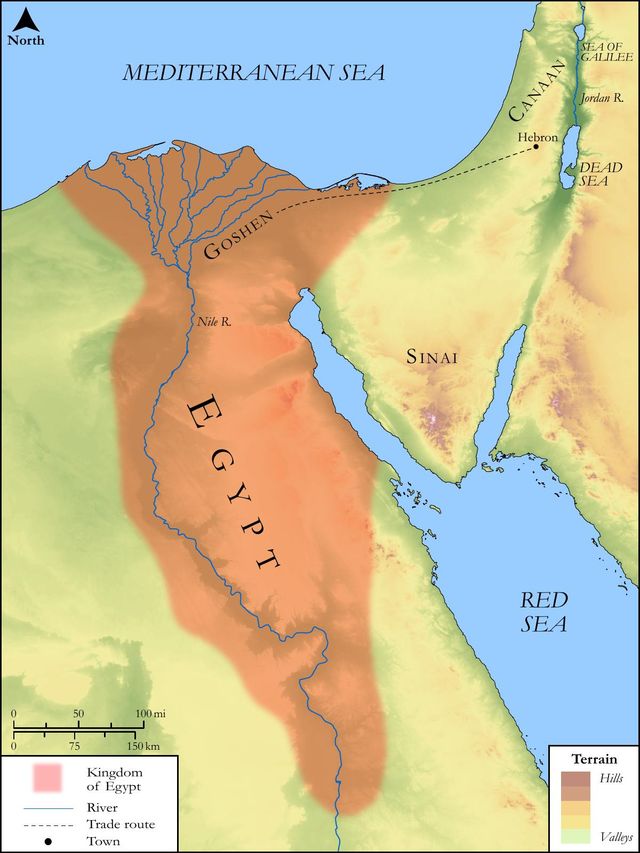
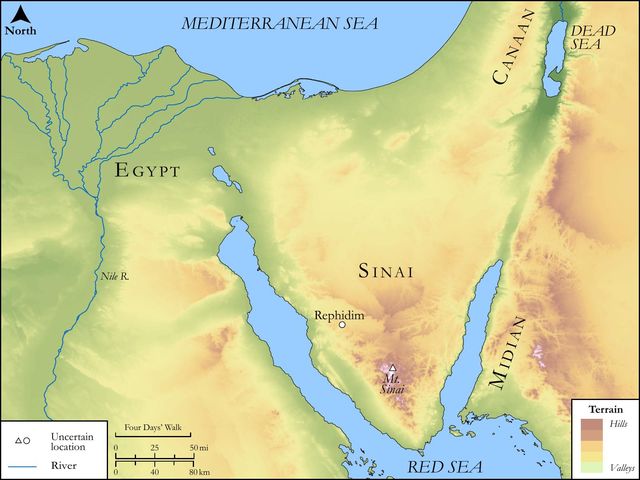
See on the biblical-era maps

Study this verse
Public-domain commentary
Matthew Henry
From his Commentary on the Whole Bible. Henry comments on passages, not single verses — this entry covers Exodus 25:23–30.
Here is, 1. A table ordered to be made of wood overlaid with gold, which was to stand, not in the holy of holies (nothing was in that but the ark with its appurtenances), but in the outer part of the tabernacle, called the sanctuary, or holy place, Heb 9:2, Heb 9:23, etc. There must also be the usual furniture of the sideboard, dishes and spoons, etc., and all of gold, Exo 25:29. 2. This table was to be always spread, and furnished with the show-bread (Exo 25:30), or bread of faces, twelve loaves, one for each tribe, set in two rows, six in a row; see the law concerning them, Lev 24:5, etc. The tabernacle being God's house, in which he was pleased to say that he would dwell among them, he would show that he kept a good house. In the royal palace it was fit that there should be a royal table. Some make the twelve loaves to represent the twelve tribes, set before God as his people and the corn of his floor, as they are called, Isa 21:10. As the ark signified God's being present with them, so the twelve loaves signified their being presented to God. This bread was designed to be, (1.) A thankful acknowledgement of God's goodness to them, in giving them their daily bread, manna in the wilderness, where he prepared a table for them, and, in Canaan, the corn of the land. Hereby they owned their dependence upon Providence, not only for the corn in the field, which they gave thanks for in offering the sheaf of first-fruits, but for the bread in their houses, that, when it was brought home, God did not blow upon it, Hag 1:9. Christ has taught us to pray every day for the bread of the day. (2.) A token of their communion with God. This bread on God's table being made of the same corn with the bread on their own tables, God and Israel did, as it were, eat together, as a pledge of friendship and fellowship; he supped with them, and they with him. (3.) A type of the spiritual provision which is made in the church, by the gospel of Christ, for all that are made priests to our God. In our Father's house there is bread enough and to spare, a loaf for every tribe. All that attend in God's house shall be abundantly satisfied with the goodness of it, Psa 36:8. Divine consolations are the continual feast of holy souls, notwithstanding there are those to whom the table of the Lord, and the meat thereof (because it is plain bread), are contemptible, Mal 1:12. Christ has a table in his kingdom, at which all his saints shall for every eat and drink with him, Luk 22:30.
Historical interpretation
Ten Centuries of Reception
2 surviving comments on this verse. Each one is dated, so this reads as a timeline rather than a list.
Select a marker to jump to its quote. Markers stagger vertically where authors wrote within a few decades of each other.
A dividing wall of cedar planks, twenty cubits high, was built in the temple to separate the inner sanctuary, that is, the Holy of Holies, from the forepart of the temple. The innersanctuary was twenty cubits deep, twenty cubits wide and twenty cubits high. The [part of the temple] in front of the inner sanctuary was forty cubits long, and in it were tables and the golden candelabrum, as well as the golden altar near the door of the inner sanctuary. This was done so that when incense was offered upon it, the cloud of smoke might rise up and cover the inner sanctuary, where the ark of the covenant was, “and above it the cherubim of glory overshadowing the mercy seat.”
A table: On which were to be placed the twelve loaves of proposition: or, as they are called in the Hebrew, the face bread, because they were always to stand before the face of the Lord in his temple: as a figure of the eucharistic sacrifice and sacrament, in the church of Christ.
Continue studying Exodus 25:23 across the web’s major study libraries — every link below opens this exact verse, chapter, or book on the destination site.
Read & Compare
 BibleGatewayThis verse in more than 200 translations and 70 languages.
 Bible.comThe YouVersion reader — hundreds of translations, reading plans, and highlights.
 ESV.orgCrossway's official English Standard Version reader.
 NET BibleThe NET translation with 60,000+ translators' notes on every rendering decision.
 STEP BibleTyndale House's free study tool — original text, vocabulary, and scholarly resources.
 BibliaLogos Bible Software's free web reader.
 USCCBThe New American Bible (Revised Edition) with the U.S. bishops' study notes.
Commentaries
 BibleHub CommentariesDozens of classic commentaries on this verse, gathered on one page.
 StudyLightMore than 100 commentary sets — the largest collection on the web.
 BibleRefPlain-English commentary on what this verse means, verse by verse.
 Enduring WordDavid Guzik's free commentary on this chapter, widely used by Bible teachers.
 Bible Study ToolsVerse commentary alongside Greek and Hebrew study aids.
Original Language & Research
- BibleHub InterlinearThe verse word by word — original language, transliteration, and English.
- BibleHub LexiconEvery word's original-language definition and Strong's entry.
 Blue Letter BibleDeep-study tools — Strong's numbers, concordance, and word studies.
 SefariaThe Hebrew text with Rashi and centuries of Jewish commentary.
Sermons, Hymns & Audio


TrulyRandomVerse is not affiliated with these sites and doesn’t control their content. They’re linked because they’re genuinely useful.
Summary
Exodus 25:23 introduces the divine specifications for the Table of Showbread, an essential furnishing within the Tabernacle's Holy Place. This verse meticulously details the required material—durable shittim wood—and precise dimensions for its construction. This level of exactitude underscores God's absolute sovereignty, His meticulous care in establishing a sacred space for His presence, and His desire for intimate communion and sustained provision for His people. It lays the foundational blueprint for a piece of furniture that would profoundly symbolize God's faithfulness and the perpetual sustenance He offers.
Context
ShowHideLiterary Context
Exodus 25:23 is embedded within a comprehensive series of divine instructions given to Moses on Mount Sinai, commencing from Exodus 25:1. This chapter marks a pivotal transition from the giving of the Law (the Ten Commandments and civil statutes) to the detailed architectural plans for the Tabernacle, a portable sanctuary designed to house God's presence among the Israelites during their wilderness journey. The instructions proceed in a deliberate and highly ordered sequence: first, the Ark of the Covenant and the Mercy Seat (verses 10-22), representing God's throne and the place of atonement, followed immediately by the Table of Showbread (verses 23-30), and subsequently the Lampstand (verses 31-40). This precise arrangement highlights the Table's integral role in the Holy Place, positioned opposite the Lampstand and before the veil separating it from the Most Holy Place. The meticulous detail in this verse, down to the specific wood and precise measurements, reinforces the overarching command that all elements of the Tabernacle be made "after the pattern thereof, which was shewed thee in the mount" (Exodus 25:9), emphasizing divine authority and the sacredness of the design.
Historical & Cultural Context
The construction of the Tabernacle occurred in the wilderness, following Israel's miraculous liberation from Egyptian bondage. This period was profoundly formative for the nascent nation, as God established His covenant relationship with them, transforming a collection of freed slaves into a distinct people. Among the nations, temples were commonly considered the dwelling places of their gods, built to show the power of those gods; here the LORD's own word was "that I may dwell among them." However, the Israelite Tabernacle was unique in its portability, signifying God's dynamic and immanent presence with His people even in their nomadic state. The materials specified, particularly "shittim wood" (acacia), were readily available in the Sinai desert, demonstrating God's provision and His use of common resources for sacred purposes. The use of precise measurements (cubits) was standard for architectural and construction projects in the days of Moses, but here, the divine origin of these measurements elevates the Tabernacle's construction beyond human design, establishing it as a direct manifestation of God's will and a central hub for Israel's worship, legal system, and national identity.
Key Themes
ShowHideExodus 25:23 contributes significantly to several overarching themes within the book of Exodus and the Pentateuch. Foremost is the theme of Divine Presence and Immanence, as the Tabernacle's construction provides a tangible means for God to dwell among His people, fulfilling His promise to be "God with us." The meticulous instructions highlight God's Sovereignty and Authority, demonstrating that every aspect of worship and interaction with the divine must conform to His perfect will, not human invention. This leads to the theme of Obedience and Holiness, as the precise adherence to divine blueprints underscores the sacredness required in approaching a holy God. Furthermore, the Table of Showbread, though only its construction is detailed here, anticipates the theme of Divine Provision and Sustenance, symbolizing God's faithfulness to nourish His people, both physically and spiritually, as seen in the later instructions for the showbread in Leviticus 24:5-9. Finally, the Tabernacle's design, including the Table, serves as a Type and Shadow, foreshadowing greater spiritual realities and the ultimate fulfillment found in Christ, as explored in the book of Hebrews.
Exposition and Analysis
ShowHideKey Word Analysis
ShowHideA primitive root meaning "to do or make, in the broadest sense and widest application." In Exodus 25:23, this imperative verb "make" (thou shalt make) emphasizes God's direct command and authority in initiating the construction of the sacred Tabernacle furnishings. It signifies not merely a physical creation but a divinely ordained act of establishing something for a specific, holy purpose, highlighting the intentionality and divine origin of the Tabernacle's design.
Referring to a table (as spread out), by implication, a meal. In this context, שֻׁלְחָן (shulchân) denotes the "Table of the Presence" or "Table of Showbread." This term carries significant theological weight, implying a place of communion, sustenance, and ongoing fellowship. Unlike an ordinary table, this "shulchân" was consecrated for divine service, symbolizing God's provision for His people and His desire for perpetual relationship through the bread placed upon it.
Feminine of a derivative (only in the plural שִׁטִּים) from H7848, meaning the acacia (from its scourging thorns). The Hebrew שִׁטִּים (shiṭṭâh) refers to the acacia tree, common in the Sinai peninsula. This wood was highly prized for its exceptional durability, hardness, resistance to decay, and immunity to insect infestation. Its selection for the Tabernacle furnishings, including the Ark, the altars, and the Table, underscores the divine intention for these sacred objects to endure the harsh desert conditions and to last for generations. The inherent qualities of shittim wood thus symbolize the enduring nature of God's covenant and the stability of His presence.
Prolonged from אֵם; properly, a mother (i.e. unit of measure, or the fore-arm (below the elbow), i.e. a cubit. The Hebrew אַמָּה (ʼammâh) denotes a unit of measurement based on the length of the forearm, typically from the elbow to the tip of the middle finger (generally around 18-21 inches or 45-53 cm). The specification of measurements in cubits highlights the divine precision demanded for the Tabernacle's construction. This exactitude is not arbitrary but signifies the perfect order, holiness, and intentionality of God's design, ensuring that every element contributed to the overall sacred pattern and symbolic harmony.
Verse Breakdown
ShowHide"Thou shalt also make a table"
This imperative command, directly from God to Moses, initiates the instruction for the Table of Showbread. The phrase "Thou shalt also make" indicates that this instruction follows previous ones (for the Ark and Mercy Seat), establishing the table as an equally essential component of the Tabernacle's sacred furniture. It emphasizes that the construction is not a human initiative but a divine mandate, underscoring God's absolute authority in dictating the form and function of His dwelling place and the worship conducted therein.
"[of] shittim wood"
This clause specifies the precise material from which the table must be constructed. The choice of shittim wood, known for its strength, durability, and resistance to decay, is profoundly symbolic. It signifies the enduring nature of the sacred objects and, by extension, the permanence of God's covenant and the unyielding stability of His presence. This detail is not merely practical; it imbues the material with theological meaning, pointing to the incorruptible character of divine things and the lasting quality of God's relationship with His people.
"two cubits [shall be] the length thereof, and a cubit the breadth thereof, and a cubit and a half the height thereof"
These precise dimensions—approximately 36-42 inches long, 18-21 inches wide, and 27-31.5 inches high—are divinely ordained and non-negotiable. The exactness of these measurements is paramount, reflecting God's perfect order, His demand for meticulous adherence to His instructions, and the sacredness of the entire Tabernacle structure. This precision ensures uniformity across all Tabernacle furnishings and contributes to the overall symbolic harmony and sacred geometry of the sanctuary, emphasizing that every detail of God's plan is purposeful, significant, and contributes to the revelation of His character.
Literary Devices
ShowHideExodus 25:23 is rich in literary devices that underscore its theological significance. The most prominent devices are Precision and Detailing. The meticulous specification of "shittim wood" and exact "cubit" measurements for length, breadth, and height serves to emphasize the divine origin and perfect nature of the Tabernacle's design. This granular level of detail is not merely instructional; it functions to convey the absolute authority of God's commands and the sacredness of the objects being created. The Imperative Mood ("Thou shalt also make") reinforces the divine command, leaving no room for human improvisation or deviation, thereby highlighting the theme of obedience and the non-negotiable nature of God's will. Furthermore, the verse utilizes Symbolism through the choice of shittim wood, which, due to its durability and resistance to decay, implicitly symbolizes the enduring and incorruptible nature of God's presence, His covenant, and the divine truths associated with the Tabernacle. The table itself, though only its construction is described here, inherently carries the Anticipation of its future function, foreshadowing its crucial role in holding the sacred showbread and thus representing God's continuous provision and desire for communion with His people.
Theological and Thematic Connections
ShowHideThe instructions for the Table of Showbread in Exodus 25:23 reveal profound theological truths about God's character and His relationship with humanity. The divine precision in specifying material and dimensions underscores God's absolute sovereignty, His meticulous care, and His demand for holiness in all that pertains to His worship. This table, though inanimate, points to God's desire for intimate communion with His people, providing a tangible place where the "bread of the presence" would perpetually signify His sustenance and fellowship. It highlights the principle that true worship involves obedient adherence to God's revealed will, recognizing that His ways are perfect and purposeful, even in the smallest details. The Table serves as a constant reminder of God's faithfulness to His covenant, ensuring His people would never lack spiritual or physical provision as long as they remained in His presence and followed His commands.
Reflection and Application
ShowHideExodus 25:23, while detailing the construction of an ancient piece of furniture, offers timeless principles for our lives today. The divine precision and specific instructions for the Table of Showbread remind us that God is a God of order, intentionality, and holiness. He cares deeply about the details of our lives, our worship, and our obedience. Just as the Israelites were called to build according to a divine pattern, we are called to live according to God's revealed will, trusting that His plans are perfect and purposeful. This verse challenges us to consider the "materials" and "dimensions" of our own spiritual lives: Are we built on an enduring foundation of faith and truth? Are we living with intentionality and precision in our walk with God, striving for excellence in our service and devotion? The Table, designed to hold the bread of His presence, points us to the ultimate source of spiritual nourishment. It prompts us to reflect on how we are actively receiving and sharing the "Bread of Life" in our daily lives, and whether our lives truly reflect the sacredness, order, and purpose that God desires for His children.
Questions for Reflection
ShowHideFAQ
ShowHideWhy was "shittim wood" specifically chosen for the Table of Showbread and other Tabernacle furnishings?
ShowHideShittim wood, derived from the acacia tree, was chosen for its exceptional durability, hardness, and natural resistance to decay and insects. These qualities made it an ideal material for constructing sacred objects that needed to withstand the harsh desert environment and endure for generations. The choice of shittim wood also carried significant symbolic weight, representing the enduring, incorruptible, and unyielding nature of God's presence and His covenant with Israel. Furthermore, it was a readily available resource in the Sinai wilderness, demonstrating God's provision and His ability to use common, accessible materials for sacred purposes, elevating the ordinary to the holy.
What was the primary function of the Table of Showbread, and how does Exodus 25:23 relate to it?
ShowHideWhile Exodus 25:23 focuses on the construction and precise dimensions of the table, its primary function, detailed in later passages like Leviticus 24:5-9, was to hold the twelve loaves of "showbread" or "bread of the presence." These loaves, representing the twelve tribes of Israel, were to be continually before the Lord. The table thus symbolized God's constant provision for His people and His desire for ongoing communion with them. Exodus 25:23 lays the foundational physical structure for this profound theological symbolism, ensuring the table was built precisely to house this sacred offering and fulfill its divine purpose.
Why were the dimensions of the Table of Showbread so precisely specified by God?
ShowHideThe precise dimensions (two cubits long, one cubit wide, and one and a half cubits high) were divinely specified to ensure absolute conformity to God's perfect pattern for the Tabernacle. This meticulousness underscores several profound theological points: God's absolute sovereignty and authority over His creation and worship; the holiness and sacredness of the Tabernacle, leaving no room for human improvisation or deviation; and the divine order and harmony that permeated all aspects of God's presence among His people. Every detail, including measurements, contributed to the overall symbolic meaning and functional integrity of the sanctuary, pointing to the perfection and intentionality of God's plan and His demand for exact obedience.
Christ-Centered Fulfillment
ShowHideThe Table of Showbread, meticulously designed and constructed according to God's precise instructions in Exodus 25:23, finds its ultimate and glorious fulfillment in Jesus Christ. The table, holding the "bread of the presence," symbolized God's constant provision and desire for communion with His people, a tangible representation of divine sustenance. Jesus, however, declares Himself to be the true "Bread of Life" in John 6:35, stating that whoever comes to Him will never hunger and whoever believes in Him will never thirst. He is the true, living sustenance from heaven, providing eternal spiritual nourishment that the physical showbread could only foreshadow. Furthermore, the Tabernacle, with all its furnishings, was a temporary dwelling place for God's presence among His people (Exodus 25:8). This concept culminates in Christ, who is God incarnate, "God with us" (Matthew 1:23), and the ultimate tabernacle where God's glory truly dwells among humanity (John 1:14). Through His broken body and shed blood, commemorated in the Lord's Supper, Jesus institutes a new covenant meal, inviting believers to a deeper, more intimate communion than the showbread could ever offer, representing His perpetual presence and provision for His redeemed people. He is the enduring reality to which the shittim wood pointed, the perfect fulfillment of every dimension and detail of God's redemptive plan.