


Exodus 37:16
Bible text: King James Version (1769 Blayney text) · Public domain
Bible text: Berean Standard Bible · Public domain
Bible text: American Standard Version (1901) · Public domain
Bible text: World English Bible, Messianic edition · Public domain
Bible text: Geneva Bible (1599) · Public domain
Bible text: Young's Literal Translation · Public domain
- וַיַּעַשׂvai·Ya·'asand he madeH6213Conj-w ¦ V-Qal-ConsecImperf-3msVerb Qal Consecutive Imperfect 3rd Singular Masculineוַandיַּעַשׂhe made
- אֶת'et<obj.>H853DirObjMParticle Object Indicator
- הַכֵּלִיםha·ke·Limthe articlesH3627Art ¦ N-mpNoun Plural Masculine Absoluteהַtheכֵּלִיםarticles
- אֲשֶׁר'a·SherwhichH834RelParticle Relative
- עַל'al[were] onH5921PrepPreposition
- הַשֻּׁלְחָןha·shul·Chanthe tableH7979Art ¦ N-msNoun Singular Masculine Absoluteהַtheשֻּׁלְחָןtable
- אֶת'et<obj.>H853DirObjMParticle Object Indicator
- קְעָרֹתָיוke·'a·ro·Tavits dishesH7086N-fpc ¦ 3msNoun Plural Feminine Constructקְעָרֹתָיdishesוits
- וְאֶתve·'Etand <obj.>H853Conj-w ¦ DirObjMParticle Object Indicatorוְandאֶת<obj.>
- כַּפֹּתָיוka·po·Tavits pansH3709N-fpc ¦ 3msNoun Plural Feminine Constructכַּפֹּתָיpansוits
- וְאֵתve·'Etand <obj.>H853Conj-w ¦ DirObjMParticle Object Indicatorוְandאֵת<obj.>
- מְנַקִּיֹּתָיוme·na·ki·yo·Tavits bowlsH4518N-fpc ¦ 3msNoun Plural Feminine Constructמְנַקִּיֹּתָיbowlsוits
- וְאֶתve·'Etand <obj.>H853Conj-w ¦ DirObjMParticle Object Indicatorוְandאֶת<obj.>
- הַקְּשָׂוֹתha·ke·sa·Votthe jugsH7184Art ¦ N-fpNoun Plural Feminine Absoluteהַtheקְּשָׂוֹתjugs
- אֲשֶׁר'a·SherwhichH834RelParticle Relative
- יֻסַּךְyu·Sakhit was poured outH5258V-Hophal-Imperf-3msVerb Hophal Imperfect 3rd Singular Masculine
- בָּהֵןba·Henwith <the> themPrep-b ¦ 3fpSuffix Personal 3rd Plural Feminineבָּwith <the>הֵןthem
- זָהָבza·HavgoldH2091N-msNoun Singular Masculine Absolute
- טָהוֹרta·HorpureH2889Adj-msAdjective Singular Masculine Absolute
English is a literal word-by-word gloss of the Hebrew, not the KJV's wording. Why?
This is the original text the KJV's translators worked from — each Hebrew word with its own literal English meaning in this verse, prepared by scholars at Tyndale House, Cambridge. The KJV translates whole sentences, not word by word, so its wording differs: one Hebrew word can become several English words, and the KJV may choose “the LORD” where the gloss reads “Yahweh”. Both are faithful — they answer different questions. For the KJV's own rendering, switch to the KJV text.
Details
See on the biblical-era maps

Study this verse
Public-domain commentary
Matthew Henry
From his Commentary on the Whole Bible. Henry comments on passages, not single verses — this entry covers Exodus 37:10–24.
Here is, 1. The making of the table on which the show-bread was to be continually placed. God is a good householder, that always keeps a plentiful table. Is the world his tabernacle? His providence in it spreads a table for all the creatures: he provides food for all flesh. Is the church his tabernacle? His grace in it spreads a table for all believers, furnished with the bread of life. But observe how much the dispensation of the gospel exceeds that of the law. Though here was a table furnished, it was only with show-bread, bread to be looked upon, not to be fed upon, while it was on this table, and afterwards only by the priests; but to the table which Christ has spread in the new covenant all real Christians are invited guests; and to them it is said, Eat, O friends, come eat of my bread. What the law gave but a sight of at a distance, the gospel gives the enjoyment of, and a hearty welcome to. 2. The making of the candlestick, which was not of wood overlaid with gold, but all beaten work of pure gold only, Exo 37:17, Exo 37:22. This signified that light of divine revelation with which God's church upon earth (which is his tabernacle among men) has always been enlightened, being always supplied with fresh oil from Christ the good Olive, Zac 4:2, Zac 4:3. God's manifestations of himself in this world are but candle-light compared with the daylight of the future state. The Bible is a golden candlestick; it is of pure gold, Psa 19:10. From it light is diffused to every part of God's tabernacle, that by it his spiritual priests may see to minister unto the Lord, and to do the service of his sanctuary. This candlestick has not only its bowls for necessary use, but its knops and flowers for ornament; there are many things which God saw fit to beautify his word with which we can no more give a reason for than for these knops and flowers, and yet we are sure that they were added for a good purpose. Let us bless God for this candlestick, have an eye to it continually, and dread the removal of it out of its place.
Historical interpretation
Historical reception
1 surviving comment on this verse from the historical church.
We know that in God’s tabernacle not only bowls but ladles too were made at the Lord’s bidding. The bowls signify a more than sufficient teaching, the ladles a small and limited knowledge. One full of true teaching fills the minds of his hearers and in this way provides a bowl by what he says. Another cannot expound what he perceives, but because he proclaims it as best he can he truly offers a ladle to taste. You who are in God’s tabernacle, in his holy church, if you cannot fill bowls with the wisdom of your teaching, give to your neighbors ladles filled with a good word, as much as you have from the divine bounty. Draw others as far as you consider you have advanced. Desire to have comrades on your way toward God.
Continue studying Exodus 37:16 across the web’s major study libraries — every link below opens this exact verse, chapter, or book on the destination site.
Read & Compare
 BibleGatewayThis verse in more than 200 translations and 70 languages.
 Bible.comThe YouVersion reader — hundreds of translations, reading plans, and highlights.
 ESV.orgCrossway's official English Standard Version reader.
 NET BibleThe NET translation with 60,000+ translators' notes on every rendering decision.
 STEP BibleTyndale House's free study tool — original text, vocabulary, and scholarly resources.
 BibliaLogos Bible Software's free web reader.
 USCCBThe New American Bible (Revised Edition) with the U.S. bishops' study notes.
Commentaries
 BibleHub CommentariesDozens of classic commentaries on this verse, gathered on one page.
 StudyLightMore than 100 commentary sets — the largest collection on the web.
 BibleRefPlain-English commentary on what this verse means, verse by verse.
 Enduring WordDavid Guzik's free commentary on this chapter, widely used by Bible teachers.
 Bible Study ToolsVerse commentary alongside Greek and Hebrew study aids.
Original Language & Research
- BibleHub InterlinearThe verse word by word — original language, transliteration, and English.
- BibleHub LexiconEvery word's original-language definition and Strong's entry.
 Blue Letter BibleDeep-study tools — Strong's numbers, concordance, and word studies.
 SefariaThe Hebrew text with Rashi and centuries of Jewish commentary.
Sermons, Hymns & Audio


TrulyRandomVerse is not affiliated with these sites and doesn’t control their content. They’re linked because they’re genuinely useful.
Summary
Exodus 37:16 meticulously details the craftsmanship of the various implements designed for the Table of Showbread within the Tabernacle, specifically mentioning dishes, spoons, bowls, and covers. This verse emphasizes that these sacred vessels were fashioned from "pure gold," underscoring the divine mandate for excellence, unblemished holiness, and precise adherence to God's instructions in the construction of His dwelling place and its worship elements, reflecting the absolute perfection required for approaching a transcendent God.
Context
ShowHideLiterary Context
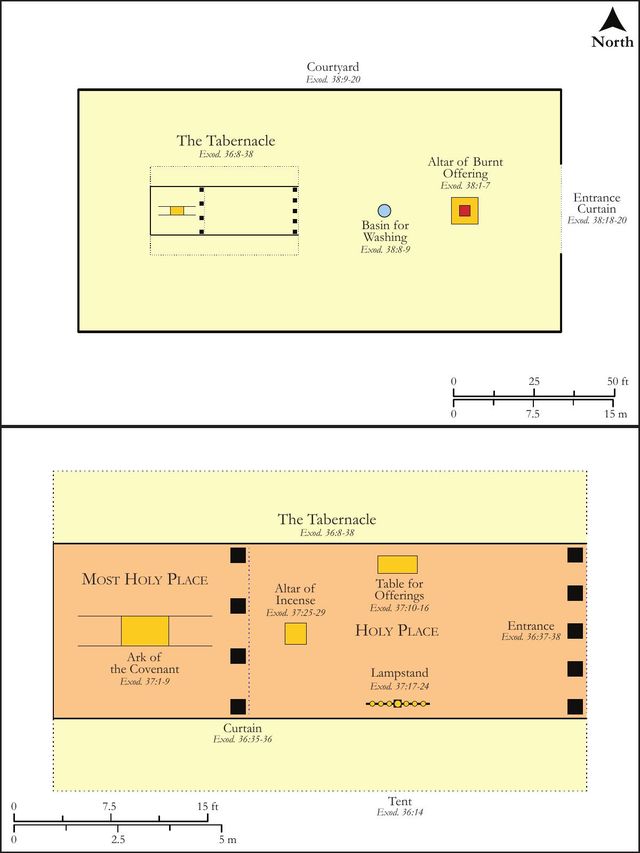
Exodus 37:16 is situated within the broader narrative of the Tabernacle's construction, specifically following the detailed account of the Ark of the Covenant's creation in Exodus 37:1-9 and the Table of Showbread itself in Exodus 37:10-15. This verse, therefore, completes the description of the Table's accessories, ensuring that all components necessary for its sacred function are accounted for. The meticulous repetition of "and he made" (וַיַּעַשׂ, vayya'as) throughout Exodus 36 and Exodus 37 highlights Bezalel's faithful execution of God's precise blueprints, first given to Moses on Mount Sinai in Exodus 25. The immediate context shows the transition from the primary furniture pieces to their essential accompanying utensils, all crafted with the same divine standard of material and design, demonstrating the comprehensive nature of God's instructions.
Historical & Cultural Context
The construction of the Tabernacle occurred during Israel's wilderness wanderings, serving as God's portable dwelling place among His people. Temples and their furnishings were made from precious materials, as Solomon furnished the house of the LORD with vessels of gold, reflecting the glory and wealth of the God worshipped. However, for Israel, the use of "pure gold" for these vessels, as mandated by God in Exodus 25:29, went beyond mere opulence; it symbolized the unblemished holiness and absolute purity required for approaching a transcendent God. These vessels were not just decorative but functional, integral to the daily and weekly priestly service, particularly in the presentation of the showbread, which symbolized God's continuous provision and covenant relationship with Israel, as detailed in Leviticus 24:5-9. The meticulous craftsmanship by divinely gifted artisans like Bezalel (Exodus 31:1-5) further underscores the sacredness and unique purpose of these items within Israel's worship, setting it apart from surrounding pagan practices.
Key Themes
ShowHideThis verse contributes to several major themes present in Exodus and the Pentateuch. Foremost is the theme of Divine Prescription and Human Obedience, as Bezalel faithfully executes every detail commanded by God, emphasizing that true worship is conducted according to God's revealed will, not human innovation. The use of "pure gold" highlights the theme of Holiness and Purity, signifying that everything associated with God's presence must be set apart and free from blemish, reflecting His own unapproachable glory. This material choice also underscores the theme of Divine Worthiness, indicating that only the most precious and refined materials are suitable for the dwelling place of the Almighty. Finally, the functional nature of these vessels for the Table of Showbread ties into the theme of God's Provision and Covenant Faithfulness, as the showbread itself symbolized God's sustained care for His people, a theme deeply rooted in the wilderness narrative and the broader covenant relationship established at Sinai (e.g., Exodus 16).
Exposition and Analysis
ShowHideKey Word Analysis
ShowHideThis term refers to "something prepared, i.e. any apparatus (as an implement, utensil, dress, vessel or weapon)." In this context, it broadly encompasses the various tools and containers specifically designed for the sacred service of the Tabernacle. The use of this general term highlights that every item, regardless of its perceived individual significance, was an integral part of the divine design and held a consecrated purpose in God's dwelling place.
This word primarily denotes "the hollow hand or palm," but can also refer to "the bowl of a dish or sling" or, as here, a "spoon." In the Tabernacle context, these "spoons" were likely small, scoop-like implements used for handling the frankincense that was placed upon the showbread, as instructed in Leviticus 24:7, signifying an offering or memorial portion to the Lord.
This adjective means "pure (in a physical, chemical, ceremonial or moral sense); clean, fair." When applied to gold, it signifies that the metal has been thoroughly refined and purged of all impurities, making it unblemished and suitable for sacred use. This emphasis on "pure" underscores the absolute holiness and perfection demanded in God's presence and in all elements associated with His worship, reflecting His own unblemished character.
Verse Breakdown
ShowHide"And he made the vessels which [were] upon the table,"
This opening clause establishes the subject of the verse: the creation of the various implements specifically designated for use on the Table of Showbread. The phrase "upon the table" directly links these items to their primary location and function, indicating their integral role in the presentation and maintenance of the showbread. The singular "table" underscores the unity of this sacred piece of furniture and its accompanying tools, all serving a singular, divine purpose.
"his dishes, and his spoons, and his bowls, and his covers to cover withal,"
This detailed enumeration specifies the types of vessels crafted. "Dishes" (קְעָרֹת, qe'arot) were likely flat or shallow containers for the showbread loaves themselves. "Spoons" (כַּפֹּת, kappot) were probably used for the frankincense. "Bowls" (מְנַקִּיּוֹת, menaqqiyot) could have been for libations or for collecting crumbs. "Covers" (קַשְׂוֹת, qaswoth), from H7184, likely served to protect the sacred elements from contamination or were used as pouring vessels. The repetition of "his" (referring to the table or God's design) emphasizes that these were not generic items but specifically designed and consecrated for sacred service, highlighting the divine ownership and purpose of each piece.
"[of] pure gold."
This concluding phrase is a powerful statement about the material composition of all these vessels. The use of "pure gold" signifies not only immense value and durability but, more importantly, the absolute holiness and perfection required for anything associated with God's presence. It underscores the unblemished nature of the worship and the divine standard of purity that permeated every aspect of the Tabernacle's construction and function, reflecting the glory and transcendence of Yahweh.
Literary Devices
ShowHideExodus 37:16 employs several literary devices to convey its profound theological significance. The specific enumeration of "dishes, spoons, bowls, and covers" serves as Merism, listing distinct parts to imply the comprehensive whole, indicating that all necessary implements, without exception, were meticulously crafted according to divine instruction. The repeated emphasis on "pure gold" functions as a powerful Symbolism, representing not just material wealth but, more profoundly, the unblemished holiness, divine glory, and absolute purity demanded by God for His dwelling place and all elements associated with His worship. This material choice also highlights the Excellence and Sacredness inherent in God's design, reinforcing the idea that only the very best is suitable for His service. Furthermore, the detailed description itself, in its precision, can be seen as a form of Didacticism, instructing the reader on the nature of God's expectations for worship and the importance of faithful adherence to His commands.
Theological and Thematic Connections
ShowHideExodus 37:16 powerfully communicates the theological principle that God demands absolute excellence, purity, and precision in all matters pertaining to His worship and service. The meticulous crafting of even the seemingly minor vessels from "pure gold" underscores that every detail in God's presence is significant and must reflect His unblemished holiness. This commitment to divine standards extends beyond the physical materials to the heart and intention of those who serve Him, emphasizing that true worship involves offering our very best, consecrated and purified, in alignment with His revealed will. The verse reminds us that God is a God of order, beauty, and holiness, and our approach to Him must reflect these attributes, signifying a profound respect for His character and His commands.
Reflection and Application
ShowHideExodus 37:16 serves as a profound reminder that God values excellence and intentionality in our service to Him. Just as the Tabernacle vessels were crafted from "pure gold" with divine precision, our offerings—whether our time, talents, resources, or even our daily tasks—should be given with the highest quality and purity of motive. This verse challenges us to move beyond perfunctory service, encouraging us to consecrate every part of our lives for God's holy purposes. It prompts us to consider the standard of our own devotion: Are we giving God our "pure gold," or are we offering Him something less than our best, perhaps tainted by impure motives or half-hearted effort? True worship is holistic, encompassing every detail of our lives, reflecting a heart that seeks to honor God in all things, knowing that He is worthy of our utmost dedication and the finest of our offerings. This commitment to excellence in the mundane aspects of life can transform our daily routines into acts of worship.
Questions for Reflection
ShowHideFAQ
ShowHideWhy were these vessels made of "pure gold" and not another precious material?
ShowHideThe consistent use of "pure gold" (זָהָב טָהוֹר, zahav tahor) throughout the Tabernacle's construction, as seen in the instructions for the Ark of the Covenant in Exodus 25:11 and the Table itself in Exodus 25:24, was not merely for aesthetic appeal or to denote monetary value, though it certainly did that. More significantly, gold in biblical symbolism often represents divine glory, purity, and incorruptibility. The term "pure" (טָהוֹר, ṭâhôwr') specifically denotes ritual and moral cleanness, indicating that the material was unblemished and fit for God's holy presence. This choice underscored the absolute holiness and perfection required for anything associated with the worship of Yahweh, setting Israel's worship apart from pagan practices that might use less refined materials. It visually communicated the transcendent nature of God and the sanctity of His dwelling, emphasizing that only the very best was acceptable in His sight.
What was the purpose of each specific vessel mentioned (dishes, spoons, bowls, covers)?
ShowHideWhile the Bible doesn't provide exhaustive details for every single item's use, we can infer their general functions based on context and later priestly instructions. The "dishes" (קְעָרֹת, qe'arot) were likely used to hold the twelve loaves of showbread that were perpetually set before the Lord, symbolizing God's continuous provision for the twelve tribes of Israel (Leviticus 24:5-9). The "spoons" (כַּפֹּת, kappot) were most probably used for holding or sprinkling the frankincense that accompanied the showbread, which served as a memorial portion burned to the Lord. The "bowls" (מְנַקִּיּוֹת, menaqqiyot) could have been for pouring libations (drink offerings) or for collecting crumbs or other small items. The "covers" (קַשְׂוֹת, qaswoth), from the root H7184 (qâsâh'), might have been literal covers to protect the sacred bread from contamination, or they could refer to a type of pouring vessel for libations. Each item had a specific, functional role in the elaborate and precise ritual of the Tabernacle service, ensuring that every aspect of worship was conducted with order and reverence.
Christ-Centered Fulfillment
ShowHideExodus 37:16, with its emphasis on vessels of "pure gold" for the Table of Showbread, finds profound Christ-centered fulfillment in several ways. The Tabernacle, as a whole, was a shadow pointing to the reality of Christ (Hebrews 8:5). The Table of Showbread, symbolizing God's continuous provision and covenant presence, is ultimately fulfilled in Jesus Christ, who declared Himself to be the Bread of Life. Just as the showbread sustained Israel, Christ sustains His people spiritually. The "pure gold" of the vessels speaks to the absolute perfection, unblemished holiness, and divine glory of Christ Himself. He is the perfect High Priest who offered a perfect sacrifice, not with material gold, but with His own precious blood, which is infinitely more valuable than any earthly substance. Furthermore, the meticulous craftsmanship and divine precision required for these vessels foreshadow the perfect obedience of Christ, who fulfilled every jot and tittle of the Law (Matthew 5:17). In Him, we receive not only the sustenance of life but also access to God's presence, made holy not by our own imperfect offerings, but by His perfect, pure, and glorious work on the cross (Hebrews 10:19-20). The Tabernacle's gold vessels, therefore, are a tangible prefigurement of the immeasurable worth and perfect purity of our Savior, Jesus Christ, through whom we are made holy and acceptable to God.