


2 Chronicles 4:8
Bible text: King James Version (1769 Blayney text) · Public domain
Bible text: King James Version with Strong's numbers · Public domain
Bible text: Berean Standard Bible · Public domain
Bible text: American Standard Version (1901) · Public domain
Bible text: World English Bible, Messianic edition · Public domain
Bible text: Geneva Bible (1599) · Public domain
Bible text: Young's Literal Translation · Public domain
- וַיַּעַשׂvai·Ya·'asand he madeH6213Conj-w ¦ V-Qal-ConsecImperf-3msVerb Qal Consecutive Imperfect 3rd Singular Masculineוַandיַּעַשׂhe made
- שֻׁלְחָנוֹתshul·cha·nOttablesH7979N-fpNoun Plural Feminine Absolute
- עֲשָׂרָה'a·sa·RahtenH6235N-fsNoun Singular Feminine Absolute
- וַיַּנַּחvai·ya·Nachand he placed [them]H5117Conj-w ¦ V-Hiphil-ConsecImperf-3msVerb Hiphil Consecutive Imperfect 3rd Singular Masculineוַandיַּנַּחhe placed [them]
- בַּהֵיכָלba·hei·Khalin the templeH1964Prep-b ¦ N-msNoun Singular Masculine Absoluteבַּin theהֵיכָלtemple
- חֲמִשָּׁהcha·mi·ShahfiveH2568N-csNoun Singular common gender Absolute
- מִיָּמִיןmi·ya·Minfrom [the] southH3225Prep-m ¦ N-fsNoun Singular Feminine Absoluteמִfromיָּמִין[the] south
- וַחֲמִשָּׁהva·cha·mi·Shahand fiveH2568Conj-w ¦ N-csNoun Singular common gender Absoluteוַandחֲמִשָּׁהfive
- מִשְּׂמֹאולmi·se·Molfrom [the] northH8040Prep-m ¦ N-msNoun Singular Masculine Absoluteמִfromשְּׂמֹאול[the] north
- וַיַּעַשׂvai·Ya·'asand he madeH6213Conj-w ¦ V-Qal-ConsecImperf-3msVerb Qal Consecutive Imperfect 3rd Singular Masculineוַandיַּעַשׂhe made
- מִזְרְקֵיmiz·re·Keibowls ofH4219N-mpcNoun Plural Masculine Construct
- זָהָבza·HavgoldH2091N-msNoun Singular Masculine Absolute
- מֵאָהme·'Ahone hundredH3967N-fsNoun Singular Feminine Absolute
English is a literal word-by-word gloss of the Hebrew, not the KJV's wording. Why?
This is the original text the KJV's translators worked from — each Hebrew word with its own literal English meaning in this verse, prepared by scholars at Tyndale House, Cambridge. The KJV translates whole sentences, not word by word, so its wording differs: one Hebrew word can become several English words, and the KJV may choose “the LORD” where the gloss reads “Yahweh”. Both are faithful — they answer different questions. For the KJV's own rendering, switch to the KJV text.
Details
See on the biblical-era maps
Study this verse
Public-domain commentary
Matthew Henry
From his Commentary on the Whole Bible. Henry comments on passages, not single verses — this entry covers 2 Chronicles 4:1–10. His three-level outline is real structure in the source text, so it is rendered as structure.
David often speaks with much affection both of the house of the Lord and of the courts of our God. Both without doors and within there was that which typified the grace of the gospel and shadowed out good things to come, of which the substance is Christ.
I.There were those things in the open court, in the view of all the people, which were very significant.
1.There was the brazen altar, Ch2 4:1. The making of this was not mentioned in the Kings. On this all the sacrifices were offered, and it sanctified the gift. This altar was much larger than that which Moses made in the tabernacle; that was five cubits square, this was twenty cubits square. Now that Israel had become both numerous and more rich, and it was to be hoped more devout (for every age should aim to be wiser and better than that which went before it), it was expected that there would be a greater abundance of offerings brought to God's altar than had been. It was therefore made such a capacious scaffold that it might hold them all, and none might excuse themselves from bringing those temptations of their devotion by alleging that there was not room to receive them. God had greatly enlarged their borders; it was therefore fit that they should enlarge his altars. Our returns should bear some proportion to our receivings. It was ten cubits high, so that the people who worshipped in the courts might see the sacrifice burnt, and their eye might affect their heart with sorrow for sin: "It is of the Lord's mercies that I am not thus consumed, and that this is accepted as an expiation of my guilt." They might thus be led to consider the great sacrifice which should be offered in the fulness of time to take away sin and abolish death, which the blood of bulls and goats could not possibly do. And with the smoke of the sacrifices their hearts might ascend to heaven in holy desires towards God and his favour. In all our devotions we must keep the eye of faith fixed upon Christ, the great propitiation. How they went up to this altar, and carried the sacrifices up to it, we are not told; some think by a plain ascent like a hill: if by steps, doubtless they were so contrived as that the end of the law (mentioned Exo 20:26) might be answered.
2.There was the molten sea, a very large brass pan, in which they put water for the priests to wash in, Ch2 4:2, Ch2 4:6. It was put just at the entrance into the court of the priests, like the font at the church door. If it were filled to the brim, it would hold 3000 baths (as here, Ch2 4:5), but ordinarily there were only 2000 baths in it, Kg1 7:26. The Holy Ghost by this signified,
(1.)Our great gospel privilege, that the blood of Christ cleanseth from all sin, Jo1 1:7. To us there is a fountain opened for all believers (who are spiritual priests, Rev 1:5, Rev 1:6), nay, for all the inhabitants of Jerusalem to wash in, from sin, which is uncleanness. There is a fulness of merit in Jesus Christ for all those that by faith apply to him for the purifying of their consciences, that they might serve the living God, Heb 9:14.
(2.)Our great gospel duty, which is to cleanse ourselves by true repentance from all the pollutions of the flesh and the corruption that is in the world. Our hearts must be sanctified, or we cannot sanctify the name of God. Those that draw nigh to God must cleanse their hands, and purify their hearts, Jam 4:8. If I was thee not, thou hast no part with me; and he that is washed still needs to wash his feet, to renew his repentance, whenever he goes in to minister, Joh 13:10.
3.There were ten lavers of brass, in which they washed such things as they offered for the burnt-offerings, Ch2 4:6. As the priests must be washed, so must the sacrifices. We must not only purify ourselves in preparation for our religious performances, but carefully put away all those vain thoughts and corrupt aims which cleave to our performances themselves and pollute them.
4.The doors of the court were overlaid with brass (Ch2 4:9), both for strength and beauty, and that they might not be rotted with the weather, to which they were exposed. Gates of brass we read of, Psa 107:16.
II.There were those things in the house of the Lord (into which the priests alone went to minister) that were very significant.
All was gold there. The nearer we come to God the purer we must be, the purer we shall be.
1.There were ten golden candlesticks, according to the form of that one which was in the tabernacle, Ch2 4:7. The written word is a lamp and a light, shining in a dark place. In Moses's time they had but one candlestick, the Pentateuch; but the additions which, in process of time, were to be made of other books of scripture might be signified by this increase of the number of the candlesticks. Light was growing. The candlesticks are the churches, Rev 1:20. Moses set up but one, the church of the Jews; but, in the gospel temple, not only believers, but churches, are multiplied.
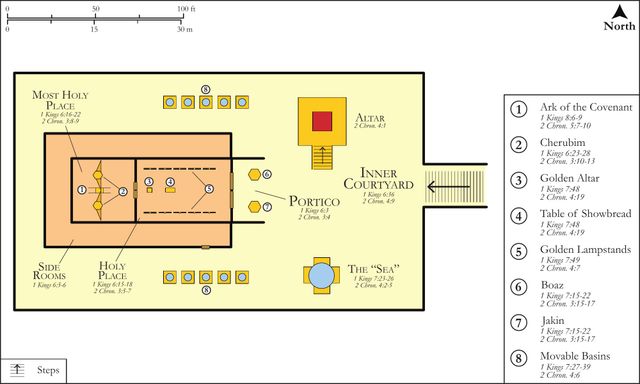
2.There were ten golden tables (Ch2 4:8), tables whereon the show-bread was set, Ch2 4:19. Perhaps every one of the tables had twelve loaves of show-bread on it. As the house was enlarged, the house-keeping was. In my father's house there is bread enough for the whole family. To those tables belonged 100 golden basins, or dishes; for God's table is well furnished.
3.There was a golden altar (Ch2 4:19), on which they burnt incense. It is probable that this was enlarged in proportion to the brazen altar. Christ, who once for all made atonement for sin, ever lives, making intercession, in virtue of that atonement.
Continue studying 2 Chronicles 4:8 across the web’s major study libraries — every link below opens this exact verse, chapter, or book on the destination site.
Read & Compare
 BibleGatewayThis verse in more than 200 translations and 70 languages.
 Bible.comThe YouVersion reader — hundreds of translations, reading plans, and highlights.
 ESV.orgCrossway's official English Standard Version reader.
 NET BibleThe NET translation with 60,000+ translators' notes on every rendering decision.
 STEP BibleTyndale House's free study tool — original text, vocabulary, and scholarly resources.
 BibliaLogos Bible Software's free web reader.
 USCCBThe New American Bible (Revised Edition) with the U.S. bishops' study notes.
Commentaries
 BibleHub CommentariesDozens of classic commentaries on this verse, gathered on one page.
 StudyLightMore than 100 commentary sets — the largest collection on the web.
 BibleRefPlain-English commentary on what this verse means, verse by verse.
 Enduring WordDavid Guzik's free commentary on this chapter, widely used by Bible teachers.
 Bible Study ToolsVerse commentary alongside Greek and Hebrew study aids.
Original Language & Research
- BibleHub InterlinearThe verse word by word — original language, transliteration, and English.
- BibleHub LexiconEvery word's original-language definition and Strong's entry.
 Blue Letter BibleDeep-study tools — Strong's numbers, concordance, and word studies.
 SefariaThe Hebrew text with Rashi and centuries of Jewish commentary.
Sermons, Hymns & Audio


TrulyRandomVerse is not affiliated with these sites and doesn’t control their content. They’re linked because they’re genuinely useful.
Summary
2 Chronicles 4:8 meticulously details two significant sets of furnishings commissioned by King Solomon for the First Temple: ten tables and one hundred basins of pure gold. This verse underscores the unparalleled magnificence, functional abundance, and precise order of the sacred space, highlighting the lavish provision for divine worship and the meticulous attention to detail in preparing a dwelling worthy of God's presence, far exceeding the scale of the earlier Tabernacle.
Context
ShowHideLiterary Context
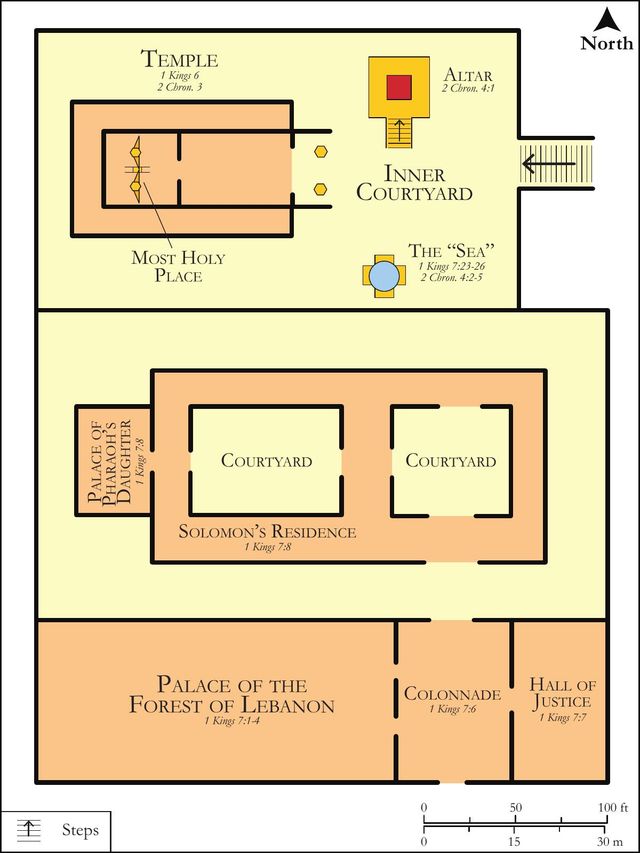
This verse is an integral part of a larger, highly detailed account of the construction and furnishing of Solomon's Temple, spanning 2 Chronicles chapters 3 and 4. Following descriptions of the Temple's foundational structure, the immense bronze altar, the "molten sea" for priestly purification, and the ten movable lavers, verse 8 shifts focus to the internal fixtures. It continues the meticulous inventory, demonstrating the comprehensive nature of Solomon's undertaking and the divine blueprint that guided every aspect of the Temple's design, emphasizing its grandeur and functional capacity for the elaborate sacrificial and worship rituals of Israel. This narrative parallels the account found in 1 Kings 7:48-50.
Historical & Cultural Context
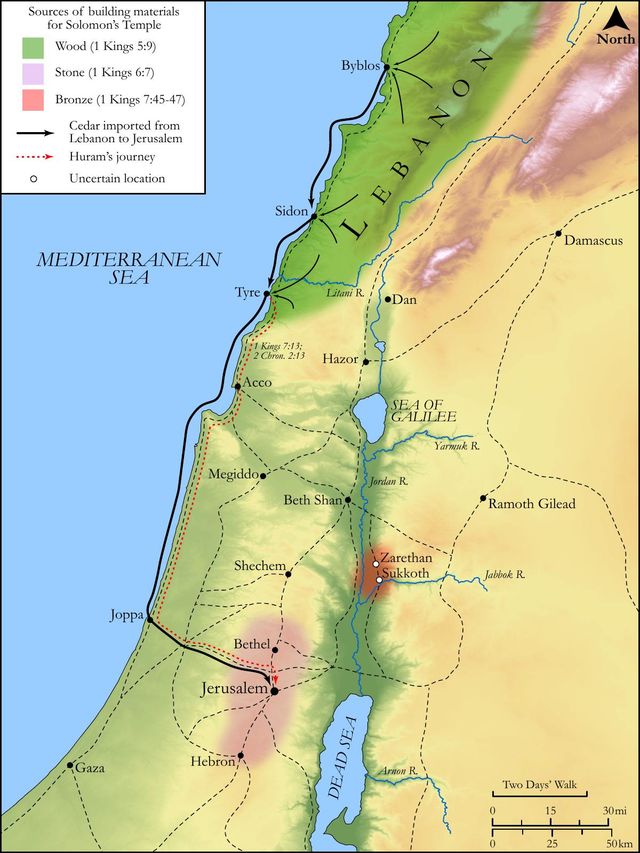
Solomon's reign (c. 970-931 BC) marked a golden age for Israel, characterized by unprecedented peace, prosperity, and international influence. The construction of the Temple was the crowning achievement of his reign, fulfilling the desire of his father, King David, to build a permanent dwelling for the Lord in Jerusalem (2 Samuel 7:1-17). The scale of the Temple's furnishings, including the ten tables and one hundred gold basins, far surpassed those of the portable Tabernacle (Exodus 25:23-30). This reflected not only Solomon's immense wealth and access to the finest materials and craftsmen but also the nation's profound devotion and the elevated status of the centralized worship in Jerusalem. The items were not merely decorative but were essential for the daily operation of the sacrificial system and the presentation of offerings before God.
Key Themes
ShowHideThe meticulous description in 2 Chronicles 4 highlights several key themes. First, Magnificence and Abundance are evident in the sheer quantity and precious materials used, particularly the "hundred basons of gold" and the multiplication of tables from one in the Tabernacle to ten. This signifies God's overflowing provision and the desire to offer the absolute best in His service. Second, Order and Symmetry are emphasized by the precise placement of the tables—"five on the right side, and five on the left"—reflecting the structured and orderly nature of divine worship and of creation itself. Third, Preparation for Worship is a central theme, as these items were highly functional. The tables likely held the showbread, a perpetual offering, while the basins were crucial for collecting sacrificial blood, for purification rites, or for holding other liquid offerings, underscoring the extensive nature of the Old Testament sacrificial system as a means of atonement and communion with God.
Exposition and Analysis
ShowHideKey Word Analysis
ShowHideThe Hebrew word שֻׁלְחָן (shulchân), meaning "table," is used here in its plural form to denote the multiple tables. In biblical contexts, tables were often used for meals, but in the Tabernacle and Temple, they specifically served for the "bread of the Presence" or "showbread" (Exodus 25:23-30). The multiplication to ten tables in Solomon's Temple, compared to the single table in the Tabernacle, signifies an unprecedented scale of worship and an abundance of provision, perhaps indicating that each table served a specific purpose or facilitated the handling of a larger volume of offerings.
The Hebrew word מִזְרָק (mizrâq), referring to a bowl or basin, is used here in its plural form. These vessels were typically used for sprinkling or pouring. In the context of the Temple, these were essential for the sacrificial system, primarily for collecting the blood of sacrifices (Exodus 24:6) or for holding other liquids used in ceremonial purification or offerings. The "hundred basons of gold" emphasize the vast number of sacrifices and rituals performed, requiring numerous vessels of the highest quality for sacred use.
This precious metal (זָהָב, zâhâb) is consistently associated with divinity, purity, and ultimate value throughout the biblical narrative. Its extensive use in the Tabernacle and Temple furnishings (Exodus 25:10-40) signifies that only the most valuable and unblemished materials were deemed worthy for items dedicated to the worship of God. The mention of "gold" for the basins, in particular, elevates their status beyond mere functional implements to sacred vessels imbued with the glory and holiness of the divine presence.
Verse Breakdown
ShowHide"He made also ten tables, and placed [them] in the temple, five on the right side, and five on the left."
This clause details the construction and precise arrangement of the tables. The number "ten" signifies a tenfold increase from the single table in the wilderness Tabernacle, indicating the vastly expanded scale of worship in Solomon's permanent Temple. The careful placement—"five on the right side, and five on the left"—demonstrates a meticulous attention to order, symmetry, and functional accessibility within the sacred space, reflecting the structured nature of the divine worship prescribed by God. These tables were likely used for the presentation of the showbread, a perpetual offering before the Lord.
"And he made an hundred basons of gold."
This second clause describes the creation of a large quantity of highly valuable vessels. "An hundred basons" further emphasizes the immense scale of the Temple's operation and the extensive nature of the sacrificial system. The material, "gold," highlights the preciousness, purity, and sacredness of these vessels, which were essential for collecting blood from sacrifices, for purification rituals, or for other ceremonial purposes, underscoring the deep reverence and lavish provision for God's service.
Literary Devices
ShowHideThe verse employs several literary devices to convey its message of grandeur and meticulousness. Repetition of the verb "made" (implied through "He made also... And he made...") underscores Solomon's active role in commissioning these numerous items. The sheer quantities mentioned—"ten tables" and "an hundred basons"—function as a form of hyperbole or exaggeration, not necessarily in the sense of falsehood, but to emphasize the extraordinary scale and opulence of the Temple furnishings, far surpassing anything seen before. Symbolism is also at play: the "gold" symbolizes divine glory, purity, and the immense value placed on God's worship, while the "tables" symbolize God's provision and communion (through the showbread), and the "basons" symbolize purification and atonement (through their use in sacrificial rituals). The balanced arrangement of the tables ("five on the right side, and five on the left") creates a sense of symmetry and order, reflecting the divine attributes of harmony and purpose.
Theological and Thematic Connections
ShowHideThis verse, describing the lavish furnishings of Solomon's Temple, speaks volumes about the nature of worship and God's relationship with His people. The abundance and preciousness of the materials reflect a theological principle that God is worthy of our absolute best and that His provision for His people is exceedingly generous. The meticulous order and symmetry in the placement of the tables underscore God's character as a God of order, not chaos, and the importance of intentionality and reverence in approaching Him. Furthermore, the functional nature of these items—tables for showbread and basins for sacrificial blood—points to the centrality of covenant, communion, and atonement in Israel's relationship with Yahweh. The Temple, with its rich adornments, was a tangible representation of God's dwelling among His people, a place where heaven and earth met, and where the sacred rituals facilitated fellowship and reconciliation.
Reflection and Application
ShowHideThe detailed account of the Temple's furnishings in 2 Chronicles 4:8, though describing ancient artifacts, offers profound principles for contemporary believers. It challenges us to consider the quality of our offering to God, not just in material terms, but in the excellence of our worship, the generosity of our giving, and the devotion of our hearts. Just as Solomon spared no expense in creating a magnificent dwelling for God, we are called to give our best in all aspects of our lives dedicated to Him, recognizing His supreme worthiness. The intentional design and functional purpose of each item remind us that our spiritual practices and communal gatherings should be thoughtfully structured to facilitate genuine encounter with God and to effectively serve His purposes. Furthermore, the sheer abundance of the Temple's provisions points to God's boundless grace and His desire to provide richly for His people, not just physically, but spiritually, offering an overflowing life in Christ.
Questions for Reflection
ShowHideFAQ
ShowHideWhat was the primary purpose of the ten tables in the Temple?
ShowHideThe ten tables in Solomon's Temple, a significant increase from the single table in the Tabernacle, were primarily used for the "bread of the Presence" or "showbread." This bread was a perpetual offering, symbolizing God's ongoing covenant and provision for His people, continually set before the Lord (Leviticus 24:5-9). The multiplication of tables suggests an expanded capacity for this offering, possibly to accommodate various types of offerings or to facilitate the handling of the showbread for the numerous priests and Levites serving in the larger Temple complex.
Why were there so many gold basons, and what were they used for?
ShowHideThe "hundred basons of gold" were essential vessels for the extensive sacrificial system and purification rituals conducted in the Temple. Their large number indicates the frequent and numerous sacrifices offered daily and on special occasions. These basins were primarily used to collect the blood of sacrificial animals, which was then sprinkled on the altar or used in other atonement rites (Leviticus 1:5). They might also have been used for holding water for purification or other liquid offerings. The use of "gold" for these basins underscores their sacredness and the immense value placed on the rituals of atonement and worship performed in God's presence.
Christ-Centered Fulfillment
ShowHideThe lavish furnishings of Solomon's Temple, including the ten tables and one hundred gold basins, find their ultimate Christ-centered fulfillment in the person and work of Jesus. The tables, which held the showbread, prefigure Christ as the true Bread of Life, who came down from heaven to give life to the world. Unlike the physical bread that sustained temporarily, Jesus offers eternal spiritual nourishment to all who believe in Him (John 6:51). Similarly, the numerous gold basins, used for collecting sacrificial blood for atonement and purification, point directly to the singular, perfect, and eternal sacrifice of Jesus Christ. His blood, shed on the cross, is the ultimate and sufficient means of cleansing from sin, making the Old Testament sacrificial system obsolete (Hebrews 9:12-14). The Temple itself, with its unparalleled glory and abundance, foreshadowed Christ as the embodiment of God's presence among humanity, the true Temple not made with hands (John 2:19-21). The abundance of gold and precious materials in the Temple points to the immeasurable spiritual riches and divine glory found in Christ, in whom "all the fullness of God was pleased to dwell" (Colossians 1:19). Thus, the physical grandeur of Solomon's Temple serves as a magnificent shadow, revealing the infinitely greater reality and spiritual abundance found in Jesus, our High Priest, our sacrifice, and our perpetual provision.