


2 Chronicles 4:7
Bible text: King James Version (1769 Blayney text) · Public domain
Bible text: Berean Standard Bible · Public domain
Bible text: American Standard Version (1901) · Public domain
Bible text: World English Bible, Messianic edition · Public domain
Bible text: Geneva Bible (1599) · Public domain
Bible text: Young's Literal Translation · Public domain
- וַיַּעַשׂVai·ya·'asand he madeH6213Conj-w ¦ V-Qal-ConsecImperf-3msVerb Qal Consecutive Imperfect 3rd Singular Masculineוַandיַּעַשׂhe made
- אֶת'et<obj.>H853DirObjMParticle Object Indicator
- מְנֹרוֹתme·no·Rot[the] lampstands ofH4501N-fpcNoun Plural Feminine Construct
- הַזָּהָבha·za·Hav<the> goldH2091Art ¦ N-msNoun Singular Masculine Absoluteהַ<the>זָּהָבgold
- עֶשֶׂר'E·sertenH6235N-msNoun Singular Masculine Absolute
- כְּמִשְׁפָּטָםke·mish·pa·Tamaccording to their ordinanceH4941Prep-k ¦ N-msc ¦ 3mpNoun Singular Masculine Constructכְּaccording toמִשְׁפָּטָordinanceםtheir
- וַיִּתֵּןvai·yi·Tenand he put [them]H5414Conj-w ¦ V-Qal-ConsecImperf-3msVerb Qal Consecutive Imperfect 3rd Singular Masculineוַandיִּתֵּןhe put [them]
- בַּהֵיכָלba·hei·Khalin the templeH1964Prep-b ¦ N-msNoun Singular Masculine Absoluteבַּin theהֵיכָלtemple
- חָמֵשׁcha·MeshfiveH2568N-csNoun Singular common gender Absolute
- מִיָּמִיןmi·ya·Minfrom [the] southH3225Prep-m ¦ N-fsNoun Singular Feminine Absoluteמִfromיָּמִין[the] south
- וְחָמֵשׁve·cha·Meshand fiveH2568Conj-w ¦ N-csNoun Singular common gender Absoluteוְandחָמֵשׁfive
- מִשְּׂמֹאולmi·se·Molfrom [the] northH8040Prep-m ¦ N-msNoun Singular Masculine Absoluteמִfromשְּׂמֹאול[the] north
English is a literal word-by-word gloss of the Hebrew, not the KJV's wording. Why?
This is the original text the KJV's translators worked from — each Hebrew word with its own literal English meaning in this verse, prepared by scholars at Tyndale House, Cambridge. The KJV translates whole sentences, not word by word, so its wording differs: one Hebrew word can become several English words, and the KJV may choose “the LORD” where the gloss reads “Yahweh”. Both are faithful — they answer different questions. For the KJV's own rendering, switch to the KJV text.
Details
See on the biblical-era maps
Study this verse
Public-domain commentary
Matthew Henry
From his Commentary on the Whole Bible. Henry comments on passages, not single verses — this entry covers 2 Chronicles 4:1–10. His three-level outline is real structure in the source text, so it is rendered as structure.
David often speaks with much affection both of the house of the Lord and of the courts of our God. Both without doors and within there was that which typified the grace of the gospel and shadowed out good things to come, of which the substance is Christ.
I.There were those things in the open court, in the view of all the people, which were very significant.
1.There was the brazen altar, Ch2 4:1. The making of this was not mentioned in the Kings. On this all the sacrifices were offered, and it sanctified the gift. This altar was much larger than that which Moses made in the tabernacle; that was five cubits square, this was twenty cubits square. Now that Israel had become both numerous and more rich, and it was to be hoped more devout (for every age should aim to be wiser and better than that which went before it), it was expected that there would be a greater abundance of offerings brought to God's altar than had been. It was therefore made such a capacious scaffold that it might hold them all, and none might excuse themselves from bringing those temptations of their devotion by alleging that there was not room to receive them. God had greatly enlarged their borders; it was therefore fit that they should enlarge his altars. Our returns should bear some proportion to our receivings. It was ten cubits high, so that the people who worshipped in the courts might see the sacrifice burnt, and their eye might affect their heart with sorrow for sin: "It is of the Lord's mercies that I am not thus consumed, and that this is accepted as an expiation of my guilt." They might thus be led to consider the great sacrifice which should be offered in the fulness of time to take away sin and abolish death, which the blood of bulls and goats could not possibly do. And with the smoke of the sacrifices their hearts might ascend to heaven in holy desires towards God and his favour. In all our devotions we must keep the eye of faith fixed upon Christ, the great propitiation. How they went up to this altar, and carried the sacrifices up to it, we are not told; some think by a plain ascent like a hill: if by steps, doubtless they were so contrived as that the end of the law (mentioned Exo 20:26) might be answered.
2.There was the molten sea, a very large brass pan, in which they put water for the priests to wash in, Ch2 4:2, Ch2 4:6. It was put just at the entrance into the court of the priests, like the font at the church door. If it were filled to the brim, it would hold 3000 baths (as here, Ch2 4:5), but ordinarily there were only 2000 baths in it, Kg1 7:26. The Holy Ghost by this signified,
(1.)Our great gospel privilege, that the blood of Christ cleanseth from all sin, Jo1 1:7. To us there is a fountain opened for all believers (who are spiritual priests, Rev 1:5, Rev 1:6), nay, for all the inhabitants of Jerusalem to wash in, from sin, which is uncleanness. There is a fulness of merit in Jesus Christ for all those that by faith apply to him for the purifying of their consciences, that they might serve the living God, Heb 9:14.
(2.)Our great gospel duty, which is to cleanse ourselves by true repentance from all the pollutions of the flesh and the corruption that is in the world. Our hearts must be sanctified, or we cannot sanctify the name of God. Those that draw nigh to God must cleanse their hands, and purify their hearts, Jam 4:8. If I was thee not, thou hast no part with me; and he that is washed still needs to wash his feet, to renew his repentance, whenever he goes in to minister, Joh 13:10.
3.There were ten lavers of brass, in which they washed such things as they offered for the burnt-offerings, Ch2 4:6. As the priests must be washed, so must the sacrifices. We must not only purify ourselves in preparation for our religious performances, but carefully put away all those vain thoughts and corrupt aims which cleave to our performances themselves and pollute them.
4.The doors of the court were overlaid with brass (Ch2 4:9), both for strength and beauty, and that they might not be rotted with the weather, to which they were exposed. Gates of brass we read of, Psa 107:16.
II.There were those things in the house of the Lord (into which the priests alone went to minister) that were very significant.
All was gold there. The nearer we come to God the purer we must be, the purer we shall be.
1.There were ten golden candlesticks, according to the form of that one which was in the tabernacle, Ch2 4:7. The written word is a lamp and a light, shining in a dark place. In Moses's time they had but one candlestick, the Pentateuch; but the additions which, in process of time, were to be made of other books of scripture might be signified by this increase of the number of the candlesticks. Light was growing. The candlesticks are the churches, Rev 1:20. Moses set up but one, the church of the Jews; but, in the gospel temple, not only believers, but churches, are multiplied.
2.There were ten golden tables (Ch2 4:8), tables whereon the show-bread was set, Ch2 4:19. Perhaps every one of the tables had twelve loaves of show-bread on it. As the house was enlarged, the house-keeping was. In my father's house there is bread enough for the whole family. To those tables belonged 100 golden basins, or dishes; for God's table is well furnished.
3.There was a golden altar (Ch2 4:19), on which they burnt incense. It is probable that this was enlarged in proportion to the brazen altar. Christ, who once for all made atonement for sin, ever lives, making intercession, in virtue of that atonement.
Continue studying 2 Chronicles 4:7 across the web’s major study libraries — every link below opens this exact verse, chapter, or book on the destination site.
Read & Compare
 BibleGatewayThis verse in more than 200 translations and 70 languages.
 Bible.comThe YouVersion reader — hundreds of translations, reading plans, and highlights.
 ESV.orgCrossway's official English Standard Version reader.
 NET BibleThe NET translation with 60,000+ translators' notes on every rendering decision.
 STEP BibleTyndale House's free study tool — original text, vocabulary, and scholarly resources.
 BibliaLogos Bible Software's free web reader.
 USCCBThe New American Bible (Revised Edition) with the U.S. bishops' study notes.
Commentaries
 BibleHub CommentariesDozens of classic commentaries on this verse, gathered on one page.
 StudyLightMore than 100 commentary sets — the largest collection on the web.
 BibleRefPlain-English commentary on what this verse means, verse by verse.
 Enduring WordDavid Guzik's free commentary on this chapter, widely used by Bible teachers.
 Bible Study ToolsVerse commentary alongside Greek and Hebrew study aids.
Original Language & Research
- BibleHub InterlinearThe verse word by word — original language, transliteration, and English.
- BibleHub LexiconEvery word's original-language definition and Strong's entry.
 Blue Letter BibleDeep-study tools — Strong's numbers, concordance, and word studies.
 SefariaThe Hebrew text with Rashi and centuries of Jewish commentary.
Sermons, Hymns & Audio


TrulyRandomVerse is not affiliated with these sites and doesn’t control their content. They’re linked because they’re genuinely useful.
Summary
Second Chronicles 4:7 offers a precise account of King Solomon's construction and strategic placement of ten magnificent golden lampstands within the Holy Place of the First Temple. These elaborate fixtures, meticulously crafted in adherence to a divinely revealed pattern, served not only to illuminate the sacred space but also powerfully symbolized the abundant presence, radiant glory, and perpetual truth of God dwelling among His people in Jerusalem. This detailed description underscores the unparalleled splendor and divine authorization of Solomon's Temple, reflecting an era of immense prosperity and profound dedication to Yahweh.
Context
ShowHideLiterary Context
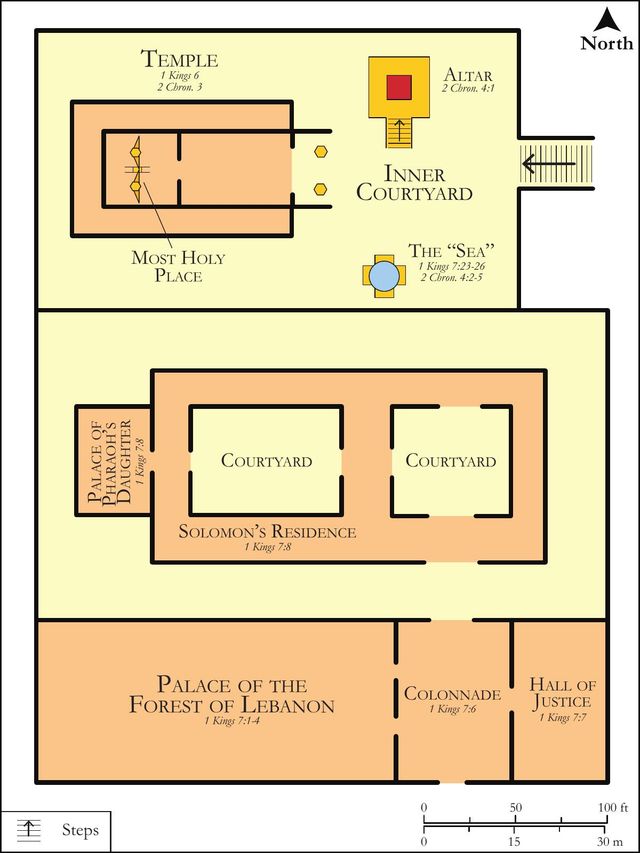
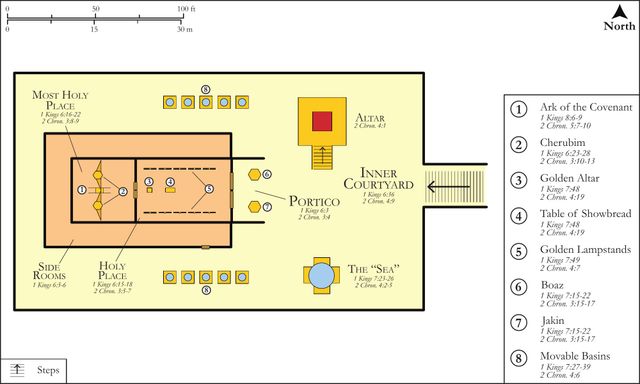
This verse is intricately woven into the broader narrative of Solomon's Temple construction, specifically within 2 Chronicles 4, which meticulously details the various bronze and gold furnishings for the sanctuary. Following the completion of the main architectural structure in 2 Chronicles 3, chapter 4 shifts focus to the sacred implements. It systematically lists the bronze altar, the great Sea, the ten lavers, and then transitions to the golden articles, including the altars, tables for the showbread, and, as highlighted here, the ten golden lampstands. This section, along with the preceding chapters detailing the building process, collectively emphasizes the immense scale, the preciousness of the materials, and the divine authorization underpinning every facet of the Temple. It implicitly contrasts the Temple's grandeur with the portable Tabernacle, underscoring the permanence and amplified glory of God's new, established dwelling place.
Historical & Cultural Context
King Solomon's reign, spanning approximately 970-931 BC, is widely regarded as a pinnacle of Israelite history, characterized by unprecedented wealth, political stability, and ambitious architectural endeavors. The construction of the Temple in Jerusalem stood as the crowning achievement of his rule, fulfilling the long-cherished desire of his father, David, to establish a permanent dwelling for the Ark of the Covenant. The Temple was understood as the dwelling place of the name of the LORD, and its opulence directly reflected the power, majesty, and honor due to the God who dwelt there. The exclusive use of pure gold, a metal of immense value and durability, for the lampstands and other sacred vessels, unequivocally underscored the Temple's sanctity and the supreme honor bestowed upon Yahweh. The number ten, frequently symbolizing completeness, divine order, or abundance in biblical numerology, further amplified the sense of overflowing glory and comprehensive presence of God within this grand new sanctuary.
Key Themes
ShowHideThe creation and placement of these ten lampstands contribute significantly to several overarching themes pervasive in the book of Chronicles. Firstly, they powerfully articulate the theme of Magnificence and Abundance, showcasing the extraordinary wealth and unwavering dedication Solomon invested in God's house, a scale far surpassing the single lampstand of the Tabernacle, as described in Exodus 25:31. Secondly, there is a strong emphasis on Continuity and Expansion. The phrase "according to their form" is a direct affirmation of adherence to the divinely prescribed design of the original Tabernacle menorah, while the multiplication of lampstands signifies an expansion of God's manifest presence and the reach of His illuminating truth within a more established, permanent dwelling. Thirdly, and perhaps most profoundly, the lampstands embody the Symbolism of Light. Their primary function was to provide perpetual illumination within the sacred Holy Place. In biblical thought, light consistently represents God's presence, His truth, divine guidance, and revelation. The constant illumination of the Holy Place by these golden lampstands powerfully symbolized the enduring presence of God's truth and His unfailing guidance among His people, echoing the profound sentiment found in Psalm 119:105 that God's word serves as a lamp unto our feet and a light unto our path.
Exposition and Analysis
ShowHideKey Word Analysis
ShowHideThe Hebrew term מְנוֹרָה (mᵉnôwrâh), appearing here in its plural form (mᵉnôwrôt), specifically refers to a lampstand designed to hold oil lamps, not candles (which were not in use in ancient Israel). This distinction is vital, as oil lamps provided a continuous, flickering light, symbolizing the enduring and living presence of God. As defined by H4501, it is a "chandelier" or "candlestick," derived from a root suggesting a "yoke" or "beam," perhaps referencing its structure. The menorah was a foundational piece of Tabernacle furniture, and its replication and multiplication in the Temple signify both continuity with divine instruction and the amplified glory of God's dwelling.
The phrase כְּמִשְׁפָּטָם (kemishpâṭām), literally "according to their judgment" or "according to their ordinance," uses the root mishpâṭ (H4941), which signifies a verdict, sentence, or formal decree, encompassing concepts of law, custom, and due order. In this context, it denotes strict adherence to a precise, established pattern or regulation. This is a direct allusion to the divinely revealed blueprint given to Moses for the Tabernacle's lampstand in Exodus 25:31-40. It underscores that despite the increased number and the Temple's grandeur, the fundamental design and spiritual significance of these sacred objects remained rooted in God's original, authoritative instruction, ensuring their authenticity and spiritual efficacy.
The Hebrew word הֵיכָל (hêykâl, H1964) refers to a "large public building, such as a palace or temple." In this context, it specifically designates the main sanctuary building of God's dwelling place in Jerusalem, distinct from the outer courts. The term emphasizes the grandeur and official status of the structure, serving as the central place of worship and the symbolic residence of God's presence among His people. Its use here highlights the permanent and majestic nature of Solomon's edifice compared to the portable Tabernacle.
Verse Breakdown
ShowHide"And he made ten candlesticks of gold"
This initial clause highlights King Solomon's active role in commissioning and overseeing the meticulous creation of these magnificent objects. The material, "gold" (H2091, zâhâb), signifies purity, preciousness, and divine glory, entirely fitting for the dwelling place of God. The quantity, "ten" (H6235, ʻeser), is a significant departure from the single lampstand of the Tabernacle, symbolizing the amplified glory, abundance, and perhaps the increased scope of God's presence and light in the permanent Temple compared to the portable sanctuary.
"according to their form"
This crucial phrase emphasizes that these new lampstands were not arbitrary human inventions but were meticulously replicated according to the divinely prescribed design of the original Tabernacle menorah. This adherence to a pre-existing, sacred pattern (H4941, mishpâṭ) ensured continuity with God's revealed will and the spiritual heritage of Israel, grounding the Temple's new splendor in ancient, holy traditions and divine authority.
"and set [them] in the temple, five on the right hand, and five on the left"
This describes the strategic and symmetrical placement of the lampstands within the Holy Place (H1964, hêykâl), the main chamber of the Temple accessible to priests. The verb "set" (H5414, nâthan) implies deliberate and purposeful placement. Placing them "five on the right hand" (H3225, yâmîyn) and "five on the left" (H8040, sᵉmôʼwl) ensured comprehensive and balanced illumination of the sacred space. This arrangement not only provided practical light for priestly duties but also visually reinforced the pervasive and encompassing nature of God's presence and truth within His sanctuary.
Literary Devices
ShowHideThe verse employs several significant literary devices to convey its profound meaning. Symbolism is paramount, with the "candlesticks of gold" symbolizing divine presence, truth, and revelation. The material, "gold," itself symbolizes purity, kingship, and divine glory, elevating the sacred space and the objects within it. The number "ten" can be seen as symbolic of completeness, divine order, or abundance, signifying the overflowing blessings and glory associated with God's established dwelling. The phrase "according to their form" utilizes Allusion to the detailed divine instructions for the Tabernacle menorah found in Exodus 25, linking the new Temple's furnishings directly to God's original blueprint and emphasizing continuity with divine will. Furthermore, the narrative subtly employs Contrast between the single lampstand of the portable Tabernacle and the ten lampstands of the permanent Temple, highlighting the increased glory, permanence, and amplified manifestation of God's dwelling among His people in the Solomonic era. The symmetrical placement "five on the right hand, and five on the left" can also be seen as a form of Merism, indicating comprehensive coverage and balanced order within the sacred space.
Theological and Thematic Connections
ShowHideThe ten golden lampstands in Solomon's Temple served as powerful and multifaceted symbols of God's enduring presence, His illuminating truth, and His unfailing guidance. Their perpetual light within the Holy Place represented the constant illumination provided by God's revelation to His people, a light that was not merely physical but profoundly spiritual, signifying the clarity, wisdom, and insight that flow from walking in God's ways. The multiplication of the lampstands from the single Tabernacle menorah speaks to an amplified revelation and a more expansive manifestation of God's glory, reflecting the stability, prosperity, and established nature of the Solomonic era. The Temple, as the central locus of Israel's worship and the dwelling place of God's Name, was intended to be a radiant beacon of divine truth, and the lampstands stood as a constant, tangible reminder of this sacred calling and the ever-present light of God among His chosen people.
Reflection and Application
ShowHideThe meticulous account of the Temple's lampstands in 2 Chronicles 4:7 offers profound and enduring lessons for contemporary believers. Just as King Solomon spared no expense in crafting these magnificent sources of light from pure gold, we are called to offer our very best in our worship, our service, and our dedication to God. Our commitment should reflect the immense value we place on His holy presence and His life-giving truth in our lives. Furthermore, the lampstands' primary function of continuously illuminating the sacred space serves as a powerful reminder that, as followers of Christ, we are called to be "light in the Lord" (Ephesians 5:8). Our lives, transformed by God's grace and guided by His infallible Word, should shine brightly, dispelling spiritual darkness and illuminating the path for others to perceive God's truth and glory. This involves living with integrity, speaking truth in love, and demonstrating Christ-like compassion, thereby reflecting the divine light that has been kindled within us. We are to be visible testimonies to God's enduring presence and His transforming power in a world often shrouded in spiritual shadows, pointing others to the ultimate source of light.
Questions for Reflection
ShowHideFAQ
ShowHideWhy did Solomon's Temple have ten lampstands instead of the single one found in the Tabernacle?
ShowHideThe multiplication of lampstands from one in the Tabernacle to ten in Solomon's Temple signifies several key aspects. Firstly, it reflects the increased glory, immense wealth, and abundant blessings of God's presence during Solomon's reign, a period of unprecedented prosperity for Israel. The Temple itself was a much larger and more permanent structure than the portable Tabernacle, naturally requiring more sources of light to illuminate its vast interior. The number ten, often symbolizing completeness, divine order, or abundance in biblical numerology, also emphasizes the amplified and comprehensive nature of God's light and truth dwelling among His people in this grander, established sanctuary. It visually represented a new era of God's manifest presence and blessing, fitting for a settled kingdom.
What does "according to their form" mean in relation to the lampstands?
ShowHideThe phrase "according to their form" (Hebrew: kemishpâṭām) indicates that Solomon's craftsmen meticulously followed the divinely prescribed pattern for the Tabernacle's lampstand, as detailed in Exodus 25:31-40. This means that despite the increase in quantity, the fundamental design—including its central shaft, branches, decorative cups, knobs, and flowers—remained consistent with God's original blueprint. This adherence to the divine "form" was crucial for maintaining the spiritual authenticity and significance of the lampstands, ensuring that these new Temple furnishings were not merely human inventions but continuations of God's sacred instructions for His dwelling place. It underscores the profound importance of divine revelation as the foundational basis for true and acceptable worship.
Christ-Centered Fulfillment
ShowHideThe ten golden lampstands in Solomon's Temple, perpetually illuminating the Holy Place, find their ultimate and most glorious fulfillment in the person and work of Jesus Christ. While these physical lampstands symbolically represented God's presence, truth, and revelation, they were but shadows of the true, eternal Light who was to come. Jesus unequivocally declared, "I am the light of the world. Whoever follows me will not walk in darkness, but will have the light of life" (John 8:12). He is the very embodiment of God's truth and revelation, the Logos made flesh, through whom "was life, and the life was the light of men" (John 1:4). The physical light of the Temple lampstands pointed forward to Christ, who perfectly illuminates the path to God and dispels the spiritual darkness of sin, ignorance, and death. In Him, the glory and presence of God, once confined to a physical sanctuary and symbolized by its furnishings, now dwell fully and personally, making Him the perfect and eternal source of all spiritual light and understanding, the one who truly "lights every person" (John 1:9). Ultimately, the book of Revelation reveals that in the New Jerusalem, there will be no need for sun or moon, "for the glory of God gives it light, and the Lamb is its lamp" (Revelation 21:23), powerfully demonstrating that Christ Himself is the everlasting fulfillment of all that the Temple lampstands foreshadowed, the ever-present and all-sufficient source of divine illumination.