


1 Kings 7:49
Bible text: King James Version (1769 Blayney text) · Public domain
Bible text: King James Version with Strong's numbers · Public domain
Bible text: Berean Standard Bible · Public domain
Bible text: American Standard Version (1901) · Public domain
Bible text: World English Bible, Messianic edition · Public domain
Bible text: Geneva Bible (1599) · Public domain
Bible text: Young's Literal Translation · Public domain
- וְאֶתve·'Etand <obj.>H853Conj-w ¦ DirObjMParticle Object Indicatorוְandאֶת<obj.>
- הַמְּנֹרוֹתHa·me·no·rotthe lampstandsH4501Art ¦ N-fpNoun Plural Feminine Absoluteהַtheמְּנֹרוֹתlampstands
- חָמֵשׁcha·MeshfiveH2568N-csNoun Singular common gender Absolute
- מִיָּמִיןmi·ya·Minfrom [the] rightH3225Prep-m ¦ N-fsNoun Singular Feminine Absoluteמִfromיָּמִין[the] right
- וְחָמֵשׁve·cha·Meshand fiveH2568Conj-w ¦ N-csNoun Singular common gender Absoluteוְandחָמֵשׁfive
- מִשְּׂמֹאולmi·se·Molfrom [the] leftH8040Prep-m ¦ N-msNoun Singular Masculine Absoluteמִfromשְּׂמֹאול[the] left
- לִפְנֵיlif·Nei<to> beforeH6440Prep-l ¦ N-mpcNoun Plural Masculine Constructלִ<to>פְנֵיbefore
- הַדְּבִירha·de·Virthe innermost roomH1687Art ¦ N-msNoun Singular Masculine Absoluteהַtheדְּבִירinnermost room
- זָהָבza·HavgoldH2091N-msNoun Singular Masculine Absolute
- סָגוּרsa·Gurpure goldH5462N-msNoun Singular Masculine Absolute
- וְהַפֶּרַחve·ha·Pe·rachand the blossomH6525Conj-w ¦ Art ¦ N-msNoun Singular Masculine Absoluteוְandהַtheפֶּרַחblossom
- וְהַנֵּרֹתve·ha·ne·Rotand the lampsH5216Conj-w ¦ Art ¦ N-fpNoun Plural Feminine Absoluteוְandהַtheנֵּרֹתlamps
- וְהַמֶּלְקַחַיִםve·ha·mel·ka·Cha·yimand the tongsH4457Conj-w ¦ Art ¦ N-mdNoun Dual Masculine Absoluteוְandהַtheמֶּלְקַחַיִםtongs
- זָהָבza·HavgoldH2091N-msNoun Singular Masculine Absolute
English is a literal word-by-word gloss of the Hebrew, not the KJV's wording. Why?
This is the original text the KJV's translators worked from — each Hebrew word with its own literal English meaning in this verse, prepared by scholars at Tyndale House, Cambridge. The KJV translates whole sentences, not word by word, so its wording differs: one Hebrew word can become several English words, and the KJV may choose “the LORD” where the gloss reads “Yahweh”. Both are faithful — they answer different questions. For the KJV's own rendering, switch to the KJV text.
Details
See on the biblical-era maps
Study this verse
Public-domain commentary
Matthew Henry
From his Commentary on the Whole Bible. Henry comments on passages, not single verses — this entry covers 1 Kings 7:48–51.
Here is, 1. The making of the gold work of the temple, which it seems was done last, for with it the work of the house of God ended. All within doors was gold, and all made new (except the ark, with its mercy-seat and cherubim), the old being either melted down or laid by - the golden altar, table, and candlestick, with all their appurtenances. The altar of incense was still one, for Christ and his intercession are so: but he made ten golden tables, Ch2 4:8 (though here mention is made of that one only on which the show-bread was, Kg1 7:48, which we may suppose was larger than the rest and to which the rest were as side-boards), and ten golden candlesticks (Kg1 7:49), intimating the much greater plenty both of spiritual food and heavenly light which the gospel blesses us with than the law of Moses did our could afford. Even the hinges of the door were of gold (Kg1 7:50), that every thing might be alike magnificent, and bespeak Solomon's generosity. Some suggest that every thing was made thus splendid in God's temple to keep the people from idolatry, for none of the idol-temples were so rich and fine as this: but how little the expedient availed the event showed. 2. The bringing in of the dedicated things, which David had devoted to the honour of God, Kg1 7:51. What was not expended in the building and furniture was laid up in the treasury, for repairs, exigencies, and the constant charge of the temple-service. What the parents have dedicated to God the children ought by no means to alienate or recall, but should cheerfully devote what was intended for pious and charitable uses, that they may, with their estates, inherit the blessing.
Historical interpretation
Historical reception
1 surviving comment on this verse from the historical church.
For just as the tables are rightly used as a type of holy Scripture because they both minister righteousness to those hungering for the bread of the word and bear the vessels of the heavenly ministry, that is, they propose for our imitation the actions of the righteous, so also by these lampstands the words of God are symbolized, that is, because they give the light of wisdom to the erring. That is why the psalmist says, “A lamp to my feet,” and so forth; that, too, is why Solomon says, “Because the commandment is a lamp, and the law a light.” Moreover, the reason why five lampstands were placed on the right and five on the left is quite easy to see from our discussion of the tables. But when he said five on the right and five on the left, he added fittingly: “over against the oracle.” For the oracle, where the ark was, as has often been said, stands for the way to the heavenly homeland: “where Christ is seated at the right hand of God,” privy, that is, to his Father’s secrets. And the temple lampstands of gold were placed opposite the oracle because the words of God always have in view the abode of the heavenly city that they may instill into our hearts the knowledge and desire of it and inflame those who take their fleshy origin from the earth to long for and to merit a place of everlasting abode in heaven.
Continue studying 1 Kings 7:49 across the web’s major study libraries — every link below opens this exact verse, chapter, or book on the destination site.
Read & Compare
 BibleGatewayThis verse in more than 200 translations and 70 languages.
 Bible.comThe YouVersion reader — hundreds of translations, reading plans, and highlights.
 ESV.orgCrossway's official English Standard Version reader.
 NET BibleThe NET translation with 60,000+ translators' notes on every rendering decision.
 STEP BibleTyndale House's free study tool — original text, vocabulary, and scholarly resources.
 BibliaLogos Bible Software's free web reader.
 USCCBThe New American Bible (Revised Edition) with the U.S. bishops' study notes.
Commentaries
 BibleHub CommentariesDozens of classic commentaries on this verse, gathered on one page.
 StudyLightMore than 100 commentary sets — the largest collection on the web.
 BibleRefPlain-English commentary on what this verse means, verse by verse.
 Enduring WordDavid Guzik's free commentary on this chapter, widely used by Bible teachers.
 Bible Study ToolsVerse commentary alongside Greek and Hebrew study aids.
Original Language & Research
- BibleHub InterlinearThe verse word by word — original language, transliteration, and English.
- BibleHub LexiconEvery word's original-language definition and Strong's entry.
 Blue Letter BibleDeep-study tools — Strong's numbers, concordance, and word studies.
 SefariaThe Hebrew text with Rashi and centuries of Jewish commentary.
Sermons, Hymns & Audio


TrulyRandomVerse is not affiliated with these sites and doesn’t control their content. They’re linked because they’re genuinely useful.
Summary
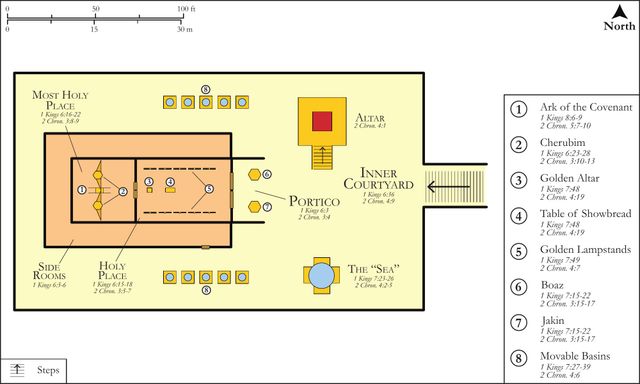
1 Kings 7:49 provides a meticulous description of the ten golden lampstands, five positioned on the right side and five on the left, within the Holy Place of Solomon's Temple. These magnificent furnishings were situated directly before the innermost sanctuary, known as the "oracle." Crafted from pure gold and intricately adorned with decorative flowers, functional lamps, and accompanying tongs, these elaborate implements were crucial for illuminating the sacred space, symbolizing the divine presence and the immense value and reverence placed upon God's dwelling.
Context
ShowHideLiterary Context
This verse is intricately woven into the extensive and highly detailed account of Solomon's construction of the Temple and his own royal palace, specifically within 1 Kings 7:13-51, which meticulously catalogues the elaborate furnishings and sacred vessels. Following the architectural blueprints and descriptions of the Temple building itself in 1 Kings 6 and Solomon's palace in 1 Kings 7:1-12, the narrative transitions to highlight the exceptional craftsmanship of Hiram of Tyre, who was responsible for fashioning the various bronze and gold implements. Verse 49 specifically details the golden lampstands, which, alongside other essential items such as the table for the showbread and the altar of incense, equipped the Holy Place—the primary chamber of the Temple that served as the antechamber to the Most Holy Place, or "oracle." This section profoundly underscores the shift from the physical structure of the Temple to its sacred function, emphasizing the meticulous provision for divine worship and the sacredness of the space.
Historical & Cultural Context
Solomon's reign, spanning approximately 970-931 BCE, represented the zenith of Israelite power, wealth, and international influence. The construction of the Temple was an unparalleled undertaking, serving not only as a testament to the king's profound devotion to Yahweh but also as a grand manifestation of the nation's prosperity and its unique covenant relationship with God. Gold was recognized as the most precious metal, frequently associated with divinity, royalty, and purity, as in the candlestick of pure gold made for the tabernacle. The explicit mention of "pure gold" for the lampstands profoundly emphasized their sacredness, their unparalleled worthiness for God's presence, and the unblemished nature required for divine service. While sharing some architectural and decorative motifs with other regional temples, Solomon's Temple was distinct in its singular dedication to the one true God. The "oracle" (Hebrew: debir) constituted the holiest and most exclusive part of the Temple, a concept central to Israelite worship, signifying the immediate and unique presence of God among His people.
Key Themes
ShowHideThe detailed description of the lampstands in 1 Kings 7:49 significantly contributes to several overarching themes present throughout the book of 1 Kings. The magnificence and grandeur of Solomon's Temple are vividly portrayed through the sheer quantity of lampstands (ten, in contrast to the single lampstand in the Tabernacle, as seen in Exodus 25:31) and the unparalleled preciousness of the materials used ("pure gold"). This highlights the theme of purity and holiness inherently required for God's dwelling place, emphasizing that only the finest and most unblemished was acceptable for His worship. The lampstands' essential function as perpetual sources of light within the windowless Holy Place powerfully symbolizes divine presence and illumination, signifying God's constant guidance and spiritual light for His people. Their precise and symmetrical arrangement ("five on the right, and five on the left") underscores the pervasive theme of order and precision inherent in God's character and in the meticulous requirements for His worship. Furthermore, the Temple's permanent nature, equipped with such elaborate and enduring furnishings, represents a significant development from the portable Tabernacle, signifying the stability and establishment of God's enduring covenant relationship with Israel.
Exposition and Analysis
ShowHideKey Word Analysis
ShowHideWhile the KJV translates this as "candlesticks," the Hebrew term (H4501) specifically refers to a lampstand or chandelier designed to hold oil lamps, not candles. This distinction is crucial for understanding its function in providing perpetual illumination within the Holy Place. The menorah was a vital piece of Temple furniture, essential for the ongoing priestly service and symbolizing divine light.
This word (H2091) refers to the precious metal, often associated with shimmer or yellow color. In the context of the Temple, "gold" (especially "pure gold" or "fine gold" as implied by the KJV's "pure") signifies immense value, purity, royalty, and sacredness. Its extensive use throughout the Temple's furnishings underscores the unparalleled worthiness of God and the lavish devotion expressed in His sanctuary.
This term (H1687) denotes the innermost and most sacred part of the sanctuary, the shrine, or the Most Holy Place (Holy of Holies). It was the exclusive chamber where the Ark of the Covenant resided, representing the very presence and throne of God. The placement of the lampstands "before the oracle" signifies their role in illuminating the approach to, and the space immediately preceding, the divine presence itself.
Verse Breakdown
ShowHide"And the candlesticks of pure gold"
This opening clause immediately establishes both the nature and the material of these crucial Temple furnishings. The specification of "pure gold" highlights their immense value, their sacred purpose, and the unblemished quality deemed necessary for items dedicated to God's service. It underscores the lavishness, reverence, and costly devotion invested in the construction and equipping of the Temple.
"five on the right [side], and five on the left"
This phrase precisely describes the symmetrical arrangement of the ten lampstands within the Holy Place. In contrast to the single lampstand of the Tabernacle, the multiplication to ten signifies the amplified glory, grandeur, and permanence of God's presence in the established Temple. This arrangement also speaks to the meticulous order, balance, and intentional design that characterized the sacred space and God's character.
"before the oracle"
This indicates the precise strategic placement of the lampstands in the Holy Place, the chamber directly preceding the "oracle" or Most Holy Place. Their position was vital, providing the necessary light that guided and illuminated the path towards the holiest part of the Temple, where God's immediate presence was manifested in the Ark of the Covenant, emphasizing a sacred progression.
"with the flowers, and the lamps, and the tongs [of] gold"
This clause details the decorative and functional components of the lampstands. The "flowers" likely refer to ornamental almond blossoms, a motif inherited from the Tabernacle menorah (e.g., Exodus 25:33), symbolizing life, fruitfulness, and divine approval. The "lamps" were the actual oil-holding vessels placed upon the lampstands, providing the literal light. The "tongs" were essential tools used by the priests for trimming the wicks and maintaining the lamps, ensuring continuous, unbroken illumination (as outlined in Leviticus 24:3-4). The fact that all these components were "of gold" further emphasizes their sacredness, value, and the uncompromised quality demanded for God's sanctuary.
Literary Devices
ShowHideThe description in 1 Kings 7:49 employs several literary devices to convey its profound meaning and impact. Symbolism is paramount, with the "pure gold" representing divine holiness, unblemished purity, and supreme value, while the "candlesticks" (lampstands) themselves symbolize God's illuminating presence, His guiding truth, and the spiritual light He provides within the sacred space. The light they cast was not merely physical but also deeply spiritual, pointing to the divine illumination that dispels darkness. The multiplication of lampstands from one in the Tabernacle to ten in the Temple serves as a form of amplification or hyperbole, emphasizing the increased glory, grandeur, and established nature of Solomon's reign and God's permanent presence among His people. The precise and balanced arrangement of "five on the right... and five on the left" is an example of merism, indicating the comprehensive and symmetrical illumination of the entire Holy Place, reflecting God's nature as a God of perfect order and design.
Theological and Thematic Connections
ShowHideThe golden lampstands in Solomon's Temple were far more than mere fixtures; they served as potent symbols of God's perpetual presence and His illuminating truth dwelling among His people. The sheer quantity and the preciousness of the pure gold underscore the profound reverence and the immense resources dedicated to creating a dwelling place deemed worthy of the Almighty, reflecting the theological principle that God deserves the absolute best and that His sanctuary should reflect His glory. The constant light they provided within the windowless Holy Place spoke powerfully to God's unwavering guidance and the spiritual illumination He offers, which is essential for His people to navigate life in His covenant. This physical light served as a tangible reminder of Israel's unique calling to be a light to the nations, reflecting God's glory and truth to a world shrouded in spiritual darkness.
Reflection and Application
ShowHideThe meticulous detail and lavish materials dedicated to the lampstands in Solomon's Temple, as described in 1 Kings 7:49, serve as a powerful and enduring reminder of the excellence, reverence, and unreserved devotion due to God. Just as the Israelites poured their finest resources into creating a fitting and magnificent dwelling for His presence, we too are called to offer our absolute best in every aspect of our lives—in worship, in service, and in our daily devotion—recognizing His supreme worth, majesty, and holiness. The perpetual light emanating from these lampstands within the Holy Place also challenges us to deeply consider our own role as "light" in a world often shrouded in spiritual darkness. As followers of Christ, we are commissioned to reflect God's truth, His transformative love, and His perfect righteousness, illuminating the spiritual darkness around us through the integrity of our words, the authenticity of our deeds, and the purity of our character. The "pure gold" speaks profoundly to the holiness required to approach God; it reminds us that while the Temple's physical purity pointed to an ideal, Christ's perfect sacrifice now enables us to approach a holy God with clean hearts, transforming us into living, spiritual temples where His Holy Spirit graciously dwells.
Questions for Reflection
ShowHideFAQ
ShowHideWhy were there ten lampstands in Solomon's Temple, unlike the single one in the Tabernacle?
ShowHideThe increase from one lampstand in the Mosaic Tabernacle (as described in Exodus 25:31-40) to ten in Solomon's Temple symbolizes the greater glory, amplified stability, and established permanence of God's presence in this new, magnificent dwelling place. The Tabernacle was a portable sanctuary, reflecting Israel's nomadic wilderness journey; the Temple, by contrast, was a permanent, grand structure in Jerusalem, signifying a settled nation and an expanded, more visible manifestation of God's covenant with His people. The multiplication also reflects the immense wealth and unparalleled grandeur of Solomon's reign, allowing for such lavishness and suggesting a more expansive and deeply established divine presence among the Israelites.
What was the "oracle" mentioned in the verse?
ShowHideThe "oracle" (Hebrew: dᵉbîyr, H1687) refers to the Most Holy Place or Holy of Holies within the Temple. This was the innermost and most sacred sanctuary, a cubical room that housed the Ark of the Covenant, which represented the very throne room and immediate presence of God. It was the holiest space in the entire Temple, accessible only to the High Priest, and then only once a year on the Day of Atonement (Leviticus 16:2). The lampstands were positioned "before" it, in the Holy Place, providing essential illumination that led towards this ultimate sacred space, underscoring the progression towards God's immediate and awesome presence.
Christ-Centered Fulfillment
ShowHideThe golden lampstands of Solomon's Temple, providing constant, pure light before the sacred "oracle," find their ultimate and profound fulfillment in the person of Jesus Christ. While the Temple's physical light illuminated a sacred space, it was merely a shadow, a temporary type pointing to the true, eternal, spiritual light of the world. Jesus unequivocally declares, "I am the light of the world. Whoever follows me will not walk in darkness, but will have the light of life" (John 8:12). He is the ultimate, divine source of all spiritual illumination, dispelling the darkness of sin and ignorance, and guiding humanity into the saving knowledge of God. The "pure gold" of the lampstands, signifying unblemished holiness and divine perfection, powerfully points to Christ's perfectly sinless nature and the imputed righteousness and purity He graciously bestows upon believers, enabling them to approach a holy God. Furthermore, the Temple itself, as God's dwelling place among His people, is ultimately fulfilled in Christ, who is "God with us" (Matthew 1:23), the very incarnation of the divine presence. Through His sacrificial death on the cross, the veil to the true "oracle"—God's immediate presence—was miraculously torn (Matthew 27:51), thereby making direct and unhindered access to God possible for all who believe. The light of the physical Temple was limited to a specific structure; Christ's light, however, is universal, shining into every heart and transforming believers themselves into "temples of the Holy Spirit" (1 Corinthians 6:19) and "light in the Lord" (Ephesians 5:8).