


Matthew 5:14
Bible text: King James Version (1769 Blayney text) · Public domain
Bible text: Berean Standard Bible · Public domain
Bible text: American Standard Version (1901) · Public domain
Bible text: World English Bible, Messianic edition · Public domain
Bible text: Geneva Bible (1599) · Public domain
Bible text: Young's Literal Translation · Public domain
- ὙμεῖςHumeisYou yourselvesG4771P-2NPPersonal pronoun Nominative 2nd Plural
- ἐστεesteareG1510V-PAI-2PVerb Present Active Indicative 2nd Plural
- τὸtotheG3588T-NSNDefinite article Nominative Singular Neuter
- φῶςphōslightG5457N-NSNNoun Nominative Singular Neuter
- τοῦtouof theG3588T-GSMDefinite article Genitive Singular Masculine
- κόσμου·kosmouworldG2889N-GSMNoun Genitive Singular Masculine
- οὐouNotG3756PRT-NNegative Particle Negative
- δύναταιdunataiis ableG1410V-PNI-3SVerb Present Middle Or Passive Deponent Indicative 3rd Singular
- πόλιςpolisa cityG4172N-NSFNoun Nominative Singular Feminine
- κρυβῆναιkrubēnaito be hiddenG2928V-2APNVerb 2nd Aorist Passive Infinitive
- ἐπάνωepanōonG1883PREPPreposition
- ὄρουςorousa hillG3735N-GSNNoun Genitive Singular Neuter
- κειμένη·keimenēlyingG2749V-PNP-NSFVerb Present Middle Or Passive Deponent Participle Nominative Singular Feminine
English is a literal word-by-word gloss of the Greek, not the KJV's wording. Why?
This is the original text the KJV's translators worked from — each Greek word with its own literal English meaning in this verse, prepared by scholars at Tyndale House, Cambridge. The KJV translates whole sentences, not word by word, so its wording differs: one Greek word can become several English words, and the KJV may choose “charity” where the gloss reads “love”. Both are faithful — they answer different questions. For the KJV's own rendering, switch to the KJV text.
Details
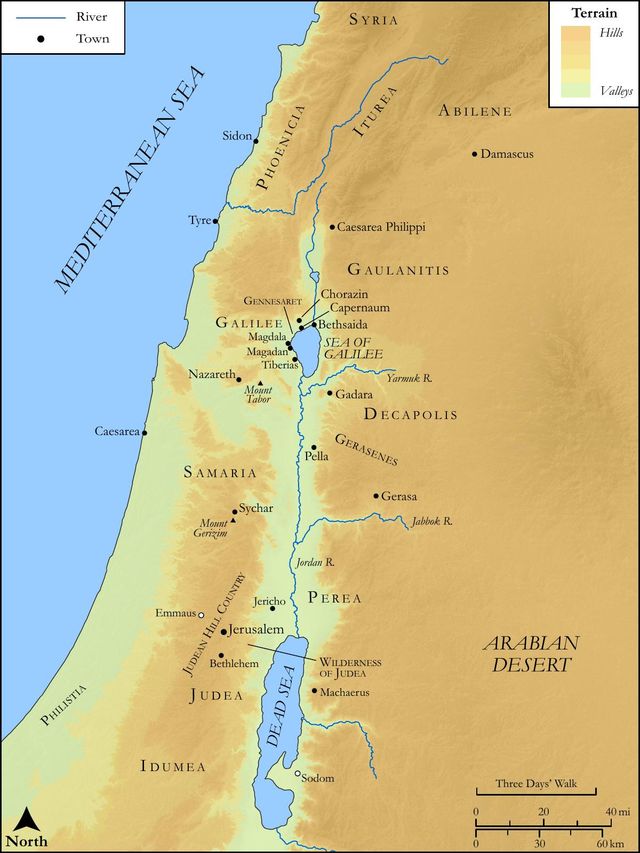
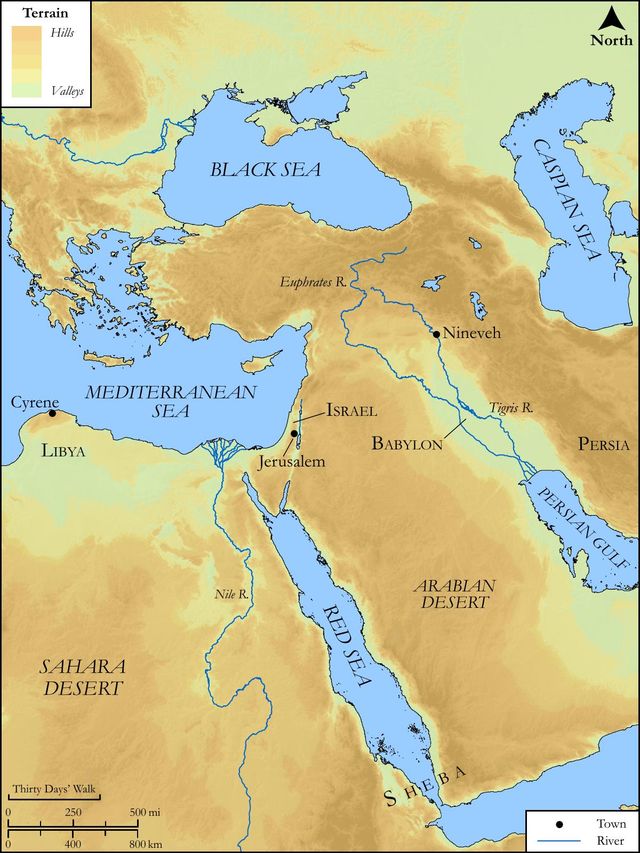
See on the biblical-era maps

Study this verse
Public-domain commentary
Matthew Henry
From his Commentary on the Whole Bible. Henry comments on passages, not single verses — this entry covers Matthew 5:13–16. His four-level outline is real structure in the source text, so it is rendered as structure.
Christ had lately called his disciples, and told them that they should be fishers of men; here he tells them further what he designed them to be - the salt of the earth, and lights of the world, that they might be indeed what it was expected they should be.
I.Ye are the salt of the earth.
This would encourage and support them under their sufferings, that, though they should be treated with contempt, yet they should really be blessings to the world, and the more so for their suffering thus. The prophets, who went before them, were the salt of the land of Canaan; but the apostles were the salt of the whole earth, for they must go into all the world to preach the gospel. It was a discouragement to them that they were so few and so weak. What could they do in so large a province as the whole earth? Nothing, if they were to work by force of arms and dint of sword; but, being to work silent as salt, one handful of that salt would diffuse its savour far and wide; would go a great way, and work insensibly and irresistibly as leaven, Mat 13:33. The doctrine of the gospel is as salt; it is penetrating, quick, and powerful (Heb 4:12); it reaches the heart Act 2:37. It is cleansing, it is relishing, and preserves from putrefaction. We read of the savour of the knowledge of Christ (Co2 2:14); for all other learning is insipid without that. An everlasting covenant is called a covenant of salt (Num 18:19); and the gospel is an everlasting gospel. Salt was required in all the sacrifices (Lev 2:13), in Ezekiel's mystical temple, Eze 43:24. Now Christ's disciples having themselves learned the doctrine of the gospel, and being employed to teach it to others, were as salt. Note, Christians, and especially ministers, are the salt of the earth.
1.If they be as they should be they are as good salt, white, and small, and broken into many grains, but very useful and necessary. Pliny says, Sine sale, vita humana non potest degere - Without salt human life cannot be sustained. See in this,
(1.)What they are to be in themselves - seasoned with the gospel, with the salt of grace; thoughts and affections, words and actions, all seasoned with grace, Col 4:6. Have salt in yourselves, else you cannot diffuse it among others, Mar 9:50.
(2.)What they are to be to others; they must not only be good but do good, must insinuate themselves into the minds of the people, not to serve any secular interest of their own, but that they might transform them into the taste and relish of the gospel.
(3.)What great blessings they are to the world. Mankind, lying in ignorance and wickedness, were a vast heap of unsavoury stuff, ready to putrefy; but Christ sent forth his disciples, by their lives and doctrines, to season it with knowledge and grace, and so to render it acceptable to God, to the angels, and to all that relish divine things.
(4.)How they must expect to be disposed of. They must not be laid on a heap, must not continue always together at Jerusalem, but must be scattered as salt upon the meat, here a grain and there a grain; as the Levites were dispersed in Israel, that, wherever they live, they may communicate their savour. Some have observed, that whereas it is foolishly called an ill omen to have the salt fall towards us, it is really an ill omen to have the salt fall from us.
2.If they be not, they are as salt that has lost its savour. If you, who should season others, are yourselves unsavoury, void of spiritual life, relish, and vigour; if a Christian be so, especially if a minister be so, his condition is very sad; for,
(1.)He is irrecoverable: Wherewith shall it be salted? Salt is a remedy for unsavoury meat, but there is no remedy for unsavoury salt. Christianity will give a man a relish; but if a man can take up and continue the profession of it, and yet remain flat and foolish, and graceless and insipid, no other doctrine, no other means, can be applied, to make him savoury. If Christianity do not do it, nothing will.
(2.)He is unprofitable: It is thenceforth good for nothing; what use can it be put to, in which it will not do more hurt than good? As a man without reason, so is a Christian without grace. A wicked man is the worst of creatures; a wicked Christian is the worst of men; and a wicked minister is the worst of Christians.
(3.)He is doomed to ruin and rejection; He shall be cast out - expelled the church and the communion of the faithful, to which he is a blot and a burden; and he shall be trodden under foot of men. Let God be glorified in the shame and rejection of those by whom he has been reproached, and who have made themselves fit for nothing but to be trampled upon.
II.Ye are the light of the world, Mat 5:14.
This also bespeaks them useful, as the former (Sole et sale nihil utilius - Nothing more useful than the sun and salt), but more glorious. All Christians are light in the Lord (Eph 5:8), and must shine as lights (Phi 2:15), but ministers in a special manner. Christ call himself the Light of the world (Joh 8:12), and they are workers together with him, and have some of his honour put upon them. Truly the light is sweet, it is welcome; the light of the first day of the world was so, when it shone out of darkness; so is the morning light of every day; so is the gospel, and those that spread it, to all sensible people. The world sat in darkness, Christ raised up his disciples to shine in it; and, that they may do so, from him they borrow and derive their light.
This similitude is here explained in two things:
1.As the lights of the world, they are illustrious and conspicuous, and have many eyes upon them. A city that is set on a hill cannot be hid. The disciples of Christ, especially those who are forward and zealous in his service, become remarkable, and are taken notice of as beacons. They are for signs (Isa 7:18), men wondered at (Zac 3:8); all their neighbours have any eye upon them. Some admire them, commend them, rejoice in them, and study to imitate them; others envy them, hate them, censure them, and study to blast them. They are concerned therefore to walk circumspectly, because of their observers; they are as spectacles to the world, and must take heed of every thing that looks ill, because they are so much looked at. The disciples of Christ were obscure men before he called them, but the character he put upon them dignified them, and as preachers of the gospel they made a figure; and though they were reproached for it by some, they were respected for it by others, advanced to thrones, and made judges (Luk 22:30); for Christ will honour those that honour him.
2.As the lights of the world, they are intended to illuminate and give light to others (Mat 5:15), and therefore,
(1.)They shall be set up as lights. Christ has lighted these candles, they shall not be put under a bushel, not confined always, as they are now, to the cities of Galilee, or the lost sheep of the house of Israel, but they shall be sent into all the world. The churches are the candlesticks, the golden candlesticks, in which these lights are placed, that they light may be diffused; and the gospel is so strong a light, and carries with it so much of its own evidence, that, like a city on a hill, it cannot be hid, it cannot but appear to be from God, to all those who do not wilfully shut their eyes against it. It will give light to all that are in the house, to all that will draw near to it, and come where it is. Those to whom it does not give light, must thank themselves; they will not be in the house with it; will not make a diligent and impartial enquiry into it, but are prejudiced against it.
(2.)They must shine as lights,
[1.]By their good preaching. The knowledge they have, they must communicate for the good of others; not put it under a bushel, but spread it. The talent must not be buried in a napkin, but traded with. The disciples of Christ must not muffle themselves up in privacy and obscurity, under pretence of contemplation, modesty, or self-preservation, but, as they have received the gift, must minister the same, Luk 12:3.
[2.]By their good living. They must be burning and shining lights (Joh 5:35); must evidence, in their whole conversation, that they are indeed followers of Christ, Jam 3:13. They must be to others for instruction, direction, quickening, and comfort, Job 29:11.
See here, First, How our light must shine - by doing such good works as men may see, and may approve of; such works as are of good report among them that are without, and as will therefore give them cause to think well of Christianity. We must do good works that may be seen to the edification of others, but not that they may be seen to our own ostentation; we are bid to pray in secret, and what lies between God and our souls, must be kept to ourselves; but that which is of itself open and obvious to the sight of men, we must study to make congruous to our profession, and praiseworthy, Phi 4:8. Those about us must not only hear our good words, but see our good works; that they may be convinced that religion is more than a bare name, and that we do not only make a profession of it, but abide under the power of it.
Secondly, For what end our light must shine - "That those who see your good works may be brought, not to glorify you (which was the things the Pharisees aimed at, and it spoiled all their performances), but to glorify your Father which is in heaven." Note, The glory of God is the great thing we must aim at in every thing we do in religion, Pe1 4:11. In this centre the lines of all our actions must meet. We must not only endeavor to glorify God ourselves, but we must do all we can to bring others to glorify him. The sight of our good works will do this, by furnishing them, 1. With matter for praise. "Let them see your good works, that they may see the power of God's grace in you, and may thank him for it, and give him the glory of it, who has given such power unto men." 2. With motives of piety. "Let them see your good works, that they may be convinced of the truth and excellency of the Christian religion, may be provoked by a holy emulation to imitate your good works, and so may glorify God." Note, The holy, regular, and exemplary conversation of the saints, may do much towards the conversion of sinners; those who are unacquainted with religion, may hereby be brought to know what it is. Examples teach. And those who are prejudiced against it, may hereby by brought in love with it, and thus there is a winning virtue in a godly conversation.
Historical interpretation
Eleven Centuries of Reception
17 surviving comments on this verse. Each one is dated, so this reads as a timeline rather than a list.
Select a marker to jump to its quote. Markers stagger vertically where authors wrote within a few decades of each other.
For what purpose, except that malice may have no access at all to you, or that you may be an example and testimony to the evil? Else, what is (that): "Let your works shine? " Why, moreover, does the Lord call us the light of the world; why has He compared us to a city built upon a mountain; if we do not shine in (the midst of) darkness, and stand eminent amid them who are sunk down? If you hide your lamp beneath a bushel, you must necessarily be left quite in darkness, and be run against by many.
You are a light of the world, and a tree ever green.
He calls the flesh he has assumed a city. For as a city consists in a variety and multitude of inhabitants, so by virtue of his assumed body he contains in himself a certain union of the entire human race. Thus he becomes a city by our union in him, and we through union with his flesh are the community of the city. Therefore he cannot be hidden. Situated on God’s lofty height, he is held up to all in admiration of his good works as deserving of contemplation and understanding.But a lamp is not to be lit and hidden under a bushel. For what benefit is derived from keeping light enclosed? Thus the lamp of Christ must not be hidden under a bushel.… Hung on the wood of the cross, it sheds everlasting light on all those who dwell in the church.
It is the nature of a light to emit its rays whithersoever it is carried about, and when brought into a house to dispel the darkness of that house. Thus the world, placed beyond the pale of the knowledge of God, was held in the darkness of ignorance, till the light of knowledge was brought to it by the Apostles, and thenceforward the knowledge of God shone bright, and from their small bodies, whithersoever they went about, light is ministered to the darkness.
Or, the city signifies the flesh which He had taken on Him; because that in Him by this assumption of human nature, there was as it were a collection of the human race, and we by partaking in His flesh become inhabitants of that city. He cannot therefore be hid, because being set in the height of God's power, He is offered to be contemplated of all men in admiration of his works.
Or, the Lord likened the Synagogue to a corn-measure, which only receiving within itself such fruit as was raised, contained a certain measure of limited obedience.
Or, the lamp, i. e. Christ Himself, is set on its stand when He was suspended on the Cross in His passion, to give light for ever to those that dwell in the Church; to give light, He says, to all that are in the house.
He instructs the Apostles to shine with such a light, that in the admiration of their work God may be praised, Let your light so shine before men, that they may see your good works.
He means not that we should seek glory of men, but that though we conceal it, our work may shine forth in honour of God to those among whom we live.
(non occ.) And therefore let none shut up his faith within the measure of the Law, but have recourse to the Church in which the grace of the sevenfold Spirit shines forth.
The Lord has already called his disciples the “salt of the earth” because they seasoned with divine wisdom the hearts of the human race which had been made tasteless by the devil. Now he also calls them the “light of the world.” For, illumined by his very own self who is the true and eternal light, they too become light within the darkness. For since he himself is the sun of righteousness, he rightly also calls his disciples “light of the world.” Through them, as if through shining rays, he poured the light of his knowledge on the entire world. For by showing the light of truth, the Lord’s disciples made the darkness of error flee from people’s hearts.
After this He leads on to another, a higher image. Ye are the light of the world. Of the world again; not of one nation, nor of twenty states, but of the whole inhabited earth. And a light to the mind, far better than this sunbeam: like as they were also a spiritual salt. And before they are salt, and now light: to teach thee how great is the gain of these strict precepts, and the profit of that grave discipline: how it binds, and permits not to become dissolute; and causes clear sight, leading men on to virtue.
A city that is set on a hill cannot be hid, neither do men light a candle, and put it under the bushel. Again, by these words He trains them to strictness of life, teaching them to be earnest in their endeavors, as set before the eyes of all men, and contending in the midst of the amphitheatre of the world. For, look not to this, He saith, that we are now sitting here, that we are in a small portion of one corner. For ye shall be as conspicuous to all as a city set on the ridge of a hill, as a candle in a house on the candlestick, giving light.
Where now are they who persevere in disbelieving the power of Christ? Let them hear these things, and let them adore His might, amazed at the power of the prophecy. For consider how great things he promised to them, who were not known even in their own country: that earth and sea should know them, and that they should by their fame reach to the limits of the inhabited world; or rather, not by their fame, but by the working of the good they wrought. For it was not fame that bearing them everywhere made them conspicuous, but also the actual demonstration by their works. Since, as though they had wings, more vehemently than the sunbeam did they overrun the whole earth, sowing the light of godliness.
But here He seems to me to be also training them to boldness of speech. For to say, A city set on a hill cannot be hid, is to speak as declaring His own powers. For as that city can by no means be hidden, so it was impossible that what they preached should sink into silence and obscurity. Thus, since He had spoken of persecutions and calumnies, of plots and wars, for fear they might think that these would have power to stop their mouths; to encourage them, He saith, that so far from being hid, it should over-shine the whole world; and that on this very account they should be illustrious and renowned.
By this then He declares His own power. In what follows, He requires that boldness of speech which was due on their part; thus saying, Neither do men light a candle and put it under the bushel, but on the candlestick, and it giveth light unto all that are in the house.
Mark how great His promise to them, men who were scarce known in their own country that the fame of them should reach to the ends of the earth. The persecutions which He had foretold, were not able to dim their light, yea they made it but more conspicuous.
Thus showing them that they ought to be careful of their own walk and conversation, seeing they were set in the eyes of all, like a city on a hill, or a lamp on a stand.
Or, in the illustration of the city, He signified His own power, by the lamp He exhorts the Apostles to preach with boldness; as though He said, 'I indeed have lighted the lamp, but that it continue to burn will be your care, not for your own sakes only, but both for others who shall receive its light and for God's glory.'
(Verset 14 et suiv.) You are the light of the world. A city set on a hill cannot be hidden. Nor do people light a lamp and put it under a basket, but on a stand, and it gives light to all in the house. In the same way, let your light shine before others, so that they may see your good works and give glory to your Father who is in heaven. It teaches the confidence in preaching, so that the apostles are not hidden out of fear, and are not like a lamp under a basket, but rather they freely reveal themselves, so that what they have heard in the inner rooms, they may proclaim on the housetops (Matthew 10:27).
He instructs them what should be the boldness of their preaching, that as Apostles they should not be hidden through fear, like lamps under a corn-measure, but should stand forth with all confidence, and what they have heard in the secret chambers, that declare upon the house tops.
You are the light of the world. In the same way as He said above, the salt of the earth, so now He says, the light of the world. For in the former case that earth is not to be understood which we tread with our bodily feet, but the men who dwell upon the earth, or even the sinners, for the preserving of whom and for the extinguishing of whose corruptions the Lord sent the apostolic salt. And here, by the world must be understood not the heavens and the earth, but the men who are in the world or love the world, for the enlightening of whom the apostles were sent. A city that is set on an hill cannot be hid, i.e. [a city] founded upon great and distinguished righteousness, which is also the meaning of the mountain itself on which our Lord is discoursing.
(ubi sup.) Not he that suffers persecution is trodden under foot of men, but he who through fear of persecution falls away. For we can tread only on what is below us; but he is no way below us, who however much he may suffer in the body, yet has his heart fixed in heaven.
(ubi sup.) By the world here we must not understand heaven and earth, but the men who are in the world; or those who love the world for whose enlightenment the Apostles were sent.
(ubi sup.) Or, the mountain is the great righteousness, which is signified by the mountain from which the Lord is now teaching.
(ubi sup.) With what meaning do we suppose the words, to put it under a corn-measure, were said? To express concealment simply, or that the corn-measure has a special signification? The putting the lamp under the corn-measure means the preferring bodily ease and enjoyment to the duty of preaching the Gospel, and hiding the light of good teaching under temporal gratification. The corn-measure aptly denotes the things of the body, whether because our reward shall be measured out to us, as each one shall receive the things done in the body; (2 Cor. 5:10.) or because worldly goods which pertain to the body come and go within a certain measure of time, which is signified by the corn-measure, whereas things eternal and spiritual are contained within no such limit. He places his lamp upon a stand, who subdues his body to the ministry of the word, setting the preaching of the truth highest, and subjecting the body beneath it. For the body itself serves to make doctrine shine more clear, while the voice and other motions of the body in good works serve to recommend it to them that learn.
For it is not absurd if any one will understand the house to be the Church. Or, the house may be the world itself, according to what He said above, Ye are the light of the world.
(Serm. in Mont. i. 7.) Had He only said, That they may see your good works, He would have seemed to have set up as an end to be sought the praises of men, which the hypocrites desire; but by adding, and glorify your Father, he teaches that we should not seek as an end to please men with our good works, but referring all to the glory of God, therefore seek to please men, that in that God may be glorified.
But to live well must go before to teach well; hence after He had called the Apostles the salt, He goes on to call them the light of the world. Or, for that salt preserves a thing in its present state that it should not change for the worse, but that light brings it into a better state by enlightening it; therefore the Apostles were first called salt with respect to the Jews and that Christian body which had the knowledge of God, and which they keep in that knowledge; and now light with respect to the Gentiles whom they bring to the light of that knowledge.
This city is the Church of which it is said, Glorious things are spoken of thee, thou city of God. (Ps. 87:3.) Its citizens are all the faithful, of whom the Apostle speaks, Ye are fellow-citizens of the saints. (Eph. 2:19.) It is built upon Christ the hill, of whom Daniel thus, A stone hewed without hands (Dan. 2:34.) became a great mountain.
A city set on a hill cannot be hidden though it would; the mountain which bears makes it to be seen of all men; so the Apostles and Priests who are founded on Christ cannot be hidden even though they would, because Christ makes them manifest.
How Christ manifests His saints, suffering them not to be hid, He shows by another comparison, adding, Neither do men light a lamp to put it under a corn-measure, but on a stand.
The lamp is the Divine word, of which it is said, Thy word is a lamp unto my feet. (Ps. 119:105.) They who light this lamp are the Father, the Son, and the Holy Spirit.
Or, men of the world may be figured in the corn-measure as these are empty above, but full beneath, so worldly men are foolish in spiritual things, but wise in earthly things, and therefore like a corn-measure they keep the word of God hid, whenever for any worldly cause he had not dared to proclaim the word openly, and the truth of the faith. The stand for the lamp is the Church which bears the word of life, and all ecclesiastical persons. (vid. Phil. 2:15.)
That is, teaching with so pure a light, that men may not only hear your words, but see your works, that those whom as lamps ye have enlightened by the word, as salt ye may season by your example. For by those teachers who do as well as teach, God is magnified; for the discipline of the master is seen in the behaviour of the family. And therefore it follows, and they shall glorify your Father which is in heaven.
For as the sun sends forth his beams, so the Lord, the Sun of righteousness, sent forth his Apostles to dispel the night of the human race.
(in loc. quoad sens.) Or, Christ Himself has lighted this lamp, when He filled the earthen vessel of human nature with the fire of His Divinity, which He would not either hide from them that believe, nor put under a bushel that is shut up under the measure of the Law, or confine within the limits of any one oration. The lampstand is the Church, on which He set the lamp, when He affixed to our foreheads the faith of His incarnation.
First He calls them salt and then light. He who reproves what is done in secret is light, "for whatsoever doth make manifest is light" (Eph. 5:13) The apostles did not enlighten one nation only, but the world.
He teaches them to struggle and to be strict in living a virtuous life, for they will be in view of all. Do not imagine, He says, that you will be hidden away in some corner, for you will be most visible. See to it, then, that you live blamelessly, lest you become a stumbling block for others.
As the doctors by their good conversation are the salt with which the people is salted; so by their word of doctrine they are the light by which the ignorant are enlightened.
Continue studying Matthew 5:14 across the web’s major study libraries — every link below opens this exact verse, chapter, or book on the destination site.
Read & Compare
 BibleGatewayThis verse in more than 200 translations and 70 languages.
 Bible.comThe YouVersion reader — hundreds of translations, reading plans, and highlights.
 ESV.orgCrossway's official English Standard Version reader.
 NET BibleThe NET translation with 60,000+ translators' notes on every rendering decision.
 STEP BibleTyndale House's free study tool — original text, vocabulary, and scholarly resources.
 BibliaLogos Bible Software's free web reader.
 USCCBThe New American Bible (Revised Edition) with the U.S. bishops' study notes.
Commentaries
 BibleHub CommentariesDozens of classic commentaries on this verse, gathered on one page.
 StudyLightMore than 100 commentary sets — the largest collection on the web.
 BibleRefPlain-English commentary on what this verse means, verse by verse.
 Enduring WordDavid Guzik's free commentary on this chapter, widely used by Bible teachers.
 Bible Study ToolsVerse commentary alongside Greek and Hebrew study aids.
Original Language & Research
- BibleHub InterlinearThe verse word by word — original language, transliteration, and English.
- BibleHub LexiconEvery word's original-language definition and Strong's entry.
 Blue Letter BibleDeep-study tools — Strong's numbers, concordance, and word studies.
 CNTR CollationThe earliest Greek manuscripts of this verse, collated letter by letter.
Sermons, Hymns & Audio


TrulyRandomVerse is not affiliated with these sites and doesn’t control their content. They’re linked because they’re genuinely useful.
Summary
In Matthew 5:14, Jesus declares to His disciples that they are "the light of the world," a profound statement of identity and purpose that follows the Beatitudes and the metaphor of salt. This declaration establishes believers not merely as individuals who possess light, but as the very embodiment of light in a world shrouded in spiritual darkness. He reinforces this truth with the vivid imagery of "a city that is set on an hill cannot be hid," emphasizing the inherent visibility and inescapable influence of God's people, whose lives are meant to illuminate truth, expose sin, and guide others toward God.
Context
ShowHideLiterary Context
Matthew 5:14 is an integral part of Jesus's foundational discourse, the Sermon on the Mount, delivered to His disciples and a large crowd. It immediately follows the Beatitudes (Matthew 5:3-12), which describe the character and blessedness of those who belong to God's kingdom. Following this, Jesus uses two powerful metaphors to describe the kingdom citizen's role in the world: first, as the salt of the earth, preserving and flavoring; and second, as the light of the world, illuminating and guiding. This progression moves from internal blessedness and character to external responsibility and influence, setting the stage for the ethical demands and kingdom principles that follow in the rest of the sermon. The declaration of identity in Matthew 5:14 is thus a direct consequence of the character described in the Beatitudes.
Historical & Cultural Context
The setting for the Sermon on the Mount was likely a hillside overlooking the Sea of Galilee, a region dotted with towns and villages. The imagery of "a city that is set on an hill" would have been immediately relatable and profoundly resonant for Jesus's audience. Many ancient towns in Judea and Galilee, such as Safed or Jerusalem, were strategically built on elevated positions for defense, making them prominent landmarks visible for miles around, especially at night when their lights would shine brightly. This common architectural and geographical reality underscored the inescapable visibility of such a city. Furthermore, in Jewish thought, light was often associated with divine revelation, truth, and God's presence (e.g., Psalm 27:1), while darkness represented ignorance, sin, and evil. Jesus's declaration thus tapped into deeply ingrained cultural and religious understandings, elevating His followers to a position of profound spiritual significance.
Key Themes
ShowHideThis verse contributes significantly to several key themes within Matthew and the broader biblical narrative. Firstly, it establishes the identity and purpose of believers as active agents of God's kingdom, not passive recipients. They are not merely to have light but to be light, reflecting the divine light of Christ into a fallen world, a theme echoed in John 8:12. Secondly, it highlights the inherent visibility and inescapable influence of a life lived for God. Just as a city on a hill cannot be hidden, the transformed lives of believers are meant to be seen, drawing attention to God rather than themselves, as further explained in Matthew 5:16. Thirdly, it underscores the theme of witness and evangelism, implying that the purpose of this visibility is to illuminate truth, expose darkness, and guide others to God, fulfilling the Great Commission found later in Matthew 28:19-20.
Exposition and Analysis
ShowHideKey Word Analysis
ShowHideThis term (G5457) refers to luminousness in its widest application—natural or artificial, abstract or concrete, literal or figurative. In biblical contexts, phōs frequently signifies truth, revelation, purity, and the very nature of God Himself. When Jesus declares His disciples to be "the light," He is not merely suggesting they possess some illumination but that their very being, transformed by Him, embodies the truth and moral purity that dispels spiritual darkness.
This word (G2889) denotes an orderly arrangement or decoration, but by implication, it refers to the world in a wide or narrow sense, including its inhabitants, often viewed as fallen and alienated from God. In Matthew 5:14, kósmos emphasizes the global scope of the disciples' mission—their light is for all humanity, not just a select group or a specific locality.
This term (G4172) refers to a town, properly with walls, of greater or lesser size. In this context, it evokes an image of a prominent, established community, often a center of life and influence. The "city on a hill" metaphor underscores the collective identity and public nature of the disciples' calling, implying that their corporate life and witness are meant to be a visible beacon.
Verse Breakdown
ShowHide"Ye are the light of the world."
This is a powerful, declarative statement of identity. Jesus does not command His disciples to become light, but affirms what they already are by virtue of their relationship with Him. Just as Jesus Himself is the ultimate Light (John 8:12), His followers, indwelt by His Spirit, are called to reflect that divine light. This "light" encompasses truth, righteousness, holiness, and the very presence of God, intended to penetrate and transform the spiritual darkness of the world.
"A city that is set on an hill cannot be hid."
This clause serves as an illustrative simile, reinforcing the truth of the preceding declaration. It emphasizes the inherent, unavoidable visibility of those who are the "light of the world." A city built on an elevated position is naturally conspicuous; its presence and its lights (especially at night) are impossible to conceal. Similarly, the lives of believers, marked by the character of the Beatitudes, are meant to be distinct and observable, making their faith and its transformative power evident to all. This implies that attempts to hide one's faith or live in obscurity are contrary to God's design for His people.
Literary Devices
ShowHideMatthew 5:14 employs several potent literary devices to convey its profound message. The primary device is Metaphor, where Jesus directly states, "Ye are the light of the world." This is not a comparison using "like" or "as," but a direct identification, asserting that believers embody the essence of light. This metaphor immediately establishes their intrinsic nature and purpose. Following this, Jesus uses a Simile (or an extended metaphor) with the phrase, "A city that is set on an hill cannot be hid." This comparison illustrates the quality of visibility inherent in being the "light of the world," making the abstract concept of spiritual light tangible and relatable. The phrase "cannot be hid" also contains an element of Hyperbole, emphasizing the absolute impossibility of concealing something so naturally prominent, thereby underscoring the inescapable public nature of the Christian witness. These devices combine to create a vivid and memorable image that powerfully communicates the disciples' identity, responsibility, and inevitable impact.
Theological and Thematic Connections
ShowHideMatthew 5:14 profoundly shapes our understanding of Christian identity and mission. It declares that believers are not merely individuals who possess light, but are, by divine appointment, the very embodiment of God's truth, righteousness, and grace in a world lost in spiritual darkness. This light is not self-generated but is a reflection of Christ, the true Light of the World. Our purpose, therefore, is to illuminate, expose, and guide, making the invisible God visible through our lives. This calling demands a public, unhidden faith that actively engages with the world, demonstrating the transformative power of the Gospel through character, conduct, and communication. Our visibility is not for self-glory but for the glory of God, drawing others to Him.
Reflection and Application
ShowHideMatthew 5:14 is a direct and empowering call to intentional living for every follower of Christ. It challenges us to embrace our God-given identity as "light" and to live in a way that naturally dispels darkness, both spiritual and moral, in our spheres of influence. This means our lives, marked by integrity, compassion, and truth, should be distinct and discernible in a world often characterized by confusion and compromise. We are called to be moral compasses, upholding biblical standards not through self-righteousness, but through humble obedience that points to God's goodness. Our presence in our families, workplaces, communities, and online spaces should bring clarity, hope, and truth, drawing others to the source of all light. Recognizing that our lives are inherently visible as Christians should motivate us to live consistently with our calling, understanding that our conduct can either attract people to the Gospel or repel them. It's a reminder that our faith is not meant to be private or confined, but a public testimony to the transforming power of Jesus Christ.
Questions for Reflection
ShowHideFAQ
ShowHideWhat does it mean for believers to be "the light of the world" if Jesus is also called "the Light of the World"?
ShowHideJesus is uniquely "the Light of the World" (John 8:12) in an ultimate, inherent sense; He is the source of all light, truth, and revelation. Believers, on the other hand, are "the light of the world" in a derivative sense. We are illuminated by Him and called to reflect His light. Just as the moon has no light of its own but reflects the sun's light, so too Christians reflect the glory and truth of Christ. Our light is not our own, but His working through us. This means our purpose is to point to Him, to make His presence and truth known in a world that desperately needs it, as John 1:4-5 suggests, the light shines in the darkness and the darkness has not overcome it.
Christ-Centered Fulfillment
ShowHideMatthew 5:14 finds its ultimate fulfillment in Jesus Christ, who is the quintessential "Light of the World" (John 8:12). He is the true "city set on a hill," whose perfect life, sacrificial death, and glorious resurrection fully revealed God's truth and glory to humanity. His light exposed the darkness of sin and offered the path to salvation (John 3:19-21). Believers become "the light of the world" only by being united with Him, drawing their very essence and purpose from His illuminating presence. As those who have been "called out of darkness into his marvelous light" (1 Peter 2:9), we are now tasked with reflecting that same light into a world still shrouded in spiritual night. Our ability to shine is not an inherent quality but a gracious impartation from Christ, enabling us to continue His mission of revealing God's kingdom and drawing all people to Himself (Matthew 5:16). Thus, our identity as light is profoundly Christ-centered, a testament to His transformative power and ongoing work through His body, the Church.