


Exodus 37:11
Bible text: King James Version (1769 Blayney text) · Public domain
Bible text: Berean Standard Bible · Public domain
Bible text: American Standard Version (1901) · Public domain
Bible text: World English Bible, Messianic edition · Public domain
Bible text: Geneva Bible (1599) · Public domain
Bible text: Young's Literal Translation · Public domain
- וַיְצַףvay·Tzafand he overlaidH6823Conj-w ¦ V-Piel-ConsecImperf-3msVerb Piel Consecutive Imperfect 3rd Singular Masculineוַandיְצַףhe overlaid
- אֹתוֹ'o·To<obj.> itH853DirObjM ¦ 3msParticle Object Indicatorאֹת<obj.>וֹit
- זָהָבza·HavgoldH2091N-msNoun Singular Masculine Absolute
- טָהוֹרta·HorpureH2889Adj-msAdjective Singular Masculine Absolute
- וַיַּעַשׂvai·Ya·'asand he madeH6213Conj-w ¦ V-Qal-ConsecImperf-3msVerb Qal Consecutive Imperfect 3rd Singular Masculineוַandיַּעַשׂhe made
- לוֹlofor <the> itPrep-l ¦ 3msSuffix Personal 3rd Singular Masculineלfor <the>וֹit
- זֵרzera molding ofH2213N-mscNoun Singular Masculine Construct
- זָהָבza·HavgoldH2091N-msNoun Singular Masculine Absolute
- סָבִיבsa·Vivall aroundH5439N-csNoun Singular common gender Absolute
English is a literal word-by-word gloss of the Hebrew, not the KJV's wording. Why?
This is the original text the KJV's translators worked from — each Hebrew word with its own literal English meaning in this verse, prepared by scholars at Tyndale House, Cambridge. The KJV translates whole sentences, not word by word, so its wording differs: one Hebrew word can become several English words, and the KJV may choose “the LORD” where the gloss reads “Yahweh”. Both are faithful — they answer different questions. For the KJV's own rendering, switch to the KJV text.
Details
See on the biblical-era maps

Study this verse
Public-domain commentary
Matthew Henry
From his Commentary on the Whole Bible. Henry comments on passages, not single verses — this entry covers Exodus 37:10–24.
Here is, 1. The making of the table on which the show-bread was to be continually placed. God is a good householder, that always keeps a plentiful table. Is the world his tabernacle? His providence in it spreads a table for all the creatures: he provides food for all flesh. Is the church his tabernacle? His grace in it spreads a table for all believers, furnished with the bread of life. But observe how much the dispensation of the gospel exceeds that of the law. Though here was a table furnished, it was only with show-bread, bread to be looked upon, not to be fed upon, while it was on this table, and afterwards only by the priests; but to the table which Christ has spread in the new covenant all real Christians are invited guests; and to them it is said, Eat, O friends, come eat of my bread. What the law gave but a sight of at a distance, the gospel gives the enjoyment of, and a hearty welcome to. 2. The making of the candlestick, which was not of wood overlaid with gold, but all beaten work of pure gold only, Exo 37:17, Exo 37:22. This signified that light of divine revelation with which God's church upon earth (which is his tabernacle among men) has always been enlightened, being always supplied with fresh oil from Christ the good Olive, Zac 4:2, Zac 4:3. God's manifestations of himself in this world are but candle-light compared with the daylight of the future state. The Bible is a golden candlestick; it is of pure gold, Psa 19:10. From it light is diffused to every part of God's tabernacle, that by it his spiritual priests may see to minister unto the Lord, and to do the service of his sanctuary. This candlestick has not only its bowls for necessary use, but its knops and flowers for ornament; there are many things which God saw fit to beautify his word with which we can no more give a reason for than for these knops and flowers, and yet we are sure that they were added for a good purpose. Let us bless God for this candlestick, have an eye to it continually, and dread the removal of it out of its place.
Continue studying Exodus 37:11 across the web’s major study libraries — every link below opens this exact verse, chapter, or book on the destination site.
Read & Compare
 BibleGatewayThis verse in more than 200 translations and 70 languages.
 Bible.comThe YouVersion reader — hundreds of translations, reading plans, and highlights.
 ESV.orgCrossway's official English Standard Version reader.
 NET BibleThe NET translation with 60,000+ translators' notes on every rendering decision.
 STEP BibleTyndale House's free study tool — original text, vocabulary, and scholarly resources.
 BibliaLogos Bible Software's free web reader.
 USCCBThe New American Bible (Revised Edition) with the U.S. bishops' study notes.
Commentaries
 BibleHub CommentariesDozens of classic commentaries on this verse, gathered on one page.
 StudyLightMore than 100 commentary sets — the largest collection on the web.
 BibleRefPlain-English commentary on what this verse means, verse by verse.
 Enduring WordDavid Guzik's free commentary on this chapter, widely used by Bible teachers.
 Bible Study ToolsVerse commentary alongside Greek and Hebrew study aids.
Original Language & Research
- BibleHub InterlinearThe verse word by word — original language, transliteration, and English.
- BibleHub LexiconEvery word's original-language definition and Strong's entry.
 Blue Letter BibleDeep-study tools — Strong's numbers, concordance, and word studies.
 SefariaThe Hebrew text with Rashi and centuries of Jewish commentary.
Sermons, Hymns & Audio


TrulyRandomVerse is not affiliated with these sites and doesn’t control their content. They’re linked because they’re genuinely useful.
Summary
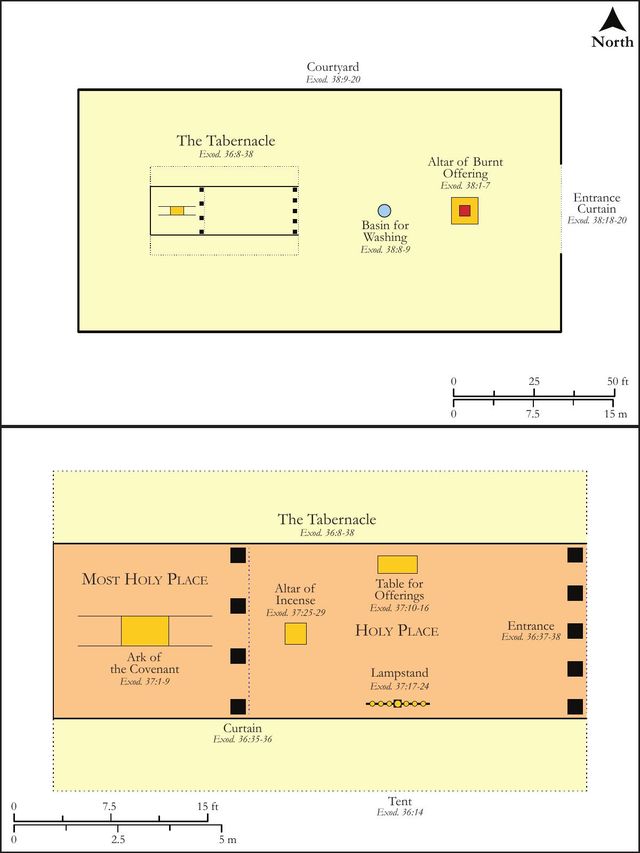
Exodus 37:11 meticulously describes the crafting of the Table of Showbread, specifically its overlaying with pure gold and the addition of a golden crown. This verse is an integral part of the detailed account of the Tabernacle's construction, emphasizing the precise adherence to God's divine blueprint given to Moses. The use of pure gold signifies the absolute holiness, divine glory, and perfection inherent in God's presence and the sacred objects dedicated to His worship, while the crown highlights the dignity, honor, and majesty due to the Lord.
Context
ShowHideLiterary Context
Exodus 37:11 is situated within the latter portion of the book of Exodus, specifically chapters 35-40, which describe the actual construction and erection of the Tabernacle and its furnishings. This section serves as the fulfillment of the detailed instructions given by God to Moses on Mount Sinai in earlier chapters, particularly Exodus 25. The immediate context of verse 11 is the crafting of the Table of Showbread, following the construction of the Ark of the Covenant and the Mercy Seat. The narrative consistently highlights the skilled craftsmanship of Bezaleel and Oholiab, who were divinely empowered for this sacred task, as noted in Exodus 31:3-6. The pervasive repetition of the phrase "as the Lord commanded Moses" throughout these chapters underscores the paramount importance of precise obedience to divine revelation in the establishment of God's dwelling place among His people.
Historical & Cultural Context
Sacred spaces were constructed with the finest materials available, as David prepared gold, silver, brass, and iron in abundance for the house of the LORD, reflecting the majesty and power of the God worshipped there. Gold, being a precious, incorruptible, and lustrous metal, was universally associated with divinity, royalty, and wealth. The meticulous use of pure gold for the Tabernacle's most sacred elements, such as the Ark of the Covenant, the Table of Showbread, and the Altar of Incense, set Israel's worship apart and emphasized the unique holiness of Yahweh, who condescended to dwell among His people. Unlike the often crude idols of surrounding nations, the God of Israel commanded a dwelling that, though portable, was of unparalleled beauty and purity, symbolizing His transcendent nature and His desire for a holy relationship with His covenant people, as established in Exodus 19. The Tabernacle served as the central point of Israelite worship and the visible sign of God's presence during their wilderness journey.
Key Themes
ShowHideThe meticulous construction of the Table of Showbread in Exodus 37:11 contributes to several overarching themes within Exodus and the Pentateuch. Foremost is the theme of Divine Holiness and Purity, underscored by the command to use "pure gold" for sacred objects, reflecting God's unblemished character and His demand for separation unto Himself. This also highlights the theme of Divine Presence and Dwelling, as the Tabernacle was designed as the earthly abode for Yahweh among His people, a place where His glory would reside, as seen in the cloud covering the Tent of Meeting in Exodus 40:34-38. Furthermore, the detailed instructions and their faithful execution emphasize the critical theme of Meticulous Obedience to Divine Command, demonstrating that God's dwelling place and the worship offered within it must adhere precisely to His revealed will, a principle reiterated throughout the Tabernacle accounts, such as in Exodus 39:32. Finally, the Table of Showbread itself, with its future loaves, points to the theme of God's Faithful Provision and Desire for Fellowship, signifying His ongoing sustenance and intimate relationship with His covenant people.
Exposition and Analysis
ShowHideKey Word Analysis
ShowHideThis verb (צָפָה, tsâphâh') means "to sheet over" or "to cover," especially with metal. It indicates a complete and thorough covering, implying that the acacia wood base of the table was entirely concealed by the gold. This was not merely a decorative veneer but a substantial plating, ensuring that the visible surface of the table was pure gold, signifying its sacredness and the divine standard of perfection required for God's holy presence.
This adjective (טָהֹר, ṭâhôwr') denotes a state of being pure, clean, or unblemished, applicable in physical, chemical, ceremonial, or moral senses. When applied to the gold of the Tabernacle furnishings, it emphasizes the highest quality, free from alloy or impurity. This detail consistently reinforces the theme of divine holiness and absolute purity, indicating that only the unblemished and most precious material was suitable for the dwelling place of a perfect God, reflecting His absolute moral and spiritual perfection.
The term (זֵר, zêr') refers to a chaplet, or more specifically, a border molding or rim. In the context of the Tabernacle furnishings, it denotes a raised ornamental edge. For the Table of Showbread, this "crown" likely served both a practical purpose—perhaps preventing the showbread loaves from falling off—and an aesthetic one, adding to the table's grandeur and dignity. Symbolically, this border signifies the honor, majesty, and regal splendor associated with God's presence and His divine provision.
Verse Breakdown
ShowHide"And he overlaid it with pure gold"
This clause describes the primary material treatment of the Table of Showbread. The "he" refers to Bezaleel, the chief craftsman, empowered by God's Spirit for this sacred task. The act of overlaying the acacia wood with "pure gold" immediately elevates the table from a mere piece of furniture to a sacred object. This choice of material underscores the themes of divine holiness, incorruptibility, and the supreme value placed on the objects dedicated to God's worship. It signifies that everything associated with God's presence must reflect His perfect and unblemished nature.
"and made thereunto a crown of gold round about"
This second clause specifies an additional, significant detail in the table's design. The "crown of gold" was an encircling ornamental border, distinct from a royal headpiece. This feature not only enhanced the table's beauty and dignity but also served a practical purpose, likely containing the loaves of showbread and other utensils. Symbolically, this crown speaks to the majesty and honor of God, for whom only the most magnificent and regal adornments were appropriate, even for an object representing His constant provision and fellowship with His people.
Literary Devices
ShowHideThe verse employs several literary devices to convey its profound meaning. Symbolism is prominent, with "pure gold" serving as a powerful symbol of God's absolute holiness, divine glory, and incorruptible nature. The very material speaks to the sanctity of the Tabernacle and everything within it, emphasizing that God's presence demands the highest standard of purity. The "crown of gold" also functions as Symbolism, representing the majesty, dignity, and honor due to God, transforming a functional object into one of regal splendor. Furthermore, the meticulous detail in the description, characteristic of the Tabernacle accounts, creates Emphasis on the divine precision and the paramount importance of obedience to God's commands. The repetition of "gold" throughout the Tabernacle descriptions creates a pervasive sense of divine presence, value, and the preciousness of God's dwelling among His people.
Theological and Thematic Connections
ShowHideExodus 37:11, in its precise description of the Table of Showbread, powerfully communicates several core theological truths. It underscores God's absolute holiness and His demand for purity and excellence in all that pertains to His worship. The use of "pure gold" signifies that nothing less than the finest and most unblemished is acceptable in His presence, reflecting His own perfect character. This meticulous attention to detail also highlights the importance of divine revelation and human obedience in establishing a proper relationship with God; the Tabernacle was built not according to human ingenuity but divine blueprint. The Table itself, with its eventual loaves, symbolizes God's faithful provision for His people and His desire for ongoing fellowship, emphasizing that His holiness does not preclude His intimate care and sustenance.
Reflection and Application
ShowHideThe meticulous craftsmanship and use of pure gold for the Table of Showbread in Exodus 37:11 serve as a profound reminder for believers today regarding the nature of our worship and service. Just as every detail of the Tabernacle was crafted according to divine specifications to honor a holy God, so too should our lives and offerings be marked by excellence, purity, and intentionality. This verse challenges us to consider whether our service, our talents, and our resources are offered to God with the "pure gold" of our best efforts, free from compromise or half-heartedness. It calls us to a reverence that understands the sacredness of God's presence and a commitment to obedience that values His instructions above our own preferences. Ultimately, it reminds us that true worship is not merely about outward acts, but about an inner posture of holiness and devotion that seeks to honor the glorious God who provides for us and desires intimate fellowship.
Questions for Reflection
ShowHideFAQ
ShowHideWhat was the purpose of the Table of Showbread within the Tabernacle?
ShowHideThe Table of Showbread was one of the three main furnishings in the Holy Place of the Tabernacle. Its primary purpose was to hold twelve loaves of unleavened bread, known as the "bread of the Presence" or "showbread," which were replaced weekly by the priests. These loaves symbolized God's constant provision for the twelve tribes of Israel and His desire for ongoing fellowship with His people. It represented the covenant relationship where God sustained His people, and they, in turn, lived in His presence. You can read more about the instructions for the showbread in Leviticus 24:5-9.
Why was pure gold used for overlaying the Table of Showbread?
ShowHideThe use of "pure gold" for the Table of Showbread, along with other sacred furnishings, was highly symbolic. Gold, being a precious, incorruptible, and lustrous metal, represented divinity, royalty, and purity. Its application to the Tabernacle's elements emphasized the absolute holiness, glory, and perfection of God. It signified that only the finest and most unblemished materials were suitable for the dwelling place of a perfect God, reflecting His transcendent nature and the sanctity of His presence among His people. This theme of purity is also seen in the instructions for the priests' garments in Exodus 28.
What does the "crown of gold" signify on the Table of Showbread?
ShowHideThe "crown of gold" (Hebrew: zêr) on the Table of Showbread was an ornamental border or molding that encircled the table. While not a royal headpiece, it served to enhance the table's beauty, dignity, and sacredness. Symbolically, this crown speaks to the majesty, honor, and royal authority of God. It elevated the Table of Showbread beyond mere utility, marking it as an object of divine splendor and reminding those who served there of the supreme glory of the One for whom the Tabernacle was built. This attention to detail reflects the divine standard of excellence required for all things pertaining to God's worship, as detailed in Exodus 25:24.
Christ-Centered Fulfillment
ShowHideExodus 37:11, describing the pure gold overlay and crown of the Table of Showbread, finds its ultimate and glorious fulfillment in Jesus Christ. The Table, with its bread, symbolized God's constant provision and desire for fellowship. Jesus declared Himself to be the "bread of life," the true and living bread that came down from heaven to give life to the world, infinitely superior to the physical showbread. The "pure gold" of the table, signifying divine holiness and perfection, perfectly foreshadows the sinless, incorruptible nature of Christ, who is "without blemish or spot" and "holy, innocent, unstained, separated from sinners" (Hebrews 7:26). The "crown of gold" on the table, denoting majesty and honor, points to Jesus as the "King of kings and Lord of lords," who is crowned with glory and honor (Hebrews 2:9). Through His perfect sacrifice, Jesus has become our ultimate provision, enabling us to have true and lasting fellowship with God, entering into the very presence of the Holy One, not merely through a golden table, but through the "new and living way" of His flesh and blood, by which we draw near to God with a true heart in full assurance of faith.