


Exodus 40:30
- וַיָּשֶׂםvai·Ya·semand he putH7760Conj-w ¦ V-Qal-ConsecImperf-3msVerb Qal Consecutive Imperfect 3rd Singular Masculineוַandיָּשֶׂםhe put
- אֶת'et<obj.>H853DirObjMParticle Object Indicator
- הַכִּיֹּרha·ki·Yorthe laverH3595Art ¦ N-msNoun Singular Masculine Absoluteהַtheכִּיֹּרlaver
- בֵּיןbeinbetweenH996Adj-mscAdjective Numerical Singular Masculine Construct
- אֹהֶל'O·hel[the] tent ofH168N-mscNoun Singular Masculine Construct
- מוֹעֵדmo·'EdmeetingH4150N-msNoun Singular Masculine Absolute
- וּבֵיןu·Veinand betweenH996Conj-w ¦ Adj-mscAdjective Numerical Singular Masculine Constructוּandבֵיןbetween
- הַמִּזְבֵּחַha·miz·Be·achthe altarH4196Art ¦ N-msNoun Singular Masculine Absoluteהַtheמִּזְבֵּחַaltar
- וַיִּתֵּןvai·yi·Tenand he putH5414Conj-w ¦ V-Qal-ConsecImperf-3msVerb Qal Consecutive Imperfect 3rd Singular Masculineוַandיִּתֵּןhe put
- שָׁמָּהSha·mahthere <towards>H8033Adv ¦ SfxAdverbשָׁמָּthereה<towards>
- מַיִםMa·yimwaterH4325N-mpNoun Plural Masculine Absolute
- לְרָחְצָהle·ra·che·Tzahfor washingH7364Prep-l ¦ V-Qal-InfVerb Qal Infinitive Constructלְforרָחְצָהwashing
English is a literal word-by-word gloss of the Hebrew, not the KJV's wording. Why?
This is the original text the KJV's translators worked from — each Hebrew word with its own literal English meaning in this verse, prepared by scholars at Tyndale House, Cambridge. The KJV translates whole sentences, not word by word, so its wording differs: one Hebrew word can become several English words, and the KJV may choose “the LORD” where the gloss reads “Yahweh”. Both are faithful — they answer different questions. For the KJV's own rendering, switch to the KJV text.
Details
See on the biblical-era map

Study this verse
Public-domain commentary
Matthew Henry
From his Commentary on the Whole Bible. Henry comments on passages, not single verses — this entry covers Exodus 40:16–33.
When the tabernacle and the furniture of it were prepared, they did not put off the rearing of it till they came to Canaan, though they now hoped to be there very shortly; but, in obedience to the will of God, they set it up in the midst of their camp, while they were in the wilderness. Those that are unsettled in the world must not think that this will excuse them in their continued irreligion; as if it were enough to begin to serve God when they begin to be settled in the world. No; a tabernacle for God is a very needful and profitable companion even in a wilderness, especially considering that our carcases may fall in that wilderness, and we may be fixed in another world before we come to fix in this.
The rearing of the tabernacle was a good day's work; the consecrating of it, and of the priests, was attended to some days after. Here we have an account only of that new-year's-day's work. 1. Moses not only did all that God directed him to do, but in the order that God appointed; for God will be sought in the due order. 2. To each particular there is added an express reference to the divine appointment, which Moses governed himself by as carefully and conscientiously as the workmen did; and therefore, as before, so here it is repeated, as the Lord commanded Moses, seven times in less than fourteen verses. Moses himself, as great a man as he was, would not pretend to vary from the institution, neither to add to it nor diminish from it, in the least punctilio. Those that command others must remember that their Master also is in heaven, and they must do as they are commanded. 3. That which was to be veiled be veiled (Exo 40:21), and that which was to be used he used immediately, for the instruction of the priests, that by seeing him do the several offices they might learn to do them the more dexterously. Though Moses was not properly a priest, yet he is numbered among the priests (Psa 99:6), and the Jewish writers call him the priest of the priests; what he did he did by special warrant and direction from God, rather as a prophet, or law-giver, than as a priest. He set the wheels a going, and then left the work in the hands of the appointed ministry. (1.) When he had placed the table, he set the show-bread in order upon it (Exo 40:23); for God will never have his table unfurnished. (2.) As soon as he had fixed the candlestick, he lighted the lamps before the Lord, Exo 40:25. Even that dark dispensation would not admit of unlighted candles. (3.) The golden altar being put in its place, immediately he burnt sweet incense thereon (Exo 40:27); for God's altar must be a smoking altar. (4.) The altar of the burnt-offering was no sooner set up in the court of the tabernacle than he had a burnt-offering, and a meat-offering, ready to offer upon it, Exo 40:29. Some think, though this is mentioned here, it was not done till some time after; but it seems to me that he immediately began the ceremony of its consecration, though it was not completed for seven days. (5.) At the laver likewise, when he had fixed that, Moses himself washed his hands and feet. Thus, in all these instances, he not only showed the priests how to do their duty, but has taught us that God's gifts are intended for use, and not barely for show. Though the altars, and table, and candlestick, were fresh and new, he did not say it was a pity to sully them; no, he handselled them immediately. Talents were given to be occupied, not to be buried.
Continue studying Exodus 40:30 across the web’s major study libraries — every link below opens this exact verse, chapter, or book on the destination site.
Read & Compare
 BibleGatewayThis verse in more than 200 translations and 70 languages.
 Bible.comThe YouVersion reader — hundreds of translations, reading plans, and highlights.
 ESV.orgCrossway's official English Standard Version reader.
 NET BibleThe NET translation with 60,000+ translators' notes on every rendering decision.
 STEP BibleTyndale House's free study tool — original text, vocabulary, and scholarly resources.
 BibliaLogos Bible Software's free web reader.
 USCCBThe New American Bible (Revised Edition) with the U.S. bishops' study notes.
Commentaries
 BibleHub CommentariesDozens of classic commentaries on this verse, gathered on one page.
 StudyLightMore than 100 commentary sets — the largest collection on the web.
 BibleRefPlain-English commentary on what this verse means, verse by verse.
 Enduring WordDavid Guzik's free commentary on this chapter, widely used by Bible teachers.
 Bible Study ToolsVerse commentary alongside Greek and Hebrew study aids.
Original Language & Research
- BibleHub InterlinearThe verse word by word — original language, transliteration, and English.
- BibleHub LexiconEvery word's original-language definition and Strong's entry.
 Blue Letter BibleDeep-study tools — Strong's numbers, concordance, and word studies.
 SefariaThe Hebrew text with Rashi and centuries of Jewish commentary.
Sermons, Hymns & Audio


TrulyRandomVerse is not affiliated with these sites and doesn’t control their content. They’re linked because they’re genuinely useful.
Summary
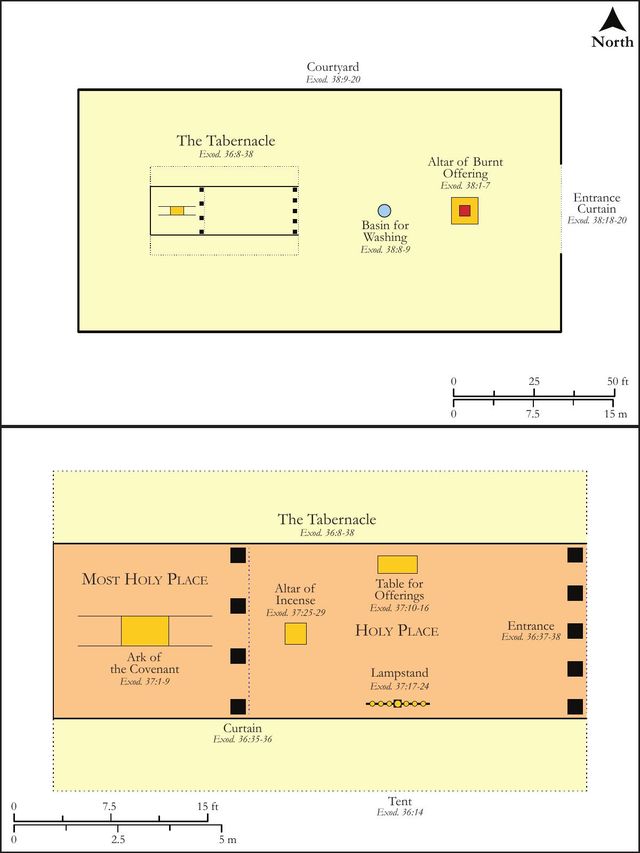
Exodus 40:30 meticulously details the final, divinely commanded placement of the bronze laver within the Tabernacle courtyard. This crucial act, occurring during the Tabernacle's dedication, positioned the laver strategically between the Brazen Altar and the Tent of Meeting. Filled with water, it served as the designated station for priests to ritually wash their hands and feet, an indispensable prerequisite for their sacred ministry, thereby underscoring the absolute necessity of ceremonial cleanness and holiness for anyone approaching the presence of a holy God.
Context
ShowHideLiterary Context
Exodus 40 serves as the glorious culmination of the entire book, marking the meticulous completion and dedication of the Tabernacle, God's portable sanctuary in the wilderness. Having received the detailed divine blueprints on Mount Sinai (beginning in Exodus 25), Moses faithfully executes every command. This chapter meticulously records the assembly of each component, from the Tabernacle structure itself (verses 1-19) to the precise placement of its sacred furnishings (verses 20-30). Verse 30 specifically describes the final outdoor placement of the laver, immediately following the installation of the Brazen Altar (verse 29) and just preceding the awe-inspiring descent of the Lord's glory that fills the Tabernacle (verses 34-38), signifying the complete readiness of the sacred space for divine indwelling and priestly service.
Historical & Cultural Context
The setting for Exodus 40:30 is the wilderness journey of the Israelites, a newly liberated people establishing their covenant relationship with Yahweh. The Tabernacle was the epicenter of their worship and communal life, embodying God's tangible presence among them. In ancient Israelite society, ritual purity was paramount, especially for those involved in sacred service. The priesthood, specifically Aaron and his sons, were consecrated for the unique task of mediating between God and the people. The requirement for washing at the laver was not merely for physical hygiene but was a vital ceremonial act, ensuring their fitness to approach a holy God and perform their duties at the altar or within the Tabernacle. This profound emphasis on ritual cleanness was a stark reminder of God's absolute holiness and the defiling nature of sin, a concept deeply ingrained in the broader Mosaic Law and priestly regulations found throughout the Pentateuch.
Key Themes
ShowHideThis verse contributes significantly to several major theological themes prevalent in Exodus and the Pentateuch. Foremost is the theme of God's Holiness and Inaccessibility to Sin, highlighting that a perfectly holy God cannot tolerate defilement in His presence, necessitating divinely appointed means of purification. Secondly, it underscores the theme of Divine Order and Obedience, as Moses meticulously follows God's precise instructions for the Tabernacle's construction and arrangement, demonstrating that proper worship requires strict adherence to God's commands. Finally, the laver reinforces the theme of Mediation and Priesthood, emphasizing the unique role of the priests as mediators who must themselves be purified before serving, a principle foundational to understanding the sacrificial system and the need for a sinless intercessor, as seen in later biblical revelation concerning the High Priest.
Exposition and Analysis
ShowHideKey Word Analysis
ShowHideThis term properly refers to something round, like a washbowl. In the Tabernacle context, it denotes the large bronze basin specifically designed for the ritual washing of the priests' hands and feet. Its function was not merely utilitarian but profoundly ritualistic, serving as the vessel for the prescribed purifications essential for sacred ministry.
This primitive root means to lave (the whole or a part of a thing), to bathe (self), or wash (self). In the context of the Tabernacle, it consistently signifies a ritual or ceremonial cleansing, rather than ordinary bathing. This act of purification was critical for removing ceremonial defilement, thereby making one ceremonially clean and fit to approach a holy God and perform sacred duties without incurring divine wrath.
Verse Breakdown
ShowHide"And he set the laver between the tent of the congregation and the altar"
This clause describes Moses' precise and divinely directed placement of the laver. "The tent of the congregation" (or Tabernacle proper) housed the Holy Place and Most Holy Place, representing the immediate presence of God. "The altar" refers to the Brazen Altar (or Altar of Burnt Offering), where animal sacrifices were made to atone for sin. This specific positioning ensures that priests must pass by and use the laver after ministering at the altar (signifying atonement) and before entering the Holy Place (signifying access to God's presence), emphasizing the divinely ordained sequence of sacrifice followed by purification.
"and put water there"
The presence of water is fundamental, as it is the indispensable medium for the prescribed ritual washing. This seemingly simple act signifies the complete readiness of the laver for its sacred purpose, making it fully operational for the crucial priestly service. The water itself, while physically cleansing, derived its ritual efficacy from God's command.
"to wash [withal]"
This concluding phrase explicitly states the laver's singular and vital purpose. It was specifically for the priests—Aaron and his sons—to wash their hands and feet before ministering at the Brazen Altar or entering the Tabernacle (as commanded in Exodus 30:19-21). This act was a non-negotiable requirement for ceremonial purity, preventing death due to an irreverent or defiled approach to God's holiness.
Literary Devices
ShowHideThe placement and purpose of the laver in Exodus 40:30 are rich in Symbolism. The laver itself, and particularly the water within it, symbolizes the absolute necessity of purity and cleansing for anyone approaching a holy God. The physical act of washing hands and feet symbolizes the spiritual purification required for divine service and fellowship. The bronze material, often associated with judgment in biblical contexts, subtly hints at the severity of defilement and the dire need for purification to avoid divine wrath. Furthermore, the laver functions as a Type, foreshadowing a greater spiritual reality. Its ritual function points forward to the ultimate and complete cleansing from sin provided not by water, but by the atoning sacrifice of Jesus Christ. This Foreshadowing extends to the New Covenant emphasis on internal purity and the ongoing need for spiritual cleansing in the life of a believer, achieved through faith in Christ and the sanctifying work of the Holy Spirit.
Theological and Thematic Connections
ShowHideThe laver powerfully underscores the foundational biblical theme of divine holiness and the absolute necessity of human purity to approach God. It teaches that access to God's presence and participation in sacred service are predicated on a state of ceremonial, and by extension, moral and spiritual cleanness. This principle is foundational throughout the Old Testament, emphasizing that God, in His perfect holiness, cannot tolerate sin in His immediate presence. The laver serves as a tangible, ever-present reminder that sin defiles and must be addressed—through both atonement and purification—before communion with the Holy One is possible. It highlights the vast chasm between human sinfulness and divine perfection, a gap that requires divinely instituted means of reconciliation and cleansing, pointing to the need for a greater, more complete purification than water could provide.
Reflection and Application
ShowHideWhile the physical laver and its ritual washings are part of the Old Covenant, the spiritual truth it embodies remains eternally relevant for believers today. It calls us to a profound awareness of God's unblemished holiness and our own inherent sinfulness, reminding us that any approach to Him must be marked by reverence and a fervent desire for purity. The laver challenges us to continually seek spiritual cleansing and purification, not through ritualistic acts, but through sincere repentance and unwavering reliance on the finished work of Christ. It reminds us that approaching God, whether in worship, prayer, or service, requires a conscious effort to live a life set apart for Him, free from the defilement of sin. Our daily walk should reflect a deep longing for purity, acknowledging that only through Christ are we truly made clean and acceptable in God's sight, enabling us to serve Him with a clear conscience and a pure heart, continually being sanctified by His Word and Spirit.
Questions for Reflection
ShowHideFAQ
ShowHideWhy was the laver placed between the altar and the tent?
ShowHideThe strategic placement of the laver "between the tent of the congregation and the altar" was crucial for the prescribed order of worship and priestly ministry. Priests first offered sacrifices for sin at the Brazen Altar to address the issue of atonement and reconciliation. After the sacrifice, they then proceeded to the laver to wash their hands and feet, symbolizing purification from any ceremonial defilement before entering the Holy Place of the Tabernacle or ministering further at the altar. This divinely ordained sequence underscored that both atonement (through sacrifice) and purification (through washing) were essential prerequisites for approaching God's holy presence, emphasizing that sin must be dealt with before one can stand clean and minister before the Lord.
What was the significance of the water in the laver?
ShowHideThe water in the laver was not merely for physical hygiene but held profound symbolic and ritualistic significance. It was the medium for ritual purification, essential for the priests to maintain ceremonial cleanness before God. This physical washing with water symbolized the spiritual cleansing required to stand in the presence of a holy God. It highlighted the defiling nature of sin and the absolute necessity of being purified to avoid divine judgment, as outlined in Exodus 30:20-21. The water served as a tangible representation of the need for internal purity, pointing beyond the physical act to a deeper spiritual reality of cleansing from defilement, a concept later fulfilled in Christ.
Christ-Centered Fulfillment
ShowHideThe laver, with its requirement for ritual washing, serves as a powerful type pointing directly to the person and work of Jesus Christ. Just as the Old Covenant priests needed to be cleansed by water before ministering in the Tabernacle, humanity, defiled by sin, needs a far deeper and more complete purification to approach a holy God. This ultimate cleansing is found not in a basin of water, but in the precious blood of the Lamb of God, Jesus Christ, who perfectly atoned for our sins on the cross. His once-for-all sacrifice provides the complete and permanent purification that the laver could only symbolize, removing the defilement of sin and granting us bold access to God's presence. Furthermore, the ongoing cleansing we experience as believers comes through the living water of the Holy Spirit and the washing of the Word, as Christ sanctifies His church "by the washing of water with the word" (Ephesians 5:26). We are now encouraged to "draw near with a true heart in full assurance of faith, having our hearts sprinkled from an evil conscience and our bodies washed with pure water" (Hebrews 10:22), recognizing that Jesus Himself is our access, our atonement, and our continual cleansing before the Father, enabling us to serve Him in truth and Spirit.