


Exodus 40:31
Bible text: King James Version (1769 Blayney text) · Public domain
Bible text: Berean Standard Bible · Public domain
Bible text: American Standard Version (1901) · Public domain
Bible text: World English Bible, Messianic edition · Public domain
Bible text: Geneva Bible (1599) · Public domain
Bible text: Young's Literal Translation · Public domain
- וְרָחֲצוּve·ra·cha·Tzuand they washedH7364Conj-w ¦ V-Qal-ConsecPerf-3cpVerb Qal Consecutive Perfect 3rd Plural common genderוְandרָחֲצוּthey washed
- מִמֶּנּוּmi·Me·nufrom itH4480Prep ¦ 3msPreposition Definiteמִמֶּfromנּוּit
- מֹשֶׁהmo·ShehMosesH4872N-proper-mNoun Proper Masculine
- וְאַהֲרֹןve·'a·ha·Ronand AaronH175Conj-w ¦ N-proper-mNoun Proper MasculineוְandאַהֲרֹןAaron
- וּבָנָיוu·va·Navand his sonsH1121Conj-w ¦ N-mpc ¦ 3msNoun Plural Masculine Constructוּandבָנָיsonsוhis
- אֶת'et<obj.>H853DirObjMParticle Object Indicator
- יְדֵיהֶםye·dei·Hemtheir handsH3027N-cdc ¦ 3mpNoun Dual common gender Constructיְדֵיhandsהֶםtheir
- וְאֶתve·'Etand <obj.>H853Conj-w ¦ DirObjMParticle Object Indicatorוְandאֶת<obj.>
- רַגְלֵיהֶםrag·lei·Hemtheir feetH7272N-fdc ¦ 3mpNoun Dual Feminine Constructרַגְלֵיfeetהֶםtheir
English is a literal word-by-word gloss of the Hebrew, not the KJV's wording. Why?
This is the original text the KJV's translators worked from — each Hebrew word with its own literal English meaning in this verse, prepared by scholars at Tyndale House, Cambridge. The KJV translates whole sentences, not word by word, so its wording differs: one Hebrew word can become several English words, and the KJV may choose “the LORD” where the gloss reads “Yahweh”. Both are faithful — they answer different questions. For the KJV's own rendering, switch to the KJV text.
Details
See on the biblical-era maps

Study this verse
Public-domain commentary
Matthew Henry
From his Commentary on the Whole Bible. Henry comments on passages, not single verses — this entry covers Exodus 40:16–33.
When the tabernacle and the furniture of it were prepared, they did not put off the rearing of it till they came to Canaan, though they now hoped to be there very shortly; but, in obedience to the will of God, they set it up in the midst of their camp, while they were in the wilderness. Those that are unsettled in the world must not think that this will excuse them in their continued irreligion; as if it were enough to begin to serve God when they begin to be settled in the world. No; a tabernacle for God is a very needful and profitable companion even in a wilderness, especially considering that our carcases may fall in that wilderness, and we may be fixed in another world before we come to fix in this.
The rearing of the tabernacle was a good day's work; the consecrating of it, and of the priests, was attended to some days after. Here we have an account only of that new-year's-day's work. 1. Moses not only did all that God directed him to do, but in the order that God appointed; for God will be sought in the due order. 2. To each particular there is added an express reference to the divine appointment, which Moses governed himself by as carefully and conscientiously as the workmen did; and therefore, as before, so here it is repeated, as the Lord commanded Moses, seven times in less than fourteen verses. Moses himself, as great a man as he was, would not pretend to vary from the institution, neither to add to it nor diminish from it, in the least punctilio. Those that command others must remember that their Master also is in heaven, and they must do as they are commanded. 3. That which was to be veiled be veiled (Exo 40:21), and that which was to be used he used immediately, for the instruction of the priests, that by seeing him do the several offices they might learn to do them the more dexterously. Though Moses was not properly a priest, yet he is numbered among the priests (Psa 99:6), and the Jewish writers call him the priest of the priests; what he did he did by special warrant and direction from God, rather as a prophet, or law-giver, than as a priest. He set the wheels a going, and then left the work in the hands of the appointed ministry. (1.) When he had placed the table, he set the show-bread in order upon it (Exo 40:23); for God will never have his table unfurnished. (2.) As soon as he had fixed the candlestick, he lighted the lamps before the Lord, Exo 40:25. Even that dark dispensation would not admit of unlighted candles. (3.) The golden altar being put in its place, immediately he burnt sweet incense thereon (Exo 40:27); for God's altar must be a smoking altar. (4.) The altar of the burnt-offering was no sooner set up in the court of the tabernacle than he had a burnt-offering, and a meat-offering, ready to offer upon it, Exo 40:29. Some think, though this is mentioned here, it was not done till some time after; but it seems to me that he immediately began the ceremony of its consecration, though it was not completed for seven days. (5.) At the laver likewise, when he had fixed that, Moses himself washed his hands and feet. Thus, in all these instances, he not only showed the priests how to do their duty, but has taught us that God's gifts are intended for use, and not barely for show. Though the altars, and table, and candlestick, were fresh and new, he did not say it was a pity to sully them; no, he handselled them immediately. Talents were given to be occupied, not to be buried.
Continue studying Exodus 40:31 across the web’s major study libraries — every link below opens this exact verse, chapter, or book on the destination site.
Read & Compare
 BibleGatewayThis verse in more than 200 translations and 70 languages.
 Bible.comThe YouVersion reader — hundreds of translations, reading plans, and highlights.
 ESV.orgCrossway's official English Standard Version reader.
 NET BibleThe NET translation with 60,000+ translators' notes on every rendering decision.
 STEP BibleTyndale House's free study tool — original text, vocabulary, and scholarly resources.
 BibliaLogos Bible Software's free web reader.
 USCCBThe New American Bible (Revised Edition) with the U.S. bishops' study notes.
Commentaries
 BibleHub CommentariesDozens of classic commentaries on this verse, gathered on one page.
 StudyLightMore than 100 commentary sets — the largest collection on the web.
 BibleRefPlain-English commentary on what this verse means, verse by verse.
 Enduring WordDavid Guzik's free commentary on this chapter, widely used by Bible teachers.
 Bible Study ToolsVerse commentary alongside Greek and Hebrew study aids.
Original Language & Research
- BibleHub InterlinearThe verse word by word — original language, transliteration, and English.
- BibleHub LexiconEvery word's original-language definition and Strong's entry.
 Blue Letter BibleDeep-study tools — Strong's numbers, concordance, and word studies.
 SefariaThe Hebrew text with Rashi and centuries of Jewish commentary.
Sermons, Hymns & Audio


TrulyRandomVerse is not affiliated with these sites and doesn’t control their content. They’re linked because they’re genuinely useful.
Summary
Exodus 40:31 culminates the detailed instructions for the Tabernacle's erection and consecration, highlighting the indispensable act of ritual purification performed by Moses, Aaron, and his sons at the bronze laver. This specific washing of hands and feet was not a mere ceremonial detail but a profound symbolic action, signifying the absolute necessity of purity, reverence, and meticulous obedience for all who would minister in the holy presence of the Lord. It underscored the sacred demarcation between the common and the holy, ensuring that access to God's dwelling place was predicated on divine command and ritual readiness.
Context
ShowHideLiterary Context
This verse serves as a climactic moment within Exodus 40, which details the completion and dedication of the Tabernacle. Following the extensive blueprints provided by God in Exodus 25-31 and the meticulous execution of these plans in Exodus 35-39, chapter 40 describes the final assembly of the sacred dwelling. The preceding verses systematically recount the placement of each Tabernacle furnishing, leading to the dramatic moment when the glory of the Lord fills the completed structure (Exodus 40:34-35). The washing at the laver, explicitly commanded earlier in Exodus 30:17-21, is presented here as the final, critical step before the priests could legitimately commence their ongoing ministry. Its inclusion emphasizes that proper, holy access to God's presence is not merely a privilege but a solemn responsibility, always predicated on divine instruction and purification.
Historical & Cultural Context
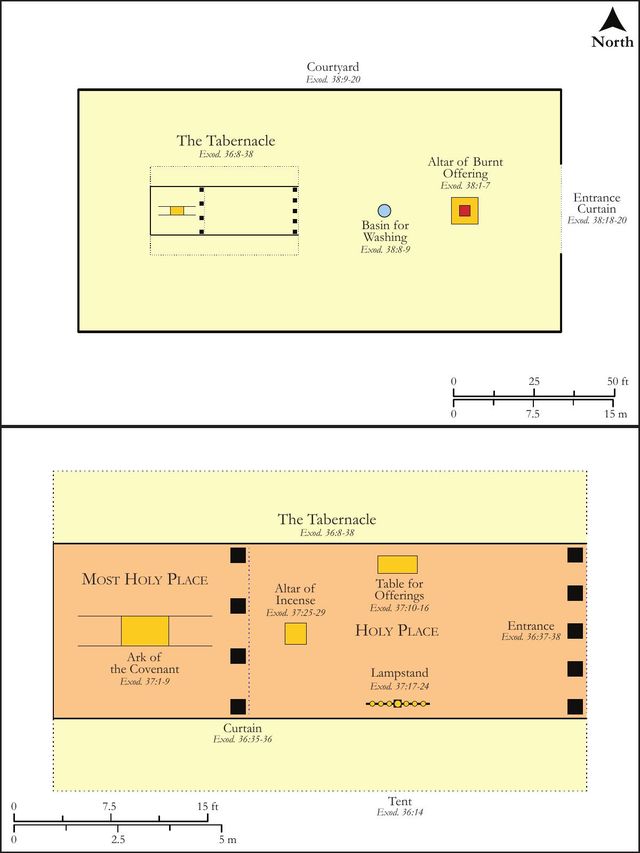
Within Israelite worship, the concept of ritual purity was paramount, reflecting the absolute holiness of Yahweh. The bronze laver, strategically positioned between the tent of meeting and the altar of burnt offering, was the designated station for priests to wash their hands and feet before undertaking any sacred duty. This act was not for physical hygiene in the modern sense but served as a ritual purification, symbolizing a necessary separation from common defilement and a consecration for holy service. The severe consequence of death for failure to wash (Exodus 30:21) underscored the profound holiness of God and the perilous nature of approaching Him presumptuously or in an impure state. This rigorous practice distinguished the Israelite priesthood and their worship from surrounding pagan customs, emphasizing the unique, demanding, yet gracious character of their God, who provided the means for His people to draw near.
Key Themes
ShowHideExodus 40:31 contributes significantly to several overarching themes within the book of Exodus and the Pentateuch. It powerfully reinforces the theme of God's Holiness and Inaccessibility, demonstrating that a holy God demands a holy approach, and that human beings cannot casually enter His presence. This verse also highlights the theme of Divine Order and Obedience, as Moses, Aaron, and his sons meticulously follow God's precise instructions, underscoring that faithful service requires strict adherence to divine commands. Furthermore, it speaks to the theme of Mediation and Priesthood, establishing the role of the priests as those who bridge the gap between a holy God and an unholy people, but only after undergoing the necessary purification. Finally, it foreshadows the broader theme of Atonement and Cleansing, pointing to the perpetual need for purification before one can stand before God, a need that would ultimately find its perfect fulfillment in Christ.
Exposition and Analysis
ShowHideKey Word Analysis
ShowHideThis verb (H7364) means "to lave" or "to bathe," referring to a cleansing, either of the whole body or a part. In this context, it specifically denotes the ritual cleansing of hands and feet. This precise instruction emphasizes the intentionality and specificity of God's commands regarding priestly service. The act of washing was not for general hygiene but for ritual purity, signifying preparation for sacred duties and a demarcation from the common.
The word yâd (H3027) refers to the "open hand," signifying power, means, and direction. In this context, the washing of hands symbolizes the purification of the priests' actions and work performed in their ministry. Their hands would handle sacred objects, perform sacrifices, and offer incense, making their ritual cleanliness paramount for the integrity of their service before God.
The term regel (H7272) refers to a "foot" as used in walking, by implication, a step. The washing of the feet symbolizes the purification of the priests' walk, their path, and their conduct within the holy precincts. It signifies that every step taken and every movement made within the Tabernacle's sacred space must be consecrated and ritually clean, underscoring the holiness of the ground they trod and the seriousness of their presence there.
Verse Breakdown
ShowHide"And Moses and Aaron and his sons"
This clause identifies the specific individuals involved in this foundational act of purification. Moses, as the divinely appointed mediator of the covenant and the overseer of the Tabernacle's construction and consecration, is included, highlighting his pivotal role in establishing the priestly system. Aaron and his sons are the designated priests, the lineage chosen by God to perpetually perform the sacred service. Their collective participation underscores the unified and divinely sanctioned nature of the Tabernacle ministry, with all key figures submitting to the same requirement of purity.
"washed their hands and their feet"
This specifies the exact body parts requiring purification. As detailed in the key word analysis, the hands represent the active work and ministry performed, while the feet represent the walk and conduct within the sacred space. This particular, limited washing was a continuous requirement before every act of service, signifying an ongoing need for purification and readiness to enter God's presence and perform holy duties. It was a reminder that even consecrated individuals required regular cleansing from the defilements of the world before approaching the Holy One.
"thereat"
This concise adverb points to the bronze laver, the specific piece of Tabernacle furniture designed and placed for this very purpose. Its strategic location, between the tent of meeting and the altar of burnt offering, ensured that no priest could enter the Holy Place or offer sacrifice without first performing this essential act of purification. This placement reinforced the absolute necessity of ritual purity as a prerequisite for all sacred duties and access to God's presence.
Literary Devices
ShowHideThe verse employs profound Symbolism, where the physical act of washing hands and feet at the laver transcends mere hygiene to represent the spiritual and ritual purity indispensable for approaching a holy God and engaging in sacred service. The water itself is a pervasive biblical symbol of cleansing, purification, and life. Furthermore, there is an element of Synecdoche, where "hands" and "feet" represent the entirety of the priests' actions, conduct, and their very being in ministry. This emphasizes that every aspect of their service and their walk before God must be consecrated and clean. The meticulous detail in this verse, following chapters of similar instructions for the Tabernacle's construction and operation, also exemplifies the literary device of Repetition for Emphasis, underscoring the critical importance of obedience, order, and purity in God's eyes for the proper functioning of His worship.
Theological and Thematic Connections
ShowHideExodus 40:31 profoundly illustrates the theological principles of God's absolute holiness and the non-negotiable necessity of human purity for divine communion. The laver washing served as a constant, tangible reminder that no one, not even consecrated priests, could casually or presumptuously approach God's presence or perform sacred duties without first acknowledging their inherent impurity and undergoing the divinely prescribed cleansing. This act underscored the meticulous obedience required by God for worship and service, emphasizing that divine instructions are not arbitrary but are essential for maintaining a right relationship with the Holy One. It also served to distinguish the sacred realm of the Tabernacle from the common world, reinforcing the reverence due to God's dwelling place and the seriousness of ministry, establishing a pattern for approaching the divine that would resonate throughout biblical history.
Reflection and Application
ShowHideWhile the ceremonial laws of the Old Testament find their ultimate fulfillment in Christ, the enduring principles embedded in the laver washing remain profoundly relevant for believers today. We are called to approach God with reverence, humility, and a sincere desire for purity, recognizing that our access to Him is now secured through Christ's perfect sacrifice and mediation. This translates into a commitment to ongoing spiritual cleansing, not through ritual washing, but through sincere confession of sin, repentance, and allowing the living Word of God to purify our hearts and minds. Before engaging in worship, prayer, or any form of ministry, it is vital to examine our spiritual state, confess any known sin, and seek God's purification, ensuring that our "hands" (our actions and service) and "feet" (our daily walk and conduct) are aligned with His holy character. Our entire lives, as believers, become our sacred service, and just as the priests needed to be prepared, we too must strive for holiness in every aspect of our conduct, reflecting the holiness of the God whom we serve.
Questions for Reflection
ShowHideFAQ
ShowHideWhy was it specifically hands and feet that needed washing, and not a full body bath?
ShowHideThe washing of hands and feet, rather than a full body bath, highlights the specific and ongoing nature of the priests' purification for ministry. The priests had already undergone an initial, more comprehensive cleansing and consecration ceremony (e.g., Exodus 29:4), which symbolized their initial separation and dedication to God. The daily or situational washing at the laver was for the defilement accumulated through their regular activities as they moved between the common camp and the holy Tabernacle precincts. Their hands were used for sacred actions and handling holy objects, while their feet were used for walking within the consecrated space. This specific washing symbolized the need for ongoing purification of their conduct and their path, ensuring that every active part of their service was ritually clean before God. It was not about general hygiene, but about specific ritual readiness for divine encounter and sacred service, recognizing that even minor defilements could not be brought into God's holy presence.
Christ-Centered Fulfillment
ShowHideThe ceremonial washing at the bronze laver, meticulously performed by Moses, Aaron, and his sons, finds its ultimate and profound fulfillment in Jesus Christ. While the Old Testament washing provided only a temporary, external, and symbolic cleansing, Christ offers a complete, eternal, and internal purification. He is the ultimate High Priest (Hebrews 4:14) who, through His once-for-all sacrifice on the cross (Hebrews 9:12), cleanses us from all sin, not with water, but with His own precious blood (1 John 1:7). The laver pointed to the perpetual need for purification before approaching God, a need perfectly met by Christ, the "Lamb of God, who takes away the sin of the world!" (John 1:29). Just as the priests were washed to enter God's presence, believers are now made clean by the Word and Spirit of Christ (Ephesians 5:26; Titus 3:5) and are granted direct, confident access to the Father through Him (Hebrews 10:19-22). Jesus' act of washing His disciples' feet (John 13:1-11) further illustrates this principle, signifying not a ritual cleansing for salvation, but the ongoing need for spiritual purification from the defilements of the world, even for those already "clean" through faith in Him, emphasizing humility, service, and continuous sanctification. Thus, the laver's shadow gives way to the glorious reality of Christ's perfect and sufficient cleansing, enabling us to draw near to God with confidence and a truly clean heart.