


Exodus 40:18
Bible text: King James Version (1769 Blayney text) · Public domain
Bible text: King James Version with Strong's numbers · Public domain
Bible text: Berean Standard Bible · Public domain
Bible text: American Standard Version (1901) · Public domain
Bible text: World English Bible, Messianic edition · Public domain
Bible text: Geneva Bible (1599) · Public domain
Bible text: Young's Literal Translation · Public domain
- וַיָּקֶםvai·Ya·kemand he set upH6965Conj-w ¦ V-Hiphil-ConsecImperf-3msVerb Hiphil Consecutive Imperfect 3rd Singular Masculineוַandיָּקֶםhe set up
- מֹשֶׁהmo·ShehMosesH4872N-proper-mNoun Proper Masculine
- אֶת'et<obj.>H853DirObjMParticle Object Indicator
- הַמִּשְׁכָּןha·mish·Kanthe tabernacleH4908Art ¦ N-msNoun Singular Masculine Absoluteהַtheמִּשְׁכָּןtabernacle
- וַיִּתֵּןvai·yi·Tenand he putH5414Conj-w ¦ V-Qal-ConsecImperf-3msVerb Qal Consecutive Imperfect 3rd Singular Masculineוַandיִּתֵּןhe put
- אֶת'et<obj.>H853DirObjMParticle Object Indicator
- אֲדָנָיו'a·da·Navits basesH134N-mpc ¦ 3msNoun Plural Masculine Constructאֲדָנָיbasesוits
- וַיָּשֶׂםvai·Ya·semand he set upH7760Conj-w ¦ V-Qal-ConsecImperf-3msVerb Qal Consecutive Imperfect 3rd Singular Masculineוַandיָּשֶׂםhe set up
- אֶת'et<obj.>H853DirObjMParticle Object Indicator
- קְרָשָׁיוke·ra·Shavits framesH7175N-mpc ¦ 3msNoun Plural Masculine Constructקְרָשָׁיframesוits
- וַיִּתֵּןvai·yi·Tenand he putH5414Conj-w ¦ V-Qal-ConsecImperf-3msVerb Qal Consecutive Imperfect 3rd Singular Masculineוַandיִּתֵּןhe put
- אֶת'et<obj.>H853DirObjMParticle Object Indicator
- בְּרִיחָיוbe·ri·Chavits barsH1280N-mpc ¦ 3msNoun Plural Masculine Constructבְּרִיחָיbarsוits
- וַיָּקֶםvai·Ya·kemand he set upH6965Conj-w ¦ V-Hiphil-ConsecImperf-3msVerb Hiphil Consecutive Imperfect 3rd Singular Masculineוַandיָּקֶםhe set up
- אֶת'et<obj.>H853DirObjMParticle Object Indicator
- עַמּוּדָיו'a·mu·Davits pillarsH5982N-mpc ¦ 3msNoun Plural Masculine Constructעַמּוּדָיpillarsוits
English is a literal word-by-word gloss of the Hebrew, not the KJV's wording. Why?
This is the original text the KJV's translators worked from — each Hebrew word with its own literal English meaning in this verse, prepared by scholars at Tyndale House, Cambridge. The KJV translates whole sentences, not word by word, so its wording differs: one Hebrew word can become several English words, and the KJV may choose “the LORD” where the gloss reads “Yahweh”. Both are faithful — they answer different questions. For the KJV's own rendering, switch to the KJV text.
Details
See on the biblical-era maps

Study this verse
Public-domain commentary
Matthew Henry
From his Commentary on the Whole Bible. Henry comments on passages, not single verses — this entry covers Exodus 40:16–33.
When the tabernacle and the furniture of it were prepared, they did not put off the rearing of it till they came to Canaan, though they now hoped to be there very shortly; but, in obedience to the will of God, they set it up in the midst of their camp, while they were in the wilderness. Those that are unsettled in the world must not think that this will excuse them in their continued irreligion; as if it were enough to begin to serve God when they begin to be settled in the world. No; a tabernacle for God is a very needful and profitable companion even in a wilderness, especially considering that our carcases may fall in that wilderness, and we may be fixed in another world before we come to fix in this.
The rearing of the tabernacle was a good day's work; the consecrating of it, and of the priests, was attended to some days after. Here we have an account only of that new-year's-day's work. 1. Moses not only did all that God directed him to do, but in the order that God appointed; for God will be sought in the due order. 2. To each particular there is added an express reference to the divine appointment, which Moses governed himself by as carefully and conscientiously as the workmen did; and therefore, as before, so here it is repeated, as the Lord commanded Moses, seven times in less than fourteen verses. Moses himself, as great a man as he was, would not pretend to vary from the institution, neither to add to it nor diminish from it, in the least punctilio. Those that command others must remember that their Master also is in heaven, and they must do as they are commanded. 3. That which was to be veiled be veiled (Exo 40:21), and that which was to be used he used immediately, for the instruction of the priests, that by seeing him do the several offices they might learn to do them the more dexterously. Though Moses was not properly a priest, yet he is numbered among the priests (Psa 99:6), and the Jewish writers call him the priest of the priests; what he did he did by special warrant and direction from God, rather as a prophet, or law-giver, than as a priest. He set the wheels a going, and then left the work in the hands of the appointed ministry. (1.) When he had placed the table, he set the show-bread in order upon it (Exo 40:23); for God will never have his table unfurnished. (2.) As soon as he had fixed the candlestick, he lighted the lamps before the Lord, Exo 40:25. Even that dark dispensation would not admit of unlighted candles. (3.) The golden altar being put in its place, immediately he burnt sweet incense thereon (Exo 40:27); for God's altar must be a smoking altar. (4.) The altar of the burnt-offering was no sooner set up in the court of the tabernacle than he had a burnt-offering, and a meat-offering, ready to offer upon it, Exo 40:29. Some think, though this is mentioned here, it was not done till some time after; but it seems to me that he immediately began the ceremony of its consecration, though it was not completed for seven days. (5.) At the laver likewise, when he had fixed that, Moses himself washed his hands and feet. Thus, in all these instances, he not only showed the priests how to do their duty, but has taught us that God's gifts are intended for use, and not barely for show. Though the altars, and table, and candlestick, were fresh and new, he did not say it was a pity to sully them; no, he handselled them immediately. Talents were given to be occupied, not to be buried.
Continue studying Exodus 40:18 across the web’s major study libraries — every link below opens this exact verse, chapter, or book on the destination site.
Read & Compare
 BibleGatewayThis verse in more than 200 translations and 70 languages.
 Bible.comThe YouVersion reader — hundreds of translations, reading plans, and highlights.
 ESV.orgCrossway's official English Standard Version reader.
 NET BibleThe NET translation with 60,000+ translators' notes on every rendering decision.
 STEP BibleTyndale House's free study tool — original text, vocabulary, and scholarly resources.
 BibliaLogos Bible Software's free web reader.
 USCCBThe New American Bible (Revised Edition) with the U.S. bishops' study notes.
Commentaries
 BibleHub CommentariesDozens of classic commentaries on this verse, gathered on one page.
 StudyLightMore than 100 commentary sets — the largest collection on the web.
 BibleRefPlain-English commentary on what this verse means, verse by verse.
 Enduring WordDavid Guzik's free commentary on this chapter, widely used by Bible teachers.
 Bible Study ToolsVerse commentary alongside Greek and Hebrew study aids.
Original Language & Research
- BibleHub InterlinearThe verse word by word — original language, transliteration, and English.
- BibleHub LexiconEvery word's original-language definition and Strong's entry.
 Blue Letter BibleDeep-study tools — Strong's numbers, concordance, and word studies.
 SefariaThe Hebrew text with Rashi and centuries of Jewish commentary.
Sermons, Hymns & Audio


TrulyRandomVerse is not affiliated with these sites and doesn’t control their content. They’re linked because they’re genuinely useful.
Summary
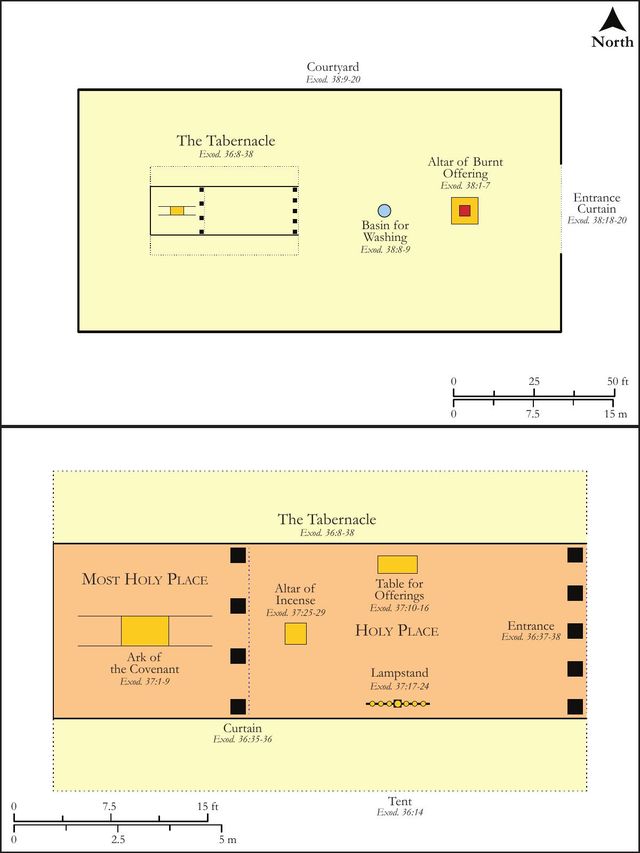
Exodus 40:18 meticulously records the climactic moment of the Tabernacle's erection, as Moses, acting in precise obedience to divine command, brings the sacred dwelling to completion. This verse details the foundational steps of assembly: securing the silver sockets, setting up the gold-overlaid acacia boards, inserting the binding bars, and finally, rearing the pillars that supported the veils and court hangings. It marks the culmination of an extensive construction process, preparing the sanctuary for the manifestation of God's glory and His dwelling among His people in the wilderness, thereby underscoring the profound importance of faithful adherence to God's specific instructions for worship and communion.
Context
ShowHideLiterary Context
Exodus 40:18 is situated within the concluding chapter of the Book of Exodus, which serves as the grand finale to the narrative of Israel's liberation from Egypt and their establishment as God's covenant people. The preceding chapters, from Exodus 25 through Exodus 39, meticulously detail God's elaborate instructions for the Tabernacle's construction and the skilled craftsmanship employed by Bezalel and Oholiab to create each component. Chapter 40 then shifts from the making of the parts to their assembly, presenting a systematic, day-by-day account of the Tabernacle's erection, culminating in the divine glory filling the sanctuary (as seen in Exodus 40:34-35). This verse, therefore, marks a crucial step in the physical manifestation of God's dwelling place among His people, fulfilling the command given in Exodus 25:8. The repetition of the phrase "as the LORD commanded Moses" throughout Exodus 40 emphasizes Moses's unwavering obedience, culminating in this verse's description of the physical structure taking shape.
Historical & Cultural Context
The construction of the Tabernacle occurred during Israel's forty-year wilderness journey after their exodus from Egypt. This period was formative for the nascent nation, as God established His covenant with them at Mount Sinai and provided the Law. The Tabernacle served as the central point of Israelite worship, a portable sanctuary that symbolized God's presence in their midst and His willingness to journey with them. Its design was given to Moses in the pattern shown him in the mount, with a most holy place and an outer court, and it was distinct in its specific dimensions, materials, and purpose—to house the ark of the covenant and facilitate atonement. Moses's personal involvement in the final assembly, as described in this verse, highlights his unique role as mediator and leader, demonstrating his complete obedience to the divine instructions received on Mount Sinai. The meticulous nature of the construction reflects a culture where precision in religious rites and structures was paramount, ensuring divine favor and proper communion. The Tabernacle was not merely a tent, but, in the words of Hebrews, "the example and shadow of heavenly things," reflecting divine order and holiness in a fallen world.
Key Themes
ShowHideThis verse powerfully contributes to several overarching themes in Exodus and the Pentateuch. Firstly, it highlights the theme of Divine Presence and Immanence. The Tabernacle's completion signifies God's tangible dwelling among His people, a fulfillment of His promise to be "God with us." Secondly, the verse underscores Obedience to Divine Command. Moses's meticulous adherence to every detail of the blueprint, culminating in this final assembly, serves as a paradigm of faithfulness. The repeated refrain "as the LORD commanded Moses" throughout Exodus 39 and Exodus 40 emphasizes that the Tabernacle's efficacy depended entirely on its construction according to God's precise specifications. Thirdly, it speaks to the theme of Order and Structure in Worship. The systematic assembly of the Tabernacle's components reflects God's character as a God of order, establishing a structured environment for holy communion. Finally, the Tabernacle's completion sets the stage for the theme of Atonement and Access to God, as it becomes the place where sacrifices are offered and where the high priest can enter God's presence on behalf of the people, foreshadowing the ultimate access provided through Christ, as seen in Hebrews 9.
Exposition and Analysis
ShowHideKey Word Analysis
ShowHideMeaning "drawing out (of the water), i.e. rescued." This name is deeply significant as it refers to the Israelite lawgiver, the one uniquely chosen by God to lead His people out of bondage and to mediate the covenant at Sinai. His personal involvement in "rearing up the tabernacle" underscores his unparalleled role as the divinely appointed leader responsible for bringing God's dwelling place into physical reality, a testament to his obedience and the authority vested in him.
Meaning "to rise (in various applications, literal, figurative, intensive and causative); abide, accomplish, ... establish, ... pitch, raise (up), rear (up), remain, (a-) rise (up) (again, against), rouse up, set (up), (e-) stablish, (make to) stand (up)." This verb, appearing twice in the verse, emphasizes the action of bringing something into an upright, stable, and established position. Its repetition highlights the deliberate and successful act of erecting the entire structure, signifying its completion and readiness for divine inhabitation. It conveys a sense of permanence and establishment for the Tabernacle.
Meaning "a basis (of a building, a column, etc.); foundation, socket." These were the heavy, foundational bases, primarily made of silver for the wallboards and bronze for the pillars of the court, into which the upright wooden components were inserted. Their mention first in the sequence of assembly underscores their critical role as the immovable anchors that provided stability and support for the entire portable sanctuary. They represent the essential, unseen foundations upon which the visible structure rested.
Verse Breakdown
ShowHide"And Moses reared up the tabernacle"
This initial clause identifies Moses as the central figure overseeing and participating in the final assembly. "Reared up" (from the Hebrew qûwm) signifies the act of raising the entire structure from its individual components, bringing it into its intended upright and complete form. This marks the culmination of the entire construction project, transitioning from discrete parts to a unified, functional sacred space.
"and fastened his sockets"
This describes the crucial first step in the assembly process. The "sockets" (Hebrew 'ădānîm) were the foundational bases, likely placed on the ground first, ensuring a stable and level base. "Fastened" (from Hebrew nâthan, meaning "to put, give, set") indicates a deliberate and secure placement, emphasizing the stability of the entire structure from its very inception. These sockets were the anchors for the walls.
"and set up the boards thereof"
Following the securing of the sockets, the "boards" (Hebrew qerāšîm)—the gold-overlaid acacia wood frames that formed the main walls of the Tabernacle—were erected and inserted into these foundational sockets. This action established the perimeter and defined the sacred interior space of the tent, giving it its primary form.
"and put in the bars thereof"
The "bars" (Hebrew bᵉrîyach) were horizontal pieces, also overlaid with gold, that passed through rings on the boards to bind them together. "Put in" (from Hebrew nâthan) signifies their insertion, which provided crucial structural integrity, ensuring the cohesion and strength of the Tabernacle's framework and preventing the walls from collapsing.
"and reared up his pillars"
Finally, Moses erected the "pillars" (Hebrew ʻammûwd), which were used to support the veils and curtains inside the Tabernacle (e.g., the veil separating the Holy Place from the Most Holy Place) as well as the outer court hangings. The repetition of "reared up" (from qûwm, as at the beginning of the verse) emphasizes the completion of all vertical elements, bringing the entire structure to its full, standing, and functional form.
Literary Devices
ShowHideThe verse employs several literary devices to convey its significance and the meticulous nature of the Tabernacle's assembly. Repetition is prominent with the phrase "reared up" (קוּם, qûm), appearing at the beginning and end of the clause sequence, creating an inclusio that frames Moses's comprehensive act of assembly. This repetition emphasizes the completeness, finality, and successful establishment of the Tabernacle. Merism is also evident through the detailed listing of components: "sockets," "boards," "bars," and "pillars." By naming these key parts, the text implies the meticulous attention to every single element of the Tabernacle, representing the entirety of its complex structure from foundation to framework. Furthermore, the precise, sequential description of actions ("fastened," "set up," "put in," "reared up") functions as a form of Anaphora or Parallelism of Structure, highlighting the systematic and orderly nature of the divine command and its human execution. This ordered presentation underscores the divine precision inherent in the Tabernacle's design and the human faithfulness required to bring it to fruition. The cumulative effect of these devices is to convey the solemnity and divine importance of the Tabernacle's completion.
Theological and Thematic Connections
ShowHideExodus 40:18 powerfully illustrates the theme of divine order and human obedience. The meticulous construction of the Tabernacle, culminating in Moses's precise assembly, reflects God's character as a God of precision and design. Every detail, from the materials to the method of assembly, was divinely ordained, underscoring that true worship and communion with God must be conducted according to His revealed will, not human invention. This act of faithful execution prepared the way for God's glory to descend and dwell among His people, signifying His covenant faithfulness and desire for intimate relationship. The Tabernacle, as a physical representation of God's presence, serves as a profound theological symbol of God's immanence and His provision for atonement and fellowship. It is a testament to God's desire to dwell with humanity, even in their wilderness wanderings, providing a tangible center for their spiritual life and national identity.
Reflection and Application
ShowHideThe detailed account of the Tabernacle's assembly in Exodus 40:18 offers profound lessons for contemporary believers. Just as Moses meticulously followed God's blueprint, we are called to build our lives, our faith, and our communities according to God's revealed Word. This verse reminds us that spiritual structures—whether personal character, family dynamics, or church ministries—require careful attention to divine instruction and diligent, faithful execution. The Tabernacle was not merely a building; it was the dwelling place of God's presence. Similarly, our lives, as temples of the Holy Spirit, are meant to be consecrated spaces where God's presence is honored and manifested. This requires intentionality, discipline, and a commitment to order and purpose, ensuring that our "construction" aligns with the divine design for holiness and worship. The completion of the Tabernacle brought God's glory; similarly, our obedient lives make space for God's glory to be revealed through us, drawing others to His truth and grace. This passage challenges us to examine the foundations and framework of our spiritual walk, ensuring they are built upon the solid rock of Christ and His Word, secured by diligent obedience and a desire for God's manifest presence.
Questions for Reflection
ShowHideFAQ
ShowHideWhy was Moses personally involved in the Tabernacle's final assembly rather than leaving it entirely to the craftsmen?
ShowHideMoses's personal involvement in the final assembly of the Tabernacle, as described in Exodus 40:18, underscores his unique and indispensable role as God's chosen mediator and leader for Israel. While skilled craftsmen like Bezalel and Oholiab were divinely gifted for the construction of the components (as detailed in Exodus 31:1-6), Moses's act of assembly symbolized the culmination of the covenant relationship and the direct fulfillment of God's commands. His hands-on participation demonstrated his complete obedience and the transfer of divine authority through him to establish God's dwelling place among His people. It emphasized the sacredness and supreme importance of the task, ensuring every detail was executed "as the LORD commanded Moses" (Exodus 40:16). This act solidified his leadership and the divine sanction upon the Tabernacle as the legitimate center of Israelite worship.
Christ-Centered Fulfillment
ShowHideThe meticulous erection of the Tabernacle by Moses, as described in Exodus 40:18, finds its ultimate Christ-centered fulfillment in the person and work of Jesus Christ. The Tabernacle, a temporary dwelling place for God among His people, was a profound foreshadowing of God's ultimate tabernacling with humanity in the incarnation of Jesus. Just as the Tabernacle was built according to a divine blueprint, so too was Christ's earthly life and ministry perfectly aligned with the Father's will, serving as the true and eternal dwelling of God. John proclaims that "the Word became flesh and [pitched His tent/tabernacled] among us" (John 1:14), signifying that Jesus Himself is the ultimate sanctuary, the very presence of God made manifest. Furthermore, as the Tabernacle was the place where sacrifices were offered for atonement, Christ's singular sacrifice on the cross serves as the perfect and final atonement for sin, fulfilling all the types and shadows of the Old Covenant system (Hebrews 9:11-14). Through Christ, believers become living stones in a spiritual temple, the Church, where God's Spirit now dwells (1 Peter 2:5), thereby extending the reality of God's presence beyond a physical structure to His redeemed people, who are collectively "the temple of the living God" (2 Corinthians 6:16). Thus, the completed Tabernacle points directly to the completed work of Christ, who makes true and lasting communion with God possible.