


1 Timothy 3:15
Bible text: King James Version (1769 Blayney text) · Public domain
Bible text: King James Version with Strong's numbers · Public domain
Bible text: Berean Standard Bible · Public domain
Bible text: American Standard Version (1901) · Public domain
Bible text: World English Bible, Messianic edition · Public domain
Bible text: Geneva Bible (1599) · Public domain
Bible text: Young's Literal Translation · Public domain
- ἐὰνeanifG1437CONDConjunction
- δὲdehoweverG1161CONJConjunction
- βραδύνωbradunōI shall delayG1019V-PAS-1SVerb Present Active Subjunctive 1st Singular
- ἵναinaso thatG2443CONJConjunction
- εἰδῇςeidēasyou may knowG1492V-RAS-2SVerb Perfect Active Subjunctive 2nd Singular
- πῶςpōshowG4459PRT-IInterrogative Particle Interrogative
- δεῖdeiit behooves [one]G1163V-PAI-3SVerb Present Active Indicative 3rd Singular
- ἐνeninG1722PREPPreposition
- οἴκῳoikō[the] householdG3624N-DSMNoun Dative Singular Masculine
- θεοῦtheouof GodG2316N-GSM-TNoun Genitive Singular Masculine Title
- ἀναστρέφεσθαιanastrephesthaito conduct oneselfG390V-PPNVerb Present Passive Infinitive
- ἥτιςhētiswhichG3748R-NSFRelative pronoun Nominative Singular Feminine
- ἐστὶνestinisG1510V-PAI-3SVerb Present Active Indicative 3rd Singular
- ἐκκλησίαekklēsia[the] churchG1577N-NSFNoun Nominative Singular Feminine
- θεοῦtheouof GodG2316N-GSM-TNoun Genitive Singular Masculine Title
- ζῶντοςzōntos[the] livingG2198V-PAP-GSMVerb Present Active Participle Genitive Singular Masculine
- στῦλοςstulos[the] pillarG4769N-NSMNoun Nominative Singular Masculine
- καὶkaiandG2532CONJConjunction
- ἑδραίωμαhedraiōmabaseG1477N-NSNNoun Nominative Singular Neuter
- τῆςtēsof theG3588T-GSFDefinite article Genitive Singular Feminine
- ἀληθείαςalētheiastruthG225N-GSFNoun Genitive Singular Feminine
English is a literal word-by-word gloss of the Greek, not the KJV's wording. Why?
This is the original text the KJV's translators worked from — each Greek word with its own literal English meaning in this verse, prepared by scholars at Tyndale House, Cambridge. The KJV translates whole sentences, not word by word, so its wording differs: one Greek word can become several English words, and the KJV may choose “charity” where the gloss reads “love”. Both are faithful — they answer different questions. For the KJV's own rendering, switch to the KJV text.
Details
See on the biblical-era maps

Study this verse
Public-domain commentary
Matthew Henry
From his Commentary on the Whole Bible. Henry comments on passages, not single verses — this entry covers 1 Timothy 3:14–16. His four-level outline is real structure in the source text, so it is rendered as structure.
He concludes the chapter with a particular direction to Timothy. He hoped shortly to come to him, to give him further directions and assistance in his work, and to see that Christianity was well planted, and took root well, at Ephesus; he therefore wrote the more briefly to him. But he wrote lest he should tarry long, that Timothy might know how to behave himself in the house of God, how to conduct himself as became an evangelist, and the apostle's substitute. Observe,
I.Those who are employed in the house of God must see to it that they behave themselves well, lest they bring reproach upon the house of God, and that worthy name by which they are called. Ministers ought to behave themselves well, and to look not only to their praying and preaching, but to their behaviour: their office binds them to their good behaviour, for any behaviour will not do in this case. Timothy must know how to behave himself, not only in the particular church where he was now appointed to reside for some time, but being an evangelist, and the apostle's substitute, he must learn how to behave himself in other churches, where he should in like manner be appointed to reside for some time; and therefore it is not the church of Ephesus, but the catholic church, which is here called the house of God, which is the church of the living God. Observe here,
1.God is the living God; he is the fountain of life, he is life in himself, and he gives life, breath, and all things to his creatures; in him we live, and move, and have our being, Act 17:25, Act 17:28.
2.The church is the house of God, he dwells there; the Lord has chosen Zion, to dwell there. "This is my rest, here will I dwell, for I have chosen it;" there may we see God's power and glory, Psa 63:2.
II.It is the great support of the church that it is the church of the living God, the true God in opposition to false gods, dumb and dead idols.
1.As the church of God, it is the pillar and ground of truth; that is, either,
(1.)The church itself is the pillar and ground of truth. Not that the authority of the scriptures depends upon that of the church, as the papists pretend, for truth is the pillar and ground of the church; but the church holds forth the scripture and the doctrine of Christ, as the pillar to which a proclamation is affixed holds forth the proclamation. Even to the principalities and powers in heavenly places is made known by the church the manifold wisdom of God, Eph 3:10.
(2.)Others understand it of Timothy. He, not he himself only, but he as an evangelist, he and other faithful ministers, are the pillars and ground of truth; it is their business to maintain, hold up, and publish, the truths of Christ in the church. It is said of the apostles that they seemed to be pillars, Gal 2:9.
[1.]Let us be diligent and impartial in our own enquiries after truth; let us buy the truth at any rate, and not think much of any pains to discover it.
[2.]Let us be careful to keep and preserve it. "Buy the truth, and sell it not (Pro 23:23), do not part with it on any consideration." [3.] Let us take care to publish it, and to transmit it safe and uncorrupted unto posterity. [4.] When the church ceases to be the pillar and ground of truth, we may and ought to forsake her; for our regard to truth should be greater than our regard to the church; we are no longer obliged to continue in the church than she continues to be the pillar and ground of truth.
2.But what is the truth which the churches and ministers are the pillars and grounds of? He tells us (Ti1 3:16) that without controversy great is the mystery of godliness. The learned Camero joins this with what goes before, and then it runs thus: "The pillar and ground of the truth, and without controversy great is the mystery of godliness." He supposes this mystery to be the pillar, etc. Observe,
(1.)Christianity is a mystery, a mystery that could not have been found out by reason or the light of nature, and which cannot be comprehended by reason, because it is above reason, though not contrary thereto. It is a mystery, not of philosophy or speculation; but of godliness, designed to promote godliness; and herein it exceeds all the mysteries of the Gentiles. It is also a revealed mystery, not shut up and sealed; and it does not cease to be a mystery because now in part revealed. But,
(2.)What is the mystery of godliness? It is Christ; and here are six things concerning Christ, which make up the mystery of godliness.
[1.]That he is God manifest in the flesh: God was manifest in the flesh. This proves that he is God, the eternal Word, that was made flesh and was manifest in the flesh. When God was to be manifested to man he was pleased to manifest himself in the incarnation of his own Son: The Word was made flesh, Joh 1:14.
[2.]He is justified in the Spirit. Whereas he was reproached as a sinner, and put to death as a malefactor, he was raised again by the Spirit, and so was justified from all the calumnies with which he was loaded. He was made sin for us, and was delivered for our offences; but, being raised again, he was justified in the Spirit; that is, it was made to appear that his sacrifice was accepted, and so he rose again for our justification, as he was delivered for our offences, Rom 4:25. He was put to death in the flesh, but quickened by the Spirit, Pe1 3:18.
[3.]He was seen of angels. They worshipped him (Heb 1:6); they attended his incarnation, his temptation, his agony, his death, his resurrection, his ascension; this is much to his honour, and shows what a mighty interest he had in the upper world, that angels ministered to him, for he is the Lord of angels.
[4.]He is preached unto the Gentiles. This is a great part of the mystery of godliness, that Christ was offered to the Gentiles a Redeemer and Saviour; that whereas, before, salvation was of the Jews, the partition-wall was now taken down, and the Gentiles were taken in. I have set thee to be a light of the Gentiles, Act 13:47.
[5.]That he was believed on in the world, so that he was not preached in vain. Many of the Gentiles welcomed the gospel which the Jews rejected. Who would have thought that the world, which lay in wickedness, would believe in the Son of God, would take him to be their Saviour who was himself crucified at Jerusalem? But, notwithstanding all the prejudices they laboured under, he was believed on, etc.
[6.]He was received up into glory, in his ascension. This indeed was before he was believed on in the world; but it is put last, because it was the crown of his exaltation, and because it is not only his ascension that is meant, but his sitting at the right hand of God, where he ever lives, making intercession, and has all power, both in heaven and earth, and because, in the apostasy of which he treats in the following chapter, his remaining in heaven would be denied by those who pretend to bring him down on their altars in the consecrated wafers. Observe, First, He who was manifest in flesh was God, really and truly God, God by nature, and not only so by office, for this makes it to be a mystery. Secondly, God was manifest in flesh, real flesh. Forasmuch as the children are partakers of flesh and blood, he also himself likewise took part of the same, Heb 2:14. And, what is more amazing, he was manifest in the flesh after all flesh had corrupted his way, though he himself was holy from the womb. Thirdly, Godliness is a mystery in all its parts and branches, from the beginning to the end, from Christ's incarnation to his ascension. Fourthly, It being a great mystery, we should rather humbly adore it, and piously believe it, than curiously pry into it, or be too positive in our explications of it and determinations about it, further than the holy scriptures have revealed it to us.
Historical interpretation
Eight Centuries of Reception
13 surviving comments on this verse. Each one is dated, so this reads as a timeline rather than a list.
Select a marker to jump to its quote. Markers stagger vertically where authors wrote within a few decades of each other.
Such, then, are the first principles of the gospel. There is one God, the Maker of this universe; he who was also announced by the prophets and who by Moses set forth the dispensation of the law—principles which proclaim the Father of our Lord Jesus Christ and ignore any other God or Father except him. So firm is the ground upon which these Gospels rest that the very heretics themselves bear witness to them, and, starting from these documents, each one of them endeavors to establish his own peculiar doctrine.… It is not possible that the Gospels can be either more or fewer in number than they are. For there are four zones of the world in which we live, and four principal winds, while the church is scattered throughout all the world, and the “pillar and ground” of the church is the gospel and the spirit of life. Therefore, it is fitting that it should have four pillars, breathing out immortality on every side and vivifying all humanity afresh.
WE have learned from none others the plan of our salvation, than from those through whom the Gospel has come down to us, which they did at one time proclaim in public, and, at a later period, by the will of God, handed down to us in the Scriptures, to be the ground and pillar of our faith.
while the Church is scattered throughout all the world, and the "pillar and ground"
The spiritual interpretation, however, is not so difficult and hard to come by. For the bride of the Word, the soul who abides in his royal house—that is, in the church—is taught by the Word of God, who is her Bridegroom, whatever things are stored and hidden within the royal court and in the king’s chamber. In this house, which is the church of the living God, she becomes acquainted also with the cellar of that wine which is extracted from the holy wine presses, the wine that is not only new, but also old and sweet—that is, the teaching of the Law and the Prophets.
"And He had in His right hand seven stars." He said that in His right hand He had seven stars, because the Holy Spirit of sevenfold agency was given into His power by the Father. As Peter exclaimed to the Jews: "Being at the right hand of God exalted, He hath shed forth this Spirit received from the Father, which ye both see and hear." Moreover, John the Baptist had also anticipated this, by saying to his disciples: "For God giveth not the Spirit by measure unto Him. The Father," says he, "loveth the Son, and hath given all things into His hands." Those seven stars are the seven churches, which he names in his addresses by name, old calls them to whom he wrote epistles. Not that they are themselves the only, or even the principal churches; but what he says to one, he says to all. For they are in no respect different, that on that ground any one should prefer them to the larger number of similar small ones. In the whole world Paul taught that all the churches are arranged by sevens, that they are called seven, and that the Catholic Church is one. And first of all, indeed, that he himself also might maintain the type of seven churches, he did not exceed that number. But he wrote to the Romans, to the Corinthians, to the Galatians, to the Ephesians, to the Thessalonians, to the Philippians, to the Colossians; afterwards he wrote to individual persons, so as not to exceed the number of seven churches. And abridging in a short space his announcement, he thus says to Timothy: "That thou mayest know how thou oughtest to behave thyself in the Church of the living God." We read also that this typical number is announced by the Holy Spirit by the month of Isaiah: "Of seven women which took hold of one man." The one man is Christ, not born of seed; but the seven women are seven churches, receiving His bread, and clothed with his apparel, who ask that their reproach should be taken away, only that His name should be called upon them. The bread is the Holy Spirit, which nourishes to eternal life, promised to them, that is, by faith. And His garments wherewith they desire to be clothed are the glory of immortality, of which Paul the apostle says: "For this corruptible must put on incorruption, and this mortal must put on mortality." Moreover, they ask that their reproach may be taken away-that is, that they may be cleansed from their sins: for the reproach is the original sin which is taken away in baptism, and they begin to be called Christian men, which is, "Let thy name be called upon us." Therefore in these seven churches, of one Catholic Church are believers, because it is one in seven by the quality of faith and election. Whether writing to them who labour in the world, and live of the frugality of their labours, and are patient, and when they see certain men in the Church wasters, and pernicious, they hear them, lest there should become dissension, he yet admonishes them by love, that in what respects their faith is deficient they should repent; or to those who dwell in cruel places among persecutors, that they should continue faithful; or to those who, under the pretext of mercy, do unlawful sins in the Church, and make them manifest to be done by others; or to those that are at ease in the Church; or to those who are negligent, and Christians only in name; or to those who are meekly instructed, that they may bravely persevere in faith; or to those who study the Scriptures, and labour to know the mysteries of their announcement, and are unwilling to do God's work that is mercy and love: to all he urges penitence, to all he declares judgment.
Every one of us, indeed, who is instructed in the Holy Scripture is the administrator of some one of those gifts which, according to the gospel, have been apportioned to us. In this great household of the church not only are there vessels of every kind—gold, silver, wooden and earthen—but also a great variety of vocational pursuits. The house of God, which is the church of the living God, has hunters, travelers, architects, builders, farmers, shepherds, athletes, soldiers.
For there is no necessity that the women should be seen by the men; but only in the laying on of hands the bishop shall anoint her head, as the priests and kings were formerly anointed, not because those which are now baptized are ordained priests, but as being Christians, or anointed, from Christ the Anointed, "a royal priesthood, and an holy nation, the Church of God, the pillar and ground of the marriage-chamber"
“For from the rising of the sun, even to its setting, my name is great among the nations.” It is of this holy Catholic church that Paul writes to Timothy.… He calls the church “the pillar and mainstay of the truth.”
Accordingly, as Scripture says, Jacob became rich by such means and reared a very good flock for Christ. He improved it with the title of faith and a diversity of virtues, the marks of a glorious name. And so he did not consider himself poor, for he was rich with the wealth of faith.… And it is no wonder that Jacob possessed peace, for he had set up a pillar and anointed it to God, and that pillar is the church. Paul calls that pillar “the bulwark of the truth.” That man anoints it who pours the ointment of faith upon Christ and of compassion upon the poor.
"That thou mayest know," he says, "how thou oughtest to behave thyself in the house of God, which is the Church of the living God, the pillar and ground of the truth." Not like that Jewish house. For it is this that maintains the faith and the preaching of the Word. For the truth is the pillar and the ground of the Church.
Therefore, beloved, with assured mind and steadfast heart, let us continue to live under so lofty a Head in so glorious a body, in which we are mutually members. Thus, even if my absence were as far as the most distant lands, we should be together in him, and we should never withdraw from the unity of his body. If we lived in one house, we should certainly be said to be together; how much more are we together when we are together in one body!
Honor the holy church as your mother. Love her, proclaim her the Jerusalem which is above, the holy city of God. She it is who, in this faith which you have heard, bears fruit and grows in the whole world, the church of the living God, the pillar and buttress of the truth. She tolerates the wicked in the communion of the sacraments, knowing that they are due to be separated from her at the end and withdrawing from them meanwhile in the dissimilarity of their morals.
We know through the grace of God that the holy church is called a virgin, as the apostle says, “I betrothed you to one husband to present you as a chaste virgin to Christ,” but in that one virgin herself, virgins in the plural are also named. For we read, “Virgins will be brought to the king after her.” Nor is there any doubt that there is one church which is spread throughout the whole world which is called by the apostle “the church of the living God, the pillar and foundation of truth.” Still this is one church in such a way that in it many are called churches.
These things I write to you, hoping to come to you soon; but if I am delayed, I write so that you may know how one ought to behave in the household of God, which is the church of the living God, the pillar and foundation of the truth.
These things I write to you. In order that the arrangement concerning these matters may not throw Timothy into gloom because Paul is no longer present, see what Paul says: "But if I am delayed." Since he was led by the Spirit, and did not know where the Spirit was ordering him to go, therefore he always hesitates.
which is the Church of the living God. Whoever is a house, is the Church of the living God; not like the Jewish temple, but a pillar and foundation, that is, a confirmation of the truth. For the temple, he says, was a foundation of the types of truth. And rightly so, "of the living God." For do you not notice, he said, that it is filled with men: for it excels through God, and is built by Him, and has Him as its inhabitant.
Continue studying 1 Timothy 3:15 across the web’s major study libraries — every link below opens this exact verse, chapter, or book on the destination site.
Read & Compare
 BibleGatewayThis verse in more than 200 translations and 70 languages.
 Bible.comThe YouVersion reader — hundreds of translations, reading plans, and highlights.
 ESV.orgCrossway's official English Standard Version reader.
 NET BibleThe NET translation with 60,000+ translators' notes on every rendering decision.
 STEP BibleTyndale House's free study tool — original text, vocabulary, and scholarly resources.
 BibliaLogos Bible Software's free web reader.
 USCCBThe New American Bible (Revised Edition) with the U.S. bishops' study notes.
Commentaries
 BibleHub CommentariesDozens of classic commentaries on this verse, gathered on one page.
 StudyLightMore than 100 commentary sets — the largest collection on the web.
 BibleRefPlain-English commentary on what this verse means, verse by verse.
 Enduring WordDavid Guzik's free commentary on this chapter, widely used by Bible teachers.
 Bible Study ToolsVerse commentary alongside Greek and Hebrew study aids.
Original Language & Research
- BibleHub InterlinearThe verse word by word — original language, transliteration, and English.
- BibleHub LexiconEvery word's original-language definition and Strong's entry.
 Blue Letter BibleDeep-study tools — Strong's numbers, concordance, and word studies.
 CNTR CollationThe earliest Greek manuscripts of this verse, collated letter by letter.
Sermons, Hymns & Audio


TrulyRandomVerse is not affiliated with these sites and doesn’t control their content. They’re linked because they’re genuinely useful.
Summary
In 1 Timothy 3:15, the Apostle Paul articulates the profound identity and indispensable role of the local church within God's redemptive plan. He explains to Timothy that his instructions regarding church order and leadership are essential because the church is not merely a human organization but the very "house of God," the "church of the living God," and, most significantly, the "pillar and ground of the truth," entrusted with upholding and proclaiming God's revealed truth in the world.
Context
ShowHideLiterary Context
This verse serves as a pivotal summary statement, concluding Paul's detailed instructions on qualifications for overseers (elders/bishops) and deacons in 1 Timothy 3:1-13. Having established the high standards for those who lead God's people, Paul now provides the overarching theological rationale for such meticulous order: the profound nature of the church itself. The preceding verses emphasize the internal integrity and spiritual maturity required of leaders, while 1 Timothy 3:15 shifts the focus to the church's external mission and its sacred identity, linking proper conduct directly to its divine purpose. This verse also sets the stage for the subsequent discussion on the "mystery of godliness" in 1 Timothy 3:16, which beautifully encapsulates the truth the church is called to uphold.
Historical & Cultural Context
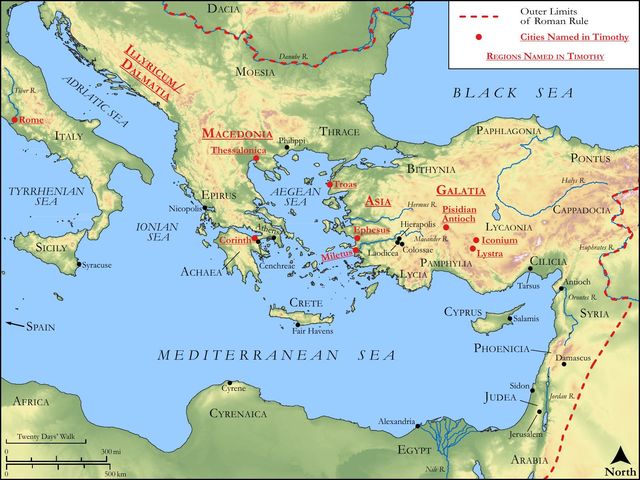
First Timothy was written by Paul to his protégé, Timothy, who was ministering in Ephesus, a prominent city in Asia Minor known for its diverse religious practices, including the widespread worship of Artemis (Diana). The Ephesian church faced challenges from false teachers, internal disputes, and the need for structured leadership in a burgeoning Christian community. In this environment, Paul's emphasis on "sound doctrine" and "proper conduct" was not merely theoretical but a practical necessity for the survival and integrity of the church. The concept of a "house of God" would have resonated with both Jewish and Gentile converts, recalling the Temple as God's dwelling place, but now reinterpreted as a spiritual dwelling. The imagery of "pillar and ground" would have been familiar from ancient architecture, where pillars supported structures and foundations provided stability, conveying a sense of permanence and crucial support in a volatile cultural landscape.
Key Themes
ShowHide1 Timothy 3:15 contributes significantly to several key themes within 1 Timothy and the broader Pauline corpus. Firstly, it underscores the sacredness and divine origin of the church, portraying it not as a human institution but as God's own "house" and "assembly." Secondly, it highlights the importance of order and proper conduct within the Christian community, a theme pervasive throughout the Pastoral Epistles (e.g., 1 Timothy 2:8-12). Thirdly, and most profoundly, it establishes the church's crucial role as the custodian and proclaimer of divine truth. This theme of truth is central to 1 Timothy, as Paul repeatedly warns against "false doctrines" (e.g., 1 Timothy 1:3) and urges Timothy to teach "sound doctrine" (e.g., 1 Timothy 4:6). The church's identity as the "pillar and ground of the truth" means it is uniquely responsible for preserving and presenting the Gospel in a world prone to error.
Exposition and Analysis
ShowHideKey Word Analysis
ShowHideThis term, from G3624, refers to a dwelling, family, or household. In this context, it signifies not merely a physical building but God's spiritual family or household, emphasizing the relational and familial aspect of the church. It conveys the idea that the church is where God dwells and where His people belong as His children.
Meaning "a calling out" or "assembly." This term refers to those who have been called out by God from the world to form His unique assembly. It denotes a distinct, divinely constituted community, not a mere social club, but a gathering of God's chosen people with a divine purpose.
Meaning a support or basis. This word, often translated as "foundation" or "bulwark," conveys the idea of a firm, stable base. Coupled with "pillar," it powerfully illustrates the church's role as the secure and unshakeable support for the truth, preventing it from collapsing or being obscured.
Verse Breakdown
ShowHide"But if I tarry long"
Paul acknowledges the possibility of a delayed return to Timothy in Ephesus, indicating that the instructions he is imparting are not merely for an immediate situation but for ongoing guidance in his absence. This highlights the enduring relevance and necessity of the principles he is about to lay out.
"that thou mayest know how thou oughtest to behave thyself"
This clause reveals the primary purpose of Paul's letter and the instructions within it. Timothy, as a leader, and by extension, all believers, need clear guidance on proper conduct and order within the Christian community, ensuring that their actions align with their divine calling and the sacred nature of the church.
"in the house of God, which is the church of the living God"
This defines the sacred context for the prescribed behavior. The church is identified as "the house of God," a spiritual dwelling where God's presence resides. Further, it is specified as "the church of the living God," emphasizing the active, dynamic, and unique nature of the God who indwells and leads this community, distinguishing it from pagan deities or lifeless idols.
"the pillar and ground of the truth."
This climactic phrase describes the church's ultimate function and responsibility. Using architectural metaphors, Paul declares that the church is the visible support (pillar) and the firm foundation (ground) for God's truth in the world. It is entrusted with preserving, proclaiming, and defending the Gospel message, ensuring its integrity and visibility for all generations.
Literary Devices
ShowHideThe verse employs powerful Metaphor and Imagery to convey the church's profound identity and vital mission. The church is first described as the "house of God," a metaphor that evokes notions of family, dwelling, and divine presence, similar to how a physical house shelters a family. This imagery emphasizes the intimate and familial relationship between God and His people. The subsequent description of the church as "the pillar and ground of the truth" utilizes a striking architectural Metaphor. A pillar visually supports a structure, making it stand tall and visible, while the ground or foundation provides stability and prevents collapse. Together, these images powerfully convey the church's indispensable role in upholding, preserving, and publicly displaying God's truth to a world that desperately needs it. This also implies a degree of Personification, as the church, a collective body of believers, is given the active role of supporting and grounding an abstract concept like "truth."
Theological and Thematic Connections
ShowHide1 Timothy 3:15 presents a high ecclesiology, underscoring the church's divine origin, sacred nature, and crucial role in God's redemptive plan. It moves beyond a mere organizational structure to define the church as the very locus of God's presence and the primary vehicle for His truth in the world. This understanding demands a profound reverence for the church and a commitment to its purity and mission, recognizing that its integrity directly impacts the visibility and credibility of the Gospel. The church is not an optional extra but God's chosen instrument for maintaining and proclaiming the truth, making its health and faithfulness paramount.
Reflection and Application
ShowHide1 Timothy 3:15 calls believers to a profound awareness of the church's identity and our individual responsibility within it. If the church is truly "the house of the living God" and the "pillar and ground of the truth," then our conduct within and outside its walls must reflect this sacred reality. This means approaching church gatherings with reverence, participating in its ministries with diligence, upholding sound doctrine, and living lives that commend the truth we profess. It challenges us to see the church not as a building or a social club, but as a divine organism, entrusted with the most precious treasure—God's revealed truth. Our behavior, our commitment to biblical teaching, and our unity as a body directly impact the church's ability to fulfill its mission as a beacon of truth in a world desperately searching for it.
Questions for Reflection
ShowHideFAQ
ShowHideWhat does it mean for the church to be "the pillar and ground of the truth"?
ShowHideThis powerful phrase means that the church is the primary institution entrusted by God to uphold, preserve, and proclaim His revealed truth in the world. The imagery is architectural: a "pillar" (Greek: stŷlos, G4769) supports a structure and makes it visible, while the "ground" (Greek: hedraíōma, G1477) or foundation provides stability and prevents collapse. Therefore, the church is the visible support and the firm foundation upon which God's truth rests and through which it is displayed to humanity. It is the custodian of the Gospel, responsible for faithfully teaching, defending, and living out the truth of God's Word in every generation, ensuring that it remains accessible and uncorrupted. This doesn't mean the church creates truth, but that it maintains and manifests it.
How does this verse relate to the authority of Scripture?
ShowHide1 Timothy 3:15 strongly implies the supreme authority of Scripture. The "truth" that the church is called to uphold is primarily the revealed Word of God. The church's role is not to invent new truths or to supersede the authority of Scripture, but to faithfully transmit and interpret the truth already given by God. Just as a pillar supports a roof, the church supports and holds up the truth contained in God's Word, making it visible and accessible. The church is therefore subservient to the truth of Scripture, recognizing that its own authority derives from its fidelity to God's inspired Word. The church is the guardian of the truth, not its source.
Christ-Centered Fulfillment
ShowHideWhile 1 Timothy 3:15 speaks of the church as the pillar and ground of the truth, the ultimate fulfillment and embodiment of all truth is found in Jesus Christ Himself. He declared, "I am the way, the truth, and the life," making it clear that all divine revelation culminates in His person. The church's role as the "pillar and ground of the truth" is therefore intrinsically Christ-centered; it is called to uphold and proclaim His truth, His Gospel, and His saving work. As the chief cornerstone of God's spiritual temple (Ephesians 2:20), Christ is the ultimate foundation upon which the church is built, and it is through Him that the church derives its very existence and purpose. All the treasures of wisdom and knowledge are hidden in Him (Colossians 2:3), and thus the church's mission is to point to Him, the living Word, who perfectly reveals the Father (John 1:18). The church upholds the truth by faithfully proclaiming Christ, in whom all truth resides.