


Exodus 40:21
Bible text: King James Version (1769 Blayney text) · Public domain
Bible text: King James Version with Strong's numbers · Public domain
Bible text: Berean Standard Bible · Public domain
Bible text: American Standard Version (1901) · Public domain
Bible text: World English Bible, Messianic edition · Public domain
Bible text: Geneva Bible (1599) · Public domain
Bible text: Young's Literal Translation · Public domain
- וַיָּבֵאvai·ya·Ve'and he broughtH935Conj-w ¦ V-Hiphil-ConsecImperf-3msVerb Hiphil Consecutive Imperfect 3rd Singular Masculineוַandיָּבֵאhe brought
- אֶת'et<obj.>H853DirObjMParticle Object Indicator
- הָאָרֹןha·'a·Ronthe arkH727Art ¦ N-msNoun Singular Masculine Absoluteהָtheאָרֹןark
- אֶל'elintoH413PrepPreposition
- הַמִּשְׁכָּןha·mish·Kanthe tabernacleH4908Art ¦ N-msNoun Singular Masculine Absoluteהַtheמִּשְׁכָּןtabernacle
- וַיָּשֶׂםvai·Ya·semand he set upH7760Conj-w ¦ V-Qal-ConsecImperf-3msVerb Qal Consecutive Imperfect 3rd Singular Masculineוַandיָּשֶׂםhe set up
- אֵת'et<obj.>H853DirObjMParticle Object Indicator
- פָּרֹכֶתpa·Ro·khet[the] curtain ofH6532N-fscNoun Singular Feminine Construct
- הַמָּסָךְha·ma·Sakhthe screenH4539Art ¦ N-msNoun Singular Masculine Absoluteהַtheמָּסָךְscreen
- וַיָּסֶךְvai·Ya·sekhand he coveredH5526Conj-w ¦ V-Hiphil-ConsecImperf-3msVerb Hiphil Consecutive Imperfect 3rd Singular Masculineוַandיָּסֶךְhe covered
- עַל'aloverH5921PrepPreposition
- אֲרוֹן'a·Ron[the] ark ofH727N-mscNoun Singular Masculine Construct
- הָעֵדוּתha·'e·Dutthe testimonyH5715Art ¦ N-fsNoun Singular Feminine Absoluteהָtheעֵדוּתtestimony
- כַּאֲשֶׁרka·'a·Sherjust asH834Prep-k ¦ RelParticle Relativeכַּjustאֲשֶׁרas
- צִוָּהtzi·Vahhe had commandedH6680V-Piel-Perf-3msVerb Piel Perfect 3rd Singular Masculine
- יְהוָהYah·wehYahwehH3068N-properNoun Proper Title
- אֶת'et<obj.>H853DirObjMParticle Object Indicator
- מֹשֶׁהmo·ShehMosesH4872N-proper-mNoun Proper Masculine
English is a literal word-by-word gloss of the Hebrew, not the KJV's wording. Why?
This is the original text the KJV's translators worked from — each Hebrew word with its own literal English meaning in this verse, prepared by scholars at Tyndale House, Cambridge. The KJV translates whole sentences, not word by word, so its wording differs: one Hebrew word can become several English words, and the KJV may choose “the LORD” where the gloss reads “Yahweh”. Both are faithful — they answer different questions. For the KJV's own rendering, switch to the KJV text.
Details
See on the biblical-era maps

Study this verse
Public-domain commentary
Matthew Henry
From his Commentary on the Whole Bible. Henry comments on passages, not single verses — this entry covers Exodus 40:16–33.
When the tabernacle and the furniture of it were prepared, they did not put off the rearing of it till they came to Canaan, though they now hoped to be there very shortly; but, in obedience to the will of God, they set it up in the midst of their camp, while they were in the wilderness. Those that are unsettled in the world must not think that this will excuse them in their continued irreligion; as if it were enough to begin to serve God when they begin to be settled in the world. No; a tabernacle for God is a very needful and profitable companion even in a wilderness, especially considering that our carcases may fall in that wilderness, and we may be fixed in another world before we come to fix in this.
The rearing of the tabernacle was a good day's work; the consecrating of it, and of the priests, was attended to some days after. Here we have an account only of that new-year's-day's work. 1. Moses not only did all that God directed him to do, but in the order that God appointed; for God will be sought in the due order. 2. To each particular there is added an express reference to the divine appointment, which Moses governed himself by as carefully and conscientiously as the workmen did; and therefore, as before, so here it is repeated, as the Lord commanded Moses, seven times in less than fourteen verses. Moses himself, as great a man as he was, would not pretend to vary from the institution, neither to add to it nor diminish from it, in the least punctilio. Those that command others must remember that their Master also is in heaven, and they must do as they are commanded. 3. That which was to be veiled be veiled (Exo 40:21), and that which was to be used he used immediately, for the instruction of the priests, that by seeing him do the several offices they might learn to do them the more dexterously. Though Moses was not properly a priest, yet he is numbered among the priests (Psa 99:6), and the Jewish writers call him the priest of the priests; what he did he did by special warrant and direction from God, rather as a prophet, or law-giver, than as a priest. He set the wheels a going, and then left the work in the hands of the appointed ministry. (1.) When he had placed the table, he set the show-bread in order upon it (Exo 40:23); for God will never have his table unfurnished. (2.) As soon as he had fixed the candlestick, he lighted the lamps before the Lord, Exo 40:25. Even that dark dispensation would not admit of unlighted candles. (3.) The golden altar being put in its place, immediately he burnt sweet incense thereon (Exo 40:27); for God's altar must be a smoking altar. (4.) The altar of the burnt-offering was no sooner set up in the court of the tabernacle than he had a burnt-offering, and a meat-offering, ready to offer upon it, Exo 40:29. Some think, though this is mentioned here, it was not done till some time after; but it seems to me that he immediately began the ceremony of its consecration, though it was not completed for seven days. (5.) At the laver likewise, when he had fixed that, Moses himself washed his hands and feet. Thus, in all these instances, he not only showed the priests how to do their duty, but has taught us that God's gifts are intended for use, and not barely for show. Though the altars, and table, and candlestick, were fresh and new, he did not say it was a pity to sully them; no, he handselled them immediately. Talents were given to be occupied, not to be buried.
Continue studying Exodus 40:21 across the web’s major study libraries — every link below opens this exact verse, chapter, or book on the destination site.
Read & Compare
 BibleGatewayThis verse in more than 200 translations and 70 languages.
 Bible.comThe YouVersion reader — hundreds of translations, reading plans, and highlights.
 ESV.orgCrossway's official English Standard Version reader.
 NET BibleThe NET translation with 60,000+ translators' notes on every rendering decision.
 STEP BibleTyndale House's free study tool — original text, vocabulary, and scholarly resources.
 BibliaLogos Bible Software's free web reader.
 USCCBThe New American Bible (Revised Edition) with the U.S. bishops' study notes.
Commentaries
 BibleHub CommentariesDozens of classic commentaries on this verse, gathered on one page.
 StudyLightMore than 100 commentary sets — the largest collection on the web.
 BibleRefPlain-English commentary on what this verse means, verse by verse.
 Enduring WordDavid Guzik's free commentary on this chapter, widely used by Bible teachers.
 Bible Study ToolsVerse commentary alongside Greek and Hebrew study aids.
Original Language & Research
- BibleHub InterlinearThe verse word by word — original language, transliteration, and English.
- BibleHub LexiconEvery word's original-language definition and Strong's entry.
 Blue Letter BibleDeep-study tools — Strong's numbers, concordance, and word studies.
 SefariaThe Hebrew text with Rashi and centuries of Jewish commentary.
Sermons, Hymns & Audio


TrulyRandomVerse is not affiliated with these sites and doesn’t control their content. They’re linked because they’re genuinely useful.
Summary
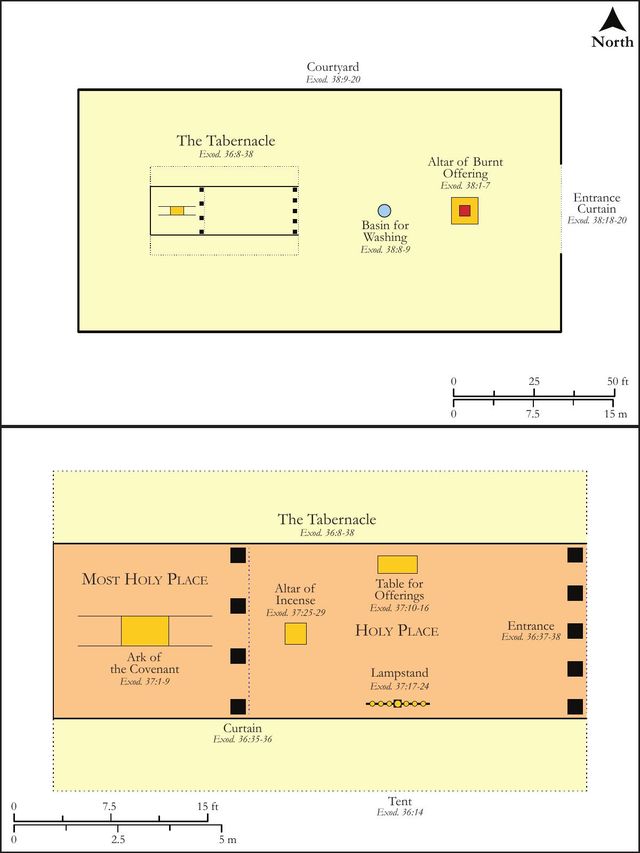
Exodus 40:21 meticulously details a climactic moment in the Tabernacle's construction: Moses' faithful installation of the Ark of the Covenant, the holiest artifact, within the Most Holy Place, and the subsequent erection of the veil that separated this sacred space. This precise act, performed exactly "as the LORD commanded Moses," signifies the completion of God's earthly dwelling place among His people, thereby establishing the physical epicenter of Israelite worship and foreshadowing profound theological truths concerning divine presence, absolute holiness, and the indispensable nature of obedient worship.
Context
ShowHideLiterary Context
Exodus 40 serves as the triumphant culmination of the detailed instructions for the Tabernacle's construction, which began with God's elaborate blueprint in Exodus 25. Following the meticulous execution of these plans by skilled craftsmen under the leadership of Bezalel and Oholiab (Exodus 35-39), this final chapter describes the precise assembly and dedication of the sanctuary. Verse 21, specifically, focuses on the placement of the Ark of the Covenant, the very heart of the sanctuary, within the Most Holy Place, and the establishment of the separating veil. This act is part of a sequence of installations, each prefaced by the recurring phrase "as the LORD commanded Moses," which powerfully emphasizes the divine authority behind the project and the human obedience required for its completion. The entire process culminates in the glorious descent of the Lord's presence, filling the Tabernacle in Exodus 40:34-35, affirming its divine approval and purpose.
Historical & Cultural Context
The construction and dedication of the Tabernacle were foundational to Israel's identity as God's chosen people following their miraculous exodus from Egypt. Among the nations round about, temples were universally understood as the dwelling places of their gods. However, for Israel, the Tabernacle was unique: a portable sanctuary specifically designed to accompany them through the wilderness, symbolizing God's dynamic and active presence in their midst. The Ark of the Covenant, containing the tablets of the Ten Commandments (Exodus 31:18), functioned as the earthly throne of God's invisible presence, the "ark of the testimony" being the tangible embodiment of God's covenant with Israel. The veil, a common feature in ancient temples, served to demarcate sacred space, but in the Tabernacle, it emphatically highlighted the profound holiness of God and the necessary separation between a holy God and sinful humanity, restricting access to the Most Holy Place to the High Priest alone, and only once a year on the Day of Atonement (Leviticus 16:2).
Key Themes
ShowHideExodus 40:21 contributes significantly to several major theological and narrative themes within the book of Exodus and the broader Pentateuch. The primary theme is Divine Presence, as the Tabernacle's completion signifies God's commitment to dwell among His people, moving from a distant, mountain-bound presence (Exodus 19) to an immanent one within the camp. Closely related is the theme of Holiness, emphasized by the meticulous design and the veil's separation, underscoring God's absolute purity and the need for Israel to approach Him with reverence and ritual purity. The verse also highlights Obedience to Divine Command, a recurring motif throughout the Tabernacle narrative, demonstrating Moses' unwavering faithfulness to God's precise instructions, which is presented as the prerequisite for God's dwelling among His people. Finally, the establishment of the Tabernacle and its most sacred contents sets the stage for the Worship and Atonement system detailed in Leviticus, where the Ark and the veil play central roles in the annual rituals for sin.
Exposition and Analysis
ShowHideKey Word Analysis
ShowHideThis term refers to a chest or coffer, but in this sacred context, it denotes the Ark of the Covenant. It was not merely a container but the most sacred piece of furniture in the Tabernacle, symbolizing God's throne and the focal point of His manifest presence among His people. Its contents—the tablets of the Law—underscored God's covenant faithfulness and righteous demands.
This specifically refers to the thick, elaborately woven curtain that served as a separatrix, dividing the Holy Place from the Most Holy Place (the Holy of Holies). The veil functioned as a physical barrier, profoundly emphasizing the absolute holiness of God and the necessary separation between His divine presence and the sinful nature of humanity, thereby strictly regulating access to the Ark and the Mercy Seat.
Often translated as "witness" or "stipulation," this word refers specifically to the Ten Commandments, the covenant stipulations inscribed on stone tablets that were placed inside the Ark. The Ark was thus appropriately called the "ark of the testimony" because it contained the tangible evidence of God's covenant relationship and His revealed will for Israel.
Verse Breakdown
ShowHide"And he brought the ark into the tabernacle"
This clause describes Moses' direct and decisive action of placing the Ark of the Covenant into its designated, most sacred location within the newly constructed Tabernacle structure. The Ark, having been meticulously constructed according to divine specifications, is now moved into the very heart of the sanctuary, signifying the imminent and awaited indwelling of God's glory. This act marks the physical establishment of God's throne room on earth.
"and set up the vail of the covering"
Immediately following the placement of the Ark, Moses proceeds to install the veil. This act is profoundly crucial, as the veil served as the definitive barrier separating the Most Holy Place, where the Ark now resided, from the rest of the Tabernacle. This physical demarcation underscored the profound holiness of God's presence and the limited, divinely ordained access to it, emphasizing the awe and reverence required.
"and covered the ark of the testimony"
The veil, once meticulously set up, effectively "covered" or enclosed the Ark, rendering it inaccessible and hidden from common view. This action reinforces the sacredness and awe-inspiring nature of God's presence, which was not to be casually approached or gazed upon by anyone other than the High Priest on the Day of Atonement. The Ark, containing the "testimony" (the Law), was now enshrined in its most sacred, secluded space, reinforcing the mystery and transcendence of God.
"as the LORD commanded Moses"
This concluding phrase, a powerful and recurring motif throughout Exodus 40 (appearing multiple times, such as in Exodus 40:16), serves as a profound affirmation of Moses' meticulous and unwavering obedience to every divine instruction. It highlights the absolute necessity of following God's precise will in matters of worship and service, underscoring the divine origin, authority, and perfect execution behind the entire Tabernacle project. This phrase validates the entire undertaking as divinely ordained and faithfully accomplished.
Literary Devices
ShowHideExodus 40:21 employs several significant literary devices to convey its profound theological message. The Repetition of the phrase "as the LORD commanded Moses" throughout Exodus 40 (and indeed, throughout the entire Tabernacle narrative from Exodus 25 onwards) functions as a powerful motif. This recurring phrase emphasizes divine authority, human obedience, and the meticulous fulfillment of God's blueprint, instilling a sense of divine precision and highlighting Moses' exemplary faithfulness. Symbolism is paramount within the verse: the Ark represents God's tangible presence and His covenant faithfulness, while the veil symbolizes the profound separation between a holy God and sinful humanity, as well as the restricted access to His most sacred presence. The act of "covering" the Ark with the veil further reinforces this symbolism of divine mystery, inaccessibility, and the awe that God's holiness demands. The verse also functions as a culmination, marking the successful completion of a major narrative arc that began with the detailed instructions for the Tabernacle, bringing the divine blueprint to its physical realization and preparing for the indwelling of God's glory.
Theological and Thematic Connections
ShowHideExodus 40:21 powerfully encapsulates core theological themes of divine presence, absolute holiness, and the nature of true worship. The installation of the Ark and the veil signifies God's profound willingness to dwell intimately among His people, yet simultaneously underscores His absolute purity and the inherent, necessary separation between a holy God and sinful humanity. Moses' meticulous obedience reinforces the foundational principle that genuine worship and service must align precisely with God's revealed will, rather than human invention or preference. This act of setting apart the Most Holy Place prepares for the descent of God's glory, demonstrating that God desires intimacy with His people but always on His terms, within the boundaries of His holy presence. This scene lays the groundwork for understanding the sacrificial system and the path to atonement.
Reflection and Application
ShowHideThe scene in Exodus 40:21 offers profound and enduring lessons for contemporary believers. Moses' meticulous obedience to God's commands, even in the smallest details of the Tabernacle's construction and setup, serves as a powerful reminder that our worship, service, and daily lives should be characterized by faithful adherence to God's revealed will. This principle extends beyond grand acts to the seemingly mundane, emphasizing that God values our wholehearted submission. Just as the Tabernacle was God's physical dwelling place among His people, believers today are called to be spiritual temples of the Holy Spirit, living sanctuaries where God's presence is honored and His commands are obeyed (1 Corinthians 6:19-20). The veil, once a formidable barrier, now reminds us of the incredible and unhindered access we have to God through Christ. This truth should inspire both profound awe and boundless gratitude, prompting us to approach God with reverence, yet also with unwavering confidence, knowing that the way has been opened for us. Our lives, therefore, should reflect both the majestic holiness of God and the unparalleled privilege of His indwelling presence, inspiring us to walk in a manner worthy of the glorious calling we have received.
Questions for Reflection
ShowHideFAQ
ShowHideWhat was the purpose of the Ark of the Covenant?
ShowHideThe Ark of the Covenant, often referred to as the "ark of the testimony," served multiple crucial purposes within the Tabernacle. Primarily, it was the most sacred object, symbolizing the very presence of God among His people. It contained the two tablets of the Ten Commandments (Exodus 31:18), representing God's covenant with Israel and His righteous laws. The lid of the Ark, known as the Mercy Seat (or atonement cover), was where God's presence would manifest, and it was the place where atonement was made for the sins of the people on the annual Day of Atonement (Leviticus 16:14-16). In essence, it functioned as God's earthly throne, the focal point of Israelite worship, and the tangible sign of His covenant faithfulness and power.
Why was the veil necessary in the Tabernacle?
ShowHideThe veil (or curtain) was absolutely necessary to separate the Most Holy Place (the Holy of Holies), where the Ark of the Covenant resided, from the Holy Place. Its primary purpose was to emphasize the absolute holiness of God and the inherent, profound separation between a perfect, holy God and sinful humanity. Only the High Priest was permitted to pass beyond the veil, and only once a year on the Day of Atonement, to offer sacrifices for the sins of the people (Leviticus 16:2). This physical barrier visually communicated the awesome, unapproachable nature of God's presence, underscoring that direct access was not possible for ordinary people due to the defilement of sin. It served as a constant reminder of humanity's fallen state and God's transcendent purity.
Christ-Centered Fulfillment
ShowHideExodus 40:21, with its depiction of the Ark's precise placement and the veil's solemn installation, finds its profound Christ-centered fulfillment in the person and redemptive work of Jesus. The Tabernacle, as God's temporary dwelling place among His people, powerfully prefigured Christ, who is the ultimate "God with us" (Matthew 1:23). Just as the Ark was the locus of God's manifest presence, so Jesus is the very embodiment of God on earth, the Word made flesh who "dwelt among us" (John 1:14). The veil, which strictly limited and guarded access to God's most sacred presence, was dramatically torn from top to bottom at the moment of Christ's death on the cross (Matthew 27:51), symbolizing that through His perfect, once-for-all sacrifice, the formidable barrier of sin separating humanity from God was completely removed. Jesus, our Great High Priest, has not entered an earthly sanctuary, but the true heavenly sanctuary, not with the blood of animals, but with His own precious blood, securing eternal redemption and opening a "new and living way" for all believers to draw near to God's presence with confidence and boldness (Hebrews 10:19-20). Thus, the meticulous obedience of Moses in setting up the earthly Tabernacle points forward to Christ's perfect obedience, which established the ultimate, eternal dwelling of God with humanity, making true fellowship possible.