


Matthew 5:29
- εἰeiIfG1487CONDConjunction
- δὲdenowG1161CONJConjunction
- ὁhotheG3588T-NSMDefinite article Nominative Singular Masculine
- ὀφθαλμόςophthalmoseyeG3788N-NSMNoun Nominative Singular Masculine
- σουsouof youG4771P-2GSPersonal pronoun Genitive 2nd Singular
- ὁho<the>G3588T-NSMDefinite article Nominative Singular Masculine
- δεξιὸςdexiosrightG1188A-NSMAdjective Nominative Singular Masculine
- σκανδαλίζειskandalizeicauses to stumbleG4624V-PAI-3SVerb Present Active Indicative 3rd Singular
- σεseyouG4771P-2ASPersonal pronoun Accusative 2nd Singular
- ἔξελεexeledo pluck outG1807V-2AAM-2SVerb 2nd Aorist Active Imperative 2nd Singular
- αὐτὸνautonitG846P-ASMPersonal pronoun Accusative Singular Masculine
- καὶkaiandG2532CONJConjunction
- βάλεbaledo cast [it]G906V-2AAM-2SVerb 2nd Aorist Active Imperative 2nd Singular
- ἀπὸapofromG575PREPPreposition
- σοῦ·souyouG4771P-2GSPersonal pronoun Genitive 2nd Singular
- συμφέρειsumphereiit is betterG4851V-PAI-3SVerb Present Active Indicative 3rd Singular
- γάρgarindeedG1063CONJConjunction
- σοιsoifor youG4771P-2DSPersonal pronoun Dative 2nd Singular
- ἵναinathatG2443CONJConjunction
- ἀπόληταιapolētaimay perishG622V-2AMS-3SVerb 2nd Aorist Middle Subjunctive 3rd Singular
- ἓνhenoneG1520A-NSNAdjective Nominative Singular Neuter
- τῶνtōnof theG3588T-GPNDefinite article Genitive Plural Neuter
- μελῶνmelōnmembersG3196N-GPNNoun Genitive Plural Neuter
- σουsouof youG4771P-2GSPersonal pronoun Genitive 2nd Singular
- καὶkaiandG2532CONJConjunction
- μὴmēnotG3361PRT-NNegative Particle Negative
- ὅλονholonallG3650A-NSNAdjective Nominative Singular Neuter
- τὸtotheG3588T-NSNDefinite article Nominative Singular Neuter
- σῶμάsōmabodyG4983N-NSNNoun Nominative Singular Neuter
- σουsouof youG4771P-2GSPersonal pronoun Genitive 2nd Singular
- βληθῇblēthēamay be castG906V-APS-3SVerb Aorist Passive Subjunctive 3rd Singular
- εἰςeisintoG1519PREPPreposition
- γέεννανgeennanhellG1067N-ASF-TNoun Accusative Singular Feminine
English is a literal word-by-word gloss of the Greek, not the KJV's wording. Why?
This is the original text the KJV's translators worked from — each Greek word with its own literal English meaning in this verse, prepared by scholars at Tyndale House, Cambridge. The KJV translates whole sentences, not word by word, so its wording differs: one Greek word can become several English words, and the KJV may choose “charity” where the gloss reads “love”. Both are faithful — they answer different questions. For the KJV's own rendering, switch to the KJV text.
Details
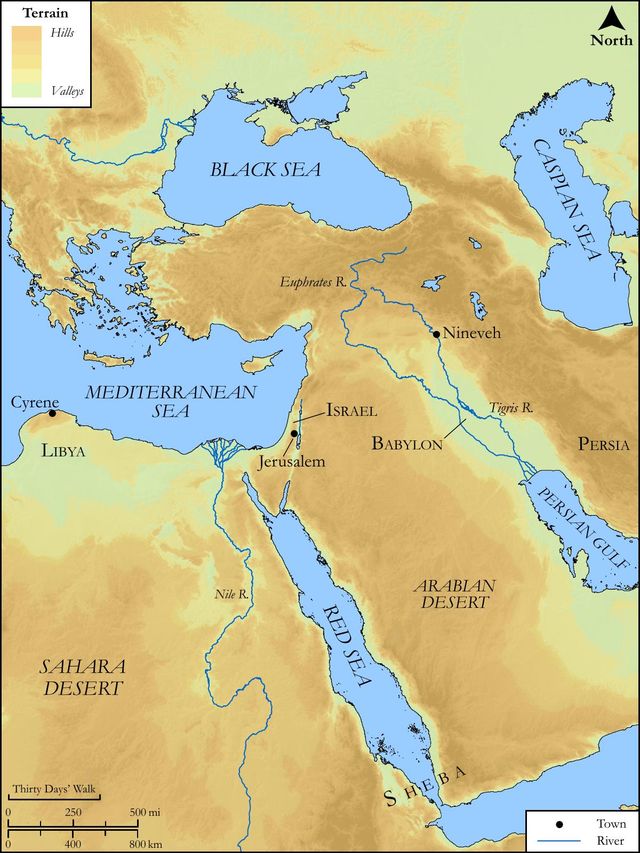
See on the biblical-era maps


Study this verse
Public-domain commentary
Matthew Henry
From his Commentary on the Whole Bible. Henry comments on passages, not single verses — this entry covers Matthew 5:27–32. His four-level outline is real structure in the source text, so it is rendered as structure.
We have here an exposition of the seventh commandment, given us by the same hand that made the law, and therefore was fittest to be the interpreter of it: it is the law against uncleanness, which fitly follows upon the former; that laid a restraint upon sinful passions, this upon sinful appetites, both which ought always to be under the government of reason and conscience, and if indulged, are equally pernicious.
I.The command is here laid down (Mat 5:27), Thou shalt not commit adultery; which includes a prohibition of all other acts of uncleanness, and the desire of them: but the Pharisees, in their expositions of this command, made it to extend no further than the act of adultery, suggesting, that if the iniquity was only regarded in the heart, and went no further, God could not hear it, would not regard it (Psa 66:18), and therefore they thought it enough to be able to say that they were no adulterers, Luk 18:11.
II.It is here explained in the strictness of it, in three things, which would seem new and strange to those who had been always governed by the tradition of the elders, and took all for oracular that they taught.
1.We are here taught, that there is such a thing as heart-adultery, adulterous thoughts and dispositions, which never proceed to the act of adultery or fornication; and perhaps the defilement which these give to the soul, that is here so clearly asserted, was not only included in the seventh commandment, but was signified and intended in many of those ceremonial pollutions under the law, for which they were to wash their clothes, and bathe their flesh in water. Whosoever looketh on a woman (not only another man's wife, as some would have it, but any woman), to lust after her, has committed adultery with her in his heart, Mat 5:28. This command forbids not only the acts of fornication and adultery, but,
(1.)All appetites to them, all lusting after the forbidden object; this is the beginning of the sin, lust conceiving (Jam 1:15); it is a bad step towards the sin; and where the lust is dwelt upon and approved, and the wanton desire is rolled under the tongue as a sweet morsel, it is the commission of sin, as far as the heart can do it; there wants nothing but convenient opportunity for the sin itself. Adultera mens est - The mind is debauched. Ovid. Lust is conscience baffled or biassed: biassed, if it say nothing against the sin; baffled, if it prevail not in what is says.
(2.)All approaches toward them; feeding the eye with the sight of the forbidden fruit; not only looking for that end, that I may lust; but looking till I do lust, or looking to gratify the lust, where further satisfaction cannot be obtained. The eye is both the inlet and outlet of a great deal of wickedness of this kind, witness Joseph's mistress (Gen 39:7), Samson (Jdg 16:1), David, Sa2 11:2. We read the eyes full of adultery, that cannot cease from sin, Pe2 2:14. What need have we, therefore, with holy Job, to make a covenant with our eyes, to make this bargain with them that they should have the pleasure of beholding the light of the sun and the works of God, provided they would never fasten or dwell upon any thing that might occasion impure imaginations or desires; and under this penalty, that if they did, they must smart for it in penitential tears! Job 31:1. What have we the covering of the eyes for, but to restrain corrupt glances, and to keep out of their defiling impressions? This forbids also the using of any other of our senses to stir up lust. If ensnaring looks are forbidden fruit, much more unclean discourses, and wanton dalliances, the fuel and bellows of this hellish fire. These precepts are hedges about the law of heart-purity, Mat 5:8. And if looking be lust, they who dress and deck, and expose themselves, with design to be looked at and lusted after (like Jezebel, that painted her face and tired her head, and looked out at the window) are no less guilty. Men sin, but devils tempt to sin.
2.That such looks and such dalliances are so very dangerous and destructive to the soul, that it is better to lose the eye and the hand that thus offend then to give way to the sin, and perish eternally in it. This lesson is here taught us, Mat 5:29, Mat 5:30. Corrupt nature would soon object against the prohibition of heart-adultery, that it is impossible to governed by it; "It is a hard saying, who can bear it? Flesh and blood cannot but look with pleasure upon a beautiful woman; and it is impossible to forbear lusting after and dallying with such an object." Such pretences as these will scarcely be overcome by reason, and therefore must be argued against with the terrors of the Lord, and so they are here argued against.
(1.)It is a severe operation that is here prescribed for the preventing of these fleshly lusts. If thy right eye offend thee, or cause thee to offend, by wanton glances, or wanton gazings, upon forbidden objects; if thy right hand offend thee, or cause thee to offend, by wanton dalliances; and if it were indeed impossible, as is pretended, to govern the eye and the hand, and they have been so accustomed to these wicked practices, that they will not be withheld from them; if there be no other way to restrain them (which, blessed be God, through his grace, there is), it were better for us to pluck out the eye, and cut off the hand, though the right eye, and right hand, the more honourable and useful, than to indulge them in sin to the ruin of the soul. And if this must be submitted to, at the thought of which nature startles, much more must we resolve to keep under the body, and to bring it into subjection; to live a life of mortification and self-denial; to keep a constant watch over our own hearts, and to suppress the first rising of lust and corruption there; to avoid the occasions of sin, to resist the beginnings of it, and to decline the company of those who will be a snare to us, though ever so pleasing; to keep out of harm's way, and abridge ourselves in the use of lawful things, when we find them temptations to us; and to seek unto God for his grace, and depend upon that grace daily, and so to walk in the Spirit, as that we may not fulfil the lusts of the flesh; and this will be as effectual as cutting off a right hand or pulling out a right eye; and perhaps as much against the grain to flesh and blood; it is the destruction of the old man.
(2.)It is a startling argument that is made use of to enforce this prescription (Mat 5:29), and it is repeated in the same words (Mat 5:30), because we are loth to hear such rough things; Isa 30:10. It is profitable for thee that one of thy members should perish, though it be an eye or a hand, which can be worse spared, and not that thy whole body should be cast into hell. Note,
[1.]It is not unbecoming a minister of the gospel to preach of hell and damnation; nay, he must do it, for Christ himself did it; and we are unfaithful to our trust, if we give not warning of the wrath to come.
[2.]There are some sins from which we need to be saved with fear, particularly fleshly lusts, which are such natural brute beasts as cannot be checked, but by being frightened; cannot be kept from a forbidden tree, but by cherubim, with a flaming sword.
[3.]When we are tempted to think it hard to deny ourselves, and to crucify fleshly lusts, we ought to consider how much harder it will be to lie for ever in the lake that burns with fire and brimstone; those do not know or do not believe what hell is, that will rather venture their eternal ruin in those flames, than deny themselves the gratification of a base and brutish lust.
[4.]In hell there will be torments for the body; the whole body will be cast into hell, and there will be torment in every part of it; so that if we have a care of our own bodies, we shall possess them in sanctification and honour, and not in the lusts of uncleanness.
[5.]Even those duties that are most unpleasant to flesh and blood, are profitable for us; and our Master requires nothing from us but what he knows to be for our advantage.
3.That men's divorcing of their wives upon dislike, or for any other cause except adultery, however tolerated and practised among the Jews, was a violation of the seventh commandment, as it opened a door to adultery, Mat 5:31, Mat 5:32. Here observe,
(1.)How the matter now stood with reference to divorce. It hath been said (he does not say as before, It hath been said by them of old time, because this was not a precept, as those were, though the Pharisees were willing so to understand it, Mat 19:7, but only a permission), "Whosoever shall put away his wife, let him give her a bill of divorce; let him not think to do it by word of mouth, when he is in a passion; but let him do it deliberately, by a legal instrument in writing, attested by witnesses; if he will dissolve the matrimonial bond, let him do it solemnly." Thus the law had prevented rash and hasty divorces; and perhaps at first, when writing was not so common among the Jews, that made divorces rare things; but in process of time it became very common, and this direction of how to do it, when there was just cause for it, was construed into a permission of it for any cause, Mat 19:3.
(2.)How this matter was rectified and amended by our Saviour. He reduced the ordinance of marriage to its primitive institution: They two shall be one flesh, not to be easily separated, and therefore divorce is not to be allowed, except in case of adultery, which breaks the marriage covenant; but he that puts away his wife upon any other pretence, causeth her to commit adultery, and him also that shall marry her when she is thus divorced. Note, Those who lead others into temptation to sin, or leave them in it, or expose them to it, make themselves guilty of their sin, and will be accountable for it. This is one way of being partaker with adulterers Psa 50:18.
Historical interpretation
Nine Centuries of Reception
14 surviving comments on this verse. Each one is dated, so this reads as a timeline rather than a list.
Select a marker to jump to its quote. Markers stagger vertically where authors wrote within a few decades of each other.
Thus a more lofty step of innocence is appointed us, in that we are admonished to keep free, not only from sin ourselves, but from such as might touch as from without.
As the degree of innocence increases, faith becomes more advanced. For we are advised to be free not only from our own particular faults but also from those things that affect us outwardly. For is it not because of sin that the bodily members were condemned in the first place? The right eye is no less sinister than the left. It is pointless to chastise a foot that is unaware of lust and thus involves no grounds for punishment. But our members indeed do differ from each other while we are all one body. We are here being advised to pluck out inordinate loves or friendships if they are the occasion that leads us further into wrongdoing. We would do well to not even have the benefit of a member, like an eye or a foot, if it furnishes the avenue by which one is drawn by excessive affections into a partnership with hell. Even the cutting away of a member might be beneficial if the heart (figuratively speaking) were also able to be cut away. But if the impulse of the heart is left unchanged, the cutting away of a member would be pointless.
He speaks about the numbers of the body but employs hyperbole. It is not that one should literally “cut off one’s members.” Rather, one is called to mortify them and render them useless for sin, as the apostle has said. One should not spare even things thought most necessary, if through them any bad activity threatens to occur.
But since the body has been mentioned, this can be understood more properly of the body of the church. In this body the eye, like a precious member, is recognized as the bishop who enlightens the entire body by the light of a divine commandment. The passage properly applies here: “If your right eye is an occasion of sin to you, pluck it out and cast it from you; for it is better for you that one of your members should perish than your whole body should be thrown into hell.” Hence, if this type of eye—symbolizing an unworthy bishop—through his disreputable faith and base dealings becomes a scandal to the church, Christ advises that he be plucked out, lest the people be held accountable for his sins.For it is written that “a little leaven leavens the whole lump.” And again: “Keep yourself from every kind of evil.” The hand is understood to signify a priest who, because of his disreputable faith or life, becomes a scandal to God’s people. The Lord orders that he be cut away, that is, removed, lest the church become defiled by his sin. For the church, according to the apostle, ought to be holy and spotless.
"Why then doth He not discourse with them also?" it may be said. "Because the laws which He appoints are in every case common, although He seem to address Himself unto men only. For in discoursing with the head, He makes His admonition common to the whole body also. For woman and man He knows as one living creature, and nowhere distinguishes their kind."
Wherefore also He subjoins, "If thy right eye offend thee, pluck it out, and cast it from thee."
Thus, lest thou shouldest say, "But what if she be akin to me? what if in any other way she belong to me?" therefore He hath given these injunctions; not discoursing about our limbs;-far from it,-for nowhere doth He say that our flesh is to be blamed for things, but everywhere it is the evil mind that is accused. For it is not the eye that sees, but the mind and the thought. Often, for instance, we being wholly turned elsewhere, our eye sees not those who are present. So that the matter does not entirely depend upon its working. Again, had He been speaking of members of the body, He would not have said it of one eye, nor of the right eye only, but of both. For he who is offended by his right eye, most evidently will incur the same evil by his left also. Why then did He mention the right eye, and add the hand? To show thee that not of limbs is He speaking, but of them who are near unto us. Thus, "If," saith He, "thou so lovest any one, as though he were in stead of a right eye; if thou thinkest him so profitable to thee as to esteem him in the place of a hand, and he hurts thy soul; even these do thou cut off." And see the emphasis; for He saith not, "Withdraw from him," but to show the fullness of the separation, "pluck it out," saith He, "and cast it from thee."
Then, forasmuch as His injunction was sharp, He shows also the gain on either hand, both from the benefits and from the evils, continuing in the metaphor.
"For it is profitable for thee," saith He, "that one of thy members should perish, and not that thy whole body should be cast into hell."
For while he neither saves himself, nor fails to destroy thee too, what kindness is it for both to sink, whereas if they were separated, one at least might have been preserved?
But that thou mayest see yet more clearly the profit of this law; let us, if you please, try what hath been said, in the case of the body itself, by way of supposition. I mean, if choice were given, and thou must either, keeping thine eye, be cast into a pit and perish, or plucking it out, preserve the rest of thy body; wouldest thou not of course accept the latter? It is plain to everyone. For this were not to act as one hating the eye, but as one loving the rest of the body. This same reckoning do thou make with regard to men also and women: that if he who harms thee by his friendship should continue incurable, his being thus cut off will both free thee from all mischief, and he also will himself be delivered from the heavier charges, not having to answer for thy destruction along with his own evil deeds.
Seest thou how full the law is of gentleness and tender care, and that which seems to men in general to be severity, how much love towards man it discloses?
Let them hearken to these things, who hasten to the theatres, and make themselves adulterers every day. For if the law commands to cut off him, whose connexion with us tends to our hurt; what plea can they have, who, by their haunting those places, attract towards them daily those even that have not yet become known to them, and procure to themselves occasions of ruin without number?
For henceforth, He not only forbids us to look unchastely, but having signified the mischief thence ensuing, He even straitens the law as He goes on, commanding to cut off, and dissever, and cast somewhere far away. And all this He ordains, who hath uttered words beyond number about love, that in either way thou mightest learn His providence, and how from every source He seeks thy profit.
Since Jesus spoke before about lust for a woman, he now rightly refers to an unruly thought or feeling as an eye. By the right hand and other members of the body the onset of the will and emotions is suggested. Thus what we conceive in the mind we might complete with an act. Hence we must be aware that what is best in us may soon devolve into a vice. If your right eye and your right hand are an occasion of sin to you, how much more is this true of the left members. If your soul begins to slip, how much more the body, which has a greater tendency to sin. In other words, in the right eye and the right hand of one’s siblings and wife and children and relatives and neighbors, an emotion is indicated. If we perceive they are an obstacle to us in contemplating the true light, we must cut off those parts. Otherwise, in our desire to profit from others, we may perish for all eternity. Hence it is said concerning the high priest whose soul is dedicated to the worship of God: “He shall not defile himself for mother and father and children.” That is, he shall have affection only for the One to whose worship he is dedicated.
Therefore by the right eye and the right hand we must understand the love of brethren, husbands and wives, parents and kinsfolk; which if we find to hinder our view of the true light, we ought to sever from us.
Otherwise; As above He had placed lust in the looking on a woman, so now the thought and sense straying hither and thither He calls 'the eye.' By the right hand and the other parts of the body, He means the initial movements of desire and affection.
(Verse 29, 30.) And if your right eye causes you to stumble, pluck it out and throw it away. It is better for you to lose one of your members than for your whole body to be thrown into hell. And if your right hand causes you to stumble, cut it off and throw it away. It is better for you to lose one of your members than for your whole body to go into hell. For he had spoken earlier about a woman's desire, and now correctly referred to the wandering of thought and sense as an eye. On the right hand, as well as other parts of the body, the beginnings of the will and emotions are demonstrated: such as what we conceive in our minds, we accomplish in our actions. Therefore, we must be careful that what is best in us does not quickly turn into vice. For if the right eye and right hand cause stumbling, how much more those things that are on the left in us! For if the soul falters, how much more the body, which is inclined towards sin! Otherwise, in the right eye and in the right hand, the affections of brothers, wives, children, relatives, and close ones are shown, which if we see as an impediment to contemplate the true light, we must cut off such portions, so that while we desire to make others gain, we ourselves do not perish forever. Where is it said, concerning the high priest, whose soul is dedicated to the worship of God: 'He shall not defile himself for the dead among his people, except for his close relatives.' (Lev. 21:11), that is, he shall not experience any emotions except for those related to his dedication.
Here, certainly, there is need of great courage in order to cut off one's members. For whatever it is that is meant by the eye, undoubtedly it is such a thing as is ardently loved. For those who wish to express their affection strongly are wont to speak thus: I love him as my own eyes, or even more than my own eyes. Then, when the word right is added, it is meant perhaps to intensify the strength of the affection. For although these bodily eyes of ours are turned in a common direction for the purpose of seeing, and if both are turned they have equal power, yet men are more afraid of losing the right one. So that the sense in this case is: Whatever it is which you so love that you reckon it as a right eye, if it offends you, i.e. if it proves a hindrance to you on the way to true happiness, pluck it out and cast it from you. For it is profitable for you, that one of these which you so love that they cleave to you as if they were members, should perish, rather than that your whole body should be cast into hell.
(Serm. in Mont. i. 13.) As the eye denotes contemplation, so the hand aptly denotes action. By the eye we must understand our most cherished friend, as they are wont to say who would express ardent affection, 'I love him as my own eye.' And a friend too who gives counsel, as the eye shows us our way. The right eye, perhaps, only means to express a higher degree of affection, for it is the one which men most fear to lose. Or, by the right eye may be understood one who counsels us in heavenly matters, and by the left one who counsels in earthly matters. And this will be the sense; Whatever that is which you love as you would your own right eye, if it offend you, that is, if it be an hindrance to your true happiness, cut it off and cast it from you. For if the right eye was not to be spared, it was superfluous to speak of the left. The right hand also is to be taken of a beloved assistant in divine actions, the left hand in earthly actions.
A hermit used to say, ‘A lustful thought is brittle like papyrus. When it is thrust at us, if we do not accept it but throw it away it breaks easily. If it allures us and we keep playing with it, it becomes as difficult to break as iron. We need discernment to know that those who consent lose hope of salvation and for those who do not consent, a crown is made ready.’
But if according to that of the Prophet, there is no whole part in our body, (Ps. 38:3.) it is needful that we cut off every limb that we have that the punishment may be equal to the depravity of the flesh. Is it then possible to understand this of the bodily eye or hand? As the whole man when he is turned to God is dead to sin, so likewise the eye when it has ceased to look evil is cut off from sin. But this explanation will not suit the whole; for when He says, thy right eye offends thee, what does the left eye? Does it contradict the right eye, and it is preserved innocent?
Otherwise; Christ would have us careful not only of our own sin, but likewise that even they who pertain to us should keep themselves from evil. Have you any friend who looks to your matters as your own eye, or manages them as your own hand, if you know of any scandalous or base action that he has done, cast him from you, he is an offence; for we shall give account not only of our own sins, but also of such of those of our neighbours as it is in our power to hinder.
The eye of flesh is the mirror of the inward eye. The body also has its own sense, that is, the left eye, and its own appetite, that is, the left hand. But the parts of the soul are called right, for the soul was created both with free-will and under the law of righteousness, that it might both see and do rightly. But the members of the body being not with free-will, but under the law of sin, are called the left. Yet He does not bid us cut off the sense or appetite of the flesh; we may retain the desires of the flesh, and yet not do thereafter, but we cannot cut off the having the desires. But when we wilfully purpose and think of evil, then our right desires and right will offend us, and therefore He bids us cut them off. And these we can cut off, because our will is free. Or otherwise; Every thing, however good in itself that offends ourselves or others, we ought to cut off from us. For example, to visit a woman with religious purposes, this good intent towards her may be called a right eye, but if often visiting her I have fallen into the net of desire, or if any looking on are offended, then the right eye, that is, something in itself good, offends me. For the right eye is good intention, the right hand is good desire.
For as we are every one members one of another, it is better that we should be saved without some one of these members, than that we perish together with them. Or, it is better that we should be saved without one good purpose, or one good work, than that while we seek to perform all good works we perish together with all.
The reason why the right eye and the right hand are to be cast away is subjoined in that, For it is better, &c.
(non occ.) Because we ought not only to avoid actual sin, but even put away every occasion of sin, therefore having taught that adultery is to be avoided not in deed only, but in heart, He next teaches us to cut off the occasions of sin.
(ord.) Or; the right eye is the contemplative life which offends by being the cause of indolence or self-conceit, or in our weakness that we are not able to support it unmixed. The right hand is good works, or the active life, which offends us when we are ensnared by society and the business of life. If then any one is unable to sustain the contemplative life, let him not slothfully rest from all action; or on the other hand while he is taken up with action, dry up the fountain of sweet contemplation.
Continue studying Matthew 5:29 across the web’s major study libraries — every link below opens this exact verse, chapter, or book on the destination site.
Read & Compare
 BibleGatewayThis verse in more than 200 translations and 70 languages.
 Bible.comThe YouVersion reader — hundreds of translations, reading plans, and highlights.
 ESV.orgCrossway's official English Standard Version reader.
 NET BibleThe NET translation with 60,000+ translators' notes on every rendering decision.
 STEP BibleTyndale House's free study tool — original text, vocabulary, and scholarly resources.
 BibliaLogos Bible Software's free web reader.
 USCCBThe New American Bible (Revised Edition) with the U.S. bishops' study notes.
Commentaries
 BibleHub CommentariesDozens of classic commentaries on this verse, gathered on one page.
 StudyLightMore than 100 commentary sets — the largest collection on the web.
 BibleRefPlain-English commentary on what this verse means, verse by verse.
 Enduring WordDavid Guzik's free commentary on this chapter, widely used by Bible teachers.
 Bible Study ToolsVerse commentary alongside Greek and Hebrew study aids.
Original Language & Research
- BibleHub InterlinearThe verse word by word — original language, transliteration, and English.
- BibleHub LexiconEvery word's original-language definition and Strong's entry.
 Blue Letter BibleDeep-study tools — Strong's numbers, concordance, and word studies.
 CNTR CollationThe earliest Greek manuscripts of this verse, collated letter by letter.
Sermons, Hymns & Audio


TrulyRandomVerse is not affiliated with these sites and doesn’t control their content. They’re linked because they’re genuinely useful.
Summary
Jesus' teaching in Matthew 5:29 employs vivid hyperbole to underscore the absolute necessity of radical self-denial and decisive action against anything that leads to sin. He asserts that it is far better to make painful sacrifices to remove sources of temptation, even if they seem as integral as an eye or a hand, than to allow sin to lead one's entire being into eternal destruction in hell. This passage emphasizes the gravity of sin and the urgent call for internal purity over mere external conformity.
Context
ShowHideLiterary Context
This verse is situated within Jesus' transformative Sermon on the Mount, specifically within His exposition on the true meaning of the Law, contrasting external obedience with internal righteousness. Following His radical reinterpretation of the Mosaic Law regarding anger and murder in Matthew 5:21-26, Jesus turns His attention to the commandment against adultery. In Matthew 5:27-28, He declares that merely looking at a woman with lustful intent constitutes adultery in the heart. Matthew 5:29 and the subsequent Matthew 5:30 serve as a stark, hyperbolic extension of this principle, illustrating the extreme measures required to eradicate the root causes of sin, particularly those related to lust, from one's life. This passage immediately precedes Jesus' teaching on divorce in Matthew 5:31-32, further cementing its place within a broader discourse on sexual ethics and the sanctity of marriage.
Historical & Cultural Context
First-century Jewish society, while valuing adherence to the Mosaic Law, often focused on outward compliance rather than inward disposition. The scribes and Pharisees, in particular, emphasized external acts of righteousness. Jesus' teaching here directly challenges this prevailing legalistic mindset by shifting the focus from actions alone to the intentions and desires of the heart. The concept of "hell" (Greek: Gehenna) would have been understood by His Jewish audience as a reference to the Valley of Hinnom, a literal valley outside Jerusalem where child sacrifices were once offered to Molech, and later became a place for burning refuse. It was a potent symbol of utter destruction and divine judgment, making Jesus' warning profoundly impactful. The hyperbolic language, while shocking, was a common rhetorical device in ancient Near Eastern cultures to convey extreme importance and urgency, not to be taken literally as a command for self-mutilation.
Key Themes
ShowHideThis verse powerfully contributes to several overarching themes in Jesus' teaching. It underscores the theme of Radical Discipleship, demanding a level of commitment that transcends superficial obedience and requires a willingness to sacrifice anything that hinders one's relationship with God or leads to sin. It highlights the Seriousness of Sin, emphasizing that sin is not merely an external act but originates in the heart (Matthew 15:19), and that even seemingly small internal transgressions can have grave, eternal consequences. The explicit mention of "hell" reinforces the Severity of Divine Judgment and the eternal stakes involved in one's moral choices. Finally, it addresses the crucial need for Vigilance Against Temptation, calling believers to proactively identify and eliminate sources of spiritual stumbling, even if they are deeply ingrained or highly valued, to safeguard their eternal destiny.
Exposition and Analysis
ShowHideKey Word Analysis
ShowHideMeaning "to entrap, i.e. trip up (figuratively, stumble (transitively) or entice to sin, apostasy or displeasure)." In this context, it signifies anything that causes one to stumble morally or spiritually, leading them into sin. It's not about causing offense to another person, but about being a snare or a trap to oneself, leading to moral failure.
Meaning "to bear together (contribute), i.e. (literally) to collect, or (figuratively) to conduce; especially (neuter participle as a noun) advantage." Here, it conveys the idea of what is truly advantageous or beneficial in the long run, contrasting temporary comfort or pleasure with eternal well-being. It underscores the ultimate value of spiritual purity over physical integrity.
Of Hebrew origin (גַּיְא and הִנֹּם), meaning "valley of (the son of) Hinnom; ge-henna (or Ge-Hinnom), a valley of Jerusalem, used (figuratively) as a name for the place (or state) of everlasting punishment." This term refers to a place of ultimate, eternal destruction and separation from God, emphasizing the dire consequences of unrepented sin.
Verse Breakdown
ShowHide"And if thy right eye offend thee"
This opening clause introduces the hypothetical situation. The "right eye" is singled out as a symbol of something precious, powerful, and often a primary source of temptation, especially in the context of lust (following Matthew 5:28). The word "offend" (G4624, skandalízō) signifies causing one to stumble or fall into sin. Jesus is identifying a direct connection between an external faculty (the eye) and an internal moral failing (lust).
"pluck it out, and cast [it] from thee"
This is the hyperbolic command. "Pluck it out" (G1807, exairéō) and "cast it" (G906, bállō) are violent, decisive actions, emphasizing the extreme measures required. This is not a literal instruction for self-mutilation, but a vivid metaphor for ruthlessly severing ties with anything, no matter how cherished or seemingly indispensable, that consistently leads one into sin. The emphasis is on radical separation from the source of temptation.
"for it is profitable for thee that one of thy members should perish, and not [that] thy whole body should be cast into hell"
This concluding clause provides the rationale for the radical action. "Profitable" (G4851, symphérō) highlights the ultimate spiritual advantage. The contrast is stark: the "perishing" (G622, apóllymi) of a single "member" (G3196, mélos) – representing a source of sin – is infinitely preferable to the "whole body" (G3650, hólos G4983, sōma) being "cast into hell" (G906, bállō G1067, géenna). This underscores the eternal consequences of unaddressed sin and the supreme value of one's eternal soul over any earthly attachment or physical comfort.
Literary Devices
ShowHideJesus employs Hyperbole as the primary literary device in this verse. His command to "pluck out" an eye or "cut off" a hand is a deliberate and extreme exaggeration, not meant to be taken literally, but to shock His audience and convey the absolute seriousness and urgency of dealing with sin at its root. This vivid imagery serves to underscore the Gravity of temptation and the Radical Nature of the spiritual discipline required to avoid eternal condemnation. The verse also utilizes Metonymy, where the "eye" and "hand" stand in for the faculties and actions that lead to sin, rather than the physical body parts themselves. The stark Contrast between the perishing of a single member and the casting of the whole body into hell further amplifies the critical choice facing individuals, highlighting the immense disparity between temporary sacrifice and eternal consequence.
Theological and Thematic Connections
ShowHideThis passage profoundly shapes Christian theology regarding the nature of sin, discipleship, and eternal judgment. It reveals that sin is not merely an external act but originates in the heart and mind, requiring radical internal surgery to excise its roots. Jesus' teaching elevates the standard of righteousness beyond mere legalistic compliance to a profound purity of thought and intention, demonstrating that true holiness demands a willingness to sacrifice anything that compromises one's spiritual integrity. The stark warning about "hell" underscores the reality of eternal consequences for unrepented sin, emphasizing God's justice alongside His mercy. This verse calls believers to a lifelong pursuit of holiness, recognizing the high stakes involved in their moral choices.
Reflection and Application
ShowHideFor believers today, Matthew 5:29 serves as a potent and challenging call to radical self-examination and decisive action against sin. It compels us to move beyond superficial morality and confront the deep-seated desires and external influences that lead us astray. This verse is not an endorsement of self-harm, but a powerful metaphor for the spiritual discipline required to identify and ruthlessly eliminate "stumbling blocks" in our lives. This might involve setting strict boundaries on media consumption, severing unhealthy relationships, changing career paths, or developing new habits that foster spiritual growth rather than compromise. The temporary discomfort or perceived loss of "plucking out" a sinful habit or influence is infinitely preferable to the eternal consequences of allowing sin to take root and lead us away from God. It encourages a proactive and vigilant pursuit of holiness, prioritizing our eternal well-being above all else.
Questions for Reflection
ShowHideFAQ
ShowHideDoes Jesus literally command self-mutilation in this verse?
ShowHideNo, Jesus is not literally commanding physical self-mutilation. The language used in Matthew 5:29 and its parallel in Matthew 5:30 is a powerful example of hyperbole, a rhetorical device involving extreme exaggeration for emphasis. Jesus uses this vivid imagery to impress upon His listeners the absolute seriousness of sin and the radical measures required to avoid it. The "eye" and "hand" represent anything, no matter how valuable or integral to one's life, that causes one to stumble into sin. The command to "pluck it out" or "cut it off" metaphorically calls for decisive, even painful, action to eliminate sources of temptation and sin from one's life, prioritizing spiritual purity and eternal life over any earthly attachment or comfort. The point is the internal transformation and ruthless self-discipline necessary to live a life of holiness.
Christ-Centered Fulfillment
ShowHideWhile Matthew 5:29 issues a stark command for radical self-denial to avoid sin and its eternal consequences, its ultimate fulfillment is found in Christ. Jesus Himself perfectly embodied this radical purity, living a sinless life and never needing to "pluck out" a metaphorical eye or hand because His heart was always perfectly aligned with God's will (Hebrews 4:15). More profoundly, Christ is the ultimate "member" that was "cut off" for the sake of the "whole body" of humanity. His sacrificial death on the cross, where He was "cut off from the land of the living" (Isaiah 53:8), served as the decisive act that dealt with the root problem of sin for all who believe. He bore the full wrath of God, the "hell" that humanity deserved, so that those who trust in Him would not perish but have everlasting life (John 3:16). Thus, while we are called to personal vigilance against sin, our salvation and ultimate deliverance from hell are not achieved by our own "plucking out" but by Christ's decisive and perfect sacrifice, which enables us, through the power of the Holy Spirit, to live lives increasingly marked by the purity He commanded (Romans 8:3-4).