


Matthew 15:19
Bible text: King James Version (1769 Blayney text) · Public domain
Bible text: King James Version with Strong's numbers · Public domain
Bible text: Berean Standard Bible · Public domain
Bible text: American Standard Version (1901) · Public domain
Bible text: World English Bible, Messianic edition · Public domain
Bible text: Geneva Bible (1599) · Public domain
Bible text: Young's Literal Translation · Public domain
- ἐκekOut ofG1537PREPPreposition
- γὰρgarforG1063CONJConjunction
- τῆςtēstheG3588T-GSFDefinite article Genitive Singular Feminine
- καρδίαςkardiasheartG2588N-GSFNoun Genitive Singular Feminine
- ἐξέρχονταιexerchontaicome forthG1831V-PNI-3PVerb Present Middle Or Passive Deponent Indicative 3rd Plural
- διαλογισμοὶdialogismoithoughtsG1261N-NPMNoun Nominative Plural Masculine
- πονηροίponēroievilG4190A-NPMAdjective Nominative Plural Masculine
- φόνοιphonoimurdersG5408N-NPMNoun Nominative Plural Masculine
- μοιχεῖαιmoicheiaiadulteriesG3430N-NPFNoun Nominative Plural Feminine
- πορνεῖαιporneiaisexual immoralityG4202N-NPFNoun Nominative Plural Feminine
- κλοπαίklopaitheftsG2829N-NPFNoun Nominative Plural Feminine
- ψευδομαρτυρίαιpseudomarturiaifalse testimoniesG5577N-NPFNoun Nominative Plural Feminine
- βλασφημίαιblasphēmiaislandersG988N-NPFNoun Nominative Plural Feminine
English is a literal word-by-word gloss of the Greek, not the KJV's wording. Why?
This is the original text the KJV's translators worked from — each Greek word with its own literal English meaning in this verse, prepared by scholars at Tyndale House, Cambridge. The KJV translates whole sentences, not word by word, so its wording differs: one Greek word can become several English words, and the KJV may choose “charity” where the gloss reads “love”. Both are faithful — they answer different questions. For the KJV's own rendering, switch to the KJV text.
Details
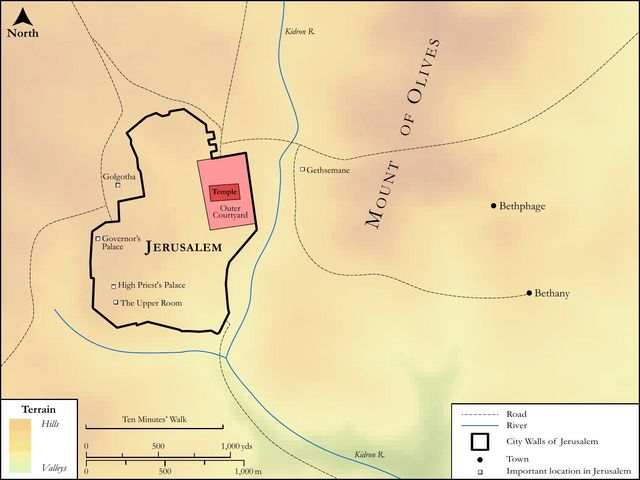
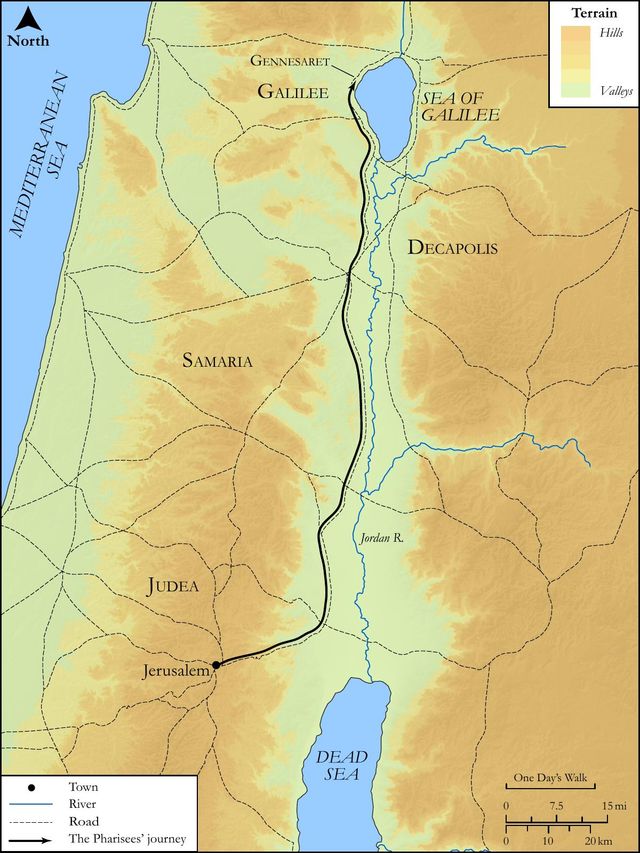
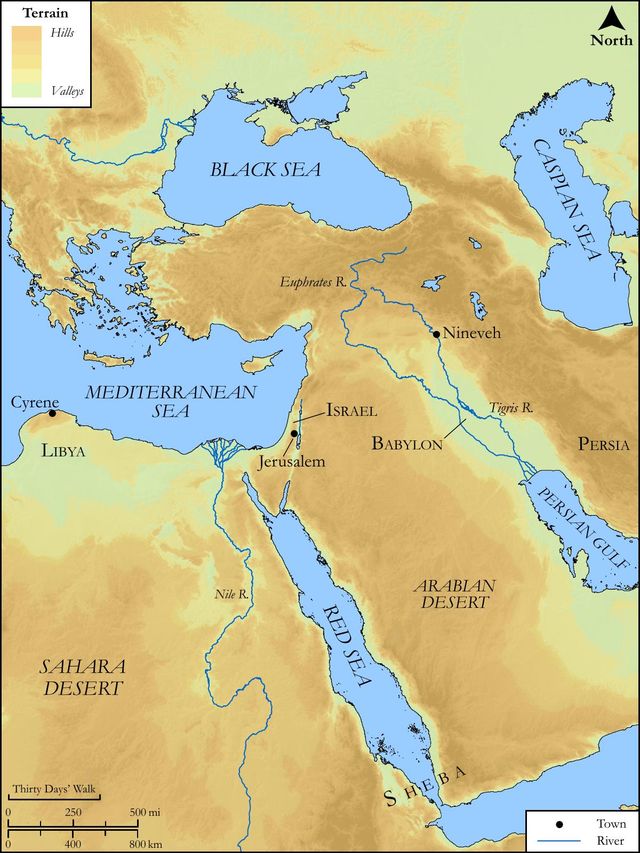
See on the biblical-era maps
Study this verse
Public-domain commentary
Matthew Henry
From his Commentary on the Whole Bible. Henry comments on passages, not single verses — this entry covers Matthew 15:10–20. His four-level outline is real structure in the source text, so it is rendered as structure.
Christ having proved that the disciples, in eating with unwashen hands, were not to be blamed, as transgressing the traditions and injunctions of the elders, comes here to show that they were not to be blamed, as having done any thing that was in itself evil. In the former part of his discourse he overturned the authority of the law, and in this the reason of it. Observe,
I.The solemn introduction to this discourse (Mat 15:10); He called the multitude.
They were withdrawn while Christ discoursed with the scribes and Pharisees; probably those proud men ordered them to withdraw, as not willing to talk with Christ in their hearing; Christ must favour them at their pleasure with a discourse in private. But Christ had a regard to the multitude; he soon despatched the scribes and Pharisees, and then turned them off, invited the mob, the multitude, to be his hearers: thus the poor are evangelized; and the foolish things of the world, and things that are despised hath Christ chosen. The humble Jesus embraced those whom the proud Pharisees looked upon with disdain, and to them he designed it for a mortification. He turns from them as wilful and unteachable, and turns to the multitude, who, though weak, were humble, and willing to be taught. To them he said, Hear and understand. Note, What we hear from the mouth of Christ, we must give all diligence to understand. Not only scholars, but even the multitude, the ordinary people, must apply their minds to understand the words of Christ. He therefore calls upon them to understand, because the lesson he was now about to teach them, was contrary to the notions which they had sucked in with their milk from their teachers; and overturned many of the customs and usages which they were wedded to, and laid stress upon. Note, There is need of a great attention of mind and clearness of understanding to free men from those corrupt principles and practices which they have been bred up in and long accustomed to; for in that case the understanding is commonly bribed and biassed by prejudice.
II.The truth itself laid down (Mat 15:11), in two propositions, which were opposite to the vulgar errors of that time, and were therefore surprising.
1.Not that which goes into the mouth defileth the man. It is not the kind or quality of our food, nor the condition of our hands, that affects the soul with any moral pollution or defilement. The kingdom of God is not meat and drink, Rom 14:17. That defiles the man, by which guilt is contracted before God, and the man is rendered offensive to him, and disfitted for communion with him; now what we eat, if we do not eat unreasonably and immoderately, does not this; for to the pure all things are pure, Tit 1:15. The Pharisees carried the ceremonial pollutions, by eating such and such meats, much further than the law intended, and burdened it with additions of their own, which our Saviour witnesses against; intending hereby to pave the way to a repeal of the ceremonial law in that matter. He was now beginning to teach his followers to call nothing common or unclean; and if Peter, when he was bid to kill and eat, had remembered this word, he would not have said, Not so, Lord, Act 10:13-15, Act 10:28.
2.But that which comes out of the mouth, this defiles a man. We are polluted, not by the meat we eat with unwashen hands, but by the words we speak from an unsanctified heart; thus it is that the mouth causeth the flesh to sin, Ecc 5:6. Christ, in a former discourse, had laid a great stress upon our words (Mat 12:36, Mat 12:37); and that was intended for reproof and warning to those that cavilled at him; this here is intended for reproof and warning to those that cavilled at the disciples, and censured them. It is not the disciples that defile themselves with what they eat, but the Pharisees that defile themselves with what they speak spitefully and censoriously of them. Note, Those who charge guilt upon others for transgressing the commandments of men, many times bring greater guilt upon themselves, by transgressing the law of God against rash judging. Those most defile themselves, who are most forward to censure the defilements of others.
III.The offence that was taken at this truth and the account brought to Christ of that offence (Mat 15:12); "The disciples said unto him, Knowest thou that the Pharisees were offended, and didst thou not foresee that they would be so, at this saying, and would think the worse of thee and of thy doctrine for it, and be the more enraged at thee?"
1.It was not strange that the Pharisees should be offended at this plain truth, for they were men made up of error and enmity, mistakes and malice. Sore eyes cannot bear clear light; and nothing is more provoking to proud imposers than the undeceiving of those whom they have first blindfolded, and then enslaved. It should seem that the Pharisees, who were strict observers of the traditions, were more offended than the scribes, who were the teachers of them; and perhaps they were as much galled with the latter part of Christ's doctrine, which taught a strictness in the government of our tongue, as with the former part, which taught an indifference about washing our hands; great contenders for the formalities of religion, being commonly as great contemners of the substantials of it.
2.The disciples thought it strange that their Master should say that which he knew would give so much offence; he did not use to do so: surely, they think, if he had considered how provoking it would be, he would not have said it. But he knew what he said, and to whom he said it, and what would be the effect of it; and would teach us, that though in indifferent things we must be tender of giving offence, yet we must not, for fear of that, evade any truth or duty. Truth must be owned, and duty done; and if any be offended, it is his own fault; it is scandal, not given, but taken.
Perhaps the disciples themselves stumbled at the word Christ said, which they thought bold, and scarcely reconcileable with the difference that was put by the law of God between clean and unclean meats; and therefore objected this to Christ, that they might themselves be better informed. They seem likewise to have a concern upon them for the Pharisees, though they had quarrelled with them; which teaches us to forgive, and seek the good, especially the spiritual good, of our enemies, persecutors, and slanderers. They would not have the Pharisees go away displeased at any thing Christ had said; and therefore, though they do not desire him to retract it, they hope he will explain, correct, and modify it. Weak hearers are sometimes more solicitous than they should be not to have wicked hearers offended. But if we please men with the concealment of truth, and the indulgence of their errors and corruptions, we are not the servants of Christ.
IV.The doom passed upon the Pharisees and their corrupt traditions; which comes in as a reason why Christ cared not though he offended them, and therefore why the disciples should not care; because they were a generation of men that hated to be reformed, and were marked out for destruction. Two things Christ here foretels concerning them.
1.The rooting out of them and their traditions (Mat 15:13); Every plant which my heavenly Father hath not planted, shall be rooted up. Not only the corrupt opinions and superstitious practices of the Pharisees, but their sect, and way, and constitution, were plants not of God's planting. The rules of their profession were no institutions of his, but owed their origin to pride and formality. The people of the Jews were planted a noble vine; but now that they are become the degenerate plant of a strange vine, God disowned them, as not of his planting. Note,
(1.)In the visible church, it is no strange thing to find plants that our heavenly Father has not planted. It is implied, that whatever is good in the church is of God's planting, Isa 41:19. But let the husbandman be ever so careful, his ground will cast forth weeds of itself, more or less, and there is an enemy busy sowing tares. What is corrupt, though of God's permitting, is not of his planting; he sows nothing but good seed in his field. Let us not therefore be deceived, as if all must needs be right that we find in the church, and all those persons and things our Father's plants that we find in our Father's garden. Believe not every spirit, but try the spirits; see Jer 19:5; Jer 23:31, Jer 23:32.
(2.)Those that are of the spirit of the Pharisees, proud, formal, and imposing, what figure soever they make, and of what denomination soever they be, God will not own them as of his planting. By their fruit you shall know them.
(3.)Those plants that are not of God's planting, shall not be of his protecting, but shall undoubtedly be rooted up. What is not of God shall not stand, Act 5:38. What things are unscriptural, will wither and die of themselves, or be justly exploded by the churches; however in the great day these tares that offend will be bundled for the fire. What is become of the Pharisees and their traditions? They are long since abandoned; but the gospel of truth is great, and will remain. It cannot be rooted up.
2.The ruin of them; and their followers, who had their persons and principles in admiration, Mat 15:14. Where,
(1.)Christ bids his disciples let them alone. "Have no converse with them or concern for them; neither court their favour, nor dread their displeasure; care not though they be offended, they will take their course, and let them take the issue of it. They are wedded to their own fancies, and will have every thing their own way; let them alone. Seek not to please a generation of men that please not God (Th1 2:15), and will be pleased with nothing less than absolute dominion over your consciences. They are joined to idols, as Ephraim (Hos 4:17), the idols of their own fancy; let them alone, let them be filthy still," Rev 22:11. The case of those sinners is sad indeed, whom Christ orders his ministers to let alone.
(2.)He gives them two reasons for it. Let them alone; for,
[1.]They are proud and ignorant; two bad qualities that often meet, and render a man incurable in his folly, Pro 26:12. They are blind leaders of the blind. They are grossly ignorant in the things of God, and strangers to the spiritual nature of the divine law; and yet so proud, that they think they see better and further than any, and therefore undertake to be leaders of others, to show others the way to heaven, when they themselves know not one step of the way; and, accordingly, they prescribe to all, and proscribe those who will not follow them. Though they were blind, if they had owned it, and come to Christ for eye-salve, they might have seen, but they disdained the intimation of such a thing (Joh 9:40); Are we blind also? They were confident that they themselves were guides of the blind (Rom 2:19, Rom 2:20), were appointed to be so, and fit to be so; that every thing they said was an oracle and a law; "Therefore let them alone, their case is desperate; do not meddle with them; you may soon provoke them, but never convince them." How miserable was the case of the Jewish Church now when their leaders were blind, so self-conceitedly foolish, as to be peremptory in their conduct, while the people were so sottishly foolish as to follow them with an implicit faith and obedience, and willingly walk after the commandment, Hos 5:11. Now the prophecy was fulfilled, Isa 29:10, Isa 29:14. And it is easy to imagine what will be in the end hereof, when the prophets prophesy falsely, and the priests bear rule by their means, and the people love to have it so, Jer 5:31.
[2.]They are posting to destruction, and will shortly be plunged into it; Both shall fall into the ditch. This must needs be the end of it, if both be so blind, and yet both so bold, venturing forward, and yet not aware of danger. Both will be involved in the general desolation coming upon the Jews, and both drowned in eternal destruction and perdition. The blind leaders and the blind followers will perish together. We find (Rev 22:15), that hell is the portion of those that make a lie, and of those that love it when it is made. The deceived and the deceiver are obnoxious to the judgment of God, Job 12:16. Note, First, Those that by their cunning craftiness draw others to sin and error, shall not, with all their craft and cunning, escape ruin themselves. If both fall together into the ditch, the blind leaders will fall undermost, and have the worst of it; see Jer 14:15, Jer 14:16. The prophets shall be consumed first, and then the people to whom they prophesy, Jer 20:6; Jer 27:15, Jer 27:16. Secondly, The sin and ruin of the deceivers will be no security to those that are deceived by them. Though the leaders of this people cause them to err, yet they that are led of them are destroyed (Isa 9:16), because they shut their eyes against the light which would have rectified their mistake. Seneca, complaining of most people's being led by common opinion and practice (Unusquisque mavult credere quam judicare - Things are taken upon trust, and never examined), concludes, Indeista tanta coacervatio aliorum super alios ruentium - Hence crowds fall upon crowds, in vast confusion. De Vit Beat. The falling of both together will aggravate the fall of both; for they that have thus mutually increased each other's sin, will mutually exasperate each other's ruin.
V.Instruction given to the disciples concerning the truth Christ had laid down, Mat 15:10.
Though Christ rejects the wilfully ignorant who care not to be taught, he can have compassion on the ignorant who are willing to learn, Heb 5:2. If the Pharisees, who made void the law, be offended, let them be offended: but this great peace have they who love the law, that nothing shall offend them, but, some way or other, the offence shall be taken off, Psa 119:165.
Here is, 1. Their desire to be better instructed in this matter (Mat 15:15); in this request as in many others, Peter was their speaker; the rest, it is probable, putting him on to speak, or intimating their concurrence; Declare unto us this parable. What Christ said was plain, but, because it agreed not with the notions they had imbibed, though they would not contradict it, yet they call it a parable, and cannot understand it. Note, (1.) Weak understandings are apt to turn plain truths into parables, and to seek for a knot in a bulrush. The disciples often did so, as Joh 16:17. Even the grasshopper is a burthen to a weak stomach, and babes in understanding cannot bear and digest strong meat. (2.) Where a weak head doubts concerning any word of Christ, an upright heart and a willing mind will seek for instruction. The Pharisees were offended, but kept it to themselves; hating to be reformed, they hated to be informed; but the disciples, though offended, sought for satisfaction, imputing the offence, not to the doctrine delivered, but to the shallowness of their own capacity.
2.The reproof Christ gave them for their weakness and ignorance (Mat 15:16); Are ye also yet without understanding? As many as Christ loves and teaches, he thus rebukes. Note, They are very ignorant indeed, who understand not that moral pollutions are abundantly worse and more dangerous than ceremonial ones. Two things aggravate their dulness and darkness.
(1.)That they were the disciples of Christ; "Are ye also without understanding? Ye whom I have admitted into so great a degree of familiarity with me, are ye so unskilful in the word of righteousness?" Note, The ignorance and mistakes of those that profess religion, and enjoy the privileges of church-membership, are justly a grief to the Lord Jesus. "No wonder that the Pharisees understand not this doctrine, who know nothing of the Messiah's kingdom: but ye that have heard of it, and embraced it yourselves, and preached it to others, are ye also such strangers to the spirit and genius of it?"
(2.)That they had been a great while Christ's scholars; "Are ye yet so, after ye have been so long under my teaching?" Had they been but of yesterday in Christ's school, it had been another matter, but to have been for so many months Christ's constant hearers, and yet to be without understanding, was a great reproach to them. Note, Christ expects from us some proportion of knowledge, and grace, and wisdom, according to the time and means we have had. See Joh 14:9; Heb 5:12; Ti2 3:7, Ti2 3:8.
3.The explication Christ gave them of this doctrine of pollutions. Though he chid them for their dulness, he did not cast them off, but pitied them, and taught them, as Luk 24:25-27. He here shows us,
(1.)What little danger we are in of pollution from that which entereth in at the mouth, Mat 15:17. An inordinate appetite, intemperance, and excess in eating, come out of the heart, and are defiling; but meat in itself is not so, as the Pharisees supposed. What there is of dregs and defilement in our meat, nature (or rather God of nature) has provided a way to clear us of it; it goes in at the belly, and is cast out into the draught, and nothing remains to us but pure nourishment. So fearfully and wonderfully are we made and preserved, and our souls held in life. The expulsive faculty is as necessary in the body as any other, for the discharge of that which is superfluous, or noxious; so happily is nature enabled to help itself, and shift for its own good: by this means nothing defiles; if we eat with unwashen hands, and so any thing unclean mix with our food, nature will separate it, and cast it out, and it will be no defilement to us. It may be a piece of cleanliness, but it is not point of conscience, to wash before meat; and we go upon a great mistake if we place religion in it. It is not the practice itself, but the opinion it is built upon, that Christ condemns, as if meat commended us to God (Co1 8:8); whereas Christianity stands not in such observances.
(2.)What great danger we are in of pollution from that which proceeds out of the mouth (Mat 15:18), out of the abundance of the heart: compare Mat 12:34. There is no defilement in the products of God's bounty; the defilement arises from the products of out corruption. Now here we have,
[1.]The corrupt fountain of that which proceeds out of the mouth; it comes from the heart; that is the spring and source of all sin, Jer 8:7. It is the heart that is so desperately wicked (Jer 17:9); for there is no sin in a word or deed, which was not first in the heart. There is the root of bitterness, which bears gall and wormwood. It is the inward part of a sinner, that is very wickedness, Psa 5:9. All evil speakings come forth from the heart, and are defiling; from the corrupt heart comes the corrupt communication.
[2.]Some of the corrupt streams which flow from this fountain, specified; though they do not all come out of the mouth, yet they all come out of the man, and are the fruits of that wickedness which is in the heart, and is wrought there, Psa 58:2.
First, Evil thoughts, sins against all the commandments. Therefore David puts vain thoughts in opposition to the whole law, Psa 119:113. These are the first-born of the corrupt nature, the beginning of its strength, and do most resemble it. These, as the son and heir, abide in the house, and lodge within us. There is a great deal of sin that begins and ends in the heart, and goes no further. Carnal fancies and imaginations are evil thoughts, wickedness in the contrivance (dialogismoi ponēroi), wicked plots, purposes, and devices of mischief to others, Mic 2:1.
Secondly, Murders, sins against the sixth commandment; these come from a malice in the heart against our brother's life, or a contempt of it. Hence he that hates his brother, is said to be a murderer; he is so at God's bar, Jo1 3:15. War is in the heart, Psa 55:21; Jam 4:1
Thirdly, Adulteries and fornications, sins against the seventh commandment; these come from the wanton, unclean, carnal heart; and the lust that reigns there, is conceived there, and brings forth these sins, Jam 1:15. There is adultery in the heart first, and then in the act, Mat 5:28.
Fourthly, Thefts, sins against the eighth commandment; cheats, wrongs, rapines, and all injurious contracts; the fountain of all these is in the heart, that is it that is exercised in these covetous practices (Pe2 2:14), that is set upon riches, Psa 62:10. Achan coveted, and then took, Jos 7:20, Jos 7:21.
Fifthly, False witness, against the ninth commandment; this comes from a complication of falsehood and covetousness, or falsehood and covetousness, or falsehood and malice in the heart. If truth, holiness, and love, which God requires in the inward parts, reigned as they ought, there would be no false witness bearing, Psa 64:6 : Jer 9:8.
Sixthly, Blasphemies, speaking evil of God, against the third commandment; speaking evil of our neighbour, against the ninth commandment; these come from a contempt and disesteem of both in the heart; thence the blasphemy against the Holy Ghost proceeds (Mat 12:31, Mat 12:32); these are the overflowing of the gall within.
Now these are the things which defile a man, Mat 15:20. Note, Sin is defiling to the soul, renders it unlovely and abominable in the eyes of a pure and holy God; unfit for communion with him, and for the enjoyment of him in the new Jerusalem, into which nothing shall enter that defileth or worketh iniquity. The mind and conscience are defiled by sin, and that makes every thing else so, Tit 1:15. This defilement by sin was signified by the ceremonial pollutions which the Jewish doctors added to, but understood not. See Heb 9:13, Heb 9:14; Jo1 1:7.
These therefore are the things we must carefully avoid, and all approaches toward them, and not lay stress upon the washing of the hands. Christ doth not yet repeal the law of the distinction of meats (that was not done till Acts 10), but the tradition of the elders, which was tacked to that law; and therefore he concludes, To eat with unwashen hands (which was the matter now in question), this defileth not a man. If he wash, he is not the better before God; if he wash not, he is not the worse.
Historical interpretation
Nine Centuries of Reception
7 surviving comments on this verse. Each one is dated, so this reads as a timeline rather than a list.
Select a marker to jump to its quote. Markers stagger vertically where authors wrote within a few decades of each other.
What then saith Peter? He saith not, "What can this be which Thou hast said?" but as though it were full of obscurity, he puts his question. And he saith not, "Why hast thou spoken contrary to the law?" for he was afraid, lest he should be thought to have taken offense, but asserts it to be obscure. However, that it was not obscure, but that he was offended, is manifest, for it had nothing of obscurity.
Wherefore also He rebukes him, saying, "Are ye also yet without understanding?" For as to the multitude, they did not perhaps so much as understand the saying; but themselves were the persons offended. Wherefore, whereas at first, as though asking in behalf of the Pharisees, they were desirous to be told; when they heard Him denouncing a great threat, and saying, "Every plant, which my heavenly Father hath not planted, shall be rooted up," and, "They are blind leaders of the blind," they were silenced. But he, always ardent, not even so endures to hold his peace, but saith, "Declare unto us this parable."
What then saith Christ? With a sharp rebuke He answers, "Are ye also yet without understanding? Do ye not yet understand?"
But these things He said, and reproved them, in order to cast out their prejudice; He stopped not however at this, but adds other things also, saying, "That whatsoever entereth in at the mouth goeth into the belly, and is cast out into the draught; but those things which proceed out of the mouth come forth from the heart, and they defile the man. For out of the heart proceed evil thoughts, murders, adulteries, fornications, thefts, blasphemies, false-witnessings: and these are the things that defile the man: but to eat with unwashen hands defileth not the man."
Seest thou how sharply He deals with them, and in the way of rebuke?
Then He establishes His saying by our common nature, and with a view to their cure. For when He saith, "It goeth into the belly, and is cast out into the draught," he is still answering according to the low views of the Jews. For He saith, "it abides not, but goes out:" and what if it abode? it would not make one unclean. But not yet were they able to hear this.
And one may remark, that because of this the lawgiver allows just so much time, as it may be remaining within one, but when it is gone forth, no longer. For instance, at evening He bids you wash yourself, and so be clean; measuring the time of the digestion, and of the excretion. But the things of the heart, He saith, abide within, and when they are gone forth they defile, and not when abiding only. And first He puts our evil thoughts, a kind of thing which belonged to the Jews; and not as yet doth He make His refutation from the nature of the things, but from the manner of production from the belly and the heart respectively, and from the fact that the one sort remains, the other not; the one entering in from without, and departing again outwards, while the others are bred within, and having gone forth they defile, and then more so, when they are gone forth. Because they were not yet able, as I said, to be told these things with all due strictness.
But Mark saith, that "cleansing the meats," He spake this. He did not however express it, nor at all say, "but to eat such and such meats defileth not the man," for neither could they endure to be told it by Him thus distinctly. And accordingly His conclusion was, "But to eat with unwashen hands defileth not the man."
Or, The Lord blames him, because it was not from any uncertainty that he asked this, but from offence which he had taken. The multitudes had not understood what had been said; but the disciples were offended at it, whence at the first they had desired to ask Him concerning the Pharisees, but had been stayed by that mighty declaration, Every plant, &c. But Peter, who is ever zealous, is not silent even so; therefore the Lord reproves him, adding a reason for His reproof, Do ye not understand, that whatsoever entereth in at the mouth goeth into the belly, and is cast out into the draught?
But the Lord in thus speaking answers His disciples after Jewish infirmity; He says that the food does not abide, but goes out; but if it did abide, yet would it not make a man unclean. But they could not yet hear these things. Thus Moses also pronounces that they continued unclean, so long as the food continued in them; for he bids them wash in the evening, and then they should be clean, calculating the time of digestion and egestion.
For the things which are of the heart, remain within a man, and defile him in going out of him, as well as in abiding in him; yea, more in going out of him; wherefore He adds, Out of the heart proceed evil thoughts; He gives these the first place, because this was the very fault of the Jews, who laid snares for Him.
He said not that to eat the meats forbidden in the Law defiles not a man, that they might not have what to answer to Him again, but He concludes in that concerning which the disputation had been.
“Out of the heart,” he said, “come evil thoughts.” Therefore the soul or principle of action is not in the brain according to Plato but in the heart according to Christ. On this point, those who believe that thoughts are introduced by the devil and do not originate from our own will are to be repudiated. The devil can aid and abet evil thoughts but he cannot originate them, even though, ever lying in wait, he kindles a small spark of our thoughts with his tinder. We must not hold the opinion that the devil can also probe the depths of our heart. However, he can judge from our demeanor and gestures what we are thinking about. For example, if he sees us gazing often at a beautiful woman, he surmises that our heart has been wounded with the dart of love.
(Verse 19, 20.) For out of the heart come evil thoughts, murders, adulteries, fornications, thefts, false testimonies, blasphemies: these are the things that defile a person. But to eat with unwashed hands does not defile a person. 'For out of the heart,' he says, 'come evil thoughts.' Therefore, according to Christ and not according to Plato, the soul's principal place is in the heart, not in the brain. Those who believe that evil thoughts are instilled by the devil and not born out of one's own will can be argued against based on this statement. The devil can be a helper and instigator of evil thoughts, but he cannot be the author. However, if he is always lying in wait, he may ignite the slightest spark of our thoughts with his fuel, but we should not assume that he can explore the secrets of our hearts. Rather, we should judge what we have within us by our physical appearance and actions. For example, if he sees us frequently admiring a beautiful woman, he understands that our hearts have been wounded by Cupid's arrow.
This is also the same as that Apostolic injunction, A heretic after the first and second admonition reject, knowing that such a one is perverse. (Tit. 3:10, 11.) To the same end the Saviour commands evil teachers to be left to their own will, knowing that it is hardly that they can be brought to the truth.
He is reproved by the Lord, because He supposed that to be spoken parabolically, which was indeed spoken plainly. Which teaches us that that hearer is to be blamed who would take dark sayings as clear, or clear sayings as obscure.
Some cavil at this, that the Lord is ignorant of physical disputation in saying that all food goes into the belly, and is cast out into the draught; for that the food, as soon as it is taken, is distributed through the limbs, the veins, the marrow, and the nerves. But it should be known, that the lighter juices, and liquid food after it has been reduced and digested in the veins and vessels, passes into the lower parts through those passages which the Greeks call 'pores,' and so goes into the draught.
The principle therefore of the soul is not according to Plato in the brain, but according to Christ in the heart, and by this passage we may refute those who think that evil thoughts are suggestions of the Devil, and do not spring from our proper will. The Devil may encourage and abet evil thoughts, but not originate them. And if he be able, being always on the watch, to blow into flame any small spark of thought in us, we should not thence conclude that he searches the hidden places of the heart, but that from our manner and motions he judges of what is passing within us. For instance, if he see us direct frequent looks towards a fair woman, he understands that our heart is wounded through the eye.
The Lord was used to speak in parables, so that Peter when he heard, That which entereth into the mouth defileth not a man, thought it was spoken as a parable, and asked, as it follows; Then answered Peter, and said unto him, Declare unto us this parable. And because he asked this on behalf of the rest, they are all included in the rebuke, But he said, Are ye also yet without understanding?
Having named the vices which are forbidden by the divine Law, the Lord beautifully adds, These are they that defile a man, that is, make him unclean and impure.
(non occ.) And from evil thoughts proceed evil deeds and evil words, which are forbidden by the law; whence He adds Murders, which are forbidden by that commandment of the Law, Thou shalt not kill; Adulteries, fornications, which are understood to be forbidden by that precept, Thou shalt not commit adultery; Thefts, forbidden by the command, Thou shalt not steal; False witness, by that, Thou shall not bear false witness against thy neighbour; Blasphemies, by that, Thou shalt not take the name of God in vain.
(non occ.) And because these words of the Lord had been occasioned by the iniquity of the Pharisees, who preferred their traditions to the commands of God, He hence concludes that there was no necessity for the foregoing tradition, But to eat with unwashen hands defileth not a man.
Continue studying Matthew 15:19 across the web’s major study libraries — every link below opens this exact verse, chapter, or book on the destination site.
Read & Compare
 BibleGatewayThis verse in more than 200 translations and 70 languages.
 Bible.comThe YouVersion reader — hundreds of translations, reading plans, and highlights.
 ESV.orgCrossway's official English Standard Version reader.
 NET BibleThe NET translation with 60,000+ translators' notes on every rendering decision.
 STEP BibleTyndale House's free study tool — original text, vocabulary, and scholarly resources.
 BibliaLogos Bible Software's free web reader.
 USCCBThe New American Bible (Revised Edition) with the U.S. bishops' study notes.
Commentaries
 BibleHub CommentariesDozens of classic commentaries on this verse, gathered on one page.
 StudyLightMore than 100 commentary sets — the largest collection on the web.
 BibleRefPlain-English commentary on what this verse means, verse by verse.
 Enduring WordDavid Guzik's free commentary on this chapter, widely used by Bible teachers.
 Bible Study ToolsVerse commentary alongside Greek and Hebrew study aids.
Original Language & Research
- BibleHub InterlinearThe verse word by word — original language, transliteration, and English.
- BibleHub LexiconEvery word's original-language definition and Strong's entry.
 Blue Letter BibleDeep-study tools — Strong's numbers, concordance, and word studies.
 CNTR CollationThe earliest Greek manuscripts of this verse, collated letter by letter.
Sermons, Hymns & Audio


TrulyRandomVerse is not affiliated with these sites and doesn’t control their content. They’re linked because they’re genuinely useful.
Summary
Matthew 15:19 presents a foundational teaching from Jesus Christ, revealing that true defilement originates not from external actions or ceremonial impurities, but from the inner core of a person's being—the heart. This verse serves as a profound explanation of Jesus' earlier statement that "what comes out of the mouth proceeds from the heart, and this defiles a person" (Matthew 15:18), listing a comprehensive array of moral evils, including evil thoughts, murders, adulteries, fornications, thefts, false witness, and blasphemies, all of which stem from an unregenerate human heart.
Context
ShowHideLiterary Context
This verse is part of a crucial confrontation between Jesus and the Pharisees and scribes in Matthew 15. The religious leaders challenge Jesus' disciples for not observing the tradition of ceremonial hand washing before eating, which they considered defiling (Matthew 15:2). Jesus responds by exposing their hypocrisy, noting how they prioritize human traditions over God's commandments (Matthew 15:3-9). He then calls the crowd and explains that "it is not what goes into the mouth that defiles a person, but what comes out of the mouth; this defiles a person" (Matthew 15:11). When the disciples are confused, Jesus clarifies this teaching further in Matthew 15:16-20, with Matthew 15:19 specifically detailing the catalogue of evils that originate from the heart, proving His point about the internal source of defilement.
Historical & Cultural Context
First-century Judaism, particularly among the Pharisees, placed immense emphasis on ritual purity laws, many of which were oral traditions passed down through generations, often exceeding the explicit commands of the Torah. These traditions included elaborate rules for washing hands, utensils, and even specific foods, all aimed at maintaining a state of external ritual purity. The concern was that contact with anything considered "unclean" could defile a person and render them unfit for worship or social interaction. Jesus' teaching directly challenges this external, performance-based understanding of righteousness, shifting the focus from outward adherence to inward moral and spiritual condition. His words would have been revolutionary and deeply offensive to those who equated piety with strict adherence to these traditions.
Key Themes
ShowHideThe central theme underscored by Matthew 15:19 is the Origin of Sin and Defilement. Jesus unequivocally states that sin, in its various manifestations, does not come from external sources or ceremonial infractions, but from the human heart. This contrasts sharply with the prevailing religious thought of His day, which often focused on external compliance. Another crucial theme is Internal Purity Over External Ritual. Jesus asserts that God is concerned with the condition of one's inner being far more than with outward observances or human traditions. True righteousness and holiness begin with a transformed heart, not with ceremonial washing or dietary restrictions. This passage also highlights the Comprehensive Nature of Human Depravity, as Jesus provides a list of diverse and severe sins, demonstrating that all forms of moral corruption—from thoughts to actions—stem from the same fallen source within the human heart. A parallel and slightly expanded list of these evils can be found in Mark 7:21-23.
Exposition and Analysis
ShowHideKey Word Analysis
ShowHideIn biblical anthropology, the "heart" is far more than just the emotional center; it is the seat of intellect, will, reason, and moral character—the very core of one's being. It is where decisions are made, thoughts are formed, and intentions are conceived. Jesus' teaching here emphasizes that the fundamental problem of humanity lies not in external circumstances or actions, but in the corrupted nature of the inner person.
This verb signifies an "issuing forth" or "coming out" from a source. It implies a natural, inevitable outflow. Just as water flows from a spring, the various evils listed by Jesus are presented as the natural and unhindered emanations from a heart that is inherently sinful. This highlights the spontaneity and intrinsic nature of sin's origin within humanity.
This term describes something that is not merely "bad" in a general sense, but actively "hurtful," "malicious," or "vicious." It denotes an active malevolence or a destructive influence, differing from other Greek words for "bad" (like kakos which refers to essential character). When applied to "thoughts," it implies intentions and desires that are inherently harmful, morally culpable, and lead to destructive actions.
Verse Breakdown
ShowHide"For out of the heart proceed evil thoughts"
This foundational clause establishes the internal origin of all sin. "Evil thoughts" (dialogismoi poneroi) are not just fleeting ideas but often refer to malicious reasonings, wicked intentions, and depraved imaginings that are conceived and nurtured within the mind, which is inextricably linked to the heart. These are the seeds from which all outward sins grow.
"murders, adulteries, fornications, thefts, false witness, blasphemies"
This list is a representative, not exhaustive, catalogue of grave moral transgressions that demonstrably flow from a heart corrupted by "evil thoughts."
Murders (phonoi)
The taking of human life, stemming from hatred, anger, or malice in the heart.
Adulteries (moicheiai)
Sexual infidelity within marriage, arising from lust and disregard for covenant.
Fornications (porneiai)
Illicit sexual immorality outside of marriage, encompassing a wide range of sexual sins.
Thefts (klopai)
Taking what belongs to another, driven by greed or covetousness.
False witness (pseudomartyriai)
Lying under oath or bearing false testimony, stemming from deceit and a lack of integrity.
Blasphemies (blasphemiai)
Slander, reviling, or speaking impiously against God or sacred things, revealing a heart of rebellion or disrespect.
Literary Devices
ShowHideMatthew 15:19 effectively employs several literary devices to convey its profound message. The most prominent is Enumeration, where Jesus provides a specific list of sins ("murders, adulteries, fornications, thefts, false witness, blasphemies") to illustrate the comprehensive nature of the evil that originates from the heart. This list serves as concrete examples of the abstract "evil thoughts" that precede them. There is also an implicit Contrast at play throughout this passage, as Jesus' teaching directly opposes the Pharisaic emphasis on external ritual purity. By stating that defilement comes from within, He highlights the stark difference between outward religious observance and true inward righteousness. Furthermore, the concept of the heart as the source from which evils "proceed" functions as a powerful Metaphor, portraying the heart as a wellspring or fountain from which all human actions, good or evil, naturally flow. This metaphor underscores the idea that outward behavior is merely a manifestation of an internal condition.
Theological and Thematic Connections
ShowHideMatthew 15:19 is a cornerstone text for understanding the biblical doctrine of human depravity and the origin of sin. It unequivocally teaches that sin is not primarily an external problem of behavior, but an internal problem of the heart's condition. This aligns with Old Testament wisdom literature, which frequently warns about the deceitfulness and wickedness of the human heart (Jeremiah 17:9; Proverbs 4:23). Jesus' teaching here underscores the radical nature of sin, affecting not just actions but thoughts and intentions, making it impossible for humanity to achieve righteousness through external means or self-effort. This profound diagnosis of the human condition sets the stage for the New Testament's emphasis on the necessity of a new heart and a spiritual transformation wrought by God, rather than by human works.
Reflection and Application
ShowHideMatthew 15:19 serves as a profound call to radical self-examination and spiritual honesty. It challenges us to look beyond outward appearances and religious rituals, urging us to confront the true wellspring of our actions—the heart. This verse compels us to recognize that merely modifying external behavior is insufficient for true righteousness; genuine transformation must begin at the deepest level of our being. If evil thoughts and desires truly "proceed" from our hearts, then our greatest need is not for more rules or stricter adherence, but for a fundamental change of heart. This understanding should lead us to humility, acknowledging our inherent sinfulness and our desperate need for divine intervention. It reminds us that true purity and holiness are not achieved through human effort but through God's grace, which alone can cleanse and renew the heart, making it a source of life rather than defilement.
Questions for Reflection
ShowHideFAQ
ShowHideDoes Jesus' teaching in Matthew 15:19 mean that external actions don't matter, only intentions?
ShowHideNot at all. Jesus is not diminishing the importance of actions; rather, He is revealing their true source. The list of sins in Matthew 15:19—murders, adulteries, thefts, etc.—are all external actions with severe consequences. Jesus' point is that these actions are not random or externally imposed; they are the natural outflow of an internal condition. He emphasizes that if the heart is corrupt, it will inevitably produce corrupt actions. Therefore, while actions are crucial, the focus must first be on the heart, because a purified heart will naturally lead to righteous actions. This teaching elevates the standard of righteousness, showing that even evil thoughts, which may not manifest externally, are defiling because they reveal the heart's true state.
Christ-Centered Fulfillment
ShowHideMatthew 15:19 powerfully articulates the human predicament: a heart inherently corrupted, from which all manner of evil naturally proceeds. This profound diagnosis of sin's origin points directly to the necessity of Christ. Humanity cannot cleanse its own heart; the problem is too deep. Jesus, however, comes as the ultimate solution to this internal crisis. He is the one who offers not merely external behavioral modification, but a radical, internal transformation. Through His atoning sacrifice on the cross, Jesus provides forgiveness for the sins that flow from our corrupted hearts, and through His resurrection, He offers the power for new life. The promise of a "new heart and a new spirit" (Ezekiel 36:26) finds its fulfillment in Christ, who, through the indwelling Holy Spirit, enables believers to walk in newness of life, producing the fruit of righteousness instead of the works of the flesh (Romans 8:1-4; Galatians 5:22-23). Thus, Matthew 15:19 is not merely a condemnation but a profound pointer to the Gospel, revealing our desperate need for a Savior who can truly change us from the inside out, making us new creations in Him (2 Corinthians 5:17).