


Mark 7:21
Bible text: King James Version (1769 Blayney text) · Public domain
Bible text: Berean Standard Bible · Public domain
Bible text: American Standard Version (1901) · Public domain
Bible text: World English Bible, Messianic edition · Public domain
Bible text: Geneva Bible (1599) · Public domain
Bible text: Young's Literal Translation · Public domain
- ἔσωθενesōthenWithinG2081ADVAdverb
- γὰρgarforG1063CONJConjunction
- ἐκekfromG1537PREPPreposition
- τῆςtēstheG3588T-GSFDefinite article Genitive Singular Feminine
- καρδίαςkardiasheartG2588N-GSFNoun Genitive Singular Feminine
- τῶνtōn<the>G3588T-GPMDefinite article Genitive Plural Masculine
- ἀνθρώπωνanthrōpōnof menG444N-GPMNoun Genitive Plural Masculine
- οἱhoi<the>G3588T-NPMDefinite article Nominative Plural Masculine
- διαλογισμοὶdialogismoithoughtsG1261N-NPMNoun Nominative Plural Masculine
- οἱhoi<the>G3588T-NPMDefinite article Nominative Plural Masculine
- κακοὶkakoievilG2556A-NPMAdjective Nominative Plural Masculine
- ἐκπορεύονταιekporeuontaigo forthG1607V-PNI-3PVerb Present Middle Or Passive Deponent Indicative 3rd Plural
- πορνεῖαιporneiaisexual immoralityG4202N-NPFNoun Nominative Plural Feminine
- κλοπαίklopaitheftsG2829N-NPFNoun Nominative Plural Feminine
- φόνοιphonoimurdersG5408N-NPMNoun Nominative Plural Masculine
English is a literal word-by-word gloss of the Greek, not the KJV's wording. Why?
This is the original text the KJV's translators worked from — each Greek word with its own literal English meaning in this verse, prepared by scholars at Tyndale House, Cambridge. The KJV translates whole sentences, not word by word, so its wording differs: one Greek word can become several English words, and the KJV may choose “charity” where the gloss reads “love”. Both are faithful — they answer different questions. For the KJV's own rendering, switch to the KJV text.
Details
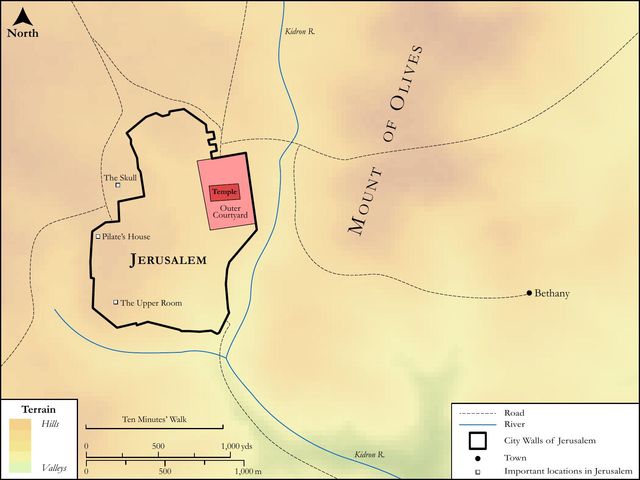
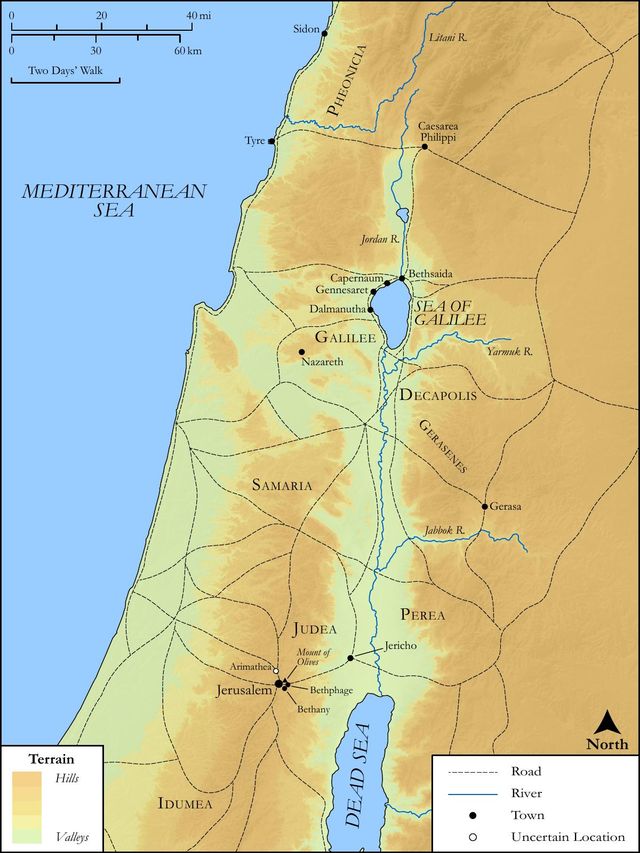
See on the biblical-era maps
Study this verse
Public-domain commentary
Matthew Henry
From his Commentary on the Whole Bible. Henry comments on passages, not single verses — this entry covers Mark 7:1–23. His three-level outline is real structure in the source text, so it is rendered as structure.
One great design of Christ's coming, was, to set aside the ceremonial law which God made, and to put an end to it; to make way for which he begins with the ceremonial law which men had made, and added to the law of God's making, and discharges his disciples from the obligation of that; which here he doth fully, upon occasion of the offence which the Pharisees took at them for the violation of it. These Pharisees and scribes with whom he had this argument, are said to come from Jerusalem down to Galilee - fourscore or a hundred miles, to pick quarrels with our Saviour there, where they supposed him to have the greatest interest and reputation. Had they come so far to be taught by him, their zeal had been commendable; but to come so far to oppose him, and to check the progress of his gospel, was great wickedness. It should seem that the scribes and Pharisees at Jerusalem pretended not only to a pre-eminence above, but to an authority over, the country clergy, and therefore kept up their visitations and sent inquisitors among them, as they did to John when he appeared, Joh 1:19.
Now in this passage we may observe,
I.What the tradition of the elders was:
by it all were enjoined to wash their hands before meat; a cleanly custom, and no harm in it; and yet as such to be over-nice in it discovers too great a care about the body, which is of the earth; but they placed religion in it, and would not leave it indifferent, as it was in its own nature; people were at their liberty to do it or not to do it; but they interposed their authority, and commanded all to do it upon pain of excommunication; this they kept up as a tradition of the elders. The Papists pretend to a zeal for the authority and antiquity of the church and its canons, and talk much of councils and fathers, when really it is nothing but a zeal for their own wealth, interest, and dominion, that governs them; and so it was with the Pharisees.
We have here an account of the practice of the Pharisees and all the Jews, Mar 7:3, Mar 7:4. 1. They washed their hands oft; they washed them, pugmē; the critics find a great deal of work about that word, some making it to denote the frequency of their washing (so we render it); others think it signifies the pains they took in washing their hands; they washed with great care, they washed their hands to their wrists (so some); they lifted up their hands when they were wet, that the water might run to their elbows. 2. They particularly washed before they ate bread; that is, before they sat down to a solemn meal; for that was the rule; they must be sure to wash before they ate the bread on which they begged a blessing. "Whosoever eats the bread over which they recite the benediction, Blessed be he that produceth bread, must wash his hands before and after," or else he was thought to be defiled. 3. They took special care, when they came in from the markets, to wash their hands; from the judgment-halls, so some; it signifies any place of concourse where there were people of all sorts, and, it might be supposed, some heathen or Jews under a ceremonial pollution, by coming near to whom they thought themselves polluted; saying, Stand by thyself, come not near me, I am holier than thou, Isa 65:5. They say, The rule of the rabbies was - That, if they washed their hands well in the morning, the first thing they did, it would serve for all day, provided they kept alone; but, if they went into company, they must not, at their return, either eat or pray till they had washed their hands; thus the elders gained a reputation among the people for sanctity, and thus they exercised and kept up an authority over their consciences. 4. They added to this the washing of cups, and pots, and brazen vessels, which they suspected had been made use of by heathens, or persons polluted; nay, and the very tables on which they ate their meat. There were many cases in which, by the law of Moses, washings were appointed; but they added to them, and enforced the observation of their own impositions as much as of God's institutions.
II.What the practice of Christ's disciples was; they knew what the law was, and the common usage; but they understood themselves so well that they would not be bound up by it: they ate bread with defiled, that is, with unwashen, hands, Mar 7:2. Eating with unwashen hands they called eating with defiled hands; thus men keep up their superstitious vanities by putting every thing into an ill name that contradicts them. The disciples knew (it is probable) that the Pharisees had their eye upon them, and yet they would not humour them by a compliance with their traditions, but took their liberty as at other times, and ate bread with unwashen hands; and herein their righteousness, however it might seem to come short, did really exceed, that of the scribes and Pharisees, Mat 5:20.
III.The offence which the Pharisees took at this; They found fault (Mar 7:2); they censured them as profane, and men of a loose conversation, or rather as men that would not submit to the power of the church, to decree rites and ceremonies, and were therefore rebellious, factious, and schismatical. They brought a complaint against them to their Master, expecting that he should check them, and order them to conform; for they that are fond of their own inventions and impositions, are commonly ready to appeal to Christ, as if he should countenance them, and as if his authority must interpose for the enforcing of them, and the rebuking of those that do not comply with them. They do not ask, Why do not thy disciples do as we do? (Though that was what they meant, coveting to make themselves the standard.) But, Why do not they walk according to the tradition of the elders? Mar 7:5. To which it was easy to answer, that, by receiving the doctrine of Christ, they had more understanding than all their teachers, yea more than the ancients, Psa 119:99, Psa 119:100.
IV.Christ's vindication of them; in which,
1.He argues with the Pharisees concerning the authority by which this ceremony was imposed; and they were the fittest to be discoursed with concerning that, who were the great sticklers for it: but this he did not speak of publicly to the multitude (as appears by his calling the people to him, Mar 7:14) lest he should have seemed to stir them up to faction and discontent at their governors; but addressed it as a reproof to the persons concerned: for the rule is, Suum cuique - Let every one have his own.
(1.)He reproves them for their hypocrisy in pretending to honour God, when really they had no such design in their religious observances (Mar 7:6, Mar 7:7); They honour me with their lips, they pretend it is for the glory of God that they impose those things, to distinguish themselves from the heathen; but really their heart is far from God, and is governed by nothing but ambition and covetousness. They would be thought hereby to appropriate themselves as a holy people to the Lord their God, when really it is the furthest thing in their thought. They rested in the outside of all their religious exercises, and their hearts were not right with God in them, and this was worshipping God in vain; for neither was he pleased with such sham - devotions, nor were they profited by them.
(2.)He reproves them for placing religion in the inventions and injunctions of their elders and rulers; They taught for doctrines the traditions of men. When they should have been pressing upon people the great principles of religion, they were enforcing the canons of their church, and judged of people's being Jews or no, according as they did, or did not, conform to them, without any consideration had, whether they lived in obedience to God's laws or no. It was true, there were divers washings imposed by the law of Moses (Heb 9:10), which were intended to signify that inward purification of the heart from worldly fleshly lusts, which God requires as absolutely necessary to our communion with him; but, instead of providing the substance, they presumptuously added to the ceremony, and were very nice in washing pots and cups; and observe, he adds, Many other such like things ye do, Mar 7:8. Note, Superstition is an endless thing. If one human invention and institution be admitted, though seemingly ever so innocent, as this of washing hands, behold, a troop comes, a door is opened for many other such things.
(3.)He reproves them for laying aside the commandment of God, and overlooking that, not urging that in their preaching, and in their discipline conniving at the violation of that, as if that were no longer of force, Mar 7:8. Note, It is the mischief of impositions, that too often they who are zealous for them, have little zeal for the essential duties of religion, but can contentedly see them laid aside. Nay, they rejected the commandment of God, Mar 7:9. He do fairly disannul and abolish the commandment of God; and even by your traditions make the word of God of no effect, Mar 7:13. God's statutes shall not only lie forgotten, as antiquated obsolete laws, but they shall, in effect, stand repealed, that their traditions may take place. They were entrusted to expound the law, and to enforce it; and, under pretence of using that power, they violated the law, and dissolved the bonds of it; destroying the text with the comment.
This he gives them a particular instance of, and a flagrant one - God commanded children to honour their parents, not only by the law of Moses, but, antecedent to that, by the law of nature; and whoso revileth, or speaketh evil of, father or mother, let him die the death, Mar 7:10. Hence it is easy to infer, that it is the duty of children, if their parents be poor, to relieve them, according to their ability; and if those children are worthy to die, that curse their parents, much more those that starve them. But if a man will but conform himself in all points to the tradition of the elders, they will find him out an expedient by which he may be discharged from this obligation, Mar 7:11. If his parents be in want and he has wherewithal to help them, but has no mind to do it, let him swear by the Corban, that is, by the gold of the temple, and the gift upon the altar, that his parents shall not be profited by him, that he will not relieve them; and, if they ask any thing of him, let him tell them this, and it is enough; as if by the obligation of this wicked vow he had discharged himself from the obligation of God's holy law; thus Dr. Hammond understands it: and it is said to be an ancient canon of the rabbin, That vows take place in things commanded by the law, as well as in things indifferent; so that, if a man make a vow which cannot be ratified without breaking a commandment, the vow must be ratified, and the commandment violated; so Dr. Whitby. Such doctrine as this the Papists teach, discharging children from all obligation to their parents by their monastic vows, and their entrance into religion, as they call it. He concludes, Any many such like things do ye. Where will men stop, when once they have made the word of God give way to their tradition? These eager imposers of such ceremonies, at first only made light of God's commandments in comparison with their traditions, but afterward made void God's commandments, if they stood in competition with them. All this, in effect, Isaiah prophesied of them; what he said of the hypocrites of his own day, was applicable to the scribes and Pharisees, v. 6. Note, When we see, and complain of, the wickedness of the present times, yet we do not enquire wisely of that matter, if we say that all the former days were better than these, Ecc 7:10. The worst of hypocrites and evil doers have had their predecessors.
2.He instructs the people concerning the principles upon which this ceremony was grounded. It was requisite that this part of his discourse should be public, for it related to daily practice, and was designed to rectify a great mistake which the people were led into by their elders; he therefore called the people unto him (Mar 7:14), and bid them hear and understand. Note, It is not enough for the common people to hear, but they must understand what they hear. When Christ would run down the tradition of the Pharisees about washing before meat, he strikes at the opinion which was the root of it. Note, Corrupt customs are best cured by rectifying corrupt notions.
Now that which he goes about to set them right in, is, what the pollution is, which we are in danger of being damaged by, Mar 7:15. (1.) Not by the meat we eat, though it be eaten with unwashen hands; that is but from without, and goes through a man. But, (2.) It is by the breaking out of the corruption that is in our hearts; the mind and conscience are defiled, guilt is contracted, and we become odious in the sight of God by that which comes out of us; our wicked thoughts and affections, words and actions, these defile us, and these only. Our care must therefore be, to wash our heart from wickedness.
3.He gives his disciples, in private, an explication of the instructions he gave the people. They asked him, when they had him by himself, concerning the parable (Mar 7:17); for to them, it seems, it was a parable. Now, in answer to their enquiry, (1.) He reproves their dulness; "Are ye so without understanding also? Are ye dull also, as dull as the people that cannot understand, as dull as the Pharisees that will not? Are ye so dull?" He doth not expect they should understand every thing; "But are ye so weak as not to understand this?" (2.) He explains this truth to them, that they might perceive it, and then they would believe it, for it carried its own evidence along with it. Some truths prove themselves, if they be but rightly explained and apprehended. If we understand the spiritual nature of God and of his law, and what it is that is offensive to him, and disfits us for communion with him, we shall soon perceive, [1.] That that which we eat and drink cannot defile us, so as to call for any religious washing; it goes into the stomach, and passes the several digestions and secretions that nature has appointed, and what there may be in it that is defiling is voided and gone; meats for the belly, and the belly for meats, but God shall destroy both it and them. But, [2.] It is that which comes out from the heart, the corrupt heart, that defiles us. As by the ceremonial law, whatsoever (almost) comes out of a man, defiles him (Lev 15:2; Deu 23:13), so what comes out from the mind of a man is that which defiles him before God, and calls for a religious washing (Mar 7:21); From within, out of the heart of men, which they boast of the goodness of, and think is the best part of them, thence that which defiles proceeds, thence comes all the mischief. As a corrupt fountain sends forth corrupt streams, so doth a corrupt heart send forth corrupt reasonings, corrupt appetites and passions, and all those wicked words and actions which are produced by them. Divers particulars are specified, as in Matthew; we had one there, which is not here, and that is, false witness-bearing; but seven are mentioned here, to be added to those we had there. First, Covetousnesses, for it is plural; pleonexiai - immoderate desires of more of the wealth of the world, and the gratifications of sense, and still more, still crying, Give, give. Hence we read of a heart exercised with covetous practices, Pe2 2:14. Secondly, Wickedness - ponēriai; malice, hatred, and ill-will, a desire to do mischief, and a delight in mischief done. Thirdly, Deceit; which is wickedness covered and disguised, that it may be the more securely and effectually committed. Fourthly, Lasciviousness; that filthiness and foolish talking which the apostle condemns; the eye full of adultery, and all wanton dalliances. Fifthly, The evil eye; the envious eye, and the covetous eye, grudging others the good we give them, or do for them (Pro 23:6), or grieving at the good they do or enjoy. Sixthly, Pride - huperēphania; exalting ourselves in our own conceit above others, and looking down with scorn and contempt upon others. Seventhly, Foolishness - aphrosunē; imprudence, inconsideration; some understand it especially of vainglorious boasting, which St. Paul calls foolishness (Co2 11:1, Co2 11:19), because it is here joined with pride; I rather take it for that rashness in speaking and acting, which is the cause of so much evil. Ill-thinking is put first, as that which is the spring of all our commissions, and unthinking put last, as that which is the spring of all our omissions. Of all these he concludes (Mar 7:23), 1. That they come from within, from the corrupt nature, the carnal mind, the evil treasure in the heart; justly is it said, that the inward part is very wickedness, it must needs be so, when all this comes from within. 2. That they defile the man; they render a man unfit for communion with God, they bring a stain upon the conscience; and, if not mortified and rooted out, will shut men out of the new Jerusalem, into which no unclean thing shall enter.
Historical interpretation
Eight Centuries of Reception
5 surviving comments on this verse. Each one is dated, so this reads as a timeline rather than a list.
Select a marker to jump to its quote. Markers stagger vertically where authors wrote within a few decades of each other.
Mystically, again, the disciples eating with unwashed hands signifies the future fellowship of the Gentiles with the Apostles. The cleansing and washing of the Pharisees is barren; but the fellowship of the Apostles, though without washing, has stretched out its branches as far as the sea.
(Vict. Ant. e Cat. in Marc.) The Jews regard and murmur about only the bodily purification of the law; our Lord wishes to bring in the contrary. Wherefore it is said, And when he had called all the people unto him, he said unto them, Hearken unto me every one, and understand; there is nothing from without a man, that entering into him can defile him, but the things which come out of a man, those are they which defile a man; that is, which make him unclean. The things of Christ have relation to the inner man, but those which are of the law are visible and external, to which, as being bodily, the cross of Christ was shortly to put an end.
(Vict. Ant. e Cat. in Marc.) Again He subjoins, If any man have ears to hear, let him hear. For He had not clearly shown them, what those things are which proceed out of a man, and defile a man; and on account of this saying, the Apostles thought that the foregoing discourse of the Lord implied some other deep thing; wherefore there follows: And when he was entered into the house from the people, his disciples asked him concerning the parable; they called it parable, because it was not clear.
(ubi sup.) For that man is a faulty hearer who considers what is obscure to be a clear speech, or what is clear to be obscurely spoken.
(ubi sup.) For the Jews, boasting themselves to be the portion of God, call common those meats which all men use, as shellfish, hares, and animals of that sort. Not even however what is offered to idols is unclean, in as far as it is food and God's creature; it is the invocation of devils which makes it unclean; and He adds the cause of it, saying, Because it entereth not into his heart. The principal seat of the soul according to Plato is the brain, but according to Christ, it is in the heart.
Thus then it is not meat that makes men unclean, but wickedness, which works in us the passions which come from within; wherefore it goes on: And he said, That which cometh out of a man, that defileth a man.
(ubi sup.) From this passage are condemned those men who suppose that thoughts are put into them by the devil, and do not arise from their own evil will. The devil may excite and help on evil thoughts, he cannot be their author.
But the intention of the Lord in saying this was to teach men, that the observing of meats, which the law commands, should not be taken in a carnal sense, and from this He began to unfold to them the intent of the law.
The Lord begins by chiding them, wherefore there follows, Are ye so without understanding also?
Then the Lord shows them what was hidden, saying, Do ye not perceive, that whatsoever thing from without entereth into the man, it cannot make him common?
An evil eye, that is, hatred and flattery, for he who hates turns an evil and envious eye on him whom he hates, and a flatterer, looking askance at his neighbour's goods, leads him into evil; blasphemies, that is, faults committed against God; pride, that is, contempt of God, when a man ascribes the good, which he does, not to God, but to his own virtue; foolishness, that is, an injury against one's neighbour.
GLOSS.a It says therefore into his heart, that is, into his mind, which is the principal part of his soul, on which his whole life depends; wherefore it is necessary, that according to the state of his heart a man should be called clean or unclean, and thus whatsoever does not reach the soul, cannot bring pollution to the man. Meats therefore, since they do not reach the soul, cannot in their own nature defile a man; but an inordinate use of meats, which proceeds from a want of order in the mind, makes men unclean. But that meats cannot reach the mind, He shows by that which He adds, saying, But into the belly, and goeth out into the draught, purging all meats. This however He says, without referring to what remains from the food in the body, for that which is necessary for the nourishment and growth of the body remains. But that which is superfluous goes out, and thus as it were purges the nourishment, which remains.
(non occ.) The meaning of which He points out, when He subjoins, for from within, out of the heart of men, proceed evil thoughts. And thus it appears that evil thoughts belong to the mind, which is here called the heart, and according to which a man is called good or bad, clean or unclean.
(non in Gloss. sed v. de Lyra in loc.) From evil thoughts, however, evil actions proceed to greater lengths, concerning which it is added, adulteries, that is, acts which consist in the violation of another man's bed; fornications, which are unlawful connections between persons, not bound by marriage; murders, by which hurt is inflicted on the person of one's neighbour; thefts, by which his goods are taken from him; covetousness, by which things are unjustly kept; wickedness, which consists in calumniating others; deceit, in overreaching them; lasciviousness, to which belongs any corruption of mind or body.
(non occ. sed v. Summa 2, 2. Qu. 46. 1. et 1, 2. Qu. 1, 1) Or, foolishness consists in wrong thoughts concerning God; for it is opposed to wisdom, which is the knowledge of divine things. It goes on, All these evil things come from within, and defile the man. For whatsoever is in the power of a man, is imputed to him as a fault, because all such things proceed from the interior will, by which man is master of his own actions.
Continue studying Mark 7:21 across the web’s major study libraries — every link below opens this exact verse, chapter, or book on the destination site.
Read & Compare
 BibleGatewayThis verse in more than 200 translations and 70 languages.
 Bible.comThe YouVersion reader — hundreds of translations, reading plans, and highlights.
 ESV.orgCrossway's official English Standard Version reader.
 NET BibleThe NET translation with 60,000+ translators' notes on every rendering decision.
 STEP BibleTyndale House's free study tool — original text, vocabulary, and scholarly resources.
 BibliaLogos Bible Software's free web reader.
 USCCBThe New American Bible (Revised Edition) with the U.S. bishops' study notes.
Commentaries
 BibleHub CommentariesDozens of classic commentaries on this verse, gathered on one page.
 StudyLightMore than 100 commentary sets — the largest collection on the web.
 BibleRefPlain-English commentary on what this verse means, verse by verse.
 Enduring WordDavid Guzik's free commentary on this chapter, widely used by Bible teachers.
 Bible Study ToolsVerse commentary alongside Greek and Hebrew study aids.
Original Language & Research
- BibleHub InterlinearThe verse word by word — original language, transliteration, and English.
- BibleHub LexiconEvery word's original-language definition and Strong's entry.
 Blue Letter BibleDeep-study tools — Strong's numbers, concordance, and word studies.
 CNTR CollationThe earliest Greek manuscripts of this verse, collated letter by letter.
Sermons, Hymns & Audio


TrulyRandomVerse is not affiliated with these sites and doesn’t control their content. They’re linked because they’re genuinely useful.
Summary
Mark 7:21 presents Jesus' profound teaching that true spiritual defilement originates not from external rituals or dietary observances, but from the corrupt desires and intentions residing within the human heart. This declaration radically redefines purity, shifting the focus from outward compliance to the inner moral and spiritual state, revealing the inherent sinfulness of humanity and the deep need for internal transformation.
Context
ShowHideLiterary Context
This verse is a crucial part of Jesus' discourse on true defilement, immediately following a confrontation with the Pharisees and scribes in Mark 7:1-13. They accused His disciples of violating traditional ceremonial handwashing rules. Jesus, however, challenges their external focus, declaring in Mark 7:15 that "There is nothing from without a man, that entering into him can defile him: but the things which come out of him, those are they that defile the man." Mark 7:21-23 then serves as a detailed elaboration of this principle, listing the specific evils that "come out of" the heart, thereby clarifying what truly defiles a person in God's eyes. This passage marks a significant departure from the prevailing legalistic interpretations of the Mosaic Law, emphasizing the spiritual over the ceremonial.
Historical & Cultural Context
First-century Jewish society, particularly among the Pharisees, placed immense importance on ritual purity laws, many of which were oral traditions (Halakha) that had evolved over centuries beyond the written Mosaic Law. These traditions governed everything from food preparation to social interactions, aiming to maintain a state of ritual cleanliness before God. The Pharisees believed that adherence to these external observances was paramount for righteousness and avoiding defilement. Jesus' teaching in Mark 7 directly challenges this deeply ingrained cultural and religious paradigm, asserting that God's primary concern is not with external cleanliness but with the moral condition of the inner person. This was a revolutionary statement that undermined the very foundation of much of the religious establishment's authority and practice.
Key Themes
ShowHideMark 7:21 contributes significantly to several key themes within the Gospel of Mark and broader biblical theology. Firstly, it highlights the theme of Internal Purity vs. External Rituals, asserting that genuine righteousness stems from a transformed heart, not from outward religious performance. This contrasts sharply with the legalism of the Pharisees, who prioritized human traditions over God's true intent for the law. Secondly, it profoundly addresses the Nature of Sin, revealing that sin is not merely a behavioral problem but a deep-seated issue originating from the core of human being—the heart. This aligns with Old Testament insights into human depravity, such as the declaration that "The heart is deceitful above all things, and desperately wicked" in Jeremiah 17:9. Thirdly, it underscores Jesus' Authority, demonstrating His power to reinterpret and fulfill the Law, moving beyond its ceremonial aspects to its spiritual essence. His teaching here is echoed in the parallel account in Matthew 15:18-20, further solidifying this radical redefinition of defilement.
Exposition and Analysis
ShowHideKey Word Analysis
ShowHideProlonged from a primary (Latin cor, "heart"); the heart, i.e. (figuratively) the thoughts or feelings (mind); also (by analogy) the middle:--(+ broken-)heart(-ed). In biblical usage, "heart" is far more than just the seat of emotions; it refers to the totality of the inner person—the intellect, will, emotions, and moral character. It is the core of one's being, the wellspring of thoughts, intentions, decisions, and moral choices. Thus, when Jesus says evil proceeds from the heart, He means from the very center of one's personality and being.
From ἐκ (ek) and πορεύομαι (poreuomai); to depart, be discharged, proceed, project:--come (forth, out of), depart, go (forth, out), issue, proceed (out of). This verb signifies an active outflow or emission. It emphasizes that the evils listed are not external influences or accidental occurrences, but rather originate from within and are actively brought forth by the individual. The heart is not merely a passive receptacle but an active source from which these evils emerge.
G1261 (dialogismós) and G2556 (kakós). Dialogismos refers to discussion, i.e., (internal) consideration (by implication, purpose), or (external) debate:--dispute, doubtful(-ing), imagination, reasoning, thought. Kakós means worthless (intrinsically, such; whereas πονηρός properly refers to effects), i.e., (subjectively) depraved, or (objectively) injurious:--bad, evil, harm, ill, noisome, wicked. Together, "evil thoughts" denote wicked reasonings, deliberations, intentions, or imaginations. This highlights that sin is not merely about outward actions but begins in the mind and will, as deliberate, internal processes that precede and give rise to outward evil deeds. It points to the foundational corruption of the human mind.
Verse Breakdown
ShowHide"For from within, out of the heart of men,"
This opening clause establishes the radical shift in Jesus' teaching. It directly counters the Pharisaic emphasis on external purity by pinpointing the true source of defilement: the inner being of humanity. The repetition of "from within" and "out of the heart" underscores the internal origin, emphasizing that the problem lies not in what enters the body, but in the very core of human nature and will. "Heart" here encompasses intellect, will, and moral character, signifying the totality of a person's inner life.
"proceed evil thoughts,"
This phrase immediately identifies the initial manifestation of the heart's corruption. "Evil thoughts" are not mere fleeting impulses but wicked reasonings, intentions, and deliberations that are conceived and nurtured internally. This reveals that sin is not just about outward acts but begins in the mind and will, highlighting the deep-seated depravity that precedes sinful behavior. It implies that the heart is a factory of sin, constantly producing corrupt ideas and desires.
"adulteries, fornications, murders,"
These specific sins are presented as concrete examples of the "evil thoughts" that proceed from the heart. They are not an exhaustive list but representative categories of grave moral transgressions. "Adulteries" (sexual infidelity within marriage) and "fornications" (broader illicit sexual acts) demonstrate the heart's capacity for sexual impurity. "Murders" illustrates the heart's potential for extreme violence and hatred, culminating in the taking of human life. The progression from internal thoughts to these severe external actions underscores the profound and destructive nature of the heart's corruption.
Literary Devices
ShowHideMark 7:21 employs several impactful literary devices. The most prominent is Metaphor, where the "heart of men" is depicted as the source or wellspring from which all evil proceeds. This vivid image contrasts sharply with the external sources of defilement emphasized by the Pharisees, powerfully conveying Jesus' redefinition of purity. Following this, Jesus uses Enumeration (or a list) to detail the specific manifestations of the heart's corruption. The list of sins—"evil thoughts, adulteries, fornications, murders" (and continuing in subsequent verses)—serves to illustrate the comprehensive and pervasive nature of human sinfulness, showing that it extends beyond mere ritual impurity to fundamental moral transgressions. There is also an implied Contrast between the external focus of the religious leaders and the internal reality Jesus reveals, highlighting the spiritual blindness of those who prioritize outward show over inward transformation.
Theological and Thematic Connections
ShowHideMark 7:21 is a foundational text for understanding the biblical doctrine of human depravity. It asserts that sin is not merely a behavioral problem or a result of external influences, but a deep-seated condition originating from the very core of human being. This aligns with the Old Testament's consistent portrayal of the human heart as inherently corrupt and bent towards evil from birth. The verse underscores humanity's inability to achieve true righteousness through external observances or self-effort, pointing instead to the radical need for divine intervention to transform the inner person. It sets the stage for the New Testament's emphasis on regeneration and the indwelling of the Holy Spirit as the only means by which a new heart, capable of genuine obedience and purity, can be granted.
Reflection and Application
ShowHideMark 7:21 serves as a profound call to introspection, challenging us to look beyond outward appearances and religious rituals to examine the true state of our hearts. It forces us to confront the uncomfortable truth that our actions, both good and bad, are merely symptoms of what lies beneath the surface. For those seeking genuine spiritual growth, this verse underscores the critical need for a fundamental transformation of the heart, which cannot be achieved through mere behavioral modification or external compliance. It compels us to recognize our inherent sinfulness and our desperate need for God's grace to cleanse and renew our inner being. Vigilance over our thoughts becomes paramount, as Jesus teaches that sinful actions often begin with sinful intentions or desires conceived in the mind. This passage promotes an authentic faith that prioritizes inner purity and a genuine relationship with God over superficial religious performance, reminding us that God is primarily concerned with the heart, and true righteousness begins there.
Questions for Reflection
ShowHideFAQ
ShowHideWhat does Jesus mean by "the heart of men" in this context?
ShowHideIn biblical understanding, the "heart" (Greek: kardia) is far more than just the seat of emotions. It encompasses the entire inner person—the intellect, will, emotions, and moral character. It is the core of one's being, the wellspring of thoughts, intentions, and decisions. So, when Jesus says evil proceeds from the heart, He means from the very center of a person's personality and being, indicating that sin is a deep-seated issue of human nature, not merely an external behavior or a result of environmental factors. This concept is consistent throughout Scripture, as seen in passages like Proverbs 4:23 which advises, "Keep thy heart with all diligence; for out of it are the issues of life."
Why does Jesus list "adulteries, fornications, murders" immediately after "evil thoughts"?
ShowHideJesus lists these specific sins as concrete, severe examples of the "evil thoughts" that proceed from the heart. The list is not exhaustive (He continues it in Mark 7:22-23), but it serves to illustrate the comprehensive and destructive nature of the heart's corruption. By starting with "evil thoughts," Jesus emphasizes that sin begins internally, in the mind and intentions, before manifesting in outward actions. The subsequent list of grave moral transgressions—sexual immorality (adulteries, fornications) and violence (murders)—demonstrates the profound and devastating consequences that flow from a corrupt inner being, making it clear that true defilement is a moral and spiritual issue, not a ceremonial one.
How does Jesus' teaching in Mark 7:21 relate to Old Testament law and purity codes?
ShowHideJesus' teaching in Mark 7:21 represents a radical reinterpretation and fulfillment of the Old Testament law and purity codes. While the Mosaic Law contained numerous regulations concerning ritual purity (e.g., dietary laws, ceremonial washings), Jesus shifts the focus from external, physical defilement to internal, moral defilement. He asserts that true impurity comes from the heart, not from unwashed hands or forbidden foods. This does not abolish the moral principles of the Old Testament but rather intensifies them, showing that God's concern has always been with the condition of the heart, which is the source of all true righteousness or wickedness. This re-orientation foreshadows the New Covenant emphasis on inner transformation through the Spirit, rather than external adherence to a legal code, as described in Hebrews 8:10.
Christ-Centered Fulfillment
ShowHideMark 7:21, in its stark diagnosis of the human heart as the wellspring of all evil, powerfully underscores humanity's desperate need for a Savior. If sin truly originates from within, then no amount of external religious observance, self-effort, or moral reformation can fundamentally cleanse the human condition. This verse sets the stage for the glorious truth of Christ's redemptive work. Jesus, the sinless Lamb of God, came not merely to teach a new ethic, but to provide the ultimate solution to the heart's depravity. Through His atoning death on the cross, He bore the penalty for the very "evil thoughts, adulteries, fornications, murders" and all other sins that proceed from the fallen human heart, offering forgiveness and reconciliation with God. Furthermore, His resurrection and ascension paved the way for the outpouring of the Holy Spirit, who alone can accomplish the radical transformation of the heart that Jesus' words in Mark 7:21 reveal as essential. As promised in the New Covenant, God gives us a "new heart and a new spirit" (Ezekiel 36:26), enabling us to live according to His will, no longer enslaved to the sinful desires that once dominated our inner being. Thus, Mark 7:21, while exposing the depth of human sin, ultimately magnifies the indispensable grace and power of Jesus Christ to redeem and renew the very core of who we are, making us new creations in Him.