


Matthew 13:9
“Jesus Teaches by the Sea”Matthew 13:1–9
Bible text: King James Version (1769 Blayney text) · Public domain
Bible text: Berean Standard Bible · Public domain
Bible text: American Standard Version (1901) · Public domain
Bible text: World English Bible, Messianic edition · Public domain
Bible text: Geneva Bible (1599) · Public domain
Bible text: Young's Literal Translation · Public domain
- ὁhoThe [one]G3588T-NSMDefinite article Nominative Singular Masculine
- ἔχωνechōnhavingG2192V-PAP-NSMVerb Present Active Participle Nominative Singular Masculine
- ὦταōtaearsG3775N-APNNoun Accusative Plural Neuter
- ἀκούεινakoueinto hearG191V-PANVerb Present Active Infinitive
- ἀκουέτωakouetōhe should hearG191V-PAM-3SVerb Present Active Imperative 3rd Singular
English is a literal word-by-word gloss of the Greek, not the KJV's wording. Why?
This is the Greek text the KJV’s translators worked from, with each word given its own literal English meaning in this verse. The word-by-word meanings were prepared by scholars at Tyndale House, Cambridge. The KJV translates whole sentences rather than single words, so its wording often differs: one Greek word can become several English words, and the KJV may say “charity” where the word-by-word meaning reads “love”. The two are made for different purposes, and both are faithful to the Greek. To read the KJV’s own wording, switch to the KJV text.
Words in [ ] are added by the English.
Details
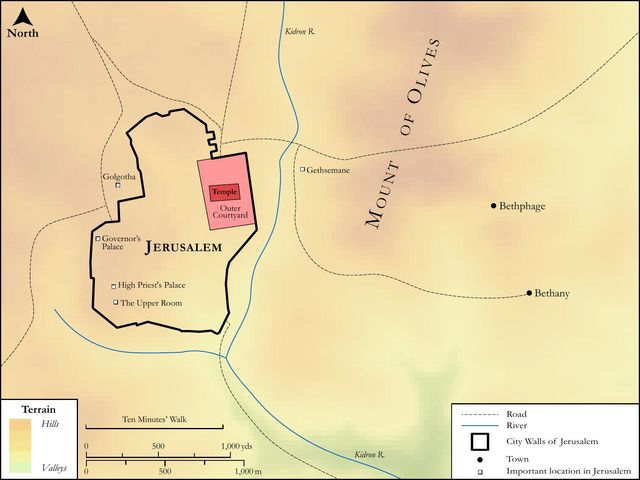
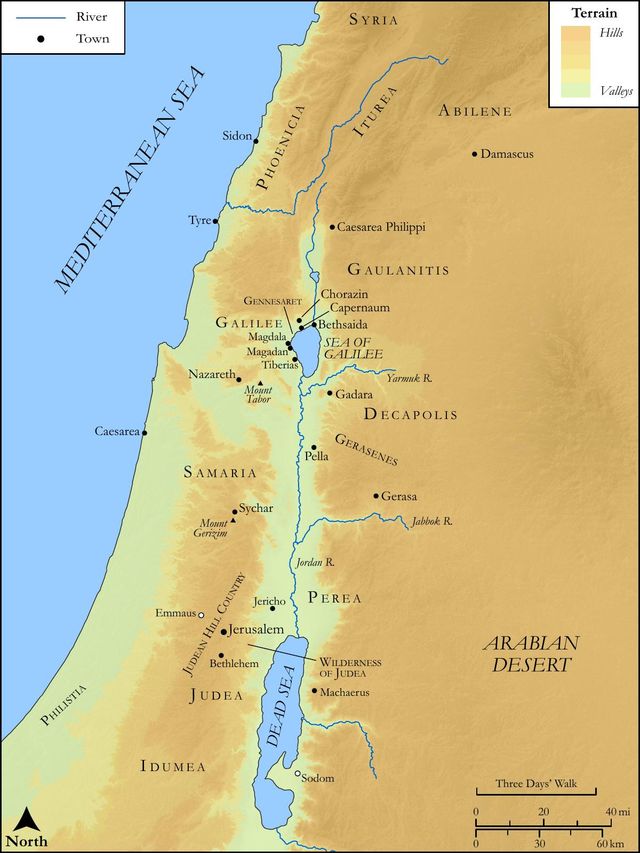
See on the biblical-era maps

Study this verse
Public-domain commentary
Matthew Henry
From his Commentary on the Whole Bible. Henry wrote on whole passages, and this entry covers Matthew 13:1–23. He set out his notes in a four-level outline, kept here as he numbered it.
We have here Christ preaching, and may observe,
1.When Christ preached this sermon; it was the same day that he preached the sermon in the foregoing chapter: so unwearied was he in doing good, and working the works of him that sent him. Note, Christ was for preaching both ends of the day, and has by his example recommended that practice to his church; we must in the morning sow our seed, and in the evening not withhold our hand, Eccl. xi. 6. An afternoon sermon well heard, will be so far from driving out the morning sermon, that it will rather clench it, and fasten the nail in a sure place. Though Christ had been in the morning opposed and cavilled at by his enemies, disturbed and interrupted by his friends, yet he went on with his work; and in the latter part of the day, we do not find that he met with such discouragements. Those who with courage and zeal break through difficulties in God's service, will perhaps find them not so apt to recur as they fear. Resist them, and they will flee.
2.To whom he preached; there were great multitudes gathered together to him, and they were the auditors; we do not find that any of the scribes or Pharisees were present. They were willing to hear him when he preached in the synagogue (ch. xii. 9, 14), but they thought it below them to hear a sermon by the sea-side, though Christ himself was the preacher: and truly he had better have their room than their company, for now they were absent, he went on quietly and without contradiction. Note, Sometimes there is most of the power of religion where there is least of the pomp of it: the poor receive the gospel. When Christ went to the sea-side, multitudes were presently gathered together to him. Where the king is, there is the court; where Christ is, there is the church, though it be by the sea-side. Note, Those who would get good by the word, must be willing to follow it in all its removes; when the ark shifts, shift after it. The Pharisees had been labouring, by base calumnies and suggestions, to drive the people off from following Christ, but they still flocked after him as much as ever. Note, Christ will be glorified in spite of all opposition; he will be followed.
3.Where he preached this sermon.
(1.)His meeting-place was the sea-side. He went out of the house (because there was no room for the auditory) into the open air. It was pity but such a Preacher should have had the most spacious, sumptuous, and convenient place to preach in, that could be devised, like one of the Roman theatres; but he was now in his state of humiliation, and in this, as in other things, he denied himself the honours due to him; as he had not a house of his own to live in, so he had not a chapel of his own to preach in. By this he teaches us in the external circumstances of worship not to covet that which is stately, but to make the best of the conveniences which God in his providence allots to us. When Christ was born, he was crowded into the stable, and now to the sea-side, upon the strand, where all persons might come to him with freedom. He that was truth itself sought no corners (no adyta), as the pagan mysteries did. Wisdom crieth without, Prov. i. 20; John xiii. 20.
(2.)His pulpit was a ship; not like Ezra's pulpit, that was made for the purpose (Neh. viii. 4); but converted to this use for want of a better. No place amiss for such a Preacher, whose presence dignified and consecrated any place: let not those who preach Christ be ashamed, though they have mean and inconvenient places to preach in. Some observe, that the people stood upon dry ground and firm ground, while the Preacher was upon the water in more hazard. Ministers are most exposed to trouble. Here was a true rostrum, a ship pulpit.
4.What and how he preached.
(1.)He spake many things unto them. Many more it is likely than are here recorded, but all excellent and necessary things, things that belong to our peace, things pertaining to the kingdom of heaven: they were not trifles, but things of everlasting consequence, that Christ spoke of. It concerns us to give a more earnest heed, when Christ has so many things to say to us, that we miss not any of them.
(2.)What he spake was in parables. A parable sometimes signifies any wise, weighty saying that is instructive; but here in the gospels it generally signifies a continued similitude or comparison, by which spiritual or heavenly things were described in language borrowed from the things of this life. It was a way of teaching used very much, not only by the Jewish rabbin, but by the Arabians, and the other wise men of the east; and it was found very profitable, and the more so from its being pleasant. Our Saviour used it much, and in it condescended to the capacities of people, and lisped to them in their own language. God had long used similitudes by his servants the prophets (Hos. xii. 10), and to little purpose; now he uses similitudes by his Son; surely they will reverence him who speaks from heaven, and of heavenly things, and yet clothes them with expressions borrowed from things earthly. See John iii. 12. So descending in a cloud. Now,
I.We have here the general reason why Christ taught in parables.
The disciples were a little surprised at it, for hitherto, in his preaching, he had not much used them, and therefore they ask, Why speakest thou to them in parables? Because they were truly desirous that the people might hear with understanding. They do not say, Why speakest thou to us? (they knew how to get the parables explained) but to them. Note, We ought to be concerned for the edification of others, as well as for our own, by the word preached; and if ourselves be strong, yet to bear the infirmities of the weak.
To this question Christ answers largely, v. 11-17, where he tells them, that therefore he preached by parables, because thereby the things of God were made more plain and easy to them who were willingly ignorant; and thus the gospel would be a savour of life to some, and of death to others. A parable, like the pillar of cloud and fire, turns a dark side towards Egyptians, which confounds them, but a light side towards Israelites, which comforts them, and so answers a double intention. The same light directs the eyes of some, but dazzles the eyes of others. Now,
1.This reason is laid down (v. 11): Because it is given unto you to know the mysteries of the kingdom of heaven, but to them it is not given. That is,
(1.)The disciples had knowledge, but the people had not. You know already something of these mysteries, and need not in this familiar way to be instructed; but the people are ignorant, are yet but babes, and must be taught as such by plain similitudes, being yet incapable of receiving instruction in any other way: for though they have eyes, they know not how to use them; so some. Or,
(2.)The disciples were well inclined to the knowledge of gospel mysteries, and would search into the parables, and by them would be led into a more intimate acquaintance with those mysteries; but the carnal hearers that rested in bare hearing, and would not be at the pains to look further, nor to ask the meaning of the parables, would be never the wiser, and so would justly suffer for their remissions. A parable is a shell that keeps good fruit for the diligent, but keeps it from the slothful. Note, There are mysteries in the kingdom of heaven, and without controversy, great is the mystery of godliness: Christ's incarnation, satisfaction, intercession, our justification and sanctification by union with Christ, and indeed the whole work of redemption, from first to last, are mysteries, which could never have been discovered but by divine revelation (1 Cor. xv. 51), were at this time discovered but in part to the disciples, and will never be fully discovered till the veil shall be rent; but the mysteriousness of gospel truth should not discourage us from, but quicken us in, our enquiries after it and searches into it.
[1.]It is graciously given to the disciples of Christ to be acquainted with these mysteries. Knowledge is the first gift of God, and it is a distinguishing gift (Prov. ii. 6); it was given to the apostles, because they were Christ's constant followers and attendants. Note, The nearer we draw to Christ, and the more we converse with him, the better acquainted we shall be with gospel mysteries.
[2.]It is given to all true believers, who have an experimental knowledge of the gospel mysteries, and that is without doubt the best knowledge: a principle of grace in the heart, is that which makes men of quick understanding in the fear of the Lord, and in the faith of Christ, and so in the meaning of parables; and for want of that, Nicodemus, a master in Israel, talked of the new birth as a blind man of colours.
[3.]There are those to whom this knowledge is not given, and a man can receive nothing unless it be given him from above (John iii. 27); and be it remembered that God is debtor to no man; his grace is his own; he gives or withholds it at pleasure (Rom. xi. 35); the difference must be resolved into God's sovereignty, as before, ch. xi. 25, 26.
2.This reason is further illustrated by the rule God observes in dispensing his gifts; he bestows them on those who improve them, but takes them away from those who bury them. It is a rule among men, that they will rather entrust their money with those who have increased their estates by their industry, than with those who have diminished them by their slothfulness.
(1.)Here is a promise to him that has, that has true grace, pursuant to the election of grace, that has, and uses what he has; he shall have more abundance: God's favours are earnests of further favours; where he lays the foundation, he will build upon it. Christ's disciples used the knowledge they now had, and they had more abundance at the pouring out of the Spirit, Acts ii.. They who have the truth of grace, shall have the increase of grace, even to an abundance in glory, Prov. iv. 18. Joseph—he will add, Gen. xxx. 24.
(2.)Here is a threatening to him that has not, that has no desire of grace, that makes no right use of the gifts and graces he has: has not root, no solid principle; that has, but uses not what he has; from him shall be taken away that which he has or seems to have. His leaves shall wither, his gifts decay; the means of grace he has, and makes no use of, shall be taken from him; God will call in his talents out of their hands that are likely to become bankrupts quickly.
3.This reason is particularly explained, with reference to the two sorts of people Christ had to do with.
(1.)Some were willingly ignorant; and such were amused by the parables (v. 13); because they seeing, see not. They had shut their eyes against the clear light of Christ's plainer preaching, and therefore were now left in the dark. Seeing Christ's person, they see not his glory, see no difference between him and another man; seeing his miracles, and hearing his preaching, they see not, they hear not with any concern or application; they understand neither. Note,
[1.]There are many that see the gospel light, and hear the gospel sound, but it never reaches their hearts, nor has it any place in them.
[2.]It is just with God to take away the light from those who shut their eyes against it; that such as will be ignorant, may be so; and God's dealing thus with them magnifies his distinguishing grace to his disciples.
Now in this the scripture would be fulfilled, v. 14, 15. It is quoted from Isa. vi. 9, 10. The evangelical prophet that spoke most plainly of gospel grace, foretold the contempt of it, and the consequences of that contempt. It is referred to no less than six times in the New Testament, which intimates, that in gospel times spiritual judgments would be most common, which make least noise, but are most dreadful. That which was spoken of the sinners in Isaiah's time was fulfilled in those in Christ's time, and it is still fulfilling every day; for while the wicked heart of man keeps up the same sin, the righteous hand of God inflicts the same punishment. Here is,
First. A description of sinners' wilful blindness and hardness, which is their sin. This people's heart is waxed gross; it is fattened, so the word is; which denotes both sensuality and senselessness (Ps. cxix. 70); secure under the word and rod of God, and scornful as Jeshurun, that waxed fat and kicked, Deut. xxxii. 15. And when the heart is thus heavy, no wonder that the ears are dull of hearing; the whispers of the Spirit they hear not at all; the loud calls of the word, though the word be nigh them, they regard not, nor are at all affected by them: they stop their ears, Ps. lviii. 4, 5. And because they are resolved to be ignorant, they shut both the learning senses; for their eyes also they have closed, resolved that they would not see light come into the world, when the Son of Righteousness arose, but they shut their windows, because they loved darkness rather than light, John iii. 19; 2 Pet. iii. 5.
Secondly, A description of that judicial blindness, which is the just punishment of this. "By hearing, ye shall hear, and shall not understand; what means of grace you have, shall be to no purpose to you; though, in mercy to others, they are continued, yet in judgment to you, the blessing upon them is denied." The saddest condition a man can be in on this side hell, is to sit under the most lively ordinances with a dead, stupid, untouched heart. To hear God's word, and see his providences, and yet not to understand and perceive his will, either in the one or in the other, is the greatest sin and the greatest judgment that can be. Observe, It is God's work to give an understanding heart, and he often, in a way of righteous judgment, denies it to those to whom he has given the hearing ear, and the seeing eye, in vain. Thus does God choose sinners' delusions (Isa. lxvi. 4), and bind them over to the greatest ruin, by giving them up to their own hearts' lusts (Ps. lxxxi. 11, 12); let them alone (Hos. iv. 17); my Spirit shall not always strive, Gen. vi. 3.
Thirdly, The woeful effect and consequence of this; Lest at any time they should see. They will not see because they will not turn; and God says that they shall not see, because they shall not turn: lest they should be converted, and I should heal them.
Note, 1. That seeing, hearing, and understanding, are necessary to conversion; for God, in working grace, deals with men as men, as rational agents; he draws with the cords of a man, changes the heart by opening the eyes, and turns from the power of Satan unto God, by turning first from darkness to light, (Acts xxvi. 18). 2. All those who are truly converted to God, shall certainly be healed by him. "If they be converted I shall heal them, I shall save them:" so that if sinners perish, it is not to be imputed to God, but to themselves; they foolishly expected to be healed, without being converted. 3. It is just with God to deny his grace to those who have long and often refused the proposals of it, and resisted the power of it. Pharaoh, for a good while, hardened his own heart (Exod. viii. 15, 32), and afterwards God hardened it, ch. ix. 12; x. 20. Let us therefore fear, lest by sinning against the divine grace, we sin it away.
(2.)Others were effectually called to be the disciples of Christ, and were truly desirous to be taught of him; and they were instructed, and made to improve greatly in knowledge, by these parables, especially when they were expounded; and by them the things of God were made more plain and easy, more intelligible and familiar, and more apt to be remembered (v. 16, 17). Your eyes see, your ears hear. They saw the glory of God in Christ's person; they heard the mind of God in Christ's doctrine; they saw much, and were desirous to see more, and thereby were prepared to receive further instruction; they had opportunity for it, by being constant attendants on Christ, and they should have it from day to day, and grace with it. Now this Christ speaks of,
[1.]As a blessing; "Blessed are your eyes for they see, and your ears for they hear; it is your happiness, and it is a happiness for which you are indebted to the peculiar favour and blessing of God." It is a promised blessing, that in the days of the Messiah the eyes of them that see shall not be dim, Isa. xxxii. 3. The eyes of the meanest believer that knows experimentally the grace of Christ, are more blessed than those of the greatest scholars, the greatest masters in experimental philosophy, that are strangers to God; who, like the other gods they serve, have eyes, and see not. Blessed are your eyes. Note, True blessedness is entailed upon the right understanding and due improvement of the mysteries of the kingdom of God. The hearing ear and the seeing eye are God's work in those who are sanctified; they are the work of his grace (Prov. xx. 12), and they are a blessed work, which shall be fulfilled with power, when those who now see through a glass darkly, shall see face to face. It was to illustrate this blessedness that Christ said so much of the misery of those who are left in ignorance; they have eyes and see not; but blessed are your eyes. Note, The knowledge of Christ is a distinguishing favour to those who have it, and upon that account it lays under the greater obligations; see John xiv. 22. The apostles were to teach others, and therefore were themselves blessed with the clearest discoveries of divine truth. The watchmen shall see eye to eye, Isa. lii. 8.
[2.]As a transcendent blessing, desired by, but not granted to, many prophets and righteous men, v. 17. The Old-Testament saints, who had some glimpses, some glimmerings of gospel light, coveted earnestly further discoveries. They had the types, shadows, and prophecies, of those things but longed to see the Substance, that glorious end of those things which they could not steadfastly look unto; that glorious inside of those things which they could not look into. They desired to see the great Salvation, the Consolation of Israel, but did not see it, because the fulness of time was not yet come. Note, First, Those who know something of Christ, cannot but covet to know more. Secondly, The discoveries of divine grace are made, even to prophets and righteous men, but according to the dispensation they are under. Though they were the favourites of heaven, with whom God's secret was, yet they have not seen the things which they desired to see, because God had determined not to bring them to light yet; and his favours shall not anticipate his counsels. There was then, as there is still, a glory to be revealed; something in reserve, that they without us should not be made perfect, Heb. xi. 40. Thirdly, For the exciting of our thankfulness, and the quickening of our diligence, it is good for us to consider what means we enjoy, and what discoveries are made to us, now under the gospel, above what they had, and enjoyed, who lived under the Old-Testament dispensation, especially in the revelation of the atonement for sin; see what are the advantages of the New Testament above the Old (2 Cor. iii. 7, &c. Heb. xii. 18); and see that our improvements be proportionable to our advantages.
II.We have, in these verses, one of the parables which our Saviour put forth; it is that of the sower and the seed; both the parable itself, and the explanation of it. Christ's parables are borrowed from common, ordinary things, not from any philosophical notions or speculations, or the unusual phenomena of nature, though applicable enough to the matter in hand, but from the most obvious things, that are of every day's observation, and come within the reach of the meanest capacity; many of them are fetched from the husbandman's calling, as this of the sower, and that of the tares. Christ chose to do thus,
1.That spiritual things might hereby be made more plain, and, by familiar similitudes, might be made the more easy to slide into our understandings.
2.That common actions might hereby be spiritualized, and we might take occasion from those things which fall so often under our view, to meditate with delight on the things of God; and thus, when our hands are busiest about the world, we may not only notwithstanding that, but even with the help of that, be led to have our hearts in heaven. Thus the word of God shall talk with us, talk familiarly with us, Prov. vi. 22.
The parable of the sower is plain enough, v. 3-9. The exposition of it we have from Christ himself, who knew best what was his own meaning. The disciples, when they asked, Why speakest thou unto them in parables? (v. 10), intimated a desire to have the parable explained for the sake of the people; nor was it any disparagement to their own knowledge to desire it for themselves. Our Lord Jesus kindly took the hint, and gave the sense, and caused them to understand the parable, directing his discourse to the disciples, but in the hearing of the multitude, for we have not the account of his dismissing them till v. 36. "Hear ye therefore the parable of the sower (v. 18); you have heard it, but let us go over it again." Note, It is of good use, and would contribute much to our understanding the word and profiting by it, to hear over again what we have heard (Phil. iii. 1); "You have heard it, but hear the interpretation of it." Note, Then only we hear the word aright, and to good purpose, when we understand what we hear; it is no hearing at all, if it be not with understanding, Neh. viii. 2. It is God's grace indeed that gives the understanding, but it is our duty to give our minds to understand.
Let us therefore compare the parable and the exposition.
(1.)The seed sown is the word of God, here called the word of the kingdom (v. 19): the kingdom of heaven, that is the kingdom; the kingdoms of the world, compared with that, are not to be called kingdoms. The gospel comes from that kingdom, and conducts to that kingdom; the word of the gospel is the word of the kingdom; it is the word of the King, and where that is, there is power; it is a law, by which we must be ruled and governed. This word is the seed sown, which seems a dead, dry thing, but all the product is virtually in it. It is incorruptible seed (1 Pet. i. 23); it is the gospel that brings forth fruit in souls, Col. i. 5, 6.
(2.)The sower that scatters the seed is our Lord Jesus Christ, either by himself, or by his ministers; see v. 37. The people are God's husbandry, his tillage, so the word is; and ministers are labourers together with God, 1 Cor. iii. 9. Preaching to a multitude is sowing the corn; we know not where it must light; only see that it be good, that it be clean, and be sure to give it seed enough. The sowing of the word is the sowing of a people for God's field, the corn of his floor, Isa. xxi. 10.
(3.)The ground in which this seed is sown is the hearts of the children of men, which are differently qualified and disposed, and accordingly the success of the word is different. Note, Man's heart is like soil, capable of improvement, of bearing good fruit; it is pity it should lie fallow, or be like the field of the slothful, Prov. xxiv. 30. The soul is the proper place for the word of God to dwell, and work, and rule in; its operation is upon conscience, it is to light that candle of the Lord. Now according as we are, so the word is to us: Recipitur ad modum recipientis—The reception depends upon the receiver. As it is with the earth; some sort of ground, take ever so much pains with it, and throw ever so good seed into it, yet it brings forth no fruit to any purpose; while the good soil brings forth plentifully: so it is with the hearts of men, whose different characters are here represented by four sorts of ground, of which three are bad, and but one good. Note, The number of fruitless hearers is very great, even of those who heard Christ himself. Who has believed our report? It is a melancholy prospect which this parable gives us of the congregations of those who hear the gospel preached, that scarcely one in four brings forth fruit to perfection. Many are called with the common call, but in few is the eternal choice evidenced by the efficacy of that call, ch. xx. 16.
Now observe the characters of these four sorts of ground.
[1.]The highway ground, v. 4-10. They had pathways through their corn-fields (ch. xii. 1), and the seed that fell on them never entered, and so the birds picked it up. The place where Christ's hearers now stood represented the characters of most of them, the sand on the sea-shore, which was to the seed like the highway ground.
Observe First, What kind of hearers are compared to the highway ground; such as hear the word and understand it not; and it is their own fault that they do not. They take no heed to it, take no hold of it; they do not come with any design to get good, as the highway was never intended to be sown. They come before God as his people come, and sit before Him as his people sit; but it is merely for fashion-sake, to see and be seen; they mind not what is said, it comes in at one ear and goes out at the other, and makes no impression.
Secondly, How they come to be unprofitable hearers. The wicked one, that is, the devil, cometh and catcheth away that which was sown.—Such mindless, careless, trifling hearers are an easy prey to Satan; who, as he is the great murderer of souls, so he is the great thief of sermons, and will be sure to rob us of the word, if we take not care to keep it: as the birds pick up the seed that falls on the ground that is neither ploughed before nor harrowed after. If we break not up the fallow ground, by preparing our hearts for the word, and humbling them to it, and engaging our own attention; and if we cover not the seed afterwards, by meditation and prayer; if we give not a more earnest heed to the things which we have heard, we are as the highway ground. Note, The devil is a sworn enemy to our profiting by the word of God; and none do more befriend his design than heedless hearers, who are thinking of something else, when they should be thinking of the things that belong to their peace.
[2.]The stony ground. Some fell upon stony places (v. 5, 6), which represents the case of hearers that go further than the former, who receive some good impressions of the word, but they are not lasting, v. 20, 21. Note, It is possible we may be a great deal better than some others, and yet not be so good as we should be; may go beyond our neighbours, and yet come short of heaven. Now observe, concerning these hearers that are represented by the stony ground,
First, How far they went. 1. They hear the word; they turn neither their backs upon it, nor a deaf ear to it. Note, hearing the word, though ever so frequently, ever so gravely, if we rest in that, will never bring us to heaven. 2. They are quick in hearing, swift to hear, he anon receiveth it, euthys, he is ready to receive it, forthwith it sprung up (v. 5), it sooner appeared above ground than that which was sown in the good soil. Note, Hypocrites often get the start of true Christians in the shows of profession, and are often too hot to hold. He receiveth it straightway, without trying it; swallows it without chewing, and then there can never be a good digestion. Those are most likely to hold fast that which is good, that prove all things, 1 Thess. v. 21. 3. They receive it with joy. Note, There are many that are very glad to hear a good sermon, that yet do not profit by it; they may be pleased with the word, and yet not changed and ruled by it; the heart may melt under the word, and yet not be melted down by the word, much less into it, as into a mould. Many taste the good word of God (Heb. vi. 5), and say they find sweetness in it, but some beloved lust is rolled under the tongue, which it would not agree with, and so they spit it out again. 4. They endure for awhile, like a violent motion, which continues as long as the impression of the force remains, but ceases when that has spent itself. Note, Many endure for awhile, that do not endure to the end, and so come short of the happiness which is promised to them only that persevere (ch. x. 22); they did run well, but something hindered them, Gal. v. 7.
Secondly, How they fell away, so that no fruit was brought to perfection; no more than the corn, that having no depth of earth from which to draw moisture, is scorched and withered by the heat of the sun. And the reason is,
1.They have no root in themselves, no settled, fixed principles in their judgments, no firm resolution in their wills, nor any rooted habits in their affections: nothing firm that will be either the sap or the strength of their profession. Note,
(1.)It is possible there may be the green blade of a profession, where yet there is not the root of grace; hardness prevails in the heart, and what there is of soil and softness is only in the surface; inwardly they are no more affected than a stone; they have no root, they are not by faith united to Christ who is our Root; they derive not from him, they depend not on him.
(2.)Where there is not a principle, though there be a profession, we cannot expect perseverance. Those who have no root will endure but awhile. A ship without ballast, though she may at first out-sail the laden vessel, yet will certainly fail in stress of weather, and never make her port.
2.Times of trial come, and then they come to nothing. When tribulation and persecution arise because of the word, he is offended; it is a stumbling-block in his way which he cannot get over, and so he flies off, and this is all his profession comes to. Note,
(1.)After a fair gale of opportunity usually follows a storm of persecution, to try who have received the word in sincerity, and who have not. When the word of Christ's kingdom comes to be the word of Christ's patience (Rev. iii. 10), then is the trial, who keeps it, and who does not, Rev. i. 9. It is wisdom to prepare for such a day.
(2.)When trying times come, those who have no root are soon offended; they first quarrel with their profession, and then quit it; first find fault with it, and then throw it off. Hence we read of the offence of the cross, Gal. v. 11. Observe, Persecution is represented in the parable by the scorching sun, (v. 6); the same sun which warms and cherishes that which was well rooted, withers and burns up that which wanted root. As the word of Christ, so the cross of Christ, is to some a savour of life unto life, to others a savour of death unto death: the same tribulation which drives some to apostasy and ruin, works for others a far more exceeding and eternal weight of glory. Trials which shake some, confirm others, Phil. i. 12. Observe how soon they fall away, by and by; as soon rotten as they were ripe; a profession taken up without consideration is commonly let fall without it: "Lightly come, lightly go."
[3.]The thorny ground, Some fell among thorns (which are a good guard to the corn when they are in the hedge, but a bad inmate when they are in the field); and the thorns sprung up, which intimates that they did not appear, or but little, when the corn was sown, but afterwards they proved choking to it, v. 7. This went further than the former, for it had root; and it represents the condition of those who do not quite cast off their profession, and yet come short of any saving benefit by it; the good they gain by the word, being insensibly overcome and overborne by the things of the world. Prosperity destroys the word in the heart, as much as persecution does; and more dangerously, because more silently: the stones spoiled the root, the thorns spoil the fruit.
Now what are these choking thorns?
First, The cares of this world. Care for another world would quicken the springing of this seed, but care for this world chokes it. Worldly cares are fitly compared to thorns, for they came in with sin, and are a fruit of the curse; they are good in their place to stop a gap, but a man must be well armed that deals much in them (2 Sam. xxiii. 6, 7); they are entangling, vexing, scratching, and their end is to be burned, Heb. vi. 8. These thorns choke the good seed. Note, Worldly cares are great hindrances to our profiting by the word of God, and our proficiency in religion. They eat up that vigour of soul which should be spent in divine things; divert us from duty, distract us in duty, and do us most mischief of all afterwards; quenching the sparks of good affections, and bursting the cords of good resolutions; those who are careful and cumbered about many things, commonly neglect the one thing needful.
Secondly, The deceitfulness of riches. Those who, by their care and industry, have raised estates, and so the danger that arises from care seems to be over, and they continue hearers of the word, yet are still in a snare (Jer. v. 4, 5); it is hard for them to enter into the kingdom of heaven: they are apt to promise themselves that in riches which is not in them; to rely upon them, and to take an inordinate complacency in them; and this chokes the word as much as care did. Observe, It is not so much riches, as the deceitfulness of riches, that does the mischief: now they cannot be said to be deceitful to us unless we put our confidence in them, and raise our expectations from them, and then it is that they choke the good seed.
[4.]The good ground (v. 18); Others fell into good ground, and it is pity but that good seed should always meet with good soil, and then there is no loss; such are good hearers of the word, v. 23. Note, Though there are many that receive the grace of God, and the word of his grace, in vain, yet God has a remnant by whom it is received to good purpose; for God's word shall not return empty, Isa. lv. 10, 11.
Now that which distinguished this good ground from the rest, was, in one word, fruitfulness. By this true Christians are distinguished from hypocrites, that they bring forth the fruits of righteousness; so shall ye be my disciples, John xv. 8. He does not say that this good ground has no stones in it, or no thorns; but there were none that prevailed to hinder its fruitfulness. Saints, in this world, are not perfectly free from the remains of sin; but happily freed from the reign of it.
The hearers represented by the good ground are,
First, Intelligent hearers; they hear the word and understand it; they understand not only the sense and meaning of the word, but their own concern in it; they understand it as a man of business understands his business. God in his word deals with men as men, in a rational way, and gains possession of the will and affections by opening the understanding: whereas Satan, who is a thief and a robber, comes not in by that door, but climbeth up another way.
Secondly, Fruitful hearers, which is an evidence of their good understanding: which also beareth fruit. Fruit is to every seed its own body, a substantial product in the heart and life, agreeable to the seed of the word received. We then bear fruit, when we practise according to the word; when the temper of our minds and the tenour of our lives are conformable to the gospel we have received, and we do as we are taught.
Thirdly, Not all alike fruitful; some a hundred-fold, some sixty, some thirty. Note, Among fruitful Christians, some are more fruitful than others: where there is true grace, yet there are degrees of it; some are of greater attainments in knowledge and holiness than others; all Christ's scholars are not in the same form. We should aim at the highest degree, to bring forth a hundred-fold, as Isaac's ground did (Gen. xxvi. 12), abounding in the work of the Lord, John xv. 8. But if the ground be good, and the fruit right, the heart honest, and the life of a piece with it, those who bring forth but thirty-fold shall be graciously accepted of God, and it will be fruit abounding to their account, for we are under grace, and not under the law.
Historical interpretation
Seven Centuries of Reception
9 surviving comments on this verse. Each one is dated, so this reads as a timeline rather than a list.
Select a marker to jump to its quote. Markers stagger vertically where authors wrote within a few decades of each other.
There is moreover a reason in the subject of His discourse why the Lord should sit in the ship, and the multitude stand on the shore. For He was about to speak in parables, and by this action signifies that they who were without the Church could have no understanding of the Divine Word. The ship offers a type of the Church, within which the word of life is placed, and is preached to those without, and who as being barren sand cannot understand it.
Having then said these words, "He came out of the house." Seest thou, how He both rebuked them, and did what they desired? Which He did also at the marriage. For there too He at once reproved her asking unseasonably, and nevertheless did not gainsay her; by the former correcting her weakness. by the latter showing His kindly feeling toward His mother. So likewise on this occasion too, He both healed the disease of vainglory, and rendered the due honor to His mother, even though her request was unseasonable. For, "in the same day," it is said, "went Jesus out of the house, and sat by the sea side."
Why, if ye desire, saith He, to see and hear, behold I come forth and discourse. Thus having wrought many miracles, He affords again the benefit of His doctrine. And He "sits by the sea," fishing and getting into His net them that are on the land.
But He "sat by the sea," not without a purpose; and this very thing the evangelist has darkly expressed. For to indicate that the cause of His doing this was a desire to order His auditory with exactness, and to leave no one behind His back, but to have all face to face,
"And great multitudes," saith He, "were gathered together unto Him, so that He went into a ship and sat, and the whole multitude stood on the shore."
And having sat down there, He speaks by parables.
"And He spake," it says, "many things unto them in parables."
And yet on the mount, we know, He did no such thing, neither did He weave His discourse with so many parables, for then there were multitudes only, and a simple people; but here are also Scribes and Pharisees.
But do thou mark, I pray thee, what kind of parable He speaks first, and how Matthew puts them in their order. Which then doth He speak first? That which it was most necessary to speak first, that which makes the hearer more attentive. For because He was to discourse unto them in dark sayings, He thoroughly rouses His hearers' mind first by His parable. Therefore also another evangelist saith that He reproved them, because they do not understand; saying, "How knew ye not the parable?" But not for this cause only doth He speak in parables, but that He may also make His discourse more vivid, and fix the memory of it in them more perfectly, and bring the things before their sight. In like manner do the prophets also.
What then is the parable? "Behold," saith He, "a sower went forth to sow." Whence went He forth, who is present everywhere, who fills all things? or how went He forth? Not in place, but in condition and dispensation to usward, coming nearer to us by His clothing Himself with flesh. For because we could not enter, our sins fencing us out from the entrance, He comes forth unto us. And wherefore came He forth? to destroy the ground teeming with thorns? to take vengeance upon the husbandmen? By no means; but to till and tend it, and to sow the word of godliness. For by seed here He means His doctrine, and by land, the souls of men, and by the sower, Himself.
What then comes of this seed? Three parts perish, and one is saved.
"And when He sowed, some seeds fell," He saith, "by the way side; and the fowls came and devoured them up."
He said not, that He cast them, but that "they fell."
A fourth part is saved; and not this all alike, but even here great is the difference.
Now these things He said, manifesting that He discoursed to all without grudging. For as the sower makes no distinction in the land submitted to him, but simply and indifferently casts his seed; so He Himself too makes no distinction of rich and poor, of wise and unwise, of slothful or diligent, of brave or cowardly; but He discourses unto all, fulfilling His part, although foreknowing the results; that it may be in His power to say, "What ought I to have done, that I have not done?" And the prophets speak of the people as of a vine; "For my beloved," it is said, "had a vineyard;" and, "He brought a vine out of Egypt;" but He, as of seed. What could this be to show? That obedience now will be quick and easier, and will presently yield its fruit.
But when thou hearest, "The sower went forth to sow," think it not a needless repetition. For the sower frequently goes forth for some other act also, either to plough, or to cut out the evil herbs, or to pluck up thorns, or to attend to some such matter; but He went forth to sow.
Whence then, tell me, was the greater part of the seed lost? Not through the sower, but through the ground that received it; that is, the soul that did not hearken.
And wherefore doth He not say, Some the careless received, and lost it; some the rich, and choked it, and some the superficial, and betrayed it? It is not His will to rebuke them severely, lest He should cast them into despair, but He leaves the reproof to the conscience of His hearers.
And this was not the case with the seed only, but also with the net; for that too produced many that were unprofitable.
But this parable He speaks, as anointing His disciples, and to teach them, that even though the lost be more than such as receive the word yet they are not to despond. For this was the case even with their Lord, and He who fully foreknew that these things should be, did not desist from sowing.
And how can it be reasonable, saith one, to sow among the thorns, on the rock, on the wayside? With regard to the seeds and the earth it cannot be reasonable; but in the case of men's souls and their instructions, it hath its praise, and that abundantly. For the husbandman indeed would reasonably be blamed for doing this; it being impossible for the rock to become earth, or the wayside not to be a wayside, or the thorns, thorns; but in the things that have reason it is not so. There is such a thing as the rock changing, and becoming rich land; and the wayside being no longer trampled on, nor lying open to all that pass by, but that it may be a fertile field; and the thorns may be destroyed, and the seed enjoy full security. For had it been impossible, this Sower would not have sown. And if the change did not take place in all, this is no fault of the Sower, but of them who are unwilling to be changed: He having done His part: and if they betrayed what they received of Him, He is blameless, the exhibitor of such love to man.
But do thou mark this, I pray thee; that the way of destruction is not one only, but there are differing ones, and wide apart from one another. For they that are like the wayside are the coarse-minded, and indifferent, and careless; but those on the rock such as fail from weakness only.
When He had rebuked him that told Him of His mother and His brethren, He then did according to their request; He departed out of the house, having first corrected His brethren for their weak desire of vainglory; He then paid the honour due to His mother, as it is said, The same day Jesus went forth out of the house, and sat down by the sea side.
The Evangelist did not relate this without a purpose, but that he might show the Lord's will therein, who desired so to place the people that He should have none behind Him, but all should be before His face.
He had not done thus on the mount; He had not framed His discourse by parables. For there were the multitudes only, and a mixed crowd, but here the Scribes and Pharisees. But He speaks in parables not for this reason only, but to make His sayings plainer, and fix them more fully in the memory, by bringing things before the eyes.
He first sets forth a parable to make His hearers more attentive, and because He was about to speak enigmatically, He attracts the attention by this first parable, saying, Behold, a sower went forth to sow his seed.
Whence then went out He who is every where present, and how went He out? Not in place; but by His incarnation being brought nearer to us by the garb of the flesh. Forasmuch as we because of our sins could not enter in unto Him, He therefore came forth to us.
When you hear the words, the sower went out to sow, do not suppose that is a tautology. For the sower goes out oftentimes for other ends; as, to break up the ground, to pluck up noxious weeds, to root up thorns, or perform any other species of industry, but this man went forth to sow. What then becomes of that seed? three parts of it perish, and one is preserved; but not all in the same manner, but with a certain difference, as it follows, And as he sowed, some fell by the wayside.
Next, how is it according to reason to sow seed among thorns, or on stony ground, or by the wayside? Indeed in the material seed and soil of this world it would not be reasonable; for it is impossible that rock should become soil, or that the way should not be the way, or that thorns should not be thorns. But with minds and doctrines it is otherwise; there it is possible that the rock be made rich soil, that the way should be no more trodden upon, and that the thorns should be extirpated. That the most part of the seed then perished, came not of him that sowed, but of the soil that received it, that is the mind. For He that sowed put no difference between rich and poor, wise or foolish, but spoke to all alike; filling up his own part, though foreseeing all things that should come to pass, so that He might say, What ought I to have done that I have not done? (Is. 5:4) He does not pronounce sentence upon them openly and say, this the indolent received and have lost it, this the rich and have choked it, this the careless and have lost it, because He would not harshly reprove them, that He might not alienate them altogether. By this parable also He instructs His disciples, that though the greater part of those that heard them were such as perished, yet that they should not therefore be remiss; for the Lord Himself who foresaw all things, did not on this account desist from sowing.
(Verse 9.) He who has ears to hear, let him hear. We are prompted to understand these sayings whenever we are moved by these words.
For it must be considered, that the multitude could not enter into the house to Jesus, nor be there where the Apostles heard mysteries; therefore the Lord in mercy to them departed out of the house, and sat near the sea of this world, that great numbers might be gathered to Him, and that they might hear on the sea shore what they were not worthy to hear within; And great multitudes were gathered unto him, so that he went into a ship, and sat down, and all the people stood on the shore.
Jesus is in the midst of the waves; He is beaten to and fro by the waves, and, secure in His majesty, causes His vessel to come nigh the land, that the people not being in danger, not being surrounded by temptations which they could not endure, might stand on the shore with a firm step, to hear what was said.
And it is to be noted, that He spake not all things to them in parables, but many things, for had He spoken all things in parables, the people would have departed without benefit. He mingles things plain with things dark, that by those things which they understand they may be incited to get knowledge of the things they understand not. The multitude also is not of one opinion, but of divers wills in divers matters, whence He speaks to them in many parables, that each according to their several dispositions may receive some portion of His teaching.
By this sower is typified the Son of God, who sows among the people the word of the Father.
Or, He was within while He was yet in the house, and spake sacraments to His disciples. He went therefore forth from the house, that He might sow seed among the multitudes.
This parable Valentinus lays hold of to establish his heresy, bringing in three different natures; the spiritual, the natural or the animal, and the earthly. But there are here four named, one by the wayside, one stony, one thorny, and a fourth the good ground.
Note that this is the first parable that has been given with its interpretation, and we must beware where the Lord expounds His own teachings, that we do not presume to understand any thing either more or less, or any way otherwise than as so expounded by Him.
And we are excited to the understanding of His words, by the advice which follows, He that hath ears to hear, let him hear.
These ears to hear, are ears of the mind, to understand namely and do those things which are commanded.
Remember what is said: If anyone has ears to hear, let him hear. For all who were present there had bodily ears. But he who says to all having ears, If anyone has ears to hear, let him hear, without doubt seeks the ears of the heart. Take care therefore that the word received remains in the ear of the heart.
For not only the Lord's words and actions, but His journeyings also, and the places in which He works His mighty works and preaches, are full of heavenly sacraments. After the discourse held in the house, wherein with wicked blasphemy He had been said to have a dæmon, He went out and taught by the sea, to signify that having left Judæa because of their sinful unbelief, He would pass to the salvation of the Gentiles. For the hearts of the Gentiles, long proud and unbelieving, are rightly likened to the swelling and bitter waves of the sea. And who knows not that Judæa was by faith the house of the Lord.
Or, that He went into a ship and sat on the sea, signifies that Christ by faith should enter into the hearts of the Gentiles, and should gather together the Church in the sea, that is in the midst of the nations that spake against Him. And the crowd that stood on the sea shore, neither in the ship nor in the sea, offers a figure of those that receive the word of God, and are by faith separated from the sea, that is from the reprobate, but are not yet imbued with heavenly mysteries. It follows; And he spake many things unto them in parables.
Or, He went forth, when having left Judea, He passed by the Apostles to the Gentiles.
But those things which He silently left to our understanding, should be shortly noticed. The wayside is the mind trodden and hardened by the continual passage of evil thoughts; the rock, the hardness of the self-willed mind; the good soil, the gentleness of the obedient mind, the sun, the heat of a raging persecution. The depth of soil, is the honesty of a mind trained by heavenly discipline. But in thus expounding them we should add, that the same things are not always put in one and the same allegorical signification.
He shows that those who have spiritual ears must understand these things in a spiritual sense. For many have ears but do not use them for hearing. This is why He added, "He who hath ears to hear, let him hear."
Continue studying Matthew 13:9 across the web’s major study libraries — every link below opens this exact verse, chapter, or book on the destination site.
Read & Compare
 BibleGatewayThis verse in more than 200 translations and 70 languages.
 Bible.comThe YouVersion reader — hundreds of translations, reading plans, and highlights.
 ESV.orgCrossway's official English Standard Version reader.
 NET BibleThe NET translation with 60,000+ translators' notes on every rendering decision.
 STEP BibleTyndale House's free study tool — original text, vocabulary, and scholarly resources.
 BibliaLogos Bible Software's free web reader.
 USCCBThe New American Bible (Revised Edition) with the U.S. bishops' study notes.
Commentaries
 BibleHub CommentariesDozens of classic commentaries on this verse, gathered on one page.
 StudyLightMore than 100 commentary sets — the largest collection on the web.
 BibleRefPlain-English commentary on what this verse means, verse by verse.
 Enduring WordDavid Guzik's free commentary on this chapter, widely used by Bible teachers.
 Bible Study ToolsVerse commentary alongside Greek and Hebrew study aids.
Original Language & Research
- BibleHub InterlinearThe verse word by word — original language, transliteration, and English.
- BibleHub LexiconEvery word's original-language definition and Strong's entry.
 Blue Letter BibleDeep-study tools — Strong's numbers, concordance, and word studies.
 CNTR CollationThe earliest Greek manuscripts of this verse, collated letter by letter.
Sermons, Hymns & Audio


TrulyRandomVerse is not affiliated with these sites and does not control their content.
Written with AI assistance. Always check it against Scripture.
This verse
Jesus closes the parable by calling everyone who has ears to listen, understand and respond to what he has said.
“Who hath ears to hear,”
Everyone in the crowd had ears, so the call reaches every listener.
“let him hear.”
A command to listen, understand and obey. It leads into the disciples’ question about the parables (Matthew 13:10–17).
Passage studyMatthew 13:1–9
The Sower, the Seed and the Four Grounds
Summary
On the same day that the Pharisees opposed him in Matthew 12, Jesus leaves the house and sits by the Sea of Galilee, and the crowd grows so large that he teaches them from a boat. Here he begins to teach in parables, and the first is the parable of the sower. A sower scatters his seed over every kind of ground. Birds eat what lands on the hard path, the sun scorches what springs up in shallow soil over rock, thorns choke what falls among them, and the seed on good ground yields thirty, sixty and a hundred times what was sown. Jesus ends with a call: “Who hath ears to hear, let him hear.” Later in the chapter he explains that the seed is the word of the kingdom and the grounds are the hearts of those who hear it. So the parable shows God’s word going out freely to all, and it asks every hearer what kind of ground that word finds in them.
Jesus Leaves the House for the Crowds by the Sea
“The same day” ties this chapter to the one before it. In Matthew 12 the Pharisees accused Jesus, argued with him over the Sabbath and disputed who he is, and Matthew 11 already tells of cities that would not repent. The word for day, hēméra, is the ordinary word for a day, and here it simply marks the time: the teaching by the sea follows straight on from that conflict. While the religious leaders harden against him, Jesus goes on teaching the people, and now he turns to parables.
“Went Jesus out of the house” uses exérchomai, to go or come out. The house was likely in Capernaum, where Jesus made his home in Galilee. A house suited a small group, and Jesus leaves it for the open shore. The Sea of Galilee is a large freshwater lake ringed by fertile plains and busy towns, where fishermen, farmers and travelers came and went, and its shore was a natural gathering place. Proverbs pictures wisdom crying aloud by the paths and at the gates where people pass (Proverbs 8:1–3), and Jesus brings his teaching out to the people in the same way. These are the crowds he had looked on with compassion, “because they fainted, and were scattered abroad, as sheep having no shepherd” (Matthew 9:35–38).
Jesus “sat by the sea side”. The verb káthēmai means to sit or be seated, and figuratively to remain somewhere or reside. Jewish teachers commonly sat to teach, as Jesus did on the mountain (Matthew 5), so his sitting down by the water shows that he is about to teach. Verse 2 uses the same verb when he sits in the boat, and there the teacher sits while the whole multitude stands.
Why Jesus taught from a boat
The crowd is “great multitudes”, from polýs, much or many, and óchlos, a throng or crowd, the ordinary mass of people. The same word óchlos stands under both “great multitudes” and “the whole multitude”, so the verse keeps the size of the crowd before us. They “were gathered together unto him”, synágō, to bring together or assemble, and they came because they wanted to hear him. The words “so that”, hṓste, give the result: the crowd was so large that Jesus went into a boat.
The word for ship, ploîon, means a boat or ship of any size and comes from the verb to sail. Here it was most likely a fishing boat. Sitting in it a little way from the shore gave Jesus room away from the press of the crowd, and the water helped his voice carry to the people on the sloping shore, which served as a natural amphitheater. Luke tells of another day when Jesus taught the people from Simon’s boat (Luke 5:1–3), and Mark and Luke both record this scene by the sea (Mark 4:1–2, Luke 8:4). The whole multitude “stood”, hístēmi, on the beach, and their willingness to stand and listen shows how hungry they were for his word.
Why Jesus Begins to Teach in Parables
“He spake many things unto them in parables.” The verb laléō is the general word for talking or uttering words. “Many things” (polýs) tells us that this was a long session of teaching, of which the sower is the first parable, and the small word en, “in”, gives the manner of it: Jesus taught in parables.
A parable, parabolḗ, is a similitude, a story from common life that carries a lesson. The word comes from a verb meaning to place alongside, and a parable sets an earthly story beside a heavenly truth so that one throws light on the other. The Hebrew word for such a saying is mashal, and teaching by parables was a familiar method among Jewish teachers, though Jesus’ parables carry an authority all their own because they announce the arrival of God’s kingdom. Matthew 13 gathers seven of them, among them the sower, the weeds sown among the wheat, the mustard seed and the leaven.
Jesus gives his own reasons for this way of teaching. Parables make the truth of the kingdom vivid and easy to remember, since everyone on that shore knew about sowing and harvest. When the disciples ask why he speaks to the crowd in parables, Jesus answers that it is given to them to know the mysteries of the kingdom of heaven, while those whose hearts have grown hard hear the story and miss its meaning (Matthew 13:10–17). So the same story opens the truth to a willing hearer and leaves the hardened hearer outside it. Matthew adds that in speaking this way Jesus fulfilled what the prophet had said (Matthew 13:34–35).
A Sower Went Forth to Sow
“Behold”, idoú, is a call to look and pay attention, and it comes after “saying”, légō, which brings in the words of the story itself. The word for sower, speírō, means to scatter or sow, and it stands behind “sower”, “to sow” and “when he sowed” alike. The sower “went forth”, and here Matthew uses exérchomai, the verb he used for Jesus going out of the house in verse 1.
Everyone listening knew this scene. A farmer carried seed in a bag and scattered it by hand across his field. Fields were often long, narrow strips, with paths trodden along their edges and through them, and in the hill country stony patches and thorns were everywhere. Farmers may often have sown on unplowed ground and plowed the seed under afterward. With such fields, some seed was bound to fall on every kind of ground.
Jesus tells us what the seed is. It is “the word of the kingdom” (Matthew 13:19), and in Luke’s account, “The seed is the word of God” (Luke 8:11). The sower scatters it freely over the whole field, and in the same way the word of the kingdom is offered to all who hear. The seed carries its own life. God says through Isaiah that as the rain makes the earth bring forth, “so shall my word be that goeth forth out of my mouth: it shall not return unto me void” (Isaiah 55:10–11). Those who sow it plant and water, and God gives the increase (1 Corinthians 3:6–7).
Who is the sower?
The sower is first of all Jesus himself, who came to preach the word of the kingdom: “I must preach the kingdom of God to other cities also: for therefore am I sent” (Luke 4:43). When he explains the next parable in the chapter, of the wheat and the tares, he says, “He that soweth the good seed is the Son of man” (Matthew 13:37). Everyone who faithfully passes on the gospel shares in his sowing, and the harvest stays in God’s hands.
Seed by the Way Side, Taken by the Birds
Some seed “fell by the way side”. The word for way, hodós, means a road or path, and with pará, “beside”, it describes the path running along or through the field. Feet had trodden that earth hard, so the seed lay on the surface where anyone could see it. Birds were always about in the fields, and “the fowls came and devoured them up”. The verb katesthíō means to eat down or devour, and the seed is swallowed up before it can sprout.
Jesus explains this ground himself: “When any one heareth the word of the kingdom, and understandeth it not, then cometh the wicked one, and catcheth away that which was sown in his heart. This is he which received seed by the way side” (Matthew 13:19). The path is a heart hardened like trodden ground, which hears the word and leaves it lying on the surface. The birds are Satan, who takes the word away quickly, as Mark and Luke also record (Mark 4:15, Luke 8:12). Paul says that “the god of this world hath blinded the minds of them which believe not” (2 Corinthians 4:4). Christ has triumphed over those powers by his cross (Colossians 2:13–15), and by his Spirit he breaks up hard ground and makes it able to receive the word.
Seed on Stony Places, Quick to Spring and Quick to Wither
Other seed “fell upon stony places”. The word petrṓdēs means rocky or stony, and it describes shallow soil lying over rock. In the hills of Galilee a thin layer of topsoil often covers limestone bedrock. The verse says twice what is wrong with this ground: there was “not much earth”, and there was “no deepness of earth”. Earth is gē, the soil or ground, and deepness is báthos, depth. The seed “forthwith” sprang up, euthéōs, immediately or at once, and the verb exanatéllō means to spring up out of the ground. The thin soil warmed quickly over the rock, so the seed sprouted fast, and for a while this ground looked the most promising in the field.
Then the sun (hḗlios) rose, and the young plants “were scorched”, kaumatízō, burned by the heat. The word “because”, diá, gives the cause of what followed. The plants “had no root”, using the negative mḗ and rhíza, root, and so “they withered away”, xēraínō, to dry up or shrivel. Rock lay where the roots needed to go down for water, and the plants dried out in the heat. Mark and Luke tell the same part of the story (Mark 4:5–6, Luke 8:6).
Jesus explains it: “But he that received the seed into stony places, the same is he that heareth the word, and anon with joy receiveth it; Yet hath he not root in himself, but dureth for a while: for when tribulation or persecution ariseth because of the word, by and by he is offended” (Matthew 13:20–21). Luke says they “for a while believe, and in time of temptation fall away” (Luke 8:13).
What the sun and the missing root mean
The sun stands for the tribulation and persecution that come because of the word. The same sun ripens a plant with deep roots, so the weakness lies in the shallow ground. The joy of this hearer is real gladness, and it lasts only as long as following Christ is easy, because the word has gone into the surface of the heart and stopped there.
The root is a deep hold on Christ and his word. The blessed man of the psalm is “like a tree planted by the rivers of water”, whose “leaf also shall not wither” (Psalm 1:3). Paul prays that believers will be “rooted and grounded in love” (Ephesians 3:17–19), urges them to walk in Christ “rooted and built up in him, and stablished in the faith” (Colossians 2:6–7), and reminds them that the only foundation is Jesus Christ (1 Corinthians 3:11). Scripture calls for faith that holds on through hard days: “if we hold the beginning of our confidence stedfast unto the end” (Hebrews 3:12–14), “ye have need of patience” (Hebrews 10:36), and “the trying of your faith worketh patience” (James 1:2–4).
Believers differ on what the stony ground says about such a hearer. Some believers hold that he had a real faith which later failed, and others hold that his faith was shallow from the start and was never saving faith. On either reading, Jesus warns against a quick and shallow faith, and true faith shows itself by enduring and by bearing fruit.
Seed Among Thorns, Choked as It Grows
Some seed “fell among thorns”. The word ákantha means a thorn and covers thistles and brambles, which grew everywhere in the fields of the land. The thorns were already in the soil, as roots or seeds, and plowing after sowing could turn up still more of them. “The thorns sprung up” uses anabaínō, to go up or grow up, and they came up together with the good seed. The English “sprung up” also stands in verse 5, where the Greek is exanatéllō, so the two verses share the English words over different verbs. The thorns “choked them”, apopnígō, to stifle by drowning or overgrowth. Thorns grow fast and deep and take the light, water and nourishment the young plants need. The good plants live for a while but bear nothing.
Jesus explains this ground too: “He also that received seed among the thorns is he that heareth the word; and the care of this world, and the deceitfulness of riches, choke the word, and he becometh unfruitful” (Matthew 13:22). Mark and Luke give the same warning, and Luke adds the pleasures of this life (Mark 4:19, Luke 8:14). Jesus’ hearers knew both thorns well. Daily bread was uncertain for many under Roman rule, and wealth promised security and standing to those who could gain it.
Jesus had already said, “Ye cannot serve God and mammon” (Matthew 6:24), and he had given the remedy: “But seek ye first the kingdom of God, and his righteousness; and all these things shall be added unto you” (Matthew 6:33). Paul warns that those who will be rich fall into a snare, for “the love of money is the root of all evil” (1 Timothy 6:9–10). Peter answers anxious care with “Casting all your care upon him; for he careth for you” (1 Peter 5:7), and Paul counted all things loss “for the excellency of the knowledge of Christ Jesus my Lord” (Philippians 3:7–8).
Good Ground and the Hundredfold Harvest
“But other fell into good ground.” The same verb, píptō, to fall, stands in verses 4, 5, 7 and 8, so the seed and the sowing are the same in every case, and only the ground differs. The word for good, kalós, is the common word for what is good, and ground is gē, the same word as the “earth” of verse 5. Here at last the earth is deep, clear and open, and the seed “brought forth fruit”. The verb is dídōmi, to give, and fruit is karpós, the natural result of what has been done.
The yields are “an hundredfold”, “sixtyfold” and “thirtyfold” (hekatón, hexḗkonta and triákonta). An ordinary harvest in that land was much smaller, perhaps seven to ten times the seed, so even the smallest of these is a rich harvest and the largest is a mark of God’s blessing.
Jesus explains: “But he that received seed into the good ground is he that heareth the word, and understandeth it; which also beareth fruit, and bringeth forth, some an hundredfold, some sixty, some thirty” (Matthew 13:23). Luke describes the same hearers as those “which in an honest and good heart, having heard the word, keep it, and bring forth fruit with patience” (Luke 8:15). The good ground hears, understands, keeps the word and bears fruit.
Why the yields differ
Every hearer on good ground bears fruit, in different measure. God gives his people different gifts, callings and circumstances, and he honours every true harvest, the thirtyfold as well as the hundredfold. The parable of the talents teaches the same, where each servant receives a different amount and each is asked to be faithful with what he has been given (Matthew 25:14–30).
What the fruit is
The fruit is the whole life that grows from the word. It includes the character the Spirit forms in us, “love, joy, peace, longsuffering, gentleness, goodness, faith, Meekness, temperance” (Galatians 5:22–23), together with obedience, righteous living, service, worship and the spread of the gospel to others. All of it comes from abiding in Christ, as he says: “I am the vine, ye are the branches: He that abideth in me, and I in him, the same bringeth forth much fruit,” and “Herein is my Father glorified, that ye bear much fruit” (John 15:1–8).
Who Hath Ears to Hear, Let Him Hear
Jesus closes with a short call. “Hath” is échō, to have or hold, the same verb as “had” in verses 5 and 6. “Ears” is oûs, the ear, and “hear” is akoúō, a verb that covers hearing in many senses, from catching a sound to listening, heeding and obeying. “Hear” comes twice in this verse. The first gives what ears are for, and the second, “let him hear”, is a command. Everyone on the shore had ears, and Jesus calls each of them to listen with understanding and to take his word to heart.
The prophets grieved over people who had ears and would not use them. Isaiah was sent to a people who would “hear indeed, but understand not” (Isaiah 6:9–10), and Jeremiah spoke to a people “which have ears, and hear not” (Jeremiah 5:21). Jesus repeats the call often, and the risen Christ uses it to the churches: “He that hath an ear, let him hear what the Spirit saith unto the churches” (Revelation 2:7). James tells us to be “doers of the word, and not hearers only” (James 1:22), and Paul says, “So then faith cometh by hearing, and hearing by the word of God” (Romans 10:17).
This call also leads straight into the disciples’ question about why Jesus speaks in parables, where he says that to those who have, more will be given (Matthew 13:10–17). The parable has shown four kinds of hearer, and the closing call asks every listener which one he will be.
Christ the Sower and the Word He Sows
The one who sits in the boat is himself the Word of God. John says that the Word was with God and was God, and that the Word was made flesh and dwelt among us (John 1:1–5, John 1:14). As Jesus left the house to reach the crowds on the shore, the eternal Son left heaven’s glory, “made himself of no reputation, and took upon him the form of a servant” (Philippians 2:6–8). The hungry crowd on the shore came to the one who says, “I am the bread of life” (John 6:35), and who calls, “Come unto me, all ye that labour and are heavy laden, and I will give you rest” (Matthew 11:28). Only he can make the Father known, “and he to whomsoever the Son will reveal him” (Matthew 11:27).
The sowing led to the cross. Jesus spoke of himself as seed: “Except a corn of wheat fall into the ground and die, it abideth alone: but if it die, it bringeth forth much fruit” (John 12:24). His death and resurrection are the heart of the word still sown in the world.
Christ also gives the ears to hear. By nature “there is none that understandeth” (Romans 3:11), and “the natural man receiveth not the things of the Spirit of God” (1 Corinthians 2:14). The risen Lord “opened he their understanding, that they might understand the scriptures” (Luke 24:45), and he sends the Holy Spirit to teach his people all things (John 14:26). So the hard path, the shallow rock and the thorny ground are within his power to change, and the good ground is his work in us.
The Word Still Goes Out
This parable shows us a generous sower. He scatters the word of the kingdom over every kind of ground, and he goes on sowing on a day when his enemies are hardening against him. It shows us a living seed that bears a harvest far beyond what was sown wherever it finds good ground. It also shows us honestly what stands against the word: a hard heart, a shallow one, and a heart crowded with care and the love of riches.
The same Lord who sowed by the Sea of Galilee still speaks, and he still gives ears to hear and hearts that understand. The harvest belongs to God, who gives the increase. And the call that closed the parable still stands for each of us who reads it: “Who hath ears to hear, let him hear.”
Matthew 13:1
“The same day”
Matthew links this teaching to the day of conflict in chapter 12, and the parables that follow come in the middle of rising opposition.
“went Jesus out of the house,”
The house (oikía, a home or dwelling) was likely in Capernaum. Jesus leaves a private setting for a public one.
“and sat by the sea side.”
The sea is thálassa, here the Sea of Galilee. Sitting was the posture of a teacher, so the crowd could see that he was about to teach.
Matthew 13:2
“And great multitudes were gathered together unto him,”
The crowds came to him, drawn by his teaching and his miracles.
“so that he went into a ship, and sat;”
“Went into” is embaínō, to step aboard. The boat gave him room and let his voice carry over the water.
“and the whole multitude stood on the shore.”
“The whole multitude” is pâs with óchlos, every one of them, and the shore is aigialós, a beach where the waves break. Teacher seated and hearers standing, the scene is set for the parables.
Matthew 13:3
“And he spake many things unto them in parables, saying,”
The sower is the first of a series of parables Jesus told that day.
“Behold,”
A call to look and listen closely, because what follows matters.
“a sower went forth to sow;”
The sower goes out into the field on purpose to sow. Jesus first, and all who pass on his word after him, are pictured here.
Matthew 13:4
“And when he sowed,”
The seed is scattered broadly, and it lands wherever the field takes it.
“some seeds fell by the way side,”
The path beside or through the field, packed hard by feet, where seed lies exposed.
“and the fowls came and devoured them up:”
The birds (peteinón, a bird) are the wicked one of Matthew 13:19, who takes the word from a heart that hears it without understanding.
Matthew 13:5
“Some fell upon stony places,”
Ground where rock lies close beneath the surface.
“where they had not much earth:”
The trouble is the thinness of the soil.
“and forthwith they sprung up,”
The warm, shallow soil makes the seed sprout at once, like the hearer who “anon with joy receiveth it” (Matthew 13:20–21).
“because they had no deepness of earth:”
The same shallowness that makes the seed sprout quickly will make it fail.
Matthew 13:6
“And when the sun was up,”
“Was up” is anatéllō, to rise. The sun is the tribulation or persecution that comes because of the word.
“they were scorched;”
The heat burns plants that have no store of water.
“and because they had no root, they withered away.”
The cause is the missing root. A faith with a deep hold on Christ lasts through the heat.
Matthew 13:7
“And some fell among thorns;”
Ground that looks ready, with the thorns already in it.
“and the thorns sprung up,”
The thorns grow up together with the good seed and faster than it.
“and choked them:”
The plants are smothered and bear no fruit, like the hearer in whom the care of this world and the deceitfulness of riches choke the word (Matthew 13:22).
Matthew 13:8
“But other fell into good ground,”
The turn of the parable. The good ground is the heart that hears and understands (Matthew 13:23).
“and brought forth fruit,”
The fruit is the life that grows from the word received.
“some an hundredfold, some sixtyfold, some thirtyfold.”
Every yield is a rich harvest, and each differs as God gives.
Matthew 13:9 This verse
“Who hath ears to hear,”
Everyone in the crowd had ears, so the call reaches every listener.
“let him hear.”
A command to listen, understand and obey. It leads into the disciples’ question about the parables (Matthew 13:10–17).
Last revised