


Matthew 13:22
Bible text: King James Version (1769 Blayney text) · Public domain
Bible text: King James Version with Strong's numbers · Public domain
Bible text: Berean Standard Bible · Public domain
Bible text: American Standard Version (1901) · Public domain
Bible text: World English Bible, Messianic edition · Public domain
Bible text: Geneva Bible (1599) · Public domain
Bible text: Young's Literal Translation · Public domain
- ὁhoThat whichG3588T-NSMDefinite article Nominative Singular Masculine
- δὲdenowG1161CONJConjunction
- εἰςeisamongG1519PREPPreposition
- τὰςtastheG3588T-APFDefinite article Accusative Plural Feminine
- ἀκάνθαςakanthasthornsG173N-APFNoun Accusative Plural Feminine
- σπαρείςspareishaving been sownG4687V-2APP-NSMVerb 2nd Aorist Passive Participle Nominative Singular Masculine
- οὗτόςhoutosthisG3778D-NSMDemonstrative pronoun Nominative Singular Masculine
- ἐστινestinisG1510V-PAI-3SVerb Present Active Indicative 3rd Singular
- ὁhothe [one]G3588T-NSMDefinite article Nominative Singular Masculine
- τὸνtontheG3588T-ASMDefinite article Accusative Singular Masculine
- λόγονlogonwordG3056N-ASMNoun Accusative Singular Masculine
- ἀκούωνakouōnhearingG191V-PAP-NSMVerb Present Active Participle Nominative Singular Masculine
- καὶkaiandG2532CONJConjunction
- ἡhētheG3588T-NSFDefinite article Nominative Singular Feminine
- μέριμναmerimnacareG3308N-NSFNoun Nominative Singular Feminine
- τοῦtouof theG3588T-GSMDefinite article Genitive Singular Masculine
- αἰῶνοςaiōnosageG165N-GSMNoun Genitive Singular Masculine
- τούτουtoutouthisG3778D-GSMDemonstrative pronoun Genitive Singular Masculine
- καὶkaiandG2532CONJConjunction
- ἡhētheG3588T-NSFDefinite article Nominative Singular Feminine
- ἀπάτηapatēdeceitG539N-NSFNoun Nominative Singular Feminine
- τοῦtou<the>G3588T-GSMDefinite article Genitive Singular Masculine
- πλούτουploutouof richesG4149N-GSMNoun Genitive Singular Masculine
- συμπνίγειsumpnigeichokeG4846V-PAI-3SVerb Present Active Indicative 3rd Singular
- τὸνtontheG3588T-ASMDefinite article Accusative Singular Masculine
- λόγονlogonwordG3056N-ASMNoun Accusative Singular Masculine
- καὶkaiandG2532CONJConjunction
- ἄκαρποςakarposunfruitfulG175A-NSMAdjective Nominative Singular Masculine
- γίνεταιginetaiit becomesG1096V-PNI-3SVerb Present Middle Or Passive Deponent Indicative 3rd Singular
English is a literal word-by-word gloss of the Greek, not the KJV's wording. Why?
This is the original text the KJV's translators worked from — each Greek word with its own literal English meaning in this verse, prepared by scholars at Tyndale House, Cambridge. The KJV translates whole sentences, not word by word, so its wording differs: one Greek word can become several English words, and the KJV may choose “charity” where the gloss reads “love”. Both are faithful — they answer different questions. For the KJV's own rendering, switch to the KJV text.
Details
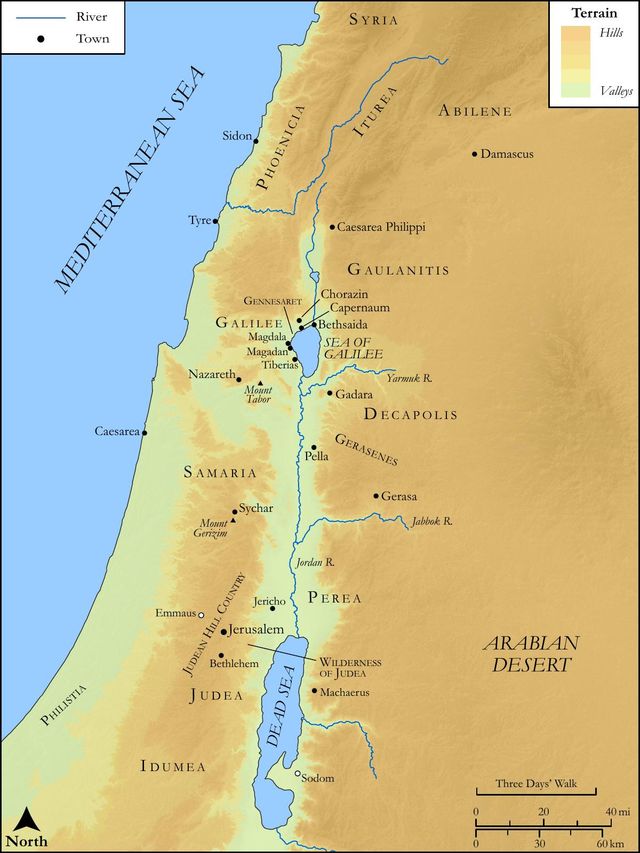
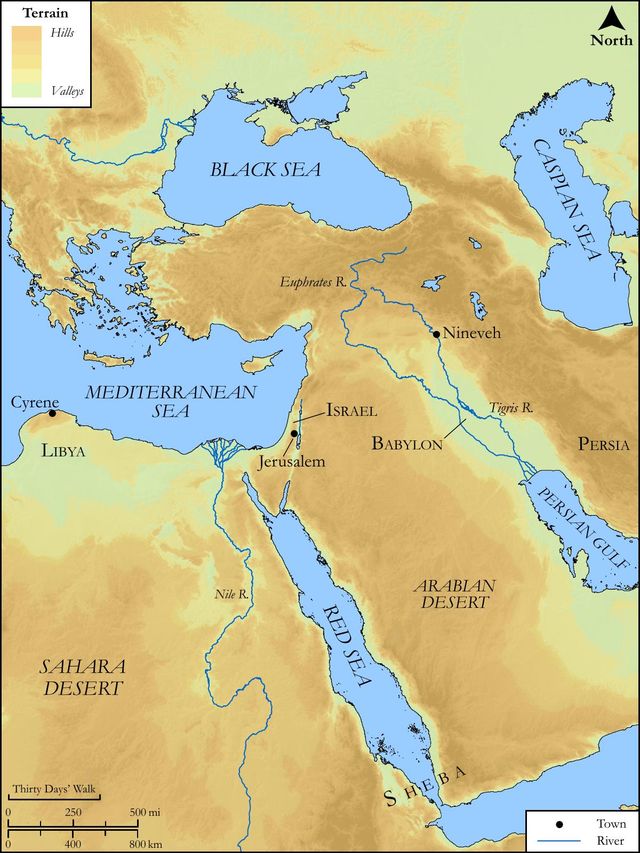
See on the biblical-era maps

Study this verse
Public-domain commentary
Matthew Henry
From his Commentary on the Whole Bible. Henry comments on passages, not single verses — this entry covers Matthew 13:1–23. His four-level outline is real structure in the source text, so it is rendered as structure.
We have here Christ preaching, and may observe,
1.When Christ preached this sermon; it was the same day that he preached the sermon in the foregoing chapter: so unwearied was he in doing good, and working the works of him that sent him. Note, Christ was for preaching both ends of the day, and has by his example recommended that practice to his church; we must in the morning sow our seed, and in the evening not withhold our hand, Eccl. xi. 6. An afternoon sermon well heard, will be so far from driving out the morning sermon, that it will rather clench it, and fasten the nail in a sure place. Though Christ had been in the morning opposed and cavilled at by his enemies, disturbed and interrupted by his friends, yet he went on with his work; and in the latter part of the day, we do not find that he met with such discouragements. Those who with courage and zeal break through difficulties in God's service, will perhaps find them not so apt to recur as they fear. Resist them, and they will flee.
2.To whom he preached; there were great multitudes gathered together to him, and they were the auditors; we do not find that any of the scribes or Pharisees were present. They were willing to hear him when he preached in the synagogue (ch. xii. 9, 14), but they thought it below them to hear a sermon by the sea-side, though Christ himself was the preacher: and truly he had better have their room than their company, for now they were absent, he went on quietly and without contradiction. Note, Sometimes there is most of the power of religion where there is least of the pomp of it: the poor receive the gospel. When Christ went to the sea-side, multitudes were presently gathered together to him. Where the king is, there is the court; where Christ is, there is the church, though it be by the sea-side. Note, Those who would get good by the word, must be willing to follow it in all its removes; when the ark shifts, shift after it. The Pharisees had been labouring, by base calumnies and suggestions, to drive the people off from following Christ, but they still flocked after him as much as ever. Note, Christ will be glorified in spite of all opposition; he will be followed.
3.Where he preached this sermon.
(1.)His meeting-place was the sea-side. He went out of the house (because there was no room for the auditory) into the open air. It was pity but such a Preacher should have had the most spacious, sumptuous, and convenient place to preach in, that could be devised, like one of the Roman theatres; but he was now in his state of humiliation, and in this, as in other things, he denied himself the honours due to him; as he had not a house of his own to live in, so he had not a chapel of his own to preach in. By this he teaches us in the external circumstances of worship not to covet that which is stately, but to make the best of the conveniences which God in his providence allots to us. When Christ was born, he was crowded into the stable, and now to the sea-side, upon the strand, where all persons might come to him with freedom. He that was truth itself sought no corners (no adyta), as the pagan mysteries did. Wisdom crieth without, Prov. i. 20; John xiii. 20.
(2.)His pulpit was a ship; not like Ezra's pulpit, that was made for the purpose (Neh. viii. 4); but converted to this use for want of a better. No place amiss for such a Preacher, whose presence dignified and consecrated any place: let not those who preach Christ be ashamed, though they have mean and inconvenient places to preach in. Some observe, that the people stood upon dry ground and firm ground, while the Preacher was upon the water in more hazard. Ministers are most exposed to trouble. Here was a true rostrum, a ship pulpit.
4.What and how he preached.
(1.)He spake many things unto them. Many more it is likely than are here recorded, but all excellent and necessary things, things that belong to our peace, things pertaining to the kingdom of heaven: they were not trifles, but things of everlasting consequence, that Christ spoke of. It concerns us to give a more earnest heed, when Christ has so many things to say to us, that we miss not any of them.
(2.)What he spake was in parables. A parable sometimes signifies any wise, weighty saying that is instructive; but here in the gospels it generally signifies a continued similitude or comparison, by which spiritual or heavenly things were described in language borrowed from the things of this life. It was a way of teaching used very much, not only by the Jewish rabbin, but by the Arabians, and the other wise men of the east; and it was found very profitable, and the more so from its being pleasant. Our Saviour used it much, and in it condescended to the capacities of people, and lisped to them in their own language. God had long used similitudes by his servants the prophets (Hos. xii. 10), and to little purpose; now he uses similitudes by his Son; surely they will reverence him who speaks from heaven, and of heavenly things, and yet clothes them with expressions borrowed from things earthly. See John iii. 12. So descending in a cloud. Now,
I.We have here the general reason why Christ taught in parables.
The disciples were a little surprised at it, for hitherto, in his preaching, he had not much used them, and therefore they ask, Why speakest thou to them in parables? Because they were truly desirous that the people might hear with understanding. They do not say, Why speakest thou to us? (they knew how to get the parables explained) but to them. Note, We ought to be concerned for the edification of others, as well as for our own, by the word preached; and if ourselves be strong, yet to bear the infirmities of the weak.
To this question Christ answers largely, v. 11-17, where he tells them, that therefore he preached by parables, because thereby the things of God were made more plain and easy to them who were willingly ignorant; and thus the gospel would be a savour of life to some, and of death to others. A parable, like the pillar of cloud and fire, turns a dark side towards Egyptians, which confounds them, but a light side towards Israelites, which comforts them, and so answers a double intention. The same light directs the eyes of some, but dazzles the eyes of others. Now,
1.This reason is laid down (v. 11): Because it is given unto you to know the mysteries of the kingdom of heaven, but to them it is not given. That is,
(1.)The disciples had knowledge, but the people had not. You know already something of these mysteries, and need not in this familiar way to be instructed; but the people are ignorant, are yet but babes, and must be taught as such by plain similitudes, being yet incapable of receiving instruction in any other way: for though they have eyes, they know not how to use them; so some. Or,
(2.)The disciples were well inclined to the knowledge of gospel mysteries, and would search into the parables, and by them would be led into a more intimate acquaintance with those mysteries; but the carnal hearers that rested in bare hearing, and would not be at the pains to look further, nor to ask the meaning of the parables, would be never the wiser, and so would justly suffer for their remissions. A parable is a shell that keeps good fruit for the diligent, but keeps it from the slothful. Note, There are mysteries in the kingdom of heaven, and without controversy, great is the mystery of godliness: Christ's incarnation, satisfaction, intercession, our justification and sanctification by union with Christ, and indeed the whole work of redemption, from first to last, are mysteries, which could never have been discovered but by divine revelation (1 Cor. xv. 51), were at this time discovered but in part to the disciples, and will never be fully discovered till the veil shall be rent; but the mysteriousness of gospel truth should not discourage us from, but quicken us in, our enquiries after it and searches into it.
[1.]It is graciously given to the disciples of Christ to be acquainted with these mysteries. Knowledge is the first gift of God, and it is a distinguishing gift (Prov. ii. 6); it was given to the apostles, because they were Christ's constant followers and attendants. Note, The nearer we draw to Christ, and the more we converse with him, the better acquainted we shall be with gospel mysteries.
[2.]It is given to all true believers, who have an experimental knowledge of the gospel mysteries, and that is without doubt the best knowledge: a principle of grace in the heart, is that which makes men of quick understanding in the fear of the Lord, and in the faith of Christ, and so in the meaning of parables; and for want of that, Nicodemus, a master in Israel, talked of the new birth as a blind man of colours.
[3.]There are those to whom this knowledge is not given, and a man can receive nothing unless it be given him from above (John iii. 27); and be it remembered that God is debtor to no man; his grace is his own; he gives or withholds it at pleasure (Rom. xi. 35); the difference must be resolved into God's sovereignty, as before, ch. xi. 25, 26.
2.This reason is further illustrated by the rule God observes in dispensing his gifts; he bestows them on those who improve them, but takes them away from those who bury them. It is a rule among men, that they will rather entrust their money with those who have increased their estates by their industry, than with those who have diminished them by their slothfulness.
(1.)Here is a promise to him that has, that has true grace, pursuant to the election of grace, that has, and uses what he has; he shall have more abundance: God's favours are earnests of further favours; where he lays the foundation, he will build upon it. Christ's disciples used the knowledge they now had, and they had more abundance at the pouring out of the Spirit, Acts ii.. They who have the truth of grace, shall have the increase of grace, even to an abundance in glory, Prov. iv. 18. Joseph—he will add, Gen. xxx. 24.
(2.)Here is a threatening to him that has not, that has no desire of grace, that makes no right use of the gifts and graces he has: has not root, no solid principle; that has, but uses not what he has; from him shall be taken away that which he has or seems to have. His leaves shall wither, his gifts decay; the means of grace he has, and makes no use of, shall be taken from him; God will call in his talents out of their hands that are likely to become bankrupts quickly.
3.This reason is particularly explained, with reference to the two sorts of people Christ had to do with.
(1.)Some were willingly ignorant; and such were amused by the parables (v. 13); because they seeing, see not. They had shut their eyes against the clear light of Christ's plainer preaching, and therefore were now left in the dark. Seeing Christ's person, they see not his glory, see no difference between him and another man; seeing his miracles, and hearing his preaching, they see not, they hear not with any concern or application; they understand neither. Note,
[1.]There are many that see the gospel light, and hear the gospel sound, but it never reaches their hearts, nor has it any place in them.
[2.]It is just with God to take away the light from those who shut their eyes against it; that such as will be ignorant, may be so; and God's dealing thus with them magnifies his distinguishing grace to his disciples.
Now in this the scripture would be fulfilled, v. 14, 15. It is quoted from Isa. vi. 9, 10. The evangelical prophet that spoke most plainly of gospel grace, foretold the contempt of it, and the consequences of that contempt. It is referred to no less than six times in the New Testament, which intimates, that in gospel times spiritual judgments would be most common, which make least noise, but are most dreadful. That which was spoken of the sinners in Isaiah's time was fulfilled in those in Christ's time, and it is still fulfilling every day; for while the wicked heart of man keeps up the same sin, the righteous hand of God inflicts the same punishment. Here is,
First. A description of sinners' wilful blindness and hardness, which is their sin. This people's heart is waxed gross; it is fattened, so the word is; which denotes both sensuality and senselessness (Ps. cxix. 70); secure under the word and rod of God, and scornful as Jeshurun, that waxed fat and kicked, Deut. xxxii. 15. And when the heart is thus heavy, no wonder that the ears are dull of hearing; the whispers of the Spirit they hear not at all; the loud calls of the word, though the word be nigh them, they regard not, nor are at all affected by them: they stop their ears, Ps. lviii. 4, 5. And because they are resolved to be ignorant, they shut both the learning senses; for their eyes also they have closed, resolved that they would not see light come into the world, when the Son of Righteousness arose, but they shut their windows, because they loved darkness rather than light, John iii. 19; 2 Pet. iii. 5.
Secondly, A description of that judicial blindness, which is the just punishment of this. "By hearing, ye shall hear, and shall not understand; what means of grace you have, shall be to no purpose to you; though, in mercy to others, they are continued, yet in judgment to you, the blessing upon them is denied." The saddest condition a man can be in on this side hell, is to sit under the most lively ordinances with a dead, stupid, untouched heart. To hear God's word, and see his providences, and yet not to understand and perceive his will, either in the one or in the other, is the greatest sin and the greatest judgment that can be. Observe, It is God's work to give an understanding heart, and he often, in a way of righteous judgment, denies it to those to whom he has given the hearing ear, and the seeing eye, in vain. Thus does God choose sinners' delusions (Isa. lxvi. 4), and bind them over to the greatest ruin, by giving them up to their own hearts' lusts (Ps. lxxxi. 11, 12); let them alone (Hos. iv. 17); my Spirit shall not always strive, Gen. vi. 3.
Thirdly, The woeful effect and consequence of this; Lest at any time they should see. They will not see because they will not turn; and God says that they shall not see, because they shall not turn: lest they should be converted, and I should heal them.
Note, 1. That seeing, hearing, and understanding, are necessary to conversion; for God, in working grace, deals with men as men, as rational agents; he draws with the cords of a man, changes the heart by opening the eyes, and turns from the power of Satan unto God, by turning first from darkness to light, (Acts xxvi. 18). 2. All those who are truly converted to God, shall certainly be healed by him. "If they be converted I shall heal them, I shall save them:" so that if sinners perish, it is not to be imputed to God, but to themselves; they foolishly expected to be healed, without being converted. 3. It is just with God to deny his grace to those who have long and often refused the proposals of it, and resisted the power of it. Pharaoh, for a good while, hardened his own heart (Exod. viii. 15, 32), and afterwards God hardened it, ch. ix. 12; x. 20. Let us therefore fear, lest by sinning against the divine grace, we sin it away.
(2.)Others were effectually called to be the disciples of Christ, and were truly desirous to be taught of him; and they were instructed, and made to improve greatly in knowledge, by these parables, especially when they were expounded; and by them the things of God were made more plain and easy, more intelligible and familiar, and more apt to be remembered (v. 16, 17). Your eyes see, your ears hear. They saw the glory of God in Christ's person; they heard the mind of God in Christ's doctrine; they saw much, and were desirous to see more, and thereby were prepared to receive further instruction; they had opportunity for it, by being constant attendants on Christ, and they should have it from day to day, and grace with it. Now this Christ speaks of,
[1.]As a blessing; "Blessed are your eyes for they see, and your ears for they hear; it is your happiness, and it is a happiness for which you are indebted to the peculiar favour and blessing of God." It is a promised blessing, that in the days of the Messiah the eyes of them that see shall not be dim, Isa. xxxii. 3. The eyes of the meanest believer that knows experimentally the grace of Christ, are more blessed than those of the greatest scholars, the greatest masters in experimental philosophy, that are strangers to God; who, like the other gods they serve, have eyes, and see not. Blessed are your eyes. Note, True blessedness is entailed upon the right understanding and due improvement of the mysteries of the kingdom of God. The hearing ear and the seeing eye are God's work in those who are sanctified; they are the work of his grace (Prov. xx. 12), and they are a blessed work, which shall be fulfilled with power, when those who now see through a glass darkly, shall see face to face. It was to illustrate this blessedness that Christ said so much of the misery of those who are left in ignorance; they have eyes and see not; but blessed are your eyes. Note, The knowledge of Christ is a distinguishing favour to those who have it, and upon that account it lays under the greater obligations; see John xiv. 22. The apostles were to teach others, and therefore were themselves blessed with the clearest discoveries of divine truth. The watchmen shall see eye to eye, Isa. lii. 8.
[2.]As a transcendent blessing, desired by, but not granted to, many prophets and righteous men, v. 17. The Old-Testament saints, who had some glimpses, some glimmerings of gospel light, coveted earnestly further discoveries. They had the types, shadows, and prophecies, of those things but longed to see the Substance, that glorious end of those things which they could not steadfastly look unto; that glorious inside of those things which they could not look into. They desired to see the great Salvation, the Consolation of Israel, but did not see it, because the fulness of time was not yet come. Note, First, Those who know something of Christ, cannot but covet to know more. Secondly, The discoveries of divine grace are made, even to prophets and righteous men, but according to the dispensation they are under. Though they were the favourites of heaven, with whom God's secret was, yet they have not seen the things which they desired to see, because God had determined not to bring them to light yet; and his favours shall not anticipate his counsels. There was then, as there is still, a glory to be revealed; something in reserve, that they without us should not be made perfect, Heb. xi. 40. Thirdly, For the exciting of our thankfulness, and the quickening of our diligence, it is good for us to consider what means we enjoy, and what discoveries are made to us, now under the gospel, above what they had, and enjoyed, who lived under the Old-Testament dispensation, especially in the revelation of the atonement for sin; see what are the advantages of the New Testament above the Old (2 Cor. iii. 7, &c. Heb. xii. 18); and see that our improvements be proportionable to our advantages.
II.We have, in these verses, one of the parables which our Saviour put forth; it is that of the sower and the seed; both the parable itself, and the explanation of it. Christ's parables are borrowed from common, ordinary things, not from any philosophical notions or speculations, or the unusual phenomena of nature, though applicable enough to the matter in hand, but from the most obvious things, that are of every day's observation, and come within the reach of the meanest capacity; many of them are fetched from the husbandman's calling, as this of the sower, and that of the tares. Christ chose to do thus,
1.That spiritual things might hereby be made more plain, and, by familiar similitudes, might be made the more easy to slide into our understandings.
2.That common actions might hereby be spiritualized, and we might take occasion from those things which fall so often under our view, to meditate with delight on the things of God; and thus, when our hands are busiest about the world, we may not only notwithstanding that, but even with the help of that, be led to have our hearts in heaven. Thus the word of God shall talk with us, talk familiarly with us, Prov. vi. 22.
The parable of the sower is plain enough, v. 3-9. The exposition of it we have from Christ himself, who knew best what was his own meaning. The disciples, when they asked, Why speakest thou unto them in parables? (v. 10), intimated a desire to have the parable explained for the sake of the people; nor was it any disparagement to their own knowledge to desire it for themselves. Our Lord Jesus kindly took the hint, and gave the sense, and caused them to understand the parable, directing his discourse to the disciples, but in the hearing of the multitude, for we have not the account of his dismissing them till v. 36. "Hear ye therefore the parable of the sower (v. 18); you have heard it, but let us go over it again." Note, It is of good use, and would contribute much to our understanding the word and profiting by it, to hear over again what we have heard (Phil. iii. 1); "You have heard it, but hear the interpretation of it." Note, Then only we hear the word aright, and to good purpose, when we understand what we hear; it is no hearing at all, if it be not with understanding, Neh. viii. 2. It is God's grace indeed that gives the understanding, but it is our duty to give our minds to understand.
Let us therefore compare the parable and the exposition.
(1.)The seed sown is the word of God, here called the word of the kingdom (v. 19): the kingdom of heaven, that is the kingdom; the kingdoms of the world, compared with that, are not to be called kingdoms. The gospel comes from that kingdom, and conducts to that kingdom; the word of the gospel is the word of the kingdom; it is the word of the King, and where that is, there is power; it is a law, by which we must be ruled and governed. This word is the seed sown, which seems a dead, dry thing, but all the product is virtually in it. It is incorruptible seed (1 Pet. i. 23); it is the gospel that brings forth fruit in souls, Col. i. 5, 6.
(2.)The sower that scatters the seed is our Lord Jesus Christ, either by himself, or by his ministers; see v. 37. The people are God's husbandry, his tillage, so the word is; and ministers are labourers together with God, 1 Cor. iii. 9. Preaching to a multitude is sowing the corn; we know not where it must light; only see that it be good, that it be clean, and be sure to give it seed enough. The sowing of the word is the sowing of a people for God's field, the corn of his floor, Isa. xxi. 10.
(3.)The ground in which this seed is sown is the hearts of the children of men, which are differently qualified and disposed, and accordingly the success of the word is different. Note, Man's heart is like soil, capable of improvement, of bearing good fruit; it is pity it should lie fallow, or be like the field of the slothful, Prov. xxiv. 30. The soul is the proper place for the word of God to dwell, and work, and rule in; its operation is upon conscience, it is to light that candle of the Lord. Now according as we are, so the word is to us: Recipitur ad modum recipientis—The reception depends upon the receiver. As it is with the earth; some sort of ground, take ever so much pains with it, and throw ever so good seed into it, yet it brings forth no fruit to any purpose; while the good soil brings forth plentifully: so it is with the hearts of men, whose different characters are here represented by four sorts of ground, of which three are bad, and but one good. Note, The number of fruitless hearers is very great, even of those who heard Christ himself. Who has believed our report? It is a melancholy prospect which this parable gives us of the congregations of those who hear the gospel preached, that scarcely one in four brings forth fruit to perfection. Many are called with the common call, but in few is the eternal choice evidenced by the efficacy of that call, ch. xx. 16.
Now observe the characters of these four sorts of ground.
[1.]The highway ground, v. 4-10. They had pathways through their corn-fields (ch. xii. 1), and the seed that fell on them never entered, and so the birds picked it up. The place where Christ's hearers now stood represented the characters of most of them, the sand on the sea-shore, which was to the seed like the highway ground.
Observe First, What kind of hearers are compared to the highway ground; such as hear the word and understand it not; and it is their own fault that they do not. They take no heed to it, take no hold of it; they do not come with any design to get good, as the highway was never intended to be sown. They come before God as his people come, and sit before Him as his people sit; but it is merely for fashion-sake, to see and be seen; they mind not what is said, it comes in at one ear and goes out at the other, and makes no impression.
Secondly, How they come to be unprofitable hearers. The wicked one, that is, the devil, cometh and catcheth away that which was sown.—Such mindless, careless, trifling hearers are an easy prey to Satan; who, as he is the great murderer of souls, so he is the great thief of sermons, and will be sure to rob us of the word, if we take not care to keep it: as the birds pick up the seed that falls on the ground that is neither ploughed before nor harrowed after. If we break not up the fallow ground, by preparing our hearts for the word, and humbling them to it, and engaging our own attention; and if we cover not the seed afterwards, by meditation and prayer; if we give not a more earnest heed to the things which we have heard, we are as the highway ground. Note, The devil is a sworn enemy to our profiting by the word of God; and none do more befriend his design than heedless hearers, who are thinking of something else, when they should be thinking of the things that belong to their peace.
[2.]The stony ground. Some fell upon stony places (v. 5, 6), which represents the case of hearers that go further than the former, who receive some good impressions of the word, but they are not lasting, v. 20, 21. Note, It is possible we may be a great deal better than some others, and yet not be so good as we should be; may go beyond our neighbours, and yet come short of heaven. Now observe, concerning these hearers that are represented by the stony ground,
First, How far they went. 1. They hear the word; they turn neither their backs upon it, nor a deaf ear to it. Note, hearing the word, though ever so frequently, ever so gravely, if we rest in that, will never bring us to heaven. 2. They are quick in hearing, swift to hear, he anon receiveth it, euthys, he is ready to receive it, forthwith it sprung up (v. 5), it sooner appeared above ground than that which was sown in the good soil. Note, Hypocrites often get the start of true Christians in the shows of profession, and are often too hot to hold. He receiveth it straightway, without trying it; swallows it without chewing, and then there can never be a good digestion. Those are most likely to hold fast that which is good, that prove all things, 1 Thess. v. 21. 3. They receive it with joy. Note, There are many that are very glad to hear a good sermon, that yet do not profit by it; they may be pleased with the word, and yet not changed and ruled by it; the heart may melt under the word, and yet not be melted down by the word, much less into it, as into a mould. Many taste the good word of God (Heb. vi. 5), and say they find sweetness in it, but some beloved lust is rolled under the tongue, which it would not agree with, and so they spit it out again. 4. They endure for awhile, like a violent motion, which continues as long as the impression of the force remains, but ceases when that has spent itself. Note, Many endure for awhile, that do not endure to the end, and so come short of the happiness which is promised to them only that persevere (ch. x. 22); they did run well, but something hindered them, Gal. v. 7.
Secondly, How they fell away, so that no fruit was brought to perfection; no more than the corn, that having no depth of earth from which to draw moisture, is scorched and withered by the heat of the sun. And the reason is,
1.They have no root in themselves, no settled, fixed principles in their judgments, no firm resolution in their wills, nor any rooted habits in their affections: nothing firm that will be either the sap or the strength of their profession. Note,
(1.)It is possible there may be the green blade of a profession, where yet there is not the root of grace; hardness prevails in the heart, and what there is of soil and softness is only in the surface; inwardly they are no more affected than a stone; they have no root, they are not by faith united to Christ who is our Root; they derive not from him, they depend not on him.
(2.)Where there is not a principle, though there be a profession, we cannot expect perseverance. Those who have no root will endure but awhile. A ship without ballast, though she may at first out-sail the laden vessel, yet will certainly fail in stress of weather, and never make her port.
2.Times of trial come, and then they come to nothing. When tribulation and persecution arise because of the word, he is offended; it is a stumbling-block in his way which he cannot get over, and so he flies off, and this is all his profession comes to. Note,
(1.)After a fair gale of opportunity usually follows a storm of persecution, to try who have received the word in sincerity, and who have not. When the word of Christ's kingdom comes to be the word of Christ's patience (Rev. iii. 10), then is the trial, who keeps it, and who does not, Rev. i. 9. It is wisdom to prepare for such a day.
(2.)When trying times come, those who have no root are soon offended; they first quarrel with their profession, and then quit it; first find fault with it, and then throw it off. Hence we read of the offence of the cross, Gal. v. 11. Observe, Persecution is represented in the parable by the scorching sun, (v. 6); the same sun which warms and cherishes that which was well rooted, withers and burns up that which wanted root. As the word of Christ, so the cross of Christ, is to some a savour of life unto life, to others a savour of death unto death: the same tribulation which drives some to apostasy and ruin, works for others a far more exceeding and eternal weight of glory. Trials which shake some, confirm others, Phil. i. 12. Observe how soon they fall away, by and by; as soon rotten as they were ripe; a profession taken up without consideration is commonly let fall without it: "Lightly come, lightly go."
[3.]The thorny ground, Some fell among thorns (which are a good guard to the corn when they are in the hedge, but a bad inmate when they are in the field); and the thorns sprung up, which intimates that they did not appear, or but little, when the corn was sown, but afterwards they proved choking to it, v. 7. This went further than the former, for it had root; and it represents the condition of those who do not quite cast off their profession, and yet come short of any saving benefit by it; the good they gain by the word, being insensibly overcome and overborne by the things of the world. Prosperity destroys the word in the heart, as much as persecution does; and more dangerously, because more silently: the stones spoiled the root, the thorns spoil the fruit.
Now what are these choking thorns?
First, The cares of this world. Care for another world would quicken the springing of this seed, but care for this world chokes it. Worldly cares are fitly compared to thorns, for they came in with sin, and are a fruit of the curse; they are good in their place to stop a gap, but a man must be well armed that deals much in them (2 Sam. xxiii. 6, 7); they are entangling, vexing, scratching, and their end is to be burned, Heb. vi. 8. These thorns choke the good seed. Note, Worldly cares are great hindrances to our profiting by the word of God, and our proficiency in religion. They eat up that vigour of soul which should be spent in divine things; divert us from duty, distract us in duty, and do us most mischief of all afterwards; quenching the sparks of good affections, and bursting the cords of good resolutions; those who are careful and cumbered about many things, commonly neglect the one thing needful.
Secondly, The deceitfulness of riches. Those who, by their care and industry, have raised estates, and so the danger that arises from care seems to be over, and they continue hearers of the word, yet are still in a snare (Jer. v. 4, 5); it is hard for them to enter into the kingdom of heaven: they are apt to promise themselves that in riches which is not in them; to rely upon them, and to take an inordinate complacency in them; and this chokes the word as much as care did. Observe, It is not so much riches, as the deceitfulness of riches, that does the mischief: now they cannot be said to be deceitful to us unless we put our confidence in them, and raise our expectations from them, and then it is that they choke the good seed.
[4.]The good ground (v. 18); Others fell into good ground, and it is pity but that good seed should always meet with good soil, and then there is no loss; such are good hearers of the word, v. 23. Note, Though there are many that receive the grace of God, and the word of his grace, in vain, yet God has a remnant by whom it is received to good purpose; for God's word shall not return empty, Isa. lv. 10, 11.
Now that which distinguished this good ground from the rest, was, in one word, fruitfulness. By this true Christians are distinguished from hypocrites, that they bring forth the fruits of righteousness; so shall ye be my disciples, John xv. 8. He does not say that this good ground has no stones in it, or no thorns; but there were none that prevailed to hinder its fruitfulness. Saints, in this world, are not perfectly free from the remains of sin; but happily freed from the reign of it.
The hearers represented by the good ground are,
First, Intelligent hearers; they hear the word and understand it; they understand not only the sense and meaning of the word, but their own concern in it; they understand it as a man of business understands his business. God in his word deals with men as men, in a rational way, and gains possession of the will and affections by opening the understanding: whereas Satan, who is a thief and a robber, comes not in by that door, but climbeth up another way.
Secondly, Fruitful hearers, which is an evidence of their good understanding: which also beareth fruit. Fruit is to every seed its own body, a substantial product in the heart and life, agreeable to the seed of the word received. We then bear fruit, when we practise according to the word; when the temper of our minds and the tenour of our lives are conformable to the gospel we have received, and we do as we are taught.
Thirdly, Not all alike fruitful; some a hundred-fold, some sixty, some thirty. Note, Among fruitful Christians, some are more fruitful than others: where there is true grace, yet there are degrees of it; some are of greater attainments in knowledge and holiness than others; all Christ's scholars are not in the same form. We should aim at the highest degree, to bring forth a hundred-fold, as Isaac's ground did (Gen. xxvi. 12), abounding in the work of the Lord, John xv. 8. But if the ground be good, and the fruit right, the heart honest, and the life of a piece with it, those who bring forth but thirty-fold shall be graciously accepted of God, and it will be fruit abounding to their account, for we are under grace, and not under the law.
Historical interpretation
Ten Centuries of Reception
13 surviving comments on this verse. Each one is dated, so this reads as a timeline rather than a list.
Select a marker to jump to its quote. Markers stagger vertically where authors wrote within a few decades of each other.
“The deceitfulness of riches chokes,” and so does the speech of heretics. The rich are liars, contrasted with “the poor, righteous person,” who is poor in speech and knowledge but righteous in life. The “care of all the churches” of which the apostle speaks is distinguished from the “care of this world.” One suffers from these worldly cares when one does not rejuvenate one’s own soil but receives the word without paying attention and sprouts up thorns, with which the earth was cursed because of the disobedience of Adam. He heard of the “thorns and thistles it shall produce for you,” “whose end is to be burned.” For these are not sown but spring forth of themselves. They “choke the word” of God through troubles and whims. One who knows truly both understands and bears fruit. But if anyone seems to understand without bearing fruit, one does not understand. If one seems to bear fruit without understanding, one does not bear fruit. This displays the variety of levels of virtue spoken of in the text: “sixtyfold and thirtyfold and a hundredfold.” Virtue’s strictness is not exhibited by everyone to the same degree. Some care less about it, some more.
"Hear ye therefore the parable of the sower," saith He; and He speaks what we before mentioned, of carelessness and attention, of cowardice and fortitude, of wealth and voluntary poverty; pointing out the hurt from the one, and the benefit from the other.
Then of virtue also He brings forward different forms. For being full of love to man, He marked out not one only way, nor did He say, "unless one bring forth an hundred, he is an outcast;" but he that brings forth sixty is saved also, and not he only, but also the producer of thirty. And this He said, making out salvation to be easy.
And thou then, art thou unable to practise virginity? Be chaste in marriage. Art thou unable to strip thyself of thy possessions? Give of thy substance. Canst thou not bear that burden? Share thy goods with Christ. Art thou unwilling to yield Him up all? Give Him but the half, but the third part. He is thy brother, and joint-heir, make Him joint-heir with thee here too. Whatsoever thou givest Him, thou wilt give to thyself.
These things then which the Apostles saw and heard, are such as His presence, His voice, His teaching. And in this He sets them before not the evil only, but even before the good, pronouncing them more blessed than even the righteous men of old. For they saw not only what the Jews saw not, but also what the righteous men and Prophets desired to see, and had not seen. For they had beheld these things only by faith, but these by sight, and even yet more clearly. You see how He identifies the Old Testament with the New, for had the Prophets been the servants of any strange or hostile Deity, they would not have desired to see Christ.
"That which is sown upon the stony places," saith He, "the same is he that heareth the word, and anon with joy receiveth it. Yet hath he not root in himself, but dureth for a while; but when tribulation or persecution ariseth because of the word, by and by he is offended! When any one," so He saith, "heareth the word of truth and understandeth it not, then cometh the wicked one, and catcheth that which was sown out of his heart. This is he that is sown by the wayside."
Now it is not the same thing for the doctrine to wither away, when no man is evil entreating, or disturbing its foundations, as when temptations press upon one. But they that are likened to the thorns, are much more inexcusable than these.
In order then that none of these things may befall us, let us by zeal and continual remembrance cover up the things that are told us. For though the devil do catch them away, yet it rests with us, whether they be caught away; though the plants wither, yet it is not from the heat this takes place (for He did not say, because of the heat it withered, but, "because it had no root"); although His sayings are choked, it is not because of the thorns, but of them who suffer them to spring up. For there is a way, if thou wilt, to check this evil growth, and to make the right use of our wealth. Therefore He said not, "the world," but "the care of the world;" nor "riches," but "the deceitfulness of riches."
Let us not then blame the things, but the corrupt mind. For it is possible to be rich and not to be deceived; and to be in this world, and not to be choked with its cares. For indeed riches have two contrary disadvantages; one, care, wearing us out, and bringing a darkness over us; the other, luxury, making us effeminate.
And well hath He said, "The deceitfulness of riches." For all that pertains to riches is deceit; they are names only, not attached to things. For so pleasure and glory, and splendid array, and all these things, are a sort of vain show, not a reality.
Having therefore spoken of the ways of destruction, afterwards He mentions the good ground, not suffering them to despair, but giving a hope of repentance, and indicating that it is possible to change from the things before mentioned into this.
And yet if both the land be good, and the Sower one, and the seed the same, wherefore did one bear a hundred, one sixty, one thirty? Here again the difference is from the nature of the ground, for even where the ground is good, great even therein is the difference. Seest thou, that not the husbandman is to be blamed, nor the seed, but the land that receives it? not for its nature, but for its disposition. And herein too, great is His mercy to man, that He doth not require one measure of virtue, but while He receives the first, and casts not out the second, He gives also a place to the third.
And these things He saith, least they that followed Him should suppose that hearing is sufficient for salvation. And wherefore, one may say, did He not put the other vices also, such as lust, vainglory? In speaking of "the care of this world, and the deceitfulness of riches," He set down all. Yea, both vainglory and all the rest belong to this world, and to the deceitfulness of riches; such as pleasure, and gluttony, and envy, and vainglory, and all the like.
But He added also the "way" and the "rock," signifying that it is not enough to be freed from riches only, but we must cultivate also the other parts of virtue. For what if thou art free indeed from riches, yet are soft and unmanly? and what if thou art not indeed unmanly, but art remiss and careless about the hearing of the word? Nay, no one part is sufficient for our salvation, but there is required first a careful hearing, and a continual recollection; then fortitude, then contempt of riches, and deliverance from all worldly things.
In fact, His reason for putting this before the other, is because the one is first required (for "How shall they believe except they hear?" just as we too, except we mind what is said, shall not be able so much as to learn what we ought to do): after that, fortitude, and the contempt of things present.
Hearing therefore these things, let us fortify ourselves on all sides, regarding His instructions, and striking our roots deep, and cleansing ourselves from all worldly things. But if we do the one, neglecting the other, we shall be nothing bettered; for though we perish not in one way, yet shall we in some other. For what signifies our not being ruined by riches, if we are by indolence: or not by indolence, if we are by softness. For so the husbandman, whether this way or that way he lose his crop, equally bewails himself. Let us not then soothe ourselves upon our not perishing in all these ways, but let it be our grief, in whichever way we are perishing.
And let us burn up the thorns, for they choke the word. And this is known to those rich men, who not for these matters alone, but for others also prove unprofitable. For having become slaves and captives of their pleasures, they are useless even for civil affairs, and if for them, much more for those of Heaven. Yea, and in two ways hereby our thoughts are corrupted; both by the luxury, and by the anxiety too. For either of these by itself were enough to overwhelm the bark; but when even both concur, imagine how high the billow swells.
And marvel not at His calling our luxury, "thorns." For thou indeed art not aware of it, being intoxicated with thy passion, but they that are in sound health know that it pricks sharper than any thorn, and that luxury wastes the soul worse than care, and causes more grievous pains both to body and soul. For one is not so sorely smitten by anxiety, as by surfeiting. Since when watchings, and throbbings of the temples, and heaviness in the head, and pangs of the bowels, lay hold of such a man, you may imagine how many thorns these surpass in grievousness. And as the thorns, on whichever side they are laid hold of, draw blood from the hands that seize them, just so doth luxury plague both feet, and hands, and head, and eyes, and in general all our members; and it is withered also, and unfruitful, like the thorn, and hurts much more than it, and in our vital parts. Yea, it brings on premature old age, and dulls the senses, and darkens our reasoning, and blinds the keen-sighted mind, and makes the body tumid, rendering excessive the deposition of that which is cast away, and gathering together a great accumulation of evils; and it makes the burden too great, and the load overwhelming; whence our falls are many and continual, and our shipwrecks frequent.
For tell me, why pamper thy body? What? are we to slay thee in sacrifice, to set thee on the table? The birds it is well for thee to pamper: or rather, not so well even for them; for when they are fattened, they are unprofitable for wholesome food. So great an evil is luxury, that its mischief is shown even in irrational beings. For even them by luxury we make unprofitable, both to themselves and to us. For their superfluous flesh is indigestible, and the moister kind of corruption is engendered by that kind of fatness. Whereas the creatures that are not so fed, but live, as one may say, in abstinence, and moderate diet, and in labor and hardship, these are most serviceable both to themselves and to others, as well for food, as for everything else. Those, at any rate, who live on them, are in better health; but such as are fed on the others are like them, growing dull and sickly, and rendering their chain more grievous. For nothing is so hostile and hurtful to the body, as luxury; nothing so tears it in pieces, and overloads and corrupts it, as intemperance.
Wherefore above all may this circumstance make one amazed at them for their folly, that not even so much care as others show towards their wine skins, are these willing to evince towards themselves. For those the wine merchants do not allow to receive more than is fit, lest they should burst; but to their own wretched belly these men do not vouchsafe even so much forethought, but when they have stuffed it and distended it, they fill all, up to the ears, up to the nostrils, to the very throat itself, thereby pressing into half its room the spirit, and the power that directs the living being. What? was thy throat given thee for this end, that thou shouldest fill it up to the very mouth, with wine turned sour, and all other corruption? Not for this, O man, but that thou shouldest above all things sing to God, and offer up the holy prayers, and read out the divine laws, and give to thy neighbors profitable counsel. But thou, as if thou hadst received it for this end, dost not suffer it to have leisure for that ministry, so much as for a short season, but for all thy life subjectest it to this evil slavery. And as if any man having had a lyre given him with golden strings, and beautifully constructed, instead of awakening with it the most harmonious music, were to cover it over with much dung and clay; even so do these men. Now the word, dung, I use not of living, but of luxurious living, and of that great wantonness. Because what is more than necessary is not nourishment, but merely injurious. For in truth the belly alone was made merely for the reception of food; but the month, and the throat, and tongue, for other things also, far more necessary than these: or rather, not even the belly for the reception of food simply, but for the reception of moderate food. And this it makes manifest by crying out loudly against us, when we tease it by this greediness; nor doth it clamor against us only, but also avenging that wrong exacts of us the severest penalty. And first it punishes the feet, that bear and conduct us to those wicked revels, then the hands that minister to it, binding them together for having brought unto it such quantities and kinds of provisions; and many have distorted even their very mouth, and eyes, and head. And as a servant receiving an order beyond his power, not seldom out of desperation becomes insolent to the giver of the order: so the belly too, together with these members, often ruins and destroys, from being over-strained, the very brain itself. And this God hath well ordered, that from excess so much mischief should arise; that when of thine own will thou dost not practise self-restraint, at least against thy will, for fear of so great ruin, thou mayest learn to be moderate.
Knowing then these things, let us flee luxury, let us study moderation, that we may both enjoy health of body, and having delivered our soul from all infirmity, may attain unto the good things to come, by the grace and love towards man of our Lord Jesus Christ, to whom be glory and might forever and ever. Amen.
“The seed sown among the thorns is the person who listens to the word, but the anxiety of the world and the deceitfulness of riches choke the word, and it is made fruitless.” This reminds us of the words spoken to Adam: “You shall eat your bread among thorns and thistles.” This mystically signifies that those who give themselves over to the pleasures and cares of this world eat the heavenly bread and true food among thorns. Hence the Lord fittingly added, “The deceitfulness of riches chokes the word.” Riches are enticing indeed, promising one thing and doing another. The possession of riches is uncertain. They are borne from place to place. Unpredictably they either desert the haves or gorge the have-nots. The Lord also states that it is difficult for the rich to enter the kingdom of heaven, for riches choke the word of God and weaken the force of the virtues.
Note that which is said, is straightway offended. There is then some difference between him who, by many tribulations and torments, is driven to deny Christ, and him who at the first persecution is offended, and falls away, of which He proceeds to speak, That which is sown among thorns. To me He seems here to express figuratively that which was said literally to Adam; Amidst briers and thorns thou shalt eat thy bread, (Gen. 3:18) that he that has given himself up to the delights and the cares of this world, eats heavenly bread and the true food among thorns.
And it is elegantly added, The deceitfulness of riches choke the word; for riches are treacherous, promising one thing and doing another. The tenure of them is slippery as they are borne hither and thither, and with uncertain step forsake those that have them, or revive those that have them not. Whence the Lord asserts, that rich men hardly enter into the kingdom of heaven, because their riches choke the word of God, and relax the strength of their virtues.
And it is to be noted, that as in the bad ground there were three degrees of difference, to wit, that by the way side, the stony and the thorny ground; so in the good soil there is a three-fold difference, the hundred-fold, the sixty-fold, and the thirty-fold. And in this as in that, not the substance but the will is changed, and the hearts as well of the unbelieving as the believing receive seed; as in the first case He said, Then cometh the wicked one, and carrieth off that which is sown in the heart; and in the second and third case of the bad soil He said, This is he that heareth the word. So also in the exposition of the good soil, This is he that heareth the word. Therefore we ought first to hear, then to understand, and after understanding to bring forth the fruits of teaching, either an hundred-fold, or sixty, or thirty.
(vid. Cyp. Tr. iv. 12.) Or, The hundred-fold fruit is to be ascribed to virgins, the sixty-fold to widows and continent persons, the thirty-fold to chaste wedlock.
(Ep. 48. 2.) For the joining together of the hands, as it were in the soft embrace of a kiss, represents husband and wife. The sixty-fold refers to widows, who as being set in narrow circumstances and affliction are denoted by the depression of the finger; for by how much greater is the difficulty of abstaining from the allurements of pleasure once known, so much greater is the reward. The hundredth number passes from the left to the right, and by its turning round with the same fingers, not on the same hand, it expresses the crown of virginitya.
(Verse 22) But he who was sown among thorns, this is the one who hears the word, and the anxiety of this world and the deceitfulness of riches choke the word, and it becomes unfruitful. It seems to me that even that which is said literally to Adam, 'Among thorns and thistles you shall eat bread' (Gen. III, 18), signifies mystically that whoever devotes themselves to the pleasures and concerns of this world, shall eat heavenly bread and true food among thorns. And he elegantly added: the fallacy of wealth suffocates the word. For wealth is beguiling, promising one thing and doing another. Its possession is slippery, as it is carried here and there, and those who have it, either with an unsteady step, abandon it, or those who do not have it, seek to obtain it. Hence, the Lord declares it difficult for the rich to enter the kingdom of heaven, as wealth suffocates the word of God and softens the rigor of virtues.
In these words the Lord explains what the seed is, to wit, the word of the kingdom, that is of the Gospel teaching. For there are some that receive the word of the Lord with no devotion of heart, and so that seed of God's word which is sown in their heart, is by dæmons straightway carried off, as it were the seed dropped by the way side. It follows, That which is sown upon the rock, is he that heareth the word, &c. For the seed or word of God, which is sown in the rock, that is, in the hard and untamed heart, can bring forth no fruit, inasmuch as its hardness is great, and its desire of heavenly things small; and because of this great hardness, it has no root in itself.
And it should be known, that in these three sorts of bad soil are comprehended all who can hear the word of God, and yet have not strength to bring it forth unto salvation. The Gentiles are excepted, who were not worthy even to hear it. It follows, That which is sown on the good ground. The good ground is the faithful conscience of the elect, or the spirit of the saints which receives the word of God with joy and desire and devotion of heart, and manfully retains it amid prosperous and adverse circumstances, and brings it forth in fruit; as it follows, And brings forth fruit, some a hundred-fold, some sixty-fold, some thirty-fold.
The thirty-fold then is borne of him who teaches faith in the Holy Trinity; the sixty-fold of him who enforces the perfection of good works; (for in the number six this world was completed with all its equipments;) (Gen. 2:1) while he bears the hundred-fold who promises eternal life. For the number one hundred passes from the left hand to the right; and by the left hand the present life is denoted, by the right hand the life to come. Otherwise, the seed of the word of God brings forth fruit thirty-fold when it begets good thoughts, sixty-fold when good speech, and an hundred-fold when it brings to the fruit of good works.
It should be noted that the Lord, in His explanation, says that cares, pleasures, and riches choke the word. For they choke it because by their importunate thoughts they strangle the throat of the mind; and since they do not allow good desire to enter the heart, they kill, as it were, the passage of the breath of life. It should also be noted that He joins two things with riches, namely cares and pleasures, because indeed they both oppress the mind through anxiety and dissolve it through abundance. For by their contrary nature they make their possessors both afflicted and unstable. But since pleasure cannot coexist with affliction, at one time they afflict through the anxiety of guarding them, and at another time they soften toward pleasures through abundance.
Rightly are they called thorns, because they lacerate the soul by the prickings of thought, and do not suffer it to bring forth the spiritual fruit of virtue.
He did not say this world chokes, but the care of this world. Nor did He say wealth chokes, but the deceit of wealth. For wealth, when it is distributed, does not choke the word, but instead makes it grow. The thorns are cares and pleasures, for they kindle the flame both of desire and of gehenna. And just as the thorn is sharp and pierces the body and is removed with difficulty, so also with pleasure, once it takes hold of the soul, it enters it and is eradicated only with difficulty.
(ap. Anselm.) He had said above, that it was not given to the Jews to know the kingdom of God, but to the Apostles, and therefore He now concludes, saying, Hear ye therefore the parable of the sower, ye to whom are committed the mysteries of heaven.
(ap. Anselm.) He proceeds then expounding the parable; Every man who hears the word of the kingdom, that is, My preaching which avails to the acquiring the kingdom of heaven, and understandeth it not; how he understands it not, is explained by, for the evil one—that is the Devil—cometh and taketh away that which is sown in his heart; every such man is that which is sown by the way side. And note that that which is sown, is taken in different senses; for the seed is that which is sown, and the field is that which is sown, both of which are found here. For where He says carrieth away that which is sown, we must understand it of the seed; that which follows, is sown by the way side, is to be understood not of the seed, but of the place of the seed, that is, of the man, who is as it were the field sown by the seed of the Divine word.
Continue studying Matthew 13:22 across the web’s major study libraries — every link below opens this exact verse, chapter, or book on the destination site.
Read & Compare
 BibleGatewayThis verse in more than 200 translations and 70 languages.
 Bible.comThe YouVersion reader — hundreds of translations, reading plans, and highlights.
 ESV.orgCrossway's official English Standard Version reader.
 NET BibleThe NET translation with 60,000+ translators' notes on every rendering decision.
 STEP BibleTyndale House's free study tool — original text, vocabulary, and scholarly resources.
 BibliaLogos Bible Software's free web reader.
 USCCBThe New American Bible (Revised Edition) with the U.S. bishops' study notes.
Commentaries
 BibleHub CommentariesDozens of classic commentaries on this verse, gathered on one page.
 StudyLightMore than 100 commentary sets — the largest collection on the web.
 BibleRefPlain-English commentary on what this verse means, verse by verse.
 Enduring WordDavid Guzik's free commentary on this chapter, widely used by Bible teachers.
 Bible Study ToolsVerse commentary alongside Greek and Hebrew study aids.
Original Language & Research
- BibleHub InterlinearThe verse word by word — original language, transliteration, and English.
- BibleHub LexiconEvery word's original-language definition and Strong's entry.
 Blue Letter BibleDeep-study tools — Strong's numbers, concordance, and word studies.
 CNTR CollationThe earliest Greek manuscripts of this verse, collated letter by letter.
Sermons, Hymns & Audio


TrulyRandomVerse is not affiliated with these sites and doesn’t control their content. They’re linked because they’re genuinely useful.
Summary
Matthew 13:22, part of Jesus' explanation of the Parable of the Sower, describes the challenging reality of those who hear the word of God but fail to produce spiritual fruit. It reveals that worldly anxieties and the deceptive allure of wealth can effectively suffocate the divine message within a person's heart, preventing genuine growth and rendering their faith unproductive. This verse serves as a profound warning against the subtle yet powerful obstacles that can hinder spiritual vitality and fruitfulness.
Context
ShowHideLiterary Context
This verse is Jesus' direct interpretation of the "thorny ground" depicted in the Parable of the Sower, found in Matthew 13:1-9. Following the parable, Jesus explains to His disciples why He teaches in parables (Matthew 13:10-17), before providing a detailed exposition of the Sower parable itself in Matthew 13:18-23. Matthew 13:22 specifically follows the explanations of the seed falling "by the wayside" (Matthew 13:19) and "on stony places" (Matthew 13:20-21), completing the progression of negative responses before highlighting the fruitful ground in Matthew 13:23. This structured explanation emphasizes the different conditions of the human heart and their impact on receiving God's word.
Historical & Cultural Context
In ancient agrarian societies, thorns and weeds were a constant threat to crops, requiring diligent removal. Farmers understood that if thorns were left unchecked, they would compete with the sown seed for nutrients, water, and sunlight, ultimately stifling its growth. This agricultural reality provided a vivid and easily understood metaphor for Jesus' audience. The "care of this world" (Greek: merimna tou aiōnos) reflects the pervasive anxieties of daily life in a pre-industrial society, including concerns over food, shelter, security, and social standing. "Riches" (Greek: ploutos) in this context would include not only vast wealth but also the pursuit of material security and comfort, which could easily become an idol. The deceitfulness of riches was a well-known concept, as wealth often promised satisfaction and control that it could not deliver, leading to spiritual compromise.
Key Themes
ShowHideThis verse powerfully contributes to several overarching themes within the Gospel of Matthew and broader biblical theology. It underscores the theme of spiritual fruitfulness as evidence of genuine faith, a concept Jesus repeatedly emphasizes (e.g., Matthew 7:16-20). It highlights the obstacles to spiritual growth, particularly the insidious nature of worldliness. The "care of this world" points to the theme of anxiety and trust in God's provision, contrasting with Jesus' teaching to "seek first the kingdom of God" in Matthew 6:33. Furthermore, "the deceitfulness of riches" addresses the pervasive danger of materialism and idolatry, a recurring warning throughout Scripture that wealth can become a rival god, as seen in Jesus' teaching about serving two masters in Matthew 6:24.
Exposition and Analysis
ShowHideKey Word Analysis
ShowHideMeaning "to strangle completely," "to suffocate," or "to crowd out." This vivid verb paints a picture of the word being literally smothered, deprived of the necessary space, light, and nourishment to grow. It implies an active, aggressive suppression by the competing elements, leading to the word's demise within the heart.
Meaning "solicitude" or "anxiety." This refers to the worries, preoccupations, and anxieties that consume one's mind and energy. These are not necessarily sinful in themselves, but when they become overwhelming and displace focus on God's word, they become "thorns" that choke spiritual life.
Meaning "barren" or "unproductive." This term describes the ultimate outcome for those in the "thorny ground" category. Despite hearing the word, they fail to yield the expected spiritual harvest—character transformation, righteous living, and acts of service that glorify God.
Verse Breakdown
ShowHide"He also that received seed among the thorns is he that heareth the word;"
This clause identifies the type of hearer represented by the thorny ground. Like the other soils, this individual initially "hears the word," indicating an initial reception and perhaps even understanding of the message of the kingdom. The problem is not a failure to hear, but a failure to integrate and prioritize the word amidst other competing influences.
"and the care of this world, and the deceitfulness of riches,"
These are the specific "thorns" that Jesus identifies. "The care of this world" refers to anxieties, worries, and daily preoccupations (e.g., finances, health, future) that can consume one's attention. "The deceitfulness of riches" highlights how wealth, or the pursuit of it, promises satisfaction, security, and happiness but ultimately misleads, drawing individuals away from devotion to God and true spiritual flourishing.
"choke the word,"
This powerful phrase describes the destructive effect of these worldly concerns. Like weeds strangling a plant, the anxieties and allure of wealth suffocate the word that was sown. They compete for the heart's attention, energy, and devotion, ultimately depriving the word of the "nutrients" it needs to grow and thrive.
"and he becometh unfruitful."
This is the tragic consequence. The individual, despite hearing the word, fails to produce the spiritual fruit that is the natural outcome of a thriving relationship with God. This unfruitfulness signifies a lack of transformed character, righteous actions, and effective witness for the kingdom.
Literary Devices
ShowHideMatthew 13:22 is rich in Symbolism and Metaphor, drawing directly from the agricultural imagery of the Parable of the Sower. The "seed" is a metaphor for the "word" or "message of the kingdom," while the "thorns" symbolize the worldly anxieties and the deceptive nature of riches. The act of "choking" is a vivid metaphor for the suppression and suffocation of spiritual life by competing worldly concerns. The verse also employs Personification by attributing an active, destructive capability to "the care of this world" and "the deceitfulness of riches," as if they are agents that actively "choke" the word. This makes the abstract dangers concrete and emphasizes their insidious power to hinder spiritual growth.
Theological and Thematic Connections
ShowHideMatthew 13:22 serves as a critical theological warning, emphasizing that merely hearing the word of God is insufficient for genuine spiritual transformation and fruitfulness. It underscores the ongoing battle for the heart's allegiance, where the kingdom of God competes with the kingdom of this world. The verse highlights the insidious nature of worldliness, not always manifesting as overt sin, but often as legitimate concerns and desires that, when unchecked, can subtly displace God as the supreme priority. True discipleship requires vigilant self-examination and a conscious decision to prioritize God's word and kingdom above all earthly pursuits, recognizing that spiritual vitality depends on the heart's readiness to cultivate the word and resist the choking effects of worldly anxieties and the deceptive allure of wealth.
Reflection and Application
ShowHideMatthew 13:22 calls every believer to a profound and honest self-assessment of their heart's condition and priorities. It challenges us to identify the "thorns" in our own lives—those anxieties, pursuits, or possessions that, though seemingly benign or even necessary, are subtly competing with and potentially suffocating the word of God within us. Are we consumed by financial worries, career ambitions, social status, or the endless demands of daily life to the extent that our spiritual growth is stunted? Is the allure of material gain or the pursuit of comfort subtly deceiving us, promising satisfaction that only God can provide? This verse compels us to cultivate a spiritual discipline of detachment from worldly concerns, prioritizing our relationship with God and His kingdom above all else. It encourages us to regularly prune the "thorns" of anxiety and materialism through prayer, meditation on Scripture, and intentional acts of seeking God's kingdom first, trusting in His provision and wisdom.
Questions for Reflection
ShowHideFAQ
ShowHideWhat are the "thorns" in modern life, and how do they manifest?
ShowHideIn contemporary society, the "thorns" of Matthew 13:22 manifest in various forms, though the underlying principles remain the same. "The care of this world" can include chronic stress from demanding careers, financial instability, social media pressures, the constant influx of news, health anxieties, or the overwhelming pace of modern life. These worries, even legitimate ones, can consume mental and emotional energy, leaving little room for spiritual reflection or engagement with God's word. "The deceitfulness of riches" extends beyond literal wealth to the pervasive consumerism, the pursuit of material possessions, the desire for comfort and security, or the idolization of success and status. These can subtly promise fulfillment and happiness that only God can truly provide, subtly drawing hearts away from devotion to Him. The danger lies in their insidious nature; they are not always overt sins but often legitimate aspects of life that, when prioritized above God, choke spiritual vitality.
Christ-Centered Fulfillment
ShowHideMatthew 13:22, while a warning, ultimately points to Christ as the solution and the very source of fruitfulness. Jesus Himself is the "Word" made flesh (John 1:14), the ultimate seed sown into the world. Those who are "in Christ" are called to be fruitful, not by their own strength, but by abiding in Him (John 15:5). He offers a way to overcome the choking effects of worldly cares and the deceitfulness of riches. Jesus taught His disciples not to be anxious about their lives, what they would eat or drink, or what they would wear, but to "seek first the kingdom of God and His righteousness" (Matthew 6:25-33). He Himself demonstrated complete reliance on the Father, even in the face of immense suffering, providing the ultimate example of detachment from worldly concerns. Furthermore, Christ's sacrifice on the cross broke the power of sin and the world's deceptive allure, enabling believers to live lives of freedom and true abundance that is not found in material wealth but in Him (Colossians 2:8-10). Through His Spirit, He empowers us to resist the "thorns" and cultivate a heart where the Word can take deep root, leading to genuine, Christ-like fruitfulness for the glory of God.