


Job 9:10
- עֹשֶׂה'o·Seh[one who] doesH6213V-Qal-Prtcpl-msVerb Qal Participle Singular Masculine Absolute
- גְדֹלוֹתGe·do·lotgreat [things]H1419Adj-fpAdjective Plural Feminine Absolute
- עַד'aduntilH5704PrepPreposition
- אֵין'einthere notH369N-mscNoun Singular Masculine Construct
- חֵקֶרChe·ker[is] inquiryH2714N-msNoun Singular Masculine Absolute
- וְנִפְלָאוֹתve·nif·la·'otand wondersH6381Conj-w ¦ V-Niphal-Prtcpl-fpVerb Niphal Participle Plural Feminine Absoluteוְandנִפְלָאוֹתwonders
- עַד'aduntilH5704PrepPreposition
- אֵין'einthere notH369N-mscNoun Singular Masculine Construct
- מִסְפָּרmis·Par[is] numberH4557N-msNoun Singular Masculine Absolute
English is a literal word-by-word gloss of the Hebrew, not the KJV's wording. Why?
This is the original text the KJV's translators worked from — each Hebrew word with its own literal English meaning in this verse, prepared by scholars at Tyndale House, Cambridge. The KJV translates whole sentences, not word by word, so its wording differs: one Hebrew word can become several English words, and the KJV may choose “the LORD” where the gloss reads “Yahweh”. Both are faithful — they answer different questions. For the KJV's own rendering, switch to the KJV text.
Details
See on the biblical-era map
Study this verse
Public-domain commentary
Matthew Henry
From his Commentary on the Whole Bible. Henry comments on passages, not single verses — this entry covers Job 9:1–13. His four-level outline is real structure in the source text, so it is rendered as structure.
Bildad began with a rebuke to Job for talking so much, Job 8:2. Job makes no answer to that, though it would have been easy enough to retort it upon himself; but in what he next lays down as his principle, that God never perverts judgment, Job agrees with him: I know it is so of a truth, Job 9:2. Note, We should be ready to own how far we agree with those with whom we dispute, and should not slight, much less resist, a truth, though produced by an adversary and urged against us, but receive it in the light and love of it, though it may have been misapplied. "It is so of a truth, that wickedness brings men to ruin and the godly are taken under God's special protection. These are truths which I subscribe to; but how can any man make good his part with God?" In his sight shall no flesh living be justified, Psa 143:2. How should man be just with God? Some understand this as a passionate complaint of God's strictness and severity, that he is a God whom there is no dealing with; and it cannot be denied that there are, in this chapter, some peevish expressions, which seem to speak such language as this. But I take this rather as a pious confession of man's sinfulness, and his own in particular, that, if God should deal with any of us according to the desert of our iniquities, we should certainly be undone.
I.He lays this down for a truth, that man is an unequal match for his Maker, either in dispute or combat.
1.In dispute (Job 9:3): If he will contend with him, either at law or at an argument, he cannot answer him one of a thousand.
(1.)God can ask a thousand puzzling questions which those that quarrel with him, and arraign his proceedings, cannot give an answer to. When God spoke to Job out of the whirlwind he asked him a great many questions (Dost thou know this? Canst thou do that?) to none of which Job could give an answer, ch. 38, 39. God can easily manifest the folly of the greatest pretenders to wisdom.
(2.)God can lay to our charge a thousand offences, can draw up against us a thousand articles of impeachment, and we cannot answer him so as to acquit ourselves from the imputation of any of them, but must, by silence, give consent that they are all true. We cannot set aside one as foreign, another as frivolous, and another as false. We cannot, as to one, deny the fact, and plead not guilty, and, as to another, deny the fault, confess and justify. No, we are not able to answer him, but must lay our hand upon our mouth, as Job did (Job 40:4, Job 40:5), and cry, Guilty, guilty.
2.In combat (Job 9:4): "Who hath hardened himself against him and hath prospered?" The answer is very easy. You cannot produce any instance, from the beginning of the world to this day, of any daring sinner who has hardened himself against God, has obstinately persisted in rebellion against him, who did not find God too hard for him and pay dearly for his folly. Such transgressors have not prospered or had peace; they have had no comfort in their way nor any success. What did ever man get by trials of skill, or trials of titles, with his Maker? All the opposition given to God is but setting briers and thorns before a consuming fire; so foolish, so fruitless, so destructive, is the attempt, Isa 27:4; Eze 28:24; Co1 10:22. Apostate angels hardened themselves against God, but did not prosper, Pe2 2:4. The dragon fights, but is cast out, Rev 12:9. Wicked men harden themselves against God, dispute his wisdom, disobey his laws, are impenitent for their sins and incorrigible under their afflictions; they reject the offers of his grace, and resist the strivings of his Spirit; they make nothing of his threatenings, and make head against his interest in the world. But have they prospered? Can they prosper? No; they are but treasuring up for themselves wrath against the day of wrath. Those that roll this will find it return upon them.
II.He proves it by showing what a God he is with whom we have to do:
He is wise in heart, and therefore we cannot answer him at law; he is mighty in strength, and therefore we cannot fight it out with him. It is the greatest madness that can be to think to contend with a God of infinite wisdom and power, who knows every thing and can do every thing, who can be neither outwitted nor overpowered. The devil promised himself that Job, in the day of his affliction, would curse God and speak ill of him, but, instead of that, he sets himself to honour God and to speak highly of him. As much pained as he is, and as much taken up with his own miseries, when he has occasion to mention the wisdom and power of God he forgets his complaints, dwells with delight, and expatiates with a flood of eloquence, upon that noble useful subject. Evidences of the wisdom and power of God he fetches,
1.From the kingdom of nature, in which the God of nature acts with an uncontrollable power and does what he pleases; for all the orders and all the powers of nature are derived from him and depend upon him.
(1.)When he pleases he alters the course of nature, and turns back its streams, Job 9:5-7. By the common law of nature the mountains are settled and are therefore called everlasting mountains, the earth is established and cannot be removed (Psa 93:1) and the pillars there of are immovably fixed, the sun rises in its season, and the stars shed their influences on this lower world; but when God pleases he can not only drive out of the common track, but invert the order and change the law of nature.
[1.]Nothing more firm than the mountains. When we speak of removing mountains we mean that which is impossible; yet the divine power can make them change their seat: He removes them and they know not, removes them whether they will or no; he can make them lower their heads; he can level them, and overturn them in his anger; he can spread the mountains as easily as the husbandman spreads the molehills, be they ever so high, and large, and rocky. Men have much ado to pass over them, but God, when he pleases, can make them pass away. He made Sinai shake, Psa 68:8. The hills skipped, Psa 114:4. The everlasting mountains were scattered, Hab 3:6.
[2.]Nothing more fixed than the earth on its axletree; yet God can, when he pleases, shake the earth out of its place, heave it off its centre, and make even its pillars to tremble; what seemed to support it will itself need support when God gives it a shock. See how much we are indebted to God's patience. God has power enough to shake the earth from under that guilty race of mankind which makes it groan under the burden of sin, and so to shake the wicked out of it (Job 38:13); yet he continues the earth, and man upon it, and does not make it, as once, to swallow up the rebels.
[3.]Nothing more constant than the rising sun, it never misses its appointed time; yet God, when he pleases, can suspend it. He that at first commanded it to rise can countermand it. Once the sun was told to stand, and another time to retreat, to show that it is still under the check of its great Creator. Thus great is God's power; and how great then is his goodness, which causes his sun to shine even upon the evil and unthankful, though he could withhold it! He that made the stars also, can, if he pleases, seal them up, and hide them from our eyes. By earthquakes and subterraneous fires mountains have sometimes been removed and the earth shaken: in very dark and cloudy days and nights it seems to us as if the sun were forbidden to rise and the stars were sealed up, Act 27:20. It is sufficient to say that Job here speaks of what God can do; but, if we must understand it of what he has done in fact, all these verses may perhaps be applied to Noah's flood, when the mountains of the earth were shaken, and the sun and stars were darkened; and the world that now is we believe to be reserved for that fire which will consume the mountains, and melt the earth, with its fervent heat, and which will turn the sun into darkness.
(2.)As long as he pleases he preserves the settled course and order of nature; and this is a continued creation. He himself alone, by his own power, and without the assistance of any other,
[1.]Spreads out the heaven (Job 9:8), not only did spread them out at first, but still spreads them out (that is, keeps them spread out), for otherwise they would of themselves roll together like a scroll of parchment.
[2.]He treads upon the waves of the sea; that is, he suppresses them and keeps them under, that they return not to deluge the earth (Psa 104:9), which is given as a reason why we should all fear God and stand in awe of him, Jer 5:22. He is mightier than the proud waves Psa 93:4; Psa 65:7.
[3.]He makes the constellations; three are named for all the rest (Job 9:9), Arcturus, Orion, and Pleiades, and in general the chambers of the south. The stars of which these are composed he made at first, and put into that order, and he still makes them, preserves them in being, and guides their motions; he makes them to be what they are to man, and inclines the hearts of man to observe them, which the beasts are not capable of doing. Not only those stars which we see and give names to, but those also in the other hemisphere, about the antarctic pole, which never come in our sight, called here the chambers of the south, are under the divine direction and dominion. How wise is he then, and how mighty!
2.From the kingdom of Providence, that special Providence which is conversant about the affairs of the children of men. Consider what God does in the government of the world, and you will say, He is wise in heart and mighty in strength.
(1.)He does many things and great, many and great to admiration, Job 9:10. Job here says the same that Eliphaz had said (Job 5:9), and in the original in the very same words, not declining to speak after him, though now his antagonist. God is a great God, and doeth great things, a wonder-working God; his works of wonder are so many that we cannot number them and so mysterious that we cannot find them out. O the depth of his counsels!
(2.)He acts invisibly and undiscerned, Job 9:11. "He goes by me in his operations, and I see him not, I perceive him not. His way is in the sea," Psa 77:19. The operations of second causes are commonly obvious to sense, but God does all about us and yet we see him not, Act 17:23. Our finite understandings cannot fathom his counsels, apprehend his motions, or comprehend the measures he takes; we are therefore incompetent judges of God's proceedings, because we know not what he does or what he designs. The arcana imperii - secrets of government, are things above us, which therefore we must not pretend to expound or comment upon.
(3.)He acts with an incontestable sovereignty, Job 9:12. He takes away our creature-comforts and confidences when and as he pleases, takes away health, estate, relations, friends, takes away life itself; whatever goes, it is he that takes it; by what hand so ever it is removed, his hand must be acknowledged in its removal. The Lord takes away, and who can hinder him? Who can turn him away? (Margin, Who shall make him restore?) Who can dissuade him or alter his counsels? Who can resist him or oppose his operations? Who can control him or call him to an account? What action can be brought against him? Or who will say unto him, What doest thou? Or, Why doest thou so? Dan 4:35. God is not obliged to give us a reason of what he does. The meanings of his proceedings we know no now; it will be time enough to know hereafter, when it will appear that what seemed now to be done by prerogative was done in infinite wisdom and for the best.
(4.)He acts with an irresistible power, which no creature can resist, Job 9:13. If God will not withdraw his anger (which he can do when he pleases, for he is Lord of his anger, lets it out or calls it in according to his will), the proud helpers do stoop under him; that is, He certainly breaks and crushes those that proudly help one another against him. Proud men set themselves against God and his proceedings. In this opposition they join hand in hand. The kings of the earth set themselves, and the rulers take counsel together, to throw off his yoke, to run down his truths, and to persecute his people. Men of Israel, help, Act 21:28; Psa 83:8. If one enemy of God's kingdom fall under his judgment, the rest come proudly to help that, and think to deliver that out of his hand: but in vain; unless he pleases to withdraw his anger (which he often does, for it is the day of his patience) the proud helpers stoop under him, and fall with those whom they designed to help. Who knows the power of God's anger? Those who think they have strength enough to help others will not be able to help themselves against it.
Historical interpretation
Two Centuries of Reception
2 surviving comments on this verse. Each one is dated, so this reads as a timeline rather than a list.
Select a marker to jump to its quote. Markers stagger vertically where authors wrote within a few decades of each other.
Whoever is great necessarily does great things. But the one who does great things is not necessarily great. The disciples who did great things received their ability from God. Taking an example from the human realm, I want to say that the grammarian writes correctly; but not everyone who writes correctly does so because of studies in grammar. Rather, he does so by chance and habit. Job demonstrates regarding greatness that only the one who is great makes great the things he does. Analogously and in accordance with our ability, we perceive God in the greatness of creatures and so receive an idea of God. He says this, however, so that his friends—who think there is only one reason for hardship—may consider that he who does great and dreadful things also has deep and unfathomable resolutions that are glorious. These things are filled with glory, so to speak. Paul writes something similar when he says, “O the depth of the riches and wisdom and knowledge of God! How unsearchable are his judgments and how inscrutable his ways! For who has known the mind of the Lord?”
19. For then we more thoroughly compass the deeds of Divine Might, when we acknowledge that we can never compass them; we then speak with greater eloquence, when we are silent on these, being struck dumb with astonishment. Since for the describing of God's works our insufficiency finds in itself how it may put forth its tongue sufficiently, that what it cannot suitably understand, it may suitably extol by being dumb. Whence it is well said by the Psalmist, Praise Him in His mighty acts; praise Him according to His excellent greatness. [Ps. 150, 2] For He ‘praises God according to His excellent greatness,’ who sees that he breaks down in the fulfilling of His praise. Therefore let him say, Which doeth great things past finding out; yea, and wonders without number: viz. ‘great,’ in power, ‘past finding out,’ in reason, ‘without number,’ in multitude. Therefore the works of God which he could not compass by speaking, he more eloquently defined by proving deficient. But in the review of things, why are we carried so far without ourselves, considering that we know nothing of the very thing that is done to our own selves?
Continue studying Job 9:10 across the web’s major study libraries — every link below opens this exact verse, chapter, or book on the destination site.
Read & Compare
 BibleGatewayThis verse in more than 200 translations and 70 languages.
 Bible.comThe YouVersion reader — hundreds of translations, reading plans, and highlights.
 ESV.orgCrossway's official English Standard Version reader.
 NET BibleThe NET translation with 60,000+ translators' notes on every rendering decision.
 STEP BibleTyndale House's free study tool — original text, vocabulary, and scholarly resources.
 BibliaLogos Bible Software's free web reader.
 USCCBThe New American Bible (Revised Edition) with the U.S. bishops' study notes.
Commentaries
 BibleHub CommentariesDozens of classic commentaries on this verse, gathered on one page.
 StudyLightMore than 100 commentary sets — the largest collection on the web.
 BibleRefPlain-English commentary on what this verse means, verse by verse.
 Enduring WordDavid Guzik's free commentary on this chapter, widely used by Bible teachers.
 Bible Study ToolsVerse commentary alongside Greek and Hebrew study aids.
Original Language & Research
- BibleHub InterlinearThe verse word by word — original language, transliteration, and English.
- BibleHub LexiconEvery word's original-language definition and Strong's entry.
 Blue Letter BibleDeep-study tools — Strong's numbers, concordance, and word studies.
 SefariaThe Hebrew text with Rashi and centuries of Jewish commentary.
Sermons, Hymns & Audio


TrulyRandomVerse is not affiliated with these sites and doesn’t control their content. They’re linked because they’re genuinely useful.
Summary
Job 9:10 serves as a profound declaration by Job, articulating the infinite and utterly inscrutable nature of God. In this powerful statement, Job acknowledges the Almighty's absolute sovereignty and the boundless scope of His actions, which transcend all human capacity for full understanding or exhaustive investigation. This verse stands as a cornerstone for contemplating divine mystery, the unsearchable depths of God's wisdom and power, and the inherent limitations of finite humanity in fully grasping the ways of the Creator.
Context
ShowHideLiterary Context
Job 9:10 is situated within Job's impassioned and deeply theological response to his friend Bildad, who has just presented a rigid, traditional argument for God's justice and the inevitable punishment of the wicked (see Job 8). While Job vehemently defends his own righteousness and challenges the simplistic application of the retribution principle by his friends, he never for a moment denies God's supreme power or justice. Instead, he highlights the unchallengeable might of God and the utter impossibility of any human being, no matter how righteous, to contend with Him or fully comprehend His ways. This verse immediately follows a series of awe-inspiring descriptions of God's cosmic power—His ability to move mountains, shake the earth, command the sun, and create constellations (see Job 9:5-9)—setting the stage for the climactic declaration of His unsearchable and innumerable wonders. It underscores Job's recognition that God is utterly beyond human challenge or comprehension, even as he grapples with the inexplicable nature of his own suffering.
Historical & Cultural Context
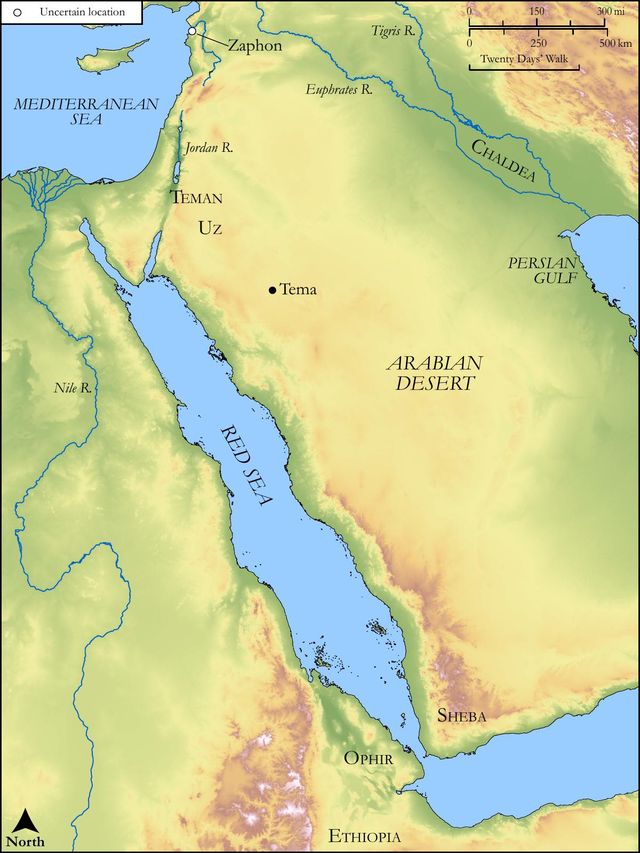
The Book of Job is set in the ancient Near East, likely in the land of Uz, a region possibly east of Palestine. The cultural backdrop is one where a prevailing understanding of divine justice, often termed the "retribution principle," held sway: righteousness leads to prosperity, and wickedness leads to suffering. Job's friends are staunch proponents of this view, attempting to force Job's suffering into this theological framework. However, Job's experience directly challenges this simplistic correlation. In this context, Job 9:10 serves as a powerful counterpoint, suggesting that God's ways are far more complex and mysterious than human theological constructs can contain. It speaks to a worldview where the divine was perceived as immensely powerful and often inscrutable, capable of acts that defied human logic and control. The concept of a God who performs "wonders without number" would have resonated with ancient peoples who experienced the raw, untamed power of nature and attributed it to divine agency, yet Job pushes this understanding to an even deeper level of divine transcendence and incomprehensibility, challenging the notion that humans can fully grasp or predict divine actions.
Key Themes
ShowHideJob 9:10 powerfully contributes to several overarching themes within the Book of Job and broader biblical theology. The primary theme is God's Incomprehensibility, emphasizing that God's works, wisdom, and ways are utterly beyond human ability to fully investigate, comprehend, or explain. His wisdom and power are infinite, rendering His actions often mysterious to finite beings, as echoed in Isaiah 55:8-9. Closely related is the theme of Boundless Divine Power, where the phrases "great things" and "wonders without number" underscore God's omnipotence and limitless capacity for action. There is no constraint on what God can do, and His creative, providential, and redemptive acts are countless and awe-inspiring, demonstrating His absolute control over all creation, as seen in Psalm 19:1. Finally, this verse reinforces the theme of Divine Sovereignty, asserting that God is the supreme ruler of the universe, acting according to His own will, independent of human counsel, understanding, or even perceived justice. His reign is absolute and unquestionable, a truth that Job grapples with throughout his ordeal, recognizing God's unchallengeable authority even in the midst of his suffering (Job 42:2).
Exposition and Analysis
ShowHideKey Word Analysis
ShowHideThe Hebrew word חֵקֶר (chêqer, H2714) conveys the idea of something that cannot be fully searched, explored, investigated, or fathomed. It implies an inscrutable, unsearchable depth or a mystery that is beyond human intellectual capacity to penetrate or exhaust. When applied to God's actions, it signifies that His works are not merely complex but are fundamentally beyond the limits of human comprehension and discovery. It suggests that there is an infinite dimension to God's wisdom and operations that remains forever inaccessible to finite minds, highlighting the profound transcendence of the divine.
The Hebrew term פָּלָא (pâlâʼ, H6381), from which the plural pela'im (wonders) is derived, refers to actions that are extraordinary, miraculous, or astonishing. These are deeds that evoke awe and astonishment because they defy natural explanation or human expectation. In a biblical context, pela'im often describes God's mighty acts of creation, deliverance, and judgment that reveal His unique power and character. The use of "wonders" emphasizes the multitude and variety of such miraculous interventions, while "without number" (literally "without counting") hyperbolically underscores their countless nature, reinforcing the idea of God's limitless power and creativity.
Verse Breakdown
ShowHide"Which doeth great things past finding out"
This clause establishes God as the active agent, the one "who does" (from the Hebrew verb 'âsâh). The "great things" refer to His mighty works, encompassing creation, providence, and all His dealings with humanity and the cosmos. The phrase "past finding out" (literally "without search" or "without investigation," from chêqer) emphatically states that these great works are not merely difficult to understand but are fundamentally inscrutable to human reason. They possess a depth and complexity that human intellect cannot fully plumb, signifying God's transcendent wisdom and power that operates on a scale far beyond our comprehension. This suggests a continuous, ongoing activity of God that remains shrouded in divine mystery, inviting humility rather than exhaustive analysis.
"yea, and wonders without number"
This second clause functions in parallel, intensifying and expanding upon the first. "Wonders" (from pâlâʼ, as discussed above) specifically highlights the miraculous, awe-inspiring, and extraordinary nature of God's deeds. These are not just "great things" in terms of scale, but "wonders" in terms of their supernatural quality and their capacity to evoke astonishment and reverence. The addition "without number" (literally "without counting," from miçpâr preceded by the negative particle 'ayin) serves as a hyperbole, emphasizing the sheer infinitude of God's miraculous acts. It conveys that God's interventions and displays of power are so numerous that they cannot be counted or cataloged by human beings, reinforcing His boundless omnipotence and the inexhaustible nature of His creative and redemptive activity.
Literary Devices
ShowHideJob 9:10 employs several potent literary devices to convey its profound theological message. The most prominent is Parallelism, specifically synonymous parallelism, where the second clause, "yea, and wonders without number," reiterates and amplifies the meaning of the first, "Which doeth great things past finding out." Both phrases convey the idea of God's immense and incomprehensible power, with "wonders" intensifying "great things" and "without number" stressing the infinitude implied by "past finding out." This creates a cumulative effect, reinforcing the central theme of divine transcendence. Hyperbole is also evident in "without number," a deliberate exaggeration to emphasize the countless nature of God's miraculous deeds, rather than a literal count. This device effectively communicates the boundless extent of divine activity and power. Furthermore, the verse evokes a strong sense of Awe and the Sublime, using language that points to a reality so vast and powerful that it overwhelms human understanding. This is achieved through the concepts of "great things," "wonders," and the impossibility of "finding out" or "numbering" them, fostering a posture of humility and reverence before the Almighty.
Theological and Thematic Connections
ShowHideJob 9:10 is a foundational text for understanding the biblical concept of God's transcendence and His inherent mystery. It asserts that while God is active and engaged in His creation, His ways are not always discernible or fully comprehensible to human reason. This does not imply that God is arbitrary or capricious, but rather that His wisdom and power operate on a plane infinitely superior to our own. This truth calls believers to a posture of profound humility, recognizing the limits of human intellect when confronted with divine infinitude. It encourages trust in God's character even when His specific actions or overarching plan remain obscure, fostering a faith that rests not on full comprehension but on the unshakeable reality of His greatness and goodness. The verse underscores that God's "great things" are not merely impressive but are "wonders," evoking awe and worship, reminding us that our God is always greater than our understanding of Him.
Reflection and Application
ShowHideJob 9:10 serves as a profound invitation to cultivate a posture of humility, awe, and unwavering trust in the face of life's mysteries and God's seemingly inscrutable ways. In a world that often demands immediate answers and complete understanding, this verse reminds us that true faith embraces the incomprehensibility of God. It encourages us to release the need to fully grasp every detail of God's plan, especially amidst suffering or confusion, and instead, to rest in the knowledge that the One who performs "great things past finding out" is sovereign, wise, and actively working. This understanding transforms our worship, moving it beyond mere intellectual assent to a deep, reverent adoration for a God whose power and wonders are truly without number. It calls us to surrender our limited perspectives and trust in His infinite wisdom, knowing that even when His purposes are hidden, His character remains steadfastly good and faithful. This verse fosters a resilient faith, enabling us to navigate uncertainty with peace, confident that the God who orchestrates cosmic wonders also holds our lives in His unfathomable hands.
Questions for Reflection
ShowHideFAQ
ShowHideHow does Job 9:10 reconcile with the idea that God desires for us to know Him?
ShowHideJob 9:10 emphasizes God's transcendence and the limits of human comprehension, not His unknowability. The Bible consistently teaches that God desires a personal, relational knowledge of Him, as seen in Jeremiah 9:24 where knowing the Lord is about understanding His character (justice, righteousness, steadfast love). Similarly, John 17:3 states that eternal life is "to know You, the only true God, and Jesus Christ whom You have sent." This "knowing" is relational and experiential, a deep intimacy and trust, rather than an exhaustive intellectual comprehension of His infinite being or all His ways. We can know God truly, intimately, and sufficiently for salvation and daily living, even if we can never fully "find out" or number all His great and wonderful works. His mystery invites worship, not despair; it cultivates humility and dependence, rather than intellectual mastery.
Christ-Centered Fulfillment
ShowHideJob 9:10, with its declaration of God's incomprehensible greatness and innumerable wonders, finds its ultimate and most profound fulfillment in the person and work of Jesus Christ. The "great things past finding out" and "wonders without number" of the Old Testament God are supremely manifested and made accessible in the Incarnation. It is through Christ, the very wisdom of God and the power of God, that the unsearchable depths of the Father are revealed in a way that is both mysterious and intimately personal. The creation itself, a primary example of God's "great things," was accomplished through Him and for Him. The greatest "wonder without number" is God's plan of salvation, a mystery hidden for ages but now unveiled in Christ's atoning work on the cross, demonstrating God's justice and love in an incomprehensible way (Romans 5:8). The profound humility of God becoming man, suffering, dying, and rising again—these are "wonders" that defy human logic and yet are the very foundation of our hope (Philippians 2:6-11). In Christ, the transcendent God of Job 9:10 does not cease to be "past finding out," but He makes Himself knowable and relatable, inviting humanity into a relationship with the very source of all wonders and the ultimate expression of His boundless power and wisdom.