


2 Chronicles 32:26
- וַיִּכָּנַעvai·yi·ka·Na'and he humbled himselfH3665Conj-w ¦ V-Niphal-ConsecImperf-3msVerb Niphal Consecutive Imperfect 3rd Singular Masculineוַandיִּכָּנַעhe humbled himself
- יְחִזְקִיָּהוּye·chiz·ki·Ya·huHezekiahH2396N-proper-mNoun Proper Masculine
- בְּגֹבַהּbe·Goahin [the] haughtiness ofH1363Prep-b ¦ N-mscNoun Singular Masculine Constructבְּinגֹבַהּ[the] haughtiness of
- לִבּוֹli·Bohis heartH3820N-msc ¦ 3msNoun Singular Masculine Constructלִבּheartוֹhis
- הוּאhu'heH1931Pro-3msPronoun Personal 3rd Singular Masculine
- וְיֹשְׁבֵיve·yo·she·Veiand [the] inhabitants ofH3427Conj-w ¦ V-Qal-Prtcpl-mpVerb Qal Participle Plural Masculine Constructוְandיֹשְׁבֵי[the] inhabitants of
- יְרוּשָׁלִָםye·ru·sha·LimJerusalemH3389N-properNoun Proper Location
- וְלֹאve·lo'and notH3808Conj-w ¦ NegParticle Negativeוְandלֹאnot
- בָאva'it cameH935V-Qal-Perf-3msVerb Qal Perfect 3rd Singular Masculine
- עֲלֵיהֶם'a·lei·Hemtowards themH5921Prep ¦ 3mpPrepositionעֲלֵיtowardsהֶםthem
- קֶצֶףKe·tzef[the] wrath ofH7110N-mscNoun Singular Masculine Construct
- יְהוָהYah·wehYahwehH3068N-properNoun Proper Title
- בִּימֵיbi·Meiin [the] days ofH3117Prep-b ¦ N-mpcNoun Plural Masculine Constructבִּinימֵי[the] days of
- יְחִזְקִיָּהוּye·chiz·ki·Ya·huHezekiahH2396N-proper-mNoun Proper Masculine
English is a literal word-by-word gloss of the Hebrew, not the KJV's wording. Why?
This is the original text the KJV's translators worked from — each Hebrew word with its own literal English meaning in this verse, prepared by scholars at Tyndale House, Cambridge. The KJV translates whole sentences, not word by word, so its wording differs: one Hebrew word can become several English words, and the KJV may choose “the LORD” where the gloss reads “Yahweh”. Both are faithful — they answer different questions. For the KJV's own rendering, switch to the KJV text.
Details
See on the biblical-era maps
Study this verse
Public-domain commentary
Matthew Henry
From his Commentary on the Whole Bible. Henry comments on passages, not single verses — this entry covers 2 Chronicles 32:24–33. His three-level outline is real structure in the source text, so it is rendered as structure.
Here we conclude the story of Hezekiah with an account of three things concerning him: -
I.His sickness and his recovery from it, Ch2 32:24.
The account of his sickness is but briefly mentioned here; we had a large narrative of it, 2 Kings 20. His disease seemed likely to be mortal. In the extremity of it he prayed. God answered him, and gave him a sign that he should recover, the going back of the sun ten degrees.
II.His sin and his repentance for it, which were also more largely related, Kg2 20:12, etc. Yet several things are here observed concerning his sin which we had not there.
1.The occasion of it was the king of Babylon's sending an honourable embassy to him to congratulate him on his recovery. But here it is added that they came to enquire of the wonder that was done in the land (Ch2 32:31), either the destruction of the Assyrian army or the going back of the sun. The Assyrians were their enemies; they came to enquire concerning their fall, that they might triumph in it. The sun was their god; they came to enquire concerning the favour he had shown to Hezekiah, that they might honour him whom their god honoured, Ch2 32:31. These miracles were wrought to alarm and awaken a stupid careless world, and turn them from dumb and lame idols to the living God; and men were startled by them, but not converted till a greater wonder was done in that land, in the appearing of Jesus Christ, Mat 2:1, Mat 2:2.
2.God left him to himself in it, to try him, Ch2 32:31. God, by the power of his almighty grace, could have prevented the sin; but he permitted it for wise and holy ends, that, by this trial and his weakness in it, he might know, that is, it might be known (a usual Hebraism), what was in his heart, that he was not so perfect in grace as he thought he was, but had his follies and infirmities as other men. God left him to himself to be proud of his wealth, to keep him from being proud of his holiness. It is good for us to know ourselves, and our own weakness and sinfulness, that we may not be conceited or self-confident, but may always think meanly of ourselves and live in a dependence upon divine grace. We know not the corruption of our own hearts, nor what we shall do if God leave us to ourselves. Lord, lead us not into temptation.
3.His sin was the his heart was lifted up, Ch2 32:25. He was proud of the honour God had put upon him in so many instances, the honour his neighbours did him in bringing him presents, and now that the king of Babylon should send an embassy to him to caress and court him: this exalted him above measure. When Hezekiah had destroyed other idolatries he began to idolize himself. O what need have great men, and good men, and useful men, to study their own infirmities and follies, and their obligations to free grace, that they may never think highly of themselves, and to beg earnestly of God that he will hide pride from them and always keep them humble!
4.The aggravation of his sin was the he made so bad a return to God for his favours to him, making even those favours the food and fuel of his pride (Ch2 32:25): He rendered not again according to the benefit done unto him. Note, It is justly expected that those who have received mercy from God should study to make some suitable returns for the mercies they have received; and, if they do not, their ingratitude will certainly be charged upon them. Though we cannot render an equivalent, or the payment of a debt, we must render the acknowledgment of a favour. What shall I render that may be so accepted? Psa 116:12.
5.The divine displeasure he was under for this sin; though it was but a heart-sin, and the overt-act seemed not only innocent but civil (the showing of his treasures to a friend), yet wrath came upon him and his kingdom for it, Ch2 32:25. Note, Pride is a sin that God hates as much as any, and particularly in his own people. Those that exalt themselves must expect to be abased, and put under humbling providences. Wrath came on David for his pride in numbering the people.
6.His repentance for this sin: He humbled himself for the pride of his heart. Note,
(1.)Though God may, for wise and holy ends, suffer his people to fall into sin, yet he will not suffer them to lie still in it; they shall not be utterly cast down.
(2.)Heart-sins are to be repented of, though they go no further.
(3.)Self-humiliation is a necessary branch of repentance.
(4.)Pride of heart, by which we have lifted up ourselves, is a sin for which we ought in a special manner to humble ourselves.
(5.)People ought to mourn for the sins of their rulers. The inhabitants of Jerusalem humbled themselves with Hezekiah, because they either knew that they also had been guilty of the same sin, or at least feared that they might share in the punishment. When David, in his pride, numbered the people, they all smarted for his sin.
7.The reprieve granted thereupon. The wrath came not in his days. While he lived the country had peace and truth prevailed; so much does repentance avail to put by, or at least to put off, the tokens of God's anger.
III.Here is the honour done to Hezekiah,
1.By the providence of God while he lived. He had exceeding much riches and honour (Ch2 32:27), replenished his stores, victualled his campus, fortified his city, and did all he wished to do; for God had given him very much substance, Ch2 32:29. Among his great performances, his turning the water-course of Gihon is mentioned (Ch2 32:30), which was done upon occasion of Sennacherib's invasion, Ch2 32:3, Ch2 32:4. The water had come into that which is called the old pool (Isa 22:11) and the upper pool (Isa 7:3); but he gathered the waters into a new place, for the greater convenience of the city, called the lower pool, Isa 22:9. And, in general, he prospered in all his works, for they were good works.
2.By the respect paid to his memory when he was dead.
(1.)The prophet Isaiah wrote his life and reign (Ch2 32:32), his acts and his goodness or piety, or which it is part of the honour to be recorded and remembered, for examples to others.
(2.)The people did him honour at his death (Ch2 32:33), buried him in the chief of the sepulchres, made as great a burning for him as for Asa, or, which is a much greater honour, made great lamentation for him, as for Josiah. See how the honour of serious godliness is manifested in the consciences of men. Though it is to be feared that the generality of the people did not heartily comply with the reforming kings, yet they could not but praise their endeavours for reformation, and the memory of those kings was blessed among them. It is a debt we owe to those who have been eminently useful in their day to do them honour at their death, when they are out of the reach of flattery and we have seen the end of their conversation. The due payment of this debt will be an encouragement to others to do likewise.
Historical interpretation
Historical reception
1 surviving comment on this verse from the historical church.
“In those days,” we are told, “Hezekiah was sick unto death, and he prayed to the Lord, and the Lord heard him and gave him a sign,” that, namely of which we read in the fourth book of the kingdoms, which was given by Isaiah the prophet through the going back of the sun. “But,” it says, “he did not respond to the benefits which he had received, for his heart was proud. And wrath was kindled against him and against Judah and Jerusalem. He humbled himself afterwards because his heart had been proud, both he and the inhabitants of Jerusalem, and therefore the wrath of the Lord did not come upon them in the days of Hezekiah.” How dangerous, how terrible is the malady of vanity! So much goodness, so many virtues, faith and devotion, great enough to prevail to change nature itself and the laws of the whole world—all destroyed by a single act of pride! The result would have been that all his good deeds would have been forgotten as if they had never existed, and he would at once have been subject to the wrath of the Lord unless he had appeased him by recovering his humility. Thus, he who, at the suggestion of pride, had fallen from so great a height of excellence, could only mount again to the height he had lost by the same steps of humility.
Continue studying 2 Chronicles 32:26 across the web’s major study libraries — every link below opens this exact verse, chapter, or book on the destination site.
Read & Compare
 BibleGatewayThis verse in more than 200 translations and 70 languages.
 Bible.comThe YouVersion reader — hundreds of translations, reading plans, and highlights.
 ESV.orgCrossway's official English Standard Version reader.
 NET BibleThe NET translation with 60,000+ translators' notes on every rendering decision.
 STEP BibleTyndale House's free study tool — original text, vocabulary, and scholarly resources.
 BibliaLogos Bible Software's free web reader.
 USCCBThe New American Bible (Revised Edition) with the U.S. bishops' study notes.
Commentaries
 BibleHub CommentariesDozens of classic commentaries on this verse, gathered on one page.
 StudyLightMore than 100 commentary sets — the largest collection on the web.
 BibleRefPlain-English commentary on what this verse means, verse by verse.
 Enduring WordDavid Guzik's free commentary on this chapter, widely used by Bible teachers.
 Bible Study ToolsVerse commentary alongside Greek and Hebrew study aids.
Original Language & Research
- BibleHub InterlinearThe verse word by word — original language, transliteration, and English.
- BibleHub LexiconEvery word's original-language definition and Strong's entry.
 Blue Letter BibleDeep-study tools — Strong's numbers, concordance, and word studies.
 SefariaThe Hebrew text with Rashi and centuries of Jewish commentary.
Sermons, Hymns & Audio


TrulyRandomVerse is not affiliated with these sites and doesn’t control their content. They’re linked because they’re genuinely useful.
Summary
Second Chronicles 32:26 records a pivotal moment in the reign of King Hezekiah, where he, along with the inhabitants of Jerusalem, humbled himself in response to the pride that had arisen in his heart following immense divine blessings and miraculous deliverance. This act of genuine repentance proved instrumental in averting the immediate wrath of the LORD, ensuring that the judgment due for their pride did not fall upon them during Hezekiah's lifetime. The verse underscores the profound spiritual principle that humility and repentance can lead to God's mercy and the postponement of deserved consequences.
Context
ShowHideLiterary Context
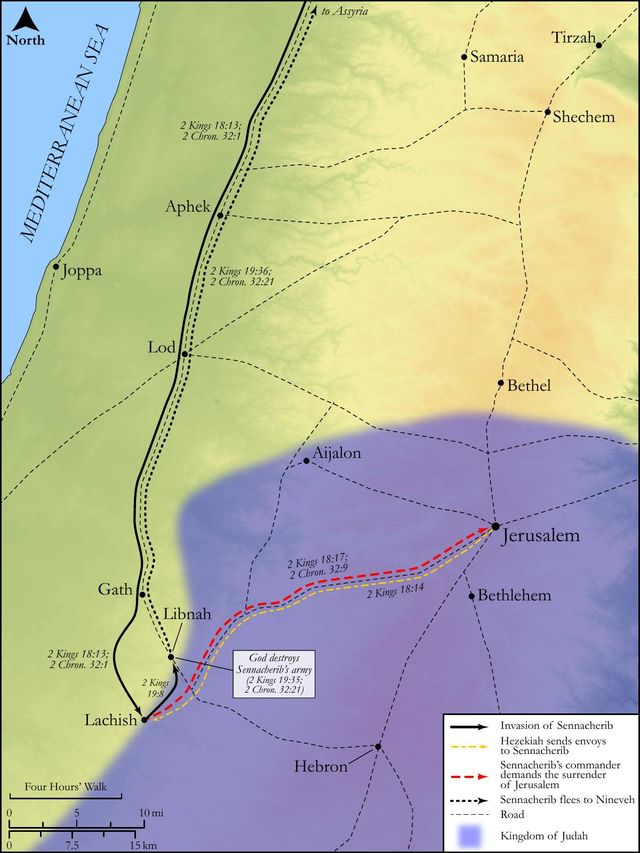
This verse immediately follows a period of extraordinary divine favor and intervention in Hezekiah's life and reign. God had miraculously delivered Jerusalem from the formidable Assyrian invasion led by Sennacherib, annihilating 185,000 Assyrian soldiers in a single night, as detailed in 2 Chronicles 32:21. Furthermore, Hezekiah himself had been miraculously healed from a life-threatening illness, with God even providing a unique sign involving the shadow on the sundial, recounted in 2 Kings 20:8-11. Despite these overwhelming demonstrations of God's power and grace, Hezekiah's heart became "lifted up" with pride, leading to ingratitude and a failure to respond appropriately to the blessings received, as explicitly stated in 2 Chronicles 32:25. Verse 26, therefore, presents a critical turning point, showcasing Hezekiah's commendable and necessary response of humility, which directly mitigates the divine wrath that had been declared upon him and upon Judah and Jerusalem. It serves as a stark contrast to his previous spiritual failing and highlights the Chronicler's emphasis on righteous leadership and its impact on the nation's destiny.
Historical & Cultural Context
The historical backdrop is the late 8th century BCE, a tumultuous period for the Southern Kingdom of Judah. The Assyrian Empire was the dominant superpower, having already conquered the Northern Kingdom of Israel and exiled its people. Judah, under Hezekiah, faced an existential threat from Sennacherib's campaign, which devastated many fortified cities before besieging Jerusalem. Culturally, the concept of a king's spiritual state profoundly impacting the nation was deeply ingrained in Israelite thought. The king was seen as the representative head, and his righteousness or sin often had corporate consequences. Pride, particularly in the face of divine favor, was considered a grave offense, as it attributed success to oneself rather than to God. The Chronicler, writing post-exile, often emphasizes the direct correlation between the king's obedience/disobedience and the nation's prosperity/suffering, making Hezekiah's humility a crucial example of how national disaster could be averted through repentance. The "wrath of the LORD" was a tangible concept, signifying divine displeasure and the potential for calamitous judgment, often manifested through military defeat, plague, or famine.
Key Themes
ShowHideThe central theme illuminated by this verse is the profound spiritual dynamic between Pride and Humility. Hezekiah's initial pride, a common pitfall for those experiencing significant success and divine favor, is directly contrasted with his subsequent act of humbling himself. This underscores the biblical truth that God opposes the proud but gives grace to the humble, a principle echoed throughout Scripture, for example in James 4:6. Another crucial theme is Repentance and Averted Judgment. Hezekiah's genuine act of self-abasement directly leads to the withholding of God's wrath, powerfully demonstrating God's mercy and willingness to relent from promised judgment when His people sincerely turn from their sin. This theme resonates with other narratives of national repentance, such as the city of Nineveh's turning from their evil ways in Jonah 3:10. Furthermore, the verse highlights Leadership by Example and Corporate Responsibility. The explicit mention that "both he and the inhabitants of Jerusalem" humbled themselves illustrates the significant influence a leader's spiritual state and actions have on their people. Hezekiah's humility set a powerful precedent for the entire city, leading to a collective act of repentance. Finally, the passage subtly touches upon Divine Patience and Grace, as God, even after Hezekiah's ingratitude, provided an opportunity for repentance, demonstrating His long-suffering nature and desire for His people to return to Him, postponing judgment for a time.
Exposition and Analysis
ShowHideKey Word Analysis
ShowHideThis verb means "to bend the knee," "to humiliate," or "to vanquish." In this context, it denotes a voluntary act of self-abasement and submission to a higher authority, specifically God. It implies a conscious decision to relinquish arrogance and acknowledge one's dependence and unworthiness before the Almighty. This is not merely a passive state but an active posture of repentance and reverence, a deliberate "bringing down" of oneself.
This noun signifies "elation," "grandeur," or "arrogance." When associated with the heart, it describes a haughty, self-exalting disposition where one attributes success or blessings to their own merit or strength, rather than to God. This internal state is the antithesis of humility and is frequently condemned in Scripture as a precursor to a fall, representing a "loftiness" of spirit that challenges God's sovereignty.
Verse Breakdown
ShowHide"Notwithstanding Hezekiah humbled himself"
This phrase serves as a direct counterpoint to the previous verse, 2 Chronicles 32:25, which described Hezekiah's pride and ingratitude. "Notwithstanding" emphasizes that despite his serious spiritual failure, Hezekiah took the crucial, corrective action of humbling himself. This highlights the active and intentional nature of his repentance, demonstrating a commendable capacity for spiritual self-correction and a turning away from his previous sin.
"for the pride of his heart"
This clause explicitly states the reason for Hezekiah's humbling: it was a direct response to and acknowledgment of his specific sin of pride. This indicates genuine introspection and a recognition of his spiritual failing, rather than a mere superficial act. It underscores the biblical principle that true repentance involves identifying and confessing the specific sin that has offended God.
"[both] he and the inhabitants of Jerusalem"
This crucial detail reveals the corporate dimension of the repentance. Hezekiah's leadership by example was so profound that it influenced the entire population of Jerusalem. This implies a collective recognition of sin and a shared turning toward God, demonstrating the powerful ripple effect of a leader's spiritual integrity. It also suggests that the wrath was intended for the nation, and thus national repentance was required to avert the impending judgment.
"so that the wrath of the LORD came not upon them in the days of Hezekiah"
This final clause states the direct and immediate consequence of their humility and repentance: the divine judgment, or "wrath," that had been threatened was averted. The phrase "in the days of Hezekiah" is significant. It implies that while the judgment was postponed during his lifetime due to this act of repentance, it was not permanently cancelled for the nation. This subtle narrative hint foreshadows the later judgment that would indeed fall upon Judah and Jerusalem, particularly in the time of Hezekiah's son Manasseh and ultimately leading to the Babylonian exile, reinforcing God's long-term justice while celebrating His immediate mercy.
Literary Devices
ShowHideThe verse effectively employs Contrast to highlight the spiritual transformation. The initial state of Hezekiah's "pride of his heart" (mentioned in the preceding verse) is starkly contrasted with his subsequent action of "humbled himself," emphasizing the profound shift from arrogance to submission. This contrast underscores the redemptive power of repentance. Furthermore, the passage clearly demonstrates Cause and Effect: Hezekiah's and Jerusalem's humility (the cause) directly leads to the aversion of God's wrath (the effect). This highlights the direct correlation between human spiritual response and divine action. Finally, the phrase "in the days of Hezekiah" functions as a subtle form of Prolepsis or Foreshadowing. While judgment is averted for the immediate future, this specific temporal limitation hints that the underlying issues of national sin were not fully resolved, and divine consequences would eventually manifest in a later generation, adding a layer of tragic irony and emphasizing the conditional nature of God's mercy in this context.
Theological and Thematic Connections
ShowHideThis verse powerfully illustrates the character of God as both just and merciful. His justice demands a response to pride and ingratitude, as evidenced by the declared "wrath." Yet, His mercy is profoundly revealed in His willingness to relent from judgment when met with genuine humility and repentance. It teaches us that while God's decrees are serious, His heart is always open to those who turn to Him in brokenness and submission. The narrative of Hezekiah's humility also underscores the ongoing spiritual battle against pride, a sin that often accompanies success and blessings, tempting individuals to take credit for what God has provided. This passage serves as a timeless reminder that true spiritual flourishing is rooted in a humble dependence on God, recognizing Him as the source of all good, and that even leaders, despite their anointing and achievements, are not exempt from the need for repentance.
Reflection and Application
ShowHideHezekiah's story in 2 Chronicles 32:26 offers profound and timeless lessons for believers today. In a world that often celebrates self-sufficiency and personal achievement, this verse serves as a powerful antidote, reminding us that true strength and divine favor flow from humility. When we experience success, blessings, or recognition, the temptation to pride can be subtle yet insidious, leading us to forget the source of all good. Hezekiah's example calls us to remain vigilant against a "lifted up heart," always attributing glory and praise to God alone. Furthermore, it highlights the transformative power of genuine repentance. When we stumble, particularly into the sin of pride, the path to restoration is not through self-justification or denial, but through sincere self-abasement before God. His grace is abundant to forgive and avert consequences when we humbly acknowledge our failings and turn back to Him. For those in positions of leadership, whether in family, church, or community, this verse underscores the immense spiritual influence of personal integrity; a leader's humility or pride can profoundly affect the spiritual climate and destiny of those under their care.
Questions for Reflection
ShowHideFAQ
ShowHideWas Hezekiah's humility truly genuine, or was it a pragmatic response to avert immediate disaster?
ShowHideThe biblical text strongly implies that Hezekiah's humility was genuine. The fact that the "wrath of the LORD came not upon them" indicates that God, who discerns the heart, accepted his repentance. While the phrase "in the days of Hezekiah" suggests a temporary reprieve, this does not negate the sincerity of his immediate response. His subsequent actions, and the Chronicler's overall portrayal of Hezekiah as a king who largely sought the Lord, support the authenticity of his self-abasement. It was a true turning from his pride, even if the nation's deeper spiritual issues would resurface later under his successors.
Why did the wrath only "not come upon them in the days of Hezekiah"? Does this imply future judgment for Judah?
ShowHideYes, the phrase "in the days of Hezekiah" is a crucial narrative detail that strongly implies future judgment. While Hezekiah's and Jerusalem's humility averted the immediate and devastating consequences of their pride, it did not permanently cancel the long-term trajectory of national sin that would manifest fully after Hezekiah's reign. This subtle but significant clause foreshadows the severe judgment that would eventually befall Judah, particularly under the reign of Hezekiah's son Manasseh, whose idolatry and wickedness would lead to the Babylonian exile. It highlights God's patience and mercy in postponing judgment due to genuine repentance, while also affirming His ultimate justice in dealing with persistent unfaithfulness, as seen in the later historical accounts in 2 Kings 21.
Christ-Centered Fulfillment
ShowHideHezekiah's act of humbling himself for the pride of his heart, which averted temporal wrath for his generation, powerfully foreshadows the ultimate and perfect humility of Jesus Christ. Hezekiah, a human king, humbled himself because of sin; Christ, the divine King, humbled himself for sin. The Apostle Paul beautifully articulates this in Philippians 2:5-8, describing how Christ, "though he was in the form of God, did not count equality with God a thing to be grasped, but emptied himself, by taking the form of a servant, being born in the likeness of men. And being found in human form, he humbled himself by becoming obedient to the point of death, even death on a cross." Unlike Hezekiah, who needed to repent for his own pride, Jesus lived a life of perfect humility and obedience, never succumbing to pride or sin. He did not merely avert wrath for a time, but by His perfect self-abasement on the cross, He bore the full weight of God's eternal wrath against humanity's sin, becoming sin for us so that in Him we might become the righteousness of God (2 Corinthians 5:21). Thus, Hezekiah's temporary reprieve due to his humility points to the everlasting salvation and complete deliverance from wrath secured by the perfect, self-sacrificial humility of the Lamb of God, who takes away the sin of the world!