


2 Chronicles 32:25
- וְלֹאve·lo'and notH3808Conj-w ¦ NegParticle Negativeוְandלֹאnot
- כִגְמֻלkhig·Mulaccording to [the] benefitH1576Prep-k ¦ N-msNoun Singular Masculine Absoluteכִaccording toגְמֻל[the] benefit
- עָלָיו'a·Lavon himH5921Prep ¦ 3msPrepositionעָלָיonוhim
- הֵשִׁיבhe·Shivhe repaidH7725V-Hiphil-Perf-3msVerb Hiphil Perfect 3rd Singular Masculine
- יְחִזְקִיָּהוּye·chiz·ki·Ya·huHezekiahH2396N-proper-mNoun Proper Masculine
- כִּיkiforH3588PrtParticle Conditional
- גָבַהּga·Vahit was haughtyH1361V-Qal-Perf-3msVerb Qal Perfect 3rd Singular Masculine
- לִבּוֹli·Bohis heartH3820N-msc ¦ 3msNoun Singular Masculine Constructלִבּheartוֹhis
- וַיְהִיvay·Hiand it wasH1961Conj-w ¦ V-Qal-ConsecImperf-3msVerb Qal Consecutive Imperfect 3rd Singular Masculineוַandיְהִיit was
- עָלָיו'a·Lavtowards himH5921Prep ¦ 3msPrepositionעָלָיtowardsוhim
- קֶצֶףKe·tzefwrathH7110N-msNoun Singular Masculine Absolute
- וְעַלve·'aland towardsH5921Conj-w ¦ PrepPrepositionוְandעַלtowards
- יְהוּדָהye·hu·DahJudahH3063N-properNoun Proper Location
- וִירוּשָׁלִָםvi·ru·sha·Limand JerusalemH3389Conj-w ¦ N-properNoun Proper LocationוִandירוּשָׁלִָםJerusalem
English is a literal word-by-word gloss of the Hebrew, not the KJV's wording. Why?
This is the original text the KJV's translators worked from — each Hebrew word with its own literal English meaning in this verse, prepared by scholars at Tyndale House, Cambridge. The KJV translates whole sentences, not word by word, so its wording differs: one Hebrew word can become several English words, and the KJV may choose “the LORD” where the gloss reads “Yahweh”. Both are faithful — they answer different questions. For the KJV's own rendering, switch to the KJV text.
Details
See on the biblical-era maps
Study this verse
Public-domain commentary
Matthew Henry
From his Commentary on the Whole Bible. Henry comments on passages, not single verses — this entry covers 2 Chronicles 32:24–33. His three-level outline is real structure in the source text, so it is rendered as structure.
Here we conclude the story of Hezekiah with an account of three things concerning him: -
I.His sickness and his recovery from it, Ch2 32:24.
The account of his sickness is but briefly mentioned here; we had a large narrative of it, 2 Kings 20. His disease seemed likely to be mortal. In the extremity of it he prayed. God answered him, and gave him a sign that he should recover, the going back of the sun ten degrees.
II.His sin and his repentance for it, which were also more largely related, Kg2 20:12, etc. Yet several things are here observed concerning his sin which we had not there.
1.The occasion of it was the king of Babylon's sending an honourable embassy to him to congratulate him on his recovery. But here it is added that they came to enquire of the wonder that was done in the land (Ch2 32:31), either the destruction of the Assyrian army or the going back of the sun. The Assyrians were their enemies; they came to enquire concerning their fall, that they might triumph in it. The sun was their god; they came to enquire concerning the favour he had shown to Hezekiah, that they might honour him whom their god honoured, Ch2 32:31. These miracles were wrought to alarm and awaken a stupid careless world, and turn them from dumb and lame idols to the living God; and men were startled by them, but not converted till a greater wonder was done in that land, in the appearing of Jesus Christ, Mat 2:1, Mat 2:2.
2.God left him to himself in it, to try him, Ch2 32:31. God, by the power of his almighty grace, could have prevented the sin; but he permitted it for wise and holy ends, that, by this trial and his weakness in it, he might know, that is, it might be known (a usual Hebraism), what was in his heart, that he was not so perfect in grace as he thought he was, but had his follies and infirmities as other men. God left him to himself to be proud of his wealth, to keep him from being proud of his holiness. It is good for us to know ourselves, and our own weakness and sinfulness, that we may not be conceited or self-confident, but may always think meanly of ourselves and live in a dependence upon divine grace. We know not the corruption of our own hearts, nor what we shall do if God leave us to ourselves. Lord, lead us not into temptation.
3.His sin was the his heart was lifted up, Ch2 32:25. He was proud of the honour God had put upon him in so many instances, the honour his neighbours did him in bringing him presents, and now that the king of Babylon should send an embassy to him to caress and court him: this exalted him above measure. When Hezekiah had destroyed other idolatries he began to idolize himself. O what need have great men, and good men, and useful men, to study their own infirmities and follies, and their obligations to free grace, that they may never think highly of themselves, and to beg earnestly of God that he will hide pride from them and always keep them humble!
4.The aggravation of his sin was the he made so bad a return to God for his favours to him, making even those favours the food and fuel of his pride (Ch2 32:25): He rendered not again according to the benefit done unto him. Note, It is justly expected that those who have received mercy from God should study to make some suitable returns for the mercies they have received; and, if they do not, their ingratitude will certainly be charged upon them. Though we cannot render an equivalent, or the payment of a debt, we must render the acknowledgment of a favour. What shall I render that may be so accepted? Psa 116:12.
5.The divine displeasure he was under for this sin; though it was but a heart-sin, and the overt-act seemed not only innocent but civil (the showing of his treasures to a friend), yet wrath came upon him and his kingdom for it, Ch2 32:25. Note, Pride is a sin that God hates as much as any, and particularly in his own people. Those that exalt themselves must expect to be abased, and put under humbling providences. Wrath came on David for his pride in numbering the people.
6.His repentance for this sin: He humbled himself for the pride of his heart. Note,
(1.)Though God may, for wise and holy ends, suffer his people to fall into sin, yet he will not suffer them to lie still in it; they shall not be utterly cast down.
(2.)Heart-sins are to be repented of, though they go no further.
(3.)Self-humiliation is a necessary branch of repentance.
(4.)Pride of heart, by which we have lifted up ourselves, is a sin for which we ought in a special manner to humble ourselves.
(5.)People ought to mourn for the sins of their rulers. The inhabitants of Jerusalem humbled themselves with Hezekiah, because they either knew that they also had been guilty of the same sin, or at least feared that they might share in the punishment. When David, in his pride, numbered the people, they all smarted for his sin.
7.The reprieve granted thereupon. The wrath came not in his days. While he lived the country had peace and truth prevailed; so much does repentance avail to put by, or at least to put off, the tokens of God's anger.
III.Here is the honour done to Hezekiah,
1.By the providence of God while he lived. He had exceeding much riches and honour (Ch2 32:27), replenished his stores, victualled his campus, fortified his city, and did all he wished to do; for God had given him very much substance, Ch2 32:29. Among his great performances, his turning the water-course of Gihon is mentioned (Ch2 32:30), which was done upon occasion of Sennacherib's invasion, Ch2 32:3, Ch2 32:4. The water had come into that which is called the old pool (Isa 22:11) and the upper pool (Isa 7:3); but he gathered the waters into a new place, for the greater convenience of the city, called the lower pool, Isa 22:9. And, in general, he prospered in all his works, for they were good works.
2.By the respect paid to his memory when he was dead.
(1.)The prophet Isaiah wrote his life and reign (Ch2 32:32), his acts and his goodness or piety, or which it is part of the honour to be recorded and remembered, for examples to others.
(2.)The people did him honour at his death (Ch2 32:33), buried him in the chief of the sepulchres, made as great a burning for him as for Asa, or, which is a much greater honour, made great lamentation for him, as for Josiah. See how the honour of serious godliness is manifested in the consciences of men. Though it is to be feared that the generality of the people did not heartily comply with the reforming kings, yet they could not but praise their endeavours for reformation, and the memory of those kings was blessed among them. It is a debt we owe to those who have been eminently useful in their day to do them honour at their death, when they are out of the reach of flattery and we have seen the end of their conversation. The due payment of this debt will be an encouragement to others to do likewise.
Historical interpretation
Historical reception
1 surviving comment on this verse from the historical church.
“In those days,” we are told, “Hezekiah was sick unto death, and he prayed to the Lord, and the Lord heard him and gave him a sign,” that, namely of which we read in the fourth book of the kingdoms, which was given by Isaiah the prophet through the going back of the sun. “But,” it says, “he did not respond to the benefits which he had received, for his heart was proud. And wrath was kindled against him and against Judah and Jerusalem. He humbled himself afterwards because his heart had been proud, both he and the inhabitants of Jerusalem, and therefore the wrath of the Lord did not come upon them in the days of Hezekiah.” How dangerous, how terrible is the malady of vanity! So much goodness, so many virtues, faith and devotion, great enough to prevail to change nature itself and the laws of the whole world—all destroyed by a single act of pride! The result would have been that all his good deeds would have been forgotten as if they had never existed, and he would at once have been subject to the wrath of the Lord unless he had appeased him by recovering his humility. Thus, he who, at the suggestion of pride, had fallen from so great a height of excellence, could only mount again to the height he had lost by the same steps of humility.
Continue studying 2 Chronicles 32:25 across the web’s major study libraries — every link below opens this exact verse, chapter, or book on the destination site.
Read & Compare
 BibleGatewayThis verse in more than 200 translations and 70 languages.
 Bible.comThe YouVersion reader — hundreds of translations, reading plans, and highlights.
 ESV.orgCrossway's official English Standard Version reader.
 NET BibleThe NET translation with 60,000+ translators' notes on every rendering decision.
 STEP BibleTyndale House's free study tool — original text, vocabulary, and scholarly resources.
 BibliaLogos Bible Software's free web reader.
 USCCBThe New American Bible (Revised Edition) with the U.S. bishops' study notes.
Commentaries
 BibleHub CommentariesDozens of classic commentaries on this verse, gathered on one page.
 StudyLightMore than 100 commentary sets — the largest collection on the web.
 BibleRefPlain-English commentary on what this verse means, verse by verse.
 Enduring WordDavid Guzik's free commentary on this chapter, widely used by Bible teachers.
 Bible Study ToolsVerse commentary alongside Greek and Hebrew study aids.
Original Language & Research
- BibleHub InterlinearThe verse word by word — original language, transliteration, and English.
- BibleHub LexiconEvery word's original-language definition and Strong's entry.
 Blue Letter BibleDeep-study tools — Strong's numbers, concordance, and word studies.
 SefariaThe Hebrew text with Rashi and centuries of Jewish commentary.
Sermons, Hymns & Audio


TrulyRandomVerse is not affiliated with these sites and doesn’t control their content. They’re linked because they’re genuinely useful.
Summary
Second Chronicles 32:25 offers a sobering assessment of King Hezekiah's spiritual state, highlighting a profound failure of gratitude and the insidious nature of pride. Despite receiving extraordinary divine intervention—the miraculous deliverance of Jerusalem from the Assyrian siege and the extension of his own life—Hezekiah's "heart was lifted up" in self-exaltation. This spiritual arrogance manifested as a failure to respond appropriately to God's immense "benefit," consequently inviting divine "wrath" that impacted not only the king but also the entire community of Judah and Jerusalem. The verse serves as a powerful reminder that even those who have experienced remarkable divine favor are susceptible to pride and ingratitude, and that the personal sins of leaders can have far-reaching communal repercussions.
Context
ShowHideLiterary Context
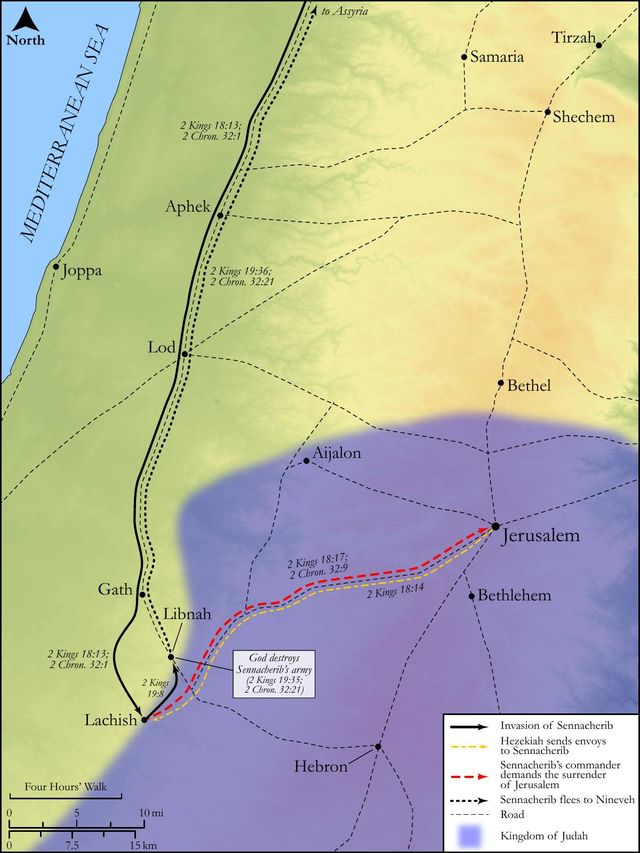
This verse immediately follows a triumphant narrative of God's miraculous deliverance of Jerusalem from the formidable siege of the Assyrian King Sennacherib. 2 Chronicles 32:20-23 vividly describes how the Lord sent an angel who annihilated the vast Assyrian army, bringing immense honor to Hezekiah among the surrounding nations. Prior to this, Hezekiah had also experienced a divine healing from a fatal illness, with God graciously extending his life by fifteen years, an event detailed in both 2 Kings 20:1-11 and Isaiah 38:1-8. These profound and undeniable acts of divine favor, which should have cultivated deeper humility and gratitude, instead became a crucible for Hezekiah's character, revealing a hidden pride. The subsequent verse, 2 Chronicles 32:26, details Hezekiah's eventual humbling and repentance, while 2 Chronicles 32:31 offers further insight into God's testing of Hezekiah concerning the Babylonian envoys, an incident often linked to his display of treasures and the very pride condemned here.
Historical & Cultural Context
King Hezekiah reigned over Judah during a tumultuous period (c. 715-686 BC), characterized by the formidable and expanding threat of the Neo-Assyrian Empire. The Assyrians had already conquered the Northern Kingdom of Israel (Samaria in 722 BC) and were the dominant global superpower. Jerusalem's miraculous deliverance from Sennacherib's siege in 701 BC was an event of unparalleled historical and theological significance, serving as a powerful demonstration of God's unique protection over His covenant people and His holy city. In the ancient Near East, kings were often perceived as direct representatives of their gods, and their success was universally attributed to divine favor. While this context could inspire humble gratitude, it also presented a potent temptation for self-exaltation. The prevailing cultural and religious expectation was that divine blessings demanded a response of worship, obedience, and humility, not pride. Hezekiah's failure to "render again" implies a breach of this reciprocal relationship, where the recipient of extraordinary divine grace failed to give due honor and submission to the Giver.
Key Themes
ShowHideThis verse encapsulates several crucial theological and narrative themes central to the Chronicler's theology and the broader Old Testament. Firstly, it prominently features Ingratitude and Pride as significant spiritual dangers. Despite receiving profound "benefit" (divine deliverance and healing), Hezekiah's "heart was lifted up," directly linking his failure to respond appropriately with an internal state of arrogance. This underscores the consistent biblical teaching that success and blessings, if not carefully stewarded, can paradoxically lead to spiritual downfall, as seen in the warnings of Deuteronomy 8:11-14. Secondly, the verse powerfully emphasizes the Consequences of Sin, particularly for those in positions of leadership. Hezekiah's personal pride did not merely affect him; it brought "wrath upon him, and upon Judah and Jerusalem." This illustrates the principle of corporate solidarity, where the spiritual state and actions of a leader can have far-reaching, detrimental effects on the entire community, a theme echoed in 1 Samuel 15:23. Finally, the broader narrative, particularly 2 Chronicles 32:31, introduces the theme of Divine Testing. God allowed Hezekiah to be tested, revealing the true condition of his heart and demonstrating that even those who have experienced great spiritual triumphs are not immune to temptation and failure, underscoring the ongoing need for vigilance and humble dependence on God.
Exposition and Analysis
ShowHideKey Word Analysis
ShowHideThe Hebrew verb שׁוּב (shûwb', H7725) primarily means "to turn back," but in this context, it carries the nuance of "to repay," "to requite," or "to render." It signifies a failure to return a fitting response or recompense for the immense "benefit" received. Hezekiah did not "turn back" to God in humble gratitude and continued dependence, but rather "turned away" from the appropriate spiritual posture. This implies a failure to fulfill the spiritual obligation of acknowledging God's sovereignty and goodness as the source of his blessings.
The Hebrew verb גָּבַהּ (gâbahh', H1361), when used in conjunction with "heart" (לֵב, lêb', H3820), forms a powerful idiom: "his heart was lifted up." This phrase consistently denotes arrogance, haughtiness, or spiritual pride throughout the Old Testament. It describes a state of self-exaltation, where one attributes success or blessing to oneself rather than to God. This "lifting up" of the heart is the antithesis of humility and is frequently condemned as a primary sin that provokes divine displeasure.
The Hebrew noun קֶצֶף (qetseph', H7110) refers to an outburst of indignation, anger, or wrath. In the biblical context, when applied to God, it signifies His righteous displeasure and just judgment against sin. It is not an arbitrary emotion but a holy and deserved response to human rebellion, particularly pride and ingratitude, which dishonor His name and sovereignty. Its application to "Judah and Jerusalem" highlights the communal dimension of divine judgment, often a consequence of leadership's sin.
Verse Breakdown
ShowHide"But Hezekiah rendered not again according to the benefit [done] unto him"
This opening clause immediately introduces the central spiritual failing of King Hezekiah. The "benefit" refers specifically to the two extraordinary acts of divine grace: God's miraculous deliverance of Jerusalem from the overwhelming Assyrian army (as described in 2 Chronicles 32:20-23) and Hezekiah's personal healing from a fatal illness and the extension of his life by fifteen years (detailed in 2 Kings 20:1-11). Hezekiah's failure to "render again" signifies a lack of appropriate gratitude, humility, and continued devotion in response to these profound acts of divine grace. It implies a spiritual debt left unpaid, not in a transactional sense, but in a relational one—a failure to honor the Giver of all good things.
"for his heart was lifted up"
This clause provides the direct cause and explanation for Hezekiah's failure to respond appropriately. The phrase "his heart was lifted up" is a powerful idiom for spiritual pride or arrogance. Instead of being humbled and drawn into deeper dependence and devotion by God's extraordinary favor, Hezekiah became self-important. He likely attributed the success of Jerusalem's defense or his personal recovery to his own righteousness, wisdom, or strength rather than solely to God's sovereign power and mercy. This pride is identified as the root sin that prevented him from offering the proper response of gratitude and continued humble dependence.
"therefore there was wrath upon him, and upon Judah and Jerusalem"
This final clause states the direct and severe consequence of Hezekiah's pride and ingratitude. God's "wrath" is His righteous displeasure and just judgment against sin. The "therefore" establishes a clear and undeniable cause-and-effect relationship between Hezekiah's spiritual state and the divine response. Significantly, the wrath was not confined to Hezekiah alone but extended "upon Judah and Jerusalem." This underscores the principle of corporate responsibility and the profound impact a leader's sin can have on the entire community, highlighting the interconnectedness of the king's spiritual state with the well-being and judgment of his people.
Literary Devices
ShowHideThe verse employs several potent literary devices to convey its profound theological message. Causality and Consequence are central to the verse's structure, explicitly linked by the conjunction "for" ("because his heart was lifted up") and the adverb "therefore" ("therefore there was wrath"). This grammatical structure unequivocally establishes Hezekiah's pride as the direct cause of divine judgment. The phrase "his heart was lifted up" functions as a powerful Idiom (or Metonymy), representing the abstract concept of spiritual arrogance through a concrete, vivid physical image of elevation. This imagery immediately communicates the nature of Hezekiah's sin. Furthermore, the verse functions as a powerful Narrative Juxtaposition, contrasting the preceding accounts of God's magnificent deliverance and Hezekiah's healing with the king's subsequent spiritual failure. This sharp contrast amplifies the tragic nature of Hezekiah's pride. Finally, the verse makes a clear Theological Statement about God's character and His righteous response to human arrogance, serving as a didactic warning against the dangers of self-exaltation, especially after receiving divine favor.
Theological and Thematic Connections
ShowHideThe narrative of Hezekiah's pride in 2 Chronicles 32:25 serves as a profound theological statement on the insidious nature of spiritual arrogance, particularly when it arises in the wake of divine blessing. It powerfully underscores the consistent biblical truth that God consistently opposes the proud but graciously extends favor to the humble. Hezekiah's failure to "render again" according to the benefits received highlights the sin of ingratitude, which is often a direct manifestation of pride—a subtle belief that one is somehow deserving of favor, or that one's own efforts are the ultimate source of success. This passage reinforces the principle that all good gifts come from God, and true wisdom lies in maintaining a posture of humble dependence and continuous gratitude, regardless of one's achievements or the magnitude of divine favor. It also powerfully demonstrates the ripple effect of sin, especially in leadership, where personal spiritual failings can bring communal consequences, reminding us of the interconnectedness within God's covenant community.
Reflection and Application
ShowHideHezekiah's story in 2 Chronicles 32:25 stands as a timeless cautionary tale for every believer, particularly those in positions of influence or who have experienced significant blessings and successes. It reveals that even after profound encounters with God's power and grace, the human heart remains acutely susceptible to the subtle and destructive sin of pride. When God blesses us with success, health, resources, or deliverance, the natural human tendency can be to subtly take credit, to forget our absolute dependence on Him, or to become self-reliant. This verse calls us to vigilant self-examination: are we quick to attribute our achievements solely to our own efforts, wisdom, or strength? Do we remember to give God the glory for every good thing, or does our heart subtly "lift itself up" in self-congratulation? True spiritual maturity is not just about avoiding overt sin, but about cultivating a deep, abiding humility and consistent gratitude, recognizing that every breath, every blessing, and every victory is a freely given gift from God. Furthermore, it profoundly reminds us that our spiritual state, particularly as leaders in our families, churches, or communities, has a tangible and often far-reaching impact on those around us. Our pride or lack of gratitude can indeed bring "wrath" or negative consequences, not just upon ourselves, but upon those we are called to serve and lead, underscoring the immense responsibility that comes with spiritual influence.
Questions for Reflection
ShowHideFAQ
ShowHideWhat specific "benefit" did Hezekiah receive that he failed to render again for?
ShowHideHezekiah received two primary, extraordinary benefits from God that are particularly highlighted in the surrounding narrative. First, God miraculously delivered Jerusalem from the overwhelming Assyrian army led by Sennacherib, saving the city from certain destruction (as detailed in 2 Chronicles 32:20-23). This was an unparalleled act of divine intervention. Second, God healed Hezekiah from a fatal illness and graciously extended his life by fifteen years in direct response to his fervent prayer (recorded in 2 Kings 20:1-11 and Isaiah 38:1-8). These were profound acts of divine grace and power, demanding a response of deep humility, worship, and gratitude, which Hezekiah failed to fully provide.
Why did "wrath" come upon Judah and Jerusalem for Hezekiah's personal sin?
ShowHideThe concept of corporate solidarity is a significant theological principle prevalent throughout the Old Testament. The actions and spiritual state of a king or leader were often seen as representative of the entire nation, and their sin could bring consequences upon the whole community. In this specific case, Hezekiah's pride, especially as the spiritual and political head of Judah, had a ripple effect. His failure to honor God properly, and his self-exaltation, could lead to a diminished spiritual atmosphere within the nation or even a direct divine judgment that affected the people he led. This highlights the immense responsibility of leadership and the interconnectedness of a community's fate with its spiritual posture, which is often reflected in its leaders.
How does this verse relate to the account of the Babylonian envoys in 2 Chronicles 32:31?
ShowHide2 Chronicles 32:31 states that "God left him [Hezekiah] to himself, to test him, that He might know all that was in his heart" regarding the envoys from Babylon. This incident, also described in 2 Kings 20:12-19, is widely understood as the specific and public manifestation of the pride mentioned in 2 Chronicles 32:25. When the Babylonian envoys came to congratulate Hezekiah on his recovery, he proudly displayed all his treasures, armory, and royal possessions, rather than giving glory to God for his miraculous deliverance and healing. This act of self-exaltation and misplaced trust in earthly riches was a direct outflow of his "lifted up heart," and it tragically led to the prophecy of Judah's future exile to Babylon, demonstrating the long-term, devastating consequences of his pride.
Christ-Centered Fulfillment
ShowHideWhile King Hezekiah, a generally good king, ultimately succumbed to the temptation of pride despite receiving immense divine favor, his failure powerfully foreshadows the perfect humility and unwavering obedience found in Jesus Christ. Hezekiah's "lifted up heart" stands in stark contrast to the divine Son of God, who, though "in the form of God, did not count equality with God a thing to be grasped, but emptied himself, by taking the form of a servant, being born in the likeness of men" (Philippians 2:6-7). Jesus, the true and eternal King of Israel, perfectly "rendered again" according to the benefit of His divine Sonship, offering perfect obedience and profound gratitude to the Father, even to the point of death on a cross (Philippians 2:8). He did not seek His own glory but always glorified the Father, declaring, "I do nothing on my own authority, but speak just as the Father taught me" (John 8:28). Furthermore, while Hezekiah's pride brought "wrath" upon his people, Christ, the ultimate Lamb of God who takes away the sin of the world, willingly bore the full wrath of God for the pride and sin of humanity, offering Himself as the perfect, atoning sacrifice (Isaiah 53:5-6). Through His perfect humility and substitutionary work on the cross, believers are delivered from the wrath that pride justly incurs, finding grace, forgiveness, and new life in Him who was "tempted in every respect as we are, yet without sin" (Hebrews 4:15).