


2 Chronicles 32:29
Bible text: King James Version (1769 Blayney text) · Public domain
Bible text: Berean Standard Bible · Public domain
Bible text: American Standard Version (1901) · Public domain
Bible text: World English Bible, Messianic edition · Public domain
Bible text: Geneva Bible (1599) · Public domain
Bible text: Young's Literal Translation · Public domain
- וְעָרִיםve·'a·Rimand citiesH5892Conj-w ¦ N-mpNoun Plural Masculine Absoluteוְandעָרִיםcities
- עָשָׂה'A·sahhe madeH6213V-Qal-Perf-3msVerb Qal Perfect 3rd Singular Masculine
- לוֹlofor himselfPrep-l ¦ 3msSuffix Personal 3rd Singular Masculineלforוֹhimself
- וּמִקְנֵהu·mik·nehand livestock ofH4735Conj-w ¦ N-mscNoun Singular Masculine Constructוּandמִקְנֵהlivestock of
- צֹאןtzonflockH6629N-csNoun Singular common gender Absolute
- וּבָקָרu·va·Karand herdH1241Conj-w ¦ N-csNoun Singular common gender Absoluteוּandבָקָרherd
- לָרֹבla·Roto abundanceH7230Prep-l ¦ N-msNoun Singular Masculine Absoluteלָtoרֹבabundance
- כִּיkiforH3588PrtParticle Conditional
- נָתַןna·tanhe had givenH5414V-Qal-Perf-3msVerb Qal Perfect 3rd Singular Masculine
- לוֹloto himPrep-l ¦ 3msSuffix Personal 3rd Singular Masculineלtoוֹhim
- אֱלֹהִים'E·lo·HimGodH430N-mpNoun Plural Masculine Absolute
- רְכוּשׁre·KhushpropertyH7399N-msNoun Singular Masculine Absolute
- רַבravmuchH7227Adj-msAdjective Singular Masculine Absolute
- מְאֹדme·'OdveryH3966Adj-msAdjective Numerical Singular Masculine Absolute
English is a literal word-by-word gloss of the Hebrew, not the KJV's wording. Why?
This is the original text the KJV's translators worked from — each Hebrew word with its own literal English meaning in this verse, prepared by scholars at Tyndale House, Cambridge. The KJV translates whole sentences, not word by word, so its wording differs: one Hebrew word can become several English words, and the KJV may choose “the LORD” where the gloss reads “Yahweh”. Both are faithful — they answer different questions. For the KJV's own rendering, switch to the KJV text.
Details
See on the biblical-era maps
Study this verse
Public-domain commentary
Matthew Henry
From his Commentary on the Whole Bible. Henry comments on passages, not single verses — this entry covers 2 Chronicles 32:24–33. His three-level outline is real structure in the source text, so it is rendered as structure.
Here we conclude the story of Hezekiah with an account of three things concerning him: -
I.His sickness and his recovery from it, Ch2 32:24.
The account of his sickness is but briefly mentioned here; we had a large narrative of it, 2 Kings 20. His disease seemed likely to be mortal. In the extremity of it he prayed. God answered him, and gave him a sign that he should recover, the going back of the sun ten degrees.
II.His sin and his repentance for it, which were also more largely related, Kg2 20:12, etc. Yet several things are here observed concerning his sin which we had not there.
1.The occasion of it was the king of Babylon's sending an honourable embassy to him to congratulate him on his recovery. But here it is added that they came to enquire of the wonder that was done in the land (Ch2 32:31), either the destruction of the Assyrian army or the going back of the sun. The Assyrians were their enemies; they came to enquire concerning their fall, that they might triumph in it. The sun was their god; they came to enquire concerning the favour he had shown to Hezekiah, that they might honour him whom their god honoured, Ch2 32:31. These miracles were wrought to alarm and awaken a stupid careless world, and turn them from dumb and lame idols to the living God; and men were startled by them, but not converted till a greater wonder was done in that land, in the appearing of Jesus Christ, Mat 2:1, Mat 2:2.
2.God left him to himself in it, to try him, Ch2 32:31. God, by the power of his almighty grace, could have prevented the sin; but he permitted it for wise and holy ends, that, by this trial and his weakness in it, he might know, that is, it might be known (a usual Hebraism), what was in his heart, that he was not so perfect in grace as he thought he was, but had his follies and infirmities as other men. God left him to himself to be proud of his wealth, to keep him from being proud of his holiness. It is good for us to know ourselves, and our own weakness and sinfulness, that we may not be conceited or self-confident, but may always think meanly of ourselves and live in a dependence upon divine grace. We know not the corruption of our own hearts, nor what we shall do if God leave us to ourselves. Lord, lead us not into temptation.
3.His sin was the his heart was lifted up, Ch2 32:25. He was proud of the honour God had put upon him in so many instances, the honour his neighbours did him in bringing him presents, and now that the king of Babylon should send an embassy to him to caress and court him: this exalted him above measure. When Hezekiah had destroyed other idolatries he began to idolize himself. O what need have great men, and good men, and useful men, to study their own infirmities and follies, and their obligations to free grace, that they may never think highly of themselves, and to beg earnestly of God that he will hide pride from them and always keep them humble!
4.The aggravation of his sin was the he made so bad a return to God for his favours to him, making even those favours the food and fuel of his pride (Ch2 32:25): He rendered not again according to the benefit done unto him. Note, It is justly expected that those who have received mercy from God should study to make some suitable returns for the mercies they have received; and, if they do not, their ingratitude will certainly be charged upon them. Though we cannot render an equivalent, or the payment of a debt, we must render the acknowledgment of a favour. What shall I render that may be so accepted? Psa 116:12.
5.The divine displeasure he was under for this sin; though it was but a heart-sin, and the overt-act seemed not only innocent but civil (the showing of his treasures to a friend), yet wrath came upon him and his kingdom for it, Ch2 32:25. Note, Pride is a sin that God hates as much as any, and particularly in his own people. Those that exalt themselves must expect to be abased, and put under humbling providences. Wrath came on David for his pride in numbering the people.
6.His repentance for this sin: He humbled himself for the pride of his heart. Note,
(1.)Though God may, for wise and holy ends, suffer his people to fall into sin, yet he will not suffer them to lie still in it; they shall not be utterly cast down.
(2.)Heart-sins are to be repented of, though they go no further.
(3.)Self-humiliation is a necessary branch of repentance.
(4.)Pride of heart, by which we have lifted up ourselves, is a sin for which we ought in a special manner to humble ourselves.
(5.)People ought to mourn for the sins of their rulers. The inhabitants of Jerusalem humbled themselves with Hezekiah, because they either knew that they also had been guilty of the same sin, or at least feared that they might share in the punishment. When David, in his pride, numbered the people, they all smarted for his sin.
7.The reprieve granted thereupon. The wrath came not in his days. While he lived the country had peace and truth prevailed; so much does repentance avail to put by, or at least to put off, the tokens of God's anger.
III.Here is the honour done to Hezekiah,
1.By the providence of God while he lived. He had exceeding much riches and honour (Ch2 32:27), replenished his stores, victualled his campus, fortified his city, and did all he wished to do; for God had given him very much substance, Ch2 32:29. Among his great performances, his turning the water-course of Gihon is mentioned (Ch2 32:30), which was done upon occasion of Sennacherib's invasion, Ch2 32:3, Ch2 32:4. The water had come into that which is called the old pool (Isa 22:11) and the upper pool (Isa 7:3); but he gathered the waters into a new place, for the greater convenience of the city, called the lower pool, Isa 22:9. And, in general, he prospered in all his works, for they were good works.
2.By the respect paid to his memory when he was dead.
(1.)The prophet Isaiah wrote his life and reign (Ch2 32:32), his acts and his goodness or piety, or which it is part of the honour to be recorded and remembered, for examples to others.
(2.)The people did him honour at his death (Ch2 32:33), buried him in the chief of the sepulchres, made as great a burning for him as for Asa, or, which is a much greater honour, made great lamentation for him, as for Josiah. See how the honour of serious godliness is manifested in the consciences of men. Though it is to be feared that the generality of the people did not heartily comply with the reforming kings, yet they could not but praise their endeavours for reformation, and the memory of those kings was blessed among them. It is a debt we owe to those who have been eminently useful in their day to do them honour at their death, when they are out of the reach of flattery and we have seen the end of their conversation. The due payment of this debt will be an encouragement to others to do likewise.
Continue studying 2 Chronicles 32:29 across the web’s major study libraries — every link below opens this exact verse, chapter, or book on the destination site.
Read & Compare
 BibleGatewayThis verse in more than 200 translations and 70 languages.
 Bible.comThe YouVersion reader — hundreds of translations, reading plans, and highlights.
 ESV.orgCrossway's official English Standard Version reader.
 NET BibleThe NET translation with 60,000+ translators' notes on every rendering decision.
 STEP BibleTyndale House's free study tool — original text, vocabulary, and scholarly resources.
 BibliaLogos Bible Software's free web reader.
 USCCBThe New American Bible (Revised Edition) with the U.S. bishops' study notes.
Commentaries
 BibleHub CommentariesDozens of classic commentaries on this verse, gathered on one page.
 StudyLightMore than 100 commentary sets — the largest collection on the web.
 BibleRefPlain-English commentary on what this verse means, verse by verse.
 Enduring WordDavid Guzik's free commentary on this chapter, widely used by Bible teachers.
 Bible Study ToolsVerse commentary alongside Greek and Hebrew study aids.
Original Language & Research
- BibleHub InterlinearThe verse word by word — original language, transliteration, and English.
- BibleHub LexiconEvery word's original-language definition and Strong's entry.
 Blue Letter BibleDeep-study tools — Strong's numbers, concordance, and word studies.
 SefariaThe Hebrew text with Rashi and centuries of Jewish commentary.
Sermons, Hymns & Audio


TrulyRandomVerse is not affiliated with these sites and doesn’t control their content. They’re linked because they’re genuinely useful.
Summary
2 Chronicles 32:29 encapsulates the extraordinary prosperity of King Hezekiah, detailing his vast holdings in cities, abundant flocks, and herds. This verse emphatically attributes his immense wealth not to human ingenuity or military might, but directly and singularly to the sovereign hand of God, who had generously bestowed upon him "substance very much," thereby underscoring the divine source of all true blessing and the Lord's faithfulness to His righteous king.
Context
ShowHideLiterary Context
This verse serves as a concluding statement in the Chronicler's extensive narrative of King Hezekiah's reign, specifically following a period of intense national trial and miraculous divine intervention. Chapters 2 Chronicles 29-31 meticulously chronicle Hezekiah's sweeping religious reforms, including the purification and rededication of the Temple, the restoration of the Passover celebration, and the reestablishment of the Levitical support system. Chapter 2 Chronicles 32 then shifts to the formidable Assyrian invasion led by Sennacherib, culminating in God's dramatic and supernatural deliverance of Jerusalem from certain destruction, as powerfully recounted in 2 Chronicles 32:21-22. The subsequent verses describe Hezekiah's illness, his prayer, and God's miraculous healing, followed by the arrival of gifts and tribute from surrounding nations who acknowledged the Lord's greatness, as seen in 2 Chronicles 32:23. Verse 29, therefore, functions as a powerful summary, highlighting the abundant blessings and prosperity that flowed as a direct consequence of Hezekiah's unwavering faithfulness and God's mighty acts on behalf of His people, reinforcing the Chronicler's overarching theological theme of divine retribution and reward.
Historical & Cultural Context
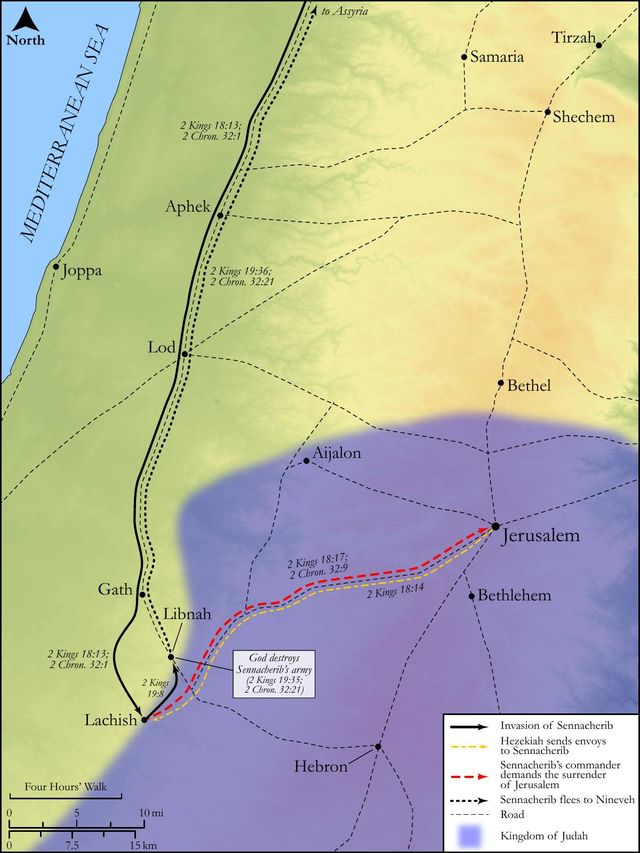
King Hezekiah ruled Judah from approximately 715 to 686 BC, a tumultuous era dominated by the aggressive expansion of the Neo-Assyrian Empire, the preeminent superpower of that day. The Assyrians were notorious for their brutal military tactics, including mass deportations and the systematic destruction of conquered lands. Jerusalem's miraculous preservation from Sennacherib's siege in 701 BC was an unprecedented historical event, widely recognized as a direct act of divine intervention. In an agrarian land like Judah, "cities, and possessions of flocks and herds" constituted the fundamental indicators of wealth, power, and national stability. Control over cities implied dominion over territory, resources, and populations, while vast numbers of livestock signified agricultural prosperity, a secure food supply, and a substantial economic base. The receipt of tribute from neighboring nations, as referenced in 2 Chronicles 32:23, was a common practice signifying either subjugation or recognition of a superior power, further contributing to Hezekiah's material abundance and prestige.
Key Themes
ShowHideThe paramount theme in 2 Chronicles 32:29 is Divine Provision and Blessing. The explicit declaration, "for God had given him substance very much," unequivocally identifies the Lord as the ultimate and sole source of Hezekiah's immense wealth, transcending any human efforts or political maneuvers. This aligns perfectly with a foundational biblical principle that God blesses those who walk in obedience and trust Him, a concept deeply rooted in the covenant blessings outlined in Deuteronomy 28. Closely intertwined is the theme of Abundance and Prosperity, vividly portrayed by the overflowing "cities, and possessions of flocks and herds in abundance," which demonstrates God's boundless capacity to bless beyond measure. Finally, the verse powerfully reinforces the theme of God's Favor for Righteousness. Hezekiah's prosperity is presented as a direct, tangible consequence of his righteous reign, his unwavering dedication to restoring true worship, and his steadfast trust in God during periods of profound crisis, thus illustrating the Chronicler's consistent theological message that faithfulness to the Lord yields divine favor and tangible blessings.
Exposition and Analysis
ShowHideKey Word Analysis
ShowHideThe Hebrew verb עָשָׂה (ʻâsâh', H6213) is a broad and versatile term meaning "to do or make, in the broadest sense and widest application." In this context, while it indicates Hezekiah's active role in managing, developing, and perhaps even expanding his kingdom's assets, the subsequent clause immediately qualifies this action. It suggests that Hezekiah's ability to "provide" was itself enabled and empowered by God's prior and ultimate giving, implying that Hezekiah was a diligent and faithful steward of the blessings God had already bestowed.
The Hebrew noun רְכֻשׁ (rᵉkûwsh', H7399) refers to "property (as gathered); good, riches, substance." Its use here is highly significant as it emphasizes that Hezekiah's wealth was not merely accumulated through human effort, tribute, or conquest, but was fundamentally a divinely granted "property" or "acquisition" that originated from God. This highlights the explicit divine hand in his prosperity, marking it as a special endowment rather than solely the fruit of human labor or political maneuvering.
The Hebrew noun רֹב (rôb', H7230) denotes "abundance (in any respect)." When used in the phrase "in abundance" (לָרֹב, larov), it functions as an adverbial intensifier, emphasizing the sheer scale, overflowing nature, and extraordinary quantity of Hezekiah's wealth. It signifies not merely sufficiency or adequacy, but an extravagant, superabundant blessing, powerfully underscoring the generosity and vastness of God's provision.
Verse Breakdown
ShowHide"Moreover he provided him cities"
This clause describes Hezekiah's active administrative and perhaps territorial expansion or consolidation. "Cities" here represents not just urban centers but also their surrounding agricultural lands, strategic importance, and the populations within them, signifying the king's control, resources, and fortified strongholds. It speaks to Hezekiah's diligence in managing and enhancing the kingdom's infrastructure and domain.
"and possessions of flocks and herds in abundance"
This specifies the primary nature of Hezekiah's material wealth beyond just cities. "Flocks and herds" were the quintessential measure of agricultural and pastoral wealth in Israel, representing not only food and clothing but also trade goods, capital, and a secure economic base. The emphatic addition of "in abundance" underscores the extraordinary quantity of these possessions, painting a vivid picture of overflowing prosperity and self-sufficiency for the kingdom of Judah.
"for God had given him substance very much"
This is the pivotal theological declaration of the verse, providing the ultimate and overarching explanation for Hezekiah's prosperity. The conjunction "for" (כִּי, ki) introduces the divine reason, unequivocally attributing all of Hezekiah's "substance" (wealth, possessions, property) to God's direct, sovereign, and bountiful giving. This clause elevates the narrative from a simple description of royal wealth to a profound theological statement of divine sovereignty, generosity, and the ultimate source of all blessings.
Literary Devices
ShowHideThe verse employs several potent literary devices to convey its profound message. Divine Attribution is central, as the Chronicler directly and explicitly assigns the source of Hezekiah's vast wealth to God, leaving no ambiguity about the ultimate origin of his prosperity. This serves to glorify God and firmly establish the theological principle that all blessings, especially those of such magnitude, ultimately flow from the divine hand. Hyperbole and Emphasis are achieved through the use of intensifying phrases such as "in abundance" and "very much," which function as superlatives, highlighting the extraordinary scale and overflowing nature of Hezekiah's possessions. This rhetorical amplification underscores the sheer magnitude of God's blessing. Furthermore, the verse functions as a powerful Summary Statement, encapsulating the material prosperity that accompanied Hezekiah's righteous reign and God's miraculous intervention, providing a concluding flourish to the narrative of his success and God's faithfulness.
Theological and Thematic Connections
ShowHideThe profound theological truth embedded in 2 Chronicles 32:29 is that all genuine prosperity and "substance" ultimately originate from the sovereign hand of God. Hezekiah's immense wealth was not merely the product of his shrewd governance, military might, or the tribute he received, but a direct, divine endowment. This powerfully reinforces the Old Testament covenantal principle that obedience and faithfulness to God often result in tangible blessings, demonstrating God's boundless capacity and unwavering willingness to provide abundantly for His people. It fundamentally challenges any notion that wealth is solely a product of human effort, chance, or cleverness, instead pointing to God's ultimate ownership and sovereign hand in all aspects of life. This perspective cultivates a deep sense of gratitude, humility, and a recognition of divine proprietorship over all possessions, fostering a stewardship mindset rather than a possessive one.
Reflection and Application
ShowHide2 Chronicles 32:29 offers enduring and vital lessons for believers today, serving as a profound reminder that God remains the ultimate source of all provision and blessing. While the New Covenant places a greater emphasis on spiritual riches and eternal inheritance, the foundational principle of divine sovereignty over all resources remains immutable. This verse compels us to cultivate a heart of profound gratitude for everything we possess, recognizing that our "substance"—whether it be material wealth, unique talents, cherished relationships, or timely opportunities—is a gracious gift from God. It calls us to be faithful and wise stewards of these divine endowments, using them not for selfish accumulation or fleeting pleasure, but primarily for God's glory and the flourishing of others. Hezekiah's story encourages us to trust God implicitly for our provision, especially during seasons of need or crisis, understanding that His resources are limitless and His faithfulness unwavering. Moreover, it challenges us to thoughtfully consider how our "abundance," in whatever form it takes, can be strategically leveraged to advance God's kingdom and serve His redemptive purposes in the world, just as Hezekiah used his prosperity to further the welfare of his people and the worship of the Lord.
Questions for Reflection
ShowHideFAQ
ShowHideWas Hezekiah's wealth a sign of his righteousness?
ShowHideYes, within the Old Testament covenant framework, particularly as presented by the Chronicler, material blessings and national prosperity were frequently portrayed as direct indicators of a king's and a nation's faithfulness and obedience to God. Hezekiah's reign is consistently depicted as righteous and pleasing in the Lord's sight, as affirmed in 2 Chronicles 31:20, and his wealth is presented as a direct consequence of God's favor upon his obedience. However, it is crucial to understand that this direct, one-to-one correlation between material wealth and righteousness is not a universal principle for all believers across all dispensations. Under the New Covenant, spiritual blessings are paramount, and suffering can also be a profound part of God's refining plan for the righteous, as highlighted in passages like Romans 5:3-5.
How did Hezekiah acquire this immense wealth?
ShowHideHezekiah's immense wealth stemmed from a confluence of factors, all ultimately attributed to God's overarching blessing. Firstly, as the reigning king, he exercised control over the kingdom's inherent resources, including agricultural output, trade routes, and taxation. Secondly, following God's miraculous deliverance of Jerusalem from the Assyrian invasion, surrounding nations brought significant tribute and gifts to Hezekiah, acknowledging the Lord's greatness and Hezekiah's elevated status, as explicitly stated in 2 Chronicles 32:23. Lastly, and most importantly, the verse unequivocally states that "God had given him substance very much," indicating a direct, supernatural enablement and provision from the Lord that transcended normal means of accumulation, emphasizing divine favor as the primary source.
Does this verse mean God will make all faithful believers rich?
ShowHideNo. While God is indeed the ultimate provider of all good and perfect gifts, and He certainly has the power to bless materially, this verse describes a specific covenantal blessing experienced by an Old Testament king within a unique historical and theological context. The New Testament primarily emphasizes spiritual riches in Christ as the believer's true and enduring inheritance, as taught in Ephesians 1:3. It frequently highlights the virtues of contentment and generosity over the pursuit of material wealth, as seen in 1 Timothy 6:6-10. While God faithfully promises to meet the needs of His people according to His riches in glory, as promised in Philippians 4:19, this does not guarantee material abundance for every faithful believer in the same extraordinary way Hezekiah experienced it.
Christ-Centered Fulfillment
ShowHideWhile 2 Chronicles 32:29 meticulously details the earthly, material prosperity of King Hezekiah, its deeper and more profound fulfillment is discovered in the spiritual and eternal "substance" that God has lavishly bestowed upon humanity through His Son, Jesus Christ. Hezekiah's abundant cities, flourishing flocks, and vast herds, though impressive and divinely given, were ultimately temporary and subject to decay and loss. In stark contrast, Christ is the true, inexhaustible, and eternal source of all spiritual riches, providing His people with an inheritance that is imperishable, undefiled, and unfading, securely kept in heaven for them, as beautifully described in 1 Peter 1:3-4. Just as God sovereignly provided for King Hezekiah, so too does He infinitely provide for us in Christ, not merely with transient earthly goods, but with the eternal blessings of redemption, perfect righteousness, profound peace, and everlasting life, as celebrated in Ephesians 1:7. Hezekiah's prosperous reign, marked by divine favor, powerfully foreshadows the ultimate and eternal reign of Christ, the King of kings and Lord of lords, who possesses all authority in heaven and on earth (Matthew 28:18), and whose kingdom is not of this world but transcends all earthly realms (John 18:36). The "substance" given to Hezekiah thus points to the infinitely greater, spiritual "substance" that God has freely and graciously bestowed upon us in His Son, making us co-heirs with Christ and granting us access to the unsearchable and glorious riches of His grace (Ephesians 3:8).