


2 Chronicles 34:27
Bible text: King James Version (1769 Blayney text) · Public domain
Bible text: King James Version with Strong's numbers · Public domain
Bible text: Berean Standard Bible · Public domain
Bible text: American Standard Version (1901) · Public domain
Bible text: World English Bible, Messianic edition · Public domain
Bible text: Geneva Bible (1599) · Public domain
Bible text: Young's Literal Translation · Public domain
- יַעַןYa·'anbecauseH3282ConjConjunction
- רַךְrakhit was softH7401V-Qal-Perf-3msVerb Qal Perfect 3rd Singular Masculine
- לְבָבְךָle·Va·ve·khayour heartH3824N-msc ¦ 2msNoun Singular Masculine Constructלְבָבְheartךָyour
- וַתִּכָּנַעva·ti·ka·Na'and you humbled yourselfH3665Conj-w ¦ V-Niphal-ConsecImperf-2msVerb Niphal Consecutive Imperfect 2nd Singular Masculineוַandתִּכָּנַעyou humbled yourself
- מִלִּפְנֵיmi·lif·Neifrom to beforeH6440Prep-m ¦ Prep-l ¦ N-mpcNoun Plural Masculine Constructמִfromלִּtoפְנֵיbefore
- אֱלֹהִים'E·lo·HimGodH430N-mpNoun Plural Masculine Absolute
- בְּשָׁמְעֲךָbe·sha·me·'a·Khawhen hearing youH8085Prep-b ¦ V-Qal-Inf ¦ 2msVerb Qal Infinitive Constructבְּwhenשָׁמְעֲhearingךָyou
- אֶת'et<obj.>H853DirObjMParticle Object Indicator
- דְּבָרָיוde·va·Ravhis wordsH1697N-mpc ¦ 3msNoun Plural Masculine Constructדְּבָרָיwordsוhis
- עַל'alonH5921PrepPreposition
- הַמָּקוֹםha·ma·Komthe placeH4725Art ¦ N-msNoun Singular Masculine Absoluteהַtheמָּקוֹםplace
- הַזֶּהha·Zeh<the> thisH2088Art ¦ PrtParticle Demonstrativeהַ<the>זֶּהthis
- וְעַלve·'aland onH5921Conj-w ¦ PrepPrepositionוְandעַלon
- יֹשְׁבָיוyo·she·Vavits inhabitantsH3427V-Qal-Prtcpl-mp ¦ 3msVerb Qal Participle Plural Masculine Constructיֹשְׁבָיinhabitantsוits
- וַתִּכָּנַעva·ti·ka·Na'and you humbled yourselfH3665Conj-w ¦ V-Niphal-ConsecImperf-2msVerb Niphal Consecutive Imperfect 2nd Singular Masculineוַandתִּכָּנַעyou humbled yourself
- לְפָנַיle·fa·Nai<to> before meH6440Prep-l ¦ N-mpc ¦ 1csNoun Plural Masculine Constructלְ<to>פָנַbeforeיme
- וַתִּקְרַעva·tik·Ra'and you toreH7167Conj-w ¦ V-Qal-ConsecImperf-2msVerb Qal Consecutive Imperfect 2nd Singular Masculineוַandתִּקְרַעyou tore
- אֶת'et<obj.>H853DirObjMParticle Object Indicator
- בְּגָדֶיךָbe·ga·Dei·khayour clothesH899N-mpc ¦ 2msNoun Plural Masculine Constructבְּגָדֶיclothesךָyour
- וַתֵּבְךְּva·Te·vekand you weptH1058Conj-w ¦ V-Qal-ConsecImperf-2msVerb Qal Consecutive Imperfect 2nd Singular Masculineוַandתֵּבְךְּyou wept
- לְפָנָיle·fa·Nai<to> before meH6440Prep-l ¦ N-mpc ¦ 1csNoun Plural Masculine Constructלְ<to>פָנָbeforeיme
- וְגַםve·gamand alsoH1571Conj-w ¦ AdvAdverbוְandגַםalso
- אֲנִי'a·NiIH589Pro-1csPronoun Personal 1st Singular common gender
- שָׁמַעְתִּיsha·Ma'·tiI have heardH8085V-Qal-Perf-1csVerb Qal Perfect 1st Singular common gender
- נְאֻםne·'um[the] utterance ofH5002N-mscNoun Singular Masculine Construct
- יְהוָהYah·wehYahwehH3068N-properNoun Proper Title
English is a literal word-by-word gloss of the Hebrew, not the KJV's wording. Why?
This is the original text the KJV's translators worked from — each Hebrew word with its own literal English meaning in this verse, prepared by scholars at Tyndale House, Cambridge. The KJV translates whole sentences, not word by word, so its wording differs: one Hebrew word can become several English words, and the KJV may choose “the LORD” where the gloss reads “Yahweh”. Both are faithful — they answer different questions. For the KJV's own rendering, switch to the KJV text.
Details
See on the biblical-era map
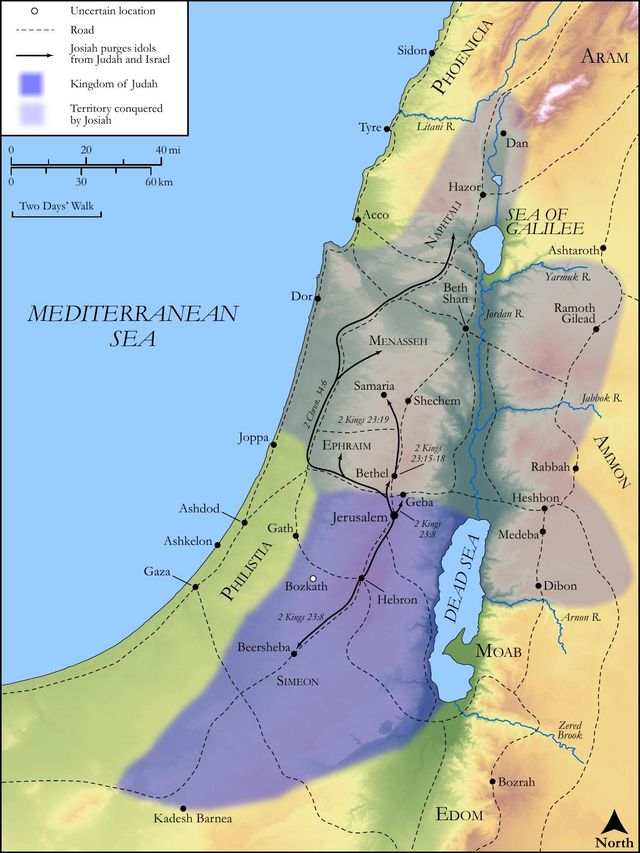
Study this verse
Public-domain commentary
Matthew Henry
From his Commentary on the Whole Bible. Henry comments on passages, not single verses — this entry covers 2 Chronicles 34:14–28.
This whole paragraph we had, just as it is here related, Kg2 22:8-20, and have nothing to add here to what was there observed. But, 1. We may hence take occasion to bless God that we have plenty of Bibles, and that they are, or may be, in all hands, - that the book of the law and gospel is not lost, is not scarce, - that, in this sense, the word of the Lord is not precious. Bibles are jewels, but, thanks be to God, they are not rarities. The fountain of the waters of life is not a spring shut up or a fountain sealed, but the streams of it, in all places, make glad the city of our God. Usus communis aquarum - These waters flow for general use. What a great deal shall we have to answer for if the great things of God's law, being thus made common, should be accounted by us as strange things! 2. We may hence learn, whenever we read or hear the word of God, to affect our hearts with it, and to get them possessed with a holy fear of that wrath of God which is there revealed against all ungodliness and unrighteousness of men, as Josiah's tender heart was. When he heard the words of the law he rent his clothes (Ch2 34:19), and God was well pleased with his doing so, Ch2 34:27. Were the things contained in the scripture new to us, as they were here to Josiah, surely they would make deeper impressions upon us than commonly they do; but they are not the less weighty, and therefore should not be the less considered by us, for their being well known. Rend the heart therefore, not the garments. 3. We are here directed when we are under convictions of sin, and apprehensions of divine wrath, to enquire of the Lord; so Josiah did, Ch2 34:21. It concerns us to ask (as they did, Act 2:37), Men and brethren, what shall we do? and more particularly (as the jailor), What must I do to be saved? Act 16:30. If you will thus enquire, enquire (Isa 21:12); and, blessed be God, we have the lively oracles to which to apply with these enquiries. 4. We are here warned of the ruin that sin brings upon nations and kingdoms. Those that forsake God bring evil upon themselves (Ch2 34:24, Ch2 34:25), and kindle a fire which shall not be quenched. Such will the fire of God's wrath be when the decree has gone forth against those that obstinately and impenitently persist in their wicked ways. 5. We are here encouraged to humble ourselves before God and seek unto him, as Josiah did. If we cannot prevail thereby to turn away God's wrath from our land, yet we shall deliver our own souls, Ch2 34:27, Ch2 34:28. And good people are here taught to be so far from fearing death as to welcome it rather when it takes them away from the evil to come. See how the property of it is altered by making it the matter of a promise: Thou shalt be gathered to thy grave in peace, housed in that ark, as Noah, when a deluge is coming.
Continue studying 2 Chronicles 34:27 across the web’s major study libraries — every link below opens this exact verse, chapter, or book on the destination site.
Read & Compare
 BibleGatewayThis verse in more than 200 translations and 70 languages.
 Bible.comThe YouVersion reader — hundreds of translations, reading plans, and highlights.
 ESV.orgCrossway's official English Standard Version reader.
 NET BibleThe NET translation with 60,000+ translators' notes on every rendering decision.
 STEP BibleTyndale House's free study tool — original text, vocabulary, and scholarly resources.
 BibliaLogos Bible Software's free web reader.
 USCCBThe New American Bible (Revised Edition) with the U.S. bishops' study notes.
Commentaries
 BibleHub CommentariesDozens of classic commentaries on this verse, gathered on one page.
 StudyLightMore than 100 commentary sets — the largest collection on the web.
 BibleRefPlain-English commentary on what this verse means, verse by verse.
 Enduring WordDavid Guzik's free commentary on this chapter, widely used by Bible teachers.
 Bible Study ToolsVerse commentary alongside Greek and Hebrew study aids.
Original Language & Research
- BibleHub InterlinearThe verse word by word — original language, transliteration, and English.
- BibleHub LexiconEvery word's original-language definition and Strong's entry.
 Blue Letter BibleDeep-study tools — Strong's numbers, concordance, and word studies.
 SefariaThe Hebrew text with Rashi and centuries of Jewish commentary.
Sermons, Hymns & Audio


TrulyRandomVerse is not affiliated with these sites and doesn’t control their content. They’re linked because they’re genuinely useful.
Summary
2 Chronicles 34:27 records the Lord's compassionate and affirming response to King Josiah's profound humility and genuine repentance. Upon hearing the words of the newly discovered Book of the Law, Josiah's heart was deeply moved, leading him to tear his clothes and weep in sincere contrition over the nation's sin and the impending divine judgment. This verse highlights God's unwavering attentiveness and mercy toward an individual who humbly acknowledges His word and submits to His authority, even amidst the dire consequences pronounced upon a rebellious people.
Context
ShowHideLiterary Context
This verse is a pivotal moment within the narrative of King Josiah's reign, specifically following the dramatic discovery of the "Book of the Law" during the Temple repair (2 Chronicles 34:14). Upon hearing its contents, which detailed the covenant stipulations and the severe curses for disobedience, Josiah's reaction was immediate and visceral: he tore his clothes (2 Chronicles 34:19) as a sign of profound grief and repentance. He then sent a delegation, including the high priest Hilkiah, to inquire of the Lord through the prophetess Huldah (2 Chronicles 34:20-22). Verse 27 is God's direct, personal message to Josiah, delivered through Huldah, acknowledging and affirming the king's sincere response before reiterating the national judgment in the subsequent verses (2 Chronicles 34:23-28). This divine affirmation serves as a crucial turning point, validating Josiah's reforms and setting the stage for the covenant renewal described in 2 Chronicles 34:29-33.
Historical & Cultural Context
King Josiah ascended the throne of Judah at the tender age of eight (2 Chronicles 34:1), inheriting a kingdom steeped in idolatry and moral decay due to the long reigns of his wicked predecessors, Manasseh and Amon. The discovery of the Book of the Law (widely believed to be a significant portion of Deuteronomy) occurred around the eighteenth year of his reign, during a period of extensive Temple purification and restoration. The text of the Law, particularly its pronouncements of blessings for obedience and curses for disobedience (e.g., Deuteronomy 28), would have been a shocking revelation to a people largely ignorant of God's covenant demands. Josiah's act of rending his clothes and weeping was a deeply ingrained cultural expression of extreme distress, grief, and repentance in Israel, signifying a broken spirit and a complete surrender to the severity of the situation. This public display underscored the authenticity and depth of his personal contrition in the face of God's revealed truth.
Key Themes
ShowHideThis verse powerfully illustrates several key theological and narrative themes. Firstly, it underscores the theme of Authentic Repentance and Humility. Josiah's "tender heart" and repeated acts of humbling himself, rending clothes, and weeping are presented as the antithesis of the hardened hearts characteristic of Judah's apostasy. This genuine contrition stands in stark contrast to mere outward religious observance, emphasizing that God values an inward posture of submission and sorrow over sin, as seen in Psalm 51:17. Secondly, the verse highlights Divine Responsiveness to Sincerity. God's declaration, "I have even heard [thee] also, saith the LORD," assures Josiah that his repentance has been fully acknowledged and accepted. This demonstrates God's character as one who is attentive and merciful to those who genuinely turn to Him, consistently responding to a humble plea, as promised in passages like Isaiah 57:15. Finally, the verse introduces the theme of Personal Grace Amidst Corporate Judgment. While the judgment against Jerusalem and its inhabitants is affirmed due to their persistent idolatry and disobedience, God grants Josiah a personal reprieve, promising that he would be gathered to his fathers in peace and not see the disaster (2 Chronicles 34:28). This demonstrates that individual faithfulness and repentance can bring personal protection and peace, even when a nation faces the consequences of its corporate sin.
Exposition and Analysis
ShowHideKey Word Analysis
ShowHideThe Hebrew verb רָכַךְ (râkak) means "to soften" or "to be tender," used both literally and figuratively. When applied to the heart, as in Josiah's case, it describes a heart that is pliable, sensitive, and receptive to God's word and Spirit, rather than being hardened or resistant. This spiritual tenderness allowed Josiah to be profoundly moved by the Law's message of judgment, prompting a genuine and immediate response of repentance. It signifies a spiritual openness that stands in stark contrast to the callousness often seen in those who reject divine truth.
The Hebrew verb כָּנַע (kânaʻ) literally means "to bend the knee," and figuratively, "to humiliate," "to be subdued," or "to humble oneself." Its repeated use in the verse ("didst humble thyself before God" and "humbledst thyself before me") underscores the profound and voluntary nature of Josiah's submission. This was not a superficial or coerced act but a deep, internal acknowledgment of his unworthiness and God's sovereign authority and righteous judgment. It describes a posture of abasement and self-abasement before the Almighty, demonstrating a genuine turning from pride to submission.
The Hebrew verb שָׁמַע (shâmaʻ) means "to hear intelligently," often implying attention, understanding, and obedience. In this context, when the Lord declares, "I have even heard [thee] also," it signifies far more than mere auditory perception. It conveys divine attentiveness, acknowledgment, and a favorable, responsive acceptance of Josiah's actions. God not only perceived Josiah's outward expressions of grief and humility but also fully understood and accepted the sincerity of his inward repentance, demonstrating His active and compassionate engagement with those who genuinely turn to Him.
Verse Breakdown
ShowHide"Because thine heart was tender,"
This clause identifies the foundational internal disposition that characterized Josiah's response. His heart was not hardened by sin or pride but was receptive and sensitive to God's word, making him capable of genuine spiritual understanding and emotional distress. This tender heart was the prerequisite for his subsequent actions.
"and thou didst humble thyself before God, when thou heardest his words against this place, and against the inhabitants thereof,"
This part describes Josiah's initial act of humility, directly linking it to his hearing of God's severe pronouncements against Judah and Jerusalem. His humbling was a direct, immediate, and appropriate response to the terrifying reality of divine judgment revealed in the Law. It signifies a profound reverence for God's word and a recognition of its authority and truth.
"and humbledst thyself before me, and didst rend thy clothes, and weep before me;"
This clause reiterates Josiah's humility, now explicitly stating it was "before me" (the Lord), and details the outward manifestations of his inward contrition. Rending clothes was a conventional sign of extreme grief, despair, or repentance, while weeping further underscored the depth of his sorrow and brokenness over the sin of his people and the impending judgment. These were not performative acts but genuine expressions of a deeply moved soul.
"I have even heard [thee] also, saith the LORD."
This is God's direct, affirming declaration. The phrase "I have even heard [thee] also" emphasizes that God has taken full notice of Josiah's sincere repentance. It is a divine assurance that his actions have been accepted and that his plea for mercy, though not explicitly stated in the text, has been acknowledged. This statement serves as the divine validation of Josiah's humble response, promising a personal reprieve despite the broader national judgment.
Literary Devices
ShowHideThe passage employs several potent literary devices to convey its message. Repetition of the phrase "didst humble thyself" (or variations of "humbledst thyself") powerfully underscores the central theme of Josiah's contrition and submission, emphasizing its depth and sincerity. This repeated action highlights the voluntary and profound nature of his spiritual posture. Symbolism is evident in the acts of "rending thy clothes" and "weeping," which are recognized throughout Scripture as gestures of profound grief, distress, and repentance. These physical actions serve as outward manifestations of an inward, spiritual brokenness and sorrow over sin. The entire verse functions as a form of Direct Discourse, as it is presented as the very words of the Lord spoken through the prophetess Huldah. This direct address lends immense authority and weight to the divine affirmation, making God's response immediate and personal to Josiah. Furthermore, there is an implicit Contrast drawn between Josiah's "tender heart" and the hardened, idolatrous hearts of the majority of the people of Judah, which is the very reason for the impending judgment. This contrast highlights Josiah's unique spiritual sensitivity and righteousness in a corrupt generation.
Theological and Thematic Connections
ShowHideThis passage profoundly illustrates God's character as one who is merciful, attentive, and responsive to genuine humility and repentance. It teaches that while God is just and will bring judgment upon sin, His ear is always open to the contrite heart. Josiah's personal reprieve amidst national judgment underscores the principle of individual accountability and God's willingness to extend grace to those who turn to Him, even when corporate consequences are inevitable. This divine responsiveness is a consistent theme throughout Scripture, demonstrating that God delights in mercy and seeks genuine relationship over mere ritual. It affirms that true repentance, marked by a tender heart and humble submission to God's word, is the pathway to divine favor and peace.
Reflection and Application
ShowHideKing Josiah's response to God's word in 2 Chronicles 34:27 provides a timeless blueprint for our own spiritual lives. It challenges us to cultivate a "tender heart" that remains sensitive and receptive to the Holy Spirit's promptings and the truths of Scripture, rather than allowing our hearts to become hardened by the cares of the world or the deceitfulness of sin. When God's Word exposes our shortcomings, reveals His will, or pronounces judgment on sin, our most appropriate and blessed response is not defensiveness or indifference, but humble submission, genuine sorrow, and a turning away from our own ways. Josiah's tears and rending of clothes were not just outward displays but reflections of a deep, internal brokenness before God. This passage reminds us that God does not merely observe our external actions but discerns the sincerity of our hearts. He is faithful to hear and respond to those who genuinely humble themselves before Him, offering grace, forgiveness, and peace even in the face of daunting circumstances. Our humility is not a weakness but the very posture through which God's strength and mercy can flow into our lives.
Questions for Reflection
ShowHideFAQ
ShowHideWhat does it mean for a heart to be "tender" in biblical terms?
ShowHideIn biblical terms, a "tender" heart (Hebrew: râkak) signifies a heart that is soft, pliable, and sensitive to God's word and His Spirit. It is the opposite of a "hardened" or "stiff-necked" heart, which is resistant, rebellious, and unresponsive to divine truth. Josiah's tender heart allowed him to be deeply convicted by the Book of the Law, leading to genuine repentance and submission. This spiritual sensitivity is highly valued by God, as it enables individuals to hear, understand, and obey His will, as seen in Psalm 34:18.
What was the "Book of the Law" that Josiah heard, and why was its discovery so impactful?
ShowHideThe "Book of the Law" discovered during the Temple repairs (2 Chronicles 34:14) is widely identified by scholars as a portion, if not the entirety, of the book of Deuteronomy. Its discovery was profoundly impactful because its contents, particularly the covenant curses for disobedience (Deuteronomy 28), revealed the extent of Judah's apostasy and the severe judgment that was due. The people, including the king, had largely forgotten or ignored God's covenant requirements. Hearing these words brought a shocking realization of their national sin and the imminent divine wrath, prompting Josiah's immediate and desperate repentance.
How could God grant Josiah personal peace while still affirming judgment on Judah?
ShowHideGod's response to Josiah demonstrates a crucial biblical principle: while corporate sin often leads to corporate judgment, God also deals with individuals based on their personal response to Him. Josiah's profound humility and genuine repentance set him apart from the general spiritual condition of Judah. Because he personally humbled himself and sought God's face, God extended a personal promise of peace, ensuring that Josiah would be "gathered to his fathers in peace" and would not live to see the full extent of the disaster that would befall Jerusalem (2 Chronicles 34:28). This illustrates God's justice in judging national sin, combined with His mercy and grace towards the repentant individual.
Christ-Centered Fulfillment
ShowHideKing Josiah's tender heart, profound humility, and the divine response to his repentance in 2 Chronicles 34:27 find their ultimate and perfect fulfillment in Jesus Christ. Josiah, a righteous king, humbled himself before God's word, recognizing the just wrath due to sin, and through his intercession and personal righteousness, he secured a measure of peace for himself and a delay of judgment for Judah. This foreshadows Christ, who is the ultimate embodiment of a "tender heart" and perfect humility, declaring Himself "gentle and humble in heart" (Matthew 11:29). Unlike Josiah, who merely delayed judgment, Jesus, through His perfect obedience and ultimate act of humility on the cross (Philippians 2:8), fully bore the wrath of God for the sins of humanity. He became sin for us, so that in Him we might become the righteousness of God (2 Corinthians 5:21). God "heard" Christ's perfect sacrifice and accepted it as the atonement for sin, securing not just a delay, but eternal peace and reconciliation for all who humble themselves and believe in Him (Romans 5:1). Thus, Josiah's experience points us to the Lamb of God, whose ultimate act of humility and perfect obedience fully satisfies God's righteous demands, offering true and lasting peace to every tender and contrite heart that trusts in Him.