


Matthew 21:27
- ΚαὶKaiAndG2532CONJConjunction
- ἀποκριθέντεςapokrithentesansweringG611V-AOP-NPMVerb Aorist Passive Deponent Participle Nominative Plural Masculine
- τῷtō<the>G3588T-DSMDefinite article Dative Singular Masculine
- ἸησοῦIēsouJesusG2424N-DSM-PNoun Dative Singular Masculine Individual
- εἶπαν·eipanthey saidG2036V-2AAI-3PVerb 2nd Aorist Active Indicative 3rd Plural
- οὐκoukNotG3756PRT-NNegative Particle Negative
- οἴδαμενoidamendo we knowG1492V-RAI-1PVerb Perfect Active Indicative 1st Plural
- ἔφηephēWas sayingG5346V-IAI-3SVerb Imperfect Active Indicative 3rd Singular
- αὐτοῖςautoisto themG846P-DPMPersonal pronoun Dative Plural Masculine
- καὶkaialsoG2532CONJConjunction
- αὐτός·autosHe himselfG846P-NSMPersonal pronoun Nominative Singular Masculine
- οὐδὲoudeNeitherG3761CONJ-NConjunction Negative
- ἐγὼegōI myselfG1473P-1NSPersonal pronoun Nominative 1st Singular
- λέγωlegōtellG3004V-PAI-1SVerb Present Active Indicative 1st Singular
- ὑμῖνhuminyouG4771P-2DPPersonal pronoun Dative 2nd Plural
- ἐνenbyG1722PREPPreposition
- ποίᾳpoiawhatG4169I-DSFInterrogative pronoun Dative Singular Feminine
- ἐξουσίᾳexousiaauthorityG1849N-DSFNoun Dative Singular Feminine
- ταῦταtautathese thingsG3778D-APNDemonstrative pronoun Accusative Plural Neuter
- ποιῶpoiōI doG4160V-PAI-1SVerb Present Active Indicative 1st Singular
English is a literal word-by-word gloss of the Greek, not the KJV's wording. Why?
This is the original text the KJV's translators worked from — each Greek word with its own literal English meaning in this verse, prepared by scholars at Tyndale House, Cambridge. The KJV translates whole sentences, not word by word, so its wording differs: one Greek word can become several English words, and the KJV may choose “charity” where the gloss reads “love”. Both are faithful — they answer different questions. For the KJV's own rendering, switch to the KJV text.
Details
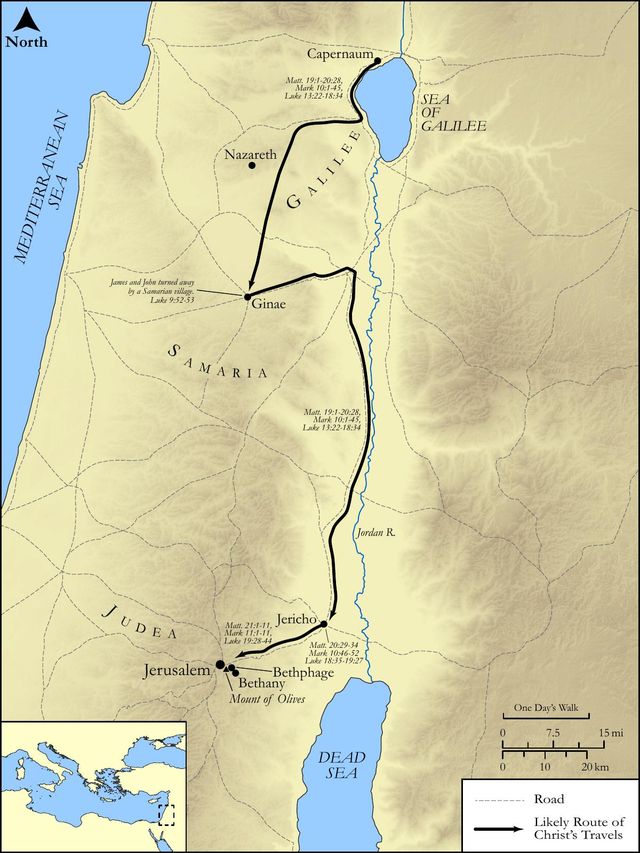
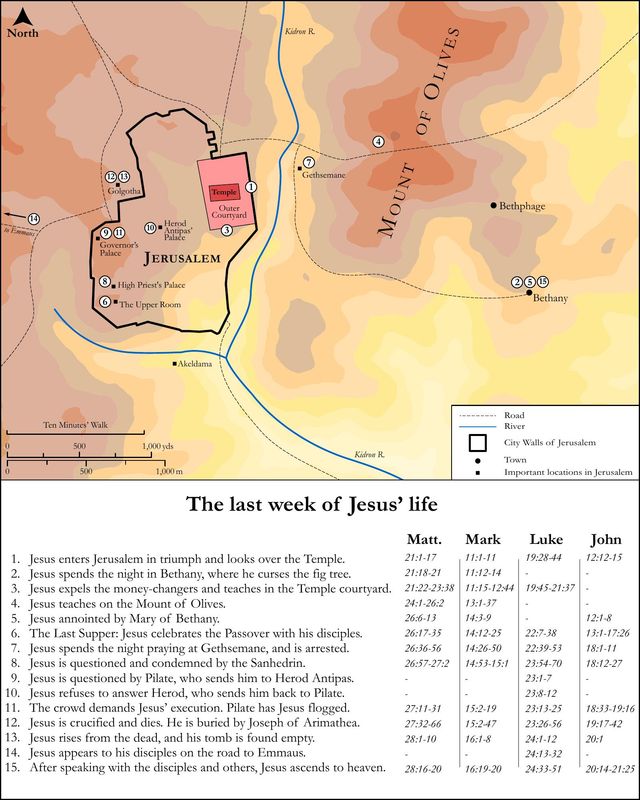
See on the biblical-era map

Study this verse
Historical interpretation
Seven Centuries of Reception
7 surviving comments on this verse. Each one is dated, so this reads as a timeline rather than a list.
Select a marker to jump to its quote. Markers stagger vertically where authors wrote within a few decades of each other.
And how was it they did not say that the baptism was of men? "They feared the people" it is said. Seest thou a perverse heart? In every case they despise God and do all things for the sake of men. For this man too they feared for their sakes not reverencing the saint but on account of men; and they were not willing to believe in Christ, because of men, and all their evils were engendered to them from hence.
After this, because they, dealing craftily, said, "We know not," He said not, neither know I, but what? "Neither tell I you." For if indeed they had been ignorant it would have been requisite for them to be instructed; but since they were dealing craftily with good reason He answers them nothing.
Or in these words they urge the same cavil as above, when they said, He casteth out demons through Beelzebub the Prince of the demons. (Mat. 12:24.) For when they say, By what authority doest thou these things? they doubt concerning the power of God, and would have it understood that the things He does are of the Devil. But when they add, Who gave thee this authority? they most clearly deny the Son of God, whom they suppose to work miracles, not by His own, but by others' strength. The Lord could have confuted the calumny of His tempters by a simple answer, but He put a question to them of such skilful contrivance, that they must be condemned either by their silence or their knowledge; Jesus answered and said unto them, I also will ask you one question.
What the Priests revolved in their malice is shown when he adds, But they reasoned with themselves. For had they replied that it was from heaven, the question was inevitable, Why then were ye not baptized by John? But should they reply that it was an invention of human device, and had in it nothing divine, they feared a tumult among the people. For all the assembled multitudes had received John's baptism, and held him accordingly for a Prophet. This godless party therefore make answer, and by a seeming humility of speech confessing that they know not, turned to hide their insidious designs. And they answered Jesus, and said, We know not. In saying that they knew not, they lied; and it might have followed upon their answering thus, that the Lord also should say, I know not; but truth cannot lie, and therefore it follows, And he said unto them, Neither tell I you by what authority I do these things. This shows that they knew, but would not answer, and that He also knew, but would not answer, because they would not speak what they knew.
(Verse 27) He also said to them: Neither do I tell you by what authority I do these things. They answered and said to him: We don't know. Then Jesus also replied to them: Neither do I tell you by what authority I do these things. But the Truth cannot lie, and he said: Neither do I tell you. From this, he shows that they know but refuse to answer, and he knows but refuses to say, because they keep silent about what they know. And immediately he tells a parable that not only condemns their impiety, but also teaches that the kingdom of God will be given to the Gentiles.
In answering Jesus that they did not know, the chief priests and elders lied. Consequently it would have been appropriate for the Lord to respond by saying, “Neither do I know.” The truth cannot lie, however, so he replied instead, “Neither will I tell you.” By this he shows both that they knew the answer but were unwilling to say it and that he also knows the answer but will not speak it because they remained silent. Immediately, then, he tells a parable designed to convince them of their own sinfulness and of the necessity that the kingdom of God be transferred to the Gentiles.
The Priests were tormented with jealousy, because they had seen Christ entering the Temple in great glory. And not being able to master the fire of jealousy which burnt in their breasts, they break forth in speech.
By that they add, Or who gave thee this authority? they show that there be many persons who give power to men, whether corporal or spiritual! as though they had said, Thou art not come of a priestly family; the Senate has not conferred on Thee this power, neither has Cæsar granted it. But had they believed that all power is from God, they would never have asked, Who gave thee this authority? For every man judges of others by himself. The fornicator thinks that none are chaste; the chaste does not readily suspect any of fornication; he who is not a Priest of God, thinks no man's Priesthood to be of God.
Not that they should answer it, and thereupon hear of Christ the answer to their question, but that being puzzled they should ask Him no farther; according to that precept He had given above, Give not that which is holy to the dogs. (Mat. 7:6.) For even if He had told them, it would have profited nothing, because the darkened will cannot perceive the things that are of the light. For him that enquires we ought to instruct, but him that tempts, to overthrow by a stroke of reasoning, but not to publish to him the power of the mystery. The Lord thus sets before them in His question a dilemma; and that they might not escape Him, says, Which if ye tell me, I in like wise will tell you by what authority I do these things. His question is this; The baptism of John whence was it? from heaven, or of men?
There are two reasons why the knowledge of truth should be kept back from those who ask; either when he who asks is unfit to receive, or from his hatred or contempt of the truth is unworthy to have that which he asks opened to him.
. Full of spite that He had expelled the peddlers from the temple, the teachers of the law approached and asked Him such things as these: "Who are you to cast out from the temple those who do business there? As a priest do you do this? But you have no priestly office. As a king, then? But neither are you a king, and even if you were, you would not have the authority to do such things. For it is not permitted for kings to do these things in the temple." They were questioning the Lord in this manner so that if He should say, "By My own authority I do them," they could accuse Him of insurrection because He said that He had His own authority. But if He said, "I do these things by divine authority," they would draw away from Him the multitudes who were praising Him as God, telling them, "Look, he is not God, but he does these things by God’s authority, as a servant." How then does Christ, Who is Himself Wisdom, respond? He seizes the sophists in their cunning, and asks them the same questions concerning John; so that if they said the teaching of John was from heaven, their rejection of John’s teachings would mark them as enemies of God; but if they said that the teaching of John was of men, they would be in danger from the multitudes, for they all considered John a prophet. The Lord shows us here that we ought not to answer those who ask a question with malicious intent. For He Himself did not reply to those Jews who questioned Him with cunning, although He was not at a loss for an answer. At the same time we learn that it is not Christ’s nature to extol Himself. Behold, then, the Lord Who is able to say by what authority He does these things, but does not say, lest He appear to extol Himself.
Continue studying Matthew 21:27 across the web’s major study libraries — every link below opens this exact verse, chapter, or book on the destination site.
Read & Compare
 BibleGatewayThis verse in more than 200 translations and 70 languages.
 Bible.comThe YouVersion reader — hundreds of translations, reading plans, and highlights.
 ESV.orgCrossway's official English Standard Version reader.
 NET BibleThe NET translation with 60,000+ translators' notes on every rendering decision.
 STEP BibleTyndale House's free study tool — original text, vocabulary, and scholarly resources.
 BibliaLogos Bible Software's free web reader.
 USCCBThe New American Bible (Revised Edition) with the U.S. bishops' study notes.
Commentaries
 BibleHub CommentariesDozens of classic commentaries on this verse, gathered on one page.
 StudyLightMore than 100 commentary sets — the largest collection on the web.
 BibleRefPlain-English commentary on what this verse means, verse by verse.
 Enduring WordDavid Guzik's free commentary on this chapter, widely used by Bible teachers.
 Bible Study ToolsVerse commentary alongside Greek and Hebrew study aids.
Original Language & Research
- BibleHub InterlinearThe verse word by word — original language, transliteration, and English.
- BibleHub LexiconEvery word's original-language definition and Strong's entry.
 Blue Letter BibleDeep-study tools — Strong's numbers, concordance, and word studies.
 CNTR CollationThe earliest Greek manuscripts of this verse, collated letter by letter.
Sermons, Hymns & Audio


TrulyRandomVerse is not affiliated with these sites and doesn’t control their content. They’re linked because they’re genuinely useful.
Summary
Matthew 21:27 captures a pivotal exchange in the Jerusalem temple during Jesus' final week, revealing the profound spiritual chasm between Jesus and the religious leaders. Faced with a direct challenge to His authority, Jesus masterfully poses a counter-question concerning John the Baptist's baptism. The chief priests and elders, caught in a dilemma that exposed their hypocrisy and fear of man, strategically feigned ignorance. In response, Jesus, with divine wisdom, refused to disclose the source of His authority, thereby highlighting their unworthiness to receive such truth due to their deliberate evasion and hardened hearts.
Context
ShowHideLiterary Context
This verse is situated within a highly charged narrative following Jesus' triumphal entry into Jerusalem and His subsequent cleansing of the temple. These actions, particularly the temple cleansing, directly challenged the authority and practices of the chief priests and elders, prompting their confrontation in Matthew 21:23. Jesus' response in Matthew 21:24-27 is a brilliant counter-interrogation, linking His authority to that of John the Baptist. The leaders' refusal to answer about John's baptism (Matthew 21:25-27) sets the stage for Jesus' subsequent parables, such as the Parable of the Two Sons and the Parable of the Wicked Tenants, which further condemn their unbelief and impending judgment.
Historical & Cultural Context
The setting is the temple courts in Jerusalem, the epicenter of Jewish religious and political life. The chief priests and elders represented the highest religious and civil authorities in Judea under Roman rule, holding significant power and influence over the people. Their challenge to Jesus' "authority" (Greek: exousía) was a direct questioning of His right to teach, perform miracles, and act as He did, especially within the sacred temple precincts. They sought to discredit Him publicly and legally. The reference to John the Baptist is crucial; John was widely regarded as a prophet by the Jewish populace, and his baptism was seen as a divinely appointed act. The leaders' fear of the crowd's reaction if they denied John's heavenly origin underscores the volatile political and religious climate, as well as their prioritization of self-preservation over truth.
Key Themes
ShowHideThis passage powerfully contributes to several overarching themes within Matthew's Gospel. The theme of Authority is central, contrasting Jesus' divine authority with the human-derived and corrupt authority of the religious establishment. The leaders' challenge and Jesus' response highlight the true source of legitimate power. Hypocrisy and Spiritual Blindness are also prominently displayed, as the leaders' refusal to answer about John's baptism reveals their calculated dishonesty and unwillingness to acknowledge divine truth, even when it was evident. This spiritual blindness ultimately leads to their rejection of Jesus. Furthermore, Jesus' Divine Wisdom and Discernment are showcased; He skillfully avoids their trap, turning the tables on His accusers and exposing their motives without directly answering their loaded question. This exchange also foreshadows the Consequences of Unbelief, demonstrating that those who willfully reject divine revelation will be left in their ignorance, unable to comprehend the deeper truths of God's kingdom.
Exposition and Analysis
ShowHideKey Word Analysis
ShowHideDerived from a verb meaning "to see," this word, when used in the perfect tense as here (οἴδαμεν, oidamen), signifies "to know" or "to be aware." The religious leaders' claim "We cannot tell" (οὐκ οἴδαμεν - ouk oídōmen) is therefore not merely an inability to speak but a deliberate refusal to acknowledge what they knew or should have known. It implies a willful ignorance or strategic evasion of truth, demonstrating their intellectual dishonesty rather than genuine lack of knowledge.
This term denotes not just raw power but rightful power, freedom of action, or delegated influence. It encompasses the right to act, command, and teach. When the chief priests and elders challenged Jesus' exousía, they were questioning the legitimacy and divine source of His actions, particularly His teaching in the temple and the cleansing of its courts. Their question was fundamentally about the origin and validation of His right to perform such acts.
As a primary first-person pronoun, "I" is used here emphatically by Jesus. By stating "Neither tell I you," Jesus emphasizes His personal decision to withhold information from them, mirroring their own refusal to answer. This highlights the direct, personal nature of the confrontation and Jesus' sovereign control over the interaction, underscoring that He is not obligated to provide answers to those who are unwilling to receive truth with an honest heart.
Verse Breakdown
ShowHide"And they answered Jesus, and said, We cannot tell."
This clause reveals the religious leaders' calculated evasion. They were trapped by Jesus' counter-question about John's baptism: if they said "from heaven," they would condemn themselves for not believing John; if they said "from men," they would provoke the people, who held John as a prophet. Their response, "We cannot tell" (literally, "we do not know"), was a strategic lie, a maneuver to avoid accountability, protect their public standing, and escape the dilemma, demonstrating their fear of man over fear of God.
"And he said unto them, Neither tell I you by what authority I do these things."
Jesus' response is a profound act of divine wisdom and justice. By mirroring their refusal to answer, He highlights their spiritual unworthiness to receive further revelation. Their deliberate dishonesty and unwillingness to acknowledge divine truth (regarding John's prophetic ministry) disqualified them from receiving the truth about Jesus' own divine authority. This is not a failure on Jesus' part to answer, but a righteous judgment on their hardened hearts and manipulative intentions, indicating that truth is not to be given to those who willfully reject it.
Literary Devices
ShowHideThis passage masterfully employs several literary devices. Rhetorical Question is central, as Jesus' counter-question about John's baptism (Matthew 21:25) is designed not to elicit information for Himself, but to expose the motives and hypocrisy of His interrogators. The leaders' response, "We cannot tell," is a prime example of Evasion, a deliberate withholding of truth to avoid undesirable consequences. Jesus' subsequent retort, "Neither tell I you," demonstrates powerful Parallelism and Reciprocity, mirroring their refusal to answer with His own, thereby illustrating the principle that those who close themselves off to truth will find truth withheld from them. There is also a strong element of Irony in the scene: the religious authorities, who claim to be guardians of truth, are exposed as intellectually dishonest, while Jesus, whom they seek to trap, reveals His divine wisdom and discernment.
Theological and Thematic Connections
ShowHideMatthew 21:27 profoundly underscores the nature of divine authority and the spiritual prerequisites for receiving truth. The religious leaders' refusal to acknowledge John's heavenly authority, despite popular belief and likely their own internal conviction, demonstrates a profound spiritual blindness and a prioritizing of self-preservation over God's truth. Jesus' response reveals that divine revelation is not indiscriminately dispensed; it is withheld from those who approach God with hardened hearts, ulterior motives, and a deliberate unwillingness to embrace truth. This passage highlights that genuine seekers of truth must possess sincerity, humility, and a readiness to submit to God's revealed will, rather than seeking to manipulate or control the divine narrative for their own ends.
Reflection and Application
ShowHideMatthew 21:27 serves as a potent reminder that our posture towards truth profoundly impacts our ability to receive it. The religious leaders' calculated evasion and fear of man prevented them from acknowledging a clear divine witness (John the Baptist) and, consequently, from recognizing the ultimate divine authority (Jesus Christ). This challenges us to honestly examine our own hearts: are we genuinely seeking God's truth, or are we approaching spiritual matters with preconceived notions, a desire to protect our own interests, or a fear of what God's truth might demand of us? True spiritual growth and understanding require humility, integrity, and a willingness to confront uncomfortable truths about ourselves and the world. When we refuse to acknowledge what God has already revealed, we close the door to further revelation. This verse calls us to cultivate a sincere and open heart, ready to receive and obey God's word, even when it challenges our comfort or status, recognizing that divine authority is not to be trifled with or manipulated.
Questions for Reflection
ShowHideFAQ
ShowHideWhy did Jesus not directly answer the chief priests and elders?
ShowHideJesus did not directly answer because the chief priests and elders were not genuinely seeking truth but were attempting to trap Him. Their question was a loaded one, designed to find grounds for accusation or to discredit Him publicly. By posing a counter-question about John the Baptist's authority, Jesus exposed their hypocrisy and unwillingness to acknowledge divine truth. Their refusal to answer about John, whom they knew to be a prophet in the eyes of the people, demonstrated their spiritual unworthiness to receive further revelation about Jesus' own divine authority. Jesus' response was a righteous judgment on their hardened hearts and manipulative intentions, indicating that truth is not to be cast before those who willfully reject it (compare Matthew 7:6).
What was the dilemma faced by the religious leaders regarding John's baptism?
ShowHideJesus' question, "The baptism of John, whence was it? from heaven, or of men?" (Matthew 21:25), presented them with an inescapable dilemma. If they said John's authority was "from heaven," they would condemn themselves for not believing him, which would implicitly validate John's testimony about Jesus. If they said "of men," they feared the people, who widely regarded John as a prophet (Matthew 21:26). Their fear of man and concern for their own reputation and power led them to choose the dishonest answer, "We cannot tell," rather than face the consequences of the truth.
Christ-Centered Fulfillment
ShowHideMatthew 21:27, while a moment of confrontation, ultimately points to the supreme authority of Christ, an authority that transcends human recognition or validation. The religious leaders' refusal to acknowledge John's divine commission foreshadows their greater refusal to acknowledge Jesus as the Messiah, the Son of God. Jesus' authority, unlike theirs, was not derived from human tradition or position, but from His inherent divinity and His unique relationship with the Father. He is the one through whom all things were made and by whom all things are sustained (Colossians 1:16-17). His refusal to answer those who deliberately closed their hearts to truth highlights the spiritual blindness that prevents many from recognizing Him even today. Yet, for those who come with genuine humility and a sincere desire for truth, Jesus freely reveals Himself as the way, the truth, and the life (John 14:6). His authority is ultimately demonstrated not in debate, but in His sacrificial death and glorious resurrection, by which He has been given "all authority in heaven and on earth" (Matthew 28:18), establishing His eternal reign and inviting all to submit to His gracious Lordship.