


Matthew 11:11
Bible text: King James Version (1769 Blayney text) · Public domain
Bible text: King James Version with Strong's numbers · Public domain
Bible text: Berean Standard Bible · Public domain
Bible text: American Standard Version (1901) · Public domain
Bible text: World English Bible, Messianic edition · Public domain
Bible text: Geneva Bible (1599) · Public domain
Bible text: Young's Literal Translation · Public domain
- ἈμὴνAmēnAmenG281INJ-HEBInterjection
- λέγωlegōI sayG3004V-PAI-1SVerb Present Active Indicative 1st Singular
- ὑμῖν·huminto youG4771P-2DPPersonal pronoun Dative 2nd Plural
- οὐκouknotG3756PRT-NNegative Particle Negative
- ἐγήγερταιegēgertaihas been raisedG1453V-RPI-3SVerb Perfect Passive Indicative 3rd Singular
- ἐνenamong [those]G1722PREPPreposition
- γεννητοῖςgennētoisbornG1084A-DPMAdjective Dative Plural Masculine
- γυναικῶνgunaikōnof womenG1135N-GPFNoun Genitive Plural Feminine
- μείζωνmeizōnone greaterG3173A-NSM-CAdjective Nominative Singular Masculine Comparative
- ἸωάννουIōannouthan JohnG2491N-GSM-PNoun Genitive Singular Masculine Individual
- τοῦtoutheG3588T-GSMDefinite article Genitive Singular Masculine
- βαπτιστοῦ·baptistouBaptistG910N-GSMNoun Genitive Singular Masculine
- ὁho<the>G3588T-NSMDefinite article Nominative Singular Masculine
- δὲdeYetG1161CONJConjunction
- μικρότεροςmikroterosthe leastG3398A-NSM-CAdjective Nominative Singular Masculine Comparative
- ἐνeninG1722PREPPreposition
- τῇtēatheG3588T-DSFDefinite article Dative Singular Feminine
- βασιλείᾳbasileiakingdomG932N-DSFNoun Dative Singular Feminine
- τῶνtōnof theG3588T-GPMDefinite article Genitive Plural Masculine
- οὐρανῶνouranōnheavensG3772N-GPMNoun Genitive Plural Masculine
- μείζωνmeizōngreaterG3173A-NSM-CAdjective Nominative Singular Masculine Comparative
- αὐτοῦautouthan heG846P-GSMPersonal pronoun Genitive Singular Masculine
- ἐστινestinisG1510V-PAI-3SVerb Present Active Indicative 3rd Singular
English is a literal word-by-word gloss of the Greek, not the KJV's wording. Why?
This is the original text the KJV's translators worked from — each Greek word with its own literal English meaning in this verse, prepared by scholars at Tyndale House, Cambridge. The KJV translates whole sentences, not word by word, so its wording differs: one Greek word can become several English words, and the KJV may choose “charity” where the gloss reads “love”. Both are faithful — they answer different questions. For the KJV's own rendering, switch to the KJV text.
Details
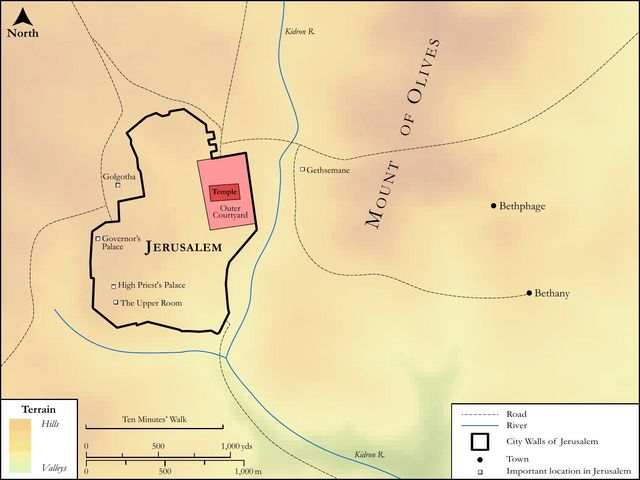
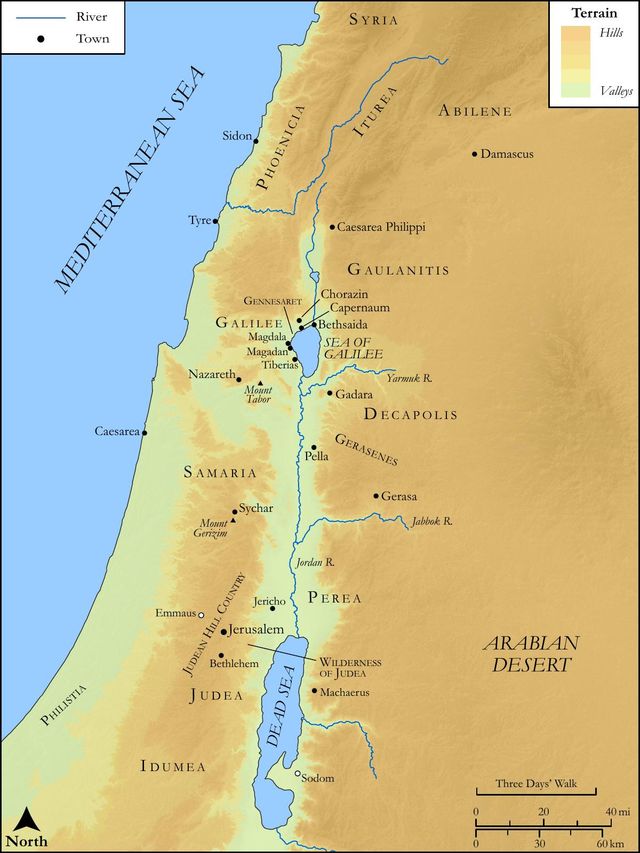
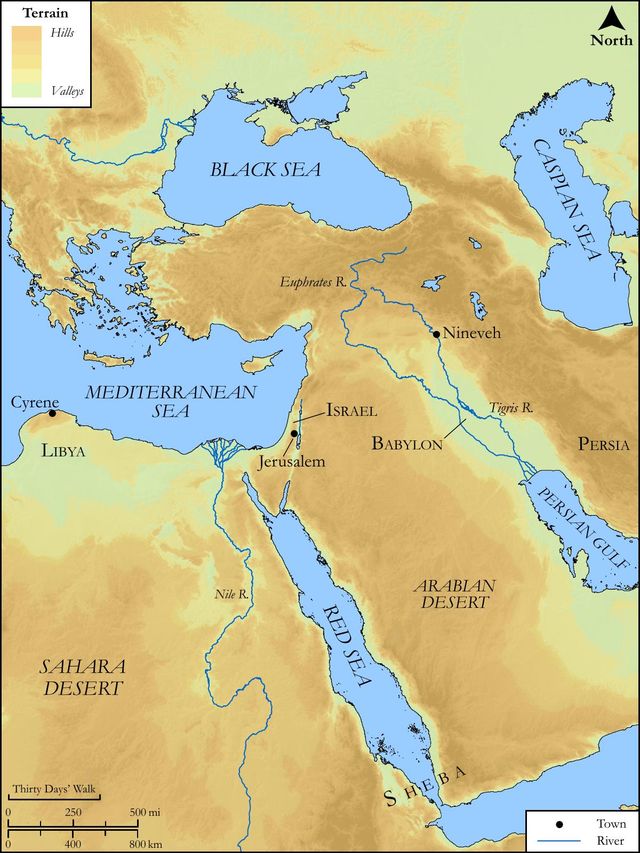
See on the biblical-era maps
Study this verse
Public-domain commentary
Matthew Henry
From his Commentary on the Whole Bible. Henry comments on passages, not single verses — this entry covers Matthew 11:7–15. His four-level outline is real structure in the source text, so it is rendered as structure.
We have here the high encomium which our Lord Jesus gave of John the Baptist; not only to revive his honour, but to revive his work. Some of Christ's disciples might perhaps take occasion from the question John sent, to reflect upon him, as weak and wavering, and inconsistent with himself, to prevent which Christ gives him this character. Note, It is our duty to consult the reputation of our brethren, and not only to remove, but to obviate and prevent, jealousies and ill thoughts of them; and we must take all occasions, especially such as discover any thing of infirmity, to speak well of those who are praiseworthy, and to give them that fruit of their hands. John the Baptist, when he was upon the stage, and Christ in privacy and retirement, bore testimony to Christ; and now that Christ appeared publicly, and John was under a cloud, he bore testimony to John. Note, They who have a confirmed interest themselves, should improve it for the helping of the credit and reputation of others, whose character claims it, but whose temper or present circumstances put them out of the way of it. This is giving honour to whom honour is due. John had abased himself to honour Christ (Joh 3:20, Joh 3:30, Mat 3:11), had made himself nothing, that Christ might be All, and now Christ dignifies him with this character. Note, They who humble themselves shall be exalted, and those that honour Christ he will honour; those that confess him before men, he will confess, and sometimes before men too, even in this world. John had now finished his testimony, and now Christ commends him. Note, Christ reserves honour for his servants when they have done their work, Joh 12:26.
Now concerning this commendation of John, observe,
I.That Christ spoke thus honourably of John, not in the hearing of John's disciples, but as they departed, just after they were gone, Luk 7:24. He would not so much as seem to flatter John, nor have these praises of him reported to him. Note, Though we must be forward to give to all their due praise for their encouragement, yet we must avoid every thing that looks like flattery, or may be in danger of puffing them up. They who in other things are mortified to the world, yet cannot well bear their own praise. Pride is a corrupt humour, which we must not feed either in others or in ourselves.
II.That what Christ said concerning John, was intended not only for his praise, but for the people's profit, to revive the remembrance of John's ministry, which had been well attended, but which was now (as other such things used to be) strangely forgotten: they did for a season, and but for a season, rejoice in his light, Joh 5:35. "Now, consider, what went ye out into the wilderness to see? Put this question to yourselves." 1. John preached in the wilderness, and thither people flocked in crowds to him, though in a remote place, and an inconvenient one. If teachers be removed into corners, it is better to go after them than to be without them. Now if his preaching was worth taking so much pains to hear it, surely it was worth taking some care to recollect it. The greater the difficulties we have broken through to hear the word, the more we are concerned to profit by it. 2. They went out to him to see him; rather to feed their eyes with the unusual appearance of his person, than to feed their souls with his wholesome instructions; rather for curiosity than for conscience. Note, Many that attend on the word come rather to see and be seen, than to learn and be taught, to have something to talk of, than to be made wise to salvation. Christ puts it to them, what went ye out to see? Note, They who attend on the word will be called to an account, what their intentions and what their improvements were. We think when the sermon is done, the care is over; no, then the greatest of the care begins. It will shortly be asked, "What business had you such a time at such an ordinance? What brought you thither? Was it custom or company, or was it a desire to honour God and get good? What have you brought thence? What knowledge, and grace, and comfort? What went you to see?" Note, When we go to read and hear the word, we should see that we aim right in what we do.
III.Let us see what the commendation of John was.
They know not what answer to make to Christ's question; well, says Christ, "I will tell you what a man John the Baptist was."
1."He was a firm, resolute man, and not a reed shaken with the wind; you have been so in your thoughts of him, but he was not so. He was not wavering in his principles, nor uneven in his conversation; but was remarkable for his steadiness and constant consistency with himself." They who are weak as reeds will be shaken as reeds; but John was strong in spirit, Eph 4:14. When the wind of popular applause on the one hand blew fresh and fair, when the storm of Herod's rage on the other hand grew fierce and blustering, John was still the same, the same in all weathers. The testimony he had borne to Christ was not the testimony of a reed, of a man who was of one mind today, and of another tomorrow; it was not a weather-cock testimony; no, his constancy in it is intimated (Joh 1:20); he confessed and denied not, but confessed, and stood to it afterwards, Joh 3:28. And therefore this question sent by his disciples was not to be construed into any suspicion of the truth of what he had formerly said: therefore the people flocked to him, because he was not as a reed. Note, There is nothing lost in the long run by an unshaken resolution to go on with our work, neither courting the smiles, nor fearing the frowns of men.
2.He was a self-denying man, and mortified to this world. "Was he a man clothed in soft raiment? If so, you would not have gone into the wilderness to see him, but to the court. You went to see one that had his raiment of camel's hair, and a leathern girdle about his loins; his mien and habit showed that he was dead to all the pomps of the world and the pleasures of sense; his clothing agreed with the wilderness he lived in, and the doctrine he preached there, that of repentance. Now you cannot think that he who was such a stranger to the pleasures of a court, should be brought to change his mind by the terrors of a prison, and now to question whether Jesus be the Messiah or not!" Note, they who have lived a life of mortification, are least likely to be driven off from their religion by persecution. He was not a man clothed in soft raiment; such there are, but they are in kings' houses. Note, It becomes people in all their appearances to be consistent with their character and their situation. They who are preachers must not affect to look like courtiers; nor must they whose lot is cast in common dwellings, be ambitious of the soft clothing which they wear who are in kings' houses. Prudence teaches us to be of a piece. John appeared rough and unpleasant, yet they flocked after him. Note, The remembrance of our former zeal in attending on the word of God, should quicken us to, and in, our present work: let it not be said that we have done and suffered so many things in vain, have run in vain and laboured in vain.
3.His greatest commendation of all was his office and ministry, which was more his honour than any personal endowments or qualifications could be; and therefore this is most enlarged upon in a full encomium.
(1.)He was a prophet, yea, and more than a prophet (Mat 11:9); so he said of him who was the great Prophet, to whom all the prophets bear witness. John said of himself, he was not that prophet, that great prophet, the Messiah himself; and now Christ (a very competent Judge) says of him, that he was more than a prophet. He owned himself inferior to Christ, and Christ owned him superior to all other prophets. Observe, The forerunner of Christ was not a king, but a prophet, lest it should seem that the kingdom of the Messiah had been laid in earthly power; but his immediate forerunner was, as such, a transcendent prophet, more than an Old Testament prophet; they all did virtuously, but John excelled them all; they saw Christ's day at a distance, and their vision was yet for a great while to come; but John saw the day dawn, he saw the sun rise, and told the people of the Messiah, as one that stood among them. They spake of Christ, but he pointed to him; they said, A virgin shall conceive: he said, Behold the Lamb of God!
(2.)He was the same that was predicted to be Christ's forerunner (Mat 11:10); This is he of whom it is written. He was prophesied of by the other prophets, and therefore was greater than they. Malachi prophesied concerning John, Behold, I send my messenger before thy face. Herein some of Christ's honour was put upon him, that the Old Testament prophets spake and wrote of him; and this honour have all the saints, that their names are written in the Lamb's book of life. It was great preferment to John above all the prophets, that he was Christ's harbinger. He was a messenger sent on a great errand; a messenger, one among a thousand, deriving his honour from his whose messenger he was: he is my messenger sent of God. His business was to prepare Christ's way, to dispose people to receive the Saviour, by discovering to them their sin and misery, and their need of a Saviour. This he had said of himself (Joh 1:23) and now Christ said it of him; intending hereby not only to put an honour upon John's ministry, but to revive people's regard to it, as making way for the Messiah. Note, Much of the beauty of God's dispensations lies in their mutual connection and coherence, and the reference they have one to another. That which advanced John above the Old Testament prophets was, that he went immediately before Christ. Note, The nearer any are to Christ, the more truly honourable they are.
(3.)There was not a greater born of women than John the Baptist, v. 11. Christ knew how to value persons according to the degrees of their worth, and he prefers John before all that went before him, before all that were born of women by ordinary generation. Of all that God had raised up and called to any service in his church, John is the most eminent, even beyond Moses himself; for he began to preach the gospel doctrine of remission of sins to those who are truly penitent; and he had more signal revelations from heaven than any of them had; for he saw heaven opened, and the Holy Ghost descend. He also had great success in his ministry; almost the whole nation flocked to him: none rose on so great a design, or came on so noble an errand, as John did, or had such claims to a welcome reception. Many had been born of women that made a great figure in the world, but Christ prefers John before them. Note, Greatness is not to be measured by appearances and outward splendour, but they are the greatest men who are the greatest saints, and the greatest blessings, who are, as John was, great in the sight of the Lord, Luk 1:15.
Yet this high encomium of John has a surprising limitation, notwithstanding, he that is least in the kingdom of heaven is greater than he. [1.] In the kingdom of glory. John was a great and good man, but he was yet in a state of infirmity and imperfection, and therefore came short of glorified saints, and the spirits of just men made perfect. Note, First, There are degrees of glory in heaven, some that are less than others there; though every vessel is alike full, all are not alike large and capacious. Secondly, The least saint in heaven is greater, and knows more, and loves more, and does more in praising God, and receives more from him, than the greatest in this world. The saints on earth are excellent ones (Psa 16:3), but those in heaven are much more excellent; the best in this world are lower than the angels (Psa 8:5), the least there are equal with the angels, which should make us long for that blessed state, where the weak shall be as David, Zac 12:8. [2.] By the kingdom of heaven here, is rather to be understood the kingdom of grace, the gospel dispensation in the perfection of its power and purity; and ho mikroteros - he that is less in that is greater than John. Some understand it of Christ himself, who was younger than John, and, in the opinion of some, less than John, who always spoke diminishingly of himself; I am a worm, and no man, yet greater than John; so it agrees with what John the Baptist said (Joh 1:15), He that cometh after me is preferred before me. But it is rather to be understood of the apostles and ministers of the New Testament, the evangelical prophets; and the comparison between them and John is not with respect to their personal sanctity, but to their office; John preached Christ coming, but they preached Christ not only come, but crucified and glorified. John came to the dawning of the gospel-day, and therein excelled the foregoing prophets, but he was taken off before the noon of that day, before the rending of the veil, before Christ's death and resurrection, and the pouring out of the Spirit; so that the least of the apostles and evangelists, having greater discoveries made to them, and being employed in a greater embassy, is greater than John. John did no miracles; the apostles wrought many. The ground of this preference is laid in the preference of the New Testament dispensation to that of the Old Testament. Ministers of the New Testament therefore excel, because their ministration does so, Co2 3:6, etc. John was a maximum quod sic - the greatest of his order; he went to the utmost that the dispensation he was under would allow; but minimum maximi est majus maximo minimi - the least of the highest order is superior to the first of the lowest; a dwarf upon a mountain sees further than a giant in the valley. Note, All the true greatness of men is derived fRom. and denominated by, the gracious manifestation of Christ to them. The best men are no better than he is pleased to make them. What reason have we to be thankful that our lot is cast in the days of the kingdom of heaven, under such advantages of light and love! And the greater the advantages, the greater will the account be, if we receive the grace of God in vain.
(4.)The great commendation of John the Baptist was, that God owned his ministry, and made it wonderfully successful for the breaking of the ice, and the preparing of people for the kingdom of heaven. From the days of the first appearing of John the Baptist, until now (which was not much above two years), a great deal of good was done; so quick was the motion when it came near to Christ the Centre; The kingdom of heaven suffereth violence - biazetai - vim patitur, like the violence of an army taking a city by storm, or of a crowd bursting into a house, so the violent take it by force. The meaning of this we have in the parallel place, Luk 16:16. Since that time the kingdom of God is preached, and every man presseth into it. Multitudes are wrought upon by the ministry of John, and become his disciples. And it is
[1.]An improbable multitude. Those strove for a place in this kingdom, that one would think had no right nor title to it, and so seemed to be intruders, and to make a tortuous entry, as our law calls it, a wrongful and forcible one. When the children of the kingdom are excluded out of it, and many come into it from the east and the west, then it suffers violence. Compare this with Mat 21:31, Mat 21:32. The publicans and harlots believed John, whom the scribes and Pharisees rejected, and so went into the kingdom of God before them, took it over their heads, while they trifled. Note, It is no breach of good manners to go to heaven before our betters: and it is a great commendation of the gospel from the days of its infancy, that it has brought many to holiness that were very unlikely.
[2.]An importunate multitude. This violence denotes a strength, and vigour, and earnestness of desire and endeavour, in those who followed John's ministry, else they would not have come so far to attend upon it. It shows us also, what fervency and zeal are required of all those who design to make heaven of their religion. Note, They who would enter into the kingdom of heaven must strive to enter; that kingdom suffers a holy violence; self must be denied, the bent and bias, the frame and temper, of the mind must be altered; there are hard sufferings to be undergone, a force to be put upon the corrupt nature; we must run, and wrestle, and fight, and be in an agony, and all little enough to win such a prize, and to get over such opposition from without and from within. The violent take it by force. They who will have an interest in the great salvation are carried out towards it with a strong desire, will have it upon any terms, and not think them hard, nor quit their hold without a blessing, Gen 32:26. They who will make their calling and election sure must give diligence. The kingdom of heaven was never intended to indulge the ease of triflers, but to be the rest of them that labour. It is a blessed sight; Oh that we could see a greater number, not with an angry contention thrusting others out of the kingdom of heaven, but with a holy contention thrusting themselves into it!
(5.)The ministry of John was the beginning of the gospel, as it is reckoned, Mar 1:1; Act 1:22. This is shown here in two things:
[1.]In John the Old Testament dispensation began to die, Mat 11:13. So long that ministration continued in full force and virtue, but then it began to decline. Though the obligation of the law of Moses was not removed till Christ's death, yet the discoveries of the Old Testament began to be superseded by the more clear manifestation of the kingdom of heaven as at hand. Because the light of the gospel (as that of nature) was to precede and make way for its law, therefore the prophecies of the Old Testament came to an end (finis perficiens, not interficiens - an end of completion, not of duration), before the precepts of it; so that when Christ says, all the prophets and the law prophesied until John, he shows us, First, How the light of the Old Testament was set up; it was set up in the law and the prophets, who spoke, though darkly, of Christ and his kingdom. Observe, The law is said to prophesy, as well as the prophets, concerning him that was to come. Christ began at Moses (Luk 24:27); Christ was foretold by the dumb signs of the Mosaic work, as well as by the more articulate voices of the prophets, and was exhibited, not only in the verbal predictions, but in the personal and real types. Blessed be God that we have both the New Testament doctrine to explain the Old Testament prophecies, and the Old Testament prophecies to confirm and illustrate the New Testament doctrine (Heb 1:1); like the two cherubim, they look at each other. The law was given by Moses long ago, and there had been no prophets for three hundred years before John, and yet they are both said to prophecy until John, because the law was still observed, and Moses and the prophets still read. Note, The scripture is teaching to this day, though the penmen of it are gone. Moses and the prophets are dead; the apostles and evangelists are dead (Zac 1:5), but the word of the Lord endures for ever (Pe1 1:25); the scripture is speaking expressly, though the writers are silent in the dust. Secondly, How this light was laid aside: when he says, they prophesied until John, he intimates, that their glory was eclipsed by the glory which excelled; their predictions superseded by John's testimony, Behold the Lamb of God! Even before the sun rises, the morning light makes candles to shine dim. Their prophecies of a Christ to come became out of date, when John said, He is come.
[2.]In him the New Testament day began to dawn; for (Mat 11:14) This is Elias, that was for to come. John was as the loop that coupled the two Testaments; as Noah was Fibula utriusque mundi - the link connecting both worlds, so was he utriusque Testamenti - the link connecting both Testaments. The concluding prophecy of the Old Testament was, Behold, I will send you Elijah, Mal 4:5, Mal 4:6. Those words prophesied until John, and then, being turned into a history, they ceased to prophecy. First, Christ speaks of it as a great truth, that John the Baptist is the Elias of the New Testament; not Elias in propria persona - in his own person, as the carnal Jews expected; he denied that (Joh 1:21), but one that should come in the spirit and power of Elias (Luk 1:17), like him in temper and conversation, that should press repentance with terrors, and especially as it is in the prophecy, that should turn the hearts of the fathers to the children. Secondly, He speaks of it as a truth, which would not be easily apprehended by those whose expectations fastened upon the temporal kingdom of the Messiah, and introductions to it agreeable. Christ suspects the welcome of it, if ye will receive it. Not but that it was true, whether they would receive it or not, but he upbraids them with their prejudices, that they were backward to receive the greatest truths that were opposed to their sentiments, though never so favourable to their interests. Or, "If you will receive him, or if you will receive the ministry of John as that of the promised Elias, he will be an Elias to you, to turn you and prepare you for the Lord," Note, Gospel truths are as they are received, a savour of life or death. Christ is a Saviour, and John an Elias, to those who will receive the truth concerning them.
Lastly, Our Lord Jesus closes this discourse with a solemn demand of attention (Mat 11:15): He that hath ears to hear, let him hear; which intimates, that those things were dark and hard to be understood, and therefore needed attention, but of great concern and consequence, and therefore well deserved it. "Let all people take notice of this, if John be the Elias prophesied of, then certainly here is a great revolution on foot, the Messiah's kingdom is at the door, and the world will shortly be surprised into a happy change. These are things which require your serious consideration, and therefore you are all concerned to hearken to what I say." Note, The things of God are of great and common concern: every one that has ears to hear any thing, is concerned to hear this. It intimates, that God requires no more from us but the right use and improvement of the faculties he has already given us. He requires those to hear that have ears, those to use their reason that have reason. Therefore people are ignorant, not because they want power, but because they want will; therefore they do not hear, because, like the deaf adder, they stop their ears.
Historical interpretation
Eleven Centuries of Reception
16 surviving comments on this verse. Each one is dated, so this reads as a timeline rather than a list.
Select a marker to jump to its quote. Markers stagger vertically where authors wrote within a few decades of each other.
From which fact is gathered an additional suggestion, that, since the opposers of the Lord refused to be baptized, they who followed the Lord were baptized, and were not like-minded with their own rivals: especially when, if there were any one to whom they clave, the Lord had exalted John above him (by the testimony) saying," Among them who are born of women there is none greater than John the Baptist."
The kingdom of heaven is Jesus the Christ himself, who exhorts all people to repentance and draws them to himself by love.
Otherwise; The Lord bade His Apostles go to the lost sheep of Israel, but all their preaching conveyed profit to the publicans and sinners. Therefore the kingdom suffers violence, and the violent take it by force, for the glory of Israel, due to the Fathers, foretold by the Prophets, offered by Christ, is entered and held by force by the might of the Gentiles.
"Verily I say unto you, among them that are born of women, there hath not arisen a greater than John the Baptist."
Now what He said is like this: "woman hath not borne a greater than this man." And His very sentence is indeed sufficient; but if thou art minded to learn from facts also, consider his table, his manner of life, the height of his soul. For he so lived as though he were in heaven: and having got above the necessities of nature, he travelled as it were a new way, spending all his time in hymns and prayers, and holding intercourse with none among men, but with God alone continually. For he did not so much as see any of his fellow-servants, neither was he seen by any one of them; he fed not on milk, he enjoyed not the comfort of bed, or roof, or market, or any other of the things of men; and yet he was at once mild and earnest. Hear, for example, how considerately he reasons with his own disciples, courageously with the people of the Jews, how openly with the king. For this cause He said also, "There hath not risen among them that are born of women a greater than John the Baptist."
But lest the exceeding greatness of His praises should produce a sort of extravagant feeling, the Jews honoring John above Christ; mark how He corrects this also. For as the things which edified His own disciples did harm to the multitudes, they supposing Him an easy kind of person; so again the remedies employed for the multitudes might have proved more mischievous, they deriving from Christ's words a more reverential opinion of John than of Himself.
Wherefore this also, in an unsuspected way, He corrects by saying, "He that is less, in the kingdom of Heaven is greater than he." Less in age, and according to the opinion of the multitude, since they even called Him "a gluttonous man and a winebibber;" and, "Is not this the carpenter's son?" and on every occasion they used to make light of Him.
"What then?" it may be said, "is it by comparison that He is greater than John?" Far from it. For neither when John saith, "He is mightier than I," doth he say it as comparing them; nor Paul, when remembering Moses he writes, "For this man was counted worthy of more glory than Moses," doth he so write by way of comparison; and He Himself too, in saying, "Behold, a greater than Solomon is here," speaks not as making a comparison.
Or if we should even grant that this was said by Him in the way of comparison, this was done in condescension, because of the weakness of the hearers. For the men really had their gaze very much fixed upon John; and then he was rendered the more illustrious both by his imprisonment, and by his plainness of speech to the king; and it was a great point for the present, that even so much should be received among the multitude. And so too, the Old Testament uses in the same way to correct the souls of the erring, by putting together in a way of comparison things that cannot be compared; as when it saith, "Among the gods there is none like unto Thee, O Lord:" and again, "There is no god like our God."
And moreover His saying, "There hath not risen among them that are born of women a greater than John," suited one contrasting John with Himself, and thus tacitly excepting Himself. For though He too were born of a woman, yet not as John, for He was not a mere man, neither was He born in like manner as a man, but by a strange and wondrous kind of birth.
"And from the days of John the Baptist," saith He, "until now, the kingdom of heaven suffereth violence, and the violent take it by force."
And what sort of connexion may this have with what was said before? Much, assuredly, and in full accordance therewith. Yea, by this topic also He proceeds to urge and press them into the faith of Himself; and at the same time likewise, He is speaking in agreement with what had been before said by John. "For if all things are fulfilled even down to John, I am He that should come."
"For all the prophets," saith He, "and the law prophesied until John."
For the prophets would not have ceased, unless I were come. Expect therefore nothing further, neither wait for any one else. For that I am He is manifest both from the prophets ceasing, and from those that every day "take by force" the faith that is in me. For so manifest is it and certain, that many even take it by force. Why, who hath so taken it? tell me. All who approach it with earnestness of mind.
Then He states also another infallible sign, saying, "If ye will receive it, he is Elias, which was for to come." For "I will send you," it is said, "Elias the Tishbite, who shall turn the heart of the father to the children." This man then is Elias, if ye attend exactly, saith He. For "I will send," saith He, "my messenger before Thy face."
And well hath He said, "If ye will receive it," to show the absence of force. For I do not constrain, saith He. And this He said, as requiring a candid mind, and showing that John is Elias, and Elias John. For both of them received one ministry, and both of them became forerunners. Wherefore neither did He simply say, "This is Elias," but, "If ye are willing to receive it, this is he," that is, if with a candid mind ye give heed to what is going on. And He did not stop even at this, but to the words, "This is Elias, which was for to come," He added, to show that understanding is needed, "He that hath ears to hear, let him hear."
Now He used so many dark sayings, to stir them up to inquiry. And if not even so were they awakened, much more, had all been plain and clear. For this surely no man could say, that they dared not ask Him, and that He was difficult of approach. For they that were asking him questions, and tempting Him about common matters, and whose mouths were stopped a thousand times, yet they did not withdraw from Him; how should they but have inquired of Him, and besought Him touching the indispensable things, had they indeed been desirous to learn? For if concerning the matters of the law they asked, "Which is the first commandment," and all such questions, although there was of course no need of His telling them that; how should they but ask the meaning of what He Himself said, for which also He was bound to give account in His answers? And especially when it was He Himself that was encouraging and drawing them on to do this. For by saying, "The violent take it by force," He stirs them up to earnestness of mind; and by saying, "He that hath ears to hear, let him hear," He doth just the same thing.
Having first delivered the Prophet's testimony in praise of John, He rested not there, but added His own decision respecting him, saying, Among them that are born of women there has not arisen a greater than John the Baptist.
That the abundance of this praise might not beget a wrong inclination in the Jews to set John above Christ, he corrects this, saying, He that is least in the kingdom of heaven is greater than he.
The kingdom of heaven, that is, in the spiritual world, and all relating thereto. But some say that Christ spoke this of the Apostles.
Or; All who come thereto with haste take by force the kingdom of God through the faith of Christ; whence He says, from, the days of John until now, and thus He brings them in haste to His faith, and at the same time adds support to those things which had been spoken by John. For if all things were fulfilled until John, then is Jesus He that should come; wherefore He adds, All the Prophets and the Law prophesied until John.
Then He adds another token of him, saying, And if ye will receive it, this is Elias who was to come. (Mal. 4:5) The Lord speaks in Malachias, I will send you Elias the Tishbite; and of the same again, Behold, I send my messenger before thy face.
If ye will receive it, showing their freedom, and requiring of them a willing mind. John the Baptist is Elias, and Elias is John, because both were forerunners of Christ.
He is then set before all those that are born in wedlock, and not before Him who was born of the Virgin and the Holy Spirit; yet these words, there has not arisen a greater than John the Baptist, do not imply that John is to be set above the Prophets and Patriarchs and all others, but only makes him equal to the rest; for it does not follow that because others are not greater than him, that therefore he is greater than others.
We understand it simply, that every saint who is already with the Lord is greater than he who yet stands in the battle; for it is one thing to have gained the crown of victory, another to be yet fighting in the field.
Because John the Baptist was the first who preached repentance to the people, saying, Repent ye, for the kingdom of heaven is at hand: rightly therefore from that day forth it may be said, that the kingdom of heaven suffereth violence, and the violent take it by force. For great indeed is the violence, when we who are born of earth, seek an abode in heaven, and obtain by excellence what we have not by nature.
Not that He cuts off all Prophets after John; for we read in the Acts of the Apostles that Agabus prophesied, and also four virgins daughters of Philip; but He means that the Law and the Prophets whom we have written, whatever they have prophesied, they have prophesied of the Lord. That He says, Prophesied until John, shows that this was now the time of Christ's coming; and that whom they had foretold should come, Him John showed to be already come.
John then is said to be Elias, not according to the foolish philosophers, and certain heretics who bring forward their metempsychosis, or passing of the soul from one body to another; but because (as it is in another passage of the Gospel) he came in the spirit and power of Elias, and had the same grace and measure of the Holy Spirit. But in austerity of life, and fortitude of spirit, Elias and John were alike; they both dwelt in the desert, both were girded with a girdle of skins; because he reproved Ahab and Jezebel for their wickedness, Elias was compelled to fly; because he condemned the unlawful union of Herod and Herodias, John is beheaded.
That He says, This is Elias, is figurative, and needs to be explained, as what follows, shews; He that hath ears to hear, let him hear.
(Verse 11) Truly I tell you, among those born of women there has not risen anyone greater than John the Baptist; yet whoever is least in the kingdom of heaven is greater than he. From the days of John the Baptist until now, the kingdom of heaven has been subjected to violence, and violent people have been raiding it. For it does not immediately follow that if others are not greater than him, he is greater than others; but that he has equality with the other saints.
But whoever is lesser in the kingdom of heaven is greater than him. Many want to understand this about the Savior, that whoever is lesser in time is greater in dignity. But let us understand simply: that every saint, who is already with God, is greater than him who still stands in battle. For it is one thing to possess the crown of victory, another to still fight in the battle. Some want to receive the last angel in heaven ministering to the Lord as better than any first man who dwells on earth.
“Yet he who is least in the kingdom of heaven is greater than he.” Now, many would like to interpret this with reference to the Savior, as meaning that the one lesser in age is the greater in worth. However, let us interpret it simply to mean that every saint who is already with God is greater than anyone who remains expectant, as yet in the battle. For it is one thing to possess the crown of victory, another to be still fighting in the ranks. Some conclude that the very newest angel who serves God in heaven is greater than any one, even the best, who dwells on the earth still in expectation.
If John is being judged against other people according to being born from a woman, he will be found to be the greatest of them all. He alone was filled with the Holy Spirit inside his mother’s womb, so that he “leaped,” and his mother prophesied because she partook in this as well. But if John is judged in relation to those who are to partake of the Spirit in the kingdom of heaven, Jesus says, he will be found to be least. Thus Jesus says that John by no means partakes of such great grace as those who will be reborn into immortality after Jesus’ resurrection from the dead and that John will experience physical death. At that time, however, the Spirit’s abundance toward people will be so great that no one who has partaken of even the least part of it can afterward fall into death.
(Cont. Adv. Leg. et Proph. ii. 5.) The heretic argues from this verse to prove, that since John did not belong to the kingdom of heaven, therefore much less did the other Prophets of that people, than whom John is greater. But these words of the Lord may be understood in two ways. Either the kingdom of heaven is something which we have not yet received, that, namely, of, which He speaks, Come, ye blessed of my Father, receive the kingdom, (Mat. 25:34) because they in it are Angels, therefore the least among them is greater than a righteous man who has a corruptible body. Or if we must understand the kingdom of heaven of the Church, whose children are all the righteous men from the beginning of the world until now, then the Lord speaks this of Himself, who was after John in the time of His birth, but greater in respect of His divine nature and supreme power. According then to the first interpretation it will be pointed, He who is least in the kingdom of heaven, is greater than he; according to the second, He who is less than he, is in the kingdom of heaven greater than he.
But seeing that righteousness has so great deepness that none can be perfect therein but God only, I suppose that all the saints tried by the keenness of the divine judgment, rank in a fixed order, some lower, some before other. Whence we understand that He that hath none greater than Himself, is greater than all.
As much as to say, Whoso has ears of the heart to hear, that is, to understand, let him understand; for He did not say that John was Elias in person, but in the Spirit.
(ubi. sup.) Also John was not clothed in soft raiment, that is, he did not encourage sinners in their sinful life by speaking smooth things, but rebuked them with sharpness and rigour, saying, Generation of vipers, &c. (Mat. 3:7)
(Hom. in Ev. xx. 14.) By the kingdom of heaven is meant the heavenly throne, whither when sinners defiled with any evil deed return in penitence, and amend themselves, they enter as sinners into the place of another, and take by violence the kingdom of heaven.
As much as to say; What need to recount one by one the praises of John the Baptist; I say verily unto you, Among them that are born of women, &c. He says women, not virgins. If the same word mulier, which denotes a married person, is any where in the Gospels applied to Mary, it should be known that the translator has there used 'mulier' for 'femina;' as in that, Woman, behold thy son! (John 19:26)
He declares this with certainty, that there is no one greater than John. But by saying "born of women" He excludes Himself, for Christ was born of a virgin, not of a woman, that is, one who is married.
Since He has extolled the praises of John, lest they think that John is greater than He says here more clearly, I am the younger in age and the lesser in your opinion, yet I am greater than he in the kingdom of heaven, that is, in regards to spiritual and heavenly good things. For here I appear less than he, both because his birth preceded Mine and because he appears great to you, but there in the kingdom of heaven I am greater.
(non occ.) That what He had last said should not lead any to suppose that John was an alien from the kingdom of heaven, He corrects this by adding, From the days of John the Baptist until now, the kingdom of heaven suffereth violence, and the violent take it by force.
Continue studying Matthew 11:11 across the web’s major study libraries — every link below opens this exact verse, chapter, or book on the destination site.
Read & Compare
 BibleGatewayThis verse in more than 200 translations and 70 languages.
 Bible.comThe YouVersion reader — hundreds of translations, reading plans, and highlights.
 ESV.orgCrossway's official English Standard Version reader.
 NET BibleThe NET translation with 60,000+ translators' notes on every rendering decision.
 STEP BibleTyndale House's free study tool — original text, vocabulary, and scholarly resources.
 BibliaLogos Bible Software's free web reader.
 USCCBThe New American Bible (Revised Edition) with the U.S. bishops' study notes.
Commentaries
 BibleHub CommentariesDozens of classic commentaries on this verse, gathered on one page.
 StudyLightMore than 100 commentary sets — the largest collection on the web.
 BibleRefPlain-English commentary on what this verse means, verse by verse.
 Enduring WordDavid Guzik's free commentary on this chapter, widely used by Bible teachers.
 Bible Study ToolsVerse commentary alongside Greek and Hebrew study aids.
Original Language & Research
- BibleHub InterlinearThe verse word by word — original language, transliteration, and English.
- BibleHub LexiconEvery word's original-language definition and Strong's entry.
 Blue Letter BibleDeep-study tools — Strong's numbers, concordance, and word studies.
 CNTR CollationThe earliest Greek manuscripts of this verse, collated letter by letter.
Sermons, Hymns & Audio


TrulyRandomVerse is not affiliated with these sites and doesn’t control their content. They’re linked because they’re genuinely useful.
Summary
Matthew 11:11 presents a profound and seemingly paradoxical declaration from Jesus concerning John the Baptist, affirming his unparalleled greatness among all born of women while simultaneously asserting that the least in the kingdom of heaven holds a superior position. This verse serves as a pivotal statement, acknowledging John's unique and climactic role as the final and greatest prophet of the Old Covenant era, while simultaneously highlighting the qualitative and positional privilege afforded to those who enter into the inaugurated spiritual reign of God through Christ, ushering in the New Covenant.
Context
ShowHideLiterary Context
This verse is embedded within Jesus' discourse regarding John the Baptist, which begins in Matthew 11:2. John, imprisoned, sends his disciples to ask Jesus, "Are you the one who is to come, or should we expect someone else?" Jesus responds by pointing to His miraculous works, fulfilling Old Testament prophecies, and then turns to commend John before the crowds. He describes John as more than a prophet, identifying him as the messenger prophesied to prepare the way for the Messiah (Malachi 3:1). The statement in Matthew 11:11 acts as a profound summary of John's unique historical and redemptive-historical position, serving as a bridge that both culminates the Old Covenant prophetic tradition and introduces the superior reality of the New Covenant kingdom that Jesus is inaugurating.
Historical & Cultural Context
John the Baptist operated within a Jewish society deeply steeped in prophetic expectation, particularly the return of Elijah before the coming of the Messiah (Malachi 4:5-6). His ascetic lifestyle, wilderness ministry, and call to repentance through baptism resonated with ancient prophetic traditions and prepared the people for the coming kingdom. The concept of the "kingdom of heaven" (or "kingdom of God" in other Gospels) was central to Jewish eschatological hopes, though many expected a political, earthly kingdom. Jesus' teaching here redefines this kingdom as a spiritual reality, initiated by His presence and accessible through faith, fundamentally shifting the understanding of God's reign from a future, external event to a present, internal reality.
Key Themes
ShowHideMatthew 11:11 contributes significantly to several key themes within Matthew's Gospel and broader biblical theology. Firstly, it underscores John the Baptist's unique and climactic role as the final and greatest prophet of the Old Covenant, the direct forerunner to the Messiah, who prepared the way for Jesus (Matthew 3:1-3). Secondly, it introduces the inauguration of the Kingdom of Heaven, emphasizing that with Christ's advent, a new spiritual order has begun, offering greater access to God and His blessings than previously available. This highlights the transition from the Old Covenant to the New Covenant, where the Law and Prophets found their fulfillment in Christ (Matthew 5:17). Finally, the verse subtly introduces the theme of paradox in God's kingdom, where conventional greatness is re-evaluated in light of spiritual privilege and proximity to Christ.
Exposition and Analysis
ShowHideKey Word Analysis
ShowHideFrom the verb "to beget" or "to be born," this word emphasizes humanity's common origin and natural generation. Jesus' use of "among them that are born of women" underscores that John's greatness is unparalleled within the sphere of human existence, highlighting his unique divine appointment and prophetic stature among all individuals who have entered the world through natural birth.
This is the comparative form of "great," signifying "larger," "more significant," or "superior." In the first part of the verse, it affirms John's supreme standing among all prophets and people of the Old Covenant. In the second part, its reapplication to the "least in the kingdom of heaven" highlights a qualitative difference in privilege and access to God's redemptive realities, not necessarily a personal moral superiority over John.
This term denotes "royalty," "rule," or "realm." In the phrase "kingdom of heaven," it refers to God's sovereign reign, particularly as it is manifested and inaugurated through the person and work of Jesus Christ. This kingdom is not merely a future hope but a present spiritual reality into which believers enter through faith, granting them unique blessings and a closer relationship with God.
Verse Breakdown
ShowHide"Verily I say unto you"
This solemn introductory phrase, "Amen, I say to you," is characteristic of Jesus' teaching, underscoring the absolute truth and authority of His subsequent statement. It commands attention and emphasizes the profound significance of what is about to be revealed, marking it as a divine pronouncement.
"Among them that are born of women there hath not risen a greater than John the Baptist"
This declaration unequivocally establishes John's preeminent position in redemptive history. It signifies that of all humanity, from the beginning of time up to John's ministry, no one had a more significant or divinely appointed role. John was the final and greatest prophet of the Old Covenant, the one uniquely chosen to prepare the way for the Messiah, bridging the gap between the Law and the Gospel.
"notwithstanding he that is least in the kingdom of heaven is greater than he"
This is the striking paradox. "Notwithstanding" (Greek dé) introduces a strong contrast. While John is supreme in the old order, the "least" (Greek mikrós, "small" or "insignificant") person who has entered the "kingdom of heaven" is "greater." This "greater" refers to positional privilege and spiritual insight, not moral superiority. Those in the kingdom of heaven experience the direct reign of God through Christ, the indwelling of the Holy Spirit, and a clearer revelation of God's redemptive plan—privileges not fully accessible even to John under the Old Covenant.
Literary Devices
ShowHideMatthew 11:11 is rich in Contrast, juxtaposing John's unparalleled greatness within the Old Covenant era with the even greater privilege of those within the New Covenant "kingdom of heaven." This creates a powerful Paradox, where the "least" in one sphere is deemed "greater" than the "greatest" in another, challenging conventional notions of status and highlighting the radical nature of God's kingdom. Jesus' initial declaration about John's greatness can also be seen as a form of Hyperbole, an intentional overstatement to emphasize John's unique and climactic role, setting the stage for the even more astonishing truth about kingdom privilege.
Theological and Thematic Connections
ShowHideThis verse powerfully articulates the monumental shift in redemptive history brought about by Christ's advent. It signifies the transition from the preparatory era of the Law and the Prophets, which culminated in John the Baptist, to the inaugurated reality of God's direct reign through His Son. While John faithfully fulfilled his role as the forerunner, those who enter the kingdom of heaven through faith in Christ are granted a superior spiritual standing, marked by direct access to God, the indwelling of the Holy Spirit, and a fuller revelation of God's saving grace. This "greater" status is not earned but is a gift of God's grace, underscoring the immense privilege and profound blessings of the New Covenant.
Reflection and Application
ShowHideMatthew 11:11 invites us to a profound appreciation for the spiritual blessings and privileges we enjoy as believers in Christ. While we honor the faithfulness and unique calling of John the Baptist and the prophets who preceded him, we must recognize that we live in an era of unprecedented access to God's presence and revelation through the New Covenant. This "greater" status is not a license for spiritual pride but a call to deeper humility and responsibility. It means we have been entrusted with a clearer understanding of God's redemptive plan and the power of the Holy Spirit to live out kingdom values. Therefore, our lives should reflect the profound grace we have received, compelling us to live in gratitude, obedience, and active participation in the advancement of God's kingdom on earth.
Questions for Reflection
ShowHideFAQ
ShowHideDoes this verse imply that John the Baptist is not saved or is somehow inferior in God's eyes?
ShowHideNo, this verse does not imply that John the Baptist is not saved or is morally inferior. Jesus' statement is a declaration of John's unparalleled greatness within the Old Covenant dispensation. The "greater" status of the "least in the kingdom of heaven" refers to a positional and qualitative privilege under the New Covenant, not a judgment on John's personal piety or salvation. John was a righteous man, filled with the Holy Spirit from birth (Luke 1:15), and faithfully fulfilled his divine calling. The "greater" status of New Covenant believers lies in their direct access to God through Christ's finished work, the indwelling of the Holy Spirit, and a fuller revelation of God's redemptive plan, which was not fully unveiled until Christ's death and resurrection.
Christ-Centered Fulfillment
ShowHideMatthew 11:11 finds its ultimate fulfillment in the person and work of Jesus Christ. John the Baptist, though the greatest of all prophets born of women, was fundamentally a pointer to Christ, the one who was "coming after me, who is mightier than I" (Matthew 3:11). The "kingdom of heaven" that grants superior privilege is not an abstract concept but the very reign of God inaugurated and embodied by Jesus Himself. It is through Christ's perfect life, atoning death, and glorious resurrection that the new covenant was established (Hebrews 8:6), granting believers a direct, intimate relationship with God that surpasses even the closest proximity enjoyed by Old Testament saints. The "least" in this kingdom is "greater" because they are united to Christ, indwelt by His Spirit, and beneficiaries of His complete revelation and redemption. Our "greatness" is entirely derived from our union with the One who is truly the greatest, the King of this very kingdom, Jesus Christ, in whom "all the fullness of God was pleased to dwell" (Colossians 1:19).