


Matthew 21:32
Bible text: King James Version (1769 Blayney text) · Public domain
Bible text: King James Version with Strong's numbers · Public domain
Bible text: Berean Standard Bible · Public domain
Bible text: American Standard Version (1901) · Public domain
Bible text: World English Bible, Messianic edition · Public domain
Bible text: Geneva Bible (1599) · Public domain
Bible text: Young's Literal Translation · Public domain
- ἦλθενēlthenCameG2064V-2AAI-3SVerb 2nd Aorist Active Indicative 3rd Singular
- γὰρgarforG1063CONJConjunction
- ἸωάννηςIōannēsJohnG2491N-NSM-PNoun Nominative Singular Masculine Individual
- πρὸςprostoG4314PREPPreposition
- ὑμᾶςhumasyouG4771P-2APPersonal pronoun Accusative 2nd Plural
- ἐνenin [the]G1722PREPPreposition
- ὁδῷhodōwayG3598N-DSFNoun Dative Singular Feminine
- δικαιοσύνηςdikaiosunēsof righteousnessG1343N-GSFNoun Genitive Singular Feminine
- καὶkaiandG2532CONJConjunction
- οὐκouknotG3756PRT-NNegative Particle Negative
- ἐπιστεύσατεepisteusateyou did believeG4100V-AAI-2PVerb Aorist Active Indicative 2nd Plural
- αὐτῷ·autōin himG846P-DSMPersonal pronoun Dative Singular Masculine
- οἱhoi<the>G3588T-NPMDefinite article Nominative Plural Masculine
- δὲdehoweverG1161CONJConjunction
- τελῶναιtelōnaithe tax collectorsG5057N-NPMNoun Nominative Plural Masculine
- καὶkaiandG2532CONJConjunction
- αἱhaitheG3588T-NPFDefinite article Nominative Plural Feminine
- πόρναιpornaiprostitutesG4204N-NPFNoun Nominative Plural Feminine
- ἐπίστευσανepisteusanbelievedG4100V-AAI-3PVerb Aorist Active Indicative 3rd Plural
- αὐτῷautōin himG846P-DSMPersonal pronoun Dative Singular Masculine
- ὑμεῖςhumeisyou yourselvesG4771P-2NPPersonal pronoun Nominative 2nd Plural
- δὲdethenG1161CONJConjunction
- ἰδόντεςidonteshaving seenG1492V-2AAP-NPMVerb 2nd Aorist Active Participle Nominative Plural Masculine
- οὐδὲoudenot evenG3761CONJ-NConjunction Negative
- μετεμελήθητεmetemelēthētedid repentG3338V-AOI-2PVerb Aorist Passive Deponent Indicative 2nd Plural
- ὕστερονhusteronafterwardG5306A-ASN-CAdjective Accusative Singular Neuter Comparative
- τοῦtou<the>G3588T-GSNDefinite article Genitive Singular Neuter
- πιστεῦσαιpisteusaito believeG4100V-AANVerb Aorist Active Infinitive
- αὐτῷautōhimG846P-DSMPersonal pronoun Dative Singular Masculine
English is a literal word-by-word gloss of the Greek, not the KJV's wording. Why?
This is the original text the KJV's translators worked from — each Greek word with its own literal English meaning in this verse, prepared by scholars at Tyndale House, Cambridge. The KJV translates whole sentences, not word by word, so its wording differs: one Greek word can become several English words, and the KJV may choose “charity” where the gloss reads “love”. Both are faithful — they answer different questions. For the KJV's own rendering, switch to the KJV text.
Details
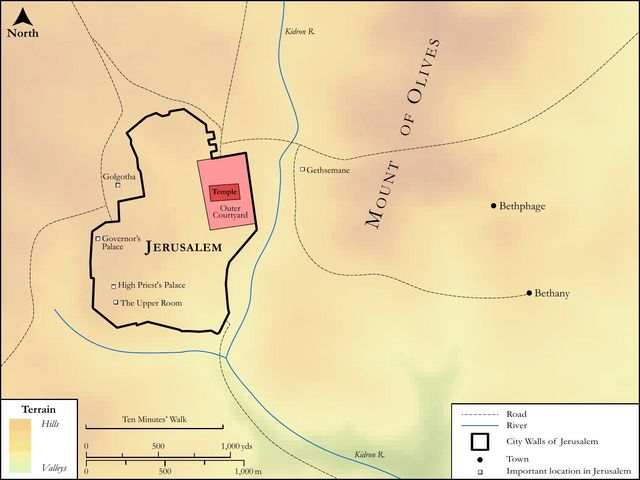
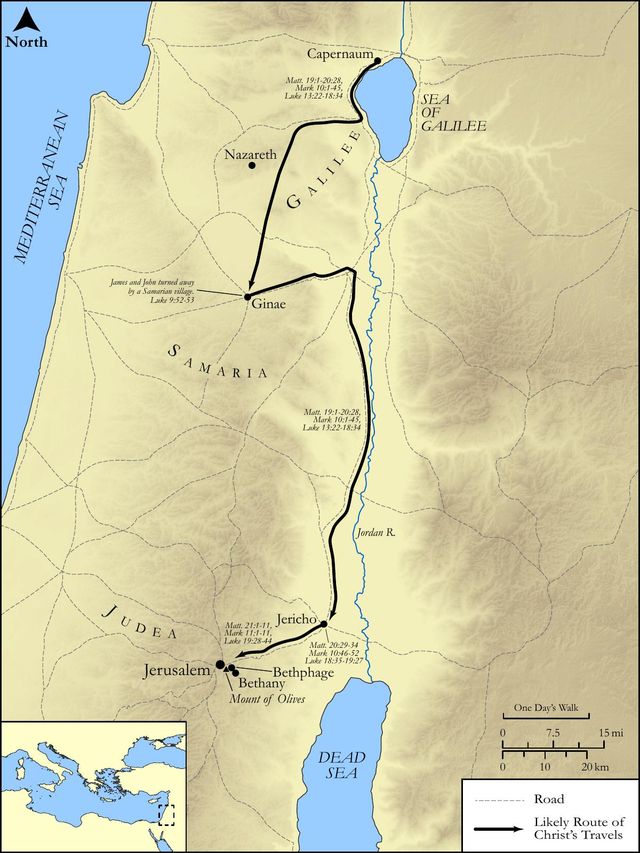
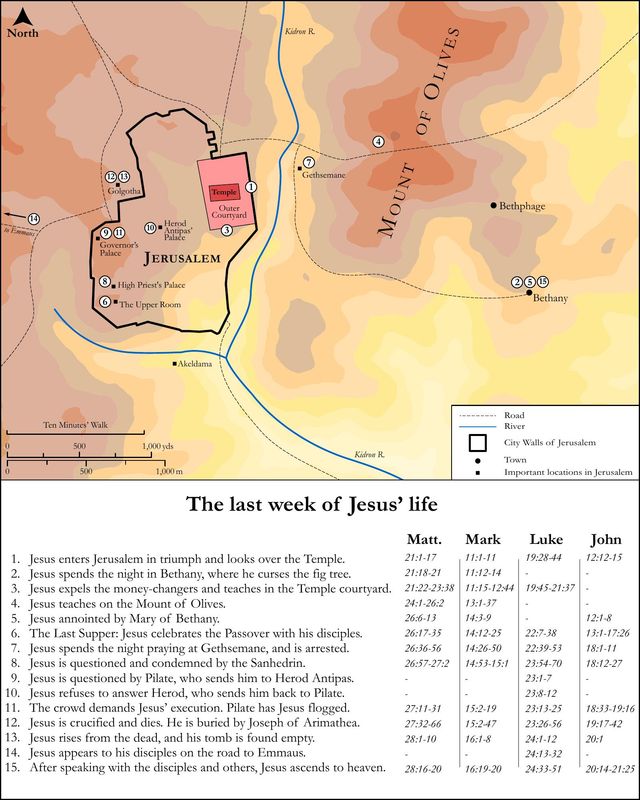
See on the biblical-era maps
Study this verse
Historical interpretation
Nine Centuries of Reception
7 surviving comments on this verse. Each one is dated, so this reads as a timeline rather than a list.
Select a marker to jump to its quote. Markers stagger vertically where authors wrote within a few decades of each other.
Whence we may gather, that in this parable the Lord spoke to such as promise little or nothing, but in their works shine forth; and against those who promise great things but do none of these things that they have promised.
Notwithstanding, the Jews are not shut out that they should never enter into the kingdom of God; but, when the fulness of the Gentiles shall have entered in, then all Israel shall be saved. (Rom. 11:25.)
But when, not understanding His sayings, they had delivered the judgment, He unfolds His concealed meaning after this, and saith, "Publicans and harlots go into the kingdom of Heaven before you. For John came unto you in the way of righteousness, and ye believed him not; but the publicans believed him; and ye, when ye had seen it, repented not afterwards, that ye might believe him."
For if He had said simply, harlots go before you, the word would have seemed to them to be offensive; but now, being uttered after their own judgment it appears to be not too hard.
Therefore He adds also the accusation. What then is this? "John came," He saith, "unto you," not unto them, and not this only, but also "in the way of righteousness." "For neither with this can ye find fault, that he was some careless one, and of no profit; but both his life was irreprehensible, and his care for you great, and ye gave no heed to him."
And with this there is another charge also, that publicans gave heed; and with this, again another, that "not even after them did ye. For ye should have done so even before them, but not to do it even after them was to be deprived of all excuse;" and unspeakable was both the praise of the one, and the charge against the other. "To you he came, and ye accepted him not; he came not to them, and they receive him, and not even them did ye take for instructors."
See by how many things is shown the commendation of those, and the charge against these. To you he came, not to them. Ye believed not, this offended not them. They believed, this profited not you.
But the word, "go before you," is not as though these were following, but as having a hope, if they were willing. For nothing, so much as jealousy, rouses the grosser sort. Therefore He is ever saying, "The first shall be last, and the last first." Therefore He brought in both harlots and publicans, that they might provoke them to jealousy.
For these two indeed are chief sins, engendered of violent lust, the one of sexual desire, the other of the desire of money. And He indicates that this especially was hearing the law of God, to believe John. For it was not of grace only, that harlots entered in, but also of righteousness. For not, as continuing harlots, did they enter in, but having obeyed and believed, and having been purified and converted, so did they enter in.
Seest thou how He rendered His discourse less offensive, and more penetrating, by the parable, by His bringing in the harlots? For neither did He say at once, wherefore believed ye not John? but what was much more pricking, when He had put forward the publicans and the harlots, then He added this, by the order of their actions convicting their unpardonable conduct, and showing that for fear of men they do all things, and for vainglory. For they did not confess Christ for fear, lest they should be put out of the synagogue; and again, of John they dared not speak evil, and not even this from reverence, but for fear. All which things He convicted by His sayings, and with more severity afterwards did He go on to inflict the blow, saying, "But ye, when ye knew it, repented not afterwards, that ye might believe him."
For an evil thing it is not at the first to choose the good, but it is a heavier charge not even to be brought round. For this above all maketh many wicked, which I see to be the case with some now from extreme insensibility.
But let no one be like this; but though he be sunk down to the extremity of wickedness, let him not despair of the change for the better. For it is an easy thing to rise up out of the very abysses of wickedness.
(Verse 32.) For John came to you in the way of righteousness, and you did not believe him; but tax collectors and prostitutes believed him. And even when you saw it, you did not afterward change your minds and believe him. Now, which of the two did the will of his father?’ They said, ‘The first.’ Jesus said to them, ‘Truly, I say to you, the tax collectors and the prostitutes go into the kingdom of God before you. For John came to you in the way of righteousness, and you did not believe him; but the tax collectors and the prostitutes believed him. Even when you saw it, you did not afterward change your minds and believe him.
Thus much prefaced, the Lord brings forward a parable, to convict them of their irreligion, and show them that the kingdom of God should be transferred to the Gentiles.
He speaks to the Gentile people first, through their knowledge of the law of nature; Go and work in my vineyard; i. e. What you would not have done to you, that do not you to others. (Tobit 4:16.) He answers haughtily, I will not.
But when, at the coming of the Saviour, the Gentile people, having done penitence, laboured in God's vineyard, and atoned by their labour for the obstinacy of their refusal, this is what is said, But afterward he repented, and went. The second son is the Jewish people who made answer to Moses, All that the Lord hath said unto us we will do. (Exod. 24:3.)
It should be known that in the correct copies it is read not The last, but The first, that they might be condemned by their own sentence. But should we prefer to read, as some have it, The last, the explanation is obvious, to say that the Jews understood the truth, but dissembled, and would not say what they thought; just as though they knew that the baptism of John was from heaven, they would not say so.
Whence others think that the parable does not relate to Gentiles and Jews, but simply to the righteous and to sinners. These by their evil deeds had rejected God's service, but after received from John the baptism of repentance; while the Pharisees who made a show of righteousness, and boasted that they did the law of God, despising John's baptism, did not follow his precepts.
Those who are to be judged in this cause, He applies to as judges, that condemning themselves they might be shown to be unworthy to be acquitted by any other. It is high confidence of the justness of a cause, that will entrust it to the decision of an adversary. But He veils the allusion to them in a parable, that they might not perceive that they were passing sentence upon themselves; A certain man had two sons. Who is he but God, who created all men, who being by nature Lord of all, yet would rather be loved as a father, than feared as a Lord. The elder son was the Gentile people, the younger the Jews, since from the time of Noah there had been Gentiles. And he came to the first, and said, Son, go work to day in my vineyard. To day, i. e. during this age. He spoke with him, not face to face as man, but to his heart as God, instilling understanding through the senses. To work in the vineyard is to do righteousness; for to cultivate the whole thereof, I know not that any one man is sufficient.
For the Gentiles from the beginning leaving God and his righteousness, and going over to idols and sins, seem to make answer in their thoughts, We will not do the righteousness of God.
But afterwards turning their backs, they lied unto God, according to that in the Psalms, The sons of the strangers have lied unto me. (Ps. 18:44.) This is what is said, But he went not. The Lord accordingly asks which of them twain did the will of his father? They say unto him, The first. See how they have first sentence upon themselves, saying, that the elder son, that is, the Gentile people, did the will of his father. For it is better not to promise righteousness before God, and to do it, than to promise, and to fail.
The Lord abundantly confirms their decision, whence it follows, Jesus said unto them, Verily I say unto you, that the publicans and harlots shall go before you in the kingdom of God; as much as to say, Not only the Gentiles are before you, but even the publicans and the harlots.
I suppose that the publicans here are to represent all sinful men, and the harlots all sinful women; because avarice is found the most prevailing vice among men, and fornication among women. For a woman's life is passed in idleness and seclusion, which are great temptations to that sin, while a man, constantly occupied in various active duties, falls readily into the snare of covetousness, and not so commonly into fornication, as the anxieties of manly cares preclude thoughts of pleasure, which engage rather the young and idle. Then follows the reason of what He had said, For John came unto you in the way of righteousness, and ye believed him not.
Or, because his venerable conversation smote the hearts of sinners, as it follows, But the Publicans and harlots believed on him. Mark how the good life of the preacher gives its force to his preaching, so as to subdue unsubdued hearts. And ye, when ye had seen it, repented not afterward, that ye might believe him; as much as to say, They have done that which is more by believing on Him, ye have not even repented, which is less. But in this exposition which we have set forth according to the mind of many interpreters, there seems to me something inconsistent. For if by the two sons are to be understood the Jews and Gentiles, as soon as the Priests had answered that it was the first son that did his father's will, then Christ should have concluded His parable with these words, Verily I say unto you, that the Gentiles shall go into the kingdom of God before you. But He says, The Publicans and harlots, a class rather of Jews than of Gentiles. Unless this is to be taken as was said above; So much rather the Gentile people please God than you, that even the Publicans and harlots are more acceptable to Him than you.
This He brings in because the Priests had asked not in order to learn, but to tempt Him. But of the common folk many had believed; and for that reason He brings forward the parable of the two sons, showing them therein that the common sort, who from the first professed secular lives, were better than the Priests who from the first professed the service of God, inasmuch as the people at length turned repentant to God, but the Priests impenitent, never left off to sin against God. And the elder son represents the people; because the people is not for the sake of the Priests, but the Priests are for the sake of the people.
There are two reasons why the knowledge of truth should be kept back from those who ask; either when he who asks is unfit to receive, or from his hatred or contempt of the truth is unworthy to have that which he asks opened to him.
Yet the kingdom of God may be understood of the Gentiles, or of the present Church, in which the Gentiles go before the Jews, because they were more ready to believe.
John came preaching the way of righteousness, because he pointed to Christ, who is the fulfilling of the Law.
. He introduces two types of men. One type are those who promised from the beginning: such were the Jews who said, "All which God spoke, we will do and we will obey" (Ex. 24:3). The other type are those who disobeyed: such are the publicans and the harlots, but also the people of the Gentiles, who from the beginning were not obedient to the will of God, but later they repented and obeyed. Behold, then, the wisdom of Christ. He did not at once from the start say to them, "The publicans and the harlots are better than you," but first He got the upper hand over them and they confessed that of the two sons, he who did the will of the father was the obedient one. And when they had so confessed He led them on and said, "John came in the way of righteousness," that is, with a blameless life, and you are not able to say that his life was reprehensible, yet the harlots obeyed him while you did not. Therefore they precede you, that is, enter before you into the kingdom. So you also should struggle to believe, so that you might at least enter in after the harlots, for if you do not believe, you will by no means enter. There are many to this very day who have promised to God their Father to become monks or priests, but afterwards were negligent in their promise. But there are others who did not promise to lead a monastic or priestly life, but now they are monks and priests. So the obedient sons are those who act, although they promised nothing.
Continue studying Matthew 21:32 across the web’s major study libraries — every link below opens this exact verse, chapter, or book on the destination site.
Read & Compare
 BibleGatewayThis verse in more than 200 translations and 70 languages.
 Bible.comThe YouVersion reader — hundreds of translations, reading plans, and highlights.
 ESV.orgCrossway's official English Standard Version reader.
 NET BibleThe NET translation with 60,000+ translators' notes on every rendering decision.
 STEP BibleTyndale House's free study tool — original text, vocabulary, and scholarly resources.
 BibliaLogos Bible Software's free web reader.
 USCCBThe New American Bible (Revised Edition) with the U.S. bishops' study notes.
Commentaries
 BibleHub CommentariesDozens of classic commentaries on this verse, gathered on one page.
 StudyLightMore than 100 commentary sets — the largest collection on the web.
 BibleRefPlain-English commentary on what this verse means, verse by verse.
 Enduring WordDavid Guzik's free commentary on this chapter, widely used by Bible teachers.
 Bible Study ToolsVerse commentary alongside Greek and Hebrew study aids.
Original Language & Research
- BibleHub InterlinearThe verse word by word — original language, transliteration, and English.
- BibleHub LexiconEvery word's original-language definition and Strong's entry.
 Blue Letter BibleDeep-study tools — Strong's numbers, concordance, and word studies.
 CNTR CollationThe earliest Greek manuscripts of this verse, collated letter by letter.
Sermons, Hymns & Audio


TrulyRandomVerse is not affiliated with these sites and doesn’t control their content. They’re linked because they’re genuinely useful.
Summary
Matthew 21:32 serves as Jesus' sharp indictment of the chief priests and elders, concluding the Parable of the Two Sons. It highlights their spiritual blindness and hypocrisy by contrasting their rejection of John the Baptist's message with the surprising belief and repentance of publicans and harlots. Jesus reveals that genuine faith is not found in outward religious observance or social standing, but in a humble heart willing to acknowledge sin, repent, and believe God's truth, regardless of the messenger or personal cost.
Context
ShowHideLiterary Context
This verse is the climactic interpretive statement following Jesus' Parable of the Two Sons (Matthew 21:28-31). The parable itself was delivered in response to the chief priests and elders who challenged Jesus' authority in the temple (Matthew 21:23). Jesus first counters their question with one of His own regarding John the Baptist's authority. When they refuse to answer, He tells the parable, which illustrates the difference between professing obedience and actually obeying. Verse 32 directly applies the parable's lesson, exposing the spiritual state of His interrogators and setting the stage for further parables of judgment against the unrepentant religious leadership, such as the Parable of the Wicked Tenants (Matthew 21:33-46).
Historical & Cultural Context
The setting is Jerusalem during Holy Week, a time of heightened tension between Jesus and the Jewish religious authorities. Publicans (tax collectors) were reviled by Jewish society, seen as traitors who collaborated with the Roman occupiers and often extorted their own people. Harlots (prostitutes) were likewise social outcasts, considered morally impure and beyond the pale of respectable society. In contrast, the chief priests and elders represented the pinnacle of religious and social standing, priding themselves on their adherence to the Law and their spiritual authority. John the Baptist's ministry, characterized by a call to repentance and baptism in the wilderness, had gained widespread popularity among the common people, including these overlooked groups, but was largely rejected by the religious elite who saw no need for his message (Luke 7:29-30).
Key Themes
ShowHideThis verse powerfully articulates several crucial themes. It underscores the rejection of divine truth by those who outwardly appeared most righteous, highlighting a spiritual blindness that prioritized self-preservation and status over God's revealed will. Conversely, it showcases unexpected belief and divine grace, as individuals considered the lowest in society—the publicans and harlots—humbly responded to John's call for repentance and believed. John's coming "in the way of righteousness" refers to his life and message being consistent with God's moral and spiritual standards, calling people to align their lives with God's will, a message foundational to the kingdom of heaven (Matthew 3:2). The religious leaders' continued failure to repent even after witnessing the transformative power of John's ministry in others reveals a hardened heart that ultimately prevented them from believing in John, and by extension, in Jesus Himself.
Exposition and Analysis
ShowHideKey Word Analysis
ShowHideThis term refers to equity of character or act, conforming to God's standards. John came "in the way of righteousness," meaning his life and message were consistent with God's moral and spiritual demands, calling people to live in right relationship with God and others.
This word signifies "to care afterwards" or "to regret." In this context, it highlights the religious leaders' failure to experience a change of mind that leads to a change of behavior. It's not merely feeling sorry, but a fundamental shift in one's outlook and direction, which they lacked.
This word means "to have faith (in, upon, or with respect to, a person or thing), i.e., credit; by implication, to entrust (especially one's spiritual well-being to Christ)." The publicans and harlots demonstrated this active trust and commitment to John's message, which contrasted sharply with the religious leaders' unbelief.
Verse Breakdown
ShowHide"For John came unto you in the way of righteousness"
This clause establishes John the Baptist's divine commission and the integrity of his ministry. John's life and message were characterized by a commitment to God's moral and spiritual standards, calling for genuine repentance and a transformation of life that reflected God's will. He modeled the very righteousness he preached.
"and ye believed him not"
This is a direct accusation against the chief priests and elders. Despite John's clear divine mandate and righteous living, and despite witnessing the impact of his ministry on others, the religious leaders refused to accept his message or acknowledge his authority. Their unbelief stemmed from pride and self-sufficiency.
"but the publicans and the harlots believed him"
This striking contrast highlights the surprising receptivity of those considered social and religious outcasts. These individuals, acutely aware of their sinfulness and lacking the self-righteousness of the religious elite, humbly responded to John's call for repentance and placed their trust in his message. Their belief was evidenced by their changed lives.
"and ye, when ye had seen [it], repented not afterward"
Jesus emphasizes the religious leaders' stubborn refusal to change. They not only rejected John's initial call but also remained unrepentant even after witnessing the visible transformation in the lives of the publicans and harlots. This implies a deliberate hardening of their hearts against God's truth, despite overwhelming evidence.
"that ye might believe him"
This final phrase reveals the ultimate purpose of John's ministry and the missed opportunity for the religious leaders. John's coming was meant to prepare the way for belief, ultimately in Christ. Their failure to repent and believe John's message meant they also failed to recognize and believe in Jesus, the one John heralded.
Literary Devices
ShowHideMatthew 21:32 is rich in literary devices that amplify its message. The most prominent is Contrast, starkly juxtaposing the religious leaders (who "believed him not" and "repented not") with the publicans and harlots (who "believed him"). This highlights the unexpected nature of God's grace and judgment. There is also profound Irony: those who outwardly embodied "righteousness" (the religious leaders) rejected the "way of righteousness" presented by John, while those considered unrighteous (publicans and harlots) embraced it. This subverts conventional expectations and underscores God's perspective on true righteousness. The verse functions as a direct Indictment, a powerful accusation from Jesus that exposes the spiritual hypocrisy of His opponents, serving as the explicit interpretation of the preceding Parable of the Two Sons.
Theological and Thematic Connections
ShowHideMatthew 21:32 profoundly illustrates the nature of true faith and the danger of spiritual pride. It reveals that God's kingdom is open to those who humble themselves and acknowledge their need for repentance, regardless of their social standing or past sins. The religious leaders, blinded by their self-righteousness and perceived spiritual superiority, missed the divine invitation extended through John. Their refusal to repent and believe, even after witnessing the transformative power of John's message in the lives of outcasts, demonstrates a hardened heart that prioritizes human tradition and status over God's truth. This passage underscores that genuine belief is not merely intellectual assent but a transformative act of repentance and trust, leading to a changed life. God's grace is freely offered, but it requires a humble and receptive heart.
Reflection and Application
ShowHideThis verse serves as a timeless mirror for self-examination, challenging us to consider the true nature of our faith and our openness to God's truth. It warns against the insidious danger of spiritual pride, which can blind us to our own need for repentance and prevent us from recognizing God's work in unexpected places or through unexpected people. We must ask ourselves if we are truly humble before God, willing to acknowledge our shortcomings and embrace His call to change, or if we, like the religious leaders, allow our status, knowledge, or perceived righteousness to create a barrier to genuine belief and obedience. The willingness of the publicans and harlots to repent and believe, despite their societal condemnation, offers profound encouragement: no one is beyond the reach of God's grace, provided they respond with a humble and repentant heart.
Questions for Reflection
ShowHideFAQ
ShowHideWhy did Jesus use this parable and direct accusation against the religious leaders?
ShowHideJesus used the Parable of the Two Sons and this direct accusation to expose the spiritual hypocrisy and blindness of the chief priests and elders. They had challenged His authority (Matthew 21:23), and Jesus' response effectively turned the tables, revealing that their own actions demonstrated a fundamental lack of God-given authority and genuine righteousness. He aimed to unmask their outward religiosity as a facade, showing that those they despised (publicans and harlots) were more receptive to God's will than they were.
What does "the way of righteousness" mean in this context?
ShowHide"The way of righteousness" refers to John the Baptist's ministry, which was characterized by a life and message consistent with God's moral and spiritual standards. John called people to a path of ethical integrity, genuine repentance, and obedience to God's will, preparing them for the coming of the Messiah. It was a path of aligning one's life with God's just and holy requirements, a stark contrast to the superficial adherence to the law practiced by many religious leaders.
Why were publicans and harlots more receptive to John's message than the religious leaders?
ShowHidePublicans and harlots, being overlooked and acutely aware of their sinfulness, lacked the self-righteousness that blinded the religious leaders. They recognized their desperate need for God's grace and forgiveness, making them humble and open to John's call for repentance. Unlike the religious elite who felt they had no need to repent, these outcasts embraced the opportunity for spiritual transformation, demonstrating a genuine faith that the outwardly pious lacked. This aligns with Jesus' teaching elsewhere about the humble being exalted (Luke 18:9-14).
Christ-Centered Fulfillment
ShowHideMatthew 21:32, though focused on John the Baptist, powerfully points to Christ as its ultimate fulfillment. John came "in the way of righteousness," preparing the path for the One who is the very embodiment of righteousness and "the way, the truth, and the life" (John 14:6). The publicans and harlots who believed John's message foreshadow the universal call of the Gospel, demonstrating that salvation is not for the self-righteous but for sinners who humble themselves and come to Christ. Jesus Himself declared that He came not to call the righteous, but sinners to repentance (Matthew 9:13). The religious leaders' rejection of John's call to repentance was, in essence, a rejection of the path leading to Christ, revealing their spiritual blindness to the very Messiah they claimed to await. Their refusal to believe and repent highlights the ongoing spiritual battle between human pride and God's grace, emphasizing that true faith in Christ always begins with a humble recognition of sin and a willingness to turn to Him for salvation, which is a gift received by grace through faith, not by works or status (Ephesians 2:8-9).