


Matthew 21:23
Bible text: King James Version (1769 Blayney text) · Public domain
Bible text: King James Version with Strong's numbers · Public domain
Bible text: Berean Standard Bible · Public domain
Bible text: American Standard Version (1901) · Public domain
Bible text: World English Bible, Messianic edition · Public domain
Bible text: Geneva Bible (1599) · Public domain
Bible text: Young's Literal Translation · Public domain
- ΚαὶKaiAndG2532CONJConjunction
- ἐλθόντοςelthontoswhen was comingG2064V-2AAP-GSMVerb 2nd Aorist Active Participle Genitive Singular Masculine
- αὐτοῦautouHeG846P-GSMPersonal pronoun Genitive Singular Masculine
- εἰςeisintoG1519PREPPreposition
- τὸtotheG3588T-ASNDefinite article Accusative Singular Neuter
- ἱερὸνhi'erontempleG2411N-ASNNoun Accusative Singular Neuter
- προσῆλθονprosēlthoncameG4334V-2AAI-3PVerb 2nd Aorist Active Indicative 3rd Plural
- αὐτῷautōto HimG846P-DSMPersonal pronoun Dative Singular Masculine
- διδάσκοντιdidaskontiteachingG1321V-PAP-DSMVerb Present Active Participle Dative Singular Masculine
- οἱhoitheG3588T-NPMDefinite article Nominative Plural Masculine
- ἀρχιερεῖςarchiereischief priestsG749N-NPMNoun Nominative Plural Masculine
- καὶkaiandG2532CONJConjunction
- οἱhoitheG3588T-NPMDefinite article Nominative Plural Masculine
- πρεσβύτεροιpresbuteroieldersG4245N-NPM-TNoun Nominative Plural Masculine Title
- τοῦtouof theG3588T-GSMDefinite article Genitive Singular Masculine
- λαοῦlaoupeopleG2992N-GSMNoun Genitive Singular Masculine
- λέγοντες·legontessayingG3004V-PAP-NPMVerb Present Active Participle Nominative Plural Masculine
- ἐνenByG1722PREPPreposition
- ποίᾳpoiawhatG4169I-DSFInterrogative pronoun Dative Singular Feminine
- ἐξουσίᾳexousiaauthorityG1849N-DSFNoun Dative Singular Feminine
- ταῦταtautathese thingsG3778D-APNDemonstrative pronoun Accusative Plural Neuter
- ποιεῖςpoieisare You doingG4160V-PAI-2SVerb Present Active Indicative 2nd Singular
- καὶkaiAndG2532CONJConjunction
- τίςtiswhoG5101I-NSMInterrogative pronoun Nominative Singular Masculine
- σοιsoito YouG4771P-2DSPersonal pronoun Dative 2nd Singular
- ἔδωκενedōkengaveG1325V-AAI-3SVerb Aorist Active Indicative 3rd Singular
- τὴνtēn<the>G3588T-ASFDefinite article Accusative Singular Feminine
- ἐξουσίανexousianauthorityG1849N-ASFNoun Accusative Singular Feminine
- ταύτην;tautēnthis?G3778D-ASFDemonstrative pronoun Accusative Singular Feminine
English is a literal word-by-word gloss of the Greek, not the KJV's wording. Why?
This is the original text the KJV's translators worked from — each Greek word with its own literal English meaning in this verse, prepared by scholars at Tyndale House, Cambridge. The KJV translates whole sentences, not word by word, so its wording differs: one Greek word can become several English words, and the KJV may choose “charity” where the gloss reads “love”. Both are faithful — they answer different questions. For the KJV's own rendering, switch to the KJV text.
Details
See on the biblical-era maps
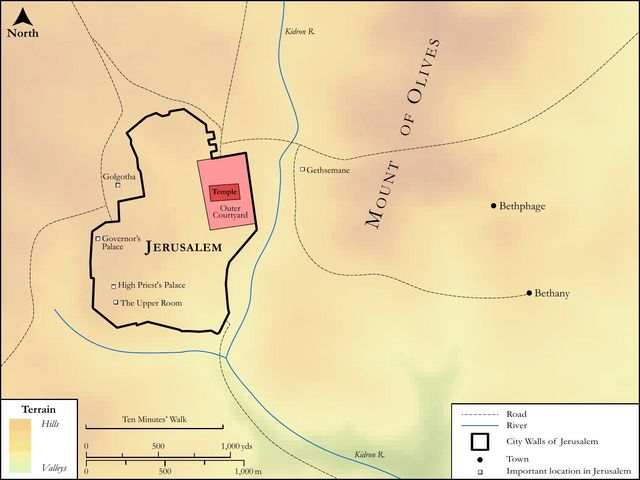
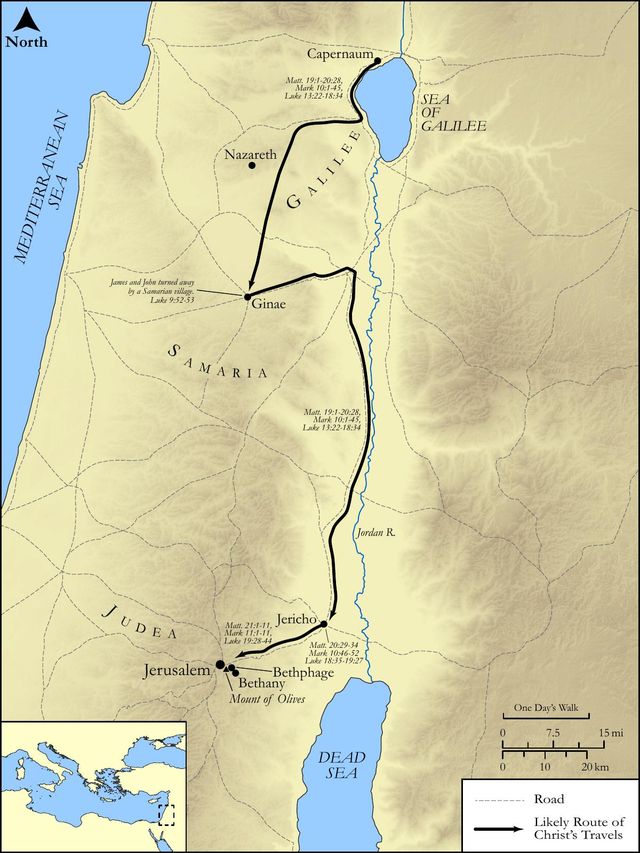
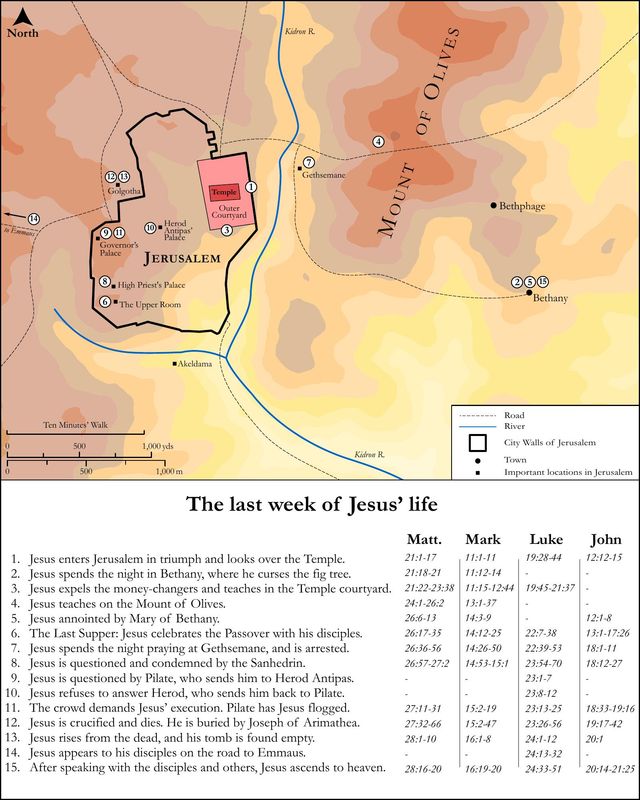
Study this verse
Historical interpretation
Six Centuries of Reception
9 surviving comments on this verse. Each one is dated, so this reads as a timeline rather than a list.
Select a marker to jump to its quote. Markers stagger vertically where authors wrote within a few decades of each other.
We have spoken, so far as our moderate ability permitted, of the generals which form the groundwork of the sanctity of baptism. I will now, equally to the best of my power, proceed to the rest of its character, touching certain minor questions.
The baptism announced by John formed the subject, even at that time, of a question, proposed by the Lord Himself indeed to the Pharisees, whether that baptism were heavenly, or truly earthly: about which they were unable to give a consistent answer, inasmuch as they understood not, because they believed not. But we, with but as poor a measure of understanding as of faith, are able to determine that that baptism was divine indeed, (yet in respect of the command, not in respect of efficacy too, in that we read that John was sent by the lord to perform this duty, ) but human in its nature: for it conveyed nothing celestial, but it fore-ministered to things celestial; being, to wit, appointed over repentance, which is in man's power. In fact, the doctors of the law and the Pharisees, who were unwilling to "believe," did not "repent" either. But if repentance is a thing human, its baptism must necessarily be of the same nature: else, if it had been celestial, it would have given both the Holy Spirit and remission of sins. But none either pardons sins or freely grants the Spirit save God only. Even the Lord Himself said that the Spirit would not descend on any other condition, but that He should first ascend to the Father. What the Lord was not yet conferring, of course the servant could not furnish. Accordingly, in the Acts of the Apostles, we find that men who had "John's baptism" had not received the Holy Spirit, whom they knew not even by hearing. That, then, was no celestial thing which furnished no celestial (endowments): whereas the very thing which was celestial in John-the Spirit of prophecy-so completely failed, after the transfer of the whole Spirit to the Lord, that he presently sent to inquire whether He whom he had himself preached, whom he had pointed out when coming to him, were "HE." And so "the baptism of repentance" was dealt with as if it were a candidate for the remission and sanctification shortly about to follow in Christ: for in that John used to preach "baptism for the remission of sins," the declaration was made with reference to future remission; if it be true, (as it is, ) that repentance is antecedent, remission subsequent; and this is "preparing the way." But he who "prepares" does not himself "perfect," but procures for another to perfect. John himself professes that the celestial things are not his, but Christ's, by saying, "He who is from the earth speaketh concerning the earth; He who comes from the realms above is above all; " and again, by saying that he "baptized in repentance only, but that One would shortly come who would baptize in the Spirit and fire; " -of course because true and stable faith is baptized with water, unto salvation; pretended and weak faith is baptized with fire, unto judgment.
But if the Lord come seeking fruit with temptations, and one be found having nought of righteousness but only a profession of faith, which is leaves without fruit, he is soon withered, losing even his seeming faith; and every disciple makes this fig tree to wither, by making it be seen that he is void of Christ, as Peter said to Simon, Thy heart is not right in the sight of God (Acts 8:21.) For it is better that a deceitful fig tree which is thought to be alive, yet brings forth no fruit, should be withered up at the word of Christ's disciples, than that by an imposture it should steal aawy innocent hearts. Also there is in every unbeliever a mountain great in proportion to his unbelief, which is removed by the words of Christ's disciples.
But some one will say in opposition to this, that it was absurd to ask by what authority Jesus did these things. For that it could not be that He would answer, that He did these by the Devil's authority; and He would not tell them as it truly was, that He did them by His own power. If it should be said, that the rulers put this question to Him in order to deter Him from His proceedings; as when we say to one who is dealing with what is ours in a way which we do not like, we say to him, Who bade thee do this? meaning to deter him from what he is so doing;—if it is to be taken so, what means Christ's answer, Do you tell Me this, and I will tell you by what authority I do these things. Perhaps therefore, the place should be understood as follows. There are in the general two opposite powers, one on the side of God, the other on the side of the Devil; but of particular powers there are many; for it was not one and the same power that wrought in all the Prophets to enable them to do miracles, but one in these, another in those; and, it may be, for lesser things a lesser power, for greater things a greater power. The Chief Priests had seen Jesus working many miracles, whereupon they desired to know the special degree and properties of that power which wrought in Him. For others who have wrought miracles wrought them at first in one power, and afterwards when more advanced in another and greater power; but the Saviour wrought all in one power, that which He received of the Father. But because they were not worthy to hear such mysteries, therefore He gives them no answer, but on the contrary put a question to them.
Prior to this, the Pharisees had seen many things more worthy to be called great miracles, but now they were deeply troubled and asked Jesus to identify the authority by which he performed these works. The great mystery of the future is included in the consequences of present deeds. They felt the urge for special questioning, then, because the prefiguration of every danger was made known in this event. The Lord replied that he would tell them by what authority he did these works if only they would also reply to his question about whether they considered John the Baptist to have come from heaven or from man. They hesitated while pondering the dangers of responding. If they confessed John to have come from heaven, they would be convicted by that very confession for not believing in the authority of a heavenly witness. They were afraid to say that he was merely from man, however, because of the large crowd of people who believed John to be a prophet. So they answered that they did not know (they did in fact know him to be from heaven) because they feared that they might be convinced by the truth of their own confession. But they told the truth about themselves, even though it was their intention to deceive; it was only through their infidelity that they did not know John the Baptist to be from heaven. And they could not have known that John the Baptist was from man, because he was not.
But the boastful and arrogant Jews, wishing to interrupt His teaching, came unto Him, and asked, "By what authority doest thou these things?" For since they could not object against the miracles, they bring forward against Him the correction of the traffickers in the temple. And this in John also they appear to ask, although not in these words, but with the same intent. For there too they say, "What sign showest thou unto us? seeing that thou doest these things." But there He answers them, saying, "Destroy this temple, and I in three days will raise it up," whereas here He drives them into a difficulty. Whence it is manifest, that then indeed was the beginning and prelude of the miracles, but here the end.
But what they say is this: Hast thou received the teacher's chair? Hast thou been ordained a priest, that thou didst display such authority? it is said. And yet He had done nothing implying arrogance, but had been careful for the good order of the temple, yet nevertheless having nothing to say, they object against this. And indeed when He cast them out, they did not dare to say anything, because of the miracles, but when He showed Himself, then they find fault with Him.
Forasmuch as they could not detract from His miracles, they bring matter of blame from His forbidding to sell in the Temple. As though they had said, Hast Thou assumed the seat of authority? Hast Thou been anointed Priest, that Thou exertest this power?
Or in these words they urge the same cavil as above, when they said, He casteth out demons through Beelzebub the Prince of the demons. (Mat. 12:24.) For when they say, By what authority doest thou these things? they doubt concerning the power of God, and would have it understood that the things He does are of the Devil. But when they add, Who gave thee this authority? they most clearly deny the Son of God, whom they suppose to work miracles, not by His own, but by others' strength. The Lord could have confuted the calumny of His tempters by a simple answer, but He put a question to them of such skilful contrivance, that they must be condemned either by their silence or their knowledge; Jesus answered and said unto them, I also will ask you one question.
What the Priests revolved in their malice is shown when he adds, But they reasoned with themselves. For had they replied that it was from heaven, the question was inevitable, Why then were ye not baptized by John? But should they reply that it was an invention of human device, and had in it nothing divine, they feared a tumult among the people. For all the assembled multitudes had received John's baptism, and held him accordingly for a Prophet. This godless party therefore make answer, and by a seeming humility of speech confessing that they know not, turned to hide their insidious designs. And they answered Jesus, and said, We know not. In saying that they knew not, they lied; and it might have followed upon their answering thus, that the Lord also should say, I know not; but truth cannot lie, and therefore it follows, And he said unto them, Neither tell I you by what authority I do these things. This shows that they knew, but would not answer, and that He also knew, but would not answer, because they would not speak what they knew.
(Verse 23.) And when he came into the temple, the chief priests and the elders of the people approached him as he was teaching, saying, 'By what authority are you doing these things, and who gave you this authority?' In different words, they construct the same accusation as before, when they said, 'He casts out demons by Beelzebub, the prince of demons.' For when they say, 'By what authority are you doing these things?' they doubt the authority of God and want it to be understood that what he does is by the power of the devil. Moreover, they added: Who gave you this authority? They openly deny the Son of God, whom they consider to be not working by his own power, but by the power of others, to perform miracles.
The Priests were tormented with jealousy, because they had seen Christ entering the Temple in great glory. And not being able to master the fire of jealousy which burnt in their breasts, they break forth in speech.
By that they add, Or who gave thee this authority? they show that there be many persons who give power to men, whether corporal or spiritual! as though they had said, Thou art not come of a priestly family; the Senate has not conferred on Thee this power, neither has Cæsar granted it. But had they believed that all power is from God, they would never have asked, Who gave thee this authority? For every man judges of others by himself. The fornicator thinks that none are chaste; the chaste does not readily suspect any of fornication; he who is not a Priest of God, thinks no man's Priesthood to be of God.
Not that they should answer it, and thereupon hear of Christ the answer to their question, but that being puzzled they should ask Him no farther; according to that precept He had given above, Give not that which is holy to the dogs. (Mat. 7:6.) For even if He had told them, it would have profited nothing, because the darkened will cannot perceive the things that are of the light. For him that enquires we ought to instruct, but him that tempts, to overthrow by a stroke of reasoning, but not to publish to him the power of the mystery. The Lord thus sets before them in His question a dilemma; and that they might not escape Him, says, Which if ye tell me, I in like wise will tell you by what authority I do these things. His question is this; The baptism of John whence was it? from heaven, or of men?
There are two reasons why the knowledge of truth should be kept back from those who ask; either when he who asks is unfit to receive, or from his hatred or contempt of the truth is unworthy to have that which he asks opened to him.
Continue studying Matthew 21:23 across the web’s major study libraries — every link below opens this exact verse, chapter, or book on the destination site.
Read & Compare
 BibleGatewayThis verse in more than 200 translations and 70 languages.
 Bible.comThe YouVersion reader — hundreds of translations, reading plans, and highlights.
 ESV.orgCrossway's official English Standard Version reader.
 NET BibleThe NET translation with 60,000+ translators' notes on every rendering decision.
 STEP BibleTyndale House's free study tool — original text, vocabulary, and scholarly resources.
 BibliaLogos Bible Software's free web reader.
 USCCBThe New American Bible (Revised Edition) with the U.S. bishops' study notes.
Commentaries
 BibleHub CommentariesDozens of classic commentaries on this verse, gathered on one page.
 StudyLightMore than 100 commentary sets — the largest collection on the web.
 BibleRefPlain-English commentary on what this verse means, verse by verse.
 Enduring WordDavid Guzik's free commentary on this chapter, widely used by Bible teachers.
 Bible Study ToolsVerse commentary alongside Greek and Hebrew study aids.
Original Language & Research
- BibleHub InterlinearThe verse word by word — original language, transliteration, and English.
- BibleHub LexiconEvery word's original-language definition and Strong's entry.
 Blue Letter BibleDeep-study tools — Strong's numbers, concordance, and word studies.
 CNTR CollationThe earliest Greek manuscripts of this verse, collated letter by letter.
Sermons, Hymns & Audio


TrulyRandomVerse is not affiliated with these sites and doesn’t control their content. They’re linked because they’re genuinely useful.
Summary
Matthew 21:23 captures a pivotal confrontation in Jesus' final week in Jerusalem, immediately following His dramatic cleansing of the temple. As Jesus taught within the sacred precincts, the highest religious authorities—the chief priests and elders of the people—approached Him, challenging the very foundation of His actions and teachings by demanding to know the source of His authority and who had granted it to Him. This encounter underscores the escalating tension between divine truth embodied in Christ and the entrenched human religious establishment.
Context
ShowHideLiterary Context
This verse is situated at a critical juncture in Matthew's Gospel, specifically within Jesus' final week in Jerusalem, often referred to as Passion Week. It immediately follows Jesus' triumphal entry into Jerusalem, where He was hailed as King, and His subsequent cleansing of the temple. In the temple, Jesus overturned the tables of money-changers and merchants, asserting that His Father's house was a "house of prayer" rather than a "den of thieves" (Matthew 21:13). Following this dramatic act, He continued to teach and heal the blind and lame within the temple courts, further demonstrating an authority that transcended human institutions. The challenge from the chief priests and elders in Matthew 21:23 is a direct response to these actions, an attempt to formally question and undermine His legitimacy in the eyes of the people and within their religious jurisdiction.
Historical & Cultural Context
The "chief priests" (ἀρχιερεῖς) were primarily members of the priestly aristocracy, often Sadducees, who controlled the temple operations and its vast revenues. The "elders of the people" (πρεσβύτεροι τοῦ λαοῦ) represented the lay aristocracy and leading citizens, often Pharisees, who held significant influence in Jewish society. Together with the scribes, these groups constituted the Sanhedrin, the supreme Jewish governing council. Their authority was rooted in Mosaic Law and centuries of tradition, and they held considerable religious, judicial, and even political power under Roman oversight. The temple was not merely a place of worship but the economic, social, and spiritual heart of Jewish life. Jesus' actions in cleansing it, and His subsequent teaching, were perceived as a direct challenge to their established order, their control over the temple, and their interpretation of religious law. Their question about His authority was a formal legal and theological inquiry, designed to expose Him as a false prophet or an unauthorized rabbinic figure, thereby justifying His arrest and condemnation.
Key Themes
ShowHideThe central theme emerging from Matthew 21:23 is the authority of Jesus. The religious leaders' question directly confronts the source and nature of Jesus' power and right to act. Jesus' ministry, marked by authoritative teaching (as seen in the Sermon on the Mount), miraculous healings, and bold actions like the temple cleansing, consistently demonstrated a divine authority that surpassed any human or institutional sanction. This encounter also highlights the religious opposition and skepticism Jesus faced. Rather than engaging with the substance of His teachings or the evidence of His miracles, the leaders sought to discredit Him, protect their own power, and maintain the existing religious hierarchy. Their challenge reveals a deep-seated resistance to God's redemptive work when it threatened their established control. Ultimately, Jesus' actions and the leaders' response underscore the challenge to the status quo that His ministry represented. He consistently exposed hypocrisy and misdirection within the religious system, calling for genuine repentance and a true relationship with God, which inevitably brought Him into conflict with those who benefited from the existing order.
Exposition and Analysis
ShowHideKey Word Analysis
ShowHideThis verb, derived from a primary verb meaning "to learn," signifies the act of imparting knowledge or instruction. In the context of Jesus, it refers to His authoritative proclamation of God's truth, His exposition of the Scriptures, and His moral instruction. The religious leaders confronted Him precisely "as he was teaching," indicating that His instruction, like His actions, was perceived as unauthorized and threatening to their established pedagogical and theological control.
This crucial term denotes not merely raw power or might (which would be dynamis), but rather the inherent right, privilege, or freedom to act. It often implies delegated power or jurisdiction. The chief priests and elders were not merely asking about Jesus' ability to perform these deeds, but about His legitimate right to do them, and crucially, who had conferred that right upon Him. They sought to understand if His authority was self-proclaimed, derived from human institutions (like a rabbinic school), or from God.
This verb means "to give" in a very wide application, encompassing bestowing, committing, delivering, or granting. In the context of the leaders' question, "who gave thee this authority?", they are probing the origin of Jesus' exousía. They implicitly assume that legitimate authority must be conferred by a recognized human or divine source, and they are demanding to know that source, expecting it to be one they could either recognize or dismiss.
Verse Breakdown
ShowHide"And when he was come into the temple"
This phrase sets the scene immediately after Jesus' dramatic actions of cleansing the temple. His presence in the temple is not casual; it is an assertion of His claim over God's house, a claim He demonstrated by purifying its worship and teaching within its courts.
"the chief priests and the elders of the people came unto him as he was teaching"
This identifies the antagonists: the highest echelons of the Jewish religious and political establishment. Their approach is deliberate and official, occurring while Jesus is engaged in the very act that underscores His perceived usurpation of their pedagogical role. Their timing suggests a formal challenge to His public ministry.
"and said, By what authority doest thou these things?"
This is the core of their challenge. "These things" refers to Jesus' recent actions—the cleansing of the temple, His teaching, and His healing miracles. They are demanding to know the legitimate basis, the exousía, for His radical disruption of their established order and His public ministry.
"and who gave thee this authority?"
This second, reinforcing question seeks to identify the source of His authority. They are looking for a human or divine patron, a recognized rabbinic ordination, or a prophetic commission that would legitimize His actions in their eyes. Their question implies that without such a recognized source, Jesus is acting without proper authorization, making Him a dangerous rogue.
Literary Devices
ShowHideMatthew 21:23 employs several potent literary devices. Interrogation is central, as the entire verse culminates in two direct questions from the religious leaders, highlighting their challenge and the confrontational nature of the scene. This interrogation sets up a dramatic conflict between Jesus and the established religious powers, a conflict that has been building throughout Matthew's narrative and will escalate to His crucifixion. The leaders' questions are imbued with irony: they, who claim to represent God's authority, are questioning the true embodiment of divine authority. Their inability or unwillingness to recognize Jesus' inherent authority, despite His miraculous works and prophetic teaching, reveals their spiritual blindness. Furthermore, this confrontation serves as foreshadowing, indicating the intensifying opposition that will ultimately lead to Jesus' arrest and trial, where His authority will again be the central issue.
Theological and Thematic Connections
ShowHideThe challenge to Jesus' authority in Matthew 21:23 is a profound theological moment, revealing the inherent conflict between divine truth and human institutions that resist it. Jesus' authority is not derived from human ordination or popular vote; it is intrinsic to His identity as the Son of God and the Messiah. The religious leaders, bound by their traditions and self-interest, failed to recognize the very source of all true authority standing before them. This encounter highlights that genuine spiritual authority flows from God alone and is often manifested in ways that challenge human-made systems and expectations. It forces us to consider whether we, like the leaders, might be prone to questioning or rejecting divine authority when it disrupts our comfort zones or established norms, rather than humbly submitting to it.
Reflection and Application
ShowHideMatthew 21:23 invites us to deeply reflect on the nature of authority, both divine and human, and our response to it. The religious leaders, blinded by their own power and prejudice, could not discern the true source of Jesus' authority, leading them to reject the very Messiah they claimed to serve. In our own lives, we are constantly confronted with various claims to authority—from political leaders, cultural trends, scientific consensus, or even religious traditions. This passage challenges us to critically examine the source of the authority we acknowledge and submit to. Do we recognize Jesus' ultimate authority over all aspects of life, including our personal choices, our understanding of truth, and the way we engage with the world? Or do we, like the chief priests and elders, seek to control or dismiss His authority when it challenges our comfort, traditions, or self-interest? True faith involves a humble submission to Christ's divine authority, allowing Him to transform our perspectives and guide our actions, rather than attempting to fit Him into our preconceived notions or human systems.
Questions for Reflection
ShowHideFAQ
ShowHideWhy did the chief priests and elders ask about Jesus' authority specifically at this moment?
ShowHideTheir question was a direct and strategic response to Jesus' recent actions, particularly His cleansing of the temple and His continued teaching within its courts. The temple was under their jurisdiction, and Jesus' actions were a profound public challenge to their control, their revenue streams, and their interpretation of what constituted proper worship. By asking "By what authority doest thou these things?" and "who gave thee this authority?", they were attempting to legally and theologically corner Him. If He claimed divine authority, they could accuse Him of blasphemy. If He claimed human authority, they could dismiss Him as an unauthorized teacher or revolutionary. Their goal was to discredit Him in the eyes of the people and find grounds for His arrest.
Christ-Centered Fulfillment
ShowHideMatthew 21:23, though a question of authority, points profoundly to the Christ-centered fulfillment of God's redemptive plan. The very authority the religious leaders questioned was not merely delegated power but the inherent authority of the Son of God, the promised Messiah. Jesus' actions in the temple—cleansing it and teaching within it—were not random acts but demonstrations of His rightful claim as the Lord of the Temple, fulfilling prophecies of a new covenant and a purified worship. His authority was rooted in His divine identity as the one sent by the Father, as He later declared, "All power is given unto me in heaven and in earth" after His resurrection. This authority is what enables Him to forgive sins (Mark 2:10), to command demons (Luke 4:36), to lay down His life and take it up again (John 10:18), and ultimately to judge the living and the dead (John 5:27). The leaders' question, "who gave thee this authority?", is answered definitively in the New Testament: it was given by the Father, because Jesus is the Son, the Word made flesh (John 1:1-14), the One through whom all things were created and in whom all things hold together (Colossians 1:16-17). Thus, the confrontation in the temple foreshadows the ultimate triumph of Christ's divine authority over all earthly powers and institutions.