


Matthew 21:26
Bible text: King James Version (1769 Blayney text) · Public domain
Bible text: Berean Standard Bible · Public domain
Bible text: American Standard Version (1901) · Public domain
Bible text: World English Bible, Messianic edition · Public domain
Bible text: Geneva Bible (1599) · Public domain
Bible text: Young's Literal Translation · Public domain
- ἐὰνeanIfG1437CONDConjunction
- δὲdehoweverG1161CONJConjunction
- εἴπωμεν·eipōmenwe shall sayG2036V-2AAS-1PVerb 2nd Aorist Active Subjunctive 1st Plural
- ἐξexFromG1537PREPPreposition
- ἀνθρώπωνanthrōpōnmenG444N-GPMNoun Genitive Plural Masculine
- φοβούμεθαphoboumethawe fearG5399V-PNI-1PVerb Present Middle Or Passive Deponent Indicative 1st Plural
- τὸνtontheG3588T-ASMDefinite article Accusative Singular Masculine
- ὄχλον·ochlonmultitudeG3793N-ASMNoun Accusative Singular Masculine
- πάντεςpantesallG3956A-NPMAdjective Nominative Plural Masculine
- γὰρgarforG1063CONJConjunction
- ὡςhōsasG5613PRTParticle or Disjunctive
- προφήτηνprophētēna prophetG4396N-ASMNoun Accusative Singular Masculine
- ἔχουσινechousinholdG2192V-PAI-3PVerb Present Active Indicative 3rd Plural
- τὸνton<the>G3588T-ASMDefinite article Accusative Singular Masculine
- ἸωάννηνIōannēnJohnG2491N-ASM-PNoun Accusative Singular Masculine Individual
English is a literal word-by-word gloss of the Greek, not the KJV's wording. Why?
This is the original text the KJV's translators worked from — each Greek word with its own literal English meaning in this verse, prepared by scholars at Tyndale House, Cambridge. The KJV translates whole sentences, not word by word, so its wording differs: one Greek word can become several English words, and the KJV may choose “charity” where the gloss reads “love”. Both are faithful — they answer different questions. For the KJV's own rendering, switch to the KJV text.
Details
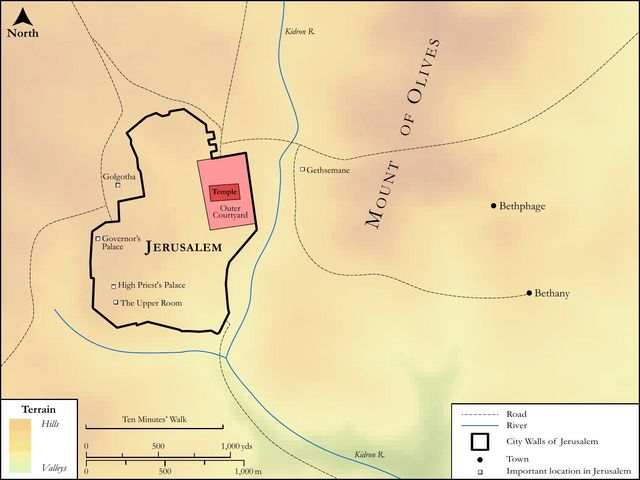
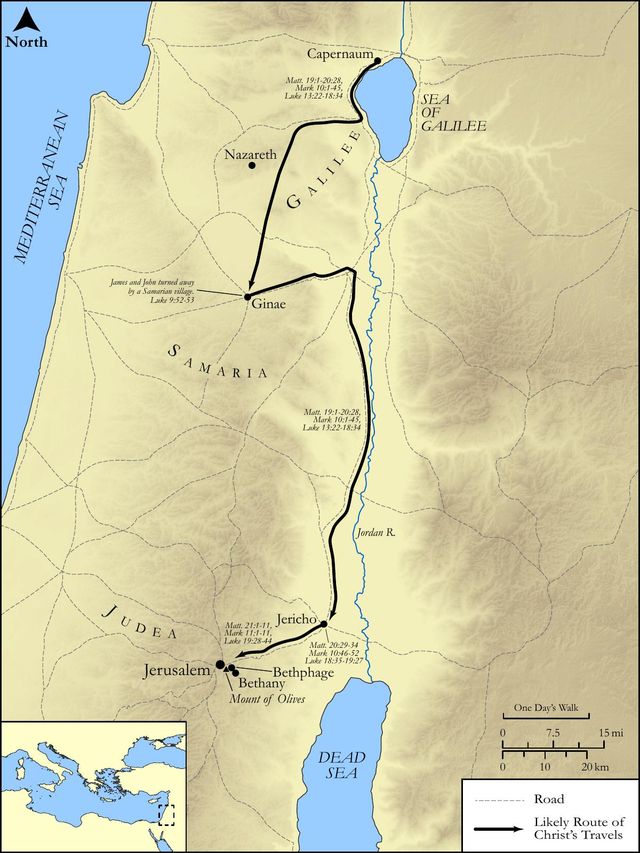
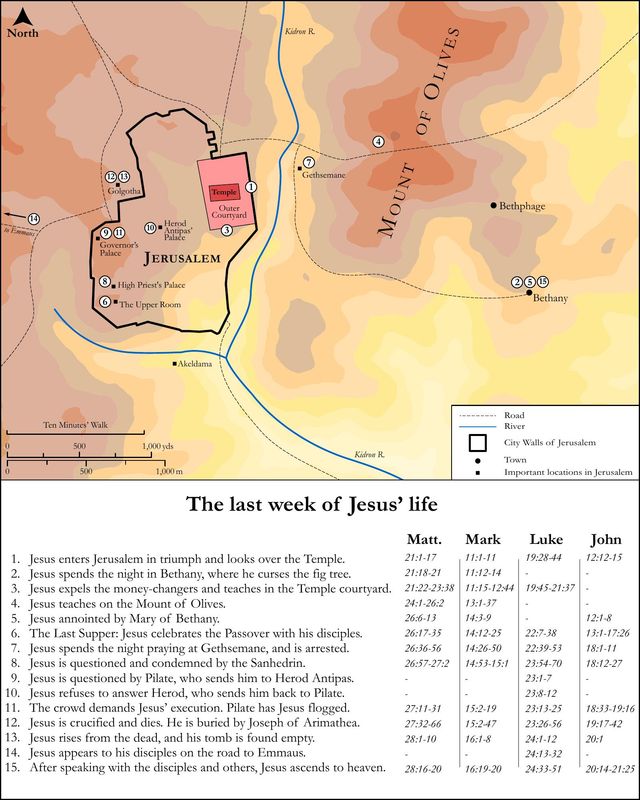
See on the biblical-era maps
Study this verse
Historical interpretation
Four Centuries of Reception
6 surviving comments on this verse. Each one is dated, so this reads as a timeline rather than a list.
Select a marker to jump to its quote. Markers stagger vertically where authors wrote within a few decades of each other.
And how was it they did not say that the baptism was of men? "They feared the people" it is said. Seest thou a perverse heart? In every case they despise God and do all things for the sake of men. For this man too they feared for their sakes not reverencing the saint but on account of men; and they were not willing to believe in Christ, because of men, and all their evils were engendered to them from hence.
After this, because they, dealing craftily, said, "We know not," He said not, neither know I, but what? "Neither tell I you." For if indeed they had been ignorant it would have been requisite for them to be instructed; but since they were dealing craftily with good reason He answers them nothing.
Or in these words they urge the same cavil as above, when they said, He casteth out demons through Beelzebub the Prince of the demons. (Mat. 12:24.) For when they say, By what authority doest thou these things? they doubt concerning the power of God, and would have it understood that the things He does are of the Devil. But when they add, Who gave thee this authority? they most clearly deny the Son of God, whom they suppose to work miracles, not by His own, but by others' strength. The Lord could have confuted the calumny of His tempters by a simple answer, but He put a question to them of such skilful contrivance, that they must be condemned either by their silence or their knowledge; Jesus answered and said unto them, I also will ask you one question.
What the Priests revolved in their malice is shown when he adds, But they reasoned with themselves. For had they replied that it was from heaven, the question was inevitable, Why then were ye not baptized by John? But should they reply that it was an invention of human device, and had in it nothing divine, they feared a tumult among the people. For all the assembled multitudes had received John's baptism, and held him accordingly for a Prophet. This godless party therefore make answer, and by a seeming humility of speech confessing that they know not, turned to hide their insidious designs. And they answered Jesus, and said, We know not. In saying that they knew not, they lied; and it might have followed upon their answering thus, that the Lord also should say, I know not; but truth cannot lie, and therefore it follows, And he said unto them, Neither tell I you by what authority I do these things. This shows that they knew, but would not answer, and that He also knew, but would not answer, because they would not speak what they knew.
In answering Jesus that they did not know, the chief priests and elders lied. Consequently it would have been appropriate for the Lord to respond by saying, “Neither do I know.” The truth cannot lie, however, so he replied instead, “Neither will I tell you.” By this he shows both that they knew the answer but were unwilling to say it and that he also knows the answer but will not speak it because they remained silent. Immediately, then, he tells a parable designed to convince them of their own sinfulness and of the necessity that the kingdom of God be transferred to the Gentiles.
(Verse 24 onwards) But Jesus, answering, said to them: I will also ask you one question, which if you tell me, I will also tell you by what authority I do these things. The baptism of John, whence was it? From heaven or from men? But they thought within themselves, saying: If we say, From heaven, he will say to us: Why then did you not believe him? But if we say, From men, we are afraid of the multitude: for all held John as a prophet. And answering Jesus, they said: We do not know. This is what is commonly said: A bad knot of a tree, a bad nail or wedge must be driven in. The Lord could have refuted the calumny of the tempters with an open response, but He wisely asks a question, so that they themselves, either by silence or by their answer, may be condemned. For if they had answered that the baptism of John was from heaven (as they cleverly handled in their malice), the consequent response would have been: Why then were you not baptized by John? If they had wanted to say that it was a human invention and had nothing divine, they feared the rebellion of the people. For all the crowds had received John's baptism in groups, and they held him as a prophet. Therefore, the most impious faction responded and, using the word of humility by which they claimed not to know, used it to plot deceit.
The Priests were tormented with jealousy, because they had seen Christ entering the Temple in great glory. And not being able to master the fire of jealousy which burnt in their breasts, they break forth in speech.
By that they add, Or who gave thee this authority? they show that there be many persons who give power to men, whether corporal or spiritual! as though they had said, Thou art not come of a priestly family; the Senate has not conferred on Thee this power, neither has Cæsar granted it. But had they believed that all power is from God, they would never have asked, Who gave thee this authority? For every man judges of others by himself. The fornicator thinks that none are chaste; the chaste does not readily suspect any of fornication; he who is not a Priest of God, thinks no man's Priesthood to be of God.
Not that they should answer it, and thereupon hear of Christ the answer to their question, but that being puzzled they should ask Him no farther; according to that precept He had given above, Give not that which is holy to the dogs. (Mat. 7:6.) For even if He had told them, it would have profited nothing, because the darkened will cannot perceive the things that are of the light. For him that enquires we ought to instruct, but him that tempts, to overthrow by a stroke of reasoning, but not to publish to him the power of the mystery. The Lord thus sets before them in His question a dilemma; and that they might not escape Him, says, Which if ye tell me, I in like wise will tell you by what authority I do these things. His question is this; The baptism of John whence was it? from heaven, or of men?
There are two reasons why the knowledge of truth should be kept back from those who ask; either when he who asks is unfit to receive, or from his hatred or contempt of the truth is unworthy to have that which he asks opened to him.
Continue studying Matthew 21:26 across the web’s major study libraries — every link below opens this exact verse, chapter, or book on the destination site.
Read & Compare
 BibleGatewayThis verse in more than 200 translations and 70 languages.
 Bible.comThe YouVersion reader — hundreds of translations, reading plans, and highlights.
 ESV.orgCrossway's official English Standard Version reader.
 NET BibleThe NET translation with 60,000+ translators' notes on every rendering decision.
 STEP BibleTyndale House's free study tool — original text, vocabulary, and scholarly resources.
 BibliaLogos Bible Software's free web reader.
 USCCBThe New American Bible (Revised Edition) with the U.S. bishops' study notes.
Commentaries
 BibleHub CommentariesDozens of classic commentaries on this verse, gathered on one page.
 StudyLightMore than 100 commentary sets — the largest collection on the web.
 BibleRefPlain-English commentary on what this verse means, verse by verse.
 Enduring WordDavid Guzik's free commentary on this chapter, widely used by Bible teachers.
 Bible Study ToolsVerse commentary alongside Greek and Hebrew study aids.
Original Language & Research
- BibleHub InterlinearThe verse word by word — original language, transliteration, and English.
- BibleHub LexiconEvery word's original-language definition and Strong's entry.
 Blue Letter BibleDeep-study tools — Strong's numbers, concordance, and word studies.
 CNTR CollationThe earliest Greek manuscripts of this verse, collated letter by letter.
Sermons, Hymns & Audio


TrulyRandomVerse is not affiliated with these sites and doesn’t control their content. They’re linked because they’re genuinely useful.
Summary
Matthew 21:26 captures the profound dilemma faced by the chief priests and elders of Israel when confronted by Jesus' counter-question regarding the authority of John the Baptist. Trapped between acknowledging John's divine commission (which would expose their unbelief) and denying it (which would provoke the revered populace), the religious leaders reveal their primary motivation: not a pursuit of truth or reverence for God, but a profound fear of public opinion and the loss of their social standing. This verse underscores the widespread popular acceptance of John as a true prophet and highlights the spiritual cowardice and hypocrisy of those who claimed spiritual authority.
Context
ShowHideLiterary Context
This verse is embedded within a pivotal confrontation in Jesus' final week in Jerusalem, immediately following His triumphal entry into the city and the dramatic cleansing of the Temple. Having asserted His authority through these actions, Jesus is challenged by the chief priests and elders in Matthew 21:23. They demand to know "By what authority do You do these things? And who gave You this authority?" Instead of directly answering, Jesus poses a counter-question about John the Baptist's baptism: "From where was it? From heaven or from men?" Their response to this question, or lack thereof, would reveal their true spiritual state and motives, effectively turning the tables on their challenge to Jesus' own authority. The entire exchange serves to expose the spiritual blindness and self-serving nature of the religious establishment.
Historical & Cultural Context
First-century Judea was under Roman occupation, but the Jewish religious leaders, particularly the Sanhedrin (composed of chief priests, elders, and scribes), held significant religious and civil authority under Roman oversight. Maintaining social order and their own power was paramount. Prophets, like John the Baptist, held a unique and revered place in Jewish society, seen as direct messengers from God. The public's perception of a prophet carried immense weight, often more so than the official religious hierarchy, especially if the hierarchy was perceived as corrupt or compromised. John the Baptist had garnered immense popular support, drawing crowds from all over Judea and beyond, and his message of repentance and the coming Messiah resonated deeply with the common people, who saw him as a legitimate prophetic figure in the tradition of Elijah. To deny John's divine authority would risk public unrest and potentially incite a riot, a situation the leaders desperately wanted to avoid, given the watchful eye of the Roman authorities.
Key Themes
ShowHideThis verse powerfully contributes to several overarching themes in Matthew's Gospel and the broader biblical narrative. Firstly, it highlights the contrast between divine authority and human authority, demonstrating Jesus' unparalleled wisdom in exposing the leaders' true allegiances. Secondly, it vividly illustrates the danger of the fear of man over the fear of God, a recurring biblical warning, as seen in Proverbs 29:25. The leaders' primary concern was not truth or God's will, but their own reputation and safety. Thirdly, it underscores the hypocrisy and spiritual blindness of the religious elite, who, despite their outward piety, prioritized political expediency and self-preservation over spiritual integrity and submission to God's revealed truth. Their inability to answer Jesus' question directly reveals their moral and spiritual bankruptcy, a theme consistently critiqued by Jesus throughout His ministry, particularly in Matthew 23.
Exposition and Analysis
ShowHideKey Word Analysis
ShowHideThis verb, G5399, means "to frighten, i.e. (passively) to be alarmed; by analogy, to be in awe of, i.e. revere." In this context, it clearly denotes alarm and dread of the consequences of offending the populace, rather than a reverent awe of God. The leaders are paralyzed by the potential negative repercussions from the crowd, revealing their misplaced priorities.
Derived from a word meaning "a vehicle," refers to "a throng (as borne along); by implication, the rabble; by extension, a class of people; figuratively, a riot." Here, it specifically refers to the common multitude or crowd who held John in high esteem. The leaders' fear was of this "throng" potentially turning into a "riot" if John's prophetic status was denied.
From a compound of pró (before or forth) and phēmí (to speak), literally means "a foreteller ('prophet'); by analogy, an inspired speaker." While foretelling the future is part of a prophet's role, the primary function is to "speak forth" God's message, to be His mouthpiece. The fact that "all hold John as a prophet" signifies the widespread belief that John's words carried divine authority and that he was a genuine messenger from God.
Verse Breakdown
ShowHide"But if we shall say, Of men;"
This clause reveals the leaders' internal deliberation and their awareness of the two possible answers to Jesus' question about John's authority. To declare John's baptism as merely "of men" (i.e., human in origin, lacking divine sanction) was the alternative they considered, but immediately rejected due to external pressure. It highlights their strategic, rather than theological, thinking.
"we fear the people;"
This is the core admission of their motivation. Their decision-making process is dictated not by truth or conviction, but by the pragmatic concern of public backlash. The "fear" here is a self-preserving dread of the multitude's potential anger or violence, demonstrating a profound lack of courage and spiritual integrity.
"for all hold John as a prophet."
This final clause provides the explicit reason for their fear. John's widespread popularity and his undisputed status as a prophet among the common people made it politically untenable for the leaders to deny his divine authority. The universal popular consensus regarding John's prophetic calling rendered the "of men" option too dangerous for their positions and safety.
Literary Devices
ShowHideThe passage is rich with Irony. The very religious leaders who should be discerning divine truth and leading the people in righteousness are shown to be more concerned with human opinion than with God's will. Their fear of the people, rather than a reverent fear of God, is deeply ironic given their sacred office. There is a strong Contrast established between Jesus' unwavering authority and truthfulness, and the leaders' cowardice and duplicity. The leaders' internal monologue, though not explicitly stated as such, functions as a form of Indirect Discourse, revealing their true motivations and the trap Jesus' question has set for them. The phrase "all hold John as a prophet" acts as a form of Hyperbole to emphasize the overwhelming popular support for John, making the leaders' position untenable.
Theological and Thematic Connections
ShowHideThis passage powerfully illustrates the spiritual danger of prioritizing human approval over divine truth, a theme echoed throughout Scripture. The chief priests and elders, representatives of God's chosen people, were so consumed by their fear of the crowd and the desire to maintain their power and reputation that they were willing to compromise truth and evade responsibility. Their fear of man became a snare, blinding them to the clear evidence of John's prophetic ministry and, by extension, to the Messiah he proclaimed. This stands in stark contrast to the call for believers to fear God alone, which is the beginning of wisdom and the foundation of true spiritual freedom.
Reflection and Application
ShowHideMatthew 21:26 serves as a profound mirror for us today, especially for those in positions of influence within the church or society. It challenges us to honestly examine our own motivations: are we driven by a genuine pursuit of God's truth and obedience to His will, or are we subtly swayed by the desire for human approval, the fear of criticism, or the potential loss of status? The example of the chief priests and elders demonstrates the spiritual decay that sets in when we prioritize public image and personal safety over divine conviction and integrity. True courage in faith means standing for what is right, even when it is unpopular, trusting in God's approval above all human applause. This passage calls us to cultivate a robust fear of God that liberates us from the enslaving fear of man, enabling us to speak truth, act justly, and live authentically, regardless of the consequences.
Questions for Reflection
ShowHideFAQ
ShowHideWhy did Jesus ask the religious leaders about John's baptism instead of directly answering their question?
ShowHideJesus' counter-question was a masterful rhetorical strategy designed to expose the true motives and spiritual condition of the chief priests and elders. By asking them to declare the source of John's authority—"from heaven, or of men?"—Jesus forced them into a dilemma. If they said "from heaven," they would condemn themselves for not believing John, who testified about Jesus John 1:29. If they said "of men," they risked a violent backlash from the populace, who universally revered John as a prophet. Their inability to answer revealed their hypocrisy and their greater concern for self-preservation and public opinion than for divine truth. This exposed their lack of genuine authority and integrity, effectively disarming their challenge to Jesus.
What was the significance of John the Baptist's popularity among the people?
ShowHideJohn the Baptist's widespread popularity, as noted by the phrase "all hold John as a prophet," was highly significant. It indicated that the common people genuinely recognized him as a legitimate messenger from God, a true prophet in the tradition of ancient Israel. His ministry, characterized by a call to repentance and baptism for the forgiveness of sins Luke 3:3, resonated deeply with the spiritual longings of the time. This popular esteem meant that any official denial of John's divine authority by the religious leaders would be met with strong public disapproval, potentially leading to social unrest or even a riot, which the leaders feared. His popularity also served as a powerful testimony to the truth of his message, which ultimately pointed to Jesus as the Messiah.
Christ-Centered Fulfillment
ShowHideMatthew 21:26, though focusing on the religious leaders' fear and hypocrisy, ultimately points to the supreme authority and uncompromised truth of Jesus Christ. The leaders' refusal to acknowledge John's divine authority was, in essence, a veiled rejection of God's preparatory work for the Messiah, and by extension, a rejection of Christ Himself. John, as the greatest of the prophets Matthew 11:11, served as the direct forerunner to Jesus, preparing the way for His ministry. The leaders' fear of man prevented them from embracing the divine truth John proclaimed, which would have led them to recognize Jesus as the Son of God. In contrast to their cowardice, Jesus consistently demonstrated unwavering obedience to His Father and fearless proclamation of truth, even when it led to His own suffering and ultimately, His crucifixion. His authority was not derived from human approval but from His divine nature and His perfect submission to the Father's will John 5:30. This passage, therefore, highlights the essential choice presented to humanity: to succumb to the fear of man and reject God's truth, or to embrace Christ's divine authority and follow Him, regardless of the cost, finding true life and freedom in Him Matthew 10:39.