


Matthew 21:46
Bible text: King James Version (1769 Blayney text) · Public domain
Bible text: Berean Standard Bible · Public domain
Bible text: American Standard Version (1901) · Public domain
Bible text: World English Bible, Messianic edition · Public domain
Bible text: Geneva Bible (1599) · Public domain
Bible text: Young's Literal Translation · Public domain
- καὶkaiAndG2532CONJConjunction
- ζητοῦντεςzētountesseekingG2212V-PAP-NPMVerb Present Active Participle Nominative Plural Masculine
- αὐτὸνautonHimG846P-ASMPersonal pronoun Accusative Singular Masculine
- κρατῆσαιkratēsaito lay hold ofG2902V-AANVerb Aorist Active Infinitive
- ἐφοβήθησανephobēthēsanthey fearedG5399V-AOI-3PVerb Aorist Passive Deponent Indicative 3rd Plural
- τοὺςtoustheG3588T-APMDefinite article Accusative Plural Masculine
- ὄχλουςochlouscrowdsG3793N-APMNoun Accusative Plural Masculine
- ἐπεὶepeibecauseG1893CONJConjunction
- εἰςeistoG1519PREPPreposition
- προφήτηνprophētēna prophetG4396N-ASMNoun Accusative Singular Masculine
- αὐτὸνautonHimG846P-ASMPersonal pronoun Accusative Singular Masculine
- εἶχονeichonthey were holdingG2192V-IAI-3PVerb Imperfect Active Indicative 3rd Plural
English is a literal word-by-word gloss of the Greek, not the KJV's wording. Why?
This is the original text the KJV's translators worked from — each Greek word with its own literal English meaning in this verse, prepared by scholars at Tyndale House, Cambridge. The KJV translates whole sentences, not word by word, so its wording differs: one Greek word can become several English words, and the KJV may choose “charity” where the gloss reads “love”. Both are faithful — they answer different questions. For the KJV's own rendering, switch to the KJV text.
Details
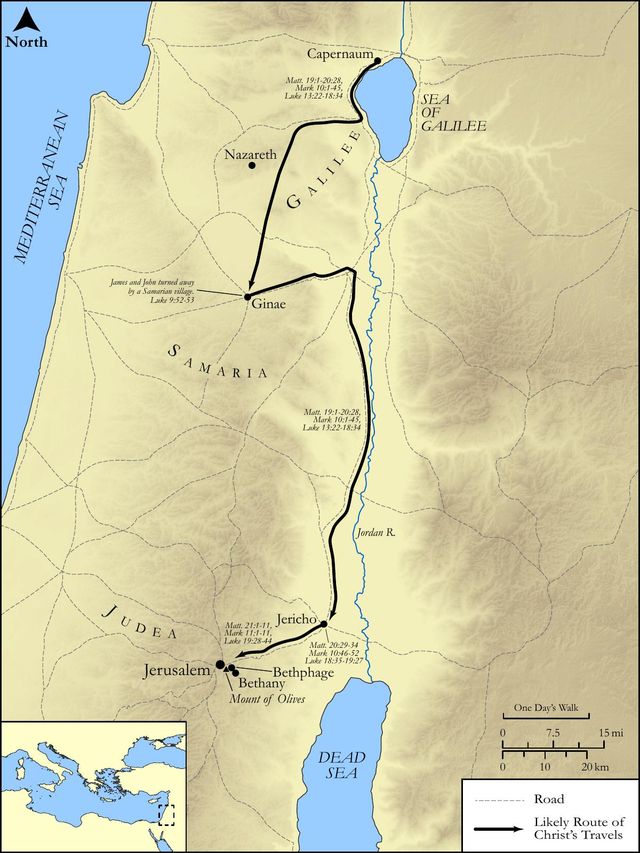
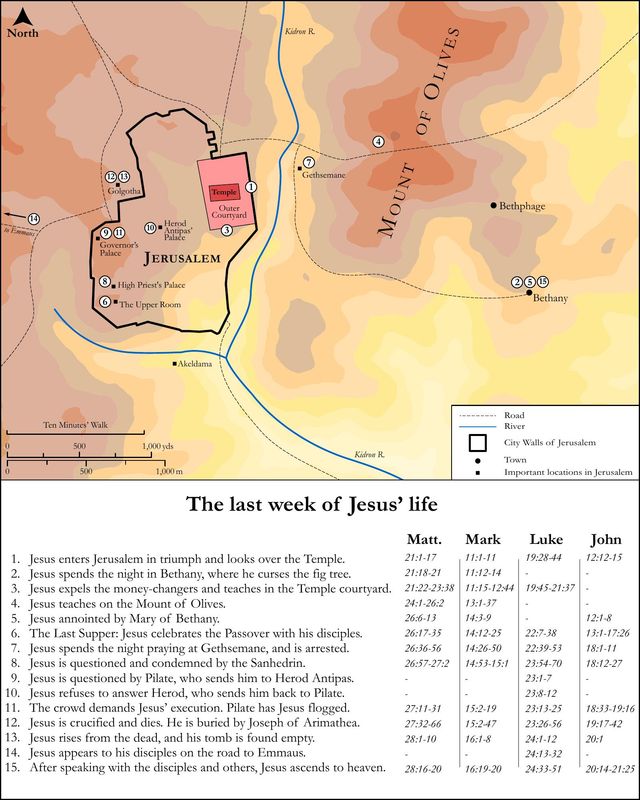
See on the biblical-era maps

Study this verse
Historical interpretation
Nine Centuries of Reception
8 surviving comments on this verse. Each one is dated, so this reads as a timeline rather than a list.
Select a marker to jump to its quote. Markers stagger vertically where authors wrote within a few decades of each other.
One thing they know which is true concerning Him; they esteemed Him a Prophet, though not understanding His greatness in respect of His being the Son of God. But the rulers feared the multitude who thought thus of Him, and were ready to fight for Him; for they could not attain to the understanding which the multitude had, seeing they thought nothing worthy concerning Him. Further, know that there are two different kinds of desires to lay hands on Jesus. The desire of the rulers and Pharisees was one kind; another that of the Bride, I held him, and would not let him go; (Song of Sol. 3:4. ch. 7:8.) intending to try Him still further, as she saith, I will get me up into the palm tree, I will lay hold of its height. All who think not rightly concerning His divinity, seek to lay hands on Jesus in order to put Him to death. Other words indeed excepting the word of Christ it is possible to seize and to hold, but the word of truth none can seize, that is, understand; none can hold it, that is, convict; nor separate it from the conviction of those that believe; nor do it to death, that is, destroy it.
What then ought they to have done on hearing these things? ought they not to have adored, to have marvelled at the tender care, that shown before, that afterwards? But if by none of these things they were made better, by the fear of punishment at any rate ought they not to have been rendered more temperate?
But they did not become so, but what do they after these things? "When they had heard it," it is said, "they perceived that He spake of them. And when they sought to lay hands on Him, they were afraid because of the multitudes, for they took Him for a prophet." For they felt afterwards that they themselves were intimated. Sometimes indeed, when being seized, He withdraws through the midst of them, and is not seen; and sometimes while appearing to them He lays a check upon their laboring eagerness; at which indeed men marveled, and said, "Is not this Jesus? Lo, He speaketh boldly, and they say nothing unto Him." But in this instance, forasmuch as they were held in restraint by the fear of the multitude, He is satisfied with this, and doth not work miracles, as before, withdrawing through the midst, and not appearing. For it was not His desire to do all things in a superhuman way, in order that the Dispensation might be believed.
But they, neither by the multitude, nor by what had been said, were brought to a sound mind; they regarded not the prophet's testimony, nor their own sentence, nor the disposition of the people; so entirely had the love of power and the lust of vainglory blinded them, together with the pursuit of things temporal.
(Verse 45, 46.) And when the chief priests and Pharisees heard his parables, they realized that he was speaking about them. And they sought to arrest him, but they feared the crowds because they regarded him as a prophet. Though they had hard hearts and were dull in their disbelief and impiety towards the Son of God, they could not deny the clear accusations, and they understood that all of the Lord's judgments were directed against them. Therefore, they indeed wanted to kill him, but they feared the crowds because they regarded him as a prophet. The crowd is always fickle, and does not persist in a fixed will: it is like the waves, being carried back and forth by the force of different winds. They now venerate and worship him as if he were a prophet, but later they shout against him: Crucify him, crucify such a person (John 19:6).
Although [the chief priests and the Pharisees] were hard of heart and on account of their unbelief and wickedness blunted in their understanding against the Son of God, nevertheless they were unable to deny Jesus’ straightforward statements and understood that all the judgments of the Lord were directed against themselves. So they determined indeed to kill him but feared “the crowd, for they considered Jesus to be a prophet.” A crowd is always easily moved, not persisting with their will in their resolution. Additionally they are like waves and opposite winds blown to and fro. The one they now honor and revere as a prophet they later shout against: “Crucify, crucify” such a man.
Hard as were the hearts of the Jews in unbelief, they yet perceived that the Lord's sentence was directed against themselves.
(in fin. Hom. xxxix.) Here is the difference between good and bad men. The good man when taken in a sin has sorrow because he has sinned, the bad man is grieved not because he has sinned, but because he is found out in his sin; and he not only does not repent, but is indignant with him that reproved him. Thus they being taken in their sins were stirred up to still greater wickedness; And they sought to lay hands on him, but feared the multitude, because they took him for a Prophet.
Every wicked man also, as far as his will is concerned, lays hands on God, and puts Him to death. For whoso tramples upon God's commandments, or murmurs against God, or raises a sullen look to heaven, would not he, if he had the power, lay hands on God, and kill Him, that he might sin without restraint?
This, that they are afraid to lay hands on Jesus because of the multitudes, is daily acted in the Church, when any who is a brother only in name, is ashamed or afraid to assail the unity of faith and peace which he does not love, because of the good men with whom he lives.
. See once again that the multitude, which is simple and guileless, follows the truth, while the teachers of the law work evil. But even today there are Jews who seek to lay hands on Christ, but they neither grasp nor understand Him. For they shall grasp the Antichrist and shall bow down and worship him, while Christ will not be grasped, that is, understood, by them.
Continue studying Matthew 21:46 across the web’s major study libraries — every link below opens this exact verse, chapter, or book on the destination site.
Read & Compare
 BibleGatewayThis verse in more than 200 translations and 70 languages.
 Bible.comThe YouVersion reader — hundreds of translations, reading plans, and highlights.
 ESV.orgCrossway's official English Standard Version reader.
 NET BibleThe NET translation with 60,000+ translators' notes on every rendering decision.
 STEP BibleTyndale House's free study tool — original text, vocabulary, and scholarly resources.
 BibliaLogos Bible Software's free web reader.
 USCCBThe New American Bible (Revised Edition) with the U.S. bishops' study notes.
Commentaries
 BibleHub CommentariesDozens of classic commentaries on this verse, gathered on one page.
 StudyLightMore than 100 commentary sets — the largest collection on the web.
 BibleRefPlain-English commentary on what this verse means, verse by verse.
 Enduring WordDavid Guzik's free commentary on this chapter, widely used by Bible teachers.
 Bible Study ToolsVerse commentary alongside Greek and Hebrew study aids.
Original Language & Research
- BibleHub InterlinearThe verse word by word — original language, transliteration, and English.
- BibleHub LexiconEvery word's original-language definition and Strong's entry.
 Blue Letter BibleDeep-study tools — Strong's numbers, concordance, and word studies.
 CNTR CollationThe earliest Greek manuscripts of this verse, collated letter by letter.
Sermons, Hymns & Audio


TrulyRandomVerse is not affiliated with these sites and doesn’t control their content. They’re linked because they’re genuinely useful.
Summary
Following Jesus' scathing parable of the wicked tenants, the chief priests and Pharisees, recognizing the indictment against themselves, desired to apprehend Him. However, their intent was thwarted by their apprehension of the crowd's reaction, as the multitude widely regarded Jesus as a legitimate prophet, a messenger from God. This verse highlights the religious leaders' fear of popular opinion over divine truth and the growing tension between Jesus and the establishment, who were constrained by the people's reverence for Him.
Context
ShowHideLiterary Context
This verse concludes a series of confrontational encounters and parables in Matthew 21. Immediately preceding this, Jesus has delivered the Parable of the Wicked Tenants (Matthew 21:33-44). In this parable, the vineyard owner represents God, the tenants represent the religious leaders of Israel, and the owner's son represents Jesus. The parable explicitly foretells the rejection and murder of the Son, and the subsequent transfer of the kingdom's stewardship to others. The religious leaders "perceived that he spake of them" (Matthew 21:45), leading directly to their desire to seize Him. This verse thus serves as the immediate consequence of their understanding and the temporary restraint on their hostile actions. It sets the stage for further debates and parables in Matthew 22 and the ultimate rejection of Jesus.
Historical & Cultural Context
Jesus' ministry was reaching its climax during Passion Week in Jerusalem, a city brimming with pilgrims for Passover. The religious authorities—the chief priests, scribes, and Pharisees—held significant power and influence over Jewish society, both religiously and politically, under Roman oversight. They viewed Jesus as a threat to their authority, traditions, and even their national stability (John 11:48). The concept of a "prophet" was deeply ingrained in Jewish culture, harkening back to figures like Moses, Elijah, and Isaiah. Prophets were seen as God's direct spokespersons, and harming one was considered a grave offense against God Himself. The multitude, many of whom were Galileans who had witnessed Jesus' miracles and teachings, held a genuine, albeit sometimes superficial, respect for Him as a man of God, perhaps even the "prophet who is to come" (John 6:14). This popular sentiment provided a crucial, albeit temporary, shield for Jesus against the immediate wrath of the Sanhedrin.
Key Themes
ShowHideThis verse powerfully illustrates several recurring themes in Matthew's Gospel. Firstly, the conflict between Jesus and the religious establishment is starkly evident; their desire to "lay hands on him" underscores their escalating animosity and rejection of His divine authority. Secondly, it highlights the fear of man over the fear of God, as the leaders' actions are dictated by public opinion rather than righteous judgment or spiritual conviction. Their primary concern is maintaining their societal standing and control, not discerning God's will. Thirdly, the popular perception of Jesus as a prophet is a significant theme, demonstrating that while many recognized His divine anointing and powerful words, they had not yet fully grasped His identity as the Messiah and Son of God, a revelation that would come with His crucifixion and resurrection. This popular support, however, served as a divine providence, delaying His arrest until God's appointed time.
Exposition and Analysis
ShowHideKey Word Analysis
ShowHideMeaning "to seek (literally or figuratively); specially, (by Hebraism) to worship (God), or (in a bad sense) to plot (against life)." In this context, zētéō implies a deliberate and hostile intent to find a way or opportunity to seize Jesus, indicating a malicious plotting rather than a simple search.
Meaning "to frighten, i.e. (passively) to be alarmed; by analogy, to be in awe of, i.e. revere." Here, phobéō denotes a genuine apprehension or dread on the part of the religious leaders. Their fear was not one of reverence for God or His prophet, but a pragmatic fear of the physical and political repercussions from the crowd if they acted against Jesus.
Meaning "a foreteller ('prophet'); by analogy, an inspired speaker; by extension, a poet." The multitude's perception of Jesus as a prophḗtēs means they viewed Him as a divinely inspired messenger, one who spoke God's truth, much like the great prophets of Israel's past. This popular recognition endowed Jesus with a sacred status in the eyes of the people, making any direct assault on Him highly risky for the authorities.
Verse Breakdown
ShowHide"But when they sought to lay hands on him"
This phrase reveals the immediate, hostile intention of the chief priests and Pharisees. Having understood Jesus' parable as a direct condemnation of their leadership and a prophecy of their removal, their natural response was to eliminate the perceived threat. The phrase "lay hands on him" (Greek kratéō, G2902) implies seizing with force, indicating a desire for arrest and detention, likely with the ultimate goal of silencing or destroying Him.
"they feared the multitude"
This clause introduces the crucial obstacle to their immediate plan. Despite their intense desire to act, their fear of the crowd's reaction superseded their animosity toward Jesus. This highlights their pragmatic, self-preserving nature and their reliance on popular support or at least tolerance for their authority. Their fear was not of God, but of social and political upheaval.
"because they took him for a prophet"
This final clause provides the reason for the multitude's protective stance and, consequently, the leaders' fear. The people, many of whom had witnessed Jesus' miracles, heard His authoritative teaching, and perhaps even seen His triumphal entry, genuinely believed Him to be a prophet sent from God. This popular conviction made any open act of aggression against Jesus politically dangerous for the religious authorities, as it could incite a riot or undermine their already tenuous control.
Literary Devices
ShowHideThe verse employs Irony, Foreshadowing, and Contrast. The irony lies in the fact that the religious leaders, who were supposed to be spiritual guides, were more concerned with public opinion and their own power than with the truth of God's message delivered by Jesus. They feared the multitude more than they feared God, whose Son they sought to apprehend. This stands in stark contrast to the multitude, who, despite their imperfect understanding, recognized Jesus' prophetic authority. The verse also serves as foreshadowing, hinting at the inevitable confrontation and eventual arrest of Jesus, but also indicating that it would not happen until the opportune moment, when the popular support would wane or be manipulated.
Theological and Thematic Connections
ShowHideMatthew 21:46 powerfully illustrates the deep spiritual blindness of the religious leaders who, despite their privileged position and knowledge of the Scriptures, failed to recognize or accept God's ultimate messenger. Their fear of the multitude, driven by a desire to maintain their earthly authority, stands in stark contrast to the fear of God that should have characterized their leadership. This episode underscores the tragic reality of rejecting divine truth when it challenges human power structures, a theme echoed throughout biblical history. The people's recognition of Jesus as a prophet, while incomplete, served as a divine protection, delaying the leaders' plans until God's appointed time for the Messiah's sacrifice.
Reflection and Application
ShowHideMatthew 21:46 offers a profound reflection on the nature of spiritual authority, the dangers of human fear, and the often-complex dynamics of popular perception. The religious leaders, entrusted with guiding God's people, prioritized their own prestige and control over discerning and embracing divine truth. Their fear of the multitude reveals a fundamental misplacement of their reverence—a fear of man rather than a fear of God. For us today, this serves as a potent warning: are we more concerned with what others think of us, or with faithfully obeying God's will? Do we seek to maintain our comfort and standing, or are we willing to embrace uncomfortable truths that challenge our preconceived notions or power structures? The multitude, though not fully understanding Jesus' messianic identity, recognized His prophetic anointing, demonstrating that even partial spiritual insight can lead to a protective reverence. This invites us to consider our own level of understanding and commitment to Jesus: do we merely see Him as a good teacher or prophet, or do we embrace Him as Lord and Savior? True faith requires moving beyond mere admiration to full surrender and obedience, regardless of the cost or popular opinion.
Questions for Reflection
ShowHideFAQ
ShowHideWhy did the religious leaders fear the multitude so much?
ShowHideThe religious leaders feared the multitude because the people largely held Jesus in high regard, viewing Him as a prophet sent from God. To openly arrest or harm Jesus would have been seen as an act against a divine messenger, potentially inciting a riot among the people, especially during the Passover festival when Jerusalem was crowded and tensions were high. Their authority and position depended on maintaining public order and, to a degree, popular support. Acting against Jesus, whom the people "took for a prophet," would have jeopardized their control and could have led to civil unrest, which would have displeased the Roman authorities and potentially led to their removal from power (John 11:48).
Christ-Centered Fulfillment
ShowHideMatthew 21:46, though seemingly a simple account of the religious leaders' fear, profoundly points to Christ's unique identity and the divine orchestration of His passion. The fact that the multitude "took him for a prophet" is a partial but significant recognition of Jesus' role as God's ultimate messenger, echoing the Old Testament prophets who spoke God's word to His people. However, Jesus was far more than a prophet; He was the very Word made flesh (John 1:14), God's final and complete revelation to humanity (Hebrews 1:1-2). The leaders' fear of the crowd, ironically, served God's sovereign timetable, ensuring that Jesus would not be seized prematurely but at the precise moment appointed for His atoning sacrifice. This temporary protection allowed Jesus to continue teaching and fulfilling prophecies until the time when He would willingly lay down His life, not by the force of human hands, but by His own divine will, as the Lamb of God who takes away the sin of the world (John 10:18 and John 1:29). Thus, even in the opposition of His enemies, God's plan for Christ's redemptive work was being meticulously unfolded.