


Job 15:14
Bible text: King James Version (1769 Blayney text) · Public domain
Bible text: Berean Standard Bible · Public domain
Bible text: American Standard Version (1901) · Public domain
Bible text: World English Bible, Messianic edition · Public domain
Bible text: Geneva Bible (1599) · Public domain
Bible text: Young's Literal Translation · Public domain
- מָהmahwhat?H4100InterrogPronoun Interrogative
- אֱנוֹשׁ'e·No·osh[is] a personH582N-msNoun Singular Masculine Absolute
- כִּיkithatH3588PrtParticle Conditional
- יִזְכֶּהyiz·Kehhe will be pureH2135V-Qal-Imperf-3msVerb Qal Imperfect 3rd Singular Masculine
- וְכִיve·khiand thatH3588Conj-w ¦ PrtParticle Conditionalוְandכִיthat
- יִצְדַּקyitz·Dakhe will be righteousH6663V-Qal-Imperf-3msVerb Qal Imperfect 3rd Singular Masculine
- יְלוּדye·Lud[one] born ofH3205V-Qal-PassPrtcpl-msVerb Qal Participle Passive Singular Masculine Construct
- אִשָּׁה'i·Shaha womanH802N-fsNoun Singular Feminine Absolute
English is a literal word-by-word gloss of the Hebrew, not the KJV's wording. Why?
This is the original text the KJV's translators worked from — each Hebrew word with its own literal English meaning in this verse, prepared by scholars at Tyndale House, Cambridge. The KJV translates whole sentences, not word by word, so its wording differs: one Hebrew word can become several English words, and the KJV may choose “the LORD” where the gloss reads “Yahweh”. Both are faithful — they answer different questions. For the KJV's own rendering, switch to the KJV text.
Details
See on the biblical-era map
Study this verse
Public-domain commentary
Matthew Henry
From his Commentary on the Whole Bible. Henry comments on passages, not single verses — this entry covers Job 15:1–16. His three-level outline is real structure in the source text, so it is rendered as structure.
Eliphaz here falls very foul upon Job, because he contradicted what he and his colleagues had said, and did not acquiesce in it and applaud it, as they expected. Proud people are apt thus to take it very much amiss if they may not have leave to dictate and give law to all about them, and to censure those as ignorant and obstinate, and all that is naught, who cannot in every thing say as they say. Several great crimes Eliphaz here charges Job with, only because he would not own himself a hypocrite.
I.He charges him with folly and absurdity (Job 15:2, Job 15:3), that, whereas he had been reputed a wise man, he had now quite forfeited his reputation; any one would say that his wisdom had departed from him, he talked so extravagantly and so little to the purpose. Bildad began thus (Job 8:2), and Zophar, Job 11:2, Job 11:3. It is common for angry disputants thus to represent one another's reasonings as impertinent and ridiculous more than there is cause, forgetting the doom of him that calls his brother Raca, and Thou fool. It is true,
1.That there is in the world a great deal of vain knowledge, science falsely so called, that is useless, and therefore worthless.
2.That this is the knowledge that puffs up, with which men swell in a fond conceit of their own accomplishments.
3.That, whatever vain knowledge a man may have in his head, if he would be thought a wise man he must not utter it, but let it die with himself as it deserves.
4.Unprofitable talk is evil talk. We must give an account in the great day not only for wicked words, but for idle words. Speeches therefore which do no good, which do no service either to God or our neighbour, or no justice to ourselves, which are no way to the use of edifying, were better unspoken. Those words which are as wind, light and empty, especially which are as the east wind, hurtful and pernicious, it will be pernicious to fill either ourselves or others with, for they will pass very ill in the account.
5.Vain knowledge or unprofitable talk ought to be reproved and checked, especially in a wise man, whom it worst becomes and who does most hurt by the bad example of it.
II.He charges him with impiety and irreligion (Job 15:4):
"Thou castest off fear," that is, "the fear of God, and that regard to him which thou shouldst have; and then thou restrainest prayer." See what religion is summed up in, fearing God and praying to him, the former the most needful principle, the latter the most needful practice. Where no fear of God is no good is to be expected; and those who live without prayer certainly live without God in the world. Those who restrain prayer do thereby give evidence that they cast off fear. Surely those have no reverence of God's majesty, no dread of his wrath, and are in no care about their souls and eternity, who make no applications to God for his grace. Those who are prayerless are fearless and graceless. When the fear of God is cast off all sin is let in and a door opened to all manner of profaneness. It is especially bad with those who have had some fear of God, but have now cast it off - have been frequent in prayer, but now restrain it. How have they fallen! How is their first love lost! It denotes a kind of force put upon themselves. The fear of God would cleave to them, but they throw it off; prayer would be uttered, but they restrain it; and, in both, they baffle their convictions. Those who either omit prayer or straiten and abridge themselves in it, quenching the spirit of adoption and denying themselves the liberty they might take in the duty, restrain prayer. This is bad enough, but it is worse to restrain others from prayer, to prohibit and discourage prayer, as Darius, Dan 6:7. Now,
1.Eliphaz charges this upon Job, either,
(1.)As that which was his own practice. He thought that Job talked of God with such liberty as if he had been his equal, and that he charged him so vehemently with hard usage of him, and challenged him so often to a fair trial, that he had quite thrown off all religious regard to him. This charge was utterly false, and yet wanted not some colour. We ought not only to take care that we keep up prayer and the fear of God, but that we never drop any unwary expressions which may give occasion to those who seek occasion to question our sincerity and constancy in religion. Or,
(2.)As that which others would infer from the doctrine he maintained. "If this be true" (thinks Eliphaz) "which Job says, that a man may be thus sorely afflicted and yet be a good man, then farewell all religion, farewell prayer and the fear of God. If all things come alike to all, and the best men may have the worst treatment in this world, every one will be ready to say, It is vain to serve God; and what profit is it to keep his ordinances? Mal 3:14. Verily I have cleansed my hands in vain, Psa 73:13, Psa 73:14. Who will be honest if the tabernacles of robbers prosper? Job 12:6. If there be no forgiveness with God (Job 7:21), who will fear him? Psa 130:4. If he laugh at the trial of the innocent (Job 9:23), if he be so difficult of access (Job 9:32), who will pray to him?" Note, It is a piece of injustice which even wise and good men are too often guilty of, in the heat of disputation, to charge upon their adversaries those consequences of their opinions which are not fairly drawn from them and which really they abhor. This is not doing as we would be done by.
2.Upon this strained innuendo Eliphaz grounds that high charge of impiety (Job 15:5): Thy mouth utters thy iniquity - teaches it, so the word is. "Thou teachest others to have the same hard thoughts of God and religion that thou thyself hast." It is bad to break even the least of the commandments, but worse to teach men so, Mat 5:19. If we ever thought evil, let us lay our hand upon our mouth to suppress the evil thought (Pro 30:32), and let us by no means utter it; that is putting an imprimatur to it, publishing it with allowance, to the dishonour of God and the damage of others. Observe, When men have cast off fear and prayer their mouths utter iniquity. Those that cease to do good soon learn to do evil. What can we expect but all manner of iniquity from those that arm not themselves with the grace of God against it? But thou choosest the tongue of the crafty, that is, "Thou utterest thy iniquity with some show and pretence of piety, mixing some good words with the bad, as tradesmen do with their wares to help them off." The mouth of iniquity could not do so much mischief as it does without the tongue of the crafty. The serpent beguiled Eve through his subtlety. See Rom 16:18. The tongue of the crafty speaks with design and deliberation; and therefore those that use it may be said to choose it, as that which will serve their purpose better than the tongue of the upright: but it will be found, at last, that honesty is the best policy. Eliphaz, in his first discourse, had proceeded against Job upon mere surmise (Job 4:6, Job 4:7), but now he has got proof against him from his own discourses (Job 15:6): Thy own mouth condemns thee, and not I. But he should have considered that he and his fellows had provoked him to say that which now they took advantage of; and that was not fair. Those are most effectually condemned that are condemned by themselves, Tit 3:11; Luk 19:22. Many a man needs no more to sink him than for his own tongue to fall upon him.
III.He charges him with intolerable arrogancy and self-conceitedness.
It was a just, and reasonable, and modest demand that Job had made (Job 12:3), Allow that I have understanding as well as you; but see how they seek occasion against him: that is misconstrued, as if he pretended to be wiser than any man. Because he will not grant to them the monopoly of wisdom, they will have it thought that he claims it to himself, Job 15:7-9. As if he thought he had the advantage of all mankind,
1.In length of acquaintance with the world, which furnishes men with so much the more experience: "Art thou the first man that was born; and, consequently, senior to us, and better able to give the sense of antiquity and the judgment of the first and earliest, the wisest and purest, ages? Art thou prior to Adam?" So it may be read. "Did not he suffer for sin; and yet wilt not thou, who art so great a sufferer, own thyself a sinner? Wast thou made before the hills, as Wisdom herself was? Pro 8:23, etc. Must God's counsels, which are as the great mountains (Psa 36:6), and immovable as the everlasting hills, be subject to thy notions and bow to them? Dost thou know more of the world than any of us do? No, thou art but of yesterday even as we are," Job 8:9. Or,
2.In intimacy of acquaintance with God (Job 15:8): "Hast thou heard the secret of God? Dost thou pretend to be of the cabinet-council of heaven, that thou canst give better reasons than others can for God's proceedings?" There are secret things of God, which belong not to us, and which therefore we must not pretend to account for. Those are daringly presumptuous who do. He also represents him,
(1.)As assuming to himself such knowledge as none else had: "Dost thou restrain wisdom to thyself, as if none were wise besides?" Job had said (Job 13:2), What you know, the same do I know also; and now they return upon him, according to the usage of eager disputants, who think they have a privilege to commend themselves: What knowest thou that we know not? How natural are such replies as these in the heat of argument! But how simple do they look afterwards, upon the review!
(2.)As opposing the stream of antiquity, a venerable name, under the shade of which all contending parties strive to shelter themselves: "With us are the gray-headed and very aged men, Job 15:10. We have the fathers on our side; all the ancient doctors of the church are of our opinion." A thing soon said, but not so soon proved; and, when proved, truth is not so soon discovered and proved by it as most people imagine. David preferred right scripture-knowledge before that of antiquity (Psa 119:100): I understand more than the ancients, because I keep thy precepts. Or perhaps one or more, if not all three, of these friends of Job, were older than he (Job 32:6), and therefore they thought he was bound to acknowledge them to be in the right. This also serves contenders to make a noise with to very little purpose. If they are older than their adversaries, and can say they knew such a thing before their opponents were born, this will not serve to justify them in being arrogant and overbearing; for the oldest are not always the wisest, Job 32:9.
IV.He charges him with a contempt of the counsels and comforts that were given him by his friends (Job 15:11): Are the consolations of God small with thee?
1.Eliphaz takes it ill that Job did not value the comforts which he and his friends administered to him more than it seems he did, and did not welcome every word they said as true and important. It is true they had said some very good things, but, in their application to Job, they were miserable comforters. Note, We are apt to think that great and considerable which we ourselves say, when others perhaps with good reason think it small and trifling. Paul found that those who seemed to be somewhat, yet, in conference, added nothing to him, Gal 2:6.
2.He represents this as a slight put upon divine consolations in general, as if they were of small account with him, whereas really they were not. If he had not highly valued them, he could not have borne up as he did under his sufferings. Note,
(1.)The consolations of God are not in themselves small. Divine comforts are great things, that is, the comfort which is from God, especially the comfort which is in God.
(2.)The consolations of God not being small in themselves, it is very lamentable if they be small with us. It is a great affront to God, and an evidence of a degenerate depraved mind, to disesteem and undervalue spiritual delights and despise the pleasant land. "What!" (says Eliphaz) "is there any secret thing with thee? Hast thou some cordial to support thyself with, that is a proprium, an arcanum, that nobody else can pretend to, or knows any thing of?" Or, "Is there some secret sin harboured and indulged in thy bosom, which hinders the operation of divine comforts?" None disesteem divine comforts but those that secretly affect the world and the flesh.
V.He charges him with opposition to God himself and to religion (Job 15:12, Job 15:13):
"Why doth thy heart carry thee away into such indecent irreligious expressions?" Note, Every man is tempted when he is drawn away of his own lust, Jam 1:14. if we fly off from God and our duty, or fly out into anything amiss, it is our own heart that carries us away. If thou scornest, thou alone shalt bear it. There is a violence, an ungovernable impetus, in the turnings of the soul; the corrupt heart carries men away, as it were, by force, against their convictions. "What is it that thy eyes wink at? Why so careless and mindless of what is said to thee, hearing it as if thou wert half asleep? Why so scornful, disdaining what we say, as if it were below thee to take notice of it? What have we said that deserves to be thus slighted - nay, that thou turnest thy spirit against God?" It was bad that his heart was carried away from God, but much worse that it was turned against God. But those that forsake God will soon break out in open enmity to him. But how did this appear? Why, "Thou lettest such words go out of thy mouth, reflecting on God, and his justice and goodness." It is the character of the wicked that they set their mouth against the heavens (Psa 73:9), which is a certain indication that the spirit is turned against God. He thought Job's spirit was soured against God, and so turned from what it had been, and exasperated at his dealings with him. Eliphaz wanted candour and charity, else he would not have put such a harsh construction upon the speeches of one that had such a settled reputation for piety and was now in temptation. This was, in effect, to give the cause on Satan's side, and to own that Job had done as Satan said he would, had cursed God to his face.
VI.He charges him with justifying himself to such a degree as even to deny his share in the common corruption and pollution of the human nature (Job 15:14): What is man, that he should be clean? that is, that he should pretend to be so, or that any should expect to find him so. What is he that is born of a woman, a sinful woman, that he should be righteous? Note,
1.Righteousness is cleanness; it makes us acceptable to God and easy to ourselves, Psa 18:24.
2.Man, in his fallen state, cannot pretend to be clean and righteous before God, either to acquit himself to God's justice or recommend himself to his favour.
3.He is to be adjudged unclean and unrighteous because born of a woman, from whom he derives a corrupt nature, which is both his guilt and his pollution. With these plain truths Eliphaz thinks to convince Job, whereas he had just now said the same (Job 14:4): Who can bring a clean thing out of an unclean? But does it therefore follow that Job is a hypocrite, and a wicked man, which is all that he denied? By no means. Though man, as born of a woman, is not clean, yet, as born again of the Spirit, he is clean.
4.Further to evince this he here shows,
(1.)That the brightest creatures are imperfect and impure before God, Job 15:15. God places no confidence in saints and angels; he employs both, but trusts neither with his service, without giving them fresh supplies of strength and wisdom for it, as knowing they are not sufficient of themselves, neither more nor better than his grace makes them. He takes no complacency in the heavens themselves. How pure soever they seem to us, in his eye they have many a speck and many a flaw: The heavens are not clean in his sight. If the stars (says Mr. Caryl) have no light in the sight of the sun, what light has the sun in the sight of God! See Isa 24:23.
(2.)That man is much more so (Job 15:16): How much more abominable and filthy is man! If saints are not to be trusted, much less sinners. If the heavens are not pure, which are as God made them, much less man, who is degenerated. Nay, he is abominable and filthy in the sight of God, and if ever he repent he is so in his own sight, and therefore he abhors himself. Sin is an odious thing, it makes men hateful. The body of sin is so, and is therefore called a dead body, a loathsome thing. Is it not a filthy thing, and enough to make any one sick, to see a man eating swine's food or drinking some nauseous and offensive stuff? Such is the filthiness of man that he drinks iniquity (that abominable thing which the Lord hates) as greedily, and with as much pleasure, as a man drinks water when he is thirsty. It is his constant drink; it is natural to sinners to commit iniquity. It gratifies, but does not satisfy, the appetites of the old man. It is like water to a man in a dropsy. The more men sin the more they would sin.
Historical interpretation
Three Centuries of Reception
3 surviving comments on this verse. Each one is dated, so this reads as a timeline rather than a list.
Select a marker to jump to its quote. Markers stagger vertically where authors wrote within a few decades of each other.
“Who is the person,” Eliphaz asks, “who can be blameless or can proclaim, I am righteous?” If, in fact, those who are very holy, both men and angels, and the purity itself of heaven before the judgment of the most pure God appear to be unclean, what should we say about the damnable and impure human being who drinks iniquity like a draught? He has said this because humans commit sin deliberately. The words “as he does not trust his saints” may also be interpreted in this manner, since the angels themselves can become different in their nature, and actually some of them slipped away from their own former position. Heaven is not pure because of this, and it is also often obscured by clouds.
37. For hereby alone that he is called ‘man’ he is described as earthly and weak; for man is so named [‘homo’ from ‘humus,’ as Hebrew ‘Adam’] from the earth. And how is it possible for him to be free from stain, who being made of earth of his own will fell into infirmity? where it is added; And he that is born of a woman, that he should be righteous? For the first piece of unrighteousness the woman proffered to the man in Paradise. And so how shall he appear righteous, who was born of her that proved the bidder of unrighteousness?
“He will drink iniquity like water.” The author says these words in order to show that [human beings] enjoy uttering blasphemies.
Continue studying Job 15:14 across the web’s major study libraries — every link below opens this exact verse, chapter, or book on the destination site.
Read & Compare
 BibleGatewayThis verse in more than 200 translations and 70 languages.
 Bible.comThe YouVersion reader — hundreds of translations, reading plans, and highlights.
 ESV.orgCrossway's official English Standard Version reader.
 NET BibleThe NET translation with 60,000+ translators' notes on every rendering decision.
 STEP BibleTyndale House's free study tool — original text, vocabulary, and scholarly resources.
 BibliaLogos Bible Software's free web reader.
 USCCBThe New American Bible (Revised Edition) with the U.S. bishops' study notes.
Commentaries
 BibleHub CommentariesDozens of classic commentaries on this verse, gathered on one page.
 StudyLightMore than 100 commentary sets — the largest collection on the web.
 BibleRefPlain-English commentary on what this verse means, verse by verse.
 Enduring WordDavid Guzik's free commentary on this chapter, widely used by Bible teachers.
 Bible Study ToolsVerse commentary alongside Greek and Hebrew study aids.
Original Language & Research
- BibleHub InterlinearThe verse word by word — original language, transliteration, and English.
- BibleHub LexiconEvery word's original-language definition and Strong's entry.
 Blue Letter BibleDeep-study tools — Strong's numbers, concordance, and word studies.
 SefariaThe Hebrew text with Rashi and centuries of Jewish commentary.
Sermons, Hymns & Audio


TrulyRandomVerse is not affiliated with these sites and doesn’t control their content. They’re linked because they’re genuinely useful.
Summary
Job 15:14, a rhetorical question posed by Eliphaz the Temanite, profoundly challenges the inherent capacity of humanity to achieve a state of purity or righteousness that meets God's divine standards. It asserts that no individual, by virtue of their birth or human effort, can stand blameless before a holy God, thereby underscoring the universal fallenness and moral inadequacy of mankind. This verse serves as a stark declaration of the vast and unbridgeable chasm between human nature and God's absolute holiness, highlighting humanity's desperate need for an external source of cleansing and justification.
Context
ShowHideLiterary Context
This verse is situated within Eliphaz's second speech to Job (found in Job 15:1-35), following Job's lament in Job 14. Eliphaz, increasingly frustrated by Job's refusal to confess sin, intensifies his argument that Job's suffering must be a direct consequence of his transgressions. He employs a series of rhetorical questions and strong assertions (such as those found in Job 15:15-16) to dismantle any implied claims of Job's innocence. Eliphaz's aim is to humble Job by emphasizing the universal sinfulness of humanity, thereby pressuring Job to confess his supposed transgressions and seek God's forgiveness. This speech is a critical part of the broader dialogue where Job's friends consistently misapply sound theological principles to Job's unique and blameless situation, as later revealed by God.
Historical & Cultural Context
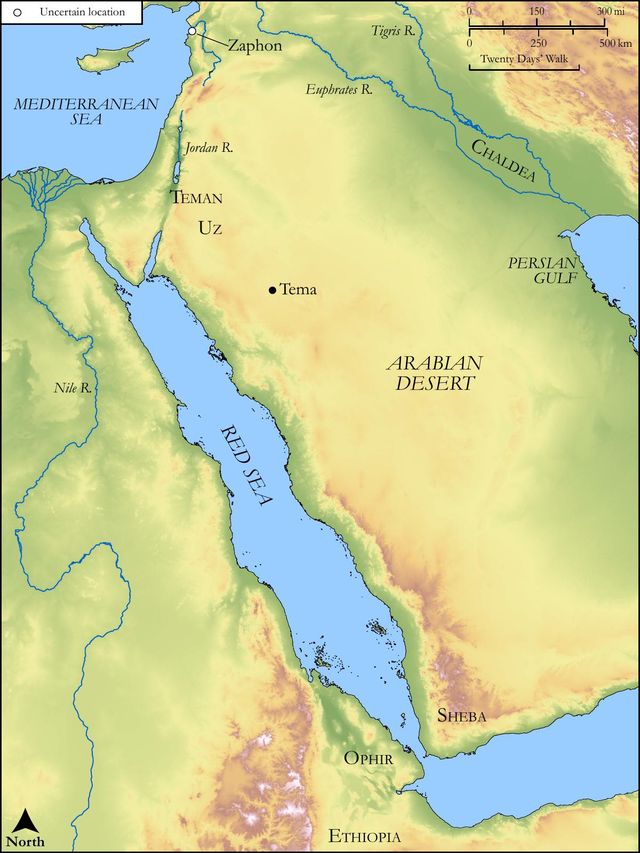
The Book of Job is set in the ancient Near East, likely in the land of Uz, a region known for its wisdom traditions. Debates surrounding divine justice, the nature of suffering, and human righteousness were common intellectual and theological pursuits in this period. The concept of ritual purity and moral blamelessness was central to the religious understanding of many cultures, including ancient Israel, where purity laws governed daily life and worship. The phrase "born of a woman" is a widely recognized idiom in the biblical world, signifying human mortality, frailty, and the universal condition of being part of fallen humanity. It emphasizes a shared, inherent limitation and a common origin that precludes self-achieved perfection.
Key Themes
ShowHideJob 15:14 contributes significantly to several key themes within the book and broader biblical theology. It speaks directly to the theme of Human Depravity and Impurity, asserting that humanity, by its very nature and origin, is fundamentally flawed and incapable of achieving true purity or righteousness through its own efforts. This implicitly highlights the immense contrast between Divine Holiness and Justice and the inherent imperfection of mankind, underscoring God's infinitely high standard of righteousness. While Eliphaz's overall counsel to Job is deemed flawed by God in Job 42:7, this specific verse articulates a profound truth about the human condition that resonates with the biblical understanding of inherited sin and the universal need for a divine solution, a theme more fully developed in the New Testament.
Exposition and Analysis
ShowHideKey Word Analysis
ShowHideThis term (H582) from אָנַשׁ, properly refers to a mortal, emphasizing human frailty, weakness, and mortality, in contrast to the more dignified אָדָם (ʼâdâm) or the strong אִישׁ (ʼîysh). Its use here by Eliphaz underscores the inherent limitation and vulnerability of humanity, reinforcing the idea that such a fragile being cannot possibly be clean or righteous before an omnipotent and holy God.
This word (H2135) is a primitive root meaning "to be translucent," and figuratively, "to be innocent." It carries both ceremonial and moral connotations, referring to ritual purity (making one fit for worship) and moral blamelessness or freedom from defilement. Eliphaz uses it to challenge the very possibility of humanity achieving a state of absolute purity that could stand before God's perfect holiness.
This term (H6663) is a primitive root meaning "to be (causatively, make) right (in a moral or forensic sense)." It denotes being just, upright, vindicated, or in right standing, describing conformity to a moral or legal standard, particularly God's divine law and character. Eliphaz's question implies that no human being, through their own actions or inherent nature, can meet God's ultimate standard of righteousness.
Verse Breakdown
ShowHide"What [is] man, that he should be clean?"
This is a powerful rhetorical question, designed not to elicit an answer but to assert an undeniable truth. It challenges the very notion that a human being, in their natural state, could ever achieve a level of purity or blamelessness that would be acceptable to God's absolute standard. It implies an inherent defilement or imperfection within humanity, rendering self-cleansing impossible.
"and [he which is] born of a woman, that he should be righteous?"
This second rhetorical question functions as synonymous parallelism, reinforcing the first clause. The phrase "born of a woman" is a common biblical idiom emphasizing the universal human condition of mortality, frailty, and a shared, inherited nature. It underscores that this state of unrighteousness is not an anomaly but an intrinsic part of being human, passed down through generations, thus making self-righteousness an impossibility.
Literary Devices
ShowHideJob 15:14 is rich in literary technique, primarily employing Rhetorical Questions. These questions are posed not to receive an answer, but to make a forceful assertion about the inherent impurity and unrighteousness of humanity. The very structure of the questions compels the listener to acknowledge the impossibility of human self-justification before God. The verse also utilizes Synonymous Parallelism, where the second clause ("and [he which is] born of a woman, that he should be righteous?") reiterates and intensifies the meaning of the first ("What [is] man, that he should be clean?"). This repetition with varied phrasing deepens the impact of Eliphaz's argument, reinforcing the universal human condition. Furthermore, the phrase "born of a woman" functions as an Idiom, a common expression whose meaning is not directly deducible from the individual words. In this context, it powerfully conveys the universal human condition of mortality, frailty, and the inherited fallen nature.
Theological and Thematic Connections
ShowHideThis verse, despite its context within Eliphaz's ultimately flawed counsel to Job, articulates a profound and consistent biblical truth: humanity's inherent sinfulness and its inability to achieve perfect righteousness before a holy God through its own efforts. It resonates deeply with the doctrine of original sin and the universal fallenness of mankind, laying bare the vast chasm between God's absolute holiness and humanity's intrinsic impurity. This theological reality serves as a foundational premise for understanding the necessity of divine grace and the provision of a means for redemption. It underscores that true cleansing and righteousness must come from an external, divine source, as humanity is utterly incapable of producing it from within itself.
Reflection and Application
ShowHideJob 15:14 serves as a sobering mirror, reflecting our true spiritual condition: we are not inherently clean or righteous in God's eyes. This truth, rather than leading to despair, should cultivate profound humility and a deep appreciation for God's mercy and grace. Recognizing our inability to save ourselves frees us from the futile burden of self-justification and opens our hearts to receive the righteousness that God freely offers. It calls us to abandon self-reliance and embrace a posture of complete dependence on divine grace. Understanding our fallen nature should also foster empathy and compassion for others, recognizing that all humanity shares this common condition, prompting us to extend grace and forgiveness as we ourselves have received it. This verse ultimately points us away from ourselves and towards the only one who can truly make us clean and righteous.
Questions for Reflection
ShowHideFAQ
ShowHideWas Eliphaz entirely wrong in his theology?
ShowHideWhile Eliphaz's application of his theology to Job's specific situation was indeed incorrect and ultimately condemned by God (as seen in Job 42:7), this particular statement in Job 15:14 contains a profound theological truth that is consistent with broader biblical teaching. The Bible consistently affirms humanity's inherent sinfulness and its inability to achieve righteousness on its own. Verses like Romans 3:10-12 affirm this universal human condition. Eliphaz's error was not in the truth of human depravity, but in presuming to know the reason for Job's suffering and in asserting that Job's suffering must be a direct punishment for specific unconfessed sin, thereby misjudging Job's integrity and God's complex ways.
What does "born of a woman" signify in this context?
ShowHideThe phrase "born of a woman" is a common biblical idiom that emphasizes the universal human condition, particularly our mortality, frailty, and shared fallen nature. It points to our earthly origin and our inheritance of a sinful nature from Adam, as described in Romans 5:12. It highlights that this condition of unrighteousness is not something we can escape by virtue of our birth or human effort; it is an intrinsic part of being human in a fallen world, underscoring our need for a divine intervention to achieve true cleanliness and righteousness.
Christ-Centered Fulfillment
ShowHideJob 15:14, though spoken by a flawed human counselor, powerfully sets the stage for the glorious truth of the gospel. It articulates humanity's desperate need for a righteousness not found within itself, a cleansing that no human effort can achieve. This profound human inability finds its perfect and singular answer in Jesus Christ. He is the only one "born of a woman" (as affirmed in Galatians 4:4) who was truly clean and perfectly righteous, living a sinless life that no other human could ever achieve (as testified in Hebrews 4:15). Through His atoning death on the cross, Christ became sin for us, so that in Him, we might become the righteousness of God (see 2 Corinthians 5:21). Thus, the rhetorical questions of Job 15:14 are answered not by human effort, but by divine intervention: God, in Christ, provides the cleansing and righteousness that humanity could never attain on its own, imputing His perfect standing to all who believe (see Romans 4:5). He is our sanctification and our redemption, making us clean and righteous in God's sight, fulfilling the deepest need exposed by Eliphaz's ancient query.