


John 17:9
Bible text: King James Version (1769 Blayney text) · Public domain
Bible text: Berean Standard Bible · Public domain
Bible text: American Standard Version (1901) · Public domain
Bible text: World English Bible, Messianic edition · Public domain
Bible text: Geneva Bible (1599) · Public domain
Bible text: Young's Literal Translation · Public domain
- ἘγὼEgōI myselfG1473P-1NSPersonal pronoun Nominative 1st Singular
- περὶpericoncerningG4012PREPPreposition
- αὐτῶνautōnthemG846P-GPMPersonal pronoun Genitive Plural Masculine
- ἐρωτῶ·erōtōam prayingG2065V-PAI-1SVerb Present Active Indicative 1st Singular
- οὐouNotG3756PRT-NNegative Particle Negative
- περὶpericoncerningG4012PREPPreposition
- τοῦtoutheG3588T-GSMDefinite article Genitive Singular Masculine
- κόσμουkosmouworldG2889N-GSMNoun Genitive Singular Masculine
- ἐρωτῶerōtōdo I prayG2065V-PAI-1SVerb Present Active Indicative 1st Singular
- ἀλλὰallabutG235CONJConjunction
- περὶpericoncerningG4012PREPPreposition
- ὧνhōnthose whomG3739R-GPMRelative pronoun Genitive Plural Masculine
- δέδωκάςdedōkasYou have givenG1325V-RAI-2SVerb Perfect Active Indicative 2nd Singular
- μοιmoiMeG3165P-1DSPersonal pronoun Dative 1st Singular
- ὅτιhotiforG3754CONJConjunction
- σοίsoiYoursG4771P-2DSPersonal pronoun Dative 2nd Singular
- εἰσιν·eisinthey areG1510V-PAI-3PVerb Present Active Indicative 3rd Plural
English is a literal word-by-word gloss of the Greek, not the KJV's wording. Why?
This is the original text the KJV's translators worked from — each Greek word with its own literal English meaning in this verse, prepared by scholars at Tyndale House, Cambridge. The KJV translates whole sentences, not word by word, so its wording differs: one Greek word can become several English words, and the KJV may choose “charity” where the gloss reads “love”. Both are faithful — they answer different questions. For the KJV's own rendering, switch to the KJV text.
Details
See on the biblical-era maps
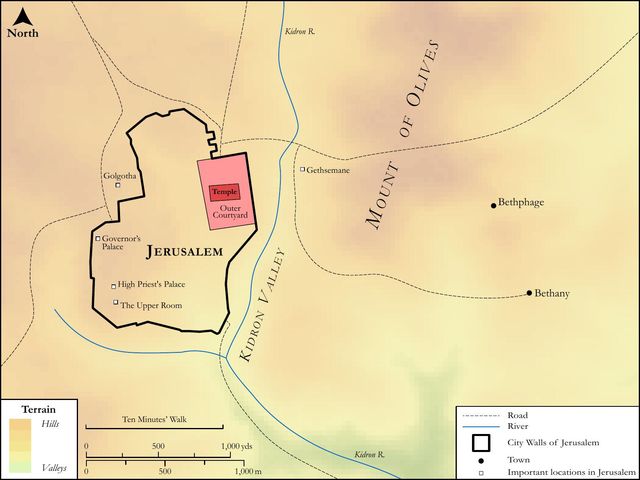
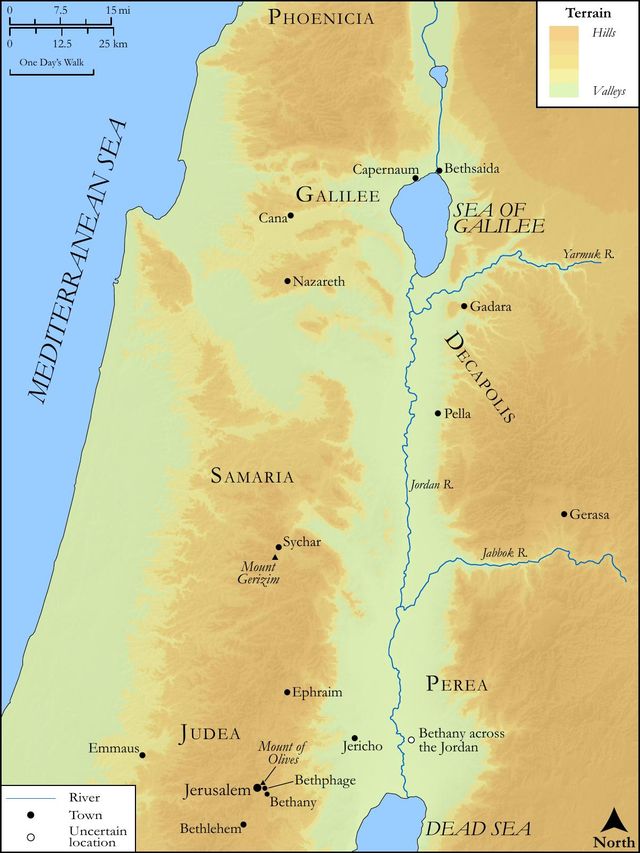
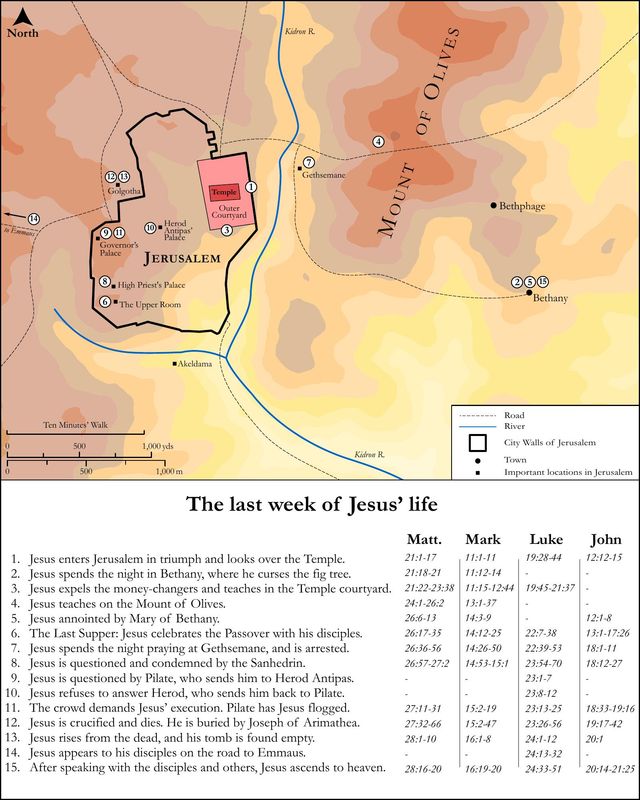
Study this verse
Public-domain commentary
Matthew Henry
From his Commentary on the Whole Bible. Henry comments on passages, not single verses — this entry covers John 17:6–10. His four-level outline is real structure in the source text, so it is rendered as structure.
Christ, having prayed for himself, comes next to pray for those that are his, and he knew them by name, though he did not here name them. Now observe here,
I.Whom he did not pray for (Joh 17:9):
I pray not for the world. Note, There is a world of people that Jesus Christ did not pray for. It is not meant of the world of mankind general (he prays for that here, Joh 17:21, That the world may believe that thou hast sent me); nor is it meant of the Gentiles, in distinction from the Jews; but the world is here opposed to the elect, who are given to Christ out of the world. Take the world for a heap of unwinnowed corn in the floor, and God loves it, Christ prays for it, and dies for it, for a blessing is in it; but, the Lord perfectly knowing those that are his, he eyes particularly those that were given him out of the world, extracts them; and then take the world for the remaining heap of rejected, worthless chaff, and Christ neither prays for it, nor dies for it, but abandons it, and the wind drives it away. These are called the world, because they are governed by the spirit of this world, and have their portion in it; for these Christ does not pray; not but that there are some things which he intercedes with God for on their behalf, as the dresser for the reprieve of the barren tree; but he does not pray for them in this prayer, that have not part nor lot in the blessings here prayed for. He does not say, I pray against the world, as Elias made intercession against Israel; but, I pray not for them, I pass them by, and leave them to themselves; they are not written in the Lamb's book of life, and therefore not in the breast-plate of the great high-priest. And miserable is the condition of such, as it was of those whom the prophet was forbidden to pray for, and more so, Jer 7:16. We that know not who are chosen, and who are passed by, must pray for all men, Ti1 2:1, Ti1 2:4. While there is life, there is hope, and room for prayer. See Sa1 12:23.
II.Whom he did pray for; not for angels, but for the children of men.
1.He prays for those that were given him, meaning primarily the disciples that had attended him in this regeneration; but it is doubtless to be extended further, to all who come under the same character, who receive and believe the words of Christ, Joh 17:6, Joh 17:8.
2.He prays for all that should believe on him (Joh 17:20), and it is not only the petitions that follow, but those also which went before, that must be construed to extend to all believers, in every place and every age; for he has a concern for them all, and calls things that are not as though they were.
III.What encouragement he had to pray for them, and what are the general pleas with which he introduces his petitions for them, and recommends them to his Father's favour; they are five: -
1.The charge he had received concerning them: Thine they were, and thou gavest them me (Joh 17:6), and again (Joh 17:9), Thou whom thou hast given me. "Father, those I am now praying for are such as thou hast entrusted me with, and what I have to say for them is in pursuance of the charge I have received concerning them." Now,
(1.)This is meant primarily of the disciples that then were, who were given to Christ as his pupils to be educated by him while he was on earth, and his agents to be employed for him when he went to heaven. They were given him to be the learners of his doctrine, the witnesses of his life and miracles, and the monuments of his grace and favour, in order to their being the publishers of his gospel and the planters of his church. When they left all to follow him, this was the secret spring of that strange resolution: they were given to him, else they had not given themselves to him. Note, The apostleship and ministry, which are Christ's gift to the church, were first the Father's gift to Jesus Christ. As under the law the Levites were given to Aaron (Num 3:9), to him (the great high priest of our profession) the Father gave the apostles first, and ministers in every age, to keep his charge, and the charge of the whole congregation, and to do the service of the tabernacle. See Eph 4:8, Eph 4:11; Psa 68:18. Christ received this gift for men, that he might give it to men. As this puts a great honour upon the ministry of the gospel, and magnifies that office, which is so much vilified; so it lays a mighty obligation upon the ministers of the gospel to devote themselves entirely to Christ's service, as being given to him,
(2.)But it is designed to extend to all the elect, for they are elsewhere said to be given to Christ (Joh 6:37, Joh 6:39), and he often laid a stress upon this, that those he was to save were given to him as his charge; to his care they were committed, from his hand they were expected, and concerning them he received commandments. He here shows,
[1.]That the Father had authority to give them: Thine they were. He did not give that which was none of his own, but covenanted that he had a good title. The elect, whom the Father gave to Christ, were his own in three ways: - First, they were creatures, and their lives and beings were derived from him. When they were given to Christ to be vessels of honour, they were in his hand, as clay in the hand of the potter, to be disposed of as God's wisdom saw most for God's glory. Secondly, They were criminals, and their lives and beings were forfeited to him. It was a remnant of fallen mankind that was given to Christ to be redeemed, that might have been made sacrifices to justice when they were pitched upon to be the monuments of mercy; might justly have been delivered to the tormentors when they were delivered to the Saviour. Thirdly, They were chosen, and their lives and beings were designed, for him; they were set apart for God, and were consigned to Christ as his agent. This he insists upon again (Joh 17:7): All things whatsoever thou hast given me are of thee, which, though it may take in all that appertained to his office as Mediator, yet seems especially to be meant of those that were given him. "They are of thee, their being is of thee as the God of nature, their well-being is of thee as the God of grace; they are all of thee, and therefore, Father, I bring them all to thee, that they may be all for thee."
[2.]That he did accordingly give them to the Son. Thou gavest them to me, as sheep to the shepherd, to be kept; as patients to the physician, to be cured; children to a tutor, to be educated; thus he will deliver up his charge (Heb 2:13), The children thou hast given me. They were delivered to Christ, First, That the election of grace might not be frustrated, that not one, no not of the little ones, might perish. That great concern must be lodged in some one good hand, able to give sufficient security, that the purpose of God according to election might stand. Secondly, That the undertaking of Christ might not be fruitless; they were given to him as his seed, in whom he should see of the travail of his soul and be satisfied (Isa 53:10, Isa 53:11), and might not spend his strength, and shed his blood, for nought, and in vain, Isa 49:4. We may plead, as Christ does, "Lord, keep my graces, keep my comforts, for thine they were, and thou gavest them to me."
2.The care he had taken of them to teach them (Joh 17:6): I have manifested thy name to them. I have given to them the words which thou gavest to me, Joh 17:8. Observe here,
(1.)The great design of Christ's doctrine, which was to manifest God's name, to declare him (Joh 1:18), to instruct the ignorant, and rectify the mistakes of a dark and foolish world concerning God, that he might be better loved and worshipped.
(2.)His faithful discharge of this undertaking: I have done it. His fidelity appears,
[1.]In the truth of the doctrine. It agreed exactly with the instructions he received from his Father. He gave not only the things, but the very words, that were given him. Ministers, in wording their message, must have an eye to the words which the Holy Ghost teaches.
[2.]In the tendency of his doctrine, which was to manifest God's name. He did not seek himself, but, in all he did and said, aimed to magnify his Father. Note, First, It is Christ's prerogative to manifest God's name to the souls of the children of men. No man knows the Father, but he to whom the Son will reveal him, Mat 11:27. He only has acquaintance with the Father, and so is able to open the truth; and he only has access to the spirits of men, and so is able to open the understanding. Ministers may publish the name of the Lord (as Moses, Deu 32:3), but Christ only can manifest that name. By the word of Christ God is revealed to us; by the Spirit of Christ God is revealed in us. Ministers may speak the words of God to us, but Christ can give us his words, can put them in us, as food, as treasure. Secondly, Sooner or later, Christ will manifest God's name to all that were given him, and will give them his word, to be the seed of their new birth, the support of their spiritual life, and the earnest of their everlasting bliss.
3.The good effect of the care he had taken of them, and the pains he had taken with them, (Joh 17:6): They have kept they word (Joh 17:7), they have known that all things are of thee (Joh 17:8); they have received thy words, and embraced them, have given their assent and consent to them, and have known surely that I came out from thee, and have believed that thou didst send me. Observe here,
(1.)What success the doctrine of Christ had among those that were given to him, in several particulars: -
[1.]"They have received the words which I gave them, as the ground receives the seed, and the earth drinks in the rain." They attended to the words of Christ, apprehended in some measure the meaning of them, and were affected with them: they received the impression of them. The word was to them an ingrafted word.
[2.]"They have kept thy word, have continued in it; they have conformed to it." Christ's commandment is then only kept when it is obeyed. Those that have to teach others the commands of Christ ought to be themselves observant of them. It was requisite that these should keep what was committed to them, for it was to be transmitted by them to every place for every age.
[3.]"They have understood the word, and have been sensible on what ground they went in receiving and keeping it. They have been aware that thou art the original author of that holy religion which I am come to institute, that all things whatsoever thou hast given me are of thee." All Christ's offices and powers, all the gifts of the Spirit, all his graces and comforts, which God gave without measure to him, were all from God, contrived by his wisdom, appointed by his will, and designed by his grace, for his own glory in man's salvation. Note, It is a great satisfaction to us, in our reliance upon Christ, that he, and all he is and has, all he said and did, all he is doing and will do, are of God, Co1 1:30. We may therefore venture our souls upon Christ's mediation, for it has a good bottom. If the righteousness be of God's appointing, we shall be justified; if the grace be of his dispensing, we shall be sanctified.
[4.]They have set their seal to it: They have known surely that I came out from God, Joh 17:8. See here, First, What it is to believe; it is to know surely, to know that it is so of a truth. The disciples were very weak and defective in knowledge; yet Christ, who knew them better than they knew themselves, passes his word for them that they did believe. Note, We may know surely that which we neither do nor can know fully; may know the certainty of the things which are not seen, though we cannot particularly describe the nature of them. We walk by faith, which knows surely, not yet by sight, which knows clearly. Secondly, What it is we are to believe: that Jesus Christ came out from God, as he is the Son of God, in his person the image of the invisible God, and that God did not send him; that in his undertaking he is the ambassador of the eternal king: so that the Christian religion stands upon the same footing, and is of equal authority, with natural religion; and therefore all the doctrines of Christ are to be received as divine truths, all his commands obeyed as divine laws, and all his promises depended upon as divine securities.
(2.)How Jesus Christ here speaks of this: he enlarges upon it,
[1.]As pleased with it himself. Though the many instances of his disciples' dulness and weakness had grieved him, yet their constant adherence to him, their gradual improvements, and their great attainments at last, were his joy. Christ is a Master that delights in the proficiency of his scholars. He accepts the sincerity of their faith, and graciously passes by the infirmity of it. See how willing he is to make the best of us, and to say the best of us, thereby encouraging our faith in him, and teaching us charity to one another,
[2.]As pleading it with the Father. He is praying for those that were given to him; and he pleads that they had given themselves to him. Note, The due improvement of grace received is a good plea, according to the tenour of the new covenant, for further grace; for so runs the promise. To him that hath shall be given. Those that keep Christ's word, and believe on him, let Christ alone to commend them, and, which is more, to recommend them to his Father.
4.He pleads the Father's own interest in them (Joh 17:9): I pray for them, for they are thine; and this by virtue of a joint and mutual interest, which he and the Father have in what pertained to each: All mine are thine, and thine are mine. Between the Father and Son there can be no dispute (as there is among the children of men) about meum and tuum - mine and thine, for the matter was settled from eternity; all mine are thine, and thine are mine. Here is,
(1.)The plea particularly urged for his disciples: They are thine. The consigning of the elect to Christ was so far from making them less the Father's that it was in order to making them the more so. Note,
[1.]All that receive Christ's word, and believe in him, are taken into covenant-relation to the Father, and are looked upon as his; Christ presents them to him, and they, through Christ, present themselves to him. Christ has redeemed us, not to himself only, but to God, by his blood, Rev 5:9, Rev 5:10. They are first-fruits unto God, Rev 14:4.
[2.]This is a good plea in prayer, Christ here pleads it, They are thine; we may plead it for ourselves, I am thine, save me; and for others (as Moses, Exo 32:11), "They are thy people. They are thine; wilt thou not provide for thine own? Wilt thou not secure them, that they may not be run down by the devil and the world? Wilt thou not secure thy interest in them, that they may not depart from thee? They are thine, own them as thine."
(2.)The foundation on which this plea is grounded: All mine are thine, and thine are mine. This bespeaks the Father and Son to be,
[1.]One in essence. Every creature must say to God, All mine are thine; but none can say to him, All thine are mine, but he that is the same in substance with him and equal in power and glory.
[2.]One in interest; no separate or divided interests between them. First, What the Father has as Creator is delivered over to the Son, to be used and disposed of in subserviency to his great undertaking. All things are delivered to him (Mat 11:27); the grant is so general that nothing is excepted but he that did put all things under him. Secondly, What the Son has as Redeemer is designed for the Father, and his kingdom shall shortly be delivered up to him. All the benefits of redemption, purchased by the Son, are intended for the Father's praise, and in his glory all the lines of his undertaking centre: All mine are thine. The Son owns none for his that are not devoted to the service of the Father; nor will any thing be accepted as a piece of service to the Christian religion which clashes with the dictates and laws of natural religion. In a limited sense, every true believer may say, All thine are mine; if God be ours in covenant, all he is and has is so far ours that it shall be engaged for our good; and in an unlimited sense every true believer does say, Lord, all mine are thine; all laid at his feet, to be serviceable to him. And what we have may be comfortably committed to God's care and blessing when it is cheerfuly submitted to his government and disposal: "Lord, take care of what I have, for it is all thine."
5.He pleads his own concern in them: I am glorified in them - dedoxasmai. (1.) I have been glorified in them. What little honour Christ had in this world was among his disciples; he had been glorified by their attendance on him and obedience to him, their preaching and working miracles in his name; and therefore I pray for them. Note, Those shall have an interest in Christ's intercession in and by whom he is glorified. (2.) "I am to be glorified in them when I am gone to heaven; they are to bear up my name." The apostles preached and wrought miracles in Christ's name; the Spirit in them glorified Christ (Joh 16:14): "I am glorified in them, and therefore," [1.] "I concern myself for them." What little interest Christ has in this degenerate world lies in his church; and therefore it and all its affairs lie near his heart, within the veil. [2.] "Therefore I commit them to the Father, who has engaged to glorify the Son, and, upon this account, will have a gracious eye to those in whom he is glorified." That in which God and Christ are glorified may, with humble confidence, be committed to God's special care.
Historical interpretation
Seven Centuries of Reception
6 surviving comments on this verse. Each one is dated, so this reads as a timeline rather than a list.
Select a marker to jump to its quote. Markers stagger vertically where authors wrote within a few decades of each other.
"I pray for them." "What sayest Thou?" "Dost Thou teach the Father, as though He were ignorant? Dost Thou speak to Him as to a man who knoweth not?" "What then meaneth this distinction?" Seest thou that the prayer is for nothing else than that they may understand the love which He hath towards them? For He who not only giveth what He hath of His own, but also calleth on Another to do the same, showeth greater love. What then is, "I pray for them"? "Not for all the world," He saith, but "for them whom Thou hast given Me." He continually putteth the "hast given," that they might learn that this seemeth good to the Father. Then, because He had said continually, "they are Thine," and, "Thou gavest them unto Me," to remove any evil suspicion, and lest any one should think that His authority was recent, and that He had but now received them, what saith He?
"All Mine are Thine, and Thine are Mine; and I am glorified in them." Seest thou the equality of honor? For lest on hearing, "Thou hast given them Me," thou shouldest deem that they were alienated from the authority of the Father, or before this from that of the Son, He removed both difficulties by speaking as He did. It was as though He said, "Do not when thou hearest that 'Thou hast given them to Me,' deem that they are alienated from the Father, for what is Mine is His; nor when thou hearest, 'Thine they were,' think that they were aliens from Me, for what is His is Mine." So that the, "Thou hast given," is said only for condescension; for what the Father hath is the Son's, and what the Son hath is the Father's. But this cannot even be said of a son after the manner of man, but because They are upon a greater Equality of honor. For that what belongs to the less, belongs to the greater also, is clear to every one, but the reverse not so; but here He converteth these terms, and the conversion declares Equality. And in another place, declaring this, He said, "All things that the Father hath are Mine," speaking of knowledge. And the "hast given Me," and the like expressions, are to show that He did not come as an alien and draw them to Him, but received them as His own. Then He putteth the cause and the proof, saying, "And I am glorified in them," that is, either that "I have power over them," or, that "they shall glorify Me, believing in Thee and Me, and shall glorify Us alike." But if He is not glorified equally in them, what is the Father's is no longer His. For no one is glorified in those over whom he hath no authority. Yet how is He glorified equally? All die for Him equally as for the Father; they preach Him as they do the Father; and as they say that all things are done in His Name, so also in the Name of the Son.
"And now I am no more in the world, but these are in the world." That is, "Although I appear no longer in the flesh, yet by these am I glorified." But why doth He say continuously, that, "I am not in the world"; and that, "because I leave them I commit them to Thee"; and that, "when I was in the world I kept them"? for if one should take these words in their simple sense, many absurdities will follow. For how could it be reasonable to say, that He is no longer in the world, and that when He departeth He committeth them to another? since these are the words of a mere man parting from them forever. Seest thou how He speaketh for the most part like a man, and in a way adapted to their state of mind, because they thought that they had a greater degree of safety from His presence? Wherefore He saith, "While I was with them, I kept them." (c. xiv.28.) Yet He telleth them, "I come to you"; and, "I am with you till the end." (Matt. xxviii. 20.) How then saith He these words, as if about to be parted from them? He addresseth Himself, as I said before, to their thoughts, that they may take breath a little when they hear Him speaking thus, and delivering them over to the care of the Father. For since, after hearing many exhortations from Him, they were not persuaded, He then holdeth converse with the Father, manifesting His affection for them. As though He had said, "Since Thou callest Me to Thyself, place these in safety; for I come to Thee." "What sayest Thou? Art Thou not able to keep them?" "Yea, I am able." "Wherefore then speakest Thou thus?" "That they may have My joy fulfilled" (ver. 13); that is, "may not be confounded, as being imperfect." And by these words He showed that He had spoken all these things so, to give them rest and joy. For the saying appears to be contradictory. "Now I am no longer in the world, and these are in the world." This was what they were suspecting. For a while therefore He condescendeth to them, because had He said, "I keep them," they would not have so well believed; wherefore He saith, "Holy Father, keep them through Thine own Name"; that is, "by thy help."
"While I was with them in the world, I kept them in Thy Name." Again He speaketh as a man and as a Prophet, since nowhere doth He appear to have done anything by the Name of God.
"Those that Thou gavest Me I have kept, and none of them is lost, but the son of perdition, that the Scripture might be fulfilled." And in another place He saith, "Of all that Thou gavest Me, I will surely lose nothing." (c. vi. 39.) Yet not only was he lost, but also many afterwards; how then saith He, "I will in nowise lose"? "For My part, I will not lose." So in another place, declaring the matter was more clearly, He said, "I will in nowise cast out." (c. vi. 37.) "Not through fault of Mine, not because I either instigate or abandon them; but if they start away of themselves, I draw them not by necessity."
"But now I come to thee." Seest thou that the discourse is composed rather in a human manner? So that should any wish from these words to lower the Son, he will lower the Father also. Observe, in proof of this, how from the beginning He speaketh partly as though informing and explaining to Him, partly as enjoining. Informing, as when He saith, "I pray not for the world"; enjoining, as, "I have kept them until now," "and none of them is lost"; and, "do Thou therefore now keep them," He saith. And again, "Thine they were, and Thou hast given them unto Me" and "While I was in the world I kept them." But the solution of all is, that the words were addressed to their infirmity.
But after having said that "none of them was lost but the son of perdition," He added, "that the Scripture might be fulfilled." Of what Scripture doth He speak? That which foretelleth many things concerning Him. Not that He perished on that account, in order that the Scripture might be fulfilled. But we have before spoken at length on this point, that this is the peculiar manner of Scripture, which puts things which fall out in accordance with it, as though they were caused by it. And it is needful to enquire exactly into all, both the manner of the speaker, his argument, and the laws of Scripture, if at least we are minded not to draw wrong conclusions. For, "Brethren, be not children in your minds." (1 Cor. xiv. 20.)
(Hom. lxxxi) As the disciples were still sad in spite of all our Lord's consolations, henceforth He addresses Himself to the Father to show the love which He had for them; I pray for them; He not only gives them what He has of His own, but entreats another for them, as a still further proof of His love.
(Hom. lxxxi. 1) He often repeats, Thou hast given Me, to impress on them that it was all according to the Father's will, and that He did not come to rob another, but to take unto Him His own. Then to show them that this power had not been lately received from the Father, He adds, And all Mine are Thine, and Thine are Mine: as if to say, Let no one, hearing Me say, Them which Thou hast given Me, suppose that they are separated from the Father; for Mine are His: nor because I said, They are Thine, suppose that they are separate from Me: for whatever is His is Mine.
(Hom. lxxxi) Then He gives proof of this, I am glorified in them. If they glorify Me, believing in Me and Thee, it is certain that I have power over them: for no one is glorified by those amongst whom he has no power.
(Hom. lxxxi) And now I am no more in the world: i. e. though I no longer appear in the flesh, I am glorified by those who die for Me, as for the Father, and preach Me as the Father.
(Hom. lxxxi) Again He speaks as man: While I was with them in the world, I kept them in Thy name; i. e. by Thy help. He speaks in condescension to the minds of His disciples, who thought they were more safe in His presence.
(Hom. lxxxi) He was the only one indeed who perished then, but there were many after. None of them is lost, i. e. as far as I am concerned; as He says above more clearly; I will in no wise cast out. But when they cast themselves out, I will not draw them to Myself by dint of compulsion. It follows: And now I come to Thee. But some one might ask, Canst Thou not keep them? I can. Then why sayest Thou this? That they may have My joy fulfilled in them, i. e. that they may not be alarmed in their as yet imperfect state.
When the Lord was speaking to the Father of those whom He already had as disciples, He said this also among other things: "I pray for them. I pray not for the world, but for those whom Thou hast given me." By the world, He now wishes to be understood those who live according to the lust of the word, and stand not in the gracious lot of such as were to be chosen by Him out of the world. Accordingly it is not for the world, but for those whom the Father hath given Him, that He expresses Himself as praying: for by the very fact of their having already been given Him by the Father, they have ceased to belong to that world for which He refrains from praying.
And then He adds, "For they are Thine." For the Father did not lose those whom He gave, in the act of giving them to the Son; since the Son still goes on to say, "And all mine are Thine, and Thine are mine." Where it is sufficiently apparent how it is that all that belongs to the Father belongs also to the Son; in this way, namely, that He Himself is also God, and, of the Father born, is the Father's equal: and not as was said to one of the two sons, to wit, the elder, "Thou art ever with me; and all that I have is thine." For that was said of all those creatures which are inferior to the holy rational creature, and are certainly subordinate to the Church; wherein its universal character is understood as including those two sons, the elder and the younger, along with all the holy angels, whose equals we shall be in the kingdom of Christ and of God: but here it was said, "And all mine are Thine, and Thine are mine," with this meaning, that even the rational creature is itself included, which is subject only to God, so that all beneath it are also subject to Him. As it then belongs to God the Father, it would not at the same time be the Son's likewise, were He not equal to the Father: for to it He was referring when He said, "I pray not for the world, but for those whom Thou hast given me: for they are Thine, and all mine are Thine, and Thine are mine." Nor is it morally admissible that the saints, of whom He so spake, should belong to any save to Him by whom they were created and sanctified: and for the same reason, everything also that is theirs must of necessity be His also to whom they themselves belong, Accordingly, since they belong both to the Father and to the Son, they demonstrate the equality of those to whom they equally belong.
(Tr. cvi) When He adds, I pray not for the world, by the world He means those who live according to the lust of the world, and have not the lot to be chosen by grace out of the world, as those had for whom He prayed: But for them which Thou hast given Me. It was because the Father had given Him them, that they did not belong to the world. Nor yet had the Father, in giving them to the Son, lost what He had given: For they are Thine.
CHAPTER VIII. That nothing which is spoken of as belonging to the Father will be excluded from the kingdom of the Son, for Both alike rule over all.
He once more mediates as Man, the Reconciler and Mediator of God and men; and being our truly great and all-holy High Priest, by His own prayers He appeases the anger of His Father, sacrificing Himself for us. For He is the Sacrifice, and is Himself our Priest, Himself our Mediator, Himself a blameless Victim, the true Lamb Which taketh away the sin of the world. The Mosaic ceremonial was then, as it were, a type and transparent shadowing forth of the mediation of Christ, shown forth in the last times, and the high priest of the Law indicated in his own person that Priest Who is above the Law. For the things of the Law are shadows of the truth. For the inspired Moses, and with him the eminent Aaron, continually intervened between God and the assembly of the people; at one time deprecating God's anger for the transgressions of the people of Israel, and inviting mercy from above upon them when they were faint; at another, praying and blessing the people, and ordering sacrifices according to the Law and offerings of gifts besides in their appointed order, sometimes for sins, and sometimes thank-offerings for the benefits they felt that they had received from God. But Christ Who manifested Himself in the last times above the types and figures of the Law, at once our High Priest and Mediator, prays for us as Man; and at the same time is ever ready to cooperate with God the Father, Who distributes good gifts to those who are worthy. Paul showed us this most plainly in the words: Grace to you and peace from God our Father, and the Lord Jesus Christ. He then prays for us as Man, and also unites in distributing good gifts to us as God. For He, being a holy High Priest, blameless and undefiled, offered Himself not for His own weakness, as was the custom of those to whom was allotted the duty of sacrificing according to the Law, but rather for the salvation of our souls, and that once for all, because of our sin, and is an Advocate for us: And He is the propitiation for our sins, as John saith; and not for ours only, but also for the whole world.
But perhaps someone, wishing to controvert what we have said, will exclaim, "Is not what the disciple says quite contrary to the Saviour's words?" For our Lord Jesus Christ expressly in these words repudiates the necessity of praying to God for the whole world, while the wise John affirmed quite the contrary. For he maintains that the Saviour will be the Advocate and propitiation, not merely for our sins, but also for the sins of the whole world. It is not hard to find the solution to this difficulty, or to say how the disciple may be seen to be in accord with his Master's saying. For the blessed John, as he was a Jew and of the Jews, that some might not perhaps think that our Lord was merely an Advocate for the Israelites, and not in any sense for the rest of the nations scattered over the whole world, though destined to distinguish themselves by faith on Him and to be shortly called to knowledge of salvation through Christ, is perforce impelled to declare that our Lord will not only be the propitiation for the race of Israel, but also for the whole world; that is, those of every nation and kindred, who shall be called through faith to righteousness and sanctification. Our Lord Christ distinguishes from His own those who are otherwise minded, and who have chosen to insult Him by stubborn disobedience; and, referring to those who are prone to listen to His Divine commands, and who have already submitted, as it were, the necks of the hearts, and well-nigh bound round them the yoke of submission to God, said that for them only it was most fitting for Him to pray. For to those only, whose Mediator and High Priest He is, He thought it meet to bring the blessings of His mediation; to those, I mean, who, He says, were given to Himself, but were the Father's, as there is no other way of fellowship with God save by the Son. And He will Himself teach you this in the words: No one cometh unto the Father, but by Me. For observe how the Father, when He gave to His Son those of whom He speaks, won them over to Himself. And the Apostle, who was so conversant with the sacred writings, knowing this well, says: God was in Christ, reconciling the world unto Himself. For when Christ acted as Mediator, and received those who come to Him by faith, and brought them aright through Himself to the Father, the world was reconciled to God. Therefore also the Prophet Isaiah taught us, in anticipation, to choose peace with God, in Christ: Let us have peace with Him; let us who are in the way have peace. For if we banish from our hearts whatsoever estrangeth us from the love of Christ, I mean the base lasciviousness which hankers after sinful pleasure and is ever inclined to the delights of the world, and is besides the mother and nurse of all vice, and leads us widely astray, we shall become united in fellowship with Christ, and shall make peace with God, being joined to the Father Himself through the Son, inasmuch as we receive in ourselves the Word That was begotten of Him, and cry out in the Spirit, Abba, Father.
To make it clear that everything He has been saying to the Father is purely for the benefit of His disciples, the Lord now adds, “I pray for them, and not for the world. I love and take care of My disciples; I bestow upon them what is Mine; and I beseech You, Father, to protect them. I do not pray to You on behalf of coarse, vulgar men who think about nothing except this world; I pray … for them whom Thou hast given Me; for they are Thine.” When the Lord says, whom Thou hast given Me, this does not mean that the Father only recently gave Him authority over these men. It does not mean that there was a time when the Father had this authority, but the Son did not, nor that the Father lost this authority when that the Son gained it. To make this clear, the Lord declares, “All Mine are Thine, and Thine are Mine. For as long as they have been Yours, they have been Mine, for all Thine are Mine. They did not come into My possession a moment ago. And the fact that they are Mine in no way implies that they are no longer Yours. They have not been taken from You, for all Mine are Thine. Furthermore, I am glorified in them, which means, “I share the glory of My Father, just as the son of an emperor shares his father’s authority and glory: both are held in equal honor by their subjects.” If the Son were less than the Father, He would not dare to say, All Thine are Mine. The master owns everything that his servant has, while the servant owns nothing of his master’s. Here, on the contrary, what the Father has belongs to the Son, and what the Son has belongs to the Father. Thus the Son is glorified in all who belong to the Father, for the Son’s authority over all creation is equal to the Father’s.
Continue studying John 17:9 across the web’s major study libraries — every link below opens this exact verse, chapter, or book on the destination site.
Read & Compare
 BibleGatewayThis verse in more than 200 translations and 70 languages.
 Bible.comThe YouVersion reader — hundreds of translations, reading plans, and highlights.
 ESV.orgCrossway's official English Standard Version reader.
 NET BibleThe NET translation with 60,000+ translators' notes on every rendering decision.
 STEP BibleTyndale House's free study tool — original text, vocabulary, and scholarly resources.
 BibliaLogos Bible Software's free web reader.
 USCCBThe New American Bible (Revised Edition) with the U.S. bishops' study notes.
Commentaries
 BibleHub CommentariesDozens of classic commentaries on this verse, gathered on one page.
 StudyLightMore than 100 commentary sets — the largest collection on the web.
 BibleRefPlain-English commentary on what this verse means, verse by verse.
 Enduring WordDavid Guzik's free commentary on this chapter, widely used by Bible teachers.
 Bible Study ToolsVerse commentary alongside Greek and Hebrew study aids.
Original Language & Research
- BibleHub InterlinearThe verse word by word — original language, transliteration, and English.
- BibleHub LexiconEvery word's original-language definition and Strong's entry.
 Blue Letter BibleDeep-study tools — Strong's numbers, concordance, and word studies.
 CNTR CollationThe earliest Greek manuscripts of this verse, collated letter by letter.
Sermons, Hymns & Audio


TrulyRandomVerse is not affiliated with these sites and doesn’t control their content. They’re linked because they’re genuinely useful.
Summary
John 17:9 captures a profound moment in Jesus' "High Priestly Prayer," where He specifically intercedes for His immediate disciples and, by extension, for all future believers whom the Father has entrusted to Him. This verse powerfully distinguishes the objects of His present intercession from "the world," emphasizing the unique, divinely-ordained relationship between the Father, the Son, and those who belong to them, highlighting their secure position and distinct identity.
Context
ShowHideLiterary Context
This verse is situated within Jesus' Farewell Discourse and High Priestly Prayer, spanning John 13 through John 17. Following His intimate teachings, the washing of the disciples' feet, and the institution of the Last Supper, Jesus prepares His disciples for His imminent departure. John 17 itself is structured as a three-part prayer: Jesus prays for Himself and His glorification (John 17:1-5), then for His disciples whom the Father has given Him (John 17:6-19), and finally for all future believers (John 17:20-26). Verse 9 falls squarely within the second section, articulating the specific focus of Jesus' intercession for those already committed to Him.
Historical & Cultural Context
Jesus' prayer takes place in Jerusalem, likely in the upper room or on the way to Gethsemane, just hours before His betrayal and crucifixion. This setting imbues the prayer with immense gravity and urgency. Intercessory prayer was a common practice in Judaism, with prophets and righteous individuals often interceding on behalf of God's people. Jesus, as the ultimate High Priest, embodies and perfects this role. The concept of "the world" (Greek: kosmos) in Johannine theology often carries a nuanced meaning, referring not merely to the physical creation but to humanity in its fallen, rebellious state, alienated from God. This distinction would have been understood by the disciples as a separation between those who follow God's ways and those who are opposed to them, a tension often felt by the Jewish people in their interactions with the surrounding Gentile world.
Key Themes
ShowHideJohn 17:9 contributes significantly to several major themes in the Gospel of John and broader biblical theology. Firstly, it highlights Jesus' specific and personal intercession for His chosen ones, demonstrating His role as the compassionate Shepherd who knows His sheep by name, as seen in John 10:14. Secondly, it underscores the radical distinction between believers and "the world," a pervasive Johannine theme where "the world" represents a system hostile to God, as opposed to those who are "not of the world" but sent into it (John 17:14-16). Thirdly, the verse powerfully affirms the divine initiative and ownership in salvation, emphasizing that believers are "given" by the Father to the Son and are inherently "thine" (the Father's), reinforcing the security and eternal nature of their relationship with God, a truth also found in John 6:37.
Exposition and Analysis
ShowHideKey Word Analysis
ShowHideThis word means "to interrogate; by implication, to request." While it can mean "ask" in a general sense, in this context, especially when directed from Jesus to the Father, it carries the weight of a solemn request or entreaty. It signifies Jesus' active and earnest intercession, not a casual asking, but a deep, purposeful petition on behalf of His disciples.
This verb means "to give (used in a very wide application, properly, or by implication, literally or figuratively; greatly modified by the connection)." Here, it denotes the Father's sovereign act of entrusting individuals to the Son. It implies a divine election and a transfer of stewardship, highlighting that the disciples' relationship with Jesus is not merely a human choice but a divine appointment.
This term, meaning "orderly arrangement, i.e. decoration; by implication, the world (in a wide or narrow sense, including its inhabitants, literally or figuratively (morally))," is used by John with significant theological nuance. While it can refer to the created universe, in this context, it specifically refers to humanity in its fallen, unredeemed state, alienated from God and often characterized by hostility toward divine truth and those who embody it.
Verse Breakdown
ShowHide"I pray for them:"
Jesus initiates His specific intercession. The "them" here refers to the disciples who are with Him, those who have believed in Him and have been His companions throughout His ministry. This is a direct, personal, and immediate focus of His prayer.
"I pray not for the world,"
This clause introduces a critical distinction. Jesus explicitly states that His prayer at this moment is not for "the world" in its state of rebellion and unbelief. This does not negate God's universal love or desire for all to be saved, but rather highlights the specific nature of this particular intercession for His consecrated followers, distinct from humanity in general.
"but for them which thou hast given me;"
This clarifies and reinforces the object of His prayer. The "them" are precisely those individuals whom the Father, in His sovereign will, has "given" or entrusted to Jesus. This emphasizes the divine initiative in salvation and the intimate relationship between the Father and the Son in the work of redemption.
"for they are thine."
This final clause provides the profound theological basis for Jesus' intercession. The reason He prays for them is because they belong to the Father. This underscores the divine ownership of believers, establishing their secure position within the Godhead's loving plan and affirming their eternal belonging to God.
Literary Devices
ShowHideJohn 17:9 employs several significant literary devices. The most prominent is Contrast, as Jesus explicitly juxtaposes "them" (His disciples) with "the world." This sharp distinction serves to highlight the unique status and divine election of believers, setting them apart from the broader, unredeemed humanity. The verse also features Emphasis through repetition and direct statement, particularly in the repeated phrase "I pray for them" and the definitive declaration "they are thine." This repetition underscores the importance of Jesus' intercession and the secure identity of His followers. Furthermore, the entire prayer is an act of Intercession, a literary and theological device that portrays Jesus in His role as the mediator between God and humanity, specifically advocating for His own. This intercessory prayer highlights His compassionate and priestly nature.
Theological and Thematic Connections
ShowHideJohn 17:9 is a cornerstone for understanding the nature of Christ's high priestly ministry and the security of the believer. It reveals the intimate and purposeful relationship within the Trinity concerning the salvation and preservation of God's people. The Father's act of "giving" individuals to the Son signifies divine election and sovereign grace, while Jesus' specific intercession underscores His ongoing advocacy for those who belong to Him. The distinction from "the world" emphasizes the unique identity and calling of believers, who are set apart for God's purposes, yet remain in the world as His representatives. This verse assures believers of their divine ownership and the unwavering care of Christ, who continues to intercede for them at the right hand of the Father.
Reflection and Application
ShowHideJohn 17:9 offers immense comfort and profound theological insight for believers today. It reminds us that our salvation is not a random occurrence but is rooted in the eternal, sovereign plan of God, where the Father has specifically "given" us to the Son. This divine initiative assures us of our secure standing in Christ, knowing that the Son Himself intercedes for us. In a world that often seeks to conform us to its values, this verse powerfully reinforces our distinct identity as God's own, called to live "in" the world but not "of" it. It should instill in us a deep sense of belonging, purpose, and security, knowing that we are cherished by both the Father and the Son, and that our High Priest continually advocates for us, protecting us from the schemes of the enemy and preserving us for eternal life. This truth should empower us to live boldly for Christ, confident in His unwavering care and our unshakeable position in Him.
Questions for Reflection
ShowHideFAQ
ShowHideDoes Jesus' statement "I pray not for the world" mean that God does not love the world or desire its salvation?
ShowHideNo, Jesus' statement in John 17:9 does not mean that God does not love the world or desire its salvation. The Bible clearly teaches God's universal love for humanity, as seen in John 3:16. The phrase "the world" (Greek: kosmos) in John's Gospel often refers to humanity in its fallen, rebellious state, alienated from God. In this specific prayer, Jesus is not offering a general prayer for the salvation of all humanity, but a focused, high priestly intercession for a particular group: His disciples and, by extension, those who would come to believe through their testimony. This prayer is about their preservation, sanctification, and unity as they live in a hostile world. It highlights the distinct spiritual reality of those who belong to God, rather than negating God's broader redemptive plan for all people.
Christ-Centered Fulfillment
ShowHideJohn 17:9 finds its Christ-centered fulfillment in Jesus' ongoing role as our great High Priest, who not only offered Himself as the perfect sacrifice but also continually intercedes for His people. His prayer for "them which thou hast given me" foreshadows His perpetual advocacy for believers at the right hand of God, as affirmed in Romans 8:34. The divine act of the Father "giving" believers to the Son underscores the eternal security of those in Christ, a truth that echoes in Jesus' promise that no one can snatch His sheep out of His hand or the Father's hand (John 10:28-29). This verse reveals the intimate, unbreakable bond between the Father, the Son, and the redeemed, showcasing Jesus as the faithful Mediator who ensures the preservation and ultimate glorification of all who are "thine." His intercession is not a past event but an eternal reality, securing our position and empowering us to live as His own, distinct from the world, until His return (Hebrews 7:25).