


John 17:21
Bible text: King James Version (1769 Blayney text) · Public domain
Bible text: King James Version with Strong's numbers · Public domain
Bible text: Berean Standard Bible · Public domain
Bible text: American Standard Version (1901) · Public domain
Bible text: World English Bible, Messianic edition · Public domain
Bible text: Geneva Bible (1599) · Public domain
Bible text: Young's Literal Translation · Public domain
- ἵναinathatG2443CONJConjunction
- πάντεςpantesallG3956A-NPMAdjective Nominative Plural Masculine
- ἓνhenoneG1520A-NSNAdjective Nominative Singular Neuter
- ὦσινōsinmay beG1510V-PAS-3PVerb Present Active Subjunctive 3rd Plural
- καθὼςkathōseven asG2531CONJConjunction
- σύsuYou yourselfG4771P-2NSPersonal pronoun Nominative 2nd Singular
- πάτερpaterFatherG3962N-VSM-TNoun Vocative Singular Masculine Person Gentilic
- ἐνen[are] inG1722PREPPreposition
- ἐμοὶemoiMe myselfG1473P-1DSPersonal pronoun Dative 1st Singular
- κἀγὼkagōand I myselfG2532P-1NS + G2532=CONJ
- ἐνeninG1722PREPPreposition
- σοίsoiYouG4771P-2DSPersonal pronoun Dative 2nd Singular
- ἵναinathatG2443CONJConjunction
- καὶkaialsoG2532CONJConjunction
- αὐτοὶautoithey themselvesG846P-NPMPersonal pronoun Nominative Plural Masculine
- ἐνeninG1722PREPPreposition
- ἡμῖνhēminUsG3165P-1DPPersonal pronoun Dative 1st Plural
- ἓνhenoneG1520A-NSNAdjective Nominative Singular Neuter
- ὦσιν·ōsinmay beG1510V-PAS-3PVerb Present Active Subjunctive 3rd Plural
- ἵναinathatG2443CONJConjunction
- ὁhotheG3588T-NSMDefinite article Nominative Singular Masculine
- κόσμοςkosmosworldG2889N-NSMNoun Nominative Singular Masculine
- πιστεύῃpisteuēmay believeG4100V-PAS-3SVerb Present Active Subjunctive 3rd Singular
- ὅτιhotithatG3754CONJConjunction
- σύsuYou yourselfG4771P-2NSPersonal pronoun Nominative 2nd Singular
- μεmeMeG3165P-1ASPersonal pronoun Accusative 1st Singular
- ἀπέστειλαςapesteilassentG649V-AAI-2SVerb Aorist Active Indicative 2nd Singular
English is a literal word-by-word gloss of the Greek, not the KJV's wording. Why?
This is the original text the KJV's translators worked from — each Greek word with its own literal English meaning in this verse, prepared by scholars at Tyndale House, Cambridge. The KJV translates whole sentences, not word by word, so its wording differs: one Greek word can become several English words, and the KJV may choose “charity” where the gloss reads “love”. Both are faithful — they answer different questions. For the KJV's own rendering, switch to the KJV text.
Details
See on the biblical-era maps
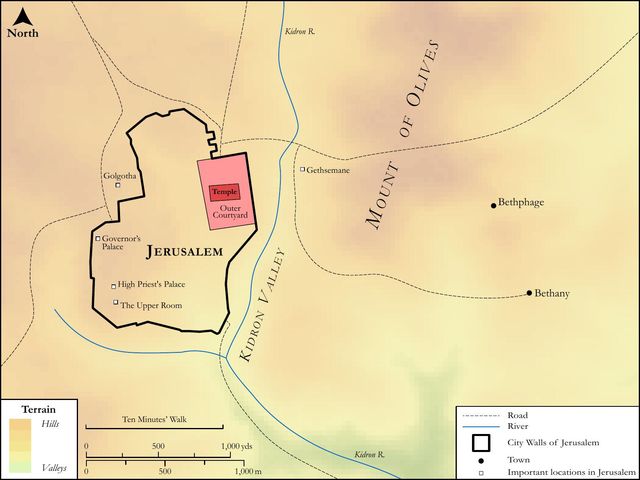
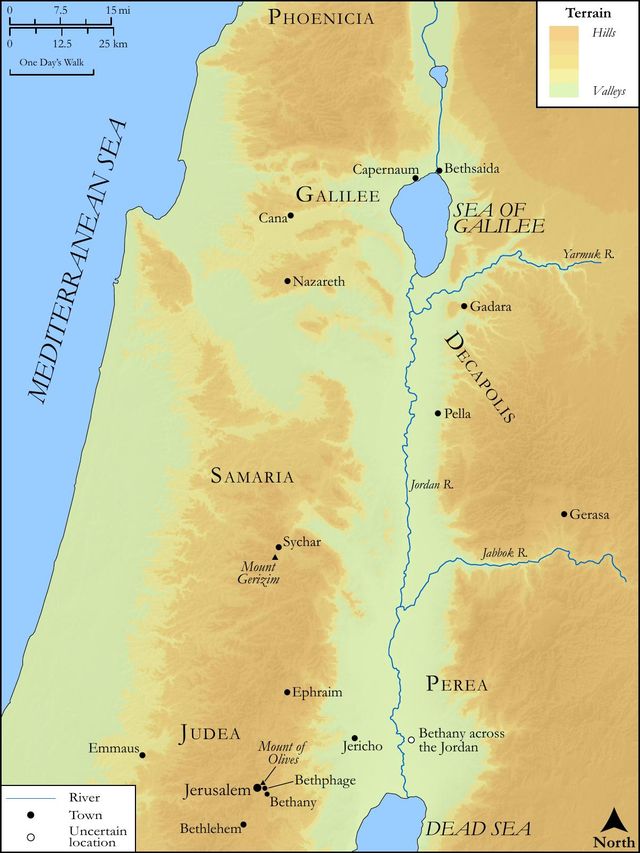
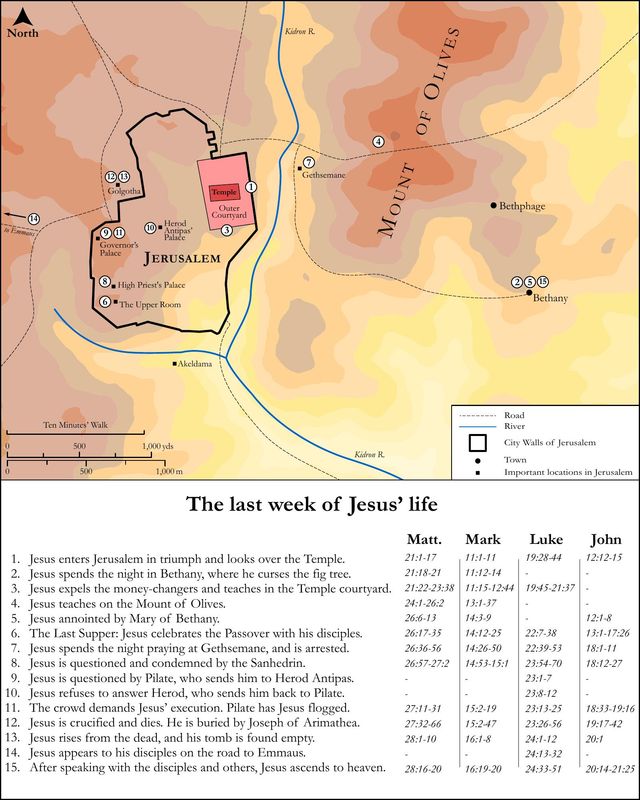
Study this verse
Public-domain commentary
Matthew Henry
From his Commentary on the Whole Bible. Henry comments on passages, not single verses — this entry covers John 17:20–23. His four-level outline is real structure in the source text, so it is rendered as structure.
Next to their purity he prays for their unity; for the wisdom from above is first pure, then peaceable; and amity is amiable indeed when it is like the ointment on Aaron's holy head, and the dew on Zion's holy hill. Observe,
I.Who are included in this prayer (Joh 17:20):
"Not these only, not these only that are now my disciples" (the eleven, the seventy, with others, men and women that followed him when he was here on earth), "but for those also who shall believe on me through their word, either preached by them in their own day or written by them for the generations to come; I pray for them all, that they all may be one in their interest in this prayer, and may all receive benefit by it." Note, here,
1.Those, and those only, are interested in the mediation of Christ, that do, or shall, believe in him. This is that by which they are described, and it comprehends all the character and duty of a Christian. They that lived then, saw and believed, but they in after ages have not seen, and yet have believed.
2.It is through the word that souls are brought to believe on Christ, and it is for this end that Christ appointed the scriptures to be written, and a standing ministry to continue in the church, while the church stands, that is, while the world stands, for the raising up of a seed.
3.It is certainly and infallibly known to Christ who shall believe on him. He does not here pray at a venture, upon a contingency depending on the treacherous will of man, which pretends to be free, but by reason of sin is in bondage with its children; no, Christ knew very well whom he prayed for, the matter was reduced to a certainty by the divine prescience and purpose; he knew who were given him, who being ordained to eternal life, were entered in the Lamb's book, and should undoubtedly believe, Act 13:48.
4.Jesus Christ intercedes not only for great and eminent believers, but for the meanest and weakest; not for those only that are to be employed in the highest post of trust and honour in his kingdom, but for all, even those that in the eye of the world are inconsiderable. As the divine providence extends itself to the meanest creature, so does the divine grace to the meanest Christian. The good Shepherd has an eye even to the poor of the flock.
5.Jesus Christ in his mediation had an actual regard to those of the chosen remnant that were yet unborn, the people that should be created (Psa 22:31), the other sheep which he must yet bring. Before they are formed in the womb he knows them (Jer 1:5), and prayers are filed in heaven for them beforehand, by him who declareth the end from the beginning, and calleth things that are not as though they were.
II.What is intended in this prayer (Joh 17:21):
That they all may be one. The same was said before (Joh 17:11), that they may be one as we are, and again, Joh 17:22. The heart of Christ was much upon this. Some think that the oneness prayed for in Joh 17:11 has special reference to the disciples as ministers and apostles, that they might be one in their testimony to Christ; and that the harmony of the evangelists, and concurrence of the first preachers of the gospel, are owing to this prayer. Let them be not only of one heart, but of one mouth, speaking the same thing. The unity of the gospel ministers is both the beauty and strength of the gospel interest. But it is certain that the oneness prayed for in Joh 17:21 respects all believers. It is the prayer of Christ for all that are his, and we may be sure it is an answered prayer - that they all may be one, one in us (Joh 17:21), one as e are one (Joh 17:22), made perfect in one, Joh 17:23. It includes three things: -
1.That they might all be incorporated in one body. "Father, look upon them all as one, and ratify that great charter by which they are embodied as one church. Though they live in distant places, from one end of heaven to the other, and in several ages, from the beginning to the close of time, and so cannot have any personal acquaintance or correspondence with each other, yet let them be united in me their common head." As Christ died, so he prayed, to gather them all in one, Joh 11:52; Eph 1:10.
2.That they might all be animated by one Spirit. This is plainly implied in this - that they may be one in us. Union with the Father and Son is obtained and kept up only by the Holy Ghost. He that is joined to the Lord in one spirit, Co1 6:17. Let them all be stamped with the same image and superscription, and influenced by the same power.
3.That they might all be knit together in the bond of love and charity, all of one heart. That they all may be one,
(1.)In judgment and sentiment; not in every little thing - this is neither possible nor needful, but in the great things of God, and in them, by the virtue of this prayer, they are all agreed - that God's favour is better than life - that sin is the worst of evils, Christ the best of friends - that there is another life after this, and the like.
(2.)In disposition and inclination. All that are sanctified have the same divine nature and image; they have all a new heart, and it is one heart.
(3.)They are all one in their designs and aims. Every true Christian, as far as he is so, eyes the glory of God as his highest end, and the glory of heaven as his chief good.
(4.)They are all one in their desires and prayers; though they differ in words and the manner of expressions, yet, having received the same spirit of adoption, and observing the same rule, they pray for the same things in effect.
(5.)All one in love and affection. Every true Christian has that in him which inclines him to love all true Christians as such. That which Christ here prays for is that communion of saints which we profess to believe; the fellowship which all believers have with God, and their intimate union with all the saints in heaven and earth, Jo1 1:3. But this prayer of Christ will not have its complete answer till all the saints come to heaven, for then, and not till then, they shall be perfect in one, Joh 17:23; Eph 4:13.
III.What is intimated by way of plea or argument to enforce this petition; three things: -
1.The oneness that is between the Father and the Son, which is mentioned again and again, Joh 17:11, Joh 17:21-23.
(1.)It is taken for granted that the Father and Son are one, one in nature and essence, equal in power and glory, one in mutual endearments. The Father loveth the Son, and the Son always pleased the Father. They are one in design, and one in operation. The intimacy of this oneness is expressed in these words, thou in me, and I in thee. This he often mentions for his support under his present sufferings, when his enemies were ready to fall upon him, and his friends to fall off from him; yet he was in the Father, and the Father in him.
(2.)This is insisted on in Christ's prayer for his disciples' oneness,
[1.]As the pattern of that oneness, showing how he desired they might be one. Believers are one in some measure as God and Christ are one; for, First, The union of believers is a strict and close union; they are united by a divine nature, by the power of divine grace, in pursuance of the divine counsels. Secondly, It is a holy union, in the Holy Spirit, for holy ends; not a body politic for any secular purpose. Thirdly, It is, and will be at last, a complete union. Father and Son have the same attributes, properties, and perfections; so have believers now, as far as they are sanctified, and when grace shall be perfected in glory they will be exactly consonant to each other, all changed into the same image.
[2.]As the centre of that oneness; that they may be one in us, all meeting here. There is one God and one Mediator; and herein believers are one, that they all agree to depend upon the favour of this one God as their felicity and the merit of this one Mediator as their righteousness. That is a conspiracy, not a union, which doth not centre in God as the end, and Christ as the way. All who are truly united to God and Christ, who are one, will soon be united one to another.
[3.]As a plea for that oneness. The Creator and Redeemer are one in interest and design; but to what purpose are they so, if all believers be not one body with Christ, and do not jointly receive grace for grace from him, as he has received it for them? Christ's design was to reduce revolted mankind to God: "Father," says he, "let all that believe be one, that in one body they may be reconciled" (Eph 2:15, Eph 2:16), which speaks of the uniting of Jews and Gentiles in the church; that great mystery, that the Gentiles should be fellow-heirs, and of the same body (Eph 3:6), to which I think this prayer of Christ principally refers, it being one great thing he aimed at in his dying; and I wonder none of the expositors I have met with should so apply it. "Father, let the Gentiles that believe be incorporated with the believing Jews, and make of twain one new man." Those words, I in them, and thou in me, show what that union is which is so necessary, not only to the beauty, but to the very being, of his church. First, Union with Christ: I in them. Christ dwelling in the hearts of believers is the life and soul of the new man. Secondly, Union with God through him: Thou in me, so as by me to be in them. Thirdly, Union with each other, resulting from these: that they hereby may be made perfect in one. We are complete in him.
2.The design of Christ in all his communications of light and grace to them (Joh 17:22): "The glory which thou gavest me, as the trustee or channel of conveyance, I have accordingly given them, to this intent, that they may be one, as we are one; so that those gifts will be in vain, if they be not one." Now these gifts are either,
(1.)Those that were conferred upon the apostles, and first planters of the church. The glory of being God's ambassadors to the world - the glory of working miracles - the glory of gathering a church out of the world, and erecting the throne of God's kingdom among men - this glory was given to Christ, and some of the honour he put upon them when he sent them to disciple all nations. Or,
(2.)Those that are given in common to all believers. The glory of being in covenant with the Father, and accepted of him, of being laid in his bosom, and designed for a place at his right hand, was the glory which the Father gave to the Redeemer, and he has confirmed it to the redeemed.
[1.]This honour he says he hath given them, because he hath intended it for them, settled it upon them, and secured it to them upon their believing Christ's promises to be real gifts.
[2.]This was given to him to give to them; it was conveyed to him in trust for them, and he was faithful to him that appointed him.
[3.]He gave it to them, that they might be one. First, to entitle them to the privilege of unity, that by virtue of their common relation to one God the Father, and one Lord Jesus Christ, they might be truly denominated one. The gift of the Spirit, that great glory which the Father gave to the Son, by him to be given to all believers, makes them one, for he works all in all, Co1 12:4, etc. Secondly, To engage them to the duty of unity. That in consideration of their agreement and communion in one creed and one covenant, one Spirit and one Bible - in consideration of what they have in one God and one Christ, and of what they hope for in one heaven, they may be of one mind and one mouth. Worldly glory sets men at variance; for if some be advanced others are eclipsed, and therefore, while the disciples dreamed of a temporal kingdom, they were ever and anon quarrelling; but spiritual honours being conferred alike upon all Christ's subjects, they being all made to our God kings and priests, there is no occasion for contest nor emulation. The more Christians are taken up with the glory Christ has given them, the less desirous they will be of vain-glory, and, consequently, the less disposed to quarrel.
3.He pleads the happy influence their oneness would have upon others, and the furtherance it would give to the public good. This is twice urged (Joh 17:21): That the world may believe that thou hast sent me. And again (Joh 17:23): That the world may know it, for without knowledge there can be no true faith. Believers must know what they believe, and why and wherefore they believe it. Those who believe at a venture, venture too far. Now Christ here shows,
(1.)His good-will to the world of mankind in general. Herein he is of his Father's mind, as we are sure he is in every thing, that he would have all men to be saved, and to come to the knowledge of the truth, Ti1 2:4; Pe2 3:9. Therefore it is his will that all means possible should be used, and no stone left unturned, for the conviction and conversion of the world. We know not who are chosen, but we must in our places do our utmost to further men's salvation, and take heed of doing any thing to hinder it.
(2.)The good fruit of the church's oneness; it will be an evidence of the truth of Christianity, and a means of bringing many to embrace it.
[1.]In general, it will recommend Christianity to the world, and to the good opinion of those that are without. First, The embodying of Christians in one society by the gospel charter will greatly promote Christianity. When the world shall see so many of those that were its children called out of its family, distinguished from others, and changed from what they themselves sometimes were, - when they shall see this society raised by the foolishness of preaching, and kept up by miracles of divine providence and grace, and how admirably well it is modelled and constituted, they will be ready to say, We will go with you, for we see that God is with you. Secondly, The uniting of Christians in love and charity is the beauty of their profession, and invites others to join with them, as the love that was among those primo-primitive Christians, Act 2:42, Act 2:43; Act 4:32, Act 4:33. When Christianity, instead of causing quarrels about itself, makes all other strifes to cease, - when it cools the fiery, smooths the rugged, and disposes men to be kind and loving, courteous and beneficent, to all men, studious to preserve and promote peace in all relations and societies, this will recommend it to all that have any thing either of natural religion or natural affection in them.
[2.]In particular, it will beget in men good thoughts, First, Of Christ: They will know and believe that thou hast sent me, By this it will appear that Christ was sent of God, and that his doctrine was divine, in that his religion prevails to join so many of different capacities, tempers, and interests in other things, in one body by faith, with one heart by love. Certainly he was sent by the God of power, who fashions men's hearts alike, and the God of love and peace; when the worshippers of God are one, he is one, and his name one. Secondly, Of Christians: They will know that thou hast loved them as thou hast loved me. Here is, 1. The privilege of believers: the Father himself loveth them with a love resembling his love to his Son, for they are loved in him with an everlasting love. 2. The evidence of their interest in this privilege, and that is their being one. By this it will appear that God loves us, if we love one another with a pure heart; for wherever the love of God is shed abroad in the heart it will change it into the same image. See how much good it would do to the world to know better how dear to God all good Christians are. The Jews had a saying, If the world did but know the worth of good men, they would hedge them about with pearls. Those that have so much of God's love should have more of ours.
Historical interpretation
Seventeen Centuries of Reception
16 surviving comments on this verse. Each one is dated, so this reads as a timeline rather than a list.
Select a marker to jump to its quote. Markers stagger vertically where authors wrote within a few decades of each other.
And the glory which Thou hast given Me I have given them; that they may be one, as We are one: I in them, and Thou in Me, that they may be made perfect in one."
But let these things which were done by Stephen be passed by for the present, lest, while we remember his audacity and pride, we bring a more lasting sadness on ourselves from the things that he has wickedly done. And knowing, concerning you, that you have settled this matter, concerning which there is now a question, according to the rule of truth and the wisdom of Christ; we have exulted with great joy, and have given God thanks that we have found in brethren placed at such a distance such a unanimity of faith and truth with us. For the grace of God is mighty to associate and join together in the bond of charity and unity even those things which seem to be divided by a considerable space of earth, according to the way in which of old also the divine power associated in the bond of unanimity Ezekiel and Daniel, though later in their age, and separated from them by a long space of time, to Job and Noah, who were among the first; so that although they were separated by long periods, yet by divine inspiration they felt the same truths. And this also we now observe in you, that you who are separated from us by the most extensive regions, approve yourselves to be, nevertheless, joined with us in mind and spirit. All which arises from the divine unity. For even as the Lord who dwells in us is one and the same, He everywhere joins and couples His own people in the bond of unity, whence their sound has gone out into the whole earth, who are sent by the Lord swiftly running in the spirit of unity; as, on the other hand, it is of no advantage that some are very near and joined together bodily, if in spirit and mind they differ, since souls cannot at all be united which divide themselves from God's unity. "For, lo," it says, "they that are far from Thee shall perish." But such shall undergo the judgment of God according to their desert, as depart from His words who prays to the Father for unity, and says, "Father, grant that, as Thou and I are one, so they also may be one in us."
(vii de Trin) And this unity is recommended by the great example of unity: As Thou, Father, art in Me, and I in Thee, that they also may be one in Us, i. e. that as the Father is in the Son, and the Son in the Father, so, after the likeness of this unity, all may be one in the Father and in the Son.
(viii. de Trin) Heretics endeavouring to get over the words, I and My Father are one, as a proving unity of nature, and to reduce them to mean a unity simply of natural love, and agreement of will, bring forwards these words of our Lord's as an example of this kind of unity: That they may be all one, as Thou, Father, art in Me, and I in Thee. But though impiety can cheat its own understanding, it cannot alter the meaning of the words themselves. For they who are born again of a nature that gives unity in life eternal, they cease to be one in will merely, acquiring the same nature by their regeneration: but the Father and Son alone are properly one, because God, only-begotten of God, can only exist in that nature from which He is derived.
(viii. de Trin) Or, the world will believe that the Son is sent from the Father, for that reason, viz. because all who believe in Him are one in the Father and the Son.
[This passage] shows that since human beings cannot, so to speak, be fused back into God or themselves coalesce into one undistinguished mass, this oneness must arise from unity of will, as all perform actions pleasing to God and unite with one another in the harmonious agreement of their thoughts. Therefore, it is not nature that makes them one but will.
The Saviour, then, saying of us, "As Thou, Father, art in Me, and I in Thee, that they too may be one in Us," does not signify that we were to have identity with Him; for this was shewn from the instance of Jonah; but it is a request to the Father, as John has written, that the Spirit should be vouchsafed through Him to those who believe, through whom we are found to be in God, and in this respect to be conjoined in Him. For since the Word is in the Father, and the Spirit is given from the Word, He wills that we should receive the Spirit, that, when we receive It, thus having the Spirit of the Word which is in the Father, we too may be found on account of the Spirit to become One in the Word, and through Him in the Father.
No separation, then, is to be made of the Word from God the Father, no separation in power, no separation in wisdom because of the unity of the divine substance. Again, God the Father is in the Son, as we often times find it written, yet not as sanctifying one who lacks sanctification or as filling a void, for the power of God knows no void. Nor, again, is the power of the one increased by the power of the other, for there are not two powers but one power. Nor does Godhead entertain Godhead, for there are not two Godheads but one Godhead. We … shall be one in Christ through power received [from another] and dwelling in us. The letter [of the unity] is common, but the substance of God and the substance of humanity are different. We shall be one. The Father and the Son [already] are one. We shall be one by grace; the Son is so by substance. Again, unity by conjunction is one thing, unity by nature another. Finally, observe what it is that Scripture has already recorded: “That they may all be one, as you, Father, are in me, and I in you.” Now notice that he did not say, “You in us, and we in you” but “You in me, and I in you.” In this way he sets himself apart from his creatures. Further, he added “that they also may be in us,” in order to separate here his dignity and his Father’s dignity from us so that our union in the Father and the Son may appear the result not of nature but of grace, while the unity of the Father and the Son is the Son’s, not by grace but by natural right of sonship.
But what is, "In Us"? In the faith which is on Us. Because nothing so offends all men as divisions, He provideth that they should be one. "What then," saith some one, "did He effect this?" Certainly He effected it. For all who believe through the Apostles are one, though some from among them were torn away. Nor did this escape His knowledge, He even foretold it, and showed that it proceeded from men's slack-mindedness. "That the world may believe that Thou hast sent Me." As He said in the beginning, "By this shall all men know that ye are My disciples, if ye love one another," And how should they hence believe? "Because," He saith, "Thou art a God of peace." If therefore they observe the same as those of whom they have learnt, their hearers shall know the teacher by the disciples, but if they quarrel, men shall deny that they are the disciples of a God of peace, and will not allow that I, not being peaceable, have been sent from Thee. Seest thou how, unto the end, He proveth His unanimity with the Father?
(Hom. lxxxii) Another ground of consolation to them, that they were to be the cause of the salvation of others.
(Hom. lxxxii) And with this prayer for unanimity, He concludes His prayer; and then begins a discourse on the same subject: A new commandment I give unto you, that ye love one another.
(Hom. lxxxii) This as again does not express perfect likeness, but only likeness as far as it was possible in men; as when He saith, Be ye merciful, even as your Father, which is in heaven, is merciful. (Luke 6:36)
(Hom. lxxxii) For there is no scandal so great as division, whereas unity amongst believers is a great argument for believing; as He said at the beginning of His discourse, By this shall all men know that ye are My disciples, if ye have love one to another. For if they quarrel, they will not be looked on as the disciples of a peacemaking Master. And I, He saith, not being a peacemaker, they will not acknowledge Me as sent from God.
(Hom. lxxxii. 2) By glory, He means miracles, and doctrines, and unity; which latter is the greater glory. For all who believed through the Apostles are one. If any separated, it was owing to men's own carelessness; not but that our Lord anticipates this happening.
(Hom. lxxxii) Elsewhere He says of Himself and the Father, We will come and make Our abode with Him; by the mention of two persons, stopping the mouths of the Sabellians. Here by saying that the Father comes to the disciples through Him, He refutes the notion of the Arians.
After having thus spoken concerning their salvation, and their being sanctified by faith and the Sacrifice, He afterwards speaketh of concord, and finally closeth his discourse with this, having begun with it and ended in it. For at the beginning He saith, "A new commandment I give unto you"; and here, "That they all may be one, as Thou, Father, art in Me and I in Thee." Here again the "as" doth not denote exact similarity in their case, (for it was not possible for them in so great a degree,) but only as far as was possible for men. Just as when He saith "Be ye merciful, as your Father."
“As we are Father, Son and Holy Spirit, one God,” [Jesus might say], “so may they be one people in themselves, that is, like dear children and partakers of the divine nature.” Call the church what you will—bride, sister, mother—its assembly is but one and never lacks husband, brother or son. [The church’s] faith is one, and it is not defiled by variety of doctrine or divided by heresies. [The church] continues a virgin. Wherever the Lamb goes, it follows him. It alone knows the song of Christ.
(Tr. cix) When our Lord had prayed for His disciples, whom He named also Apostles, He added a prayer for all others who should believe on Him; Neither pray I for these alone, but for all others who shall believe on Me through their word.
(Tr. cix) All, i. e. not only those who were then alive, but those who were to be born; not those only who heard the Apostles themselves, but us who were born long after their death. We have all believed in Christ through their word: for they first heard that word from Christ, and then preached it to others, and so it has come down, and will go down to all posterity. We may see that in this prayer there are some disciples whom He does not pray for; for those, i. e. who were neither with Him at the time, nor were about to believe on Him afterwards through the Apostles' word, but believed already. Was Nathanael with Him then, or Joseph of Arimathea, and many others, who, John says, believed on Him? I do not mention old Simeon, or Anna the prophetess, Zacharias, Elisabeth, or John the Baptist; for it might be answered that it was not necessary to pray for dead persons, such as these who departed with such rich merits. With respect to the former then we must understand that they did not yet believe in Him, as He wished, but that after His resurrection, when the Apostles were taught and strengthened by the Holy Spirit, they attained to a right faith. The case of Paul however still remains, An Apostle not of men, or by men; (Gal. 1:1) and that of the robber, who believed when even the teachers themselves of the faith fell away. We must understand then, their word, to mean the word of faith itself which they preached to the world; it being called their word, because it was preached in the first instance and principally by them; for it was being preached by them, when Paul received it by revelation from Jesus Christ Himself. And in this sense the robber too believed their word. Wherefore in this prayer the Redeemer prays for all whom He redeemed, both present and to come. And then follows the thing itself which He prays for, That they all may be one. He asks that for all, which he asked above for the disciples; that all both we and they may be one.
(Tr. cx) We must particularly observe here, that our Lord did not say, that we may be all one, but that they may be all one, as Thou, Father, in Me, and I in Thee, are one, understood. For the Father is so in the Son, that They are one, because They are of one substance; but we can be one in Them, but not with Them; because we and They are not of one substance. They are in us, and we in Them, so as that They are one in Their nature, we one in ours. They are in us, as God is in the temple; we in Them, as the creature is in its Creator. Wherefore He adds, in Us, to show, that our being made one by charity, is to be attributed to the grace of God, not to ourselves.
(iv. de. Trin. c. ix) Or that in ourselves we cannot be one, severed from each other by diverse pleasures, and lusts, and the pollution of sin, from which we must be cleansed by a Mediator, in order to be one in Him.
(Tr. cx) But why does He say, That the world may believe that Thou hast sent Me? Will the world believe when we shall all be one in the Father and the Son? Is not this unity that peace eternal, which is the reward of faith, rather than faith itself? For though in this life all of us who hold in the same common faith are one, yet even this unity is not a means to belief, but the consequence of it. What means then, That all may be one, that the world may believe? He prays for the world when He says, Neither pray I for these alone, but for all those who shall believe on Me through their word. Whereby it appears that He does not make this unity the cause of the world believing, but prays that the world may believe, as He prays that they all may be one. The meaning will be clearer if we always put in the word ask; I ask that they all may be one; I ask that they may be one in Us; I ask that the world may believe that Thou hast sent Me.
(Tr. cx) Then our Saviour, Who, by praying to the Father, showed Himself to be man, now shows that, being God with the Father, He doth what He prays for: And the glory which Thou gavest Me, I have given them. What glory, but immortality, which human nature was about to receive in Him? For that which was to be by unchangeable predestination, though future, He expresses by the past tense. That glory of immortality, which He says was given Him by the Father, we must understand He gave Himself also. For when the Son is silent of His own cooperation in the Father's work, He shows His humility: when He is silent of the Father's cooperation in His work, He shows His equality. In this way here He neither disconnects Himself with the Father's work, when He says, The glory which Thou gavest Me, nor the Father with His work, when He says, I have given them. But as He was pleased by prayer to the Father to obtain that all might be one, so now He is pleased to effect the same by His own gift; for He continues, That all may be one, even as We are one.
(Tr. cx. 4) Nor is this said, however, as if to mean that the Father was not in us, or we in the Father. He only means to say, that He is Mediator between God and man. And what He adds, That they may be made perfect in one, shows that the reconciliation made by this Mediator, was carried on even to the enjoyment of everlasting blessedness. So what follows, That the world may know that Thou hast sent Me, must not be taken to mean the same as the words just above, That the world may believe. For as long as we believe what we do not see, we are not yet made perfect, as we shall be when we have merited to see what we believe. So that when He speaks of their being made perfect, we are to understand such a knowledge as shall be by sight, not such as is by faith. These that believe are the world, not a permanent enemy, but changed from an enemy to a friend; as it follows: And hast loved them, as Thou hast loved Me. The Father loves us in the Son, because He elected us in Him. These words do not prove that we are equal to the Only Begotten Son; for this mode of expression, as one thing so another, does not always signify equality. It sometimes only means, because one thing, therefore another. And this is its meaning here: Thou hast loved them, as Thou hast loved Me, i. e. Thou hast loved them, because Thou hast loved Me. There is no reason for God loving His members, but that He loves him. But since He hateth nothing that He hath made, who can adequately express how much He loves the members of His Only Begotten Son, and still more the Only Begotten Himself.
How, then, are we to understand Him when He says, "That they also may be one in us, that the world may believe that Thou hast sent me," but just in this way, that He did not assign the cause of the world believing to the fact that those others are one, as if it believed on the ground that it saw them to be one; for the world itself here consisteth of all who by their own believing become one; but in His prayer He said, "That the world may believe," just as in His prayer He also said, "That they all may be one;" and still further in the same prayer, "That they also may be one in us." For the words, "they all may be one," are equivalent to "the world may believe," since it is by believing that they become one, perfectly one; that is, those who, although one by nature, had ceased to be so by their mutual dissensions. In fine, if the verb which He uses, "I pray," be understood in the third clause, or rather, to make the whole fuller, be everywhere supplied, the explanation of this sentence will be all the clearer: I pray "that they all may be one; as Thou, Father, in me, and I in Thee;" I pray "that they also may be one in us;" I pray "that the world may believe that Thou hast sent me." And, mark, He added the words "in us" in order that we may know that our being made one in that love of unchanging faithfulness is to be attributed to the grace of God, and not to ourselves: just as the apostle, after saying, "For ye were at one time darkness, but now are ye light," that none might attribute the doing of this to themselves, added, "in the Lord."
But then after saying, "That they also may be one in us," He added, "That the world may believe that Thou hast sent me." What does He mean by this? Is it that the world will then be brought to the faith, when we shall all be one in the Father and Son? Is not such a state the everlasting peace, and the reward of faith, rather than faith itself? For we shall be one not in order to our believing, but because we have believed. But although in this life, because of the common faith itself, all who believe in one are one according to the words of the apostle, "For ye are all one in Christ Jesus;" even thus we are one, not in order to our believing, but because we do believe. What, then, is meant by the words, "That they all may be one, that the world may believe"? This, doubtless, that the "all" are themselves the believing world. For those who shall be one are not of one class, and the world that is thereafter to believe on this very ground that these shall be one, of another; since it is perfectly certain that He says, "That they all may be one," of those of whom He had said before, "Neither pray I for these alone, but for those also who shall believe on me through their word," immediately adding as He does, "That they all may be one." And this "all," what is it but the world; not certainly that which is hostile, but that which is believing? For you see here that He who had said, "I pray not for the world," now prayeth for the world that it may believe. For there is a world whereof it is written, "That we might not be condemned with this world." For that world He prayeth not, for He is fully aware to what it is predestinated. And there is a world whereof it is written, "For the Son of man came not to condemn the world, but that the world through Him might be saved;" and hence the apostle also says, "God was in Christ, reconciling the world unto Himself." For this world it is that He prayeth, in saying, "That the world may believe that Thou hast sent me." For through this faith the world is reconciled unto God when it believes in the Christ whom God has sent.
After the Lord Jesus had prayed for His disciples whom He had with Him at the time, and had conjoined with them others who were also His own, by saying, "Neither pray I for these alone, but for them also who shall believe on me through their word," as if we were inquiring what or wherefore He prayed for them, He straightway subjoined, "That they all may be one; as Thou, Father, [art] in me, and I in Thee, that they also may be one in us." And a little above, while still praying for the disciples alone who were then with Him, He said, "Holy Father, keep in Thine own name those whom Thou hast given me, that they may be one, as we are." It is the same thing, therefore, that He now also prayed for in our behalf, as He did at that time in theirs, namely, that all-to wit, both we and they-may be one. And here we must take particular notice that the Lord did not say that we all may be one, but, "that they all may be one; as Thou Father, in me, and I in Thee"; because He had also said before of the disciples who were with Him, "That they may be one, as we are." The Father, therefore, is in the Son, and the Son in the Father, in such a way as to be one, because they are of one substance; but while we may indeed be in them, we cannot be one with them; for they and we are not of one substance, in as far as the Son is God along with the Father. But in as far as He is man, He is of the same substance as we are. But at present He wished rather to call attention to that other statement which He made use of in another place, "I and the Father are one," where He intimated that His own nature was the same with that of the Father. And accordingly, though the Father and Son, or even the Holy Spirit, are in us, we must not suppose that they are of one nature with ourselves. And hence they are in us, or we are in them, in this sense, that they are one in their own nature, and we are one in ours. For they are in us, as God in His temple; but we are in them, as the creature in its Creator.
Our Lord Jesus Christ did not pray for the twelve apostles alone. He prayed for all who were destined in every age to yield to and obey the words that call them to be holy by believing and to be purified through participation in the Holy Spirit.… “May they all be one,” he prayed. “As you Father are in me and I am in you, may they also be one in us.” … The only Son shines out from the very substance of the Father and possesses the Father completely in his own nature. He became man, according to the Scriptures, blending himself, so to speak, with our nature by an inexplicable union with an earthly body.… In himself he somehow united totally disparate natures to make us sharers in the divine nature.The communion and abiding presence of the Spirit has passed even to ourselves. This was experienced first through Christ and in Christ when he was seen to have become like us, that is, a human being anointed and sanctified. By nature, however, he was God, for he proceeded from the Father. It was with his own Spirit that he sanctified the temple of his body and also, in a way befitting it, the world of his creation. Through the mystery of Christ, then, sharing in the Holy Spirit and union with God has become possible also for us, for we are all sanctified in him.
By his own wisdom and the Father’s counsel he devised a way of bringing us all together and blending us into a unity with God and one another, even though the differences between us give us each in both body and soul a separate identity. For in Holy Communion he blesses with one body, which is his own, those who believe in him, and he makes them one body with himself and one another. Who could separate those who are united to Christ through that one sacred body or destroy their true union with one another? If “we all share one loaf,” we all become one body, for Christ cannot be divided.
So it is that the church is the body of Christ, and we are its members. For since we are all united to Christ through his sacred body, having received that one indivisible body into our own, our members are not our own but his.
[Responding to the question "Many people are quite unable to understand the theological differences which have caused divisions in the Christian Church. Do you consider that these differences are fundamental, and is the time now ripe for reunion?"]
The time is always ripe for reunion. Divisions between Christians are a sin and a scandal, and Christians ought at all times to be making contributions toward reunion, if it is only by their prayers. I am only a layman and a recent Christian, and I do not know much about these things, but in all the things which I have written and thought I have always stuck to traditional, dogmatic positions. The result is that letters of agreement reach me from what are ordinarily regarded as the most different kinds of Christians; for instance, I get letters from Jesuits, monks, nuns, and also from Quakers and Welsh Dissenters, and so on. So it seems to me that the "extremist" elements in every church are nearest one another and the liberal and "broad-minded" people in each body could never be united at all. The world of dogmatic Christianity is a place in which thousands of people of quite different types keep on saying the same thing, and the world of "broad-mindedness" and watered-down "religion" is a world where a small number of people (all of the same type) say totally different things and change their minds every few minutes. We shall never get reunion from them.
Continue studying John 17:21 across the web’s major study libraries — every link below opens this exact verse, chapter, or book on the destination site.
Read & Compare
 BibleGatewayThis verse in more than 200 translations and 70 languages.
 Bible.comThe YouVersion reader — hundreds of translations, reading plans, and highlights.
 ESV.orgCrossway's official English Standard Version reader.
 NET BibleThe NET translation with 60,000+ translators' notes on every rendering decision.
 STEP BibleTyndale House's free study tool — original text, vocabulary, and scholarly resources.
 BibliaLogos Bible Software's free web reader.
 USCCBThe New American Bible (Revised Edition) with the U.S. bishops' study notes.
Commentaries
 BibleHub CommentariesDozens of classic commentaries on this verse, gathered on one page.
 StudyLightMore than 100 commentary sets — the largest collection on the web.
 BibleRefPlain-English commentary on what this verse means, verse by verse.
 Enduring WordDavid Guzik's free commentary on this chapter, widely used by Bible teachers.
 Bible Study ToolsVerse commentary alongside Greek and Hebrew study aids.
Original Language & Research
- BibleHub InterlinearThe verse word by word — original language, transliteration, and English.
- BibleHub LexiconEvery word's original-language definition and Strong's entry.
 Blue Letter BibleDeep-study tools — Strong's numbers, concordance, and word studies.
 CNTR CollationThe earliest Greek manuscripts of this verse, collated letter by letter.
Sermons, Hymns & Audio


TrulyRandomVerse is not affiliated with these sites and doesn’t control their content. They’re linked because they’re genuinely useful.
Summary
In John 17:21, Jesus, in His profound High Priestly Prayer, fervently requests the Father for the ultimate unity of all His followers. This desired oneness is modeled after the perfect, intimate relationship between the Father and the Son, serving not merely as an internal spiritual state but as a powerful, visible testimony to the world. The purpose of this unity is explicitly stated: that the world might believe in Jesus' divine origin and that He was indeed sent by God, thereby validating His mission and the truth of the Gospel.
Context
ShowHideLiterary Context
John 17 is often referred to as Jesus' "High Priestly Prayer," marking a pivotal moment in His earthly ministry. It immediately follows His extensive Farewell Discourse to His disciples in John 13-16, where He prepares them for His departure, the coming of the Holy Spirit, and the challenges they will face. This prayer precedes His arrest in Gethsemane (John 18:1-11) and His subsequent crucifixion. The chapter itself is structured as a threefold prayer: first for Himself (John 17:1-5), then for His immediate disciples (John 17:6-19), and finally, in John 17:20-26, for all future believers who would come to faith through the disciples' testimony. Verse 21, therefore, stands as the climax of Jesus' intercession for the entire church throughout history, highlighting His deep concern for its spiritual integrity and evangelistic effectiveness.
Historical & Cultural Context
In the first-century Roman world, unity was often imposed through imperial power, military might, or shared cultural norms, but genuine, voluntary unity across diverse ethnic and social lines was rare. Jewish society, while bound by covenant and law, also experienced significant internal divisions (e.g., Pharisees, Sadducees, Essenes). Against this backdrop, Jesus' prayer for a spiritual unity among His followers, transcending social, economic, and ethnic barriers, was revolutionary. The early Christian community, as depicted in Acts 2:42-47, demonstrated a counter-cultural unity characterized by shared life, teaching, fellowship, and worship, which profoundly impacted their witness. This unity was not based on external coercion but on an internal transformation and a shared identity in Christ, a stark contrast to the hierarchical and often fractured societal structures of the time.
Key Themes
ShowHideJohn 17 is rich with profound theological themes. Divine Unity is central, with Jesus praying for believers to be "one; as thou, Father, art in me, and I in thee," directly mirroring the perfect Trinitarian oneness. This unity is not merely organizational but a spiritual and relational indwelling, a participation in the divine life. Another crucial theme is Glorification, as Jesus prays for the Father to glorify Him (John 17:1), which is intertwined with His mission and the salvation of believers. The theme of Truth and Sanctification is also prominent, as Jesus prays for His disciples to be "sanctified through thy truth" (John 17:17), recognizing that adherence to God's word is foundational to their spiritual purity and unity. Finally, and most directly related to John 17:21, is the theme of Evangelistic Witness. The visible unity of believers is presented as the crucial means by which the world will come to believe in Jesus' divine mission and that He was sent by the Father, underscoring the missional imperative of the church's unity.
Exposition and Analysis
ShowHideKey Word Analysis
ShowHideThis word signifies a singular, unified entity, emphasizing not merely agreement but a profound, essential oneness. In this context, it speaks to a spiritual and relational unity among believers, mirroring the unique, indivisible unity of the Godhead. It implies a common purpose, mind, and spirit, rather than mere organizational uniformity.
This preposition denotes a fixed position, state, or intimate relation of rest. When Jesus says "as thou, Father, art in me, and I in thee," it highlights a profound mutual indwelling and intimate communion within the Trinity. Applied to believers, "one in us" suggests a participation in this divine union, a spiritual solidarity and shared existence rooted in Christ and the Father.
This term refers to the orderly arrangement, decoration, and by implication, the world in a wide or narrow sense, including its inhabitants, literally or figuratively (morally). Here, it refers to humanity outside of faith in Christ. The unity of believers is presented as a powerful, visible sign to this unbelieving "world," intended to draw them to faith.
This word means to set apart, or to send out, properly on a mission. It underscores Jesus' divine commission from the Father, emphasizing His authority and the divine origin of His ministry. The world's belief in Jesus' unity with the Father is directly tied to their belief that the Father "sent" Him, validating His messianic claims.
Verse Breakdown
ShowHide"That they all may be one;"
This is the primary petition of Jesus' prayer for His followers. The "that" (Greek hina, G2443) introduces a purpose clause, indicating the goal or intention of the prayer. Jesus desires a profound, essential unity for all who would believe in Him, transcending superficial differences.
"as thou, Father, art in me, and I in thee,"
This clause provides the divine model for the unity Jesus desires for His disciples. It refers to the perfect, reciprocal indwelling and intimate communion between God the Father and God the Son within the Trinity. This is not merely a comparison but an invocation of the very nature of God as the blueprint for the church's unity.
"that they also may be one in us:"
This reiterates the desire for unity, but now explicitly states the sphere of that unity: "in us"—that is, in the Father and the Son. This implies a participation in the divine life and relationship, a spiritual union with God that simultaneously binds believers to one another. It's a derived unity, rooted in their shared relationship with the Godhead.
"that the world may believe that thou hast sent me."
This final clause reveals the ultimate evangelistic purpose of the believers' unity. The visible, tangible oneness of Jesus' followers is intended to be a compelling witness to the unbelieving world. Their unity serves as evidence that Jesus is indeed the divinely appointed Messiah, sent by God, thereby validating His claims and the Gospel message.
Literary Devices
ShowHideJohn 17:21 employs several powerful literary devices. Simile is prominently used in the phrase "as thou, Father, art in me, and I in thee," drawing a direct comparison between the perfect Trinitarian unity and the desired unity of believers. This elevates the standard for unity to the highest possible divine level. The repeated use of the Greek conjunction hina (translated as "that") functions as a Purpose Clause, emphasizing the intentionality and goal-oriented nature of Jesus' prayer. Each "that" introduces a successive purpose: unity for its own sake, unity in the Godhead, and ultimately, unity for evangelistic witness. There is also a strong sense of Parallelism in the repetition of "may be one," first as a general desire, then specified as "one in us," reinforcing the centrality of this theme. The entire verse functions as a profound Theological Statement, articulating a core truth about the nature of God, the church, and its mission in the world.
Theological and Thematic Connections
ShowHideJohn 17:21 is a cornerstone for understanding the nature of the church and its mission. It firmly establishes that Christian unity is not merely a practical organizational goal but a theological imperative, rooted in the very nature of the Triune God. The unity Jesus prays for is a spiritual, relational oneness—a participation in the mutual indwelling of the Father and the Son—which then manifests outwardly. This Trinitarian model of unity underscores that true Christian fellowship is a reflection of divine communion. Furthermore, the verse inextricably links this internal unity to the external witness of the church. Disunity among believers undermines their credibility and hinders the spread of the Gospel, whereas visible unity serves as a powerful apologetic, compelling the world to believe in Jesus' divine origin and mission. This highlights the missional purpose of the church's existence: to be a unified body that testifies to the truth of Christ.
Reflection and Application
ShowHideJohn 17:21 challenges believers today to seriously examine the state of unity within the church, both locally and globally. It reminds us that our oneness is not an optional extra but a divine command with profound implications for our witness to a watching world. In an increasingly fractured and skeptical society, the visible unity of Christians, despite their diverse backgrounds and secondary theological differences, stands as a powerful counter-cultural testimony to the transformative power of the Gospel. Pursuing this unity requires humility, love, forgiveness, and a steadfast focus on the core truths of the faith. It means actively working to bridge divides, seeking reconciliation, and prioritizing the common mission of Christ above personal preferences or denominational loyalties. When the world sees genuine love and harmony among those who claim to follow Christ, it validates our message and points them to the God who sent His Son.
Questions for Reflection
ShowHideFAQ
ShowHideDoes "unity" in John 17:21 mean that all Christians should belong to one single denomination or organization?
ShowHideNot necessarily. While organizational unity can be beneficial, the "unity" Jesus prays for in John 17:21 is primarily a spiritual and relational oneness, modeled after the mutual indwelling of the Father and the Son. It's a unity of spirit, purpose, love, and truth, rather than strict uniformity of structure or practice. This spiritual unity should manifest in visible ways, such as mutual love, cooperation in mission, and a shared commitment to the Gospel, even across denominational lines. The Apostle Paul emphasizes this spiritual unity in Ephesians 4:3-6, speaking of "one Spirit," "one hope," "one Lord," "one faith," "one baptism," and "one God and Father of all." While organizational division can certainly hinder witness, the core of Jesus' prayer is for a profound, lived spiritual unity that transcends mere external structures.
Christ-Centered Fulfillment
ShowHideJohn 17:21 finds its ultimate Christ-centered fulfillment in the person and work of Jesus Himself, who is the very foundation and embodiment of the unity He prays for. As the Incarnate Son, Jesus perfectly reflects the Father's glory and will, demonstrating the seamless oneness that serves as the blueprint for His followers. It is through His atoning sacrifice on the cross that the deepest chasm—the one between God and humanity—is bridged, making reconciliation and unity possible (Colossians 1:19-20). Furthermore, Jesus is the Head of His body, the Church (Ephesians 1:22-23), and all believers are united in Him, becoming "one new humanity" (Ephesians 2:14-16) regardless of their former divisions. The Holy Spirit, whom Jesus promised to send (John 14:16-17), is the divine agent who indwells believers and empowers this spiritual unity, binding them together in Christ's love and truth. Thus, Jesus is not only the subject of the prayer but also the means, the model, and the ongoing reality of the unity that compels the world to believe in His divine mission.