


Genesis 11:4
Bible text: King James Version (1769 Blayney text) · Public domain
Bible text: King James Version with Strong's numbers · Public domain
Bible text: Berean Standard Bible · Public domain
Bible text: American Standard Version (1901) · Public domain
Bible text: World English Bible, Messianic edition · Public domain
Bible text: Geneva Bible (1599) · Public domain
Bible text: Young's Literal Translation · Public domain
- וַיֹּאמְרוּvai·yo·me·Ruand they saidH559Conj-w ¦ V-Qal-ConsecImperf-3mpVerb Qal Consecutive Imperfect 3rd Plural Masculineוַandיֹּאמְרוּthey said
- הָבָהHa·vahgive !H3051V-Qal-Imp-2ms ¦ SfxVerb Qal Imperative 2nd Singular Masculineהָבָgiveה!
- נִבְנֶהniv·nehlet us buildH1129V-Qal-Imperf-1cpVerb Qal Imperfect 1st Plural common gender
- לָּנוּLa·nufor <the> ourselvesPrep-l ¦ 1cpSuffix Personal 1st Plural common genderלָּfor <the>נוּourselves
- עִיר'Ira cityH5892N-fsNoun Singular Feminine Absolute
- וּמִגְדָּלu·mig·Daland a towerH4026Conj-w ¦ N-msNoun Singular Masculine Absoluteוּandמִגְדָּלa tower
- וְרֹאשׁוֹve·ro·Shoand its topH7218Conj-w ¦ N-msc ¦ 3msNoun Singular Masculine Constructוְandרֹאשׁtopוֹits
- בַשָּׁמַיִםva·sha·Ma·yim[will be] in the heavensH8064Prep-b ¦ N-mpNoun Plural Masculine Absoluteבַ[will be] in theשָּׁמַיִםheavens
- וְנַעֲשֶׂהve·na·'a·sehand we may makeH6213Conj-w ¦ V-Qal-ConjImperf-1cpVerb Qal Conjunction+Imperfect 1st Plural common genderוְandנַעֲשֶׂהwe may make
- לָּנוּLa·nufor <the> ourselvesPrep-l ¦ 1cpSuffix Personal 1st Plural common genderלָּfor <the>נוּourselves
- שֵׁםShema nameH8034N-msNoun Singular Masculine Absolute
- פֶּןpenlestH6435PrtParticle Conditional
- נָפוּץna·Futzwe should be scatteredH6327V-Qal-Imperf-1cpVerb Qal Imperfect 1st Plural common gender
- עַל'aloverH5921PrepPreposition
- פְּנֵיpe·Nei[the] surface ofH6440N-mpcNoun Plural Masculine Construct
- כָלkholallH3605N-mscNoun Singular Masculine Construct
- הָאָרֶץha·'A·retzthe earthH776Art ¦ N-fsNoun Singular Feminine Absoluteהָtheאָרֶץearth
English is a literal word-by-word gloss of the Hebrew, not the KJV's wording. Why?
This is the original text the KJV's translators worked from — each Hebrew word with its own literal English meaning in this verse, prepared by scholars at Tyndale House, Cambridge. The KJV translates whole sentences, not word by word, so its wording differs: one Hebrew word can become several English words, and the KJV may choose “the LORD” where the gloss reads “Yahweh”. Both are faithful — they answer different questions. For the KJV's own rendering, switch to the KJV text.
Details
See on the biblical-era maps


Study this verse
Public-domain commentary
Matthew Henry
From his Commentary on the Whole Bible. Henry comments on passages, not single verses — this entry covers Genesis 11:1–4. His four-level outline is real structure in the source text, so it is rendered as structure.
The close of the foregoing chapter tells us that by the sons of Noah, or among the sons of Noah, the nations were divided in the earth after the flood, that is, were distinguished into several tribes or colonies; and, the places having grown too strait for them, it was either appointed by Noah, or agreed upon among his sons, which way each several tribe or colony should steer its course, beginning with the countries that were next them, and designing to proceed further and further, and to remove to a greater distance from each other, as the increase of their several companies should require. Thus was the matter well settled, one hundred years after the flood, about the time of Peleg's birth; but the sons of men, it should seem, were loth to disperse into distant places; they thought the more the merrier and the safer, and therefore they contrived to keep together, and were slack to go to possess the land which the Lord God of their fathers had given them (Jos 18:3), thinking themselves wiser than either God or Noah. Now here we have,
I.The advantages which befriended their design of keeping together,
1.They were all of one language, Gen 11:1. If there were any different languages before the flood, yet Noah's only, which it is likely was the same with Adam's, was preserved through the flood, and continued after it. Now, while they all understood one another, they would be the more likely to love one another, and the more capable of helping one another, and the less inclinable to separate one from another.
2.They found a very convenient commodious place to settle in (Gen 11:2), a plain in the land of Shinar, a spacious plain, able to contain them all, and a fruitful plain, able, according as their present numbers were, to support them all, though perhaps they had not considered what room there would be for them when their numbers should be increased. Note, Inviting accommodations, for the present, often prove too strong temptations to the neglect of both duty and interest, as it respects futurity.
II.The method they took to bind themselves to one another, and to settle together in one body.
Instead of coveting to enlarge their borders by a peaceful departure under the divine protection, they contrived to fortify them, and, as those that were resolved to wage war with Heaven, they put themselves into a posture of defence. Their unanimous resolution is, Let us build ourselves a city and a tower. It is observable that the first builders of cities, both in the old world (Gen 4:17), and in the new world here, were not men of the best character and reputation: tents served God's subjects to dwell in; cities were first built by those that were rebels against him and revolters from him. Observe here,
1.How they excited and encouraged one another to set about this work. They said, Go to, let us make brick (Gen 11:3), and again, (Gen 11:4), Go to, let us build ourselves a city; by mutual excitements they made one another more daring and resolute. Note, Great things may be brought to pass when the undertakers are numerous and unanimous, and stir up one another. Let us learn to provoke one another to love and to good works, as sinners stir up and encourage one another to wicked works. See Psa 122:1; Isa 2:3, Isa 2:5; Jer 50:5.
2.What materials they used in their building. The country, being plain, yielded neither stone nor mortar, yet this did not discourage them from their undertaking, but they made brick to serve instead of stone, and slime or pitch instead of mortar. See here,
(1.)What shift those will make that are resolute in their purposes: were we but zealously affected in a good thing, we should not stop our work so often as we do, under pretence that we want conveniences for carrying it on.
(2.)What a difference there is between men's building and God's; when men build their Babel, brick and slime are their best materials; but, when God builds his Jerusalem, he lays even the foundations of it with sapphires, and all its borders with pleasant stones, Isa 54:11, Isa 54:12; Rev 21:19.
3.For what ends they built. Some think they intended hereby to secure themselves against the waters of another flood. God had told them indeed that he would not again drown the world; but they would trust to a tower of their own making, rather than to a promise of God's making or an ark of his appointing. If, however, they had had this in their eye, they would have chosen to build their tower upon a mountain rather than upon a plain, but three things, it seems, they aimed at in building this tower: -
(1.)It seems designed for an affront to God himself; for they would build a tower whose top might reach to heaven, which bespeaks a defiance of God, or at least a rivalship with him. They would be like the Most High, or would come as near him as they could, not in holiness but in height. They forgot their place, and, scorning to creep on the earth, resolved to climb to heaven, not by the door or ladder, but some other way.
(2.)They hoped hereby to make themselves a name; they would do something to be talked of now, and to give posterity to know that there had been such men as they in the world. Rather than die and leave no memorandum behind them, they would leave this monument of their pride, and ambition, and folly. Note,
[1.]Affectation of honour and a name among men commonly inspires with a strange ardour for great and difficult undertakings, and often betrays to that which is evil and offensive to God.
[2.]It is just with God to bury those names in the dust which are raised by sin. These Babel-builders put themselves to a great deal of foolish expense to make themselves a name; but they could not gain even this point, for we do not find in any history the name of so much as one of these Babel-builders. Philo Judaeus says, They engraved every one his name upon a brick, in perpetuam rei memoriam - as a perpetual memorial; yet neither did this serve their purpose.
(3.)They did it to prevent their dispersion: Lest we be scattered abroad upon the face of the earth. "It was done" (says Josephus) "in disobedience to that command (Gen 9:1), Replenish the earth." God orders them to disperse. "No," say they, "we will not, we will live and die together." In order hereunto, they engage themselves and one another in this vast undertaking. That they might unite in one glorious empire, they resolve to build this city and tower, to be the metropolis of their kingdom and the centre of their unity. It is probable that the band of ambitious Nimrod was in all this. He could not content himself with the command of a particular colony, but aimed at universal monarchy, in order to which, under pretence of uniting for their common safety, he contrives to keep them in one body, that, having them all under his eye, he might not fail to have them under his power. See the daring presumption of these sinners. Here is,
[1.]A bold opposition to God: "You shall be scattered," says God. "But we will not," say they. Woe unto him that thus strives with his maker.
[2.]A bold competition with God. It is God's prerogative to be universal monarch, Lord of all, and King of kings; the man that aims at it offers to step into the throne of God, who will not give his glory to another.
Historical interpretation
Six Centuries of Reception
17 surviving comments on this verse. Each one is dated, so this reads as a timeline rather than a list.
Select a marker to jump to its quote. Markers stagger vertically where authors wrote within a few decades of each other.
And in the three and thirtieth jubilee, in the first year in the second week, Peleg took to himself a wife, whose name was Lomna the daughter of Sina'ar, and she bare him a son in the fourth year of this week, and he called his name Reu; for he said: 'Behold the children of men have become evil through the wicked purpose of building for themselves a city and a tower in the land of Shinar.' For they departed from the land of Ararat eastward to Shinar; for in his days they built the city and the tower, saying, 'Go to, let us ascend thereby into heaven.' And they began to build, and in the fourth week they made brick with fire, and the bricks served them for stone, and the clay with which they cemented them together was asphalt which comes out of the sea, and out of the fountains of water in the land of Shinar. And they built it: forty and three years were they building it; its breadth was 203 bricks, and the height (of a brick) was the third of one; its height amounted to 5433 cubits and 2 palms, and (the extent of one wall was) thirteen stades (and of the other thirty stades). And the Lord our God said unto us: Behold, they are one people, and (this) they begin to do, and now nothing will be withholden from them. Go to, let us go down and confound their language, that they may not understand one another's speech, and they may be dispersed into cities and nations, and one purpose will no longer abide with them till the day of judgment.' And the Lord descended, and we descended with him to see the city and the tower which the children of men had built. And he confounded their language, and they no longer understood one another's speech, and they ceased then to build the city and the tower. For this reason the whole land of Shinar is called Babel, because the Lord did there confound all the language of the children of men, and from thence they were dispersed into their cities, each according to his language and his nation. And the Lord sent a mighty wind against the tower and overthrew it upon the earth, and behold it was between Asshur and Babylon in the land of Shinar, and they called its name 'Overthrow'. In the fourth week in the first year in the beginning thereof in the four and thirtieth jubilee, were they dispersed from the land of Shinar.
VI. Then all they that had been divided and dwelt upon the earth gathered together there after, and dwelt together; and they set forth from the East and found a plain in the land of Babylon: and there they dwelt, and they said every man to his neighbour: Behold, it will come to pass that we shall be scattered every man. from his brother, and in the latter days we shall be fighting one against another. Now, therefore, come and let us build for ourselves a tower, the head whereof shall reach unto heaven, and we shall make us a name and a renown upon the earth.
2. And they said everyone to his neighbour: Let us take bricks (lit. stones), and let us, each one, write our names upon the bricks and burn them with fire: and that which is thoroughly burned shall be for mortar and brick. (Perhaps, that which is not thoroughly burned shall be for mortar, and that which is, for brick.)
3. And they took every man their bricks, saving 12 men, which would not take them, and these are their names: Abraham, Nachor, Loth, Ruge, Tenute, Zaba, Armodath, Iobab, Esar, Abimahel, Saba, Auphin.
4. And the people of the land laid hands on them and brought them before their princes and said: These are the men that have transgressed our counsels and will not walk in our ways. And the princes said unto them: Wherefore would ye not set every man your bricks with the people of the land? And they answered and said: We will not set bricks with you, neither will we be joined with your desire. One Lord know we, and him do we worship. And if ye should cast us into the fire with your bricks, we will not consent to you.
5. And the princes were wroth and said: As they have said, so do unto them, and if they consent not to set bricks with you, ye shall burn them with fire together with your bricks.
6. Then answered Jectan which was the first prince of the captains: Not so, but there shall be given them a space of 7 days. And it shall be, if they repent of their evil counsels, and will set bricks along with us, they shall live; but if not, let them be burned according to your word. But he sought how he might save them out of the hands of the people; for he was of their tribe, and he served God.
7. And when he had thus said he took them and shut them up in the king's house: and when it was evening the prince commanded 50 mighty men of valour to be called unto him, and said unto them: Go forth and take to-night these men that are shut up in mine house, and put provision for them from my house upon 10 beasts, and the men bring ye to me, and their provision together with the beasts take ye to the mountains and wait for them there: and know this, that if any man shall know what I have said unto you, I will burn you with fire.
8. And the men set forth and did all that their prince commanded them, and took the men from his house by night; and took provision and put it upon beasts and took them to the hill country as he commanded them.
9. And the prince called unto him those 12 men and said to them: Be of good courage and fear not, for ye shall not die. For God in whom ye trust is mighty, and therefore be ye stablished in him, for he will deliver you and save you. And now lo, I have commanded So men to take [you with] provision from my house, and go before you into the hill country and wait for you in the valley: and I will give you other 50 men which shall guide you thither: go ye therefore and hide yourselves there in the valley, having water to drink that floweth down from the rocks: hold yourselves there for 30 days, until the anger of the people of the land be appeased and until God send his wrath upon them and break them. For I know that the counsel of iniquity which they have agreed to perform shall not stand, for their thought is vain. And it shall be when 7 days are expired and they shall seek for you, I will say unto them: They have gone forth and have broken the door of the prison wherein they were shut up and have fled by night, and I have sent 100 men to seek them. So will I turn them from their madness that is upon them.
10. And there answered him 11 of the men saying: Thy servants have found favour in thy sight, in that we are set free out of the hands of these proud men.
11. But Abram only kept silence, and the prince said unto him: Wherefore answerest thou not me, Abram, servant of God? Abram answered and said: Lo, I flee away to-day into the hill country, and if I escape the fire, wild beasts will come out of the mountains and devour us. Or our victuals will fail and we shall die of hunger; and we shall be found fleeing from the people of the land and shall fall in our sins. And now, as he liveth in whom I trust, I will not remove from my place wherein they have put me: and if there be any sin of mine so that I be indeed burned, the will of God be done. And the prince said unto him: Thy blood be upon thy head, if thou refuse to go forth with these. But if thou consent, thou shall be delivered. Yet if thou wilt abide, abide as thou art. And Abram said: I will not go forth, but I will abide here.
12. And the prince took those 11 men and sent other 50 with them, and commanded them saying: Wait, ye also, in the hill country for 15 days with those 50 which were sent before you; and after that ye shall return and say We have not found them, as I said to the former ones. And know that if any man transgress one of all these words that I have spoken unto you, he shall be burned with fire. So the men went forth, and he took Abram by himself and shut him up where he had been shut up aforetime.
13. And after 7 days were passed, the people were gathered together and spake unto their prince saying: Restore us the men which would not consent unto us, that we may burn them with fire. And they sent captains to bring them, and they found them not, save Abram only. And they gathered all of them to their prince saying: The men whom ye shut up are fled and have escaped that which we counselled.
14. And Phenech and Nemroth said unto Jectan: Where are the men whom thou didst shut up? But he said: They have broken prison and fled by night: but I have sent 100 men to seek them, and commanded them if they find them that they should not only burn them with fire but give their bodies to the fowls of the heaven and so destroy them.
15. Then said they: This fellow which is found alone, let us burn him. And they took Abram and brought him before their princes and said to him: Where are they that were with thee? And he said: Verily at night I slept, and when I awaked I found them not.
16. And they took him and built a furnace and kindled it with fire, and put bricks burned with fire into the furnace. Then Jectan the prince being amazed (lit. melted) in his mind took Abram and put him with the bricks into the furnace of fire.
17. But God stirred up a great earthquake, and the fire gushed forth of the furnace and brake out into flames and sparks of fire and consumed all them that stood round about in sight of the furnace; and all they that were burned in that day were 83,500. But upon Abram was there not any the least hurt by the burning of the fire.
18. And Abram arose out of the furnace, and the fiery furnace fell down, and Abram was saved. And he went unto the 11 men that were hid in the hill country and told them all that had befallen him, and they came down with him out of the hill country rejoicing in the name of the Lord, and no man met them to affright them that day. And they called that place by the name of Abram, and in the tongue of the Chaldeans Deli, which is being interpreted, God.
1. Now the sons of Noah were three, - Shem, Japhet, and Ham, born one hundred years before the Deluge. These first of all descended from the mountains into the plains, and fixed their habitation there; and persuaded others who were greatly afraid of the lower grounds on account of the flood, and so were very loath to come down from the higher places, to venture to follow their examples. Now the plain in which they first dwelt was called Shinar. God also commanded them to send colonies abroad, for the thorough peopling of the earth, that they might not raise seditions among themselves, but might cultivate a great part of the earth, and enjoy its fruits after a plentiful manner. But they were so ill instructed that they did not obey God; for which reason they fell into calamities, and were made sensible, by experience, of what sin they had been guilty: for when they flourished with a numerous youth, God admonished them again to send out colonies; but they, imagining the prosperity they enjoyed was not derived from the favor of God, but supposing that their own power was the proper cause of the plentiful condition they were in, did not obey him. Nay, they added to this their disobedience to the Divine will, the suspicion that they were therefore ordered to send out separate colonies, that, being divided asunder, they might the more easily be Oppressed.
2. Now it was Nimrod who excited them to such an affront and contempt of God. He was the grandson of Ham, the son of Noah, a bold man, and of great strength of hand. He persuaded them not to ascribe it to God, as if it was through his means they were happy, but to believe that it was their own courage which procured that happiness. He also gradually changed the government into tyranny, seeing no other way of turning men from the fear of God, but to bring them into a constant dependence on his power. He also said he would be revenged on God, if he should have a mind to drown the world again; for that he would build a tower too high for the waters to be able to reach! and that he would avenge himself on God for destroying their forefathers!
3. Now the multitude were very ready to follow the determination of Nimrod, and to esteem it a piece of cowardice to submit to God; and they built a tower, neither sparing any pains, nor being in any degree negligent about the work: and, by reason of the multitude of hands employed in it, it grew very high, sooner than any one could expect; but the thickness of it was so great, and it was so strongly built, that thereby its great height seemed, upon the view, to be less than it really was. It was built of burnt brick, cemented together with mortar, made of bitumen, that it might not be liable to admit water. When God saw that they acted so madly, he did not resolve to destroy them utterly, since they were not grown wiser by the destruction of the former sinners; but he caused a tumult among them, by producing in them diverse languages, and causing that, through the multitude of those languages, they should not be able to understand one another. The place wherein they built the tower is now called Babylon, because of the confusion of that language which they readily understood before; for the Hebrews mean by the word Babel, confusion. The Sibyl also makes mention of this tower, and of the confusion of the language, when she says thus: "When all men were of one language, some of them built a high tower, as if they would thereby ascend up to heaven, but the gods sent storms of wind and overthrew the tower, and gave every one his peculiar language; and for this reason it was that the city was called Babylon." But as to the plan of Shinar, in the country of Babylonia, Hestiaeus mentions it, when he says thus: "Such of the priests as were saved, took the sacred vessels of Jupiter Enyalius, and came to Shinar of Babylonia."
And they arose and came from the land of the east; and, as they went through the land, they chanced upon the land of Shinar, which was exceeding broad; where they took in hand to build a tower. They sought means thereby to go up to heaven, and be able to leave their work as a memorial to those men who should come after them. And the building was made with burnt bricks and bitumen: and the boldness of their audacity went forward, as they were all of one mind and consent, and by means of one speech they served the purpose of their desires. But that the work should advance no further, God divided their tongues, that they should longer be able to understand one another. And so they were scattered and planted out, and took possession of the world, and dwelt in groups and companies each according to his language: whence came the diverse tribes and various languages upon the earth. So then, whereas three races of men took possession of the earth, and one of them was under the curse, and two under the blessing, the blessing first of all came to Shem, whose race dwelt in the east and held the land of the Chaldeans.
They foolishly began to build a tower that touched the stars and thought they might be able to climb the skies with it. But God, seeing that their work proceeded because they spoke the same language, intervened and caused them to speak different languages. Then he scattered them by isolating them in the islands of the earth, so that nations speaking different tongues arose.
But I do not understand how he can imagine the overturning of the tower (of Babel) to have happened with a similar object to that of the deluge, which effected a purification of the earth, according to the accounts both of Jews and Christians. For, in order that the narrative contained in Genesis respecting the tower may be held to convey no secret meaning, but, as Celsus supposes, may be taken as true to the letter, the event does not on such a view appear to have taken place for the purpose of purifying the earth; unless, indeed, he imagines that the so-called confusion of tongues is such a purificatory process. But on this point, he who has the opportunity will treat more seasonably when his object is to show not only what is the meaning of the narrative in its historical connection, but what metaphorical meaning may be deduced from it. Seeing that he imagines, however, that Moses, who wrote the account of the tower, and the confusion of tongues, has perverted the story of the sons of Aloeus, and referred it to the tower, we must remark that I do not think any one prior to the time of Homer has mentioned the sons of Aloeus, while I am persuaded that what is related about the tower has been recorded by Moses as being much older not only than Homer, but even than the invention of letters among the Greeks. Who, then, are the perverters of each other's narratives? Whether do they who relate the story of the Aloadæ pervert the history of the time, or he who wrote the account of the tower and the confusion of tongues the story of the Aloadæ? Now to impartial hearers Moses appears to be more ancient than Homer. The destruction by fire, moreover, of Sodom and Gomorrha on account of their sins, related by Moses in Genesis, is compared by Celsus to the story of Phæthon — all these statements of his resulting from one blunder, viz., his not attending to the (greater) antiquity of Moses. For they who relate the story of Phæthon seem to be younger even than Homer, who, again, is much younger than Moses. We do not deny, then, that the purificatory fire and the destruction of the world took place in order that evil might be swept away, and all things be renewed; for we assert that we have learned these things from the sacred books of the prophets. But since, as we have said in the preceding pages, the prophets, in uttering many predictions regarding future events, show that they have spoken the truth concerning many things that are past, and thus give evidence of the indwelling of the Divine Spirit, it is manifest that, with respect to things still future, we should repose faith in them, or rather in the Divine Spirit that is in them.
Moses represents God as descending to the tower that the sons of men were building, seeking to inspect it and saying, “Come, let us go down quickly, and there confuse their language, so that they may not understand one another’s speech.” Who do the heretics think was the God that descended to the tower in this passage and then sought to visit these men? Was he God the Father? In that case, God is enclosed in a place. If so, how then does he embrace all things? Or is it possible that he speaks of an angel descending with other angels and saying, “Come, let us go down quickly, and there confuse their language”? On the contrary, we note in Deuteronomy that it was God who recounted these things and God who spoke, where it is written: “When he scattered abroad the sons of Adam, he set up the boundaries of the people according to the number of the angels of God.” Therefore the Father did not descend, nor did an angel command these things, as the narrative clearly indicates. Accordingly, the only remaining conclusion is that he descended of whom the apostle Paul says, “He who descended, he it is who ascended also above all heavens, that he might fill all things,” that is, the Son of God, the Word of God.
AGAIN, whereas Moses wrote an account of the building of the tower, and how from one language men passed into the confusion of many dialects, the author just before mentioned, in his work entitled Of Assyrian History, bears the like testimony, speaking as follows:
[ABYDENUS] 'But there are some who say that the men who first arose out of the earth, being puffed up by their strength and great stature, and proudly thinking that they were better than the gods, raised a huge tower, where Babylon now stands: and when they were already nearer to heaven, the winds came to the help of the gods, and overthrew their structure upon them, the ruins of which were called Babylon. And being up to that time of one tongue, they received from the gods a confused language; and afterwards war arose between Cronos and Titan.
[JOSEPHUS] 'And the place in which they built the tower is now called Babylon, because of the confusion of what at first was clear in their language. For the Hebrews call confusion "Babel." '
And if any one cites the confusion of tongues that took place at the building of the tower, as contradicting what I have said, not even there is God spoken of as creating men’s languages, but as confounding the existing one, that all might not hear all. For when all lived together and were not as yet divided by various differences of race, the aggregate of men dwelt together with one language among them; but when by the Divine will it was decreed that all the earth should be replenished by mankind, then, their community of tongue being broken up, men were dispersed in various directions and adopted this and that form of speech and language, possessing a certain bond of union in similarity of tongue, not indeed disagreeing from others in their knowledge of things, but differing in the character of their names. For a stone or a stick does not seem one thing to one man and another to another, but the different peoples call them by different names. So that our position remains unshaken, that human language is the invention of the human mind or understanding. For from the beginning, as long as all men had the same language, we see from Holy Scripture that men received no teaching of God’s words, nor, when men were separated into various differences of language, did a Divine enactment prescribe how each man should talk. But God, willing that men should speak different languages, gave human nature full liberty to formulate arbitrary sounds, so as to render their meaning more intelligible. Accordingly, Moses, who lived many generations after the building of the tower, uses one of the subsequent languages in his historical narrative of the creation, and attributes certain words to God, relating these things in his own tongue in which he had been brought up, and with which he was familiar, not changing the names for God by foreign peculiarities and turns of speech, in order by the strangeness and novelty of the expressions to prove them the words of God Himself.
This in fact is the way the Lord is accustomed to behave. This is what he did in the beginning in the case of the [first] woman as well. She had abused the status conferred on her, and for that reason he subjected her to her husband. Again, too, in the case of Adam, since he drew no advantage from the great ease he enjoyed and from life in the garden but rather rendered himself liable to punishment through the fall, God drove him out of the garden and inflicted on him everlasting punishment in the words “thorns and thistles let the earth yield.” So when the people in the present case, who had been dignified with similarity of language, used the privilege given them for evil purposes, he put a stop to the impulse of their wickedness through creating differences in language. “Let us confuse their speech,” he says, “so that they will be unable to understand one another’s language.” His purpose was that, just as similarity of language achieved their living together, so difference in language might cause dispersal among them.
“When they traveled from the east, they found open country in the land of Sennar [Shinar] and settled there.” Notice how the human race, instead of managing to keep to its own boundaries, always longs for more and reaches out for greater things. This is what the human race has lost in particular, not being prepared to recognize the limitations of its own condition but always lusting after more, entertaining ambitions beyond its capacity. In this regard, too, when people who chase after the things of the world acquire for themselves much wealth and status, they lose sight of their own nature, as it were, and aspire to such heights that they topple into the very depths. You could see this happening every day without others being any the wiser from the sight of it. Instead, they pause for a while but immediately lose all recollection of it and take the same road as the others and fall over the same precipice. This is exactly what you can see happening to these people in the present instance: “When they traveled from the east, they found open country in the land of Sennar [Shinar] and settled there.” See how in gradual stages it teaches us the instability of their attitude. When they saw the open country (the text says), they packed up and left their previous dwelling and settled down there.
Verse 2. "And the Lord gave Jehoiakim king of Judah into his hand." The fact that Jehoiachim is recorded to have been given over shows that it was not a victory for the might of his enemies but rather it was of the will of the Lord. "...and some of the vessels of the house of God, and he brought them to the land of Shinar to the house of his god, and he conveyed them into the treasure house of his god" (Gen. 11). The land of Shinar is a region of Babylon in which the plain of Dura was located, and also the tower which those who had migrated from the East attempted to build up to heaven. From this circumstance and from the confusion of tongues the region received the name Babylon, which, translated into our language, means "confusion." At the same time it ought to be noted, by way of spiritual interpretation, that the king of Babylon was not able to transport all of the vessels of God, and place them in the idol-house which he had built himself, but only a part of the vessels of God's house. By these vessels we are to understand the dogmas of truth. For if you go through all of the works of the philosophers, you will necessarily find in them some portion of the vessels of God. For example, you will find in Plato that God is the fashioner of the universe, in Zeno the chief of the Stoics, that there are inhabitants in the infernal regions and that souls are immortal, and that honor is the one (true) good. But because the philosophers combine truth with error and corrupt the good of nature with many evils, for that reason they are recorded to have captured only a portion of the vessels of God's house, and not all of them in their completeness and perfection.
This city named "Confusion" was none other than Babylon, to whose marvelous construction pagan history brings testimonies. For Babylon means "confusion." It would seem that the founder of the city was the giant Nimrod, as was noticed above. In mentioning him, the Scripture tells us that Babylon was the head of his kingdom, meaning at the head of all the other cities, the capital where the government of the kingdom had its seat. However, the city never reached the kind of completion that the pride of impious men had dreamed. The actual plan called for an immense height—it was meant to reach the sky. This perhaps refers to one of its towers, which was to be higher than all the others, or perhaps the word tower may mean all the towers much as "horse" can mean thousands of horsemen.
After the flood, as if striving to fortify themselves against God, as if there could be anything high for God or anything secure for pride, certain proud men built a tower, ostensibly so that they might not be destroyed by a flood if one came later. For they had heard and recalled that all iniquity had been destroyed by the flood. They were unwilling to abstain from iniquity. They sought the height of a tower against a flood; they built a lofty tower. God saw their pride, and he caused this disorder to be sent upon them, that they might speak but not understand one another, and tongues became different through pride.
But when the threatenings of the mighty God
Are fulfilled, which he threatened mortals once,
When in Assyrian land they built a tower;--
120 (And they all spoke one language, and resolved
To mount aloft into the starry heaven;
But on the air the Immortal straightway put
A mighty force; and then winds from above
Cast down the great tower and stirred mortals up
125 To wrangling with each other; therefore men
Gave to that city the name of Babylon);--
Now when the tower fell and the tongues of men
Turned to all sorts of sounds, straightway all earth
Was filled with men and kingdoms were divided;
Come, he said, let us build ourselves a city and a tower whose top may reach to heaven. The wicked teachers make a city for themselves when, having left the heavenly city, whose architect and builder is God—that is, the holy Church—they gather their own assemblies. All the reprobates make a city for themselves when, neglecting the protection of God's commandments, they follow the thoughts and desires of their own hearts in their actions or words. They build the city of Babylon when they perform works worthy of confusion. They also make a tower whose top may reach to heaven when, to the injury of their Creator, they exercise impious tongues; when, according to the voice of the Psalmist, they speak iniquity against the Most High, when they set their mouth against heaven, which the heathens do by worshipping many gods, the heretics by polluting the faith of the one God with errors, the Jews by denying Christ the Son of God, false Catholics by profaning the true faith with evil deeds or schisms. To all these, the Psalmist's cry to the Lord fits: Their pride rises always against you (Psalm 73:23), that is, it rises to you in the remembrance of your just judgment. But since the pride of the wicked rises to heaven like the top of a cursed tower, it is right that the Creator of heaven, descending, should destroy the unanimous works of the wicked, and first offer them this benefit, that not having the capacity to complete what they began, they may not be condemned more gravely for eternity; then that, having their harmful conspiracy torn apart and dissension among them, they may do less harm to the good. This He once did by descending from heaven Himself: this He does daily through His preachers in the Church: for He confounds the proud languages of the Jews, who, against the grace of the Gospel which He preached, unanimously rebel, as if all with one lip; and retarding them from impious conquests, He scattered them over the whole world. He also precipitates and divides, through Catholic doctors, the tongues of heretics, and, dissociating them from each other, prevents them from raising the gates of Hell against His Church. For there is no heresy which is not attacked by other heretics; no sect of secular philosophy which is not rebutted by other equally foolish philosophical sects; thus it happens that while the reprobates have confused tongues among themselves, such that none can understand the voice of his neighbor with the same understanding, they prove that the name of Babylon, that is, confusion, fits them, and they harm less the vision of peace in which the Church glories. For it is evident that the more the wicked teachers or evil workers are separated from each other in dissenting spirit, the more space they provide for the Church to gather.
And they said: Come, let us build ourselves a city and a tower, whose top may reach heaven, and let us make a name for ourselves before we are scattered over the face of the whole earth. When it says whose top, it refers not to the city but to the tower, that is, the citadel, which they planned to make higher than the other walls in a more elevated place. Truly, it is amazing with what intention they planned to raise the top of their tower up to heaven, and yet at the same time claimed they would be divided over the entire earth; unless they foolishly and most arrogantly thought to divide themselves throughout the world in such a way that if they should be discontented with earthly habitation, or if a flood of water again threatened the earth, they might seek the upper regions of the air or the sky through this tower.
Continue studying Genesis 11:4 across the web’s major study libraries — every link below opens this exact verse, chapter, or book on the destination site.
Read & Compare
 BibleGatewayThis verse in more than 200 translations and 70 languages.
 Bible.comThe YouVersion reader — hundreds of translations, reading plans, and highlights.
 ESV.orgCrossway's official English Standard Version reader.
 NET BibleThe NET translation with 60,000+ translators' notes on every rendering decision.
 STEP BibleTyndale House's free study tool — original text, vocabulary, and scholarly resources.
 BibliaLogos Bible Software's free web reader.
 USCCBThe New American Bible (Revised Edition) with the U.S. bishops' study notes.
Commentaries
 BibleHub CommentariesDozens of classic commentaries on this verse, gathered on one page.
 StudyLightMore than 100 commentary sets — the largest collection on the web.
 BibleRefPlain-English commentary on what this verse means, verse by verse.
 Enduring WordDavid Guzik's free commentary on this chapter, widely used by Bible teachers.
 Bible Study ToolsVerse commentary alongside Greek and Hebrew study aids.
Original Language & Research
- BibleHub InterlinearThe verse word by word — original language, transliteration, and English.
- BibleHub LexiconEvery word's original-language definition and Strong's entry.
 Blue Letter BibleDeep-study tools — Strong's numbers, concordance, and word studies.
 SefariaThe Hebrew text with Rashi and centuries of Jewish commentary.
Sermons, Hymns & Audio


TrulyRandomVerse is not affiliated with these sites and doesn’t control their content. They’re linked because they’re genuinely useful.
Summary
Genesis 11:4 chronicles a pivotal moment in early human history after the global flood, revealing humanity's collective ambition and defiance of God's divine mandate. In the plain of Shinar, a unified people resolve to construct a city and a monumental tower, not merely for habitation, but with the explicit purpose of asserting their autonomy, "making a name" for themselves, and preventing their dispersion across the earth. This act represents a profound spiritual rebellion, prioritizing human glory and self-preservation over divine command and trust in God's sovereign plan.
Context
ShowHideLiterary Context
Genesis 11:4 is situated directly after the account of the Great Flood and the Noahic Covenant, which included God's command to Noah and his descendants to "be fruitful and multiply and fill the earth" (Genesis 9:1). The preceding verses in Genesis 11 establish that "the whole earth had one language and the same words" (Genesis 11:1), highlighting a unified humanity. The narrative then describes their migration eastward to the plain of Shinar (Genesis 11:2), where they decide to settle and build. This verse, therefore, marks a direct and collective contravention of God's dispersion mandate, setting the stage for divine intervention and the subsequent scattering of humanity. It serves as a bridge between the universal history of humanity (Genesis 1-11) and the particular history of Abraham and his descendants (Genesis 12 onwards), explaining the origin of diverse languages and nations.
Historical & Cultural Context
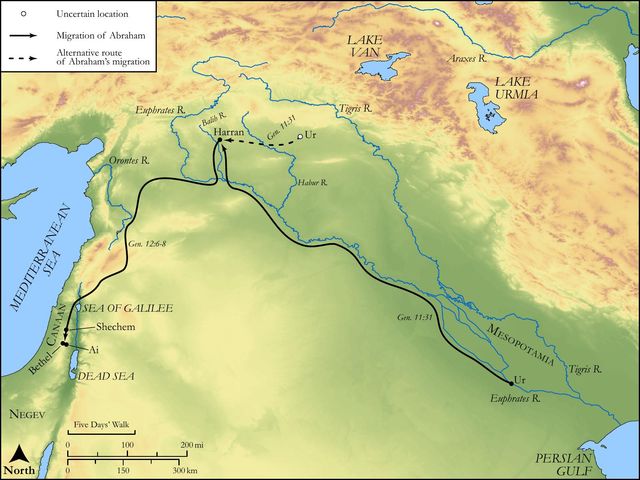
The setting, the plain of Shinar, corresponds to ancient Mesopotamia (modern-day Iraq), a region renowned for its early urban centers and monumental architecture. The "tower" described in the text was the great building of the city in the plain of Shinar, raised of brick and slime in the land where Nimrod's kingdom had begun. The aspiration for the tower's "top [to reach] unto heaven" is the pride Scripture later lays against the king of Babylon: "I will ascend into heaven, I will exalt my throne above the stars of God." Furthermore, the desire to "make us a name" was a significant impulse of human pride, seeking by monumental achievement an enduring fame that God alone bestows, as He promised to make Abraham's name great.
Key Themes
ShowHideGenesis 11:4 contributes significantly to several overarching themes within Genesis and the broader biblical narrative. Firstly, it underscores the persistent theme of human rebellion and pride against divine authority, echoing the fall in Genesis 3. The people's desire to "make us a name" for themselves directly contrasts with God's intention for humanity to glorify Him. Secondly, it highlights the tension between human unity and divine sovereignty. While human unity can be a blessing, here it becomes a vehicle for collective sin, challenging God's plan for humanity's dispersion and stewardship of the earth. Thirdly, the narrative explores the theme of false security and human self-sufficiency. The city and tower are built as an attempt to create a permanent, secure dwelling and prevent scattering, revealing a lack of trust in God's provision and a desire to control their own destiny. This stands in stark contrast to the true security found in obedience to God, a theme that will be explored through the life of Abraham in Genesis 12.
Exposition and Analysis
ShowHideGenesis 11:4 captures the pivotal moment of human rebellion against God's post-flood mandate. The verse begins with a collective resolve, indicating a unified purpose among the people. Their ambition was two-fold: to construct a grand city and a tower, and through this endeavor, to secure their own fame and prevent their divinely ordained dispersion.
Key Word Analysis
ShowHideThis primitive root (H1129) signifies the act of construction, both literally and figuratively. In this context, it denotes a deliberate, concerted human effort to establish a permanent structure and society. However, the building here is not for God's glory or according to His command, but for human self-aggrandizement and defiance, highlighting a perversion of human creativity and industry.
Derived from a root meaning "to be great" or "to grow up" (H4026), this word refers to a large, tall structure. Here it refers to the vast building that the people proposed to raise in the plain of Shinar. The choice of a "tower" reaching "unto heaven" symbolizes human aspiration to ascend, to connect with the divine on their own terms, or even to challenge divine authority, rather than humbly submitting to God.
This primitive word (H8034) signifies an appellation, a mark of individuality, honor, authority, or character. The desire to "make us a name" reveals the core motivation of the Babel builders: the pursuit of self-glory, renown, and a lasting legacy apart from God. This stands in stark contrast to God's promise to "make your name great" for Abraham (Genesis 12:2), which was contingent on obedience and for God's redemptive purposes.
Verse Breakdown
ShowHide"And they said, Go to"
This phrase, literally "Come now" or "Let us begin," signals a deliberate, unified, and concerted call to action. It emphasizes the collective human initiative and resolve to act independently of, and indeed in opposition to, God's stated will. It highlights a moment of premeditated rebellion.
"let us build us a city and a tower"
The decision to build a "city" represents a desire for centralization, human governance, and a secure, permanent dwelling. This directly contradicts God's command for humanity to scatter and "fill the earth." The "tower" was intended as a symbol of their collective power, unity, and perhaps a means to access the divine or protect themselves from future floods, demonstrating a reliance on human ingenuity rather than divine faithfulness.
"whose top [may reach] unto heaven"
This expression is not necessarily a literal claim of physical height that could touch the sky, but rather a symbolic aspiration. It signifies an attempt to achieve divine status, power, or independence from God. It reflects a desire to transcend human limitations, assert autonomy, and perhaps even to challenge God's sovereignty or create a point of access to the divine on their own terms, bypassing God's established order.
"and let us make us a name"
This is the explicit, core motivation behind their ambitious project. It reveals a profound desire for self-glory, lasting renown, and a reputation built on human achievement rather than divine blessing. This pursuit of human fame and legacy signifies a deep-seated spiritual rebellion, prioritizing human honor over obedience and the glory of God.
"lest we be scattered abroad upon the face of the whole earth"
This clause explicitly states their defiance of God's earlier command to "fill the earth" (Genesis 1:28 and Genesis 9:1). By choosing to consolidate and build, they directly opposed God's plan for humanity's dispersion and stewardship of the globe. Their fear of being scattered reveals a desire to control their destiny and maintain unity on their own terms, rather than trusting in God's sovereign will and provision.
Literary Devices
ShowHideThe narrative of Genesis 11:4 employs several potent literary devices. Symbolism is prominent, with the "city" representing human attempts at self-sufficiency and centralized power, and the "tower" symbolizing human pride, ambition, and a futile aspiration to usurp divine prerogative or bypass God's ordained means of access. The phrase "reach unto heaven" is an example of hyperbole, emphasizing the audacious scale of their ambition rather than a literal physical possibility. There is also a strong element of irony in the narrative: the very act intended to prevent scattering and ensure unity ultimately leads to the most profound division and dispersion, demonstrating the futility of human schemes against divine will. Furthermore, the focus on "making a name" for themselves highlights anthropocentricism, placing human glory at the center of their endeavor, a stark contrast to the theocentric nature of true worship and obedience.
Theological and Thematic Connections
ShowHideGenesis 11:4 profoundly illustrates humanity's persistent inclination towards pride and rebellion against God's sovereign will. The desire to "make us a name" and to consolidate power, rather than obeying the divine command to fill the earth, reveals a deep-seated human ambition for self-glory and autonomy. This act of collective defiance demonstrates the futility of human efforts to establish security and significance apart from God, as all such endeavors are ultimately destined to fail when they contravene divine purposes. The narrative underscores that true unity and flourishing come from alignment with God's plan, not from human-devised schemes of consolidation and self-exaltation.
Reflection and Application
ShowHideGenesis 11:4 serves as a timeless warning against the dangers of collective human ambition that excludes or directly defies God. It challenges us to examine our own motivations, both individually and communally: are we striving to "make a name" for ourselves, seeking security, significance, or unity on our own terms, or are we living for the glory of God and trusting in His sovereign plan? The story reminds us that true security and lasting purpose are found not in our achievements, our accumulated power, or our self-devised structures, but in humble obedience and reliance on God's will. When we prioritize our own renown over God's command, we inevitably invite confusion and scattering, both spiritually and relationally. This passage calls us to surrender our self-centered ambitions and align our lives with God's purposes, recognizing that genuine flourishing comes from Him alone.
Questions for Reflection
ShowHideFAQ
ShowHideWhat was the primary sin of the people at Babel?
ShowHideThe primary sin of the people at Babel was a multifaceted act of rebellion rooted in pride and self-glorification. They sought to "make a name" for themselves, prioritizing human renown and achievement over the glory of God. Furthermore, their decision to build a city and a tower to prevent being "scattered abroad upon the face of the whole earth" was a direct and deliberate defiance of God's repeated command to humanity to "be fruitful, and multiply, and replenish the earth" (Genesis 1:28 and Genesis 9:1). Their ambition was driven by a desire for human autonomy, control, and a false sense of security apart from God.
Did the Tower of Babel literally reach heaven?
ShowHideThe phrase "whose top [may reach] unto heaven" is best understood as a symbolic expression of immense height and, more importantly, an audacious aspiration for divine status, power, or independence from God. It signifies an attempt to assert human power and control over the divine realm, or to create a human-made gateway to the heavens, rather than a literal physical structure that could touch the sky. It reflects the same ambition Scripture later charges against the king of Babylon, "I will ascend into heaven," a human-centric, rather than God-honoring, perspective. The emphasis is on the prideful intent and the symbolic challenge to God's sovereignty.
How does this story relate to God's command to "fill the earth"?
ShowHideThe story of Babel is a direct narrative of humanity's rebellion against God's repeated command to "fill the earth." After the flood, God reiterated His mandate to Noah and his sons in Genesis 9:1, echoing the original creation mandate in Genesis 1:28. Instead of dispersing and populating the globe as instructed, the people at Babel chose to centralize, building a city and tower with the explicit aim of preventing their scattering. Their actions directly defied God's sovereign plan for humanity's expansion, stewardship of the earth, and the development of diverse nations. God's subsequent intervention to confuse their language and scatter them (Genesis 11:7-8) was a direct fulfillment of His original command, albeit through judgment.
Christ-Centered Fulfillment
ShowHideThe Tower of Babel stands as a monument to humanity's futile and rebellious attempt to reach God on its own terms, to establish a name for itself through collective pride, and to achieve unity and security apart from divine will. This self-exalting endeavor resulted not in ascent, but in profound division and confusion. In stark contrast, Jesus Christ is the ultimate fulfillment and reversal of Babel's failure. He is the true "ladder to heaven," the divine bridge between God and humanity, not built by human hands but divinely ordained. While Babel led to the scattering of peoples and the confusion of languages, the day of Pentecost, empowered by the Holy Spirit, miraculously reversed this curse by uniting diverse peoples through a common understanding of God's mighty works in Christ (Acts 2:1-11). Through His sacrificial death and resurrection, Christ made a name for Himself—the Name above all names (Philippians 2:9-11)—not through human ambition, but through humble obedience and redemptive love. He offers true unity to a scattered humanity, gathering all things into Himself (Ephesians 1:9-10), and provides a secure dwelling place in the New Jerusalem, where God's presence is our ultimate home, fulfilling what humanity at Babel sought in vain (Revelation 21:1-4).