


Esther 3:11
- וַיֹּאמֶרvai·Yo·merand he saidH559Conj-w ¦ V-Qal-ConsecImperf-3msVerb Qal Consecutive Imperfect 3rd Singular Masculineוַandיֹּאמֶרhe said
- הַמֶּלֶךְha·Me·lekhthe kingH4428Art ¦ N-msNoun Singular Masculine Absoluteהַtheמֶּלֶךְking
- לְהָמָןle·ha·Manto HamanH2001Prep-l ¦ N-proper-mNoun Proper MasculineלְtoהָמָןHaman
- הַכֶּסֶףha·Ke·sefthe silverH3701Art ¦ N-msNoun Singular Masculine Absoluteהַtheכֶּסֶףsilver
- נָתוּןna·Tun[is] givenH5414V-Qal-PassPrtcpl-msVerb Qal Participle Passive Singular Masculine Absolute
- לָךְLakhto <the> youPrep-l ¦ 2msSuffix Personal 2nd Singular Masculineלָto <the>ךְyou
- וְהָעָםve·ha·'Amand the peopleH5971Conj-w ¦ Art ¦ N-msNoun Singular Masculine Absoluteוְandהָtheעָםpeople
- לַעֲשׂוֹתla·'a·Sotto doH6213Prep-l ¦ V-Qal-InfVerb Qal Infinitive Constructלַtoעֲשׂוֹתdo
- בּוֹbowith <the> itPrep-b ¦ 3msSuffix Personal 3rd Singular Masculineבּwith <the>וֹit
- כַּטּוֹבka·Tovaccording to the goodH2896Prep-k ¦ Adj-msAdjective Singular Masculine Absoluteכַּaccording to theטּוֹבgood
- בְּעֵינֶיךָbe·'ei·Nei·khain your viewH5869Prep-b ¦ N-fdc ¦ 2msNoun Dual Feminine Constructבְּinעֵינֶיviewךָyour
English is a literal word-by-word gloss of the Hebrew, not the KJV's wording. Why?
This is the original text the KJV's translators worked from — each Hebrew word with its own literal English meaning in this verse, prepared by scholars at Tyndale House, Cambridge. The KJV translates whole sentences, not word by word, so its wording differs: one Hebrew word can become several English words, and the KJV may choose “the LORD” where the gloss reads “Yahweh”. Both are faithful — they answer different questions. For the KJV's own rendering, switch to the KJV text.
Details
See on the biblical-era map
Study this verse
Public-domain commentary
Matthew Henry
From his Commentary on the Whole Bible. Henry comments on passages, not single verses — this entry covers Esther 3:7–15. His two-level outline is real structure in the source text, so it is rendered as structure.
Haman values himself upon that bold and daring thought, which he fancied well became his great spirit, of destroying all the Jews - an undertaking worthy of its author, and which he promised himself would perpetuate his memory. He doubts not but to find desperate and bloody hands enough to cut all their throats if the king will but give him leave. How he obtained leave, and commission to do it, we are here told. He had the king's ear, let him alone to manage him.
I.He makes a false and malicious representation of Jews, and their character, to the king, Est 3:8.
The enemies of God's people could not give them such bad treatment as they do if they did not first give them a bad name. He would have the king believe, 1. That the Jews were a despicable people, and that it was not for his credit to harbour them:"A certain people there is," without name, as if nobody knew whence they came and what they were; "they are not incorporated, but scattered abroad and dispersed in all the provinces as fugitives and vagabonds on the earth, and inmates in all countries, the burden and scandal of the places where they live." 2. That they were a dangerous people, and that it was not safe to harbour them. "They have laws and usages of their own, and conform not to the statutes of the kingdom and the customs of the country; and therefore they may be looked upon as disaffected to the government and likely to infect others with their singularities, which may end in a rebellion." It is no new thing for the best of men to have such invidious characters as these given of them; if it be no sin to kill them, it is no sin to belie them.
II.He bids high for leave to destroy them all, Est 3:9.
He knew there were many that hated the Jews, and would willingly fall upon them if they might but have a commission: Let it be written therefore that they may be destroyed. Give but orders for a general massacre of all the Jews, and Haman will undertake it shall be easily done. If the king will gratify him in this matter, he will make him a present of ten thousand talents, which shall be paid into the king's treasuries. This, he thought, would be a powerful inducement to the king to consent, and would obviate the strongest objection against him, which was that the government must needs sustain loss in its revenues by the destruction of so many of its subjects; so great a sum, he hoped, would be equivalent for that. Proud and malicious men will not stick at the expenses of their revenge, nor spare any cost to gratify it. Yet no doubt Haman knew how to re-imburse himself out of the spoil of the Jews, which his janizaries were to seize for him (Est 3:13), and so to make them bear the charges of their own ruin; while he himself hoped to be not only a saver but a gainer by the bargain.
III.He obtains what he desired, a full commission to do what he would with the Jews, Est 3:10, Est 3:11.
The king was so inattentive to business, and so bewitched with Haman, that he took no time to examine the truth of his allegations, but was as willing as Haman could wish to believe the worst concerning the Jews, and therefore he gave them up into his hands, as lambs to the lion: The people are thine, do with them as it seemeth good unto thee. He does not say, "Kill them, slay them" (hoping Haman's own cooler thoughts would abate the rigour of that sentence and induce him to sell them for slaves); but "Do what thou wilt with them." And so little did he consider how much he should lose in his tribute, and how much Haman would gain in the spoil, that he gave him withal the ten thousand talents: The silver is thine. Such an implicit confidence likewise he had in Haman, and so perfectly had he abandoned all care of his kingdom, that he gave Haman his ring, his privy-seal, or sign-manual, wherewith to confirm whatever edict he pleased to draw up for this purpose. Miserable is the kingdom that is at the disposal of such a head as this, which has one ear only, and a nose to be led by, but neither eyes nor brains, nor scarcely a tongue of its own.
IV.He then consults with his soothsayers to find out a lucky day for the designed massacre, Est 3:7.
The resolve was taken up in the first month, in the twelfth year of the king, when Esther had been his wife about five years. Some day or other in that year must be pitched upon; and, as if he doubted not but that Heaven would favour his design and further it, he refers it to the lot, that is, to the divine Providence, to choose the day for him; but that, in the decision, proved a better friend to the Jews than to him, for the lot fell upon the twelfth month, so that Mordecai and Esther had eleven months to turn themselves in for the defeating of the design, or, if they could not defeat it, space would be left for the Jews to make their escape and shift for their safety. Haman, though eager to have the Jews cut off, yet will submit to the laws of his superstition, and not anticipate the supposed fortunate day, no, not to gratify his impatient revenge. Probably he was in some fear lest the Jews should prove too hard for their enemies, and therefore durst not venture on such a hazardous enterprise but under the smiles of a good omen. This may shame us, who often acquiesce not in the directions and disposals of Providence when they cross our desires and intentions. He that believeth the lot, much more that believeth the promise, will not make haste. But see how God's wisdom serves its own purposes by men's folly. Haman has appealed to the lot, and to the lot he shall go, which, by adjourning the execution, gives judgment against him and breaks the neck of the plot.
V.The bloody edict is hereupon drawn up, signed, and published, giving orders to the militia of every province to be ready against the thirteenth day of the twelfth month, and, on that day, to murder all the Jews, men, women, and children, and seize their effects, Est 3:12-14. Had the decree been to banish all the Jews and expel them out of the king's dominions, it would have been severe enough; but surely never any act of cruelty appeared so barefaced as this, to destroy, to kill, and to cause to perish, all the Jews, appointing them as sheep for the slaughter without showing any cause for so doing. No crime is laid to their charge; it is not pretended that they were obnoxious to the public justice, nor is any condition offered, upon performance of which they might have their lives spared; but die they must, without mercy. Thus have the church's enemies thirsted after blood, the blood of the saints and the martyrs of Jesus, and drunk of it till they have been perfectly intoxicated (Rev 17:6); yet still, like the horse-leech, they cry, Give, give. This cruel offer is ratified with the king's seal, directed to the king's lieutenants, and drawn up in the king's name, and yet the king knows not what he does. Posts are sent out, with all expedition, to carry copies of the decree to the respective provinces, Est 3:15. See how restless the malice of the church's enemies is: it will spare no pains; it will lose no time.
VI.The different temper of the court and city hereupon.
1.The court was very merry upon it: The king and Haman sat down to drink, perhaps to drink "Confusion to all the Jews." Haman was afraid lest the king's conscience should smite him for what he had done and he should begin to wish it undone again, to prevent which he engrossed him to himself, and kept him drinking. This cursed method many take to drown their convictions, and harden their own hearts and the hearts of others in sin.
2.The city was very sad upon it (and the other cities of the kingdom, no doubt, when they had notice of it): The city Shushan was perplexed, not only the Jews themselves, but all their neighbours that had any principles of justice and compassion. It grieved them to see their king so abused, to see wickedness in the place of judgment (Ecc 3:16), to see men that lived peaceably treated so barbarously; and what would be the consequences of it to themselves they knew not. But the king and Haman cared for none of these things. Note, It is an absurd and impious thing to indulge ourselves in mirth and pleasure when the church is in distress and the public are perplexed.
Historical interpretation
Historical reception
2 surviving comments on this verse. Each one is dated, so this reads as a timeline rather than a list.
So Haman promised ten thousand talents of silver to the king, and asked for the death of the Jews; and so too the Jewish people, who were dedicated to the fleshly observance of the rites of the Law in the belief that they were pleasing God in this way, planned the death of the true witnesses to Christ who were performing their spiritual service to God in accordance with the teachings of the Gospels. And just as Haman, when he sent his letters, took care to enforce them with the king’s seal because this would make it easier for him to carry out his wishes, the faithlessness of the Jews wrongly exploited—as evidence for their heresy—the books of divine law in which the seal of the supreme king is impressed, that is, the grace of the Holy Spirit is made manifest. This they did in their effort to denounce the conversion of the nations to a fellowship of faith, and to condemn the Gospel of Christ as something contrary to God’s precepts.
The fact that the twelfth month, which is called Adar, was chosen for the destruction of Israel after casting lots is not with its own spiritual meaning. It is referring, in fact, to the grace of Christ which has been prepared for the faithful in the fullness of time when the faithful will undergo a fierce persecution in the world in the last days. And writing about this to Timothy, the teacher of the Gentiles says, “You must understand this, that in the last days distressing times will come. For people will be lovers of themselves, lovers of money, boasters, arrogant, abusive, disobedient to their parents, ungrateful, unholy, inhuman, implacable, slanderers, profligates, brutes, haters of good, treacherous, reckless, swollen with conceit, lovers of pleasure rather than lovers of God, holding the outward form of godliness but denying its power.” And the Lord himself says in the Gospel, “And this gospel of the kingdom will be proclaimed throughout the world, as a testimony to all the nations; and then the end will come.” And a bit further: “For at that time there will be great suffering, such as has not been from the beginning of the world until now, and never will be.”
Continue studying Esther 3:11 across the web’s major study libraries — every link below opens this exact verse, chapter, or book on the destination site.
Read & Compare
 BibleGatewayThis verse in more than 200 translations and 70 languages.
 Bible.comThe YouVersion reader — hundreds of translations, reading plans, and highlights.
 ESV.orgCrossway's official English Standard Version reader.
 NET BibleThe NET translation with 60,000+ translators' notes on every rendering decision.
 STEP BibleTyndale House's free study tool — original text, vocabulary, and scholarly resources.
 BibliaLogos Bible Software's free web reader.
 USCCBThe New American Bible (Revised Edition) with the U.S. bishops' study notes.
Commentaries
 BibleHub CommentariesDozens of classic commentaries on this verse, gathered on one page.
 StudyLightMore than 100 commentary sets — the largest collection on the web.
 BibleRefPlain-English commentary on what this verse means, verse by verse.
 Enduring WordDavid Guzik's free commentary on this chapter, widely used by Bible teachers.
 Bible Study ToolsVerse commentary alongside Greek and Hebrew study aids.
Original Language & Research
- BibleHub InterlinearThe verse word by word — original language, transliteration, and English.
- BibleHub LexiconEvery word's original-language definition and Strong's entry.
 Blue Letter BibleDeep-study tools — Strong's numbers, concordance, and word studies.
 SefariaThe Hebrew text with Rashi and centuries of Jewish commentary.
Sermons, Hymns & Audio


TrulyRandomVerse is not affiliated with these sites and doesn’t control their content. They’re linked because they’re genuinely useful.
Summary
Esther 3:11 captures a chilling and pivotal moment where King Ahasuerus, with a startling display of indifference and unquestioning trust, grants Haman, his malevolent chief minister, absolute authority over a specific, unnamed people and their fate. By waiving Haman's substantial financial offer and delegating full power, the king unwittingly sanctions a genocidal plot, setting the stage for the terrifying decree that threatens the very existence of God's chosen people throughout the vast Persian Empire.
Context
ShowHideLiterary Context
This verse immediately follows Haman's cunning and malicious proposal to King Ahasuerus. Driven by a personal vendetta against Mordecai, a Jew who refused to bow to him, Haman conceived a plan to annihilate all Jews across the kingdom, a plot detailed in Esther 3:6. To secure the king's approval, Haman offered an immense sum of 10,000 talents of silver for the royal treasury, as recorded in Esther 3:9. In a shocking demonstration of his detached governance, the king not only refused the money but also removed his signet ring, a potent symbol of delegated royal authority, and gave it to Haman, as recounted in Esther 3:10. Esther 3:11 is the king's verbal confirmation of this transfer of power, cementing Haman's unfettered control over the lives of the Jewish people, thereby escalating the narrative tension to an alarming degree.
Historical & Cultural Context
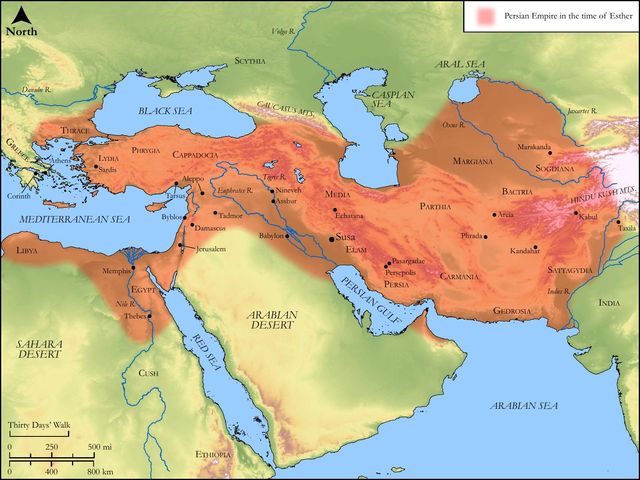
The events of Esther unfold during the reign of King Ahasuerus, widely identified with Xerxes I (486-465 BC), who ruled over the vast Persian Empire, stretching "from India even unto Ethiopia" (Esther 1:1). Persian kings were absolute monarchs, often distant from the daily affairs of their subjects, relying heavily on trusted viziers like Haman. The delegation of the royal signet ring was a common practice, signifying the transfer of the king's own authority to issue decrees and make them legally binding. The king's casual dismissal of the 10,000 talents of silver (an astronomical sum, equivalent to hundreds of tons of silver, which could have funded a significant portion of the empire's military for a year) underscores the immense wealth of the Persian Empire and, more critically, the king's profound indifference to the human cost of Haman's vague proposal. This cultural context highlights how easily a powerful, yet disengaged, ruler could be manipulated by a malevolent official, leading to catastrophic consequences.
Key Themes
ShowHideEsther 3:11 powerfully contributes to several overarching themes within the book of Esther. Firstly, it exemplifies the theme of Absolute Authority and Blind Trust. The king's statement, "The silver [is] given to thee, the people also, to do with them as it seemeth good to thee," reveals an alarming delegation of power without scrutiny, demonstrating a dangerous level of trust in Haman and a profound lack of concern for justice or the welfare of his subjects. Secondly, the verse underscores the Gravity of Haman's Malice and the immediate danger facing the Jewish people. The king's endorsement transforms Haman's personal vendetta into an officially sanctioned state policy, setting in motion a decree for mass extermination, as detailed in Esther 3:13. Finally, it highlights the Consequences of Indifference. The king's casual response to Haman's offer, particularly his willingness to waive a massive sum and grant a "blank check" over human lives, illustrates how a ruler's apathy can pave the way for immense evil and suffering, ultimately leading to a crisis that threatens the very survival of God's people, as seen in the widespread distress described in Esther 4:3.
Exposition and Analysis
ShowHideKey Word Analysis
ShowHideThis verb (H5414), meaning "to give, put, set, allow," signifies a definitive act of transfer or bestowal. Here, it highlights the king's active role in empowering Haman, not merely acquiescing but explicitly granting permission. It underscores the king's personal endorsement of Haman's plan, even if he remains ignorant of its full implications. The king is not simply allowing Haman to proceed; he is giving him the authority and the "people" as if they were property, thereby legitimizing Haman's destructive intent.
This term (H5971) refers to a specific group of people, a nation or tribe, often a congregated unit. In this context, it refers to the Jewish people, though the king is likely unaware of their specific identity. The use of "the people" in such a generic and detached manner by the king highlights his dehumanization of the subjects Haman intends to destroy. They are not individuals with rights or lives, but a collective, an abstract entity to be managed or, in Haman's case, eradicated, stripped of their humanity and reduced to a mere problem.
While typically meaning "good, pleasant, agreeable" (H2896), here it is used in the sense of "what seems right or fitting" to Haman. The king grants Haman the power "to do with them as it seemeth good to thee," implying that whatever Haman decides will be acceptable and legitimate in the king's eyes. This is a chilling inversion of justice and morality, as Haman's "good" is, in fact, an evil, genocidal intent. The word exposes the king's moral blindness and the dangerous subjectivity of "good" when divorced from divine righteousness and universal human value.
Verse Breakdown
ShowHide"And the king said unto Haman,"
This opening clause establishes the direct, authoritative communication from King Ahasuerus to his chief minister, Haman. It sets a formal and weighty tone, emphasizing that the words that follow are not merely suggestions but a royal decree, carrying the full weight of the empire's highest authority.
"The silver [is] given to thee,"
This statement reveals the king's immediate and surprising waiver of the enormous sum of 10,000 talents of silver that Haman had offered. It indicates either extreme wealth that renders such a sum insignificant to the king, or, more likely, a profound trust in Haman's judgment and loyalty, so much so that the king values Haman's initiative more than the money. It signifies the king's complete disengagement from the financial aspect of the deal, focusing solely on the "problem" Haman presented and Haman's perceived solution.
"the people also,"
This incredibly terse and chilling phrase is a direct extension of the previous clause, creating a parallel structure that equates human lives with mere currency. Just as the silver is given, so too are "the people." This demonstrates the king's shocking indifference to human life, treating an entire ethnic group as mere property or a commodity to be dispensed with. It implies that the lives of these people are of no value to him, or at least, of less value than the perceived benefit of Haman's proposed solution to an unspecified problem.
"to do with them as it seemeth good to thee."
This grants Haman carte blanche authority, an unrestricted license to act. The king places no limitations, asks no questions, and requires no oversight regarding Haman's plans for "the people." This phrase is the ultimate expression of blind trust and abdication of royal responsibility, allowing Haman's malevolent intentions to be carried out under the full sanction of the crown. It sets the stage for the horrifying decree that follows, as Haman is now legally empowered to execute his genocidal scheme without any royal impediment.
Literary Devices
ShowHideEsther 3:11 is rich with literary devices that amplify its dramatic and chilling impact. The most prominent is Irony: the king, the supreme authority, grants Haman absolute power to commit an act of mass murder under the guise of "what seemeth good to thee," completely unaware of the true nature of Haman's "good" or the identity of "the people." This dramatic irony creates intense tension, as the reader knows the horrific truth that the king does not. There is also significant Symbolism in the king's act of giving Haman his signet ring (mentioned in the preceding verse, Esther 3:10), which represents the full transfer of royal authority and power to issue decrees. This physical act, combined with the verbal declaration in verse 11, underscores the terrifying legitimacy Haman's plot now possesses. The verse also functions as powerful Foreshadowing, hinting at the immense danger that will befall the Jewish people and setting the stage for the desperate measures Esther and Mordecai will need to take to avert the catastrophe. The king's casual, almost dismissive tone, juxtaposed with the gravity of the decision, creates a chilling Juxtaposition that highlights his profound moral blindness and detachment.
Theological and Thematic Connections
ShowHideEsther 3:11 serves as a stark biblical example of the dangers inherent in unchecked power, human indifference, and the insidious nature of evil. The king's casual delegation of authority, born out of a combination of trust and apathy, demonstrates how easily a position of great power can be manipulated for destructive ends. Theologically, this moment highlights the vulnerability of God's people when faced with human malice and the absence of righteous leadership. Yet, within the broader narrative of Esther, this extreme vulnerability also sets the stage for God's subtle, yet powerful, providence. Though God's name is not explicitly mentioned in the book, His hand is evident in the unfolding events, turning what was intended for evil into a means of deliverance and preservation for His covenant people. This verse underscores the reality of human responsibility in the face of evil, even as it implicitly points to the ultimate sovereignty of God working behind the scenes, orchestrating circumstances to protect His purposes and His people.
Reflection and Application
ShowHideEsther 3:11 is a profound cautionary tale for all generations, highlighting the immense dangers of unchecked power and the devastating consequences of indifference in leadership. It calls us to be vigilant, to discern the character and intentions of those in authority, and to recognize that true leadership requires not just power, but wisdom, justice, and compassion. For believers, this verse underscores the importance of praying for our leaders, that they might govern with righteousness and protect the vulnerable, as exhorted in 1 Timothy 2:1-2. It also reminds us that even when evil seems to triumph and God's people face existential threats, our ultimate hope rests in God's unwavering providence. We are called to stand against injustice, to rebuke the powerful, and to trust that even in the darkest moments, God is at work, orchestrating events for the good of His people and the fulfillment of His purposes, just as He did through Esther and Mordecai. This passage challenges us to consider our own spheres of influence, however small, and to ensure that we do not exhibit similar indifference or wield authority without discernment and compassion.
Questions for Reflection
ShowHideFAQ
ShowHideWhy did King Ahasuerus not ask more questions about Haman's plan?
ShowHideThe text does not explicitly state the king's motivations, but several factors likely contributed to his lack of inquiry. Firstly, Persian kings were absolute monarchs, often detached from the specifics of governance, relying heavily on trusted viziers like Haman. The king's primary concern might have been maintaining order and trusting his officials to handle details. Secondly, Haman's proposal in Esther 3:8 was vague but framed as a matter of state security and unity ("there is a certain people scattered abroad... their laws are diverse... neither do they keep the king's laws"). This generalized accusation, combined with Haman's immense financial offer, might have been sufficient for a king more interested in perceived efficiency and loyalty than in justice or human dignity. His casual dismissal of the money in Esther 3:11 further highlights his profound indifference to the human cost, viewing "the people" as a problem to be solved rather than individuals with inherent value and rights.
What does this verse tell us about the nature of power?
ShowHideEsther 3:11 offers a chilling commentary on the corrupting potential of unchecked power and the immense danger of its misuse. It demonstrates that power, when wielded without wisdom, accountability, or moral compass, can become a tool for immense evil. The king's absolute authority, combined with his apathy, allows Haman's personal vendetta to escalate into a state-sanctioned genocidal plot. The verse illustrates how easily a ruler can be manipulated when they prioritize blind trust or convenience over justice and the welfare of their subjects. It serves as a timeless warning that power, particularly absolute power, demands the highest degree of discernment, integrity, and responsibility, for its impact can be devastatingly far-reaching.
Christ-Centered Fulfillment
ShowHideEsther 3:11, with its portrayal of a powerful, indifferent ruler granting authority for a wicked plot against God's people, powerfully foreshadows the ultimate cosmic conflict between good and evil, and God's sovereign plan of salvation through Christ. Haman's scheme to annihilate the Jews was a direct attack on the lineage through which the Messiah would come, a satanic attempt to thwart God's redemptive purposes. Just as Haman sought to destroy the physical seed of Abraham, so too does Satan seek to destroy the spiritual seed of Christ, the church, through various persecutions and deceptions (Revelation 12:17). However, the narrative of Esther, culminating in the miraculous deliverance of God's people, points to the greater deliverance wrought by Jesus Christ. While Haman's plot aimed at physical destruction, humanity faced an even greater threat: spiritual death and separation from God due to sin. God, in His ultimate providence, did not remain silent or indifferent. Instead, He sent His Son, the true King, who, unlike Ahasuerus, did not delegate but personally entered into the human condition to confront the forces of evil. Jesus, the Lamb of God, willingly laid down His life, not as a victim of an indifferent ruler, but as a perfect sacrifice to redeem His people from the ultimate decree of death and sin's dominion (Romans 5:8). His resurrection is the ultimate reversal, turning the tables on sin and death, just as the Jews' fortunes were dramatically reversed in Esther (Esther 9:1). Thus, Esther 3:11, a moment of profound darkness and existential threat, ultimately points to the light and triumph found in Christ, who ensures the eternal preservation of His people against all the schemes of the enemy, declaring that "the gates of hell shall not prevail against it" (Matthew 16:18).