


Esther 9:26
Bible text: King James Version (1769 Blayney text) · Public domain
Bible text: King James Version with Strong's numbers · Public domain
Bible text: Berean Standard Bible · Public domain
Bible text: American Standard Version (1901) · Public domain
Bible text: World English Bible, Messianic edition · Public domain
Bible text: Geneva Bible (1599) · Public domain
Bible text: Young's Literal Translation · Public domain
- עַל'althere-H5921PrepPreposition
- כֵּןken-foreH3651AdvAdverb
- קָרְאוּka·re·'Upeople calledH7121V-Qal-Perf-3cpVerb Qal Perfect 3rd Plural common gender
- לַיָּמִיםlai·ya·Mim<to> the daysH3117Prep-l ¦ N-mpNoun Plural Masculine Absoluteלַ<to> theיָּמִיםdays
- הָאֵלֶּהha·'E·leh<the> theseH428Art ¦ PrtParticle Demonstrativeהָ<the>אֵלֶּהthese
- פוּרִיםfu·RimPurimH6332N-mpNoun Plural Masculine Absolute
- עַל'alonH5921PrepPreposition
- שֵׁםshem[the] name ofH8034N-mscNoun Singular Masculine Construct
- הַפּוּרha·Purthe PurH6332Art ¦ N-msNoun Singular Masculine AbsoluteהַtheפּוּרPur
- עַל'althere-H5921PrepPreposition
- כֵּןken-foreH3651AdvAdverb
- עַל'alonH5921PrepPreposition
- כָּלkolallH3605N-mscNoun Singular Masculine Construct
- דִּבְרֵיdiv·Rei[the] words ofH1697N-mpcNoun Plural Masculine Construct
- הָאִגֶּרֶתha·'i·Ge·retthe letterH107Art ¦ N-fsNoun Singular Feminine Absoluteהָtheאִגֶּרֶתletter
- הַזֹּאתha·Zot<the> thisH2063Art ¦ PrtParticle Demonstrativeהַ<the>זֹּאתthis
- וּמָהu·mahand whateverH4100Conj-w ¦ InterrogPronoun Interrogativeוּandמָהwhatever
- רָאוּra·'Uthey had seenH7200V-Qal-Perf-3cpVerb Qal Perfect 3rd Plural common gender
- עַל'alonH5921PrepPreposition
- כָּכָהKa·khahthusH3602AdvAdverb
- וּמָהu·Mahand whateverH4100Conj-w ¦ InterrogPronoun Interrogativeוּandמָהwhatever
- הִגִּיעַhi·Gi·a'it had happenedH5060V-Hiphil-Perf-3msVerb Hiphil Perfect 3rd Singular Masculine
- אֲלֵיהֶם'a·lei·Hemto themH413Prep ¦ 3mpPrepositionאֲלֵיtoהֶםthem
English is a literal word-by-word gloss of the Hebrew, not the KJV's wording. Why?
This is the original text the KJV's translators worked from — each Hebrew word with its own literal English meaning in this verse, prepared by scholars at Tyndale House, Cambridge. The KJV translates whole sentences, not word by word, so its wording differs: one Hebrew word can become several English words, and the KJV may choose “the LORD” where the gloss reads “Yahweh”. Both are faithful — they answer different questions. For the KJV's own rendering, switch to the KJV text.
Details
See on the biblical-era maps
Study this verse
Public-domain commentary
Matthew Henry
From his Commentary on the Whole Bible. Henry comments on passages, not single verses — this entry covers Esther 9:20–32. His four-level outline is real structure in the source text, so it is rendered as structure.
We may well imagine how much affected Mordecai and Esther were with the triumphs of the Jews over their enemies, and how they saw the issue of that decisive day with a satisfaction proportionable to the care and concern with which they expected it. How were their hearts enlarged with joy in God and his salvation, and what new songs of praise were put into their mouths! But here we are told what course they took to spread the knowledge of it among their people, and to perpetuate the remembrance of it to posterity, for the honour of God and the encouragement of his people to trust in him at all times.
I.The history was written, and copies of it were dispersed among all the Jews in all the provinces of the empire, both nigh and far, Est 9:20.
They all knew something of the story, being nearly concerned in it - were by the first edict made sensible of their danger and by the second of their deliverance; but how this amazing turn was given they could not tell. Mordecai therefore wrote all these things. And if this book be the same that he wrote, as many think it is, I cannot but observe what a difference there is between Mordecai's style and Nehemiah's. Nehemiah, at every turn, takes notice of divine Providence and the good hand of his God upon him, which is very proper to stir up devout affections in the minds of his readers; but Mordecai never so much as mentions the name of God in the whole story. Nehemiah wrote his book at Jerusalem, where religion was in fashion and an air of it appeared in men's common conversation; Mordecai wrote his at Shushan the palace, where policy reigned more then piety, and he wrote according to the genius of the place. Even those that have the root of the matter in them are apt to lose the savour of religion, and let their leaf wither, when they converse wholly with those that have little religion. Commend me to Nehemiah's way of writing; that I would imitate, and yet learn from Mordecai's that men may be truly devout though they do not abound in the shows and expressions of devotion, and therefore that we must not judge nor despise our brethren. But, because there is so little of the language of Canaan in this book, many think it was not written by Mordecai, but was an extract out of the journals of the kings of Persia, giving an account of the matter of fact, which the Jews themselves knew how to comment upon.
II.A festival was instituted, to be observed yearly from generation to generation by the Jews, in remembrance of this wonderful work which God wrought for them, that the children who should be born might know it, and declare it to their children, that they might set their hope in God, Psa 78:6, Psa 78:7. It would be for the honour of God as the protector of his people, and the honour of Israel as the care of Heaven, a confirmation of the fidelity of God's covenant, an invitation to strangers to come into the bonds of it, and an encouragement to God's own people cheerfully to depend upon his wisdom, power, and goodness, in the greatest straits. Posterity would reap the benefit of this deliverance, and therefore ought to celebrate the memorial of it. Now concerning this festival we are here told,
1.When it was observed - every year on the fourteenth and fifteenth days of the twelfth month, just a month before the passover, Est 9:21. Thus the first month and the last month of the year kept in remembrance the months that were past, even the days when God preserved them. They kept two days together as thanksgiving days, and did not think them too much to spend in praising God. Let us not be niggardly in our returns of praise to him who bestows his favours so liberally upon us. Observe, They did not keep the day when they fought, but the days when they rested, and on the fifteenth those in Shushan, and both those days they kept. The sabbath was appointed not on the day that God finished his work, but on the day that he rested from it. The modern Jews observe the thirteenth day, the day appointed for their destruction, as a fasting-day, grounding the practice on Est 9:31, the matters of their fastings and cry. But that refers to what was in the day of their distress (Est 4:3, Est 4:16), which was not to be continued when God had turned their fasts into joy and gladness, Zac 8:19.
2.How it was called - The feast of Purim (Est 9:26), from Pur, a Persian word which signified a lot, because Haman had by lot determined this to be the time of the Jews' destruction, but the Lord, at whose disposal the lot is, had determined it to be the time of their triumph. The name of this festival would remind them of the sovereign dominion of the God of Israel, who served his own purposes by the foolish superstitions of the heathen, and outwitted the monthly prognosticators in their own craft (Isa 47:13), frustrating the tokens of the liars and making the diviners mad, Isa 44:25, Isa 44:26.
3.By whom it was instituted and enacted. It was not a divine institution, and therefore it is not called a holy day, but a human appointment, by which it was made a good day, Est 9:19, Est 9:22.
(1.)The Jews ordained it, and took it upon themselves (Est 9:27), voluntarily undertook to do as they had begun. Est 9:23. They bound themselves to this by common consent.
(2.)Mordecai and Esther confirmed their resolve, that it might be the more binding on posterity, and might come well recommended by those great names. They wrote,
[1.]With all authority (Est 9:29), as well they might, Esther being queen and Mordecai prime-minister of state. It is well when those who are in authority use their authority to authorize that which is good.
[2.]With words of peace and truth. Though they wrote with authority, they wrote with tenderness, not imperious, not imposing, but in such language as the council at Jerusalem use in their decree (Act 15:29): "If you do so and so, you shall do well. Fare you well." Such was the style of these letters, or such the salutation or valediction of them: Peace and truth be with you.
4.By whom it was to be observed - by all the Jews, and by their seed, and by all such as joined themselves to them, Est 9:27. The observance of this feast was to be both universal and perpetual; the proselytes must observe it, in token of their sincere affection to the Jewish nation and their having united interests with them. A concurrence in joys and praises is one branch of the communion of saints.
5.Why it was to be observed - that the memorial of the great things God had done for his church might never perish from their seed, Est 9:28. God does not work wonders for a day, but to be had in everlasting remembrance. What he does shall be for ever, and therefore should for ever be had in mind, Ecc 3:14. In this affair they would remember,
(1.)Haman's bad practices against the church, to his perpetual reproach (Est 9:24): Because he had devised against the Jews to destroy them. Let this be kept in mind, that God's people may never be secure, while they have such malicious enemies, on whom they ought to have a jealous eye. Their enemies aim at no less then their destruction; on God therefore let them depend for salvation.
(2.)Esther's good services to the church, to her immortal honour. When Esther, in peril of her life, came before the king, he repealed the edict, Est 9:25. This also must be remembered, that wherever this feast should be kept, and this history read in explication of it, this which she did might be told for a memorial of her. Good deeds done for the Israel of God ought to be remembered, for the encouragement of others to do the like. God will not forget them, and therefore we must not.
(3.)Their own prayers, and the answers given to them (Est 9:31): The matters of their fastings and their cry. The more cries we have offered up in our trouble, and the more prayers for deliverance, the more we are obliged to be thankful to God for deliverance. Call upon me in the time of trouble, and then offer to God thanksgiving.
6.How it was to be observed. And of this let us see,
(1.)What was here enjoined, which was very good, that they should make it,
[1.]A day of cheerfulness, a day of feasting and joy (Est 9:22), and a feast was made for laughter, Ecc 10:19. When God gives us cause to rejoice why should we not express our joy?
[2.]A day of generosity, sending portions one to another, in token of their pleasantness and mutual respect, and their being knit by this and other public common dangers and deliverances so much the closer to each other in love. Friends have their goods in common.
[3.]A day of charity, sending gifts to the poor. It is not to our kinsmen and rich neighbours only that we are to send tokens, but to the poor and the maimed, Luk 14:12, Luk 14:13. Those that have received mercy must, in token of their gratitude, show mercy; and there never wants occasion, for the poor we have always with us. Thanksgiving and almsgiving should go together, that, when we are rejoicing and blessing God, the heart of the poor may rejoice with us and their loins may bless us.
(2.)What was added to this, which was much better. They always, at the feast, read the whole story over in the synagogue each day, and put up three prayers to God, in the first of which they praise God for counting them worthy to attend this divine service; in the second they thank him for the miraculous preservation of their ancestors; in the third they praise him that they have lived to observe another festival in memory of it. So bishop Patrick.
(3.)What it has since degenerated to, which is much worse. Their own writers acknowledge that this feast is commonly celebrated among them with gluttony, and drunkenness, and excess of riot. Their Talmud says expressly that, in the feast of Purim, a man should drink till he knows not the difference between Cursed be Haman, and Blessed be Mordecai. See what the corrupt and wicked nature of man often brings that to which was at first well intended: here is a religious feast turned into a carnival, a perfect revel, as wakes are among us. Nothing more purifies the heart and adorns religion than holy joy; nothing more pollutes the heart and reproaches religion than carnal mirth and sensual pleasure. Corruptio optimi est pessima - What is best becomes when corrupted the worst.
Historical interpretation
Historical reception
2 surviving comments on this verse. Each one is dated, so this reads as a timeline rather than a list.
Very often people’s evil schemes turn out differently than they had hoped and the trap they had placed to capture others ensnares them, as the Scripture confirms, “The wicked are ensnared in their traps. And whoever digs a pit will fall into it.” Therefore also Haman, who prefigures the enemies of the church, was obligated to suffer the death that he had prepared for Mordecai. The lot cast into the urn represents the machinations of the human mind; but the result of such machinations entirely depends on divine judgment. Therefore it is said through Solomon, “The lot is cast into the lap, but the decision is the Lord’s alone.”
For wicked men often find that their desires are fulfilled in ways they had not expected to happen; and they are caught in the same traps they set to ensnare others, as the Scripture shows when it says: “The wicked are caught in their traps; and whoever digs a pit falls into it” (Proverbs 26). Hence Haman, who prefigures the enemies of the Church, was likewise forced to suffer the death he had planned for Mordecai. For the lot cast into an urn symbolizes the disposition of each and every thing in the mind of man, whose outcomes depend even so upon the judgment of God. Hence we are told by Solomon: “Lots are cast in the lap, but they are tempered by the Lord. For his way is not in the power of man; rather it belongs not to one who wills, or one who runs, but to God who grants mercy. For all things obey at his nod, and he does whatever he wishes in Heaven and on earth, on the sea and in all the depths” (Proverbs 16).
Continue studying Esther 9:26 across the web’s major study libraries — every link below opens this exact verse, chapter, or book on the destination site.
Read & Compare
 BibleGatewayThis verse in more than 200 translations and 70 languages.
 Bible.comThe YouVersion reader — hundreds of translations, reading plans, and highlights.
 ESV.orgCrossway's official English Standard Version reader.
 NET BibleThe NET translation with 60,000+ translators' notes on every rendering decision.
 STEP BibleTyndale House's free study tool — original text, vocabulary, and scholarly resources.
 BibliaLogos Bible Software's free web reader.
 USCCBThe New American Bible (Revised Edition) with the U.S. bishops' study notes.
Commentaries
 BibleHub CommentariesDozens of classic commentaries on this verse, gathered on one page.
 StudyLightMore than 100 commentary sets — the largest collection on the web.
 BibleRefPlain-English commentary on what this verse means, verse by verse.
 Enduring WordDavid Guzik's free commentary on this chapter, widely used by Bible teachers.
 Bible Study ToolsVerse commentary alongside Greek and Hebrew study aids.
Original Language & Research
- BibleHub InterlinearThe verse word by word — original language, transliteration, and English.
- BibleHub LexiconEvery word's original-language definition and Strong's entry.
 Blue Letter BibleDeep-study tools — Strong's numbers, concordance, and word studies.
 SefariaThe Hebrew text with Rashi and centuries of Jewish commentary.
Sermons, Hymns & Audio


TrulyRandomVerse is not affiliated with these sites and doesn’t control their content. They’re linked because they’re genuinely useful.
Summary
Esther 9:26 serves as the pivotal declaration for the annual Jewish festival of Purim, explicitly stating that these commemorative days were named "Purim" after "Pur," the lot Haman cast to determine the day of Jewish annihilation. This verse underscores that the establishment of this festival was a direct and divinely orchestrated response to the official decree disseminated by Mordecai and Esther, as well as the profound eyewitness accounts and personal experiences of the miraculous deliverance that transformed a day of intended destruction into one of joyous celebration and decisive victory for the Jewish people.
Context
ShowHideLiterary Context
This verse is strategically placed at the narrative's climax within the Book of Esther, following the dramatic and comprehensive reversal of fortune for the Jewish people. The preceding chapters meticulously detail Haman's genocidal plot, his reliance on casting lots (pur) to set the date for the extermination, and Queen Esther's courageous and divinely guided intervention, which ultimately led to Haman's execution and the granting of the Jews' right to self-defense. Esther 9:1-19 describes the Jews' successful defense against their enemies throughout the vast Persian Empire, effectively turning the tables on their persecutors. Esther 9:20-22 specifically outlines Mordecai's initial directive to establish an annual celebration, involving the sending of letters to all Jews to observe these days with feasting, joy, and the exchange of gifts. Therefore, Esther 9:26 formally ratifies and explains the etymological and historical basis for the naming and perpetual observance of this newly instituted festival.
Historical & Cultural Context
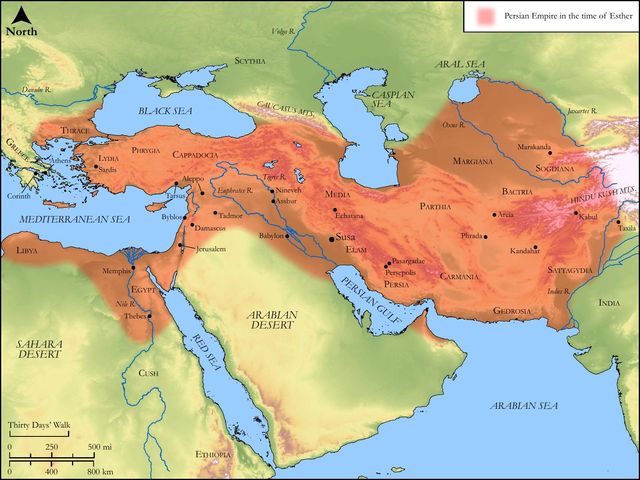
The events chronicled in the Book of Esther unfold during the reign of Ahasuerus (widely identified as Xerxes I, 486-465 BCE) over the sprawling Persian Empire, which extended from India to Ethiopia. During this period, Jewish communities were living in diaspora, a vulnerable minority within this powerful empire. The practice of casting lots (pur) was a common divination method among the nations, employed to ascertain fate, divine will, or auspicious times for significant undertakings. Haman's use of the pur in Esther 3:7 underscores his reliance on pagan superstition to orchestrate his malevolent plan. The subsequent issuance of royal decrees, such as the one Haman initially secured and the counter-decree issued by Mordecai and Esther (Esther 8:8), constituted the primary method of governance and communication across the empire. The establishment of a new festival by official decree, commemorating a national deliverance, aligns perfectly with ancient practices of memorializing significant historical events through ritual and celebratory observances.
Key Themes
ShowHideEsther 9:26 powerfully encapsulates several central themes woven throughout the Book of Esther. Firstly, it profoundly underscores the theme of Divine Providence, even in the conspicuous absence of God's explicit name from the entire book. The naming of Purim after Haman's pur ironically highlights God's hidden hand orchestrating events to turn Haman's evil intent into a means of salvation for His people. Secondly, it emphasizes Remembrance and Commemoration, establishing a perpetual reminder of God's unwavering faithfulness and the Jews' miraculous deliverance from annihilation. The festival ensures that future generations would "never cease to remember" this pivotal moment. Thirdly, the verse points to the dramatic Reversal of Fortune, a dominant motif in Esther. The very day chosen for destruction became a day of triumph, and the instrument of intended evil (the pur) became the namesake for a joyous celebration. This dramatic reversal stands as a powerful testament to God's ultimate sovereignty over human schemes, echoing the broader biblical narrative of God's protective care for His covenant people, even when they are in exile and seemingly abandoned.
Exposition and Analysis
ShowHideKey Word Analysis
ShowHideThe plural form of "Pur," which means "lot" or "die." The festival's name is an intentional, ironic reference to the very instrument Haman used to determine the date for the extermination of the Jews (Esther 3:7). By naming the celebration after the "lots," the Jewish people permanently enshrined the memory of Haman's wicked plot and, more importantly, God's dramatic reversal of that plot into their deliverance. It transforms a symbol of impending doom into a symbol of salvation and triumph.
A loanword, likely from Akkadian pūru or Old Persian pūr, meaning "lot" or "die." This word is central to understanding the festival's origin. Haman cast the pur to find an "auspicious" day for his genocidal plan. The naming of the festival "Purim" (the plural of pur) serves as a permanent, ironic memorial to the fact that what Haman intended for evil, God used for good, turning the very instrument of his malevolence into a symbol of the Jews' salvation.
This term refers to the official written decree sent out by Mordecai and Esther, which formalized the observance of Purim (Esther 9:20). This word highlights the legal and authoritative basis for the festival's establishment. The "words of this letter" signify the binding nature of the decree, ensuring that the commemoration would be observed annually across the vast Persian Empire, rooted in a formal, recognized mandate from the highest authorities.
Verse Breakdown
ShowHide"Wherefore they called these days Purim after the name of Pur."
This clause directly explains the etymology of the festival's name. The "days" refer to the 14th and 15th of Adar, which were established as days of feasting and joy. The naming "Purim" (the plural of "Pur") is a deliberate, ironic memorial to Haman's casting of lots ("Pur") to determine the day of destruction. This act of naming solidifies the historical context and the dramatic reversal of fortune, transforming a symbol of doom into a perpetual reminder of divine deliverance.
"Therefore for all the words of this letter,"
This phrase indicates that the decision to call these days Purim was made in accordance with the official decree or communication that had been sent out. "This letter" specifically refers to the missives dispatched by Mordecai to all the Jews, instructing them to observe these days annually (Esther 9:20-22). It underscores the authoritative and widespread nature of the command to establish this festival, ensuring its observance across the vast Persian Empire.
"and [of that] which they had seen concerning this matter,"
This part emphasizes the experiential basis for the festival's establishment. "They had seen" refers to the eyewitness accounts and direct experience of the Jewish people regarding Haman's plot, the king's decrees, Esther's bravery, and the subsequent deliverance and victory over their enemies. The festival is not based on abstract theology but on tangible, historical events witnessed and profoundly felt by the entire community.
"and which had come unto them,"
This final phrase reinforces the personal and collective impact of the events. "Which had come unto them" signifies the direct consequences and blessings that resulted from the divine intervention—the turning of sorrow into joy, mourning into feasting, and the salvation that personally touched each Jewish family. The festival is thus a celebration of a deliverance that was deeply felt and experienced by the entire community, transforming their lived reality.
Literary Devices
ShowHideThe most prominent literary device in Esther 9:26 and the broader narrative it references is Irony. The festival is named "Purim" after "Pur," the very lot Haman cast to determine the day of Jewish annihilation. This is a profound example of situational irony, where the instrument intended for destruction becomes the namesake for a celebration of deliverance. It highlights the complete Reversal of Haman's plans, a central and pervasive theme throughout the Book of Esther. The narrative itself functions as a Historical Narrative, meticulously recounting specific events that led to the establishment of a lasting tradition. The verse also employs a form of Metonymy or Synecdoche when referring to "the words of this letter," where the "letter" represents the entire authoritative decree and its contents, signifying the formal and binding nature of the Purim observance.
Theological and Thematic Connections
ShowHideEsther 9:26, by formally establishing the festival of Purim, profoundly illustrates God's sovereign control over human history, even when His name is not explicitly mentioned within the text. The festival serves as a perpetual reminder of God's hidden hand at work, orchestrating events to protect His covenant people and to turn the schemes of evil into opportunities for deliverance and triumph. It teaches that divine providence is not always overtly miraculous but often operates through seemingly ordinary human actions, political maneuvering, and a series of "coincidences" that are too perfectly timed to be accidental. The naming of Purim after the "lot" (Pur) is a powerful theological statement: what was intended for evil, God transformed for good, demonstrating His ultimate authority over fate and human malice. This truth resonates deeply with the broader biblical narrative of God's unwavering faithfulness to His promises, even in the face of immense threats and exile.
Reflection and Application
ShowHideEsther 9:26 invites us to recognize and celebrate the "Purim moments" in our own lives and in the collective history of God's people. Just as the Jewish community was called to remember and commemorate their miraculous deliverance, we are encouraged to cultivate a spirit of profound gratitude and active remembrance for God's faithfulness. This verse reminds us that even in circumstances where God's presence seems hidden or His hand unseen, He is actively working behind the scenes, orchestrating events for our ultimate good and His glory. It challenges us to trust implicitly in His sovereignty when facing adversity, knowing with certainty that He can turn our greatest fears into our greatest triumphs. The act of remembering and celebrating strengthens our faith, reinforces our understanding of God's unwavering character, and equips us to face future challenges with enduring hope, confident that His divine purposes will ultimately prevail.
Questions for Reflection
ShowHideFAQ
ShowHideWhy is the name of God not explicitly mentioned in the Book of Esther, even though His providence is so evident?
ShowHideThe absence of God's explicit name in the Book of Esther is a unique literary feature that actually amplifies the theme of divine providence. Rather than direct intervention or explicit divine decree, God's hand is seen through a series of "coincidences," human actions, and dramatic reversals that are too perfectly timed to be accidental. This literary choice emphasizes that God works powerfully and sovereignly even in seemingly secular or political spheres, orchestrating events behind the scenes. It teaches us to discern God's activity not just in overt miracles but also in the subtle, intricate tapestry of everyday life and historical events, reinforcing the idea that His presence is pervasive, even when unstated. The entire narrative, culminating in the establishment of Purim, serves as a powerful testament to His unwavering commitment to His covenant people, regardless of whether His name is invoked.
What is the significance of the "lot" (Pur) in the naming of the festival?
ShowHideThe "lot" (Hebrew: pur) was the instrument Haman used to determine the "auspicious" day for the planned extermination of the Jews (Esther 3:7). By naming the festival "Purim" (the plural of pur), the Jewish people intentionally highlighted the very means Haman employed to plot their destruction. This act of naming is profoundly ironic and symbolic. It transforms an instrument of intended evil into a perpetual reminder of God's ultimate sovereignty and His ability to turn the enemy's schemes on their head. It underscores the complete reversal of fortune: what was meant for doom became the namesake for a joyous celebration of deliverance, demonstrating that God's purposes cannot be thwarted by human malice or pagan superstition. It is a powerful testament to God's ability to work all things for good.
Christ-Centered Fulfillment
ShowHideEsther 9:26, by commemorating a great deliverance through the festival of Purim, powerfully foreshadows the ultimate and eternal deliverance accomplished through Jesus Christ. Just as the Jewish people were miraculously saved from physical annihilation by Haman's decree, humanity is saved from spiritual death and eternal separation by Christ's redemptive work on the cross. The "lot" (Pur) cast by Haman to determine destruction finds its ultimate reversal in the "lot" of humanity, which was destined for judgment but was transformed by Christ's sacrifice. He became the true "Pur" (lot) cast for us, willingly taking upon Himself the curse and judgment we deserved, so that we might receive life and salvation. The joy and feasting of Purim, celebrating freedom from a temporal enemy, point to the far greater and eternal joy of being liberated from sin, death, and the devil through Christ's decisive victory on the cross and His glorious resurrection (Colossians 2:15). He is our ultimate Mordecai and Esther, our great High Priest who continually intercedes for us (Hebrews 7:25) and our King who has secured our eternal triumph. The annual remembrance of Purim finds its eternal fulfillment in the ongoing celebration of the new covenant, where believers feast on the spiritual provisions of Christ, remembering His body broken and blood shed for our salvation in the Lord's Supper (1 Corinthians 11:23-26). His deliverance is not merely from a physical threat but from the power of sin itself, offering eternal life and true freedom to all who believe in Him (John 8:36).