


Esther 9:25
Bible text: King James Version (1769 Blayney text) · Public domain
Bible text: King James Version with Strong's numbers · Public domain
Bible text: Berean Standard Bible · Public domain
Bible text: American Standard Version (1901) · Public domain
Bible text: World English Bible, Messianic edition · Public domain
Bible text: Geneva Bible (1599) · Public domain
Bible text: Young's Literal Translation · Public domain
- וּבְבֹאָהּu·ve·vo·'Ahand when came itH935Conj-w ¦ Prep-b ¦ V-Qal-Inf ¦ 3fsVerb Qal Infinitive Constructוּandבְwhenבֹאָcameהּit
- לִפְנֵיlif·Nei<to> beforeH6440Prep-l ¦ N-mpcNoun Plural Masculine Constructלִ<to>פְנֵיbefore
- הַמֶּלֶךְha·me·leKhthe kingH4428Art ¦ N-msNoun Singular Masculine Absoluteהַtheמֶּלֶךְking
- אָמַר'a·Marhe saidH559V-Qal-Perf-3msVerb Qal Perfect 3rd Singular Masculine
- עִם'imwithH5973PrepPreposition
- הַסֵּפֶרha·Se·ferthe letterH5612Art ¦ N-msNoun Singular Masculine Absoluteהַtheסֵּפֶרletter
- יָשׁוּבya·Shuvlet it returnH7725V-Qal-Imperf-3msVerb Qal Imperfect 3rd Singular Masculine
- מַחֲשַׁבְתּוֹma·cha·shav·Tohis planH4284N-fsc ¦ 3msNoun Singular Feminine Constructמַחֲשַׁבְתּplanוֹhis
- הָרָעָהha·ra·'Ah<the> evilH7451Art ¦ N-fsNoun Singular Feminine Absoluteהָ<the>רָעָהevil
- אֲשֶׁר'a·SherwhichH834RelParticle Relative
- חָשַׁבcha·Shavhe had plannedH2803V-Qal-Perf-3msVerb Qal Perfect 3rd Singular Masculine
- עַל'alonH5921PrepPreposition
- הַיְּהוּדִיםhai·ye·hu·Dimthe JewsH3064Art ¦ N-mpNoun Gentilic Plural Masculine AbsoluteהַtheיְּהוּדִיםJews
- עַל'alonH5921PrepPreposition
- רֹאשׁוֹro·Shohis own headH7218N-msc ¦ 3msNoun Singular Masculine Constructרֹאשׁown headוֹhis
- וְתָלוּve·ta·Luand people will hangH8518Conj-w ¦ V-Qal-ConsecPerf-3cpVerb Qal Consecutive Perfect 3rd Plural common genderוְandתָלוּpeople will hang
- אֹתוֹ'o·To<obj.> himH853DirObjM ¦ 3msParticle Object Indicatorאֹת<obj.>וֹhim
- וְאֶתve·'Etand <obj.>H853Conj-w ¦ DirObjMParticle Object Indicatorוְandאֶת<obj.>
- בָּנָיוba·Navhis sonsH1121N-mpc ¦ 3msNoun Plural Masculine Constructבָּנָיsonsוhis
- עַל'alonH5921PrepPreposition
- הָעֵץha·'Etzthe gallowsH6086Art ¦ N-msNoun Singular Masculine Absoluteהָtheעֵץgallows
English is a literal word-by-word gloss of the Hebrew, not the KJV's wording. Why?
This is the original text the KJV's translators worked from — each Hebrew word with its own literal English meaning in this verse, prepared by scholars at Tyndale House, Cambridge. The KJV translates whole sentences, not word by word, so its wording differs: one Hebrew word can become several English words, and the KJV may choose “the LORD” where the gloss reads “Yahweh”. Both are faithful — they answer different questions. For the KJV's own rendering, switch to the KJV text.
Details
See on the biblical-era maps
Study this verse
Public-domain commentary
Matthew Henry
From his Commentary on the Whole Bible. Henry comments on passages, not single verses — this entry covers Esther 9:20–32. His four-level outline is real structure in the source text, so it is rendered as structure.
We may well imagine how much affected Mordecai and Esther were with the triumphs of the Jews over their enemies, and how they saw the issue of that decisive day with a satisfaction proportionable to the care and concern with which they expected it. How were their hearts enlarged with joy in God and his salvation, and what new songs of praise were put into their mouths! But here we are told what course they took to spread the knowledge of it among their people, and to perpetuate the remembrance of it to posterity, for the honour of God and the encouragement of his people to trust in him at all times.
I.The history was written, and copies of it were dispersed among all the Jews in all the provinces of the empire, both nigh and far, Est 9:20.
They all knew something of the story, being nearly concerned in it - were by the first edict made sensible of their danger and by the second of their deliverance; but how this amazing turn was given they could not tell. Mordecai therefore wrote all these things. And if this book be the same that he wrote, as many think it is, I cannot but observe what a difference there is between Mordecai's style and Nehemiah's. Nehemiah, at every turn, takes notice of divine Providence and the good hand of his God upon him, which is very proper to stir up devout affections in the minds of his readers; but Mordecai never so much as mentions the name of God in the whole story. Nehemiah wrote his book at Jerusalem, where religion was in fashion and an air of it appeared in men's common conversation; Mordecai wrote his at Shushan the palace, where policy reigned more then piety, and he wrote according to the genius of the place. Even those that have the root of the matter in them are apt to lose the savour of religion, and let their leaf wither, when they converse wholly with those that have little religion. Commend me to Nehemiah's way of writing; that I would imitate, and yet learn from Mordecai's that men may be truly devout though they do not abound in the shows and expressions of devotion, and therefore that we must not judge nor despise our brethren. But, because there is so little of the language of Canaan in this book, many think it was not written by Mordecai, but was an extract out of the journals of the kings of Persia, giving an account of the matter of fact, which the Jews themselves knew how to comment upon.
II.A festival was instituted, to be observed yearly from generation to generation by the Jews, in remembrance of this wonderful work which God wrought for them, that the children who should be born might know it, and declare it to their children, that they might set their hope in God, Psa 78:6, Psa 78:7. It would be for the honour of God as the protector of his people, and the honour of Israel as the care of Heaven, a confirmation of the fidelity of God's covenant, an invitation to strangers to come into the bonds of it, and an encouragement to God's own people cheerfully to depend upon his wisdom, power, and goodness, in the greatest straits. Posterity would reap the benefit of this deliverance, and therefore ought to celebrate the memorial of it. Now concerning this festival we are here told,
1.When it was observed - every year on the fourteenth and fifteenth days of the twelfth month, just a month before the passover, Est 9:21. Thus the first month and the last month of the year kept in remembrance the months that were past, even the days when God preserved them. They kept two days together as thanksgiving days, and did not think them too much to spend in praising God. Let us not be niggardly in our returns of praise to him who bestows his favours so liberally upon us. Observe, They did not keep the day when they fought, but the days when they rested, and on the fifteenth those in Shushan, and both those days they kept. The sabbath was appointed not on the day that God finished his work, but on the day that he rested from it. The modern Jews observe the thirteenth day, the day appointed for their destruction, as a fasting-day, grounding the practice on Est 9:31, the matters of their fastings and cry. But that refers to what was in the day of their distress (Est 4:3, Est 4:16), which was not to be continued when God had turned their fasts into joy and gladness, Zac 8:19.
2.How it was called - The feast of Purim (Est 9:26), from Pur, a Persian word which signified a lot, because Haman had by lot determined this to be the time of the Jews' destruction, but the Lord, at whose disposal the lot is, had determined it to be the time of their triumph. The name of this festival would remind them of the sovereign dominion of the God of Israel, who served his own purposes by the foolish superstitions of the heathen, and outwitted the monthly prognosticators in their own craft (Isa 47:13), frustrating the tokens of the liars and making the diviners mad, Isa 44:25, Isa 44:26.
3.By whom it was instituted and enacted. It was not a divine institution, and therefore it is not called a holy day, but a human appointment, by which it was made a good day, Est 9:19, Est 9:22.
(1.)The Jews ordained it, and took it upon themselves (Est 9:27), voluntarily undertook to do as they had begun. Est 9:23. They bound themselves to this by common consent.
(2.)Mordecai and Esther confirmed their resolve, that it might be the more binding on posterity, and might come well recommended by those great names. They wrote,
[1.]With all authority (Est 9:29), as well they might, Esther being queen and Mordecai prime-minister of state. It is well when those who are in authority use their authority to authorize that which is good.
[2.]With words of peace and truth. Though they wrote with authority, they wrote with tenderness, not imperious, not imposing, but in such language as the council at Jerusalem use in their decree (Act 15:29): "If you do so and so, you shall do well. Fare you well." Such was the style of these letters, or such the salutation or valediction of them: Peace and truth be with you.
4.By whom it was to be observed - by all the Jews, and by their seed, and by all such as joined themselves to them, Est 9:27. The observance of this feast was to be both universal and perpetual; the proselytes must observe it, in token of their sincere affection to the Jewish nation and their having united interests with them. A concurrence in joys and praises is one branch of the communion of saints.
5.Why it was to be observed - that the memorial of the great things God had done for his church might never perish from their seed, Est 9:28. God does not work wonders for a day, but to be had in everlasting remembrance. What he does shall be for ever, and therefore should for ever be had in mind, Ecc 3:14. In this affair they would remember,
(1.)Haman's bad practices against the church, to his perpetual reproach (Est 9:24): Because he had devised against the Jews to destroy them. Let this be kept in mind, that God's people may never be secure, while they have such malicious enemies, on whom they ought to have a jealous eye. Their enemies aim at no less then their destruction; on God therefore let them depend for salvation.
(2.)Esther's good services to the church, to her immortal honour. When Esther, in peril of her life, came before the king, he repealed the edict, Est 9:25. This also must be remembered, that wherever this feast should be kept, and this history read in explication of it, this which she did might be told for a memorial of her. Good deeds done for the Israel of God ought to be remembered, for the encouragement of others to do the like. God will not forget them, and therefore we must not.
(3.)Their own prayers, and the answers given to them (Est 9:31): The matters of their fastings and their cry. The more cries we have offered up in our trouble, and the more prayers for deliverance, the more we are obliged to be thankful to God for deliverance. Call upon me in the time of trouble, and then offer to God thanksgiving.
6.How it was to be observed. And of this let us see,
(1.)What was here enjoined, which was very good, that they should make it,
[1.]A day of cheerfulness, a day of feasting and joy (Est 9:22), and a feast was made for laughter, Ecc 10:19. When God gives us cause to rejoice why should we not express our joy?
[2.]A day of generosity, sending portions one to another, in token of their pleasantness and mutual respect, and their being knit by this and other public common dangers and deliverances so much the closer to each other in love. Friends have their goods in common.
[3.]A day of charity, sending gifts to the poor. It is not to our kinsmen and rich neighbours only that we are to send tokens, but to the poor and the maimed, Luk 14:12, Luk 14:13. Those that have received mercy must, in token of their gratitude, show mercy; and there never wants occasion, for the poor we have always with us. Thanksgiving and almsgiving should go together, that, when we are rejoicing and blessing God, the heart of the poor may rejoice with us and their loins may bless us.
(2.)What was added to this, which was much better. They always, at the feast, read the whole story over in the synagogue each day, and put up three prayers to God, in the first of which they praise God for counting them worthy to attend this divine service; in the second they thank him for the miraculous preservation of their ancestors; in the third they praise him that they have lived to observe another festival in memory of it. So bishop Patrick.
(3.)What it has since degenerated to, which is much worse. Their own writers acknowledge that this feast is commonly celebrated among them with gluttony, and drunkenness, and excess of riot. Their Talmud says expressly that, in the feast of Purim, a man should drink till he knows not the difference between Cursed be Haman, and Blessed be Mordecai. See what the corrupt and wicked nature of man often brings that to which was at first well intended: here is a religious feast turned into a carnival, a perfect revel, as wakes are among us. Nothing more purifies the heart and adorns religion than holy joy; nothing more pollutes the heart and reproaches religion than carnal mirth and sensual pleasure. Corruptio optimi est pessima - What is best becomes when corrupted the worst.
Historical interpretation
Historical reception
2 surviving comments on this verse. Each one is dated, so this reads as a timeline rather than a list.
Very often people’s evil schemes turn out differently than they had hoped and the trap they had placed to capture others ensnares them, as the Scripture confirms, “The wicked are ensnared in their traps. And whoever digs a pit will fall into it.” Therefore also Haman, who prefigures the enemies of the church, was obligated to suffer the death that he had prepared for Mordecai. The lot cast into the urn represents the machinations of the human mind; but the result of such machinations entirely depends on divine judgment. Therefore it is said through Solomon, “The lot is cast into the lap, but the decision is the Lord’s alone.”
For wicked men often find that their desires are fulfilled in ways they had not expected to happen; and they are caught in the same traps they set to ensnare others, as the Scripture shows when it says: “The wicked are caught in their traps; and whoever digs a pit falls into it” (Proverbs 26). Hence Haman, who prefigures the enemies of the Church, was likewise forced to suffer the death he had planned for Mordecai. For the lot cast into an urn symbolizes the disposition of each and every thing in the mind of man, whose outcomes depend even so upon the judgment of God. Hence we are told by Solomon: “Lots are cast in the lap, but they are tempered by the Lord. For his way is not in the power of man; rather it belongs not to one who wills, or one who runs, but to God who grants mercy. For all things obey at his nod, and he does whatever he wishes in Heaven and on earth, on the sea and in all the depths” (Proverbs 16).
Continue studying Esther 9:25 across the web’s major study libraries — every link below opens this exact verse, chapter, or book on the destination site.
Read & Compare
 BibleGatewayThis verse in more than 200 translations and 70 languages.
 Bible.comThe YouVersion reader — hundreds of translations, reading plans, and highlights.
 ESV.orgCrossway's official English Standard Version reader.
 NET BibleThe NET translation with 60,000+ translators' notes on every rendering decision.
 STEP BibleTyndale House's free study tool — original text, vocabulary, and scholarly resources.
 BibliaLogos Bible Software's free web reader.
 USCCBThe New American Bible (Revised Edition) with the U.S. bishops' study notes.
Commentaries
 BibleHub CommentariesDozens of classic commentaries on this verse, gathered on one page.
 StudyLightMore than 100 commentary sets — the largest collection on the web.
 BibleRefPlain-English commentary on what this verse means, verse by verse.
 Enduring WordDavid Guzik's free commentary on this chapter, widely used by Bible teachers.
 Bible Study ToolsVerse commentary alongside Greek and Hebrew study aids.
Original Language & Research
- BibleHub InterlinearThe verse word by word — original language, transliteration, and English.
- BibleHub LexiconEvery word's original-language definition and Strong's entry.
 Blue Letter BibleDeep-study tools — Strong's numbers, concordance, and word studies.
 SefariaThe Hebrew text with Rashi and centuries of Jewish commentary.
Sermons, Hymns & Audio


TrulyRandomVerse is not affiliated with these sites and doesn’t control their content. They’re linked because they’re genuinely useful.
Summary
Esther 9:25 powerfully encapsulates the dramatic reversal of fortune in the book of Esther, detailing King Ahasuerus's decisive decree that Haman's malevolent plot to annihilate the Jewish people should instead rebound upon his own head. This verse records the king's official command, issued through royal letters, for Haman and his ten sons to be executed by hanging on the very gallows Haman had prepared for Mordecai, thereby ensuring divine justice and securing the profound deliverance of the Jews from certain destruction.
Context
ShowHideLiterary Context
Esther 9:25 serves as the climactic culmination of the central conflict within the book of Esther, immediately following the initial execution of Haman himself (recounted in Esther 7:9-10) and the subsequent issuance of a counter-decree empowering the Jews to defend themselves against their enemies (detailed in Esther 8). This particular verse specifically addresses the fate of Haman's ten sons, who were implicated in their father's genocidal scheme, solidifying the complete triumph of the Jewish people over their adversaries. It functions as a crucial narrative bridge, transitioning from the immediate crisis and its resolution to the establishment of the Feast of Purim as a lasting memorial of deliverance, emphasizing the thoroughness of the retribution meted out against the enemies of God's people and the finality of their victory.
Historical & Cultural Context
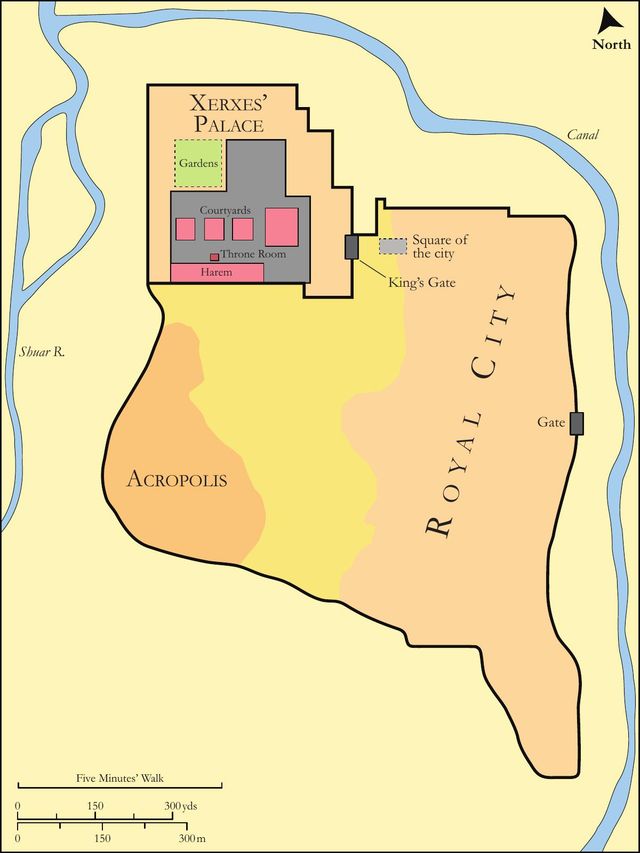
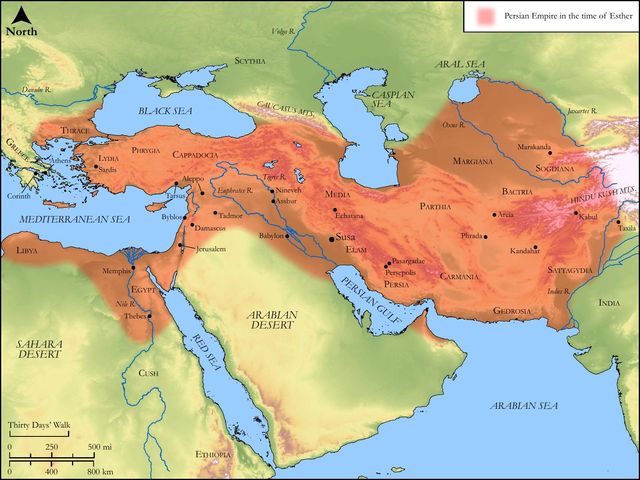
The events narrated in the book of Esther are set during the reign of Ahasuerus, widely identified as Xerxes I (486-465 BC), who ruled over the vast Persian Empire stretching from India to Ethiopia. A key aspect of Persian jurisprudence, repeatedly highlighted in the book (e.g., Esther 1:19 and Esther 8:8), was the immutability of royal decrees; once issued and sealed with the king's signet ring, a law could not be revoked. This legal principle necessitated a counter-decree, rather than a direct rescission of Haman's original edict, to grant the Jews the right to self-defense. The method of execution, often described as "hanging" but potentially involving impalement on a stake or gallows, was a common and highly public form of capital punishment among the kings of that day, designed to deter others and demonstrate the king's absolute authority. The execution of Haman's sons alongside him underscores the ancient societal principle of collective responsibility, where the family unit was often held accountable for the grave crimes of its head, ensuring the complete eradication of a threat.
Key Themes
ShowHideThis verse powerfully underscores several key themes woven throughout the book of Esther. Foremost is the theme of poetic justice and divine retribution, vividly illustrated as Haman's wicked scheme is turned back upon his own head, fulfilling the principle articulated in Psalm 7:16 that "his mischief shall return upon his own head, and his violent dealing shall come down upon his own pate." This dramatic reversal highlights God's unseen providence, demonstrating how He orchestrates seemingly coincidental events—Esther's ascent to the throne, Mordecai's discovery of the assassination plot, the king's sleepless night (as seen in Esther 6:1)—to protect His people, even when His name is never explicitly mentioned in the text. The verse also emphasizes the consequences of unchecked evil and pride, demonstrating that Haman's arrogance and genocidal intent ultimately led to his own undoing and the eradication of his lineage, serving as a stark warning against malice and hatred, echoing the wisdom found in Proverbs 16:18.
Exposition and Analysis
ShowHideKey Word Analysis
ShowHide(châshab), this noun refers to a "contrivance," "intention," or "plan," often carrying a negative connotation of malicious intent or evil plotting. In Esther 9:25, it specifically denotes Haman's meticulously crafted and deceitful plan to utterly destroy the Jewish people throughout the Persian Empire. The use of this word emphasizes the premeditated, wicked, and cunning nature of Haman's actions, highlighting that his downfall was a direct consequence of his own deliberate malevolence and calculated scheme.
A primitive root meaning "to turn back," "to return," or "to revert," this verb is crucial as it signifies the dramatic reversal of Haman's intended outcome. His "device" was designed to bring destruction upon the Jews, but the king's command ensured that the very consequences Haman sought to inflict upon others would instead "return upon his own head." This word powerfully conveys the concept of lex talionis (law of retaliation) or poetic justice, where the perpetrator experiences the very evil they intended for others, illustrating the principle that one reaps what one sows.
A primitive root meaning "to suspend" or "to gibbet," often translated as "to hang" or "to impale." While the term can refer to various forms of suspension, among the Persians, it often implied impalement on a stake or gallows, which was a particularly humiliating and public form of death. The significance here lies not merely in the execution itself, but in the public, ignominious manner of Haman's death and that of his sons, on the very structure Haman had prepared for Mordecai, amplifying the sense of divine irony and complete, public reversal of fortune.
Verse Breakdown
ShowHide"But when [Esther] came before the king"
This clause refers to Queen Esther's courageous second approach to King Ahasuerus, as detailed in Esther 7:1-6, where she finally revealed Haman's genocidal plot and her own Jewish identity. It underscores her pivotal role as the courageous catalyst for the events that followed, demonstrating her self-sacrificial intercession that brought the truth to light and initiated the process of justice against Haman.
"he commanded by letters that his wicked device, which he devised against the Jews, should return upon his own head"
This segment highlights the king's decisive and authoritative action, directly prompted by Esther's revelation and Haman's exposed treachery. The "letters" (royal decrees, from H5612 çêpher) were the official and legally binding means by which the king's will was enacted throughout the vast Persian Empire, ensuring the legal and irreversible nature of the command. The phrase "return upon his own head" (from H7218 rôʼsh) is a powerful idiomatic expression signifying that the evil Haman planned for others would rebound directly upon him, a clear declaration of retributive justice. It emphasizes that Haman was undone by his own malevolent machinations.
"and that he and his sons should be hanged on the gallows"
This final clause specifies the ultimate, ignominious fate of Haman and his ten sons (from H1121 bên). The "gallows" (from H6086 ʻêts), which Haman had meticulously prepared for Mordecai (as described in Esther 5:14), became the instrument of his own demise and that of his lineage. The inclusion of his sons underscores the thoroughness of the judgment and the complete eradication of Haman's threat, preventing any future resurgence of his oppressive agenda through his descendants. This public execution served as a powerful deterrent, a visible sign of the Jewish people's deliverance, and a profound act of poetic justice.
Literary Devices
ShowHideEsther 9:25 is rich with several potent literary devices that amplify its dramatic impact and theological significance. Irony is paramount, as Haman is executed on the very gallows he meticulously prepared for Mordecai, a classic and striking example of the "biter bit" or the "engineer hoist with his own petard." This serves as a powerful demonstration of poetic justice, where the punishment perfectly fits the crime, and the perpetrator falls into his own snare. The phrase "return upon his own head" is a vivid and ancient idiom, effectively communicating the principle of retribution and accountability, emphasizing that Haman's downfall was self-inflicted. Furthermore, the narrative structure of the book, culminating in this decisive reversal, showcases climax and resolution, bringing the intense conflict to a decisive and satisfying close. The explicit mention of Haman's sons being hanged alongside him emphasizes the completeness of the judgment and the eradication of the threat, adding a layer of finality and security to the narrative of deliverance.
Theological and Thematic Connections
ShowHideEsther 9:25 serves as a profound theological statement on God's active, though often unseen, involvement in human affairs, particularly in defending His covenant people. It powerfully illustrates the principle that while evil schemes may flourish for a time, divine justice ultimately prevails, ensuring that the wicked are ensnared by their own devices. This verse reassures believers that God is sovereign over all earthly powers and plots, orchestrating events to fulfill His purposes and protect His elect, even when His name is not explicitly invoked within the text. It is a testament to the fact that God's providence can turn the most dire circumstances into opportunities for His glory and the profound deliverance of His people, demonstrating His unwavering faithfulness to His promises.
Reflection and Application
ShowHideEsther 9:25 offers enduring hope and a profound reminder that even in the face of overwhelming evil and seemingly insurmountable odds, God's sovereign hand is actively at work, orchestrating justice and deliverance. For believers, this verse underscores the critical importance of trusting in God's ultimate plan, even when circumstances appear dire or when powerful, malevolent forces array themselves against righteousness. It reassures us that God is intimately involved in the unfolding of history, ensuring that justice will ultimately prevail and His people will be protected. This passage encourages courageous action and unwavering faithfulness, as powerfully exemplified by Esther and Mordecai, who, through their obedience, intercession, and willingness to take significant risks, became instruments of God's redemptive work. It calls us to stand firm against injustice, to rebuke the powerful, and to act with integrity, knowing that the Lord is the ultimate vindicator and that no wicked scheme against His divine purposes will ultimately succeed. Our hope is anchored in His unfailing sovereignty.
Questions for Reflection
ShowHideFAQ
ShowHideWhy were Haman's sons also hanged, and what is the significance of this?
ShowHideHaman's ten sons were hanged alongside him (and later, their bodies were publicly displayed, as noted in Esther 9:13-14) for several significant reasons rooted in the legal and cultural practices of the Persian court. Firstly, they were complicit in their father's genocidal plot against the Jews, as indicated by the initial decree that included the destruction of "women and little children" (Esther 3:13). Secondly, among the nations of that day, the family unit often bore collective responsibility for the grave crimes of its head, and the eradication of the male lineage was a common practice to ensure that no avenger or successor could rise to continue the threat or seek retribution. The public execution of Haman's sons, therefore, served as a complete and decisive end to the lineage of the primary antagonist, ensuring the absolute security of the Jewish people and preventing any future resurgence of Haman's malicious intent. It underscored the thoroughness of God's judgment and the comprehensive nature of the Jewish people's deliverance from utter destruction.
Christ-Centered Fulfillment
ShowHideEsther 9:25, while deeply rooted in historical events within the Persian Empire, powerfully foreshadows the ultimate triumph of God's perfect justice and the complete reversal of evil through the person and redemptive work of Jesus Christ. Haman's "wicked device" to utterly destroy God's covenant people finds its ultimate parallel in Satan's grand scheme to enslave all humanity through the power of sin and the dominion of death. Just as Haman's malicious plot returned "upon his own head," so too was the devil's power broken and his device turned against him through Christ's crucifixion and glorious resurrection. The very cross, intended as an instrument of shame, defeat, and death for Jesus, became the divine means of Satan's undoing and humanity's salvation, profoundly transforming a symbol of death into an eternal sign of life and victory (Colossians 2:14-15). Jesus, the true and eternal King, interceded for His people, not before an earthly monarch, but before the heavenly Father, offering Himself as the ultimate, once-for-all sacrifice to deliver us from the dominion of darkness and transfer us into His kingdom of light (Hebrews 7:25 and Colossians 1:13-14). The miraculous deliverance of the Jews from Haman's gallows points to the infinitely greater deliverance from the gallows of sin and eternal death accomplished by the Lamb of God, who takes away the sin of the world. The complete defeat of Haman and his sons prefigures the final and decisive victory of Christ over all evil, sin, and death, culminating in the ultimate judgment of all God's enemies and the eternal security of His redeemed people in the new heavens and new earth (Revelation 20:10 and Revelation 21:4).