


Esther 9:14
Bible text: King James Version (1769 Blayney text) · Public domain
Bible text: Berean Standard Bible · Public domain
Bible text: American Standard Version (1901) · Public domain
Bible text: World English Bible, Messianic edition · Public domain
Bible text: Geneva Bible (1599) · Public domain
Bible text: Young's Literal Translation · Public domain
- וַיֹּאמֶרvai·Yo·merand he saidH559Conj-w ¦ V-Qal-ConsecImperf-3msVerb Qal Consecutive Imperfect 3rd Singular Masculineוַandיֹּאמֶרhe said
- הַמֶּלֶךְha·Me·lekhthe kingH4428Art ¦ N-msNoun Singular Masculine Absoluteהַtheמֶּלֶךְking
- לְהֵעָשׂוֹתle·he·'a·Sotto be doneH6213Prep-l ¦ V-Niphal-InfVerb Niphal Infinitive Constructלְtoהֵעָשׂוֹתbe done
- כֵּןKenthusH3651AdvAdverb
- וַתִּנָּתֵןva·ti·na·Tenand it was givenH5414Conj-w ¦ V-Niphal-ConsecImperf-3fsVerb Niphal Consecutive Imperfect 3rd Singular Feminineוַandתִּנָּתֵןit was given
- דָּתdat[the] lawH1881N-fsNoun Singular Feminine Absolute
- בְּשׁוּשָׁןbe·shu·Shanin SusaH7800Prep-b ¦ N-properNoun Proper LocationבְּinשׁוּשָׁןSusa
- וְאֵתve·'Etand <obj.>H853Conj-w ¦ DirObjMParticle Object Indicatorוְandאֵת<obj.>
- עֲשֶׂרֶת'a·Se·ret[the] tenH6235N-fscNoun Singular Feminine Construct
- בְּנֵיbe·nei[the] sons ofH1121N-mpcNoun Plural Masculine Construct
- הָמָןha·ManHamanH2001N-proper-mNoun Proper Masculine
- תָּלוּta·Lupeople hangedH8518V-Qal-Perf-3cpVerb Qal Perfect 3rd Plural common gender
English is a literal word-by-word gloss of the Hebrew, not the KJV's wording. Why?
This is the original text the KJV's translators worked from — each Hebrew word with its own literal English meaning in this verse, prepared by scholars at Tyndale House, Cambridge. The KJV translates whole sentences, not word by word, so its wording differs: one Hebrew word can become several English words, and the KJV may choose “the LORD” where the gloss reads “Yahweh”. Both are faithful — they answer different questions. For the KJV's own rendering, switch to the KJV text.
Details
See on the biblical-era maps
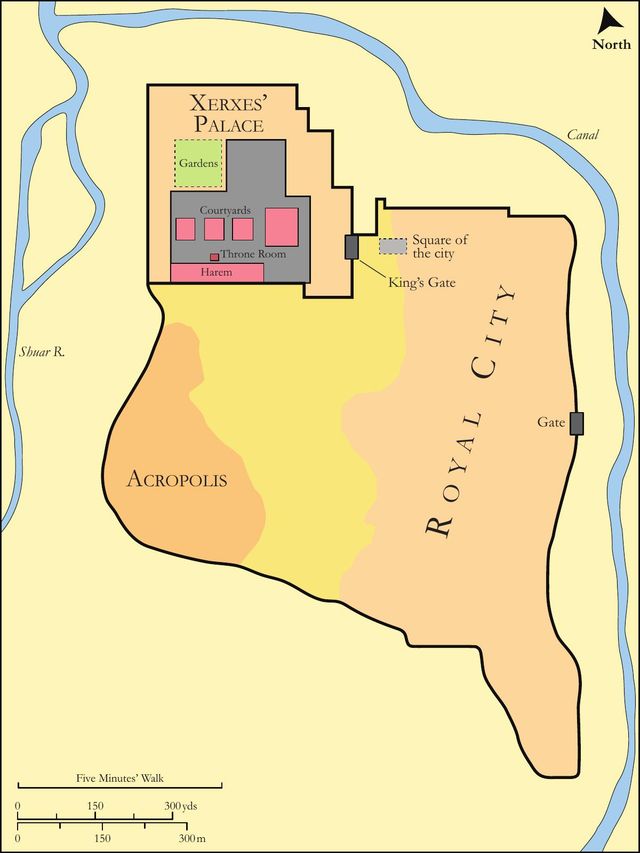
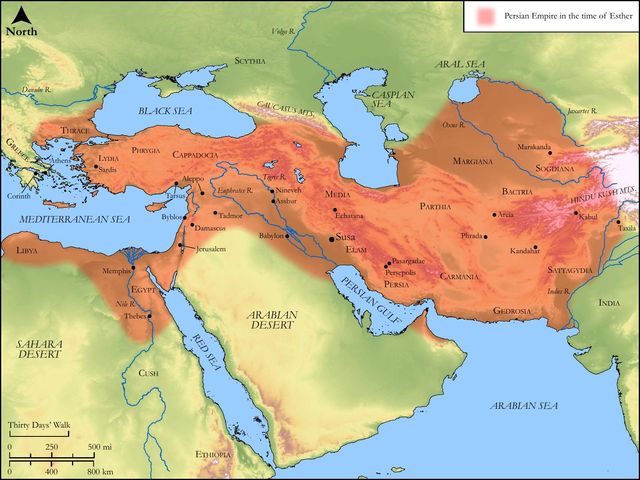
Study this verse
Public-domain commentary
Matthew Henry
From his Commentary on the Whole Bible. Henry comments on passages, not single verses — this entry covers Esther 9:1–19. His four-level outline is real structure in the source text, so it is rendered as structure.
We have here a decisive battle fought between the Jews and their enemies, in which the Jews were victorious. Neither side was surprised; for both had notice of it long enough before, so that it was a fair trial of skill between them. Nor could either side call the other rebels, for they were both supported by the royal authority.
I.The enemies of the Jews were the aggressors.
They hoped, notwithstanding the latter edict, to have power over them, by virtue of the former (Est 9:1), and made assaults upon them accordingly; they formed themselves into bodies, and joined in confederacy against them, to seek their hurt, Est 9:2. The Chaldee paraphrase says that none appeared against the Jews but Amalekites only, who were infatuated, and had their hearts hardened, as Pharaoh's against Israel, to take up arms to their own destruction. Some had such an inveterate implacable malice against the Jews that Haman's fall and Mordecai's advancement, instead of convincing them, did but exasperate them, and make them the more outrageous and resolute to cut all their throats. The sons of Haman, particularly, vowed to avenge their father's death, and pursue his designs, which they call noble and brave, whatever hazards they run; and a strong party they had formed both in Shushan and in the provinces in order hereunto. Fight they would, though they plainly saw Providence fight against them; and thus they were infatuated to their own destruction. If they would have sat still, and attempted nothing against the people of God, not a hair of their head would have fallen to the ground: but they cannot persuade themselves to do that; they must be meddling, though it prove to their own ruin, and roll a burdensome stone, which will return upon them.
II.But the Jews were the conquerors.
That very day when the king's decree for their destruction was to be put in execution, and which the enemies thought would have been their day, proved God's day, Psa 37:13. It was turned to the contrary of what was expected, and the Jews had rule over those that hated them, Est 9:1. We are here told,
1.What the Jews did for themselves (Est 9:2): They gathered themselves together in their cities, embodied, and stood upon their defence, offering violence to none, but bidding defiance to all. If they had not had an edict to warrant them, they durst not have done it, but, being so supported, they strove lawfully. Had they acted separately, each family apart, they would have been an easy prey to their enemies; but acting in concert, and gathering together in their cities, they strengthened one another, and durst face their enemies. Vis unita fortior - forces act most powerfully when combined. Those that write of the state of the Jews at this day give this as a reason why, though they are very numerous in many parts, and very rich, they are yet so despicable, because they are generally so selfish that they cannot incorporate, and, being under the curse of dispersion, they cannot unite, nor (as here) gather together, for, if they could, they might with their numbers and wealth threaten the most potent states.
2.What the rulers of the provinces did for them, under the influence of Mordecai. All the officers of the king, who, by the bloody edict, were ordered to help forward their destruction (Est 3:12, Est 3:13), conformed to the latter edict (which, being an estopel against an estopel, had set the matter at large, and left them at liberty to observe which they pleased) and helped the Jews, which turned the scale on their side, Est 9:3. The provinces would generally do as the rulers of the provinces inclined, and therefore their favouring the Jews would greatly further them. But why did they help them? Not because they had any kindness for them, but because the fear of Mordecai fell upon them, he having manifestly the countenance both of God and the king. They all saw it their interest to help Mordecai's friends because he was not only great in the king's house, and caressed by the courtiers (as many are who have no intrinsic worth to support their reputation), but his fame for wisdom and virtue went out thence throughout all the provinces: in all places he was extolled as a great man. He was looked upon also as a thriving man, and one that waxed greater and greater (Est 9:4), and therefore for fear of him all the king's officers helped the Jews. Great men may, by their influence, do a great deal of good; many that fear not God will stand in awe of them.
3.What God did for them: he struck all people with a fear of them (Est 9:2), as the Canaanites were made afraid of Israel (Jos 2:9, Jos 5:1), so that, though they had so much hardiness as to assault them, yet they had not courage to prosecute the assault. Their hearts failed them when they came to engage, and none of the men of might could find their hands.
4.What execution they did hereupon: No man could withstand them (Est 9:2), but they did what they would to those that hated them, Est 9:5. So strangely were the Jews strengthened and animated, and their enemies weakened and dispirited, that none of those who had marked themselves for their destruction escaped, but they smote them with the stroke of the sword. Particularly,
(1.)On the thirteenth day of the month Adar they slew in the city Shushan 500 men (Est 9:6) and the ten sons of Haman, Est 9:10. The Jews, when on the feast of Purim they read this book of Esther, oblige themselves to read the names of Haman's ten sons all in one breath, without any pause, because they say that they were all killed together, and all gave up the ghost just in the same moment. - Buxt. Synag. Jud. c. 24. The Chaldee paraphrase says that, when these ten were slain, Zeresh, with seventy more of his children, escaped, and afterwards begged their bread from door to door.
(2.)On the fourteenth day they slew in Shushan 300 more, who had escaped the sword on the former day of execution, Est 9:15. This Esther obtained leave of the king for them to do, for the greater terror of their enemies, and the utter crushing of that malignant party of men. The king had taken account of the numbers that were put to the sword the first day (Est 9:11), and told Esther (Est 9:12), and asked her what more she desired. "Nothing," says she, "but commission to do such another day's work." Esther surely was none of the blood-thirsty, none of those that delight in slaughter, but she had some very good reasons that moved her to make this request. She also desired that the dead bodies of Haman's ten sons might be hanged up on the gallows on which their father was hanged, for the greater disgrace of the family and terror of the party (Est 9:13), and it was done accordingly, Est 9:14. It is supposed that they were hanged in chains and left hanging for some time.
(3.)The Jews in the country kept to their orders, and slew no more of their enemies than what were slain the thirteenth day, which were in all, among all the provinces, 75,000, Est 9:16. If all these were Amalekites (as the Jews say), surely now it was that the remembrance of Amalek was utterly put out, Exo 17:14. However, that which justifies them in the execution of so many is that they did it in their own just and necessary defence; they stood for their lives, authorized to do so by the law of self-preservation, as well as by the king's decree.
(4.)In these several executions it is taken notice of that on the prey they laid not their hand, Est 9:10, Est 9:15, Est 9:16. The king's commission had warranted them to take the spoil of their enemies for a prey (Est 8:11), and a fair opportunity they had of enriching themselves with it; if Haman's party had prevailed, no doubt, they would have made use of their authority to seize the goods and estates of the Jews, Est 3:13. But the Jews would not do so by them,
[1.]That they might, to the honour of their religion, evidence a holy and generous contempt of worldly wealth, in imitation of their father Abraham, who scorned to enrich himself with the spoils of Sodom.
[2.]That they might make it appear that they aimed at nothing but their own preservation, and used their interest at court for the saving of their lives, not for the raising of their estates.
[3.]Their commission empowered them to destroy the families of their enemies, even the little ones and the women, Est 8:11. But their humanity forbade them to do that, though that was designed against them. They slew none but those they found in arms; and therefore they did not take the spoil, but left it to the women and little ones, whom they spared, for their subsistence; otherwise as good slay them as starve them, take away their lives as take away their livelihoods. Herein they acted with a consideration and compassion well worthy of imitation.
5.What a satisfaction they had in their deliverance. The Jews in the country cleared themselves of their enemies on the thirteenth day of the month, and they rested on the fourteenth day (Est 9:17), and made that a thanksgiving day, Est 9:19. The Jews in Shushan, the royal city, took two days for their military execution, so that they rested on the fifteenth day, and made that their thanksgiving-day, Est 9:18. Both of them celebrated their festival the very day after they had finished their work and gained their point. When we have received signal mercies from God we ought to be quick and speedy in making our thankful returns to him, while the mercy is fresh and the impressions of it are most sensible.
Historical interpretation
Historical reception
2 surviving comments on this verse. Each one is dated, so this reads as a timeline rather than a list.
This contention of Queen Esther, in which she fights to have her enemies aggressively attacked and wiped out, expresses the zeal and ingenuity of the true queen, that is, of the holy Church which harasses her enemies without respite and struggles to scatter them completely and subject them to itself. It is in her voice that the Psalmist speaks: “I will harass my enemies, and I will encompass them, and I will not turn away until they are ruined; I will afflict them, and they cannot stand” (Psalms 18). In Shushan she killed first five hundred men, then three hundred, since she shows that not only those who refuse to repent their sins, but also those who fail to adorn their faith in the holy Trinity with good works, are worthy of perpetual death. So it happens that just as the Jews killed, in the course of two days, seventy-five thousand of their enemies, so too the faithful strive and attempt to truly defeat and scatter, in the light of the two Testaments, all those enemies who—because they are devoted to the five senses of the body, and experience the Law of God in the flesh—refuse to know it in spirit, complete and perfected by spiritual dogma through the sevenfold grace of the Holy Spirit. And yet no one wants to touch any of their property, because the chosen believers would never consent to sully themselves with the wickedness of the damned; rather, they make themselves in every way foreign to and separate from the false dogmas, and the evil deeds, of such people.
Queen Esther’s endeavor to successfully crush her enemies and root them out reveals the eagerness and zeal of a true queen, namely, of the holy church that constantly fights against her enemies and strives to defeat them completely and subdue them. And it is her voice the psalmist uses when he says, “I pursued my enemies and overtook them; and did not turn back until they were consumed. I struck them down so that they were unable to rise.” And when she first kills five hundred people in Susa, and then three hundred, she shows that eternal death awaits not only those who do not want to repent of their sins, but also those who neglect to adorn the faith of the Holy Trinity with good works.
Continue studying Esther 9:14 across the web’s major study libraries — every link below opens this exact verse, chapter, or book on the destination site.
Read & Compare
 BibleGatewayThis verse in more than 200 translations and 70 languages.
 Bible.comThe YouVersion reader — hundreds of translations, reading plans, and highlights.
 ESV.orgCrossway's official English Standard Version reader.
 NET BibleThe NET translation with 60,000+ translators' notes on every rendering decision.
 STEP BibleTyndale House's free study tool — original text, vocabulary, and scholarly resources.
 BibliaLogos Bible Software's free web reader.
 USCCBThe New American Bible (Revised Edition) with the U.S. bishops' study notes.
Commentaries
 BibleHub CommentariesDozens of classic commentaries on this verse, gathered on one page.
 StudyLightMore than 100 commentary sets — the largest collection on the web.
 BibleRefPlain-English commentary on what this verse means, verse by verse.
 Enduring WordDavid Guzik's free commentary on this chapter, widely used by Bible teachers.
 Bible Study ToolsVerse commentary alongside Greek and Hebrew study aids.
Original Language & Research
- BibleHub InterlinearThe verse word by word — original language, transliteration, and English.
- BibleHub LexiconEvery word's original-language definition and Strong's entry.
 Blue Letter BibleDeep-study tools — Strong's numbers, concordance, and word studies.
 SefariaThe Hebrew text with Rashi and centuries of Jewish commentary.
Sermons, Hymns & Audio


TrulyRandomVerse is not affiliated with these sites and doesn’t control their content. They’re linked because they’re genuinely useful.
Summary
Esther 9:14 records King Ahasuerus's immediate and absolute command to execute Queen Esther's final request: the public hanging of Haman's ten sons in Shushan. This pivotal act, formally decreed and carried out in the heart of the Persian Empire, signifies the complete and irreversible triumph of divine justice, the secure vindication of the Jewish people, and the definitive reversal of Haman's genocidal plot against them.
Context
ShowHideLiterary Context
This verse serves as the climactic fulfillment of Queen Esther's second, audacious request to King Ahasuerus, articulated in Esther 9:13. Following the Jews' successful self-defense throughout the empire on the 13th of Adar, Esther specifically asks for an additional day of defense in Shushan and, crucially, for Haman's ten sons, already slain, to be publicly hanged. The king's swift and unequivocal affirmation ("And the king commanded it so to be done") dramatically contrasts with his earlier, more passive assent to Haman's initial, destructive decree against the Jews, as seen in Esther 3:11. The events of Esther 9 detail the widespread victory of the Jewish people over their adversaries, culminating in the establishment of the Feast of Purim, and this verse marks a final, decisive act of public justice and deterrence in the capital city, solidifying their newfound security.
Historical & Cultural Context
The Persian Empire was defined by the absolute and unquestionable authority of its monarch. A royal decree, once issued, was considered irrevocable, a principle famously illustrated in Daniel 6:8. The public hanging of Haman's sons was not merely an execution but a profound public spectacle of justice, humiliation, and deterrence. Such displays were common among the kings of that day for severe offenses, particularly those deemed treasonous or rebellious against the state, or those that threatened the king's favor. Shushan the citadel, as the administrative and political heart of the vast Persian Empire, was the ideal location for such a public act. Its execution there sent an unmistakable message to all subjects, particularly those who might harbor anti-Jewish sentiments, that the king's favor had irrevocably shifted, and the Jewish people were now under royal protection, demonstrating a complete and visible reversal of power dynamics from Haman's brief ascendancy.
Key Themes
ShowHideEsther 9:14 powerfully encapsulates several core themes woven throughout the book of Esther. Foremost is Divine Justice and Retribution, where the malevolent schemes of Haman are completely overturned, and his own family suffers a fate mirroring what he intended for others. This serves as a stark echo of Haman's own execution on the very gallows he prepared for Mordecai, as vividly recounted in Esther 7:10. Another prominent theme is The King's Absolute Authority, which, though often depicted as capricious or swayed by counsel, is ultimately instrumental in God's providential plan to protect His chosen people. The king's command ensures the immediate and complete execution of the decree, providing the legal framework for the Jews' self-defense and the public display of justice. Finally, the verse profoundly underscores the Security and Vindication for the Jewish People, as the eradication of Haman's direct male lineage, combined with the widespread victory throughout the provinces, solidified their safety and elevated their position within the Persian Empire, deterring future adversaries and bringing a profound, lasting sense of vindication to the community.
Exposition and Analysis
ShowHideKey Word Analysis
ShowHideThis term (H4428) refers to the monarch, the supreme ruler of the Persian Empire. In this context, it emphasizes King Ahasuerus's absolute authority and the unquestionable power of his word. His command is not subject to debate or delay, highlighting the swift and decisive nature of his action in response to Esther's request.
This word (H1881) denotes a formal, legally binding edict or statute issued by royal authority. The fact that the king's command was formalized as a "decree given at Shushan" underscores its official, public, and irrevocable nature. It transforms Esther's request into an undeniable legal mandate, ensuring its widespread recognition and enforcement throughout the capital.
This verb (H8518) signifies to suspend, especially to gibbet or hang. Among the kings of that day, hanging was a method of execution often used for public display and humiliation, particularly for those guilty of treason or severe offenses against the state. The public hanging of Haman's sons served as a powerful deterrent and a visible, ignominious symbol of justice served, ensuring the complete eradication of Haman's wicked legacy.
Verse Breakdown
ShowHide"And the king commanded it so to be done"
This phrase immediately conveys the king's swift, decisive, and absolute response to Queen Esther's request. It highlights his unwavering commitment to her and, by extension, to the Jewish people. The phrase underscores the immense, unchallengeable power of the Persian monarch, whose word was law and whose will was instantly translated into action without hesitation.
"and the decree was given at Shushan"
This clause signifies the formal, legal promulgation of the king's command. "Shushan" refers specifically to the capital city and citadel, emphasizing the public and official nature of the act. The issuance of a formal decree ensured that the execution was not an arbitrary act but a legally sanctioned event, publicly known and carried out in the very seat of imperial power, lending it immense weight and legitimacy.
"and they hanged Haman's ten sons"
This is the direct and impactful culmination of the king's command and the subsequent decree. The specific mention of "ten sons" highlights the complete eradication of Haman's direct male lineage, ensuring that his wicked legacy and potential for future vengeance would not continue. The act of hanging was a public and ignominious death, serving as a powerful symbol of the complete reversal of Haman's fortunes and the ultimate triumph of justice over his malicious designs.
Literary Devices
ShowHideThe verse employs several potent literary devices to underscore its dramatic significance. Poetic Justice is profoundly evident, as Haman's sons suffer the same ignominious fate of public hanging that their father met on the gallows he prepared for Mordecai. This mirrors Haman's own wicked intentions back upon his household, demonstrating the biblical principle that those who dig a pit for others often fall into it themselves. There is also a strong element of Irony, given that Haman's entire scheme was designed to eliminate the Jewish people, yet it results in the complete eradication of his own male descendants, ensuring the continuity of the very people he sought to destroy. The public nature of the execution also serves as Symbolism, representing the total dismantling of Haman's power and influence, and the definitive vindication and security of the Jewish community within the empire. The swiftness and finality of the king's command contribute significantly to the dramatic tension and resolution of the narrative, bringing the saga of Haman's plot to a definitive close.
Theological and Thematic Connections
ShowHideEsther 9:14, though famously devoid of any explicit mention of God, powerfully illustrates the overarching theme of divine providence and justice at work through human agents and political structures. It stands as a testament to the truth that evil, though it may prosper and threaten for a time, ultimately faces consequences, and God's sovereign purposes for His people will prevail. The complete reversal of fortunes—from the Jewish people facing annihilation to their enemies being destroyed and Haman's lineage utterly cut off—underscores a profound biblical principle of retribution and the ultimate triumph of righteousness. This passage demonstrates God's hidden hand orchestrating events, even through a seemingly secular court and a pagan king, to protect His covenant people and bring about His will, ensuring that no plot against His chosen ones can ultimately succeed.
Reflection and Application
ShowHideEsther 9:14, while depicting a harsh act of ancient justice, offers profound and enduring lessons for believers today. It serves as a powerful reminder that God is intricately sovereign over all circumstances, even when His direct presence or intervention seems hidden or unacknowledged. The ultimate defeat of Haman and his sons, despite their initial power, pride, and malicious intent, serves as a powerful testament that evil will not have the final word. This passage encourages us to cultivate an unwavering trust in God's perfect timing and His unwavering commitment to justice, even when we face seemingly insurmountable opposition or when the wicked appear to prosper. It calls us to reflect deeply on the destructive consequences of hatred, pride, and the pursuit of malicious agendas, urging us to instead walk in righteousness, humility, and love. The dramatic vindication and security granted to the Jewish people should inspire us to stand firm in our faith, knowing that God is our ultimate defender and that His purposes for His church will always prevail against the gates of hell.
Questions for Reflection
ShowHideFAQ
ShowHideWhy were Haman's sons hanged, and why was it done publicly?
ShowHideHaman's sons were hanged as a direct and severe consequence of their father's treasonous and genocidal plot against the Jewish people. Their execution likely stemmed from their complicity or direct association with Haman's wicked schemes, as well as the practice among the kings of that day of punishing the family of a traitor to ensure the complete eradication of their influence and legacy. Queen Esther specifically requested their public hanging in Esther 9:13 as a final, decisive act of justice and a powerful deterrent. The public nature of the execution, carried out in Shushan the capital, served multiple critical purposes: it was a clear and undeniable display of the king's absolute authority and his unwavering support for the Jewish people; it sent a powerful, intimidating message to any potential adversaries or those who harbored anti-Jewish sentiments throughout the empire; and it served as a visible, ignominious symbol of the complete reversal of Haman's power and the definitive triumph of the Jewish community. This act ensured that Haman's lineage, and thus his legacy of hatred and animosity, was utterly extinguished, providing a profound sense of finality and vindication for the Jewish people.
Christ-Centered Fulfillment
ShowHideWhile Esther 9:14 depicts a temporal act of justice and the defeat of a physical enemy, it profoundly foreshadows the ultimate triumph of God's perfect justice and the complete eradication of spiritual enemies through the redemptive work of Jesus Christ. Haman's malevolent plot to annihilate God's people finds its ultimate parallel in Satan's ongoing spiritual war against the church and humanity. Just as Haman's own gallows, intended for Mordecai, became the instrument of his demise, so too did the cross, intended by Satan as an instrument of defeat and humiliation for God's Son, become the very means by which Christ triumphed definitively over sin, death, and the devil. The public humiliation and execution of Haman's sons, ensuring the end of his wicked lineage and legacy, powerfully points to the definitive and public victory of Christ over all principalities and powers, making a public spectacle of them in His triumph (Colossians 2:15). The security and vindication granted to the Jewish people in Esther prefigure the eternal security and ultimate vindication offered to all who are in Christ, who has delivered us from the domain of darkness and graciously transferred us to the glorious kingdom of His beloved Son (Colossians 1:13). Ultimately, the justice seen in Esther 9:14, though a shadow, points to the perfect, final justice that will be meted out at the return of Christ, when every enemy will be put under His feet and His kingdom will reign supreme forever (1 Corinthians 15:25).