


Esther 7:10
Bible text: King James Version (1769 Blayney text) · Public domain
Bible text: Berean Standard Bible · Public domain
Bible text: American Standard Version (1901) · Public domain
Bible text: World English Bible, Messianic edition · Public domain
Bible text: Geneva Bible (1599) · Public domain
Bible text: Young's Literal Translation · Public domain
- וַיִּתְלוּvai·yit·Luand they hangedH8518Conj-w ¦ V-Qal-ConsecImperf-3mpVerb Qal Consecutive Imperfect 3rd Plural Masculineוַandיִּתְלוּthey hanged
- אֶת'et<obj.>H853DirObjMParticle Object Indicator
- הָמָןha·ManHamanH2001N-proper-mNoun Proper Masculine
- עַל'alonH5921PrepPreposition
- הָעֵץha·'Etzthe gallowsH6086Art ¦ N-msNoun Singular Masculine Absoluteהָtheעֵץgallows
- אֲשֶׁר'a·SherwhichH834RelParticle Relative
- הֵכִיןhe·Khinhe had preparedH3559V-Hiphil-Perf-3msVerb Hiphil Perfect 3rd Singular Masculine
- לְמָרְדֳּכָיle·ma·re·do·Khaifor MordecaiH4782Prep-l ¦ N-proper-mNoun Proper MasculineלְforמָרְדֳּכָיMordecai
- וַחֲמַתva·cha·Matand [the] rage ofH2534Conj-w ¦ N-fscNoun Singular Feminine Constructוַandחֲמַת[the] rage of
- הַמֶּלֶךְha·Me·lekhthe kingH4428Art ¦ N-msNoun Singular Masculine Absoluteהַtheמֶּלֶךְking
- שָׁכָכָהsha·Kha·khahit subsidedH7918V-Qal-Perf-3fsVerb Qal Perfect 3rd Singular Feminine
English is a literal word-by-word gloss of the Hebrew, not the KJV's wording. Why?
This is the original text the KJV's translators worked from — each Hebrew word with its own literal English meaning in this verse, prepared by scholars at Tyndale House, Cambridge. The KJV translates whole sentences, not word by word, so its wording differs: one Hebrew word can become several English words, and the KJV may choose “the LORD” where the gloss reads “Yahweh”. Both are faithful — they answer different questions. For the KJV's own rendering, switch to the KJV text.
Details
See on the biblical-era maps
Study this verse
Public-domain commentary
Matthew Henry
From his Commentary on the Whole Bible. Henry comments on passages, not single verses — this entry covers Esther 7:7–10. His two-level outline is real structure in the source text, so it is rendered as structure.
Here, I. The king retires in anger. He rose from table in a great passion, and went into the palace garden to cool himself and to consider what was to be done, Est 7:7. He sent not for his seven wise counsellors who knew the times, being ashamed to consult them about the undoing of that which he had rashly done without their knowledge or advice; but he went to walk in the garden awhile, to compare in his thoughts what Esther had now informed him of with what had formerly passed between him and Haman. And we may suppose him, 1. Vexed at himself, that he should be such a fool as to doom a guiltless nation to destruction, and his own queen among the rest, upon the base suggestions of a self-seeking man, without examining the truth of his allegations. Those that do things with self-will reflect upon them afterwards with self-reproach. 2. Vexed at Haman whom he had laid in his bosom, that he should be such a villain as to abuse his interest in him to draw him to consent to so wicked a measure. When he saw himself betrayed by one he had caressed he was full of indignation at him; yet he would say nothing till he had taken time for second thoughts, to see whether they would make the matter better or worse than it first appeared, that he might proceed accordingly. When we are angry we should pause awhile before we come to any resolution, as those that have a rule over our own spirits and are governed by reason.
II.Haman becomes a humble petitioner to the queen for his life.
He might easily perceived by the king's hastily flying out of the room that there was evil determined against him. For the wrath of a king, such a king, is as the roaring of a lion and as messengers of death; and now see,
1.How mean Haman looks, when he stands up first and then falls down at Esther's feet, to beg she would save his life and take all he had. Those that are most haughty, insolent, and imperious, when they are in power and prosperity, are commonly the most abject and poor-spirited when the wheel turns upon them. Cowards, they say, are most cruel, and then consciousness of their cruelty makes them the more cowardly.
2.How great Esther looks, who of late had been neglected and doomed to the slaughter tanquam ovis - as a sheep; now her sworn enemy owns that he lies at her mercy, a d begs his life at her hand. Thus did God regard the low estate of his handmaiden and scatter the proud in the imagination of their hearts, Luk 1:48, Luk 1:51. Compare with this that promise made to the Philadelphian church (Rev 3:9), I will make those of the synagogue of Satan to come and to worship before thy feet and to know that I have loved thee. The day is coming when those that hate and persecute God's chosen ones would gladly be beholden to them. Give us of your oil. Father Abraham, send Lazarus. The upright shall have dominion in the morning.
III.The king returns yet more exasperated against Haman.
The more he thinks of him the worse he thinks of him and of what he had done. It was but lately that every thing Haman said and did, even that which was most criminal, was taken well and construed to his advantage; now, on the contrary, what Haman did that was not only innocent, but a sign of repentance, is ill taken, and, without colour of reason, construed to his disadvantage. He lay in terror at Esther's feet, to beg for his life. What! (says the king) will he force the queen also before me in the house? Not that he thought he had any such intention, but having been musing on Haman's design to slay the queen, and finding him in this posture, he takes occasion from it thus to vent his passion against Haman, as a man that would not scruple at the greatest and most impudent piece of wickedness. "He designed to slay the queen, and to slay her wish me in the house; will he in like manner force her? What! ravish her first and then murder her? He that had a design upon her life may well be suspected to have a design upon her chastity."
IV.Those about him were ready to be the instruments of his wrath.
The courtiers that adored Haman when he was the rising sun set themselves as much against him now that he is a falling star, and are even glad of an occasion to run him down: so little sure can proud men be of the interest they think they have. 1. As soon as the king spoke an angry word they covered Haman's face, as a condemned man, not worthy any more either to see the king or to be seen by him; they marked him for execution. Those that are hanged commonly have their faces covered. See how ready the servants were to take the first hint of the king's mind in this matter. Turba Romae sequitur fortunam, et semper et odit damnatos - The Roman populace change as the aspects of fortune do, and always oppress the fallen. If Haman be going down, they all cry, "Down with him." 2. One of those that had been lately sent to Haman's house, to fetch him to the banquet, informed the king of the gallows which Haman had prepared for Mordecai, Est 7:9. Now that Mordecai is the favourite the chamberlain applauds him - he spoke good for the king; and, Haman being in disgrace, every thing is taken notice of that might make against him, incense the king against him, and fill up the measure of his iniquity.
V.The king gave orders that he should be hanged upon his own gallows, which was done accordingly, nor was he so much as asked what he had to say why this judgment should not be passed upon him and execution awarded. The sentence is short - Hang him thereon; and the execution speedy - So they hanged Haman on the gallows, Est 7:10. See here,
1.Pride brought down. He that expected every one to do him homage is now made an ignominious spectacle to the world, and he himself sacrificed to his revenge. God resists the proud; and those whom he resists will find him irresistible.
2.Persecution punished. Haman was upon many accounts a wicked man, but his enmity to God's church was his most provoking crime, and for that the God to whom vengeance belongs here reckons with him, and, though his plot was defeated, gives him according to the wickedness of his endeavours, Psa 28:4.
3.Mischief returned upon the person himself that contrived it, the wicked snared in the work of his own hands, Psa 7:15, Psa 7:16; Psa 9:15, Psa 9:16. Haman was justly hanged on the very gallows he had unjustly prepared for Mordecai. If he had not set up that gallows, perhaps the king would not have thought of ordering him to be hanged; but, if he rear a gallows for the man whom the king delights to honour, the thought is very natural that he should be ordered to try it himself, and see how it fits him, see how he likes it. The enemies of God's church have often been thus taken in their own craftiness. In the morning Haman was designing himself for the robes and Mordecai for the gallows; but the tables are turned: Mordecai has the crown, Haman the cross. The Lord is known by such judgments. See Pro 11:8; Pro 21:18.
Lastly, The satisfaction which the king had in this execution. Then was the king's wrath pacified, and not till then. He was as well pleased in ordering Haman to be hanged as in ordering Mordecai to be honoured. Thus shall it be done to the man whom the king delights to take vengeance on. God saith of wicked men (Eze 5:13), I will cause my fury to rest upon them, and I will be comforted.
Historical interpretation
Historical reception
1 surviving comment on this verse from the historical church.
It is written in Proverbs: “He who digs a pit will fall into it; and when one starts a stone rolling it will roll back upon him” (Proverbs 26). So too Haman was forced to suffer the cross he had prepared for Mordecai.
We might, however, ask what it means that, as we have read, the cross itself was made fifty cubits high. For the Law had previously been given to the people on the fiftieth day after a lamb was sacrificed on Mount Sinai; and given that we said before that Haman signified the Jews themselves when they were rioting against Christ—who had been promised to them in the Law—and persecuting his Church, the Law itself, which had been given to them to safeguard their lives, became the cause of their deaths because with it they had snuffed out the name of Christ and tried mightily to kill those who professed him. In other words, those who wanted by means of the Law to oppress the guiltless unjustly received through it the verdict of a just judgment, about which we are told by Paul: “Whoever has sinned in the Law will be judged through the Law” (Romans 2).
Moreover, Harbona the eunuch, who handed over the actual cross that had been made, signifies the teachers of the Law who brought to light—by reading the Law itself—the deceit of the Jews and everything which they did contrary to the precepts of God. Hence because Moses foresaw in the spirit the rebels and apostates who would one day come to be, he predicted in his song in Deuteronomy everything that was going to happen to sinners. So too the Savior says to the Jews themselves in the Gospel: “Do not think that I am going to indict you before the Father—it is Moses, in whom you hope, who accuses you; for if you believed in Moses you would perhaps believe in me as well, for it is about me that he wrote. But if you do not believe what he wrote, then how will you believe my words (John 5)?”
Continue studying Esther 7:10 across the web’s major study libraries — every link below opens this exact verse, chapter, or book on the destination site.
Read & Compare
 BibleGatewayThis verse in more than 200 translations and 70 languages.
 Bible.comThe YouVersion reader — hundreds of translations, reading plans, and highlights.
 ESV.orgCrossway's official English Standard Version reader.
 NET BibleThe NET translation with 60,000+ translators' notes on every rendering decision.
 STEP BibleTyndale House's free study tool — original text, vocabulary, and scholarly resources.
 BibliaLogos Bible Software's free web reader.
 USCCBThe New American Bible (Revised Edition) with the U.S. bishops' study notes.
Commentaries
 BibleHub CommentariesDozens of classic commentaries on this verse, gathered on one page.
 StudyLightMore than 100 commentary sets — the largest collection on the web.
 BibleRefPlain-English commentary on what this verse means, verse by verse.
 Enduring WordDavid Guzik's free commentary on this chapter, widely used by Bible teachers.
 Bible Study ToolsVerse commentary alongside Greek and Hebrew study aids.
Original Language & Research
- BibleHub InterlinearThe verse word by word — original language, transliteration, and English.
- BibleHub LexiconEvery word's original-language definition and Strong's entry.
 Blue Letter BibleDeep-study tools — Strong's numbers, concordance, and word studies.
 SefariaThe Hebrew text with Rashi and centuries of Jewish commentary.
Sermons, Hymns & Audio


TrulyRandomVerse is not affiliated with these sites and doesn’t control their content. They’re linked because they’re genuinely useful.
Summary
Esther 7:10 marks the dramatic and ironic climax of Haman's malicious plot, narrating his swift execution on the very gallows he had meticulously prepared for Mordecai. This verse signifies the complete reversal of fortune for the Jewish people and their antagonist, serving as the ultimate resolution to King Ahasuerus's intense fury, which is explicitly stated to have been "pacified" by Haman's demise. It is the culmination of Queen Esther's courageous intercession and the unseen providential hand guiding events toward justice.
Context
ShowHideLiterary Context
Esther 7:10 stands as the decisive turning point and climax of the book's central conflict. Immediately preceding this verse, Queen Esther has courageously revealed Haman's genocidal plot against her people during the second banquet she arranged for King Ahasuerus and Haman. The king, upon realizing that Haman intended to destroy his own queen's people, stormed out in a rage. Haman, in a desperate attempt to plead for his life, fell upon Esther's couch, which the king misinterpreted as an assault, further fueling his fury. The king's eunuchs then pointed out the very gallows Haman had prepared for Mordecai, providing the king with an immediate and fitting instrument of justice. This verse resolves the tension that has built since Haman's initial decree to annihilate the Jews, fulfilling the dramatic irony foreshadowed when Haman first constructed the gallows, a detail found in Esther 5:14.
Historical & Cultural Context
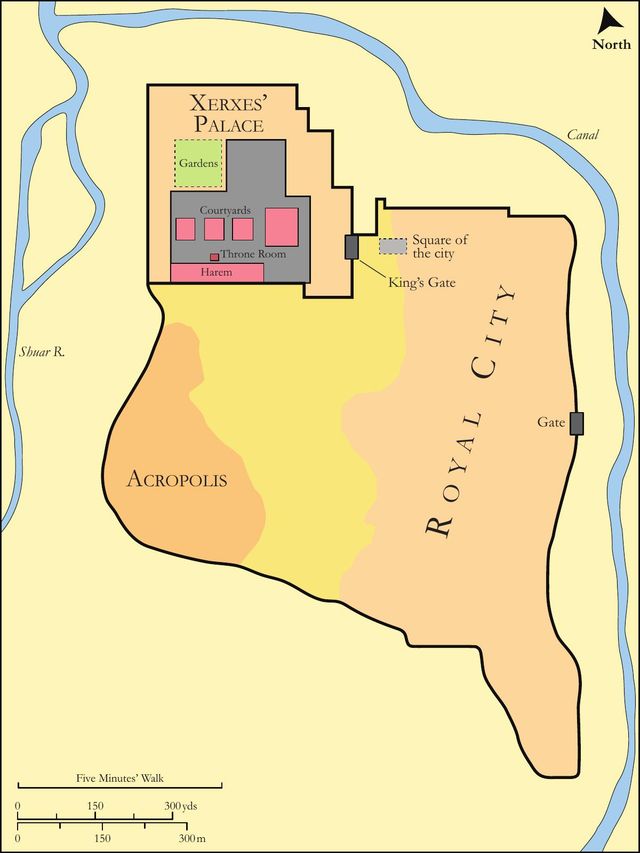
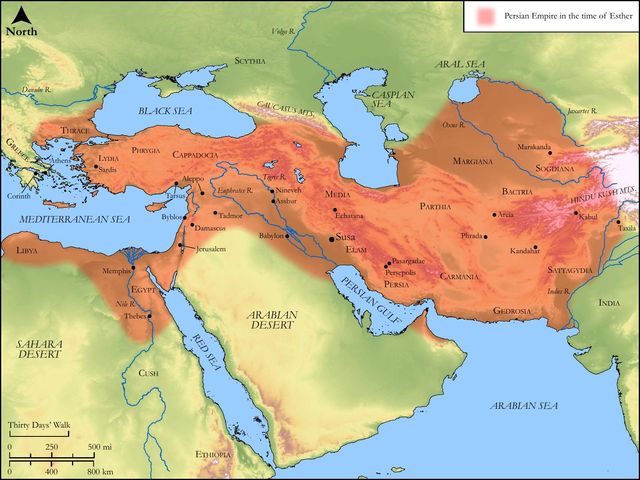
The narrative of Esther is set in the Persian Empire during the reign of King Ahasuerus, commonly identified with Xerxes I (486-465 BC), ruling from his capital at Susa. Persian kings wielded absolute authority, and their decrees were irreversible. Public executions were common and often brutal, serving as deterrents and demonstrations of royal power. The "gallows" (Hebrew: ets, "tree" or "wood") in this context likely refers to a tall stake or pole used for impalement, a particularly humiliating form of execution among the Persians, designed to display the condemned person's body publicly as a warning. Haman's choice of a 50-cubit (approx. 75 feet) high structure for Mordecai underscores his desire for maximum public humiliation and spectacle, a desire that ironically backfired upon him.
Key Themes
ShowHideThis verse powerfully encapsulates several key themes woven throughout the book of Esther. Foremost is Poetic Justice and Retribution, where Haman's own wicked device becomes the instrument of his downfall, perfectly illustrating the principle that "the wicked fall into their own nets" as seen in Psalm 9:15. Another prominent theme is Divine Providence, even though God is never explicitly mentioned in the book. The series of "coincidences"—the king's sleepless night leading to the reading of the royal chronicles, a pivotal moment described in Esther 6:1, Mordecai's forgotten service being remembered, Esther's strategic banquets, and the timing of Haman's arrival—all point to an unseen divine hand orchestrating events to protect His people and defeat their enemy. Finally, the King's Absolute Authority and Wrath is a critical theme; Ahasuerus's power is supreme and his anger, once fully aroused and directed, results in swift and irreversible judgment, bringing immediate resolution and "pacification" to his fury.
Exposition and Analysis
ShowHideKey Word Analysis
ShowHideWhile often translated "gallows," the Hebrew word עֵץ literally means "tree" or "wood." In the context of Persian execution, it refers to a tall, upright stake or pole used for impalement or hanging. This method was designed for maximum public visibility and humiliation, often leaving the body exposed as a warning. The irony is profound: Haman intended this symbol of shame for Mordecai, but it became his own monument of disgrace.
The verb תָּלָה means "to hang," "to suspend," or "to impale." It describes the act of execution on the ets. The immediate action ("So they hanged Haman") highlights the swiftness of royal justice once the king's decision was made, emphasizing the finality and decisiveness of Haman's fate.
The word שָׁכַךְ means "to sink," "to subside," "to abate," or "to quiet down." It vividly describes the complete cessation of the king's intense wrath. This "pacification" indicates that Haman's execution fully satisfied the king's anger and sense of violated justice, bringing a definitive end to the immediate crisis and emotional turmoil for the monarch.
Verse Breakdown
ShowHide"So they hanged Haman on the gallows"
This clause describes the immediate and decisive execution of Haman. The "they" refers to the king's servants or eunuchs, who carried out the royal command without delay. The action is swift and public, marking the dramatic reversal of Haman's fortunes. This execution is not merely a punishment but a public spectacle of justice.
"that he had prepared for Mordecai."
This is the heart of the verse's profound irony. The instrument of Haman's intended malice, designed specifically for his enemy Mordecai, becomes the instrument of his own demise. This detail underscores the principle of poetic justice, where the perpetrator falls into the very trap he set for another, highlighting the self-destructive nature of evil.
"Then was the king's wrath pacified."
This concluding clause emphasizes the resolution of the king's intense fury. Haman's death served as the ultimate satisfaction for King Ahasuerus, who had been enraged by Haman's betrayal and the threat to his queen. The "pacification" of his wrath signifies that justice, from the king's perspective, had been fully served, and the immediate threat to his kingdom and queen had been decisively removed.
Literary Devices
ShowHideEsther 7:10 is rich in Irony, specifically Situational Irony, as Haman is executed on the very gallows he prepared for Mordecai. This is a classic example of Poetic Justice, where a character's demise is perfectly fitting and often brought about by their own actions or instruments. The verse functions as the Climax of the narrative, representing the peak of the dramatic tension and the decisive turning point in the fortunes of the Jewish people. It also serves as a powerful Resolution to the conflict, bringing an immediate end to Haman's threat and the king's fury. The earlier mention of Haman building the gallows (Esther 5:14) acts as Foreshadowing, subtly hinting at this ultimate reversal. The entire situation presents a stark Antithesis between Haman's arrogant rise and his humiliating fall, directly contrasting his intended victim's elevation.
Theological and Thematic Connections
ShowHideEsther 7:10 powerfully illustrates the biblical principle that those who plot evil against God's people often fall into their own snares. While God is not explicitly named in the book of Esther, His providential hand is undeniably evident in the precise timing and ironic outcome of Haman's scheme. This verse serves as a profound testament to divine justice, demonstrating that even in seemingly secular or politically driven events, God is sovereignly working behind the scenes to protect His covenant people and ensure that evil does not ultimately triumph. It reassures believers that despite the machinations of the wicked, God's purposes will prevail, and those who sow malice will inevitably reap its bitter fruit.
Reflection and Application
ShowHideEsther 7:10 offers profound lessons for contemporary believers, reminding us that even when God's presence seems hidden or His intervention delayed, His sovereign hand is actively at work, orchestrating events for the good of His people and the ultimate defeat of evil. Haman's swift and ironic downfall serves as a powerful warning against pride, hatred, and the destructive nature of plotting malice against others. It assures us that justice, though sometimes slow, is certain, and that those who seek to harm the innocent will ultimately face consequences, often by their own devices. This narrative encourages steadfast faith and courage in the face of adversity, knowing that God can turn the most dire circumstances into triumphs, reversing the plans of the wicked and elevating the humble. We are called to trust in His unseen providence and to live righteously, confident that His justice will prevail.
Questions for Reflection
ShowHideFAQ
ShowHideWhat exactly does "gallows" mean in this context, and why was it so high?
ShowHideThe KJV translation "gallows" for the Hebrew word עֵץ (ʻêts) is somewhat misleading to a modern reader, as it typically refers to a structure for hanging by the neck. In the Persian context, ets referred to a tall stake or pole, upon which a condemned person would be impaled or hanged as a form of public execution. This method was designed not only for death but for extreme humiliation, with the body left exposed as a warning. Haman's decision to make his ets 50 cubits (approximately 75 feet) high, as detailed in Esther 5:14, was to ensure maximum visibility and public disgrace for Mordecai, reflecting the depth of his hatred and desire for a spectacular display of power. Ironically, this very height ensured Haman's own public humiliation.
Why was the king's wrath "pacified" by Haman's execution?
ShowHideKing Ahasuerus's wrath was "pacified" (Hebrew: שָׁכַךְ, shâkak, meaning to subside or abate) because Haman's execution fully satisfied his sense of justice and removed the immediate threat. The king had been deeply enraged by Haman's deceit and the realization that Haman's decree would lead to the destruction of his own queen and her people. Haman's death represented the ultimate consequence for his treachery, restoring order and punishing the betrayer. For the king, the matter was resolved, and his intense anger subsided, allowing him to move forward with the subsequent decrees that would protect the Jews, as recounted in Esther 8:1-17.
Given that God is not explicitly mentioned in the book of Esther, how can we speak of "Divine Providence" in relation to Esther 7:10?
ShowHideWhile the name of God does not appear in the book of Esther, His providential hand is powerfully evident throughout the narrative, especially in Esther 7:10. The series of seemingly coincidental events—such as the king's sleepless night leading to the reading of the chronicles, a detail found in Esther 6:1, Mordecai's forgotten service being recalled, Esther's courage, and the perfect timing of Haman's arrival to request Mordecai's execution—all culminate in this moment of Haman's downfall. The fact that Haman is executed on the very gallows he prepared for Mordecai is a striking example of poetic justice, which many biblical scholars interpret as a clear sign of God's unseen but active orchestration of events to protect His people and thwart the plans of their enemies. The absence of God's name highlights the subtle, yet undeniable, way He works through human agents and ordinary circumstances to achieve His purposes.
Christ-Centered Fulfillment
ShowHideEsther 7:10, with its vivid portrayal of the enemy's self-inflicted downfall and the ultimate triumph of justice, finds profound Christ-centered fulfillment in the person and work of Jesus. Haman, in his pride and malice, sought to annihilate God's people, acting as a type of anti-Christ figure. His plot to destroy the Jews, from whom the Messiah would come, was ultimately defeated on the very instrument he prepared. This foreshadows the ultimate victory of Christ over sin, death, and the devil. The cross, which was intended by Satan and wicked men as an instrument of shame and defeat for Jesus, became the very means of their undoing. Just as Haman was "hanged on the gallows that he had prepared for Mordecai," so too was Christ "hanged on a tree" as affirmed in Acts 5:30 to defeat the one who held the power of death, that is, the devil, as explained in Hebrews 2:14. Through His death and resurrection, Jesus disarmed the principalities and powers, triumphing over them by the cross, a victory celebrated in Colossians 2:14-15. The "pacification" of the king's wrath in Esther 7:10 points to the ultimate pacification of God's wrath against humanity, achieved not through human execution, but through Christ's perfect sacrifice on the cross, making peace through the blood of His cross, as proclaimed in Colossians 1:20. Thus, Haman's ironic demise serves as a powerful Old Testament echo of the greater victory secured by the Lamb of God, who takes away the sin of the world, a truth revealed in John 1:29, and whose "gallows" became the throne of salvation.