


Esther 9:15
Bible text: King James Version (1769 Blayney text) · Public domain
Bible text: King James Version with Strong's numbers · Public domain
Bible text: Berean Standard Bible · Public domain
Bible text: American Standard Version (1901) · Public domain
Bible text: World English Bible, Messianic edition · Public domain
Bible text: Geneva Bible (1599) · Public domain
Bible text: Young's Literal Translation · Public domain
- וַיִּקָּהֲלוּvai·yi·ka·ha·Luand they assembledH6950Conj-w ¦ V-Niphal-ConsecImperf-3mpVerb Niphal Consecutive Imperfect 3rd Plural Masculineוַandיִּקָּהֲלוּthey assembled
- הַיְּהוּדִיםhai·ye·hu·di·yimthe JewsH3064Art ¦ N-mpNoun Gentilic Plural Masculine AbsoluteהַtheיְּהוּדִיםJews
- אֲשֶׁר'a·SherwhoH834RelParticle Relative
- בְּשׁוּשָׁןbe·shu·Shan[were] in SusaH7800Prep-b ¦ N-properNoun Proper Locationבְּ[were] inשׁוּשָׁןSusa
- גַּםgamalsoH1571AdvAdverb
- בְּיוֹםbe·Yomon dayH3117Prep-b ¦ N-mscNoun Singular Masculine Constructבְּonיוֹםday
- אַרְבָּעָה'ar·ba·'Ahfour-H702Adj-csAdjective Numerical Singular common gender Absolute
- עָשָׂר'a·SarteenH6240Adj-csAdjective Numerical Singular common gender Absolute
- לְחֹדֶשׁle·Cho·deshof [the] month ofH2320Prep-l ¦ N-mscNoun Singular Masculine Constructלְofחֹדֶשׁ[the] month of
- אֲדָר'a·DarAdarH143N-properNoun Proper Title
- וַיַּהַרְגוּvai·ya·har·Guand they killedH2026Conj-w ¦ V-Qal-ConsecImperf-3mpVerb Qal Consecutive Imperfect 3rd Plural Masculineוַandיַּהַרְגוּthey killed
- בְשׁוּשָׁןve·shu·Shanin SusaH7800Prep-b ¦ N-properNoun Proper LocationבְinשׁוּשָׁןSusa
- שְׁלֹשׁshe·LoshthreeH7969Adj-cscAdjective Numerical Singular common gender Construct
- מֵאוֹתme·'othundred<s>H3967Adj-fpAdjective Numerical Plural Feminine Absolute
- אִישׁ'IshmanH376N-msNoun Singular Masculine Absolute
- וּבַבִּזָּהu·Vab·bi·Zahand on the plunderH961Conj-w ¦ Prep-b ¦ N-fsNoun Singular Feminine Absoluteוּandבַon theבִּזָּהplunder
- לֹאlo'notH3808NegParticle Negative
- שָׁלְחוּsha·le·Chuthey stretched outH7971V-Qal-Perf-3cpVerb Qal Perfect 3rd Plural common gender
- אֶת'et<obj.>H853DirObjMParticle Object Indicator
- יָדָםya·Damtheir handH3027N-csc ¦ 3mpNoun Singular common gender Constructיָדָhandםtheir
English is a literal word-by-word gloss of the Hebrew, not the KJV's wording. Why?
This is the original text the KJV's translators worked from — each Hebrew word with its own literal English meaning in this verse, prepared by scholars at Tyndale House, Cambridge. The KJV translates whole sentences, not word by word, so its wording differs: one Hebrew word can become several English words, and the KJV may choose “the LORD” where the gloss reads “Yahweh”. Both are faithful — they answer different questions. For the KJV's own rendering, switch to the KJV text.
Details
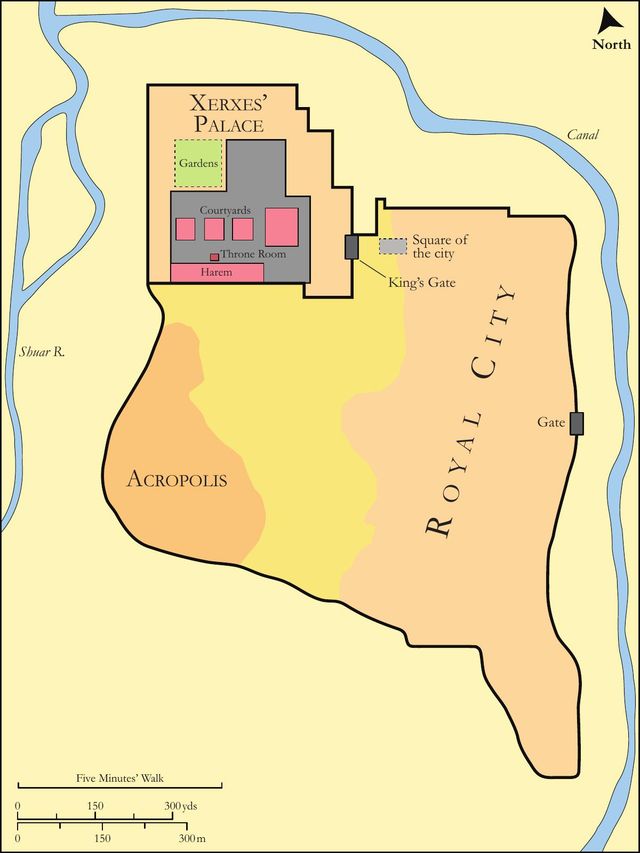
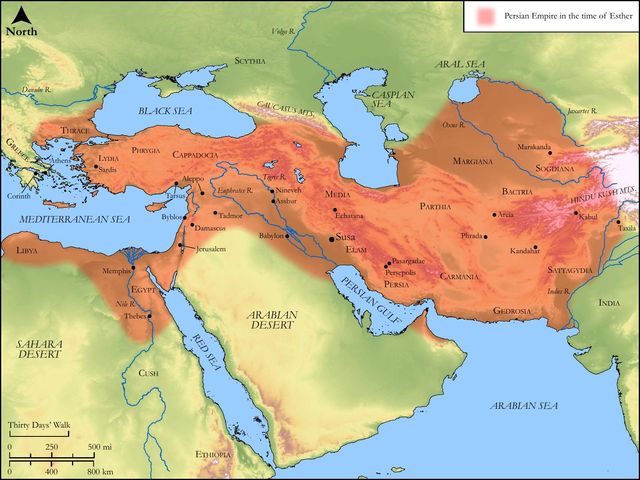
See on the biblical-era maps
Study this verse
Public-domain commentary
Matthew Henry
From his Commentary on the Whole Bible. Henry comments on passages, not single verses — this entry covers Esther 9:1–19. His four-level outline is real structure in the source text, so it is rendered as structure.
We have here a decisive battle fought between the Jews and their enemies, in which the Jews were victorious. Neither side was surprised; for both had notice of it long enough before, so that it was a fair trial of skill between them. Nor could either side call the other rebels, for they were both supported by the royal authority.
I.The enemies of the Jews were the aggressors.
They hoped, notwithstanding the latter edict, to have power over them, by virtue of the former (Est 9:1), and made assaults upon them accordingly; they formed themselves into bodies, and joined in confederacy against them, to seek their hurt, Est 9:2. The Chaldee paraphrase says that none appeared against the Jews but Amalekites only, who were infatuated, and had their hearts hardened, as Pharaoh's against Israel, to take up arms to their own destruction. Some had such an inveterate implacable malice against the Jews that Haman's fall and Mordecai's advancement, instead of convincing them, did but exasperate them, and make them the more outrageous and resolute to cut all their throats. The sons of Haman, particularly, vowed to avenge their father's death, and pursue his designs, which they call noble and brave, whatever hazards they run; and a strong party they had formed both in Shushan and in the provinces in order hereunto. Fight they would, though they plainly saw Providence fight against them; and thus they were infatuated to their own destruction. If they would have sat still, and attempted nothing against the people of God, not a hair of their head would have fallen to the ground: but they cannot persuade themselves to do that; they must be meddling, though it prove to their own ruin, and roll a burdensome stone, which will return upon them.
II.But the Jews were the conquerors.
That very day when the king's decree for their destruction was to be put in execution, and which the enemies thought would have been their day, proved God's day, Psa 37:13. It was turned to the contrary of what was expected, and the Jews had rule over those that hated them, Est 9:1. We are here told,
1.What the Jews did for themselves (Est 9:2): They gathered themselves together in their cities, embodied, and stood upon their defence, offering violence to none, but bidding defiance to all. If they had not had an edict to warrant them, they durst not have done it, but, being so supported, they strove lawfully. Had they acted separately, each family apart, they would have been an easy prey to their enemies; but acting in concert, and gathering together in their cities, they strengthened one another, and durst face their enemies. Vis unita fortior - forces act most powerfully when combined. Those that write of the state of the Jews at this day give this as a reason why, though they are very numerous in many parts, and very rich, they are yet so despicable, because they are generally so selfish that they cannot incorporate, and, being under the curse of dispersion, they cannot unite, nor (as here) gather together, for, if they could, they might with their numbers and wealth threaten the most potent states.
2.What the rulers of the provinces did for them, under the influence of Mordecai. All the officers of the king, who, by the bloody edict, were ordered to help forward their destruction (Est 3:12, Est 3:13), conformed to the latter edict (which, being an estopel against an estopel, had set the matter at large, and left them at liberty to observe which they pleased) and helped the Jews, which turned the scale on their side, Est 9:3. The provinces would generally do as the rulers of the provinces inclined, and therefore their favouring the Jews would greatly further them. But why did they help them? Not because they had any kindness for them, but because the fear of Mordecai fell upon them, he having manifestly the countenance both of God and the king. They all saw it their interest to help Mordecai's friends because he was not only great in the king's house, and caressed by the courtiers (as many are who have no intrinsic worth to support their reputation), but his fame for wisdom and virtue went out thence throughout all the provinces: in all places he was extolled as a great man. He was looked upon also as a thriving man, and one that waxed greater and greater (Est 9:4), and therefore for fear of him all the king's officers helped the Jews. Great men may, by their influence, do a great deal of good; many that fear not God will stand in awe of them.
3.What God did for them: he struck all people with a fear of them (Est 9:2), as the Canaanites were made afraid of Israel (Jos 2:9, Jos 5:1), so that, though they had so much hardiness as to assault them, yet they had not courage to prosecute the assault. Their hearts failed them when they came to engage, and none of the men of might could find their hands.
4.What execution they did hereupon: No man could withstand them (Est 9:2), but they did what they would to those that hated them, Est 9:5. So strangely were the Jews strengthened and animated, and their enemies weakened and dispirited, that none of those who had marked themselves for their destruction escaped, but they smote them with the stroke of the sword. Particularly,
(1.)On the thirteenth day of the month Adar they slew in the city Shushan 500 men (Est 9:6) and the ten sons of Haman, Est 9:10. The Jews, when on the feast of Purim they read this book of Esther, oblige themselves to read the names of Haman's ten sons all in one breath, without any pause, because they say that they were all killed together, and all gave up the ghost just in the same moment. - Buxt. Synag. Jud. c. 24. The Chaldee paraphrase says that, when these ten were slain, Zeresh, with seventy more of his children, escaped, and afterwards begged their bread from door to door.
(2.)On the fourteenth day they slew in Shushan 300 more, who had escaped the sword on the former day of execution, Est 9:15. This Esther obtained leave of the king for them to do, for the greater terror of their enemies, and the utter crushing of that malignant party of men. The king had taken account of the numbers that were put to the sword the first day (Est 9:11), and told Esther (Est 9:12), and asked her what more she desired. "Nothing," says she, "but commission to do such another day's work." Esther surely was none of the blood-thirsty, none of those that delight in slaughter, but she had some very good reasons that moved her to make this request. She also desired that the dead bodies of Haman's ten sons might be hanged up on the gallows on which their father was hanged, for the greater disgrace of the family and terror of the party (Est 9:13), and it was done accordingly, Est 9:14. It is supposed that they were hanged in chains and left hanging for some time.
(3.)The Jews in the country kept to their orders, and slew no more of their enemies than what were slain the thirteenth day, which were in all, among all the provinces, 75,000, Est 9:16. If all these were Amalekites (as the Jews say), surely now it was that the remembrance of Amalek was utterly put out, Exo 17:14. However, that which justifies them in the execution of so many is that they did it in their own just and necessary defence; they stood for their lives, authorized to do so by the law of self-preservation, as well as by the king's decree.
(4.)In these several executions it is taken notice of that on the prey they laid not their hand, Est 9:10, Est 9:15, Est 9:16. The king's commission had warranted them to take the spoil of their enemies for a prey (Est 8:11), and a fair opportunity they had of enriching themselves with it; if Haman's party had prevailed, no doubt, they would have made use of their authority to seize the goods and estates of the Jews, Est 3:13. But the Jews would not do so by them,
[1.]That they might, to the honour of their religion, evidence a holy and generous contempt of worldly wealth, in imitation of their father Abraham, who scorned to enrich himself with the spoils of Sodom.
[2.]That they might make it appear that they aimed at nothing but their own preservation, and used their interest at court for the saving of their lives, not for the raising of their estates.
[3.]Their commission empowered them to destroy the families of their enemies, even the little ones and the women, Est 8:11. But their humanity forbade them to do that, though that was designed against them. They slew none but those they found in arms; and therefore they did not take the spoil, but left it to the women and little ones, whom they spared, for their subsistence; otherwise as good slay them as starve them, take away their lives as take away their livelihoods. Herein they acted with a consideration and compassion well worthy of imitation.
5.What a satisfaction they had in their deliverance. The Jews in the country cleared themselves of their enemies on the thirteenth day of the month, and they rested on the fourteenth day (Est 9:17), and made that a thanksgiving day, Est 9:19. The Jews in Shushan, the royal city, took two days for their military execution, so that they rested on the fifteenth day, and made that their thanksgiving-day, Est 9:18. Both of them celebrated their festival the very day after they had finished their work and gained their point. When we have received signal mercies from God we ought to be quick and speedy in making our thankful returns to him, while the mercy is fresh and the impressions of it are most sensible.
Historical interpretation
Historical reception
2 surviving comments on this verse. Each one is dated, so this reads as a timeline rather than a list.
When the whole nation of Israel was about to perish, blessed Esther defeated the tyrant’s anger simply by fasting and praying to God. By faith she changed the ruin of her people into safety. Those days are feast days for Israel; they used to call a feast when an enemy was slain or a conspiracy against the people was broken up and Israel was delivered. That is why Moses established the Feast of the Passover: because Pharaoh was killed and the people were delivered from bondage. So then, especially when tyrants were slain, temporal feasts and holidays were established in Judea. Now, however, the devil, that tyrant against the whole world, is slain. Therefore, our feast does not relate only to time but to eternity. It is a heavenly feast! We do not announce it as a shadow or a picture or a type but as the real thing.
In the face of all this, brothers and sisters, what should we do but give thanks to God, the king of all? Let us start by crying out the words of the psalm, “Blessed is the Lord, who has not let them eat us up.” Let us keep the feast in that way that he has established for our salvation—the holy day of Easter—so that we, along with the angels, may celebrate the heavenly feast. Remember that Israel, coming out of affliction to a state of rest, sang a song of praise for the victory as they kept the feast. And in the time of Esther the people kept a feast to the Lord because they had been delivered from a deadly decree. They called a feast, thanking and praising the Lord because he had changed the situation for them. Therefore, let us keep our promises to the Lord, confess our sins, and keep the feast to him—in behavior, moral conduct, and way of life. Let us keep it by praising the Lord, who has disciplined us so lightly but has never failed us nor forsaken us nor stopped speaking to us.
Continue studying Esther 9:15 across the web’s major study libraries — every link below opens this exact verse, chapter, or book on the destination site.
Read & Compare
 BibleGatewayThis verse in more than 200 translations and 70 languages.
 Bible.comThe YouVersion reader — hundreds of translations, reading plans, and highlights.
 ESV.orgCrossway's official English Standard Version reader.
 NET BibleThe NET translation with 60,000+ translators' notes on every rendering decision.
 STEP BibleTyndale House's free study tool — original text, vocabulary, and scholarly resources.
 BibliaLogos Bible Software's free web reader.
 USCCBThe New American Bible (Revised Edition) with the U.S. bishops' study notes.
Commentaries
 BibleHub CommentariesDozens of classic commentaries on this verse, gathered on one page.
 StudyLightMore than 100 commentary sets — the largest collection on the web.
 BibleRefPlain-English commentary on what this verse means, verse by verse.
 Enduring WordDavid Guzik's free commentary on this chapter, widely used by Bible teachers.
 Bible Study ToolsVerse commentary alongside Greek and Hebrew study aids.
Original Language & Research
- BibleHub InterlinearThe verse word by word — original language, transliteration, and English.
- BibleHub LexiconEvery word's original-language definition and Strong's entry.
 Blue Letter BibleDeep-study tools — Strong's numbers, concordance, and word studies.
 SefariaThe Hebrew text with Rashi and centuries of Jewish commentary.
Sermons, Hymns & Audio


TrulyRandomVerse is not affiliated with these sites and doesn’t control their content. They’re linked because they’re genuinely useful.
Summary
Esther 9:15 details the continued self-defense of the Jewish people in the Persian capital of Shushan on the fourteenth day of the month Adar. This verse recounts their decisive victory over those who sought their destruction, with an additional three hundred men slain, and emphatically reiterates their remarkable integrity by stating that they abstained from taking any plunder. It underscores the thoroughness of their preservation and the moral purity of their actions, setting the stage for the establishment of the festival of Purim.
Context
ShowHideLiterary Context
Esther 9:15 follows directly from Queen Esther's bold request to King Ahasuerus for an additional day of self-defense for the Jews in Shushan, and for the hanging of Haman's ten sons on the gallows prepared for Mordecai, as detailed in Esther 9:13. The previous day, the thirteenth of Adar, had seen the Jews throughout the 127 provinces successfully defend themselves, slaying 75,000 of their enemies and 500 in Shushan, notably without taking plunder, as recounted in Esther 9:5-10. Verse 15 thus provides the specific outcome of Esther's granted request for the capital city, detailing the continued eradication of the threat and reinforcing a crucial detail about their conduct, which is then reiterated for the provinces in Esther 9:16. This sequence highlights the unique intensity of the threat in Shushan and the complete nature of their deliverance, ensuring no remnant of the enemy remained.
Historical & Cultural Context
The events of Esther take place during the Persian Empire, specifically during the reign of Xerxes I (Ahasuerus), likely in the 5th century BCE. The capital city, Shushan (Susa), was a significant administrative and royal center, making the threat to the Jewish community there particularly acute and any victory highly symbolic. The practice of taking "prey" or "plunder" from defeated enemies was a common custom among the nations of that day, often a primary motivation for warfare and a sign of complete victory and subjugation. The repeated emphasis in Esther 9 that the Jews "laid not their hand on the prey" is therefore highly significant. It distinguishes their actions from typical warfare driven by greed or revenge, aligning them instead with a defensive, divinely sanctioned act of justice. This restraint would have been understood by contemporary audiences as a remarkable display of moral discipline, signaling that their actions were solely for self-preservation, not for personal enrichment or the accumulation of spoils.
Key Themes
ShowHideThis verse powerfully contributes to several overarching themes within the book of Esther. Firstly, it underscores the theme of Divine Providence, even though God is not explicitly named. The Jews' continued success, even on a second day, demonstrates a guiding hand ensuring their complete deliverance from annihilation, a reversal of fortune orchestrated by God through human agents like Esther and Mordecai. Secondly, the repeated phrase "but on the prey they laid not their hand" emphasizes the theme of Moral Integrity and Purity of Motive. This restraint distinguishes the Jews' defensive actions from acts of vengeful retribution or opportunistic plunder, reinforcing that their fight was for survival and justice, not personal gain. This moral purity is crucial for understanding the legitimacy of their actions in the eyes of both human and divine law. Finally, the events of the 14th of Adar in Shushan, alongside the 13th, are foundational to the establishment of the Festival of Purim, a lasting commemoration of God's miraculous deliverance and the Jewish people's triumph over their adversaries, as detailed in Esther 9:20-22. The thoroughness of the victory in the capital, leading to the subsequent celebration, solidifies the historical basis for this enduring feast.
Exposition and Analysis
ShowHideKey Word Analysis
ShowHideThis verb signifies "to smite with deadly intent," "to kill," or "to murder." In this context, it denotes a decisive and lethal act of self-defense. The number "three hundred" indicates a significant and continued threat within the capital that required further action beyond the initial day. The use of hârag here is not about wanton destruction but about the necessary elimination of those who actively sought to destroy the Jewish people, validating the king's counter-decree which permitted such defensive action.
This noun refers to "booty," "spoil," or "plunder" taken from a defeated enemy. It encompasses goods, possessions, and wealth. The repeated mention of the Jews not laying their hand on the bizzâh is a crucial detail, differentiating their actions from typical ancient warfare where plunder was a common incentive and reward. This abstinence highlights their moral high ground and the defensive, rather than acquisitive, nature of their engagement.
This primitive word refers literally to "the hand," often indicating power, means, or direction. In the idiomatic phrase "laid not their hand" (literally, "did not send forth a hand" or "did not stretch out a hand"), it directly refers to their deliberate refusal to take the spoils of war. This repeated negative assertion (also in Esther 9:10 and Esther 9:16) is a powerful statement of their integrity and purity of motive. It underscores that their actions were solely for preservation and justice, not for personal gain or revenge, aligning with the spirit of the king's decree that permitted self-defense, not conquest.
Verse Breakdown
ShowHide"For the Jews that [were] in Shushan gathered themselves together on the fourteenth day also of the month Adar,"
This clause establishes the specific setting and timing of the continued defensive actions. The phrase "gathered themselves together" implies organized, unified action, not random acts of violence, demonstrating a strategic response to the ongoing threat. The inclusion of "the fourteenth day also" explicitly links this day's events to the previous day's successful defense, indicating an extension of the conflict specifically within the capital, as requested by Esther. This highlights the concentrated and persistent nature of the threat in Shushan, requiring an additional day to neutralize it completely.
"and slew three hundred men at Shushan;"
This specifies the precise outcome of the extended conflict in the capital. The number "three hundred" is significant, indicating that a substantial number of enemies still posed a threat and were decisively eliminated. This act signifies the thoroughness of the Jewish people's self-preservation efforts, ensuring that all those who sought their destruction were fully dealt with within the heart of the empire, leaving no remaining hostile elements.
"but on the prey they laid not their hand."
This final, crucial clause reiterates a key moral distinction. Despite the ample opportunity and the prevalent cultural norm to take plunder from defeated enemies, the Jews deliberately chose not to. This act of remarkable restraint underscores their righteous motives, demonstrating unequivocally that their actions were purely defensive and for the sake of survival, not for personal enrichment, vengeful retribution, or territorial conquest. It sets them apart and reinforces the integrity and moral purity of their cause, aligning their conduct with a higher ethical standard.
Literary Devices
ShowHideThe most prominent literary device in Esther 9:15 is Repetition, specifically the phrase "but on the prey they laid not their hand." This phrase appears three times in chapter 9 (Esther 9:10, Esther 9:15, and Esther 9:16). This deliberate Emphasis serves to highlight the moral purity and integrity of the Jewish people's actions. It is not merely a descriptive detail but a profound thematic statement, distinguishing their divinely sanctioned self-defense from acts of conquest or greed. The repetition creates a powerful Contrast between the Jews' righteous conduct and the typical motivations for warfare among the nations of that day, reinforcing the unique nature of their deliverance and the justice of their cause. Furthermore, the narrative employs Foreshadowing, as this specific detail of restraint sets the stage for the establishment of Purim as a feast of joy and remembrance, untainted by the spoils of war.
Theological and Thematic Connections
ShowHideEsther 9:15 profoundly illustrates the themes of divine justice and the integrity of God's people, even when facing existential threats. While God is not explicitly mentioned in Esther, His providential hand is evident in the complete reversal of fortune and the thoroughness of the Jewish people's deliverance. Their refusal to take plunder, a repeated motif, elevates their actions beyond mere vengeance or self-interest, signifying a commitment to righteous conduct even in the midst of conflict. This moral restraint reflects a deeper theological principle: that God's people are called to act justly and with pure motives, even when given license to defend themselves. Their victory is not just physical but also moral, demonstrating a character consistent with their covenant relationship with God, and distinguishing them from their adversaries who sought only destruction and gain.
Reflection and Application
ShowHideEsther 9:15 offers profound lessons for believers today. In a world where self-interest often dictates action, the Jews' refusal to take plunder stands as a powerful testament to integrity and purity of motive. It challenges us to examine our own motivations, even when we believe our cause is just or we are defending what is right. Are our actions driven by a desire for personal gain, revenge, or material acquisition, or are they rooted in a commitment to justice, preservation, and God-honoring conduct? This verse reminds us that true victory is not merely about overcoming opposition, but about doing so in a way that honors God and reflects His character. It calls us to exercise moral restraint and to maintain our ethical compass, even when circumstances might tempt us to compromise. Furthermore, it highlights the importance of decisive, unified action in the face of spiritual or moral threats, coupled with an unwavering commitment to righteous principles. We are called to stand firm, trusting in God's providential care, while ensuring our conduct remains above reproach, demonstrating the transformative power of a life lived for God's glory rather than personal gain.
Questions for Reflection
ShowHideFAQ
ShowHideWhy was it so important that the Jews "laid not their hand on the prey"?
ShowHideThe repeated emphasis that the Jews "laid not their hand on the prey" is crucial for several reasons. First, it distinguishes their actions as purely defensive and a matter of survival, rather than an act of conquest, revenge, or personal enrichment. In ancient warfare, taking plunder was common practice and often a primary motivation. By abstaining, the Jews demonstrated that their intent was not to enrich themselves or to exact vengeful retribution beyond what was necessary for self-preservation. This moral restraint underscored the legitimacy of their cause, aligning their actions with the king's counter-decree that permitted self-defense, not a general war of aggression. It also reflects a deeper theological principle of acting with integrity and pure motives, even in dire circumstances, which would have resonated with the moral standards found in the Law (e.g., Deuteronomy 20:10-14). This ethical stance elevates the narrative from a mere account of survival to a testament of God's people maintaining their character even amidst chaos, demonstrating that their deliverance was a divine act of justice, not a human act of greed.
Christ-Centered Fulfillment
ShowHideThe events of Esther 9:15, particularly the Jews' deliverance and their refusal to take plunder, foreshadow profound aspects of Christ's work and the nature of His kingdom. The complete and decisive victory over their enemies, orchestrated by God's hidden hand, points to the ultimate triumph of Christ over sin, death, and the powers of darkness, as powerfully declared in Colossians 2:15. Just as the Jews were saved from annihilation, humanity finds its ultimate salvation and deliverance in Jesus, the true King who conquers not with the sword for plunder, but through self-sacrifice on the cross, drawing all people to Himself as foretold in John 12:31-32. Moreover, the Jews' remarkable integrity in refusing to take "prey" speaks to the purity of motive and spiritual nature of the victory Christ achieved. His kingdom is "not of this world" (John 18:36), and His victory was not for earthly gain or material spoils, but for the spiritual redemption of humanity, making us righteous through Him as revealed in 2 Corinthians 5:21. The purity of their actions foreshadows the perfect righteousness of Christ, who, though given all authority in heaven and on earth, came not to be served, but to serve, and to give His life as a ransom for many, as He Himself stated in Mark 10:45. The deliverance in Esther, culminating in celebration, points to the eternal joy and peace found in Christ's completed work, where believers are freed from the bondage of sin and death, not through their own power or plunder, but through His perfect, selfless sacrifice.