


Deuteronomy 10:10
Bible text: King James Version (1769 Blayney text) · Public domain
Bible text: King James Version with Strong's numbers · Public domain
Bible text: Berean Standard Bible · Public domain
Bible text: American Standard Version (1901) · Public domain
Bible text: World English Bible, Messianic edition · Public domain
Bible text: Geneva Bible (1599) · Public domain
Bible text: Young's Literal Translation · Public domain
- וְאָנֹכִיve·'a·no·Khiand IH595Conj-w ¦ Pro-1csPronoun Personal 1st Singular common genderוְandאָנֹכִיI
- עָמַדְתִּי'a·Mad·tiI remainedH5975V-Qal-Perf-1csVerb Qal Perfect 1st Singular common gender
- בָהָרva·Haron the mountainH2022Prep-b ¦ N-msNoun Singular Masculine Absoluteבָon theהָרmountain
- כַּיָּמִיםkai·ya·Mimlike the daysH3117Prep-k ¦ N-mpNoun Plural Masculine Absoluteכַּlike theיָּמִיםdays
- הָרִאשֹׁנִיםha·Ri·sho·Nim<the> formerH7223Art ¦ Adj-mpAdjective Numerical Position Plural Masculine Absoluteהָ<the>רִאשֹׁנִיםformer
- אַרְבָּעִים'ar·ba·'ImfortyH705N-mpNoun Plural Masculine Absolute
- יוֹםYomday[s]H3117N-msNoun Singular Masculine Absolute
- וְאַרְבָּעִיםve·'ar·ba·'Imand fortyH705Conj-w ¦ N-mpNoun Plural Masculine Absoluteוְandאַרְבָּעִיםforty
- לָיְלָהLa·ye·lahnight[s]H3915N-msNoun Singular Masculine Absolute
- וַיִּשְׁמַעvai·yish·Ma'and he listenedH8085Conj-w ¦ V-Qal-ConsecImperf-3msVerb Qal Consecutive Imperfect 3rd Singular Masculineוַandיִּשְׁמַעhe listened
- יְהוָהYah·wehYahwehH3068N-properNoun Proper Title
- אֵלַי'e·Laito meH413Prep ¦ 1csPreposition Definiteאֵלַtoיme
- גַּםgamalsoH1571AdvAdverb
- בַּפַּעַםba·Pa·'amat the timeH6471Prep-b ¦ N-fsNoun Singular Feminine Absoluteבַּat theפַּעַםtime
- הַהִואha·Hiv'<the> thatH1931Art ¦ Pro-3fsPronoun Personal 3rd Singular Feminineהַ<the>הִואthat
- לֹאlo'notH3808NegParticle Negative
- אָבָה'a·Vahhe was willingH14V-Qal-Perf-3msVerb Qal Perfect 3rd Singular Masculine
- יְהוָהYah·wehYahwehH3068N-properNoun Proper Title
- הַשְׁחִיתֶךָhash·chi·Te·khato destroy youH7843V-Hiphil-Inf ¦ 2msVerb Hiphil Infinitive Constructהַשְׁחִיתֶto destroyךָyou
English is a literal word-by-word gloss of the Hebrew, not the KJV's wording. Why?
This is the original text the KJV's translators worked from — each Hebrew word with its own literal English meaning in this verse, prepared by scholars at Tyndale House, Cambridge. The KJV translates whole sentences, not word by word, so its wording differs: one Hebrew word can become several English words, and the KJV may choose “the LORD” where the gloss reads “Yahweh”. Both are faithful — they answer different questions. For the KJV's own rendering, switch to the KJV text.
Details
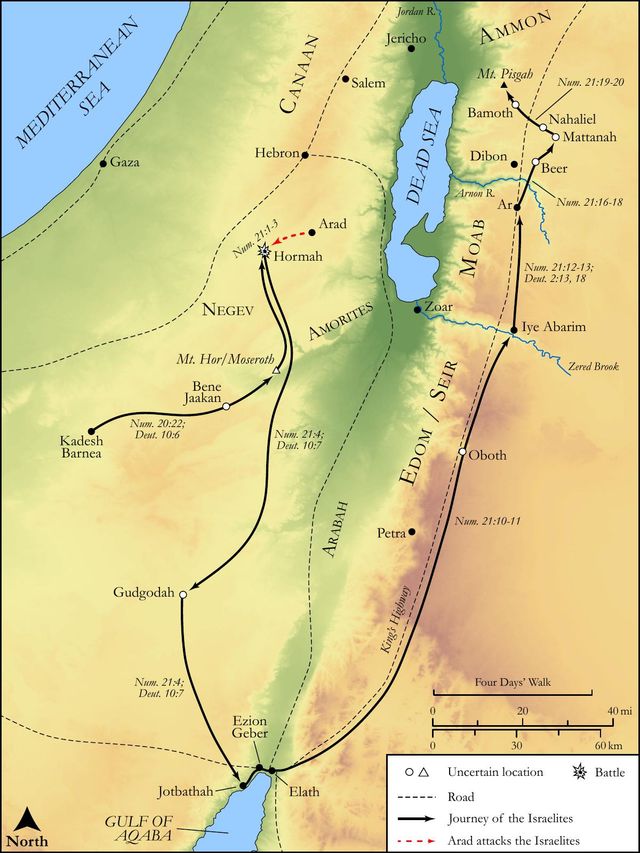
See on the biblical-era map
Study this verse
Public-domain commentary
Matthew Henry
From his Commentary on the Whole Bible. Henry comments on passages, not single verses — this entry covers Deuteronomy 10:1–11. His two-level outline is real structure in the source text, so it is rendered as structure.
There were four things in and by which God showed himself reconciled to Israel and made them truly great and happy, and in which God's goodness took occasion from their badness to make him the more illustrious: -
I.He gave them his law, gave it to them in writing, as a standing pledge of his favour.
Though the tables that were first written were broken, because Israel had broken the commandments, and God might justly break the covenant, yet when his anger was turned away the tables were renewed, Deu 10:1, Deu 10:2. Note, God's putting his law in our reconciliation to God and the best earnest of our happiness in him. Moses is told to hew the tables; for the law prepares the heart by conviction and humiliation for the grace of God, but it is only that grace that then writes the law in it. Moses made an ark of shittim-wood (Deu 10:3), a plain chest, the same, I suppose, in which the tables were afterwards preserved: but Bezaleel is said to make it (Exo 37:1), because he afterwards finished it up and overlaid it with gold. Or Moses is said to make it because, when he went up the second time into the mount, he ordered it to be made by Bezaleel against he came down. And it is observable that for this reason the ark was the first thing that God gave orders about, Exo 25:10. And this left an earnest to the congregation that the tables should not miscarry this second time, as they had done the first. God will send his law and gospel to those whose hearts are prepared as arks to receive them. Christ is the ark in which now our salvation is kept safely, that it may not be lost as it was in the first Adam, when he had it in his own hand. Observe,
1.What it was that God wrote on the two tables, the ten commandments (Deu 10:4), or ten words, intimating in how little a compass they were contained: they were not ten volumes, but ten words: it was the same with the first writing, and both the same that he spoke in the mount. The second edition needed no correction nor amendment, nor did what he wrote differ form what he spoke. The written word is as truly the word of God as that which he spoke to his servants the prophets.
2.What care was taken of it. These two tables, thus engraven, were faithfully laid up in the ark. And there they be, said Moses, pointing it is probable towards the sanctuary, Deu 10:5. That good thing which was committed to him he transmitted to them, and left it pure and entire in their hands; now let them look to it at their peril. Thus we may say to the rising generation, "God has entrusted us with Bibles, sabbaths, sacraments, etc., as tokens of his presence and favour, and there they be; we lodge them with you," Ti2 1:13, Ti2 1:14.
II.He led them forward towards Canaan, though they in their hearts turned back towards Egypt, and he might justly have chosen their delusions, Deu 10:6, Deu 10:7. He brought them to a land of rivers of waters, out of a dry and barren wilderness. Sometimes God supplied their wants by the ordinary course of nature: when that failed, then by miracles; and yet after this, when they were brought into a little distress, we find them distrusting God and murmuring, Num 20:3, Num 20:4.
III.He appointed a standing ministry among them, to deal for them in holy things.
At that time when Moses went up a second time to the mount, or soon after, he had orders to separate the tribe of Levi to God, and to his immediate service, they having distinguished themselves by their zeal against the worshippers of the golden calf, Deu 10:8, Deu 10:9. The Kohathites carried the ark; they and the other Levites stood before the Lord, to minister to him in all the offices of the tabernacle; and the priests, who were of that tribe, were to bless the people. This was a standing ordinance, which had now continued almost forty years, even unto this day; and provision was made for the perpetuating of it by the settled maintenance of that tribe, which was such as gave them great encouragement in their work, and no diversion from it. The Lord is his inheritance. Note, A settled ministry is a great blessing to a people, and a special token of God's favour. And, since the particular priests could not continue by reason of death, God showed his care of the people in securing a succession, which Moses takes notice of here, Deu 10:6. When Aaron died, the priesthood did not die with him, but Eleazar his son ministered in his stead, and took care of the ark, in which the tables of stone, those precious stones, were deposited, that they should suffer no damage; there they be, and he has the custody of them. Under the law, a succession in the ministry was kept up, by an entail of the office on a certain tribe and family. But now, under the gospel, when the effusion of the Spirit is more plentiful and powerful, the succession is kept up by the Spirit's operation on men's hearts, qualifying men for, and inclining men to, that work, some in every age, that the name of Israel may not be blotted out.
IV.He accepted Moses as an advocate or intercessor for them, and therefore constituted him their prince and leader (Deu 10:10, Deu 10:11):
The Lord hearkened to me and said, Arise, go before the people. It was a mercy to them that they had such a friend, so faithful both to him that appointed him and to those for whom he was appointed. It was fit that he who had saved them from ruin, by his intercession with heaven, should have the conduct and command of them. And herein he was a type of Christ, who, as he ever lives making intercession for us, so he has all power both in heaven and in earth.
Continue studying Deuteronomy 10:10 across the web’s major study libraries — every link below opens this exact verse, chapter, or book on the destination site.
Read & Compare
 BibleGatewayThis verse in more than 200 translations and 70 languages.
 Bible.comThe YouVersion reader — hundreds of translations, reading plans, and highlights.
 ESV.orgCrossway's official English Standard Version reader.
 NET BibleThe NET translation with 60,000+ translators' notes on every rendering decision.
 STEP BibleTyndale House's free study tool — original text, vocabulary, and scholarly resources.
 BibliaLogos Bible Software's free web reader.
 USCCBThe New American Bible (Revised Edition) with the U.S. bishops' study notes.
Commentaries
 BibleHub CommentariesDozens of classic commentaries on this verse, gathered on one page.
 StudyLightMore than 100 commentary sets — the largest collection on the web.
 BibleRefPlain-English commentary on what this verse means, verse by verse.
 Enduring WordDavid Guzik's free commentary on this chapter, widely used by Bible teachers.
 Bible Study ToolsVerse commentary alongside Greek and Hebrew study aids.
Original Language & Research
- BibleHub InterlinearThe verse word by word — original language, transliteration, and English.
- BibleHub LexiconEvery word's original-language definition and Strong's entry.
 Blue Letter BibleDeep-study tools — Strong's numbers, concordance, and word studies.
 SefariaThe Hebrew text with Rashi and centuries of Jewish commentary.
Sermons, Hymns & Audio


TrulyRandomVerse is not affiliated with these sites and doesn’t control their content. They’re linked because they’re genuinely useful.
Summary
Deuteronomy 10:10 recounts Moses' second forty-day and forty-night period on Mount Horeb, a time of intense intercession following Israel's grievous sin with the golden calf. This verse powerfully highlights God's profound mercy and responsiveness to Moses' prayers, affirming that despite the nation's deserving judgment, the Lord graciously relented and chose not to destroy them, thereby renewing His covenant and preserving His people.
Context
ShowHideLiterary Context
Deuteronomy is presented as Moses' final addresses to the new generation of Israelites on the plains of Moab, just before they enter the Promised Land. Chapters 9 and 10 form a significant unit where Moses recounts Israel's past rebellion, particularly the golden calf incident, and God's subsequent mercy. Deuteronomy 10:10 specifically refers back to the events described in Exodus 32-34, where Moses first broke the tablets due to Israel's idolatry (Deuteronomy 9:17) and then, at God's command, prepared new ones (Exodus 34:1). This verse emphasizes the second forty-day period, which was crucial for the renewal of the covenant and the averting of divine judgment, setting the stage for the subsequent commands and blessings in Deuteronomy.
Historical & Cultural Context
The Israelites stood on the cusp of entering Canaan, a generation removed from the initial Exodus. The memory of the golden calf incident was a stark reminder of their collective failure and God's holiness. In Scripture, covenants were foundational to relationships between men, as between Abraham and Abimelech, and between God and His people. Israel's covenant with Yahweh was unique, based on His gracious election rather than their merit. Moses' role as a mediator was culturally understood but divinely appointed, standing between a holy God and a rebellious people. The forty-day period was a significant duration in biblical narratives, often associated with divine encounters, testing, or preparation, such as Noah's flood, Elijah's journey, or Jesus' temptation.
Key Themes
ShowHideThis verse encapsulates several profound themes central to Deuteronomy and the broader biblical narrative. Foremost is Divine Mercy and Forgiveness, demonstrating God's willingness to pardon even after severe transgression, choosing compassion over deserved wrath. It underscores the Power of Intercession, as Moses' fervent prayers on behalf of the nation were instrumental in God's decision not to destroy them, echoing his earlier pleas in Exodus 32:11-14. Furthermore, it highlights God's Unwavering Covenant Faithfulness, revealing that even when Israel broke their side of the covenant, God remained true to His promises to the patriarchs, preserving the lineage through which His redemptive plan would unfold. This also speaks to the theme of Divine Patience and the Consequences of Sin, showing that while sin provokes divine anger, God's character is ultimately one of abounding steadfast love.
Exposition and Analysis
ShowHideKey Word Analysis
ShowHideVerse Breakdown
ShowHide"And I stayed in the mount, according to the first time, forty days and forty nights"
This clause refers to Moses' second extended period on Mount Horeb (Sinai). The phrase "according to the first time" directly links this event to the initial forty days and nights when Moses received the first set of commandments, which he subsequently broke due to Israel's idolatry. This second period was not merely a repetition but a crucial time of renewed divine encounter, where Moses interceded for the nation and received the second set of stone tablets, symbolizing the re-establishment of the covenant despite Israel's grievous sin. It underscores the profound spiritual intensity and divine purpose of this prolonged communion.
"and the LORD hearkened unto me at that time also"
This pivotal phrase reveals God's divine responsiveness to human intercession. Moses had passionately pleaded with God on behalf of the rebellious Israelites, reminding Him of His covenant promises to Abraham, Isaac, and Jacob. God's "hearkening" signifies that He not only heard Moses' prayers but acted upon them favorably, demonstrating His willingness to relent from judgment and extend mercy in response to the mediator's earnest plea. It highlights the efficacy and power of intercessory prayer in altering divine decrees.
"[and] the LORD would not destroy thee"
This is the climactic outcome of God's hearkening to Moses' intercession. Israel's idolatry with the golden calf was an act of profound covenant unfaithfulness that warranted utter destruction. However, because of God's inherent character of mercy, His faithfulness to His covenant promises, and His response to Moses' mediation, He chose to spare the nation. This statement powerfully emphasizes the depth of God's patience, His capacity for forgiveness, and His commitment to preserving His chosen people, through whom His broader redemptive plan for humanity would ultimately unfold.
Literary Devices
ShowHideThe verse employs several literary devices to convey its profound message. Repetition is evident in "forty days and forty nights," a significant biblical motif that emphasizes the extended duration and spiritual intensity of Moses' time with God, mirroring the first period of covenant reception. There is an implicit Contrast between Israel's profound unfaithfulness and God's steadfast mercy, highlighting the divine character that chooses to forgive rather than destroy. Moses functions as a Mediator or Intercessor, a type of one who stands between a holy God and a sinful people, pleading for mercy. The phrase "the LORD hearkened unto me" employs Divine Anthropomorphism, attributing a human-like action (listening and responding) to God, making His active engagement with humanity more relatable and emphasizing His personal involvement in the affairs of His people.
Theological and Thematic Connections
ShowHideDeuteronomy 10:10 stands as a powerful testament to the enduring themes of divine mercy, the efficacy of intercession, and God's unwavering covenant faithfulness. It reveals a God who, though just and holy, is "slow to anger and abounding in steadfast love" (Exodus 34:6). Despite Israel's egregious sin and deserving judgment, God's character prevailed, demonstrating His willingness to forgive and restore rather than annihilate. This act of divine relenting, prompted by Moses' fervent prayers, underscores the profound impact of a faithful mediator and sets a precedent for God's gracious interaction with His people throughout salvation history. It reminds us that God's ultimate desire is not destruction but reconciliation and the fulfillment of His redemptive purposes.
Reflection and Application
ShowHideDeuteronomy 10:10 offers profound spiritual nourishment for believers today. It serves as a powerful reminder that even in our deepest failings and most egregious sins, God's character is one of boundless mercy and forgiveness. Just as He did not destroy Israel despite their idolatry, He offers hope and restoration to us when we turn to Him in repentance. This verse encourages us to never despair, knowing that God is rich in compassion and always ready to "hearken" to the humble and contrite heart. Furthermore, Moses' example underscores the vital importance of intercessory prayer. Our prayers for others—for family, friends, communities, and nations—can genuinely influence divine action and avert spiritual or temporal judgment. It calls us to actively participate in God's redemptive work by standing in the gap for those who need mercy, trusting in God's overarching plan and His commitment to His people, even when they are undeserving.
Questions for Reflection
ShowHideFAQ
ShowHideWhat was the significance of Moses staying on the mount for "forty days and forty nights" a second time?
ShowHideThe second forty-day period on Mount Horeb (Sinai) was profoundly significant. It mirrored the first period when Moses received the original tablets of the Law, but this time it occurred after Israel's catastrophic sin with the golden calf. Its significance lies in its demonstration of God's incredible grace and willingness to renew His covenant despite Israel's rebellion. During this time, Moses was not merely receiving laws but was actively interceding for the nation, pleading for God to relent from His righteous anger. This extended period signified a profound time of divine revelation, covenant re-establishment, and fervent intercession, underscoring the gravity of the situation and the depth of God's commitment to His people, preventing their destruction and offering a path to reconciliation.
How does God "hearkening" to Moses relate to our prayers today?
ShowHideGod's "hearkening" (Hebrew shama') to Moses signifies much more than simply hearing sound; it implies attentive listening that leads to a favorable and active response. In Deuteronomy 10:10, it means God responded to Moses' intercession by relenting from destroying Israel. For believers today, this passage provides immense encouragement regarding the power and efficacy of prayer. It assures us that God truly hears the prayers of His people and is responsive to them, especially when they are offered in faith, humility, and in alignment with His will, particularly for the good of others. Just as Moses' intercession averted national judgment, our prayers can have real impact, influencing divine action and bringing about God's purposes in our lives and the world, encouraging us to pray with confidence and persistence, knowing God is listening and responsive.
Christ-Centered Fulfillment
ShowHideDeuteronomy 10:10, with its powerful portrayal of Moses' intercession and God's mercy, finds its ultimate and perfect fulfillment in Jesus Christ. Moses, standing between a holy God and a sinful people, served as a type of the greater Mediator to come. While Moses' intercession averted temporal destruction for Israel, Christ's intercession and sacrificial death secured eternal salvation for all who believe. The phrase "the LORD hearkened unto me" foreshadows God's ultimate "hearkening" to the perfect sacrifice and perpetual intercession of His Son. Jesus is not merely a temporary mediator like Moses, but the one true Mediator between God and humanity (1 Timothy 2:5), whose blood speaks a better word than that of Abel (Hebrews 12:24). He is the Lamb of God who takes away the sin of the world, whose sacrifice fully satisfied divine justice, thereby truly preventing our eternal destruction. Unlike Israel, who continually broke the covenant, Christ established a new and better covenant through His own blood (Hebrews 9:15), ensuring that God's people would never again face the threat of ultimate destruction due to their sin. His intercession is not a one-time event but a perpetual reality, as He ever lives to make intercession for us (Hebrews 7:25), demonstrating God's love for us even while we were still sinners (Romans 5:8).