


Judges 5:1
- וַתָּשַׁרva·Ta·sharand she sangH7891Conj-w ¦ V-Qal-ConsecImperf-3fsVerb Qal Consecutive Imperfect 3rd Singular Feminineוַandתָּשַׁרshe sang
- דְּבוֹרָהde·vo·RahDeborahH1683N-proper-fNoun Proper Feminine
- וּבָרָקu·va·Rakand BarakH1301Conj-w ¦ N-proper-mNoun Proper MasculineוּandבָרָקBarak
- בֶּןben[the] son ofH1121N-mscNoun Singular Masculine Construct
- אֲבִינֹעַם'a·vi·No·'amAbinoamH42N-proper-mNoun Proper Masculine
- בַּיּוֹםbai·Yomon the dayH3117Prep-b ¦ N-msNoun Singular Masculine Absoluteבַּon theיּוֹםday
- הַהוּאha·Hu'<the> thatH1931Art ¦ Pro-3msPronoun Personal 3rd Singular Masculineהַ<the>הוּאthat
- לֵאמֹרle·Mor<to> sayingH559Prep-l ¦ V-Qal-InfVerb Qal Infinitive Constructלֵ<to>אמֹרsaying
English is a literal word-by-word gloss of the Hebrew, not the KJV's wording. Why?
This is the original text the KJV's translators worked from — each Hebrew word with its own literal English meaning in this verse, prepared by scholars at Tyndale House, Cambridge. The KJV translates whole sentences, not word by word, so its wording differs: one Hebrew word can become several English words, and the KJV may choose “the LORD” where the gloss reads “Yahweh”. Both are faithful — they answer different questions. For the KJV's own rendering, switch to the KJV text.
Details
See on the biblical-era map
Study this verse
Public-domain commentary
Matthew Henry
From his Commentary on the Whole Bible. Henry comments on passages, not single verses — this entry covers Judges 5:1–5. His three-level outline is real structure in the source text, so it is rendered as structure.
The former chapter let us know what great things God had done for Israel; in this we have the thankful returns they made to God, that all ages of the church might learn that work of heaven to praise God.
I.God is praised by a song, which is,
1.A very natural expression of rejoicing. Is any merry? Let him sing; and holy joy is the very soul and root of praise and thanksgiving. God is pleased to reckon himself glorified by our joy in him, and in his wondrous works. His servants' joy is his delight, and their sons are melody to him.
2.A very proper expedient for spreading the knowledge and perpetuating the remembrance of great events. Neighbours would learn this song one of another and children of their parents; and by that means those who had not books, or could not read, yet would be made acquainted with these works of God; and one generation would thus praise God's works to another, and declare his mighty acts, Psa 145:4, etc.
II.Deborah herself penned this song, as appears by Jdg 5:7 :
Till I Deborah arose. And the first words should be rendered, Then she sang, even Deborah.
1.She used her gifts as a prophetess in composing the song, and the strain throughout is very fine and lofty, the images are lively, the expressions elegant, and an admirable mixture there is in it of sweetness and majesty. No poetry is comparable to the sacred poetry. And,
2.We may supposed she used her power as a princess, in obliging the conquering army of Israel to learn and sing this son. She expects not that they should, by their poems, celebrate her praises and magnify here, but requires that in this poem they should join with her in celebrating God's praises and magnifying him. She had been the first wheel in the action, and now is so in the thanksgiving.
III.It was sung on that day, not the very day that the fight was, but on that occasion, and soon after, as soon as a thanksgiving day could conveniently be appointed. When we have received mercy from God, we ought to be speedy in our returns of praise, while the impressions of the mercy are fresh. It is rent to be paid at the day.
1.She begins with a general Hallelujah: Praise (or bless, for that is the word) you the Lord, Jdg 5:2. The design of the song is to give glory to God; this therefore is put first, to explain and direct all that follows, like the first petition of the Lord's prayer, Hallowed be thy name. Two things God is here praised for: - (1.) The vengeance he took on Israel's enemies, for the avenging of Israel upon their proud and cruel oppressors, recompensing into their bosoms all the injuries they had done to his people. The Lord is known as a righteous God, and the God to whom vengeance belongs by the judgments which he executeth. (2.) The grace he gave to Israel's friends, when the people willingly offered themselves to serve in this war. God is to have the glory of all the good offices that are at any time done us; and the more willingly they are done the more is to be observed of that grace which gives both to will and to do. For these two things she resolves to leave this song upon record, to the honour of the everlasting God (Jdg 5:3): I, even I, will sing unto the Lord, Jehovah, that God of incontestable sovereignty and irresistible power, even to the Lord God of Israel, who governs all for the good of the church.
2.She calls to the great ones of the world, that sit at the upper end of its table, to attend to her song, and take notice of the subject of it: Hear, O you kings! give ear, O you princes!
(1.)She would have them know that as great and as high as they were there was one above them with whom it is folly to contend, and to whom it was their interest to submit, that horses and chariots are vain things for safety.
(2.)She would have them to join with her in praising the God of Israel, and no longer to praise their counterfeit deities, as Belshazzar did. Dan 5:4, He praised the gods of gold and silver. She bespeaks them as the psalmist (Psa 2:10, Psa 2:11), Be wise now therefore, O you kings! serve the Lord with fear.
(3.)She would have them take warning by Sisera's fate, and not dare to offer any injury to the people of God, whose cause, sooner or later, God will plead with jealousy.
3.She looks back upon God's former appearances, and compares this with them, the more to magnify the glorious author of this great salvation. What God is doing should bring to our mind what he has done; for he is the same yesterday, today, and for ever (Jdg 5:4): Lord, when thou wentest our of Seir. This may be understood either,
(1.)Of the appearances of God's power and justice against the enemies of Israel to subdue and conquer them; and so Hab 3:3, Hab 3:4, etc., is parallel to it, where the destruction of the church's enemies is thus described. When God had led his people Israel from the country of Edom he brought down under their feet Sihom and Og, striking them and their armies with such terror and amazement that they seemed apprehensive heaven and earth were coming together. Their hearts melted, as if all the world had been melting round about them. Or it notes the glorious displays of the divine majesty; and the surprising effects of the divine power, enough to make the earth tremble, the heavens drop like snow before the sun, and the mountains to melt. Compare Psa 18:7. God's counsels are so far from being hindered by any creature that, when the time of their accomplishment comes, that which seemed to stand in their way will not only yield before them, but be made to serve them. See Isa 64:1, Isa 64:2. Or,
(2.)It is meant of the appearances of God's glory and majesty to Israel, when he gave them his law at Mount Sinai. It was then literally true, the earth trembled, and the heavens dropped, etc. Compare Deu 33:2; Psa 68:7, Psa 68:8. Let all the kings and princes know that this is the God whom Deborah praises, and not such mean and impotent deities as they paid their homage to. The Chaldee paraphrase applies it to the giving of the law, but has a strange descant on those words, the mountains melted. Tabor, Hermon, and Carmel, contended among themselves: one said, Let the divine majesty dwell upon me; the other said, Let it dwell upon me; but God made it to dwell upon Mount Sinai, the meanest and least of all the mountains. I suppose it means the least valuable, because barren and rocky.
Historical interpretation
Two Centuries of Reception
2 surviving comments on this verse. Each one is dated, so this reads as a timeline rather than a list.
Select a marker to jump to its quote. Markers stagger vertically where authors wrote within a few decades of each other.
The fourth song is in the book of Judges. Concerning it there is written, “And Deborah and Barak the son of Abinoam sang on that day, saying, ‘That the princes took the lead in Israel, that the people offered themselves willingly, bless the Lord! Hear, O kings, give ear, O governors!’ ” and the rest. And the person who sings this ought to be a bee, whose product is used by kings and ordinary people for their health. For “Deborah,” who sings this song, means “bee.” Moreover, Barak is with her; and his name means “flashing.” And this song is sung after a victory, because no one can sing of what is perfect unless he has conquered his adversaries. Furthermore, it is said in this song, “Awake, awake, Deborah! Stir up the thousands of the people. Awake, awake, utter a song! Awake, Barak!” But you will find these matters more fully discussed in the homilies we have given on the book of Judges.
(Judges 5:1) And Deborah and Barak son of Abinoam sang. Barak is said to have been a man of Deborah the prophetess. Barak himself is also called Barak son of Lapidoth. For Lapidoth means lightning, and Barak, thunder. Lightning, therefore, because before he avenged Israel against the Canaanites, there was a lightning shining among the people, by merit and prerogative of his deeds: but after he avenged Israel against the Canaanites, he was called Thunder, that is, striking.
Continue studying Judges 5:1 across the web’s major study libraries — every link below opens this exact verse, chapter, or book on the destination site.
Read & Compare
 BibleGatewayThis verse in more than 200 translations and 70 languages.
 Bible.comThe YouVersion reader — hundreds of translations, reading plans, and highlights.
 ESV.orgCrossway's official English Standard Version reader.
 NET BibleThe NET translation with 60,000+ translators' notes on every rendering decision.
 STEP BibleTyndale House's free study tool — original text, vocabulary, and scholarly resources.
 BibliaLogos Bible Software's free web reader.
 USCCBThe New American Bible (Revised Edition) with the U.S. bishops' study notes.
Commentaries
 BibleHub CommentariesDozens of classic commentaries on this verse, gathered on one page.
 StudyLightMore than 100 commentary sets — the largest collection on the web.
 BibleRefPlain-English commentary on what this verse means, verse by verse.
 Enduring WordDavid Guzik's free commentary on this chapter, widely used by Bible teachers.
 Bible Study ToolsVerse commentary alongside Greek and Hebrew study aids.
Original Language & Research
- BibleHub InterlinearThe verse word by word — original language, transliteration, and English.
- BibleHub LexiconEvery word's original-language definition and Strong's entry.
 Blue Letter BibleDeep-study tools — Strong's numbers, concordance, and word studies.
 SefariaThe Hebrew text with Rashi and centuries of Jewish commentary.
Sermons, Hymns & Audio


TrulyRandomVerse is not affiliated with these sites and doesn’t control their content. They’re linked because they’re genuinely useful.
Summary
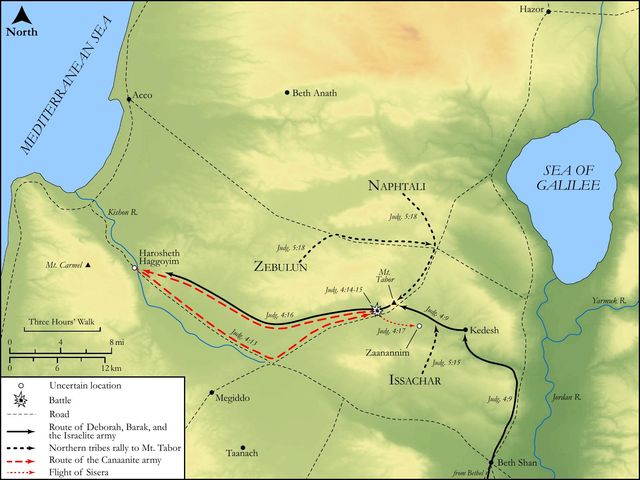
Judges 5:1 serves as the solemn and celebratory introduction to the "Song of Deborah," one of the oldest and most significant poetic compositions in the Hebrew Bible. This verse immediately follows the dramatic narrative of Israel's decisive victory over the oppressive Canaanite forces of King Jabin and his formidable general Sisera, a triumph orchestrated by God through the leadership of the prophetess Deborah and the military commander Barak. It marks a pivotal transition from prose narrative to lyrical praise, setting the stage for a profound theological reflection on divine deliverance, human obedience, and the communal expression of gratitude for God's mighty acts.
Context
ShowHideLiterary Context
Judges 5:1 directly follows the detailed prose account of the battle in Judges 4. The transition from narrative to song is a common literary device in the Old Testament, used to commemorate significant divine interventions and to provide a theological interpretation of historical events, much like the Song of Moses in Exodus 15 after the Red Sea crossing. This shift elevates the victory from a mere historical event to a liturgical act of worship and remembrance, emphasizing its spiritual significance and ensuring its enduring legacy within Israel's collective memory. The song itself, encompassing all of Judges 5, provides a parallel, often more vivid and emotionally charged, account of the same events described in Judges 4.
Historical & Cultural Context
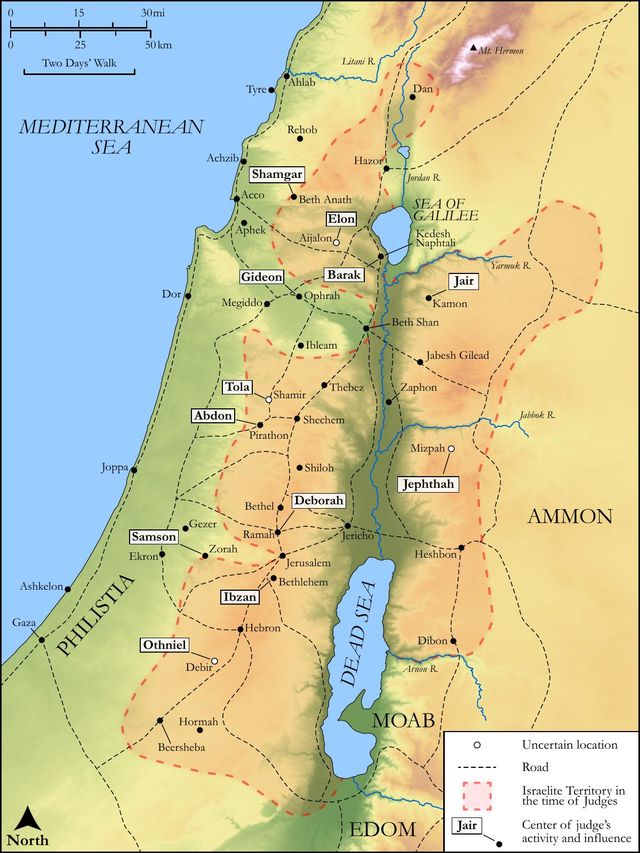
This verse is set within the turbulent period of the Judges, a time characterized by Israel's cyclical disobedience, subsequent oppression by foreign powers, their cry for deliverance, and God's raising up of "judges" to rescue them (Judges 2:16). For twenty years, Israel had been severely oppressed by Jabin, the Canaanite king of Hazor, whose general Sisera commanded a fearsome army equipped with 900 iron chariots (Judges 4:3). The Canaanites represented a significant threat, both militarily and culturally, to Israel's nascent identity and monotheistic faith. In this context, Deborah's emergence as a prophetess and judge was extraordinary, highlighting God's ability to use unexpected instruments for His purposes, even in a patriarchal society. The victory described was not merely a military one but a profound demonstration of Yahweh's sovereignty over the gods of Canaan and His unwavering commitment to His covenant people.
Key Themes
ShowHideThe "Song of Deborah" introduced by this verse is rich with theological and narrative themes. Firstly, it embodies Praise and Thanksgiving, giving all glory to God for the victory, acknowledging that it was His power, not human strength, that secured Israel's freedom (Judges 4:15). Secondly, it powerfully illustrates Divine Deliverance, showcasing God's active involvement in the affairs of His people and His faithfulness to rescue them from oppression when they turn to Him. Thirdly, the song serves as a vital act of Commemoration, ensuring that the details of the battle and God's miraculous intervention are remembered and passed down through generations, reinforcing Israel's identity as a people saved by God. Lastly, it highlights Leadership and Obedience, celebrating the courageous and unique leadership of Deborah, a prophetess and judge, and the eventual obedience of Barak, who, despite initial hesitation, fulfilled his crucial role in God's redemptive plan (Judges 4:8-9).
Exposition and Analysis
ShowHideKey Word Analysis
ShowHideFrom the primitive root meaning "to sing," this verb signifies more than a mere utterance; it denotes a formal, often communal and liturgical act of praise. In ancient Israel, singing was a primary means of commemorating divine interventions, expressing theological truths, and engaging in corporate worship, publicly declaring God's sovereignty following a significant event like a victory.
This is the name of the prophetess and judge, one of two Hebrewesses bearing this name in biblical history. Her prominent role in this song underscores her unique spiritual and judicial leadership, and her co-authorship signifies her pivotal involvement in the victory and its theological interpretation.
Identified as an Israelite military commander, Barak was summoned by Deborah to lead the forces against Sisera. His co-authorship of the song signifies his crucial role in the victory and the communal nature of the celebration, acknowledging his military leadership in the triumph alongside Deborah's spiritual guidance.
Verse Breakdown
ShowHide"¶ Then sang Deborah and Barak the son of Abinoam"
This opening clause immediately establishes the context of celebration and the key figures involved. The KJV paragraph marker "¶" signals a significant shift in literary form from prose narrative to poetic composition. The joint singing of Deborah and Barak emphasizes the unity of spiritual and military leadership in Israel's deliverance. Barak is identified by his patronymic, "son of Abinoam," a common way to identify individuals in ancient Near Eastern texts, grounding him in his lineage from Kedesh Naphtali.
"on that day, saying"
The phrase "on that day" highlights the immediacy of the celebration following the decisive victory over Sisera and the Canaanites. It suggests a spontaneous outpouring of praise and thanksgiving, a direct response to God's miraculous intervention. The word "saying" introduces the subsequent poetic text, indicating that the entire fifth chapter of Judges is the content of their song, a formal and communal declaration of God's mighty acts.
Literary Devices
ShowHideJudges 5:1 masterfully employs several literary devices to set the stage for the powerful "Song of Deborah." The most prominent is Genre Shift or Poetic Shift, moving abruptly from the prose narrative of Judges 4 to the archaic, elevated poetry of Judges 5. This shift immediately signals to the reader that the following text is not merely a recounting of facts but a deeply spiritual and artistic interpretation of events, meant to be sung, remembered, and celebrated. The use of Inclusio is also evident, as the song in Judges 5 provides a poetic retelling of the events of Judges 4, framing the entire episode of deliverance with both narrative and lyrical accounts. This repetition through different literary forms underscores the profound significance and divine origin of the victory. Furthermore, the verse acts as a powerful Anticipation, building suspense and inviting the reader into the heart of the celebration, preparing them for the rich imagery, vivid descriptions, and theological insights contained within the ensuing song.
Theological and Thematic Connections
ShowHideJudges 5:1, as the gateway to the Song of Deborah, encapsulates the profound biblical truth that deliverance and victory ultimately belong to the Lord. The act of singing is not merely an emotional response but a theological declaration, a public acknowledgment that God alone is the source of salvation and the one who triumphs over all enemies. This communal act of worship serves to embed the memory of God's faithfulness into the heart of the community, ensuring that future generations will remember His mighty deeds and trust in His power. It underscores the importance of celebrating God's victories, both personal and corporate, as a vital expression of faith and a means of reinforcing a God-centered worldview.
Reflection and Application
ShowHideJudges 5:1 invites us to consider how we respond to God's interventions and victories in our own lives and in the life of the church. Just as Deborah and Barak immediately broke into song, we are called to cultivate a spirit of prompt and heartfelt gratitude, recognizing God's hand in our deliverances, large and small. This verse reminds us that worship is not just an obligation but a natural, joyful response to God's goodness and power. When we acknowledge God as the true source of our triumphs, we not only give Him the glory He deserves but also strengthen our own faith and the faith of those around us. It encourages us to remember past acts of God's faithfulness, allowing them to build our confidence for future challenges, and to express that gratitude through various forms of worship—whether through song, prayer, testimony, or acts of service.
Questions for Reflection
ShowHideFAQ
ShowHideWhy is Judges 5 called a "Song" and not just a narrative, and what is its significance?
ShowHideJudges 5 is designated as a "Song" because it is a highly poetic and lyrical composition, distinct from the prose narrative of Judges 4. Its significance lies in several aspects: it represents one of the oldest pieces of Hebrew poetry in the Bible, offering valuable insights into early Israelite language and literary forms. Theologically, it serves as a powerful liturgical and commemorative piece, celebrating God's miraculous deliverance of Israel from Canaanite oppression. Unlike a simple historical account, the song provides a theological interpretation of the events, emphasizing God's sovereignty, the participation of various tribes, and the dramatic roles of Deborah, Barak, and Jael. It was likely performed communally to reinforce faith, remember God's mighty acts, and pass down the story through generations.
What is the significance of Deborah and Barak singing together in Judges 5:1?
ShowHideThe joint singing of Deborah and Barak in Judges 5:1 is highly significant. It highlights the collaborative nature of the victory, which involved both spiritual leadership (Deborah as prophetess and judge) and military leadership (Barak as commander). Their shared authorship and performance of the song underscore the communal aspect of the celebration and the unified recognition that the victory was from God. It also serves to publicly honor both figures for their distinct yet complementary roles in God's plan of deliverance, showcasing that God uses diverse individuals and gifts to accomplish His purposes (1 Corinthians 12:4-7).
Christ-Centered Fulfillment
ShowHideJudges 5:1, introducing a song of triumph over oppression, finds its ultimate fulfillment in the person and work of Jesus Christ. The victory of Deborah and Barak over Sisera's chariots foreshadows the far greater and decisive victory achieved by the Lamb of God over the forces of sin, death, and the devil. Just as God raised up Deborah and Barak as deliverers for Israel, He sent His Son, Jesus, as the supreme and final Deliverer for all humanity (Hebrews 2:14-15). The Song of Deborah celebrates a temporary liberation from an earthly oppressor, but Christ's triumph on the cross and His resurrection secured eternal freedom from spiritual bondage (Colossians 2:15). He is the true Judge who brings justice and salvation, and the ultimate Commander who leads His people to victory, not through physical warfare, but through spiritual conquest. The "new song" sung in heaven by the redeemed (Revelation 5:9) echoes the ancient songs of deliverance, but its theme is the Lamb who was slain and has triumphed, making all who believe in Him more than conquerors (Romans 8:37). Thus, Judges 5:1 points forward to the ultimate celebration of God's definitive victory through Christ, inviting all believers to join in the eternal song of praise for His finished work.