


Judges 5:3
Bible text: King James Version (1769 Blayney text) · Public domain
Bible text: Berean Standard Bible · Public domain
Bible text: American Standard Version (1901) · Public domain
Bible text: World English Bible, Messianic edition · Public domain
Bible text: Geneva Bible (1599) · Public domain
Bible text: Young's Literal Translation · Public domain
- שִׁמְעוּshim·'UhearH8085V-Qal-Imp-2mpVerb Qal Imperative 2nd Plural Masculine
- מְלָכִיםme·la·KhimO kingsH4428N-mpNoun Plural Masculine Absolute
- הַאֲזִינוּha·'a·Zi·nugive earH238V-Hiphil-Imp-2mpVerb Hiphil Imperative 2nd Plural Masculine
- רֹזְנִיםro·ze·NimO rulersH7336V-Qal-Prtcpl-mpVerb Qal Participle Plural Masculine Absolute
- אָנֹכִי'a·no·KhiIH595Pro-1csPronoun Personal 1st Singular common gender
- לַיהוָהla·Yah·wehto YahwehH3068Prep-l ¦ N-properNoun Proper TitleלַtoיהוָהYahweh
- אָנֹכִי'a·no·KhiIH595Pro-1csPronoun Personal 1st Singular common gender
- אָשִׁירָה'a·Shi·rahI will singH7891V-Qal-Imperf-1csVerb Qal Imperfect 1st Singular common gender
- אֲזַמֵּר'a·za·MerI will sing praisesH2167V-Piel-Imperf-1csVerb Piel Imperfect 1st Singular common gender
- לַיהוָהla·Yah·wehto YahwehH3068Prep-l ¦ N-properNoun Proper TitleלַtoיהוָהYahweh
- אֱלֹהֵי'e·lo·Hei[the] God ofH430N-mpcNoun Plural Masculine Construct
- יִשְׂרָאֵלYis·ra·'ElIsraelH3478N-properNoun Proper Location
English is a literal word-by-word gloss of the Hebrew, not the KJV's wording. Why?
This is the original text the KJV's translators worked from — each Hebrew word with its own literal English meaning in this verse, prepared by scholars at Tyndale House, Cambridge. The KJV translates whole sentences, not word by word, so its wording differs: one Hebrew word can become several English words, and the KJV may choose “the LORD” where the gloss reads “Yahweh”. Both are faithful — they answer different questions. For the KJV's own rendering, switch to the KJV text.
Details
See on the biblical-era maps

Study this verse
Public-domain commentary
Matthew Henry
From his Commentary on the Whole Bible. Henry comments on passages, not single verses — this entry covers Judges 5:1–5. His three-level outline is real structure in the source text, so it is rendered as structure.
The former chapter let us know what great things God had done for Israel; in this we have the thankful returns they made to God, that all ages of the church might learn that work of heaven to praise God.
I.God is praised by a song, which is,
1.A very natural expression of rejoicing. Is any merry? Let him sing; and holy joy is the very soul and root of praise and thanksgiving. God is pleased to reckon himself glorified by our joy in him, and in his wondrous works. His servants' joy is his delight, and their sons are melody to him.
2.A very proper expedient for spreading the knowledge and perpetuating the remembrance of great events. Neighbours would learn this song one of another and children of their parents; and by that means those who had not books, or could not read, yet would be made acquainted with these works of God; and one generation would thus praise God's works to another, and declare his mighty acts, Psa 145:4, etc.
II.Deborah herself penned this song, as appears by Jdg 5:7 :
Till I Deborah arose. And the first words should be rendered, Then she sang, even Deborah.
1.She used her gifts as a prophetess in composing the song, and the strain throughout is very fine and lofty, the images are lively, the expressions elegant, and an admirable mixture there is in it of sweetness and majesty. No poetry is comparable to the sacred poetry. And,
2.We may supposed she used her power as a princess, in obliging the conquering army of Israel to learn and sing this son. She expects not that they should, by their poems, celebrate her praises and magnify here, but requires that in this poem they should join with her in celebrating God's praises and magnifying him. She had been the first wheel in the action, and now is so in the thanksgiving.
III.It was sung on that day, not the very day that the fight was, but on that occasion, and soon after, as soon as a thanksgiving day could conveniently be appointed. When we have received mercy from God, we ought to be speedy in our returns of praise, while the impressions of the mercy are fresh. It is rent to be paid at the day.
1.She begins with a general Hallelujah: Praise (or bless, for that is the word) you the Lord, Jdg 5:2. The design of the song is to give glory to God; this therefore is put first, to explain and direct all that follows, like the first petition of the Lord's prayer, Hallowed be thy name. Two things God is here praised for: - (1.) The vengeance he took on Israel's enemies, for the avenging of Israel upon their proud and cruel oppressors, recompensing into their bosoms all the injuries they had done to his people. The Lord is known as a righteous God, and the God to whom vengeance belongs by the judgments which he executeth. (2.) The grace he gave to Israel's friends, when the people willingly offered themselves to serve in this war. God is to have the glory of all the good offices that are at any time done us; and the more willingly they are done the more is to be observed of that grace which gives both to will and to do. For these two things she resolves to leave this song upon record, to the honour of the everlasting God (Jdg 5:3): I, even I, will sing unto the Lord, Jehovah, that God of incontestable sovereignty and irresistible power, even to the Lord God of Israel, who governs all for the good of the church.
2.She calls to the great ones of the world, that sit at the upper end of its table, to attend to her song, and take notice of the subject of it: Hear, O you kings! give ear, O you princes!
(1.)She would have them know that as great and as high as they were there was one above them with whom it is folly to contend, and to whom it was their interest to submit, that horses and chariots are vain things for safety.
(2.)She would have them to join with her in praising the God of Israel, and no longer to praise their counterfeit deities, as Belshazzar did. Dan 5:4, He praised the gods of gold and silver. She bespeaks them as the psalmist (Psa 2:10, Psa 2:11), Be wise now therefore, O you kings! serve the Lord with fear.
(3.)She would have them take warning by Sisera's fate, and not dare to offer any injury to the people of God, whose cause, sooner or later, God will plead with jealousy.
3.She looks back upon God's former appearances, and compares this with them, the more to magnify the glorious author of this great salvation. What God is doing should bring to our mind what he has done; for he is the same yesterday, today, and for ever (Jdg 5:4): Lord, when thou wentest our of Seir. This may be understood either,
(1.)Of the appearances of God's power and justice against the enemies of Israel to subdue and conquer them; and so Hab 3:3, Hab 3:4, etc., is parallel to it, where the destruction of the church's enemies is thus described. When God had led his people Israel from the country of Edom he brought down under their feet Sihom and Og, striking them and their armies with such terror and amazement that they seemed apprehensive heaven and earth were coming together. Their hearts melted, as if all the world had been melting round about them. Or it notes the glorious displays of the divine majesty; and the surprising effects of the divine power, enough to make the earth tremble, the heavens drop like snow before the sun, and the mountains to melt. Compare Psa 18:7. God's counsels are so far from being hindered by any creature that, when the time of their accomplishment comes, that which seemed to stand in their way will not only yield before them, but be made to serve them. See Isa 64:1, Isa 64:2. Or,
(2.)It is meant of the appearances of God's glory and majesty to Israel, when he gave them his law at Mount Sinai. It was then literally true, the earth trembled, and the heavens dropped, etc. Compare Deu 33:2; Psa 68:7, Psa 68:8. Let all the kings and princes know that this is the God whom Deborah praises, and not such mean and impotent deities as they paid their homage to. The Chaldee paraphrase applies it to the giving of the law, but has a strange descant on those words, the mountains melted. Tabor, Hermon, and Carmel, contended among themselves: one said, Let the divine majesty dwell upon me; the other said, Let it dwell upon me; but God made it to dwell upon Mount Sinai, the meanest and least of all the mountains. I suppose it means the least valuable, because barren and rocky.
Historical interpretation
Historical reception
2 surviving comments on this verse. Each one is dated, so this reads as a timeline rather than a list.
Hear, O kings. She names them “kings” who are called together to hear the word of God. You should rejoice, people of God, at this emblem of your nobility. It is not as just any people that you are called to hear the word of God, but as a king, for to you it was said, “You are a royal, priestly race, a people for God’s possession.” Because you are kings, therefore, Christ our Lord is rightly called the “King of kings and the Lord of lords.” However, as you revel in this title of your nobility, you should also learn what each one of you must do to be a king. Let me outline it for you briefly. You are made a king if Christ reigns in you, for he is called a king by reigning. If also in you, therefore, the soul reigns and the body submits, if you put the concupiscence of the flesh under of yoke of your command, if you subdue every kind of vice by the tight bridle of your sobriety, then you who know how to reign are also rightly called a “king.”
The fourth song is in the book of Judges. Concerning it there is written, “And Deborah and Barak the son of Abinoam sang on that day, saying, ‘That the princes took the lead in Israel, that the people offered themselves willingly, bless the Lord! Hear, O kings, give ear, O governors!’ ” and the rest. And the person who sings this ought to be a bee, whose product is used by kings and ordinary people for their health. For “Deborah,” who sings this song, means “bee.” Moreover, Barak is with her; and his name means “flashing.” And this song is sung after a victory, because no one can sing of what is perfect unless he has conquered his adversaries. Furthermore, it is said in this song, “Awake, awake, Deborah! Stir up the thousands of the people. Awake, awake, utter a song! Awake, Barak!” But you will find these matters more fully discussed in the homilies we have given on the book of Judges.
Continue studying Judges 5:3 across the web’s major study libraries — every link below opens this exact verse, chapter, or book on the destination site.
Read & Compare
 BibleGatewayThis verse in more than 200 translations and 70 languages.
 Bible.comThe YouVersion reader — hundreds of translations, reading plans, and highlights.
 ESV.orgCrossway's official English Standard Version reader.
 NET BibleThe NET translation with 60,000+ translators' notes on every rendering decision.
 STEP BibleTyndale House's free study tool — original text, vocabulary, and scholarly resources.
 BibliaLogos Bible Software's free web reader.
 USCCBThe New American Bible (Revised Edition) with the U.S. bishops' study notes.
Commentaries
 BibleHub CommentariesDozens of classic commentaries on this verse, gathered on one page.
 StudyLightMore than 100 commentary sets — the largest collection on the web.
 BibleRefPlain-English commentary on what this verse means, verse by verse.
 Enduring WordDavid Guzik's free commentary on this chapter, widely used by Bible teachers.
 Bible Study ToolsVerse commentary alongside Greek and Hebrew study aids.
Original Language & Research
- BibleHub InterlinearThe verse word by word — original language, transliteration, and English.
- BibleHub LexiconEvery word's original-language definition and Strong's entry.
 Blue Letter BibleDeep-study tools — Strong's numbers, concordance, and word studies.
 SefariaThe Hebrew text with Rashi and centuries of Jewish commentary.
Sermons, Hymns & Audio


TrulyRandomVerse is not affiliated with these sites and doesn’t control their content. They’re linked because they’re genuinely useful.
Summary
Judges 5:3, a pivotal verse from the "Song of Deborah and Barak," serves as a majestic summons to all earthly rulers to acknowledge the supreme sovereignty of the LORD. It transitions from this universal call to a deeply personal and emphatic declaration of worship by Deborah herself, emphasizing her unwavering commitment to sing praises to the LORD God of Israel for His miraculous deliverance of His people from Canaanite oppression. The verse encapsulates profound themes of divine authority, personal devotion, and covenant faithfulness, setting a precedent for responding to God's mighty acts with profound gratitude and adoration.
Context
ShowHideLiterary Context
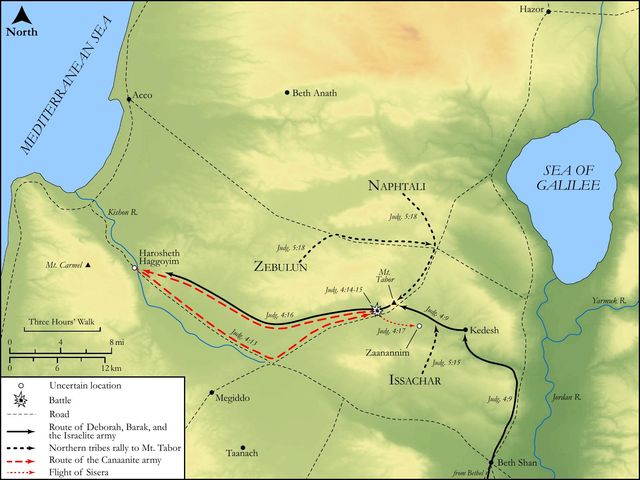
Judges 5:3 is an integral part of the "Song of Deborah and Barak," a triumphant poetic ode found in Judges 5. This song immediately follows the prose account of Israel's decisive victory over the Canaanite forces led by King Jabin and his formidable general Sisera, as detailed in Judges 4. The song functions as a theological interpretation and emotional response to the historical events, transforming a military triumph into a profound act of worship and thanksgiving. It begins with a grand call to praise and then recounts the battle from a divine perspective, highlighting God's direct intervention and the varied responses of the Israelite tribes. The opening verses, including Judges 5:3, establish the song's reach to all creation and its primary purpose: to glorify God for His salvation and to declare His universal dominion.
Historical & Cultural Context
The period of the Judges (roughly 1200-1000 BC) was characterized by a cyclical pattern of Israelite apostasy, foreign oppression, cries for help, and divine deliverance through a "judge." At this specific juncture, Israel had been oppressed by Jabin, King of Hazor, for twenty years (Judges 4:3). The Canaanites, with their superior iron chariots, posed a significant military threat, symbolizing technological and military superiority. Deborah, a prophetess and judge, alongside Barak, a military commander, led the Israelites to victory at the Kishon River, where a divinely orchestrated rainstorm turned the battlefield into a quagmire, rendering Sisera's chariots ineffective (Judges 5:20-22). Victory songs were common in Israel, as when Moses and the children of Israel sang unto the LORD at the Red Sea, serving to commemorate significant events, praise the LORD, and solidify national identity. The "Song of Deborah" fits this cultural pattern but uniquely attributes the victory not to human might or a national deity, but emphatically to the LORD God of Israel, emphasizing His unique covenant relationship and active involvement in history.
Key Themes
ShowHideJudges 5:3 contributes significantly to several overarching themes within the book of Judges and the broader biblical narrative. Foremost is the theme of Divine Sovereignty, as the verse boldly asserts God's authority over all earthly rulers, echoing the universal reign of God found in passages like Psalm 2:10-12. It also highlights Personal Commitment to Worship, as Deborah's emphatic "I, even I, will sing" demonstrates a deeply personal and public vow of adoration, setting an example for individual and communal praise. The repeated reference to "the LORD God of Israel" underscores the theme of Covenant Faithfulness, reminding the audience of God's unique relationship with His chosen people and His readiness to act on their behalf, even when they falter. Finally, the verse is a testament to the theme of Victory and Thanksgiving, demonstrating the appropriate response to God's mighty acts of deliverance—a response of heartfelt praise and glorification, as seen throughout the Psalms, such as Psalm 107:1-2.
Exposition and Analysis
ShowHideKey Word Analysis
ShowHideA primitive root (H8085) meaning to hear intelligently, often with the implication of attention, obedience, or understanding. In this context, it is an imperative, demanding that the addressees not merely perceive sound but truly comprehend and respond to the divine message. Paired with "give ear," it forms a strong call to heed the proclamation of God's mighty acts.
A primitive root (H7891) meaning to sing. In Judges 5:3, it is used in the first person imperfect, "I will sing," indicating a personal and determined act of worship. This verb, along with zâmar (H2167, "sing praise"), emphasizes the vocal and musical expression of adoration, a fitting response to God's deliverance. Deborah's repeated use of this verb underscores her profound personal commitment to praise.
The self-Existent or Eternal One; Jehovah, the Jewish national name of God. This is God's personal, covenantal name, emphasizing His faithfulness, self-sufficiency, and active presence in the lives of His people. Its use here highlights that the praise is directed to the specific, covenant-keeping God of Israel, not a generic deity.
Verse Breakdown
ShowHide"Hear, O ye kings; give ear, O ye princes;"
This opening clause is a majestic and authoritative summons. Deborah, speaking under divine inspiration, addresses not just the immediate audience but all earthly rulers—kings and princes—regardless of their power or domain. It is a universal declaration that the message of God's sovereignty and mighty acts is relevant to all, demanding their attention and recognition. This sets a stage as wide as creation for the song that follows, asserting God's ultimate authority over all human governance and challenging the perceived power of earthly potentates.
"I, [even] I, will sing unto the LORD;"
Following the grand, universal call, Deborah shifts to a deeply personal and emphatic declaration. The Hebrew construction uses the strong personal pronoun "I" (אָנֹכִי) twice for emphasis, highlighting her individual, unwavering commitment to worship. Despite her prominent role as a leader and judge, her primary response to God's deliverance is personal adoration directed specifically to "the LORD" (Yahweh), God's covenant name. This demonstrates that true leadership in faith begins with profound personal devotion and a public commitment to acknowledge God's greatness.
"I will sing [praise] to the LORD God of Israel."
This final clause reiterates and reinforces the preceding vow of worship, adding specificity to the object of her praise. The repetition of "I will sing" underscores the depth of her resolve and the joy of her heart. The title "the LORD God of Israel" (Yahweh Elohei Yisrael) grounds her praise in the specific covenant relationship God has with His people. It acknowledges His unique identity as the one who has acted powerfully on behalf of Israel, emphasizing His faithfulness and their exclusive allegiance to Him. Her praise is a direct, grateful response to His specific and mighty acts of salvation for His chosen nation.
Literary Devices
ShowHideJudges 5:3 is rich in literary artistry, effectively conveying its powerful message. The most prominent device is Apostrophe, where Deborah directly addresses "kings" and "princes," though they are not physically present or part of her immediate audience. This rhetorical address elevates the song's scope, making it a universal proclamation of God's sovereignty over all earthly powers. Repetition is evident in the dual imperatives "Hear... give ear" and the repeated personal vow "I... will sing... I will sing." This repetition creates a sense of urgency and profound Emphasis, underscoring both the universal call to attention and Deborah's deep personal commitment to worship. Furthermore, the verse employs Parallelism, particularly synonymous parallelism, where "Hear, O ye kings" is mirrored by "give ear, O ye princes," and "I... will sing unto the LORD" is echoed by "I will sing [praise] to the LORD God of Israel." This structural balance enhances the poetic quality and reinforces the meaning of each phrase, driving home the dual message of God's universal claim and the individual's response of praise.
Theological and Thematic Connections
ShowHideJudges 5:3 serves as a foundational declaration of God's ultimate sovereignty, asserting that His authority transcends all earthly powers and demands recognition from even the most exalted human rulers. This theological truth is not merely an abstract concept but is powerfully demonstrated through His active intervention in history on behalf of His people. Deborah's personal vow to sing praise exemplifies the proper response to such divine acts—a response rooted in deep gratitude and covenant faithfulness. The verse underscores that worship is not just a communal act but a profoundly personal commitment, flowing from an understanding of who God is (the LORD, the covenant God) and what He has done (delivered Israel). It establishes a pattern where divine deliverance evokes human adoration, transforming moments of triumph into opportunities for glorifying God and proclaiming His unmatched dominion.
Reflection and Application
ShowHideJudges 5:3 offers profound lessons for contemporary believers, reminding us that our God is not merely a personal savior but the sovereign Lord over all creation, whose authority extends to every nation and every ruler. In a world often characterized by human pride, political ambition, and the pursuit of earthly power, this verse calls us to align our perspective with God's, recognizing that ultimate dominion belongs to Him alone. Deborah's emphatic personal declaration, "I, even I, will sing unto the LORD," challenges us to cultivate a deeply personal and intentional practice of worship, not just as a duty but as a heartfelt response to God's faithfulness and deliverance in our own lives. Whether in moments of personal triumph or amidst societal challenges, our primary response should be to lift our voices in praise, proclaiming His greatness and acknowledging His active involvement in our circumstances. This verse inspires us to be bold in our worship, letting our praise be a testimony to the world of the God who reigns supreme.
Questions for Reflection
ShowHideFAQ
ShowHideWhy does Deborah address "kings and princes" who are not present?
ShowHideDeborah's address to "kings and princes" is a powerful rhetorical device known as apostrophe. It serves to elevate the significance of the message and to assert the universal sovereignty of the LORD. By calling upon the highest earthly authorities, Deborah emphasizes that the victory achieved by Israel was not merely a tribal skirmish but a demonstration of God's ultimate power over all nations and their rulers. It's a prophetic declaration that God's acts of deliverance demand recognition from all, regardless of their earthly status. This grand summons sets the stage for the song's theological depth, proclaiming that the God of Israel is the true King over all creation, a theme echoed in Psalm 24:7-10.
What is the significance of Deborah emphasizing "I, even I, will sing"?
ShowHideThe emphatic repetition "I, even I, will sing" (אָנֹכִי לַיהוָה אָשִׁירָה) highlights Deborah's deep personal resolve and leadership in worship. It underscores that while the call to acknowledge God's sovereignty is universal, the response of worship is also profoundly personal. As a prophetess and judge, Deborah models the appropriate response to God's mighty acts: a heartfelt, unwavering commitment to praise Him. This personal vow demonstrates that true spiritual leadership is rooted in individual devotion and sets an example for all believers to actively and personally participate in adoration, as seen in the psalmist's declaration in Psalm 104:33.
Christ-Centered Fulfillment
ShowHideThe "Song of Deborah" and Judges 5:3, with its triumphant declaration of God's sovereignty and His victory over oppressors, finds its ultimate fulfillment in Jesus Christ. While Deborah sang of a temporal deliverance from Canaanite oppression, Christ's victory on the cross achieved an eternal deliverance from sin, death, and the dominion of darkness (Colossians 2:15). The call to "Hear, O ye kings; give ear, O ye princes" resonates with the universal kingship of Christ, before whom "every knee should bow, in heaven and on earth and under the earth" (Philippians 2:10). Just as Deborah personally vowed to sing praise to the LORD God of Israel, believers today are called to offer their lives as a "spiritual worship" to the Lamb of God, who has conquered all (Romans 12:1; Revelation 5:9-10). The victory celebrated in Judges 5 foreshadows the ultimate triumph of Christ, whose reign is eternal and whose deliverance brings true freedom and everlasting joy, prompting a new song of praise that will resound throughout eternity (Revelation 15:3-4).