


Judges 1:15
Bible text: King James Version (1769 Blayney text) · Public domain
Bible text: King James Version with Strong's numbers · Public domain
Bible text: Berean Standard Bible · Public domain
Bible text: American Standard Version (1901) · Public domain
Bible text: World English Bible, Messianic edition · Public domain
Bible text: Geneva Bible (1599) · Public domain
Bible text: Young's Literal Translation · Public domain
- וַתֹּאמֶרva·To·merand she saidH559Conj-w ¦ V-Qal-ConsecImperf-3fsVerb Qal Consecutive Imperfect 3rd Singular Feminineוַandתֹּאמֶרshe said
- לוֹloto <the> himPrep-l ¦ 3msSuffix Personal 3rd Singular Masculineלto <the>וֹhim
- הָבָהha·vahgive !H3051V-Qal-Imp-2ms ¦ SfxVerb Qal Imperative 2nd Singular Masculineהָבָgiveה!
- לִּיlito <the> mePrep-l ¦ 1csSuffix Personal 1st Singular common genderלִּto <the>יme
- בְרָכָהve·ra·Khaha blessingH1293N-fsNoun Singular Feminine Absolute
- כִּיkiforH3588PrtParticle Conditional
- אֶרֶץ'E·retz[the] land ofH776N-fscNoun Singular Feminine Construct
- הַנֶּגֶבha·Ne·gevthe NegevH5045Art ¦ N-properNoun Proper LocationהַtheנֶּגֶבNegev
- נְתַתָּנִיne·ta·Ta·niyou have given to meH5414V-Qal-Perf-2ms ¦ 1csVerb Qal Perfect 2nd Singular Masculineנְתַתָּyou have given toנִיme
- וְנָתַתָּהve·na·ta·Tahand you will giveH5414Conj-w ¦ V-Qal-ConsecPerf-2msVerb Qal Consecutive Perfect 2nd Singular Masculineוְandנָתַתָּהyou will give
- לִיlito <the> mePrep-l ¦ 1csSuffix Personal 1st Singular common genderלִto <the>יme
- גֻּלֹּתgu·Lotsprings ofH1543N-fpcNoun Plural Feminine Construct
- מָיִםMa·yimwaterH4325N-mpNoun Plural Masculine Absolute
- וַיִּתֶּןvai·yi·tenand he gaveH5414Conj-w ¦ V-Qal-ConsecImperf-3msVerb Qal Consecutive Imperfect 3rd Singular Masculineוַandיִּתֶּןhe gave
- לָהּlahto <the> herPrep-l ¦ 3fsSuffix Personal 3rd Singular Feminineלָto <the>הּher
- כָּלֵבka·LevCalebH3612N-proper-mNoun Proper Masculine
- אֵת'et<obj.>H853DirObjMParticle Object Indicator
- גֻּלֹּתgu·LotspringsH1543N-fpcNoun Plural Feminine Construct
- עִלִּית'i·LitupperH5942Adj-fscAdjective Singular Feminine Construct
- וְאֵתve·'Etand <obj.>H853Conj-w ¦ DirObjMParticle Object Indicatorוְandאֵת<obj.>
- גֻּלֹּתgu·LotspringsH1543N-fpcNoun Plural Feminine Construct
- תַּחְתִּיתtach·TitlowerH8482Adj-fsAdjective Singular Feminine Absolute
English is a literal word-by-word gloss of the Hebrew, not the KJV's wording. Why?
This is the original text the KJV's translators worked from — each Hebrew word with its own literal English meaning in this verse, prepared by scholars at Tyndale House, Cambridge. The KJV translates whole sentences, not word by word, so its wording differs: one Hebrew word can become several English words, and the KJV may choose “the LORD” where the gloss reads “Yahweh”. Both are faithful — they answer different questions. For the KJV's own rendering, switch to the KJV text.
Details
See on the biblical-era maps

Study this verse
Public-domain commentary
Matthew Henry
From his Commentary on the Whole Bible. Henry comments on passages, not single verses — this entry covers Judges 1:9–20.
We have here a further account of that glorious and successful campaign which Judah and Simeon made. 1. The lot of Judah was pretty well cleared of the Canaanites, yet not thoroughly. Those that dwelt in the mountain (the mountains that were round about Jerusalem) were driven out (Jdg 1:9, Jdg 1:19), but those in the valley kept their ground against them, having chariots of iron, such as we read of, Jos 17:16. Here the men of Judah failed, and thereby spoiled the influence which otherwise their example hitherto might have had on the rest of the tribes, who followed them in this instance of their cowardice, rather than in all the other instances of their courage. They had iron chariots, and therefore it was thought not safe to attack them: but had not Israel God on their side, whose chariots are thousands of angels (Psa 68:17), before whom these iron chariots would be but as stubble to the fire? Had not God expressly promised by the oracle (Jdg 1:2) to give them success against the Canaanites in this very expedition, without excepting those that had iron chariots? Yet they suffered their fears to prevail against their faith, they could not trust God under any disadvantages, and therefore durst not face the iron chariots, but meanly withdrew their forces, when with one bold stroke they might have completed their victories; and it proved of pernicious consequence. They did run well, what hindered them? Gal 5:7. 2. Caleb was put in possession of Hebron, which, though given him by Joshua ten or twelve years before (as Dr. Lightfoot computes), yet being employed in public service, for the settling of the tribes, which he preferred before his own private interests, it seems he did not till now make himself master of; so well content was that good man to serve others, while he left himself to be served last; few are like-minded, for all seek their own, Phi 2:20, Phi 2:21. Yet now the men of Judah all came in to his assistance for the reducing of Hebron (Jdg 1:10), slew the sons of Anak, and put him in possession of it, Jdg 1:20. They gave Hebron unto Caleb. And now Caleb, that he might return the kindness of his countrymen, is impatient to see Debir reduced and put into the hands of the men of Judah, to expedite which he proffers his daughter to the person that will undertake to command in the siege of that important place, Jdg 1:11, Jdg 1:12. Othniel bravely undertakes it, and wins the town and the lady (Jdg 1:13), and by his wife's interest and management with her father gains a very good inheritance for himself and his family, Jdg 1:14, Jdg 1:15. We had this passage before, Jos 15:16-19, where it was largely explained and improved. 3. Simeon got ground of the Canaanites in his border, Jdg 1:17, Jdg 1:18. In the eastern part of Simeon's lot, they destroyed the Canaanites in Zephath, and called it Hormah - destruction, adding this to some other devoted cities not far off, which they had some time ago, with good reason, called by that name, Num 21:2, Num 21:3. And this perhaps was the complete performance of the vow they them made that they would utterly destroy these cities of the Canaanites in the south. In the western part they took Gaza, Askelon, and Ekron, cities of the Philistines; they gained present possession of the cities, but, not destroying the inhabitants, the Philistines in process of time recovered the cities, and proved inveterate enemies to the Israel of God, and no better could come of doing their work by the halves. 4. The Kenites gained a settlement in the tribe of Judah, choosing it there rather than in any other tribe, because it was the strongest, and there they hoped to be safe and quiet, Jdg 1:16. These were the posterity of Jethro, who either went with Israel when Moses invited them (Num 10:29) or met them about the same place when they came up from their wanderings in the wilderness thirty-eight years after, and went with them then to Canaan, Moses having promised them that they should fare as Israel fared, Num 10:32. They had at first seated themselves in the city of palm-trees, that is, Jericho, a city which never was to be rebuilt, and therefore the fitter for those who dwelt in tents, and did not mind building. But afterwards they removed into the wilderness of Judah, either out of their affection to that place, because solitary and retired, or out of their affection to that tribe, which perhaps had been in a particular manner kind to them. Yet we find the tent of Jael, who was of that family, far north, in the lot of Naphtali, when Sisera took shelter there, Jdg 4:17. This respect Israel showed them, to let them fix where they pleased, being a quiet people, who, wherever they were, were content with a little. Those that molested none were molested by none. Blessed are the meek, for thus they shall inherit the earth.
Historical interpretation
Historical reception
1 surviving comment on this verse from the historical church.
There are two main types of compunction, however. The penitent thirsting for God feels the compunction of fear at first; later on, he experiences the compunction of love. When he considers his sins, he is overcome with weeping because he fears eternal punishment. Then when this fear subsides through prolonged sorrow and penance, a feeling of security emerges from an assurance of forgiveness, and the soul begins to burn with a love for heavenly joys. Now the same person, who wept out of fear of punishment, sheds abundant tears because his entrance to the kingdom of heaven is being delayed. Once we envision the choirs of angels and fix our gaze on the company of the saints and the majesty of an endless vision of God, the thought of having no part in these joys makes us weep more bitterly than the fear of hell and the prospect of eternal misery did before. Thus the compunction of fear, when perfect, leads the soul to the compunction of love.This is beautifully symbolized in one of the historical books of the Bible. There we read that Achsah, the daughter of Caleb, sighed as she sat upon her beast of burden. “And Caleb asked her. ‘What is troubling you?’ She answered, ‘Give me an additional gift! Since you have assigned to me land in the Negeb, give me also pools of water.’ So he gave her the upper and the lower pools.”
We say that Achsah sat on an ass because her soul presided over the irrational movements of her flesh. Just as she begged her father with a sigh for pools of water, so must we with deep groans obtain from our Creator the grace of tears. There are some who have received the gift of speaking out openly for justice, of defending the oppressed, of sharing their possessions with the needy, of professing their faith ardently, who still do not have the grace of tears. These we may say received “land in the Negeb,” that is, “southern and dry land,” but are completely lacking in “pools of water.” It is of utmost importance, however, that those who are zealous for good works and devote much time to performing them should also weep over their past sins, either through fear of eternal punishment or through longing for God’s kingdom.
Caleb gave Achsah the upper and lower pools. These correspond to the two kinds of compunction. The soul receives the upper pools when it weeps because of its longing for heaven; it receives the lower pools when the fear of hell causes it to break forth in tears. Actually, the lower pools are given first; then, only, the upper. Yet, since the compunction of love is greater in dignity, the upper pools were necessarily mentioned first and then the lower.
Continue studying Judges 1:15 across the web’s major study libraries — every link below opens this exact verse, chapter, or book on the destination site.
Read & Compare
 BibleGatewayThis verse in more than 200 translations and 70 languages.
 Bible.comThe YouVersion reader — hundreds of translations, reading plans, and highlights.
 ESV.orgCrossway's official English Standard Version reader.
 NET BibleThe NET translation with 60,000+ translators' notes on every rendering decision.
 STEP BibleTyndale House's free study tool — original text, vocabulary, and scholarly resources.
 BibliaLogos Bible Software's free web reader.
 USCCBThe New American Bible (Revised Edition) with the U.S. bishops' study notes.
Commentaries
 BibleHub CommentariesDozens of classic commentaries on this verse, gathered on one page.
 StudyLightMore than 100 commentary sets — the largest collection on the web.
 BibleRefPlain-English commentary on what this verse means, verse by verse.
 Enduring WordDavid Guzik's free commentary on this chapter, widely used by Bible teachers.
 Bible Study ToolsVerse commentary alongside Greek and Hebrew study aids.
Original Language & Research
- BibleHub InterlinearThe verse word by word — original language, transliteration, and English.
- BibleHub LexiconEvery word's original-language definition and Strong's entry.
 Blue Letter BibleDeep-study tools — Strong's numbers, concordance, and word studies.
 SefariaThe Hebrew text with Rashi and centuries of Jewish commentary.
Sermons, Hymns & Audio


TrulyRandomVerse is not affiliated with these sites and doesn’t control their content. They’re linked because they’re genuinely useful.
Summary
Judges 1:15 records a pivotal moment where Achsah, daughter of Caleb, demonstrates remarkable foresight and boldness by requesting essential resources for the "south land" she had received as an inheritance. Recognizing the arid nature of the region, she petitions her father for "springs of water," a request Caleb generously fulfills by granting her both the upper and nether springs. This verse powerfully illustrates the importance of discerning and asking for what is truly needed for fruitfulness, and it highlights the principle of abundant provision from a faithful giver.
Context
ShowHideLiterary Context
Judges 1:15 is situated early in the Book of Judges, immediately following the death of Joshua and the initial, often fragmented, attempts by the Israelite tribes to secure their allotted territories in Canaan. The preceding verses establish the context of Caleb's promise: he offered his daughter Achsah in marriage to whoever would conquer Kiriath-sepher (also known as Debir). Othniel, Caleb's nephew, successfully captured the city and subsequently married Achsah, as detailed in Judges 1:12-13. The verse immediately prior, Judges 1:14, describes Achsah's initial request for a field, which she received. This verse then details her further, more specific, and crucial request for water sources, a parallel account of which is also found in Joshua 15:19. This narrative sequence underscores Achsah's initiative and the practical necessities of establishing a secure and productive inheritance in the promised land.
Historical & Cultural Context
The period of the Judges was characterized by a transition from unified conquest under Joshua to tribal consolidation and often, fragmented obedience to God. Land distribution was central to Israel's identity and livelihood, fulfilling God's covenant promise to Abraham, as recorded in Genesis 12:7. Caleb, as one of the faithful spies from the wilderness generation, received Hebron as his inheritance, a promise fulfilled in Joshua 14:13. The "south land" (Hebrew: negeb) refers to the arid, semi-desert region south of Judah, where water was exceptionally scarce and vital for agriculture and sustenance. In this culture, a daughter's inheritance often came through her husband, but a father's provision for his daughter, especially in securing her portion of the land, was a significant act of care and honor. Achsah's direct and bold request to her father, rather than her husband, highlights her agency and Caleb's paternal authority and generosity within the patriarchal societal structure.
Key Themes
ShowHideThis verse contributes to several overarching themes within Judges and the broader biblical narrative. It emphasizes the theme of Inheritance and Provision, showcasing how the promised land, while a divine gift, required practical resources for its full utilization and fruitfulness. Achsah's request highlights the importance of Boldness and Specificity in Asking, demonstrating a proactive approach to securing what is needed for thriving, rather than merely surviving. Caleb's immediate and abundant response underscores the theme of Generous Provision, reflecting not only his character but also a divine principle of God's desire to bless His people beyond mere necessity. Furthermore, the narrative subtly points to Divine Faithfulness through Human Agents, as Caleb's actions, while personal, echo God's enduring commitment to provide for His covenant people, ensuring their flourishing in the land He has given them, as seen throughout the Pentateuch and early historical books like Deuteronomy 8:7-9.
Exposition and Analysis
ShowHideKey Word Analysis
ShowHideFrom the root meaning "to kneel" or "to bless," Bᵉrâkâh in this context signifies more than a mere verbal good wish; it refers to a tangible, practical gift that brings prosperity, favor, and enhancement to one's life or possessions. Achsah was not asking for a sentiment but for a concrete asset that would increase the value and productivity of the land she had received. This aligns with the biblical understanding of blessing as often involving material and physical well-being, enabling flourishing and abundance.
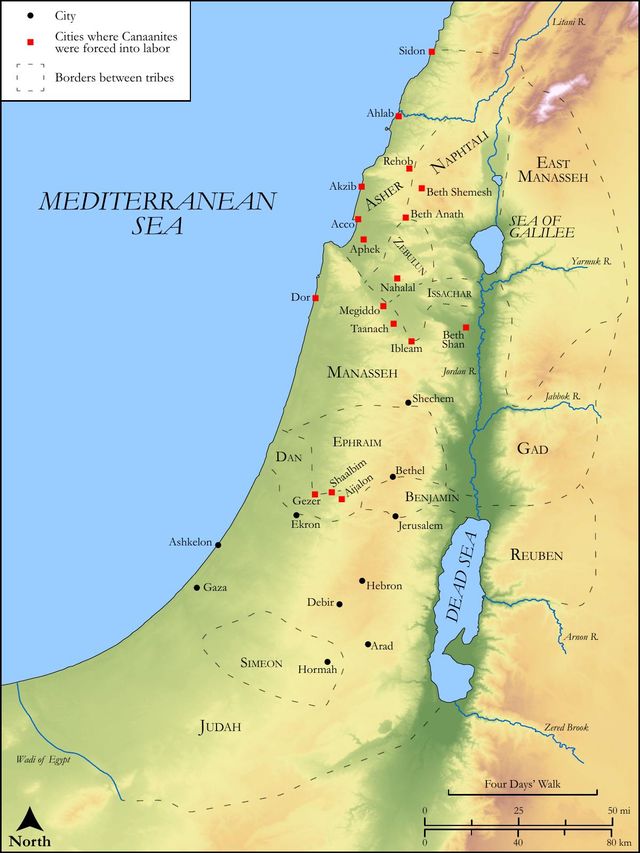
This term specifically refers to the arid, semi-desert region in the southern part of Judah. Characterized by sparse rainfall and dry wadis, the negeb was notoriously difficult to cultivate without consistent water sources. Achsah's request for "springs of water" immediately after being given a "south land" underscores her practical understanding of the land's limitations and the absolute necessity of water for any form of sustainable living or agriculture in that region. It highlights the stark contrast between the potential and the reality of the inheritance without vital resources.
While the text uses the plural form gullot, the root word gullâh denotes a fountain, bowl, or globe, implying a gushing, flowing source. In this context, it refers to consistent and abundant water sources, not just ephemeral rainwater collection or shallow wells. The distinction between "upper springs" (gullot 'illiyot) and "nether springs" (gullot tahtoniyot) suggests a comprehensive provision. "Upper springs" would refer to sources higher up, perhaps on slopes or hills, providing water through gravity, while "nether springs" would be lower, perhaps in valleys or at the base of hills, indicating a complete and diverse water supply covering the entire property and ensuring maximum irrigation potential.
Verse Breakdown
ShowHide"And she said unto him, Give me a blessing:"
Achsah initiates the conversation with a direct and bold appeal to her father, Caleb. Her request for a "blessing" is not vague but a prelude to a specific, tangible need. This demonstrates her discernment and her understanding of her father's capacity and willingness to provide for her. It sets the stage for a practical transaction rather than a mere expression of good wishes, highlighting her proactive approach to securing her well-being.
"for thou hast given me a south land;"
Achsah provides the rationale for her request, subtly yet effectively highlighting the inherent limitation of the land she received. By stating it is a "south land," she implies its aridity and the challenge it presents for cultivation and sustenance. This is not a complaint but a logical argument, demonstrating her shrewdness and practical wisdom; she understands that the value of the land is severely diminished without a reliable water source.
"give me also springs of water."
This is the precise and crucial request. Achsah does not ask for just any water source, but specifically for "springs" (gullot), indicating a desire for reliable, flowing water. This specificity is key; she knows exactly what is needed to make her inheritance productive and sustainable. Her request goes beyond basic survival to thriving, revealing her vision for the land's full potential.
"And Caleb gave her the upper springs and the nether springs."
Caleb's response is immediate, generous, and comprehensive. He not only grants her request but exceeds it by providing both "upper springs" (likely for higher elevations or gravity-fed irrigation) and "nether springs" (for lower areas). This signifies a complete and abundant provision, ensuring that her entire land parcel, regardless of its topography, would have access to vital water, transforming a potentially barren inheritance into a fertile and flourishing one.
Literary Devices
ShowHideThe narrative of Judges 1:15 effectively employs several literary devices, enriching its theological and practical implications. Symbolism is prominent, with the "south land" symbolizing the inheritance or portion of life that, while promised, may be challenging or arid without essential resources. The "springs of water" powerfully symbolize the life-giving, sustaining elements necessary for fruitfulness and flourishing, whether physical or spiritual. The interaction also features Dialogue, which is direct and purposeful, revealing Achsah's discerning wisdom and Caleb's generous character. There is an element of Contrast between the initial gift of a potentially barren "south land" and the subsequent provision of abundant "springs," highlighting the transformation from scarcity to plenty. Furthermore, the detailed mention of "upper springs and nether springs" uses Specificity to emphasize the completeness and generosity of Caleb's gift, ensuring no part of the land would lack water, thereby underscoring the lavish nature of the provision.
Theological and Thematic Connections
ShowHideJudges 1:15 offers profound theological insights into the nature of divine provision and human petition. Achsah's bold and specific request, followed by Caleb's generous response, mirrors God's character as a benevolent Father who delights in providing for His children, often beyond what they initially ask or imagine. Just as the physical land required water to be fruitful, our spiritual inheritance in Christ requires the life-giving resources of God's Spirit and Word to bear fruit. The story teaches us that while God gives us our "land" (our calling, our gifts, our life circumstances), we are invited to actively seek the "springs" that will make it truly productive and vibrant. This active participation in prayer and dependence on God's provision is not a sign of lack of faith, but rather a demonstration of faith in a God who hears and answers, desiring our flourishing.
Reflection and Application
ShowHideThe account of Achsah and Caleb in Judges 1:15 serves as a timeless paradigm for our walk of faith. It encourages believers to cultivate a spirit of discernment, recognizing not only what God has given but also what additional resources are necessary to maximize the fruitfulness of that gift. Achsah's boldness in asking, rooted in a clear understanding of her need, challenges us to move beyond vague prayers to specific petitions, trusting that our heavenly Father is not only willing but eager to provide. Furthermore, Caleb's generosity reminds us of God's abundant nature; He often gives "upper springs and nether springs," exceeding our expectations and ensuring comprehensive provision. This narrative calls us to steward our spiritual inheritance—the life, grace, and calling we have in Christ—by actively seeking the "living water" of the Holy Spirit and the wisdom of God's Word, which are essential for our spiritual growth and fruitfulness in His kingdom.
Questions for Reflection
ShowHideFAQ
ShowHideWhy did Achsah ask for springs after receiving land?
ShowHideAchsah's request was a practical and wise one. While she had received a "south land" (Hebrew: negeb), this region was known for its aridity and scarcity of water. Land in itself, especially in such a climate, was of limited value without a reliable water source for agriculture and sustenance. Her request for "springs of water" was not an act of greed but a discerning recognition that to make the inheritance truly productive and livable, the most crucial resource—water—was still needed. It highlights her foresight and understanding of what was essential for thriving in her new possession.
What is the significance of Caleb giving her "the upper springs and the nether springs"?
ShowHideThis detail emphasizes the completeness and generosity of Caleb's provision. "Upper springs" (likely originating from higher elevations) and "nether springs" (found in lower areas or valleys) together signify a comprehensive water supply that would cover the entire property, regardless of its topography. It means Achsah received not just a single water source, but a full and abundant provision, ensuring maximum fertility and usability of her land. This act goes beyond mere necessity, demonstrating lavish generosity and a desire for her full flourishing.
Does this story only apply to material blessings?
ShowHideWhile the immediate context is about material provision (land and water), the story carries profound spiritual and theological implications. It serves as an analogy for God's provision in all areas of life, including spiritual resources. Just as physical land needs water to be fruitful, our spiritual lives, ministries, and callings require the "living water" of the Holy Spirit and the nourishment of God's Word to truly flourish. The narrative encourages believers to boldly and specifically ask God for the spiritual "springs" (e.g., wisdom, guidance, strength, anointing) necessary to fulfill their divine inheritance and bear fruit for His kingdom, as seen in passages like John 7:37-39.
Christ-Centered Fulfillment
ShowHideThe narrative of Achsah's request for springs and Caleb's generous provision finds its ultimate and most profound fulfillment in Jesus Christ. While Achsah sought physical water for a physical inheritance, Christ is revealed as the ultimate "spring of living water" who offers eternal life and spiritual sustenance to all who believe, as He declared in John 4:10-14. Our inheritance as believers is not merely a plot of land, but an eternal one in Christ, encompassing spiritual blessings "in the heavenly places" (Ephesians 1:3). This spiritual inheritance, like Achsah's "south land," would be barren without the life-giving presence of the Holy Spirit, whom Christ promised and poured out, as described in John 7:37-39. Just as Caleb gave Achsah "upper and nether springs," God, through Christ, has "blessed us with every spiritual blessing" (Ephesians 1:3), providing comprehensively for our spiritual flourishing. Christ's ultimate sacrifice on the cross secured for us an inheritance that is imperishable, undefiled, and unfading (1 Peter 1:3-4), and He continually intercedes for us, ensuring we receive all the necessary "springs" of grace and truth to live out that inheritance in abundance.