


Deuteronomy 31:9
- וַיִּכְתֹּבvai·yikh·Toand he wrote downH3789Conj-w ¦ V-Qal-ConsecImperf-3msVerb Qal Consecutive Imperfect 3rd Singular Masculineוַandיִּכְתֹּבhe wrote down
- מֹשֶׁהmo·ShehMosesH4872N-proper-mNoun Proper Masculine
- אֶת'et<obj.>H853DirObjMParticle Object Indicator
- הַתּוֹרָהha·to·Rahthe lawH8451Art ¦ N-fsNoun Singular Feminine Absoluteהַtheתּוֹרָהlaw
- הַזֹּאתha·zoT<the> thisH2063Art ¦ PrtParticle Demonstrativeהַ<the>זֹּאתthis
- וַיִּתְּנָהּvai·yi·te·Nahand he gave itH5414Conj-w ¦ V-Qal-ConsecImperf-3ms ¦ 3fsVerb Qal Consecutive Imperfect 3rd Singular Masculineוַandיִּתְּנָhe gaveהּit
- אֶל'eltoH413PrepPreposition
- הַכֹּהֲנִיםha·ko·ha·Nimthe priestsH3548Art ¦ N-mpNoun Plural Masculine Absoluteהַtheכֹּהֲנִיםpriests
- בְּנֵיbe·Nei[the] sons ofH1121N-mpcNoun Plural Masculine Construct
- לֵוִיle·ViLeviH3881N-proper-mNoun Proper Masculine
- הַנֹּשְׂאִיםha·No·se·'Imwho carryH5375Art ¦ V-Qal-Prtcpl-mpVerb Qal Participle Plural Masculine Absoluteהַwhoנֹּשְׂאִיםcarry
- אֶת'et<obj.>H853DirObjMParticle Object Indicator
- אֲרוֹן'a·Ron[the] ark ofH727N-mscNoun Singular Masculine Construct
- בְּרִיתbe·Rit[the] covenant ofH1285N-fscNoun Singular Feminine Construct
- יְהוָהYah·wehYahwehH3068N-properNoun Proper Title
- וְאֶלve·'eland toH413Conj-w ¦ PrepPrepositionוְandאֶלto
- כָּלkolallH3605N-mscNoun Singular Masculine Construct
- זִקְנֵיzik·Nei[the] elders ofH2205Adj-mpcAdjective Plural Masculine Construct
- יִשְׂרָאֵלYis·ra·'ElIsraelH3478N-properNoun Proper Location
English is a literal word-by-word gloss of the Hebrew, not the KJV's wording. Why?
This is the original text the KJV's translators worked from — each Hebrew word with its own literal English meaning in this verse, prepared by scholars at Tyndale House, Cambridge. The KJV translates whole sentences, not word by word, so its wording differs: one Hebrew word can become several English words, and the KJV may choose “the LORD” where the gloss reads “Yahweh”. Both are faithful — they answer different questions. For the KJV's own rendering, switch to the KJV text.
Details
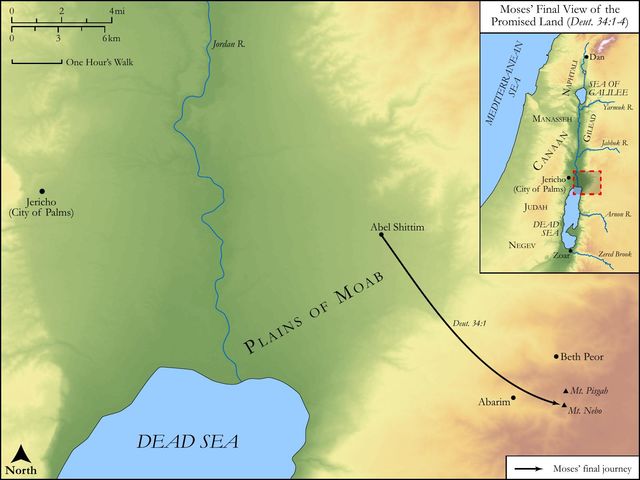
See on the biblical-era map
Study this verse
Public-domain commentary
Matthew Henry
From his Commentary on the Whole Bible. Henry comments on passages, not single verses — this entry covers Deuteronomy 31:9–13. His three-level outline is real structure in the source text, so it is rendered as structure.
The law was given by Moses; so it is said, Joh 1:17. He was not only entrusted to deliver it to that generation, but to transmit it to the generations to come; and here it appears that he was faithful to that trust.
I.Moses wrote this law, Deu 31:9.
The learned bishop Patrick understands this of all the five books of Moses, which are often called the law; he supposes that though Moses had written most of the Pentateuch before, yet he did not finish it till now; now he put his last hand to that sacred volume. Many think that the law here (especially since it is called this law, this grand abridgment of the law) is to be understood of this book of Deuteronomy; all those discourses to the people which have taken up this whole book, he, being in them divinely inspired, wrote them as the word of God. He wrote this law,
1.That those who had heard it might often review it themselves, and call it to mind.
2.That it might be the more safely handed down to posterity. Note, The church has received abundance of advantage from the writing, as well as from the preaching, of divine things; faith comes not only by hearing, but by reading. The same care that was taken of the law, thanks be to God, is taken of the gospel too; soon after it was preached it was written, that it might reach to those on whom the ends of the world shall come.
II.Having written it, he committed it to the care and custody of the priests and elders.
He delivered one authentic copy to the priests, to be laid up by the ark (v. 26), there to remain as a standard by which all other copies must be tried. And it is supposed that he gave another copy to the elders of each tribe, to be transcribed by all of that tribe that were so disposed. Some observe that the elders, as well as the priests, were entrusted with the law, to intimate that magistrates by the power, as well as ministers by their doctrine, are to maintain religion, and to take care that the law be not broken nor lost.
III.He appointed the public reading of this law in a general assembly of all Israel every seventh year.
The pious Jews (it is very probable) read the laws daily in their families, and Moses of old time was read in the synagogue every sabbath day, Act 15:21. But once in seven years, that the law might be the more magnified and made honourable, it must be read in a general assembly. Though we read the word in private, we must not think it needless to hear it read in public. Now here he give direction,
1.When this solemn reading of the law must be, that the time might add to the solemnity; it must be done,
(1.)In the year of release. In that year the land rested, so that they could the better spare time to attend this service. Servants who were then discharged, and poor debtors who were then acquitted from their debts, must know that, having the benefit of the law, it was justly expected they should yield obedience to it, and therefore give up themselves to be God's servants, because he had loosed their bonds. The year of release was typical of gospel grace, which therefore is called the acceptable year of the Lord; for our remission and liberty by Christ engage us to keep his commandments, Luk 1:74, Luk 1:75.
(2.)At the feast of tabernacles in that year. In that feast they were particularly required to rejoice before God, Lev 23:40. Therefore then they must read the law, both to qualify their mirth and keep it in due bounds, and to sanctify their mirth, that they might make the law of God the matter of their rejoicing, and might read it with pleasure and not as a task.
2.To whom it must be read: To all Israel (Deu 31:11), men, women, and children, and the strangers, Deu 31:12. The women and children were not obliged to go up to the other feasts, but to this only in which the law was read. Note, It is the will of God that all people should acquaint themselves with his word. It is a rule to all, and therefore should be read to all. It is supposed that, since all Israel could not possibly meet in one place, nor could one man's voice reach them all, as many as the courts of the Lord's house would hold met there, and the rest at the same time in their synagogues. The Jewish doctors say that the hearers were bound to prepare their hearts, and to hear with fear and reverence, and with joy and trembling, as in the day when the law was given on Mount Sinai; and, though there were great and wise men who knew the whole law very well, yet they were bound to hear with great attention; for he that reads is the messenger of the congregation to cause the words of God to be heard. I wish those that hear the gospel read and preached would consider this.
3.By whom it must be read: Thou shalt read it (Deu 31:11), "Thou, O Israel," by a proper person appointed for that purpose; or, "Thou, O Joshua," their chief ruler; accordingly we find that he did read the law himself, Jos 8:34, Jos 8:35. So did Josiah, Ch2 34:30, and Ezra, Neh 8:3. And the Jews say that the king himself (when they had one) was the person that read in the courts of the temple, that a pulpit was set up for that purpose in the midst of the court, in which the king stood, that the book of the law was delivered to him by the high priest, that he stood up to receive it, uttered a prayer (as every one did that was to read the law in public) before he read; and then, if he pleased, he might sit down and read. But if he read standing it was thought the more commendable, as (they say) king Agrippa did. Here let me offer it as a conjecture that Solomon is called the preacher, in his Ecclesiastes, because he delivered the substance of that book in a discourse to the people, after his public reading of the law in the feast of tabernacles, according to this appointment here.
4.For what end it must be thus solemnly read.
(1.)That the present generation might hereby keep up their acquaintance with the law of God, Deu 31:12. They must hear, that they may learn, and fear God, and observe to do their duty. See here what we are to aim at in hearing the word; we must hear, that we may learn and grow in knowledge; and every time we read the scriptures we shall find that there is still more and more to be learned out of them. We must learn, that we may fear God, that is, that we may be duly affected with divine things; and must fear God, that we may observe and do the words of his law; for in vain do we pretend to fear him if we do not obey him.
(2.)That the rising generation might betimes be leavened with religion (Deu 31:13); not only that those who know something may thus know more, but that the children who have not known any thing may betimes know this, how much it is their interest as well as duty to fear God.
Continue studying Deuteronomy 31:9 across the web’s major study libraries — every link below opens this exact verse, chapter, or book on the destination site.
Read & Compare
 BibleGatewayThis verse in more than 200 translations and 70 languages.
 Bible.comThe YouVersion reader — hundreds of translations, reading plans, and highlights.
 ESV.orgCrossway's official English Standard Version reader.
 NET BibleThe NET translation with 60,000+ translators' notes on every rendering decision.
 STEP BibleTyndale House's free study tool — original text, vocabulary, and scholarly resources.
 BibliaLogos Bible Software's free web reader.
 USCCBThe New American Bible (Revised Edition) with the U.S. bishops' study notes.
Commentaries
 BibleHub CommentariesDozens of classic commentaries on this verse, gathered on one page.
 StudyLightMore than 100 commentary sets — the largest collection on the web.
 BibleRefPlain-English commentary on what this verse means, verse by verse.
 Enduring WordDavid Guzik's free commentary on this chapter, widely used by Bible teachers.
 Bible Study ToolsVerse commentary alongside Greek and Hebrew study aids.
Original Language & Research
- BibleHub InterlinearThe verse word by word — original language, transliteration, and English.
- BibleHub LexiconEvery word's original-language definition and Strong's entry.
 Blue Letter BibleDeep-study tools — Strong's numbers, concordance, and word studies.
 SefariaThe Hebrew text with Rashi and centuries of Jewish commentary.
Sermons, Hymns & Audio


TrulyRandomVerse is not affiliated with these sites and doesn’t control their content. They’re linked because they’re genuinely useful.
Summary
Deuteronomy 31:9 records a pivotal moment in Israel's history, where Moses, nearing the end of his life, meticulously inscribed the divine Law and formally entrusted it to the Levite priests, who bore the sacred Ark of the Covenant, and to all the elders of Israel. This act profoundly underscores the Law's divine origin, its absolute authority, and the critical importance of its faithful preservation and widespread dissemination through both spiritual and civil leadership, ensuring its enduring influence for the entire covenant community across generations.
Context
ShowHideLiterary Context
This verse is strategically positioned within Moses' concluding addresses and final acts before his death and Israel's entry into the Promised Land. The preceding chapters, particularly Deuteronomy 29 and Deuteronomy 30, serve as a powerful covenant renewal ceremony, reiterating the terms of the Mosaic Covenant, emphasizing the blessings contingent upon obedience, and the severe curses for disobedience. Deuteronomy 31 itself details Moses' final preparations, including the commissioning of Joshua as his successor (verses 7-8), the command for the public reading of the Law every seven years during the Feast of Booths (verses 10-13), and the prophetic warning of Israel's future apostasy (verses 16-22). Moses' solemn act of writing and delivering the Law in verse 9 is thus a foundational step in ensuring its permanent preservation, public accessibility, and authoritative continuity for all future generations of Israel, solidifying their covenantal relationship with God before his departure. It is the tangible transfer of divine authority.
Historical & Cultural Context
The setting is the plains of Moab, on the eastern side of the Jordan River, marking a significant transition point for the Israelites from a nomadic wilderness generation to a settled nation poised to enter Canaan. In the ancient Near East, written legal codes were common, often inscribed on stelae or clay tablets, but Israel's Law was unique in its explicit divine origin and comprehensive scope, encompassing religious, civil, and moral statutes given directly by Yahweh. The "priests the sons of Levi" were the divinely appointed spiritual custodians, responsible for officiating sacrifices, maintaining the Tabernacle, and, crucially, teaching the Law to the people. Their role in "bear[ing] the ark of the covenant of the LORD" signifies their intimate connection to God's manifest presence and the very heart of the covenant, as detailed in Exodus 25:10-22. The "elders of Israel" were the tribal and community leaders, responsible for local governance, justice, and the practical application of the Law in daily life. This dual entrustment reflects a comprehensive strategy to embed the Law deeply within both the religious and civil fabric of the nascent nation, ensuring its authority permeated all societal levels.
Key Themes
ShowHideThe primary theme is the Authority and Preservation of God's Law. Moses' act of writing "this law" (Hebrew: Torah) signifies its divine origin and absolute authority, distinct from human legislation. Its written form ensures accurate transmission and prevents corruption across generations, emphasizing the unchanging nature of God's Word, as seen in the prohibition against adding or subtracting from it in Deuteronomy 4:2. Another key theme is the Custodianship of Sacred Trust. The Law is specifically entrusted to the Levite priests, who were the spiritual interpreters and guardians, and to the elders, who were the civil administrators. This dual responsibility highlights that God's Law was not merely a set of religious rituals but a comprehensive guide for all aspects of life, requiring both spiritual discernment and practical application. Finally, the verse speaks to Divine Mandate and Succession. While Joshua is commissioned for military and political leadership, the spiritual and judicial stewardship of God's revealed will is passed to the priests and elders. This established a robust system for the continued study, teaching, and enforcement of the covenant made at Sinai, ensuring the nation's fidelity to God beyond Moses' lifetime and into their new life in the land.
Exposition and Analysis
ShowHideKey Word Analysis
ShowHideWhile often translated as "law" (H8451), tôwrâh (תּוֹרָה) is far more expansive, encompassing divine instruction, teaching, guidance, and direction. It refers to God's comprehensive revelation of His will, designed to guide His people into a blessed and righteous life, encompassing statutes, ordinances, and moral principles. It is not merely a legal code but a holistic way of life, providing the framework for Israel's covenant relationship with Yahweh.
The kôhên (כֹּהֵן), referring to the singular root of the plural "priests" (H3548), were the designated descendants of Aaron, set apart for sacred service. Their duties included mediating between God and Israel through sacrifices, maintaining the tabernacle/temple, and, crucially, teaching the Law to the people (Leviticus 10:11). Their role as custodians of the written Law was central to Israel's spiritual health and fidelity to the covenant.
This phrase refers to the ʼârôwn (אֲרוֹן, H727), the most sacred object in Israel, which contained the tablets of the bᵉrîyth (בְּרִית, H1285), or covenant, and symbolized the very presence and throne of Yᵉhôvâh (יְהוָה, H3068), the self-Existent God. The Ark of the Covenant was the tangible symbol of God's covenant faithfulness and His dwelling among His people. The priests' responsibility to bear it emphasized their unique proximity to God's holiness and their role as guardians of the covenant itself, which was intrinsically linked to the Law contained within it (Deuteronomy 10:5).
Verse Breakdown
ShowHide"And Moses wrote this law"
This foundational clause highlights Moses' direct authorship, acting under divine inspiration and mandate. It signifies the transition from an oral tradition to a permanent, tangible, and authoritative written document. This act ensures the Law's integrity, preventing distortion, and guarantees its accessibility for all future generations, making it the foundational text for Israel's identity and their covenant relationship with God.
"and delivered it unto the priests the sons of Levi"
This specifies the primary recipients and spiritual custodians of the Law. The Levite priests, by divine appointment and lineage, were the sacred guardians and authoritative interpreters of God's word. Their role was not merely ceremonial but profoundly instructional, tasked with teaching the Law to the people, ensuring its proper observance in religious life, and maintaining the purity of worship.
"which bare the ark of the covenant of the LORD"
This specific descriptor for the priests underscores their unique and profoundly sacred responsibility. Bearing the Ark symbolized their intimate connection to God's manifest presence and the very heart of the covenant. It signifies that the Law they received was intrinsically linked to God's covenant faithfulness and His dwelling among His people, emphasizing its divine origin and the holiness required in its handling.
"and unto all the elders of Israel"
This indicates the second crucial group of recipients, representing the civil and judicial leadership of the nation. Their inclusion demonstrates that the Law was not solely for religious observance but was intended to govern all aspects of Israelite society—justice, governance, social order, and daily life. This dual entrustment ensured the Law's pervasive influence throughout the community, integrating it into both sacred and secular spheres.
Literary Devices
ShowHideThe verse primarily employs Metonymy, where "this law" stands for the entire body of divine instruction, commandments, and covenant stipulations given through Moses, encompassing the Pentateuch itself. The act of writing and delivering is a powerful Symbolism of the Law's enduring authority, its foundational role in Israel's identity, and God's meticulous care for its preservation. The specific mention of the "priests the sons of Levi, which bare the ark of the covenant of the LORD" uses Synecdoche, where a part (bearing the Ark) represents the whole sacred office, divine appointment, and comprehensive responsibility of the priesthood in relation to the covenant. The verse also exhibits Emphasis through its explicit enumeration of the two distinct groups of custodians, highlighting the critical importance of the Law for both the spiritual and civil spheres of Israelite life, ensuring its comprehensive application.
Theological and Thematic Connections
ShowHideDeuteronomy 31:9 is profoundly significant for understanding the nature of divine revelation and its transmission. It establishes the written Word of God as the ultimate, unchanging authority for the covenant community, demonstrating God's meticulous care for the preservation of His truth across generations. The entrustment to both spiritual (priests) and civil (elders) leaders underscores that God's Law is holistic, intended to govern every facet of life—from worship and ethics to justice and governance. This act of formal delivery ensures that the Law would not be lost, corrupted, or forgotten, but would serve as the unchanging standard for Israel's relationship with God and with one another, forming the bedrock of their national identity and purpose. It prefigures the ongoing need for faithful stewardship of God's Word across all generations and within all spheres of human activity.
Reflection and Application
ShowHideDeuteronomy 31:9 serves as a timeless reminder of the profound value and enduring authority of God's written Word. Just as Moses painstakingly ensured the Law's preservation and dissemination, believers today are called to cherish, diligently study, and faithfully apply the Scriptures as the authoritative guide for life. This verse challenges us to consider our own role as custodians of divine truth. Are we actively engaging with God's Word, allowing it to shape our thoughts, decisions, and actions, and to transform our character? Furthermore, it highlights the immense responsibility of spiritual leaders within the church to faithfully teach and shepherd God's flock according to His truth, and of community leaders in society to uphold principles of justice and righteousness rooted in divine wisdom. The spiritual health and vitality of any community are directly tied to its commitment to the authoritative Word of God. We are all called to live out the principles of God's Word and to ensure its faithful transmission to future generations, much like the priests and elders of ancient Israel were tasked with, recognizing that the integrity of the faith depends on it.
Questions for Reflection
ShowHideFAQ
ShowHideWhat was "this law" that Moses wrote and delivered?
ShowHide"This law" refers to the Torah, which encompasses the divine instruction, commandments, statutes, and ordinances that God revealed to Israel through Moses. While it certainly includes legal codes, it is much broader, serving as God's comprehensive teaching and guidance for how His people were to live in covenant relationship with Him. It is primarily understood to refer to the book of Deuteronomy itself, which contains Moses' final addresses and reiteration of the covenant, or more broadly, the entire Pentateuch (the first five books of the Bible), which contains the foundational revelation of God's will for Israel. This written form was crucial for preserving its integrity and ensuring its accurate transmission across generations, as seen in the stern warning against adding or subtracting from it in Deuteronomy 4:2.
Why was the Law delivered to both priests and elders, and what were their respective roles?
ShowHideThe Law was delivered to both groups to ensure its comprehensive integration into all aspects of Israelite life—religious, civil, and social. The "priests the sons of Levi" were the spiritual custodians. Their divinely appointed role was to teach the Law, offer sacrifices, and mediate between God and the people, ensuring proper worship and adherence to divine commands within the sanctuary and in religious life (e.g., Leviticus 10:11). The "elders of Israel" were the civil leaders, representing the tribes and responsible for governance, justice, and the practical application of the Law in daily community life, resolving disputes, and maintaining social order (e.g., Deuteronomy 19:12). This dual entrustment ensured that God's Law would permeate both the sacred and secular spheres, providing a holistic framework for the nation's existence and fidelity to the covenant.
Christ-Centered Fulfillment
ShowHideDeuteronomy 31:9, with its emphasis on the written Law and its faithful transmission, finds its ultimate fulfillment in the person and work of Jesus Christ. The Law, painstakingly recorded by Moses and entrusted to the priests and elders, served to reveal God's perfect standard of righteousness and humanity's inherent inability to fully keep it, thus pointing to the desperate need for a greater deliverer and a new covenant (Romans 3:20). Jesus declared that He did not come to abolish the Law but to fulfill it (Matthew 5:17), perfectly embodying its righteous demands in His life and offering Himself as the spotless Lamb of God to atone for the sins of those who failed to keep it (John 1:29). In the new covenant, the Law is no longer merely an external code written on stone tablets but is inscribed on the hearts of believers by the Holy Spirit (Jeremiah 31:33 and Hebrews 8:10), enabling them to walk in God's ways. Christ Himself is the living Word (John 1:1), the ultimate and complete revelation of God, and through His finished work, the true knowledge of God and His will is made accessible to all who believe, transcending the limitations of a written code and establishing a direct, Spirit-empowered relationship with the Father.