


Deuteronomy 31:22
Bible text: King James Version (1769 Blayney text) · Public domain
Bible text: Berean Standard Bible · Public domain
Bible text: American Standard Version (1901) · Public domain
Bible text: World English Bible, Messianic edition · Public domain
Bible text: Geneva Bible (1599) · Public domain
Bible text: Young's Literal Translation · Public domain
- וַיִּכְתֹּבvai·yikh·Toand he wrote downH3789Conj-w ¦ V-Qal-ConsecImperf-3msVerb Qal Consecutive Imperfect 3rd Singular Masculineוַandיִּכְתֹּבhe wrote down
- מֹשֶׁהmo·ShehMosesH4872N-proper-mNoun Proper Masculine
- אֶת'et<obj.>H853DirObjMParticle Object Indicator
- הַשִּׁירָהha·shi·Rahthe songH7892Art ¦ N-fsNoun Singular Feminine Absoluteהַtheשִּׁירָהsong
- הַזֹּאתha·Zot<the> thisH2063Art ¦ PrtParticle Demonstrativeהַ<the>זֹּאתthis
- בַּיּוֹםbai·Yomon the dayH3117Prep-b ¦ N-msNoun Singular Masculine Absoluteבַּon theיּוֹםday
- הַהוּאha·Hu'<the> thatH1931Art ¦ Pro-3msPronoun Personal 3rd Singular Masculineהַ<the>הוּאthat
- וַיְלַמְּדָהּvay·la·me·Dahand he taught itH3925Conj-w ¦ V-Piel-ConsecImperf-3ms ¦ 3fsVerb Piel Consecutive Imperfect 3rd Singular Masculineוַandיְלַמְּדָhe taughtהּit
- אֶת'et<obj.>H853DirObjMParticle Object Indicator
- בְּנֵיbe·Nei[the] people ofH1121N-mpcNoun Plural Masculine Construct
- יִשְׂרָאֵלYis·ra·'ElIsraelH3478N-properNoun Proper Location
English is a literal word-by-word gloss of the Hebrew, not the KJV's wording. Why?
This is the original text the KJV's translators worked from — each Hebrew word with its own literal English meaning in this verse, prepared by scholars at Tyndale House, Cambridge. The KJV translates whole sentences, not word by word, so its wording differs: one Hebrew word can become several English words, and the KJV may choose “the LORD” where the gloss reads “Yahweh”. Both are faithful — they answer different questions. For the KJV's own rendering, switch to the KJV text.
Details
See on the biblical-era map
Study this verse
Public-domain commentary
Matthew Henry
From his Commentary on the Whole Bible. Henry comments on passages, not single verses — this entry covers Deuteronomy 31:22–30.
Here, I. The charge is given to Joshua, which God has said (v. 14) he would give him. The same in effect that Moses had given him. The same in effect that Moses had given him (v. 7): Be strong and of a good courage, v. 23. Joshua had now heard from God so much of the wickedness of the people whom he was to have the conduct of as could not but be a discouragement to him: "Nay," says God, "how bad soever they are, thou shalt go through thy understanding, for I will be with thee. Thou shalt put them into possession of Canaan. If they afterwards by their sin throw themselves out of it again, that will be no fault of thine, nor any dishonour to thee, therefore be of good courage."
II.The solemn delivery of the book of the law to the Levites, to be deposited in the side of the ark, is here again related (v.
24-26), of which before, v. 9. Only they are here directed where to treasure up this precious original, not in the ark (there only the two tables were preserved), but in another box by the side of the ark. It is probable that this was the very book that was found in the house of the Lord (having been somehow or other misplaced) in the days of Josiah (Ch2 34:14), and so perhaps the following words here, that it may be a witness against thee, may particularly point at that event, which happened so long after; for the finding of this very book occasioned the public reading of it by Josiah himself, for a witness against a people who were then almost ripe for their ruin by the Babylonians.
III.The song which follows in the next chapter is here delivered to Moses, and by him to the people.
He wrote it first (v. 22), as the Spirit of God indited it, and then spoke it in the ears of all the congregation (v. 30), and taught it to them (v. 22), that is, gave out copies of it, and ordered the people to learn it by heart. It was delivered by word of mouth first, and afterwards in writing, to the elders and officers, as the representatives of their respective tribes (v. 28), by them to be transmitted to their several families and households. It was delivered to them with a solemn appeal to heaven and earth concerning the fair warning which was given them by it of the fatal consequences of their apostasy from God, and with a declaration of the little joy and little hope Moses had in and concerning them. 1. He declares what little joy he had had of them while he was with them, v. 27. It is not in a passion that he says, I know thy rebellion (as once he said unadvisedly, Hear now, you rebels), but it is the result of a long acquaintance with them: you have been rebellious against the Lord. Their rebellions against himself he makes no mention of: these he had long since forgiven and forgotten; but they must be made to hear of their rebellions against God, that they may be ever repented of and never repeated. 2. What little hopes he had of them now that he was leaving them. From what God had now said to him (v. 16) more than from his own experience of them, though that was discouraging enough, he tells them (v. 29), I know that after my death you will utterly corrupt yourselves. Many a sad thought, no doubt, it occasioned to this good man, to foresee the apostasy and ruin of a people he had taken so much pains with, in order to them good and make them happy; but this was his comfort, that he had done his duty, and that God would be glorified, if not in their settlement, yet in their dispersion. Thus our Lord Jesus, a little before his death, foretold the rise of false Christs and false prophets (Mat 24:24), notwithstanding which, and all the apostasies of the latter times, we may be confident that the gates of hell shall not prevail against the church, for the foundation of God stands sure.
Continue studying Deuteronomy 31:22 across the web’s major study libraries — every link below opens this exact verse, chapter, or book on the destination site.
Read & Compare
 BibleGatewayThis verse in more than 200 translations and 70 languages.
 Bible.comThe YouVersion reader — hundreds of translations, reading plans, and highlights.
 ESV.orgCrossway's official English Standard Version reader.
 NET BibleThe NET translation with 60,000+ translators' notes on every rendering decision.
 STEP BibleTyndale House's free study tool — original text, vocabulary, and scholarly resources.
 BibliaLogos Bible Software's free web reader.
 USCCBThe New American Bible (Revised Edition) with the U.S. bishops' study notes.
Commentaries
 BibleHub CommentariesDozens of classic commentaries on this verse, gathered on one page.
 StudyLightMore than 100 commentary sets — the largest collection on the web.
 BibleRefPlain-English commentary on what this verse means, verse by verse.
 Enduring WordDavid Guzik's free commentary on this chapter, widely used by Bible teachers.
 Bible Study ToolsVerse commentary alongside Greek and Hebrew study aids.
Original Language & Research
- BibleHub InterlinearThe verse word by word — original language, transliteration, and English.
- BibleHub LexiconEvery word's original-language definition and Strong's entry.
 Blue Letter BibleDeep-study tools — Strong's numbers, concordance, and word studies.
 SefariaThe Hebrew text with Rashi and centuries of Jewish commentary.
Sermons, Hymns & Audio


TrulyRandomVerse is not affiliated with these sites and doesn’t control their content. They’re linked because they’re genuinely useful.
Summary
Deuteronomy 31:22 records Moses' immediate and diligent obedience to God's command to compose a specific prophetic song and teach it to the Israelites. This act, performed on the very day of the divine instruction, underscores the urgency and profound significance of this final didactic composition. The song was intended to serve as a perpetual witness against the people, anticipating their future unfaithfulness, while simultaneously preserving a vital record of God's covenant faithfulness and their obligations, thereby cementing a crucial part of Moses' enduring legacy as he prepared for his death and the transfer of leadership to Joshua.
Context
ShowHideLiterary Context
Deuteronomy 31:22 is situated within the final farewell discourses of Moses, as he prepares the nation of Israel for entry into the Promised Land and transitions leadership to Joshua. The immediate preceding verses, specifically Deuteronomy 31:14-21, detail the Lord's direct command to Moses and Joshua to appear before Him, where God explicitly instructs Moses to write this song. The divine rationale for the song is clearly stated in Deuteronomy 31:19: it is to be a "witness for Me against the children of Israel," anticipating their future apostasy from the covenant. The song itself is then recorded in its entirety in Deuteronomy 32, demonstrating its central importance in Moses' final testament. This verse serves as the immediate fulfillment of that divine mandate, highlighting Moses' unwavering obedience in his final moments of leadership.
Historical & Cultural Context
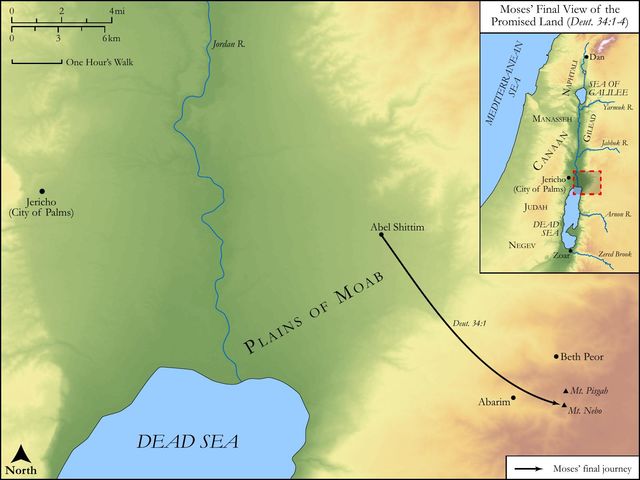
The setting for this event is the plains of Moab, just east of the Jordan River, with the Promised Land visible but still unconquered. Israel stands on the precipice of a new era, transitioning from wilderness wandering to settled nationhood. In Scripture, covenants often included curses and blessings, and sometimes a "witness" document or object to remind parties of their obligations and the consequences of breaking the agreement, as with the heap of witness between Jacob and Laban. A song, particularly a didactic or prophetic one, served as an ideal medium for such a witness in an oral culture, ensuring memorization and transmission across generations. The phrase "the same day" emphasizes the immediate nature of Moses' response, reflecting the urgency of the divine command given his impending death, as revealed in Deuteronomy 31:14. This act was a critical part of preparing a largely illiterate populace to remember God's faithfulness and their covenant responsibilities.
Key Themes
ShowHideThis verse powerfully contributes to several key themes prevalent in Deuteronomy and the broader Pentateuch. Firstly, it underscores the theme of Divine Mandate and Obedience, as Moses meticulously fulfills God's explicit instruction, demonstrating a model of faithful leadership even at life's end. Secondly, it highlights Memory and Warning, as the song's primary purpose is to serve as a perpetual reminder and witness against Israel's anticipated future disobedience, ensuring that their straying would be without excuse. This connects to Deuteronomy's overarching emphasis on "remembering" God's acts and commands (e.g., Deuteronomy 8:2). Thirdly, it speaks to Leadership and Legacy, showcasing Moses' commitment to imparting spiritual truth to the next generation, ensuring that God's covenant principles would endure beyond his physical presence. Finally, the choice of a "song" emphasizes the Power of Poetic Form as a medium for theological truth, making complex messages accessible, memorable, and transmissible through oral tradition, a concept echoed in other biblical songs like the Song of Deborah.
Exposition and Analysis
ShowHideKey Word Analysis
ShowHideThe verb כָּתַב (kâthab) signifies more than merely jotting down; it implies a formal, authoritative act of inscribing or recording. As per the Strong's data, it means "to grave, by implication, to write (describe, inscribe, prescribe, subscribe)." In the context of ancient Israel, writing was a significant act, often associated with legal documents, covenants, or divine revelation. Moses' act of writing this song gives it permanence and authority, elevating it to the status of divinely inspired scripture, meant to endure as a perpetual witness.
The Hebrew word שִׁיר (shîyr), or its feminine form שִׁירָה, denotes a poetic composition, often with a didactic, prophetic, or celebratory purpose. As defined in the Strong's data, it refers to "a song; abstractly, singing." Unlike a simple tune, this shîyr is a weighty theological and historical narrative, designed to instruct, warn, and remind the people of their covenant relationship with God. Its poetic structure would facilitate memorization and oral transmission across generations, ensuring its message would be deeply ingrained in the collective memory of Israel.
The verb לִמַּד (lâmad) means "to teach, to instruct, to cause to learn." The Strong's data indicates it means "to teach (the rod being an Oriental incentive); (un-) accustomed, diligently, expert, instruct, learn, skilful." This is not a passive act of merely presenting information but an active, pedagogical process aimed at ensuring comprehension and internalization. Moses' diligent teaching implies that he ensured the children of Israel not only heard the words of the song but also understood their profound significance, their covenant obligations, and the solemn warnings contained within.
Verse Breakdown
ShowHide"Moses therefore wrote this song the same day"
This clause immediately follows God's command in Deuteronomy 31:19, highlighting Moses' swift and unwavering obedience. The phrase "the same day" emphasizes the urgency and diligence with which Moses carried out this divine instruction, underscoring his commitment to fulfilling God's will to the very end of his life and leadership. It signifies that there was no delay or hesitation in executing this crucial task.
"and taught it the children of Israel"
This second clause reveals the pedagogical dimension of Moses' action. It was not enough for the song to be written; it had to be deeply ingrained in the hearts and minds of the people. The act of "teaching" implies a thorough instruction process, ensuring that the entire community, from the youngest to the oldest, would know, understand, and internalize the song's message. This was vital for the song to function effectively as a witness and a perpetual reminder of their covenant with God.
Literary Devices
ShowHideDeuteronomy 31:22 employs several literary devices that enhance its impact and meaning. The narrative uses Direct Fulfillment, immediately following God's command in Deuteronomy 31:19, demonstrating Moses' immediate and perfect Obedience. The choice of a "song" itself is a form of Didacticism and Mnemonics, as poetic forms are inherently easier to memorize and transmit orally, ensuring the message's longevity and widespread adoption. The song functions as a Symbol of witness and a perpetual reminder, foreshadowing Israel's future apostasy while simultaneously affirming God's faithfulness. The phrase "the same day" acts as Emphasis, highlighting the urgency and diligence of Moses' final acts of leadership.
Theological and Thematic Connections
ShowHideDeuteronomy 31:22 underscores the enduring importance of God's Word as a living and active force in the life of His people. Just as the song was meticulously written and taught to serve as a witness and a perpetual reminder for ancient Israel, so too is God's inspired Word today meant to be internalized, taught, and passed down through generations. It is a testament to God's faithfulness, a guide for righteous living, and a warning against straying from His covenant. This verse highlights the divine imperative for instruction and the human responsibility to receive and transmit truth, ensuring that the foundational principles of faith and obedience are not forgotten but continually renewed in the hearts of believers. The act of writing and teaching emphasizes the dual nature of divine revelation: its preservation in written form and its active transmission through teaching.
Reflection and Application
ShowHideMoses' diligent and immediate obedience in writing and teaching the song, even in his final days, offers a profound model for believers today. It challenges us to consider our own responsiveness to God's commands and the urgency with which we prioritize His Word. Just as the song was designed to serve as a witness and a means of remembering God's covenant, we are called to be living testimonies to God's truth in our own generation. This involves not only internalizing Scripture ourselves but also actively engaging in the spiritual formation of others, particularly the next generation. We are reminded of the power of creative and memorable ways to transmit biblical truth, whether through song, story, or intentional discipleship. In a world prone to forgetfulness and spiritual drift, we must intentionally cultivate a culture of remembering God's faithfulness and diligently teaching His ways, ensuring that His truth resonates through our lives and communities.
Questions for Reflection
ShowHideFAQ
ShowHideWhy did God command Moses to write a song specifically, rather than just another law or speech?
ShowHideGod commanded Moses to write a song because of its unique properties as a medium for conveying and preserving truth, especially in an oral culture. Unlike a mere speech or a legal statute, a song is inherently memorable, easily recited, and can be passed down through generations with greater fidelity. Its poetic structure, rhythm, and often emotional content make it more engaging and easier to internalize. As Deuteronomy 31:19 indicates, the song was intended to be a "witness" against Israel, a perpetual reminder of God's covenant and their future apostasy. The enduring nature of a song ensured that even when they strayed, the words of warning and the record of God's faithfulness would remain accessible in their collective memory, leaving them without excuse.
What is the significance of "the same day" in this verse?
ShowHideThe phrase "the same day" (בַּיּוֹם הַזֶּה, bayyom hazzeh) emphasizes Moses' immediate, diligent, and unwavering obedience to God's command. Given that this occurs in Moses' final days, shortly before his death (as indicated in Deuteronomy 31:14), it highlights the urgency and critical importance of this task. It demonstrates Moses' commitment to fulfilling every aspect of God's will right up to the very end of his life and leadership. This immediate action underscores the divine authority of the command and Moses' exemplary faithfulness in executing it without delay, ensuring that this vital prophetic and didactic message was secured for future generations before his departure.
Christ-Centered Fulfillment
ShowHideDeuteronomy 31:22, with Moses writing and teaching a song as a witness against Israel's future unfaithfulness, finds its ultimate fulfillment and transformation in Jesus Christ. While Moses' song served as a prophetic warning under the Old Covenant, Jesus Himself is the ultimate "Word made flesh" (John 1:14), the perfect embodiment of God's truth and the definitive witness to His faithfulness. Unlike a song that merely reminds of a covenant, Christ inaugurates a New Covenant, a superior covenant "enacted on better promises" (Hebrews 8:6). The Holy Spirit, promised by Christ, now writes God's law not on tablets of stone or in a song to be memorized, but directly "on their hearts and on their minds" (Jeremiah 31:33; 2 Corinthians 3:3). Moses' perfect obedience in writing and teaching foreshadows Christ's perfect obedience, even "to the point of death on a cross" (Philippians 2:8), securing redemption. Ultimately, the "song" of Moses, anticipating Israel's failure, gives way to the "new song" of redemption sung by the redeemed in heaven, celebrating the Lamb "who was slain, and by your blood you ransomed people for God" (Revelation 5:9). Jesus is the faithful and true witness (Revelation 1:5) who not only teaches God's truth but perfectly fulfills it, bringing about the reconciliation that the old covenant's warnings could not ultimately achieve.