


1 Kings 8:3
Bible text: King James Version (1769 Blayney text) · Public domain
Bible text: Berean Standard Bible · Public domain
Bible text: American Standard Version (1901) · Public domain
Bible text: World English Bible, Messianic edition · Public domain
Bible text: Geneva Bible (1599) · Public domain
Bible text: Young's Literal Translation · Public domain
- וַיָּבֹאוּvai·ya·Vo·'uand they cameH935Conj-w ¦ V-Qal-ConsecImperf-3mpVerb Qal Consecutive Imperfect 3rd Plural Masculineוַandיָּבֹאוּthey came
- כֹּלkolallH3605N-mscNoun Singular Masculine Construct
- זִקְנֵיzik·Nei[the] elders ofH2205Adj-mpcAdjective Plural Masculine Construct
- יִשְׂרָאֵלYis·ra·'ElIsraelH3478N-properNoun Proper Location
- וַיִּשְׂאוּvai·yis·'Uand they liftedH5375Conj-w ¦ V-Qal-ConsecImperf-3mpVerb Qal Consecutive Imperfect 3rd Plural Masculineוַandיִּשְׂאוּthey lifted
- הַכֹּהֲנִיםha·ko·ha·Nimthe priestsH3548Art ¦ N-mpNoun Plural Masculine Absoluteהַtheכֹּהֲנִיםpriests
- אֶת'et<obj.>H853DirObjMParticle Object Indicator
- הָאָרוֹןha·'a·Ronthe arkH727Art ¦ N-msNoun Singular Masculine Absoluteהָtheאָרוֹןark
English is a literal word-by-word gloss of the Hebrew, not the KJV's wording. Why?
This is the original text the KJV's translators worked from — each Hebrew word with its own literal English meaning in this verse, prepared by scholars at Tyndale House, Cambridge. The KJV translates whole sentences, not word by word, so its wording differs: one Hebrew word can become several English words, and the KJV may choose “the LORD” where the gloss reads “Yahweh”. Both are faithful — they answer different questions. For the KJV's own rendering, switch to the KJV text.
Details
See on the biblical-era maps
Study this verse
Public-domain commentary
Matthew Henry
From his Commentary on the Whole Bible. Henry comments on passages, not single verses — this entry covers 1 Kings 8:1–11. His three-level outline is real structure in the source text, so it is rendered as structure.
The temple, though richly beautified, yet while it was without the ark was like a body without a soul, or a candlestick without a candle, or (to speak more properly) a house without an inhabitant. All the cost and pains bestowed on this stately structure are lost if God do not accept them; and, unless he please to own it as the place where he will record his name, it is after all but a ruinous heap. When therefore all the work is ended (Kg1 7:51), the one thing needful is yet behind, and that is the bringing in of the ark. This therefore is the end which must crown the work, and which here we have an account of the doing of with great solemnity.
I.Solomon presides in this service, as David did in the bringing up of the ark to Jerusalem; and neither of them thought it below him to follow the ark nor to lead the people in their attendance on it. Solomon glories in the title of the preacher (Ecc 1:1), and the master of assemblies, Ecc 12:11. This great assembly he summons (Kg1 8:1), and he is the centre of it, for to him they all assembled (Kg1 8:2) at the feast in the seventh month, namely, the feast of tabernacles, which was appointed on the fifteenth day of that month, Lev 23:34. David, like a very good man, brings the ark to a convenient place, near him; Solomon, like a very great man, brings it to a magnificent place. As every man has received the gift, so let him minister; and let children proceed in God's service where their parents left off.
II.All Israel attend the service, their judges and the chief of their tribes and families, all their officers, civil and military, and (as they speak in the north) the heads of their clans. A convention of these might well be called an assembly of all Israel. These came together, on this occasion,
1.To do honour to Solomon, and to return him the thanks of the nation for all the good offices he had done in kindness to them.
2.To do honour to the ark, to pay respect to it, and testify their universal joy and satisfaction in its settlement. The advancement of the ark in external splendour, though it has often proved too strong a temptation to its hypocritical followers, yet, because it may prove an advantage to its true interests, is to be rejoiced in (with trembling) by all that wish well to it. Public mercies call for public acknowledgments. Those that appeared before the Lord did not appear empty, for they all sacrificed sheep and oxen innumerable, Kg1 8:5. The people in Solomon's time were very rich, very easy, and very cheerful, and therefore it was fit that, on this occasion, they should consecrate not only their cheerfulness, but a part of their wealth, to God and his honour.
III.The priests do their part of the service.
In the wilderness, the Levites were to carry the ark, because then there were not priests enough to do it; but here (it being the last time that the ark was to be carried) the priests themselves did it, as they were ordered to do when it surrounded Jericho. We are here told,
1.What was in the ark, nothing but the two tables of stone (Kg1 8:9), a treasure far exceeding all the dedicated things both of David and Solomon. The pot of manna and Aaron's rod were by the ark, but not in it.
2.What was brought up with the ark (Kg1 8:4): The tabernacle of the congregation. It is probable that both that which Moses set up in the wilderness, which was in Gibeon, and that which David pitched in Zion, were brought to the temple, to which they did, as it were, surrender all their holiness, merging it in that of the temple, which must henceforward be the place where God must be sought unto. Thus will all the church's holy things on earth, that are so much its joy and glory, be swallowed up in the perfection of holiness above.
3.Where it was fixed in its place, the place appointed for its rest after all its wanderings (Kg1 8:6): In the oracle of the house, whence they expected God to speak to them, even in the most holy place, which was made so by the presence of the ark, under the wings of the great cherubim which Solomon set up (Kg1 6:27), signifying the special protection of angels, under which God's ordinances and the assemblies of his people are taken. The staves of the ark were drawn out, so as to be seen from under the wings of the cherubim, to direct the high priest to the mercy-seat, over the ark, when he went in, once a year, to sprinkle the blood there; so that still they continued of some use, though there was no longer occasion for them to carry it by.
IV.God graciously owns what is done and testifies his acceptance of it, Kg1 8:10, Kg1 8:11.
The priests might come into the most holy place till God manifested his glory there; but, thenceforward, none might, at their peril, approach the ark, except the high priest, on the day of atonement. Therefore it was not till the priests had come out of the oracle that the Shechinah took possession of it, in a cloud, which filled not only the most holy place, but the temple, so that the priests who burnt incense at the golden altar could not bear it. By this visible emanation of the divine glory,
1.God put an honour upon the ark, and owned it as a token of his presence. The glory of it had been long diminished and eclipsed by its frequent removes, the meanness of its lodging, and its being exposed too much to common view; but God will now show that it is as dear to him as ever, and he will have it looked upon with as much veneration as it was when Moses first brought it into his tabernacle.
2.He testified his acceptance of the building and furnishing of the temple as good service done to his name and his kingdom among men.
3.He struck an awe upon this great assembly; and, by what they saw, confirmed their belief of what they read in the books of Moses concerning the glory of God's appearance to their fathers, that hereby they might be kept close to the service of the God of Israel and fortified against temptations to idolatry.
4.He showed himself ready to hear the prayer Solomon was now about to make; and not only so, but took up his residence in this house, that all his praying people might there be encouraged to make their applications to him. But the glory of God appeared in a cloud, a dark cloud, to signify,
(1.)The darkness of that dispensation in comparison with the light of the gospel, by which, with open face, we behold, as in a glass, the glory of the Lord.
(2.)The darkness of our present state in comparison with the vision of God, which will be the happiness of heaven, where the divine glory is unveiled. Now we can only say what he is not, but then we shall see him as he is.
Continue studying 1 Kings 8:3 across the web’s major study libraries — every link below opens this exact verse, chapter, or book on the destination site.
Read & Compare
 BibleGatewayThis verse in more than 200 translations and 70 languages.
 Bible.comThe YouVersion reader — hundreds of translations, reading plans, and highlights.
 ESV.orgCrossway's official English Standard Version reader.
 NET BibleThe NET translation with 60,000+ translators' notes on every rendering decision.
 STEP BibleTyndale House's free study tool — original text, vocabulary, and scholarly resources.
 BibliaLogos Bible Software's free web reader.
 USCCBThe New American Bible (Revised Edition) with the U.S. bishops' study notes.
Commentaries
 BibleHub CommentariesDozens of classic commentaries on this verse, gathered on one page.
 StudyLightMore than 100 commentary sets — the largest collection on the web.
 BibleRefPlain-English commentary on what this verse means, verse by verse.
 Enduring WordDavid Guzik's free commentary on this chapter, widely used by Bible teachers.
 Bible Study ToolsVerse commentary alongside Greek and Hebrew study aids.
Original Language & Research
- BibleHub InterlinearThe verse word by word — original language, transliteration, and English.
- BibleHub LexiconEvery word's original-language definition and Strong's entry.
 Blue Letter BibleDeep-study tools — Strong's numbers, concordance, and word studies.
 SefariaThe Hebrew text with Rashi and centuries of Jewish commentary.
Sermons, Hymns & Audio


TrulyRandomVerse is not affiliated with these sites and doesn’t control their content. They’re linked because they’re genuinely useful.
Summary
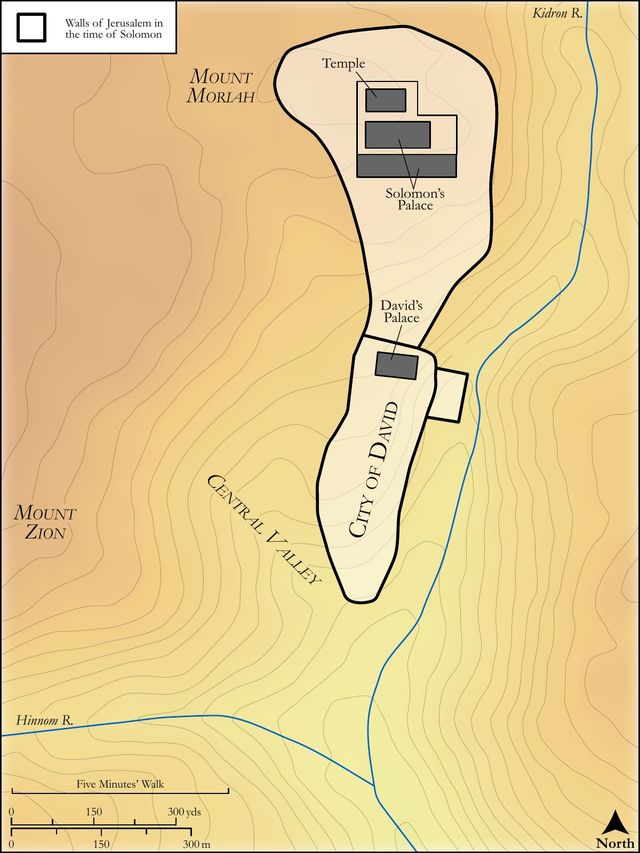
1 Kings 8:3 captures a profoundly significant moment in Israelite history: the solemn and unified action of the nation's leadership and priesthood as they commence the sacred procession of the Ark of the Covenant. This pivotal event marks the transfer of the Ark from the City of David to its permanent resting place within Solomon's newly consecrated Temple in Jerusalem, symbolizing the culmination of God's dwelling among His people and the transition from a mobile tabernacle to a glorious, fixed sanctuary. It powerfully underscores the Ark's central role as the tangible representation of God's presence, covenant faithfulness, and the very heart of Israel's worship.
Context
ShowHideLiterary Context
This verse is strategically placed at the very threshold of the grand narrative detailing the dedication of Solomon's Temple, an event of unparalleled significance in Israel's spiritual and national life. The preceding verses, 1 Kings 8:1-2, meticulously set the stage, describing King Solomon's convocation of "all the elders of Israel, and all the heads of the tribes, the chief of the fathers of the children of Israel" to bring the Ark of the Covenant from its temporary dwelling in the City of David. Verse 3 then initiates the sacred action, precisely identifying the immediate participants—the elders and the priests—who would oversee and execute this momentous transfer. The subsequent verses, such as 1 Kings 8:4-9, vividly recount the procession itself, the Ark's placement within the Most Holy Place, and the awe-inspiring manifestation of God's glory filling the Temple, leading into Solomon's profound dedicatory prayer in 1 Kings 8:22-53.
Historical & Cultural Context
The dedication of Solomon's Temple marked a monumental paradigm shift in Israelite worship and national identity. For centuries, the Ark of the Covenant, the preeminent symbol of God's presence, had resided within a portable tabernacle, a reflection of Israel's nomadic origins and their wilderness journey. While King David had brought the Ark to Jerusalem, placing it in a tent, it was his son, Solomon, who fulfilled the divine mandate to construct a permanent, magnificent edifice for the Lord's name to dwell. This event not only solidified Jerusalem's burgeoning status as the religious and political capital but also established a central, fixed place of worship that would serve as the spiritual epicenter of the nation for generations. The collective involvement of "all the elders of Israel" underscores the national consensus and unified participation in this pivotal religious and political act, while the priests' exclusive and meticulous role in handling the Ark highlights the profound sanctity of the object and the stringent ritual protocols governing Israelite worship.
Key Themes
ShowHideThe themes radiating from 1 Kings 8 and powerfully underscored by this verse include the centrality of God's presence among His people, powerfully symbolized by the Ark of the Covenant. The Ark's movement into the Temple signifies God's establishment of a fixed, glorious sanctuary, fulfilling His ancient promise to cause His name to dwell there. Another crucial theme is national unity and covenant faithfulness, as "all the elders of Israel" gather in a unified demonstration of collective commitment to God and His covenant. The specific and exclusive role of "the priests" emphasizes the theme of sacred duty and priestly authority, highlighting the divinely ordained order and reverence required for approaching and serving God. This monumental event also represents the fulfillment of David's vision to build a permanent house for the Lord, a promise initially articulated in 2 Samuel 7:13, where God assures David that his son would build a house for His name.
Exposition and Analysis
ShowHideKey Word Analysis
ShowHideDerived from the root meaning "old," this term refers to the respected, experienced, and authoritative leaders of the community or nation. Their presence in this context signifies the full representation and endorsement of all the tribes and families of Israel for this momentous occasion. It underscores the national scope and unified consent behind the Temple's dedication and the Ark's relocation, indicating a collective act of worship and commitment.
This term specifically designates the Levitical priests, the consecrated descendants of Aaron, who were divinely appointed for sacred service. Their duties included the handling of holy objects such as the Ark of the Covenant. Their exclusive role here highlights the profound sanctity of the Ark and the strict ritual purity and divine authorization required for its movement and placement, emphasizing the divinely ordained order and reverence surrounding God's presence.
From a root meaning "to gather" or "a box," this refers to the Ark of the Covenant, the most sacred object in Israel. It contained the tablets of the Law, Aaron's rod, and a pot of manna, symbolizing God's throne, His presence, and His covenant relationship with Israel. Its transfer to the Temple's Most Holy Place (Debir) was the central, culminating act of the dedication, signifying God's permanent and glorious dwelling among His people.
Verse Breakdown
ShowHide"And all the elders of Israel came"
This clause emphasizes the comprehensive and unified nature of the assembly. The phrase "all the elders" signifies that representatives from every tribe and family of Israel were present and actively participated, indicating national unity and collective consent for the dedication of the Temple and the sacred transfer of the Ark. Their presence lends immense authority and legitimacy to the entire proceeding, demonstrating a unified commitment to God's presence in their midst and the establishment of His dwelling place.
"and the priests took up the ark"
This clause highlights the specific, exclusive, and profoundly sacred role of the priesthood. Only the consecrated priests, specifically the Kohathite Levites (Numbers 4:15), were permitted to handle the Ark of the Covenant, a task fraught with divine consequence and requiring meticulous adherence to divine law (cf. the account of Uzzah in 2 Samuel 6:6-7). Their action signifies the solemn initiation of the procession, underscoring the reverence, meticulous obedience, and the profound spiritual significance attached to moving God's most sacred dwelling symbol into its permanent sanctuary. This was not merely a logistical task but a deeply spiritual act of consecrated service.
Literary Devices
ShowHideThe verse employs Synecdoche by using "all the elders of Israel" to represent the entire nation's leadership and, by extension, the collective participation and unified will of the people behind this momentous event. The phrase "the priests took up the ark" utilizes Metonymy, where "the ark" stands not merely for a physical object but for the very presence of God, His covenant, and His divine authority, underscoring the profound sacredness of the object and the spiritual weight of the priests' actions. The concise, declarative, and unadorned nature of the statement also lends an air of Solemnity and Purposefulness, immediately drawing the reader into the gravity and historical significance of this theological moment.
Theological and Thematic Connections
ShowHideThis verse powerfully underscores the enduring theological theme of God's desire to dwell intimately among His people, a consistent thread woven throughout the biblical narrative from the Tabernacle in the wilderness to the New Jerusalem. The movement of the Ark, the tangible symbol of God's holy presence, from a temporary tent to a magnificent, permanent Temple, signifies a new and established phase in the covenant relationship. It marks the fulfillment of God's promise to establish His name and His dwelling place among Israel, solidifying the Temple as the preeminent focal point of Israel's worship, national identity, and the place where God's glory would manifest in a unique way. This act speaks profoundly to the divine initiative in seeking communion with humanity and the human responsibility to prepare a fitting place for His presence, whether physical or spiritual.
Reflection and Application
ShowHideThe profound significance of 1 Kings 8:3 lies in its portrayal of a people united in solemn reverence for God's holy presence. The Ark, symbolizing God's dwelling, was treated with utmost care, sanctity, and adherence to divine protocol, handled only by those consecrated for the task. For believers today, this passage serves as a powerful and enduring reminder that God still desires to dwell among His people, not primarily in a physical temple made with human hands, but within the hearts of those who believe. The New Testament reveals that through Christ, the Holy Spirit indwells individual believers, making them living temples of God (1 Corinthians 6:19), and corporately, the Church is being built together into a holy dwelling place for God by the Spirit (Ephesians 2:21-22). This calls us to a life of profound holiness, intentional unity, and deep reverence, recognizing the sacredness of God's indwelling presence and striving to maintain a pure and fitting dwelling for Him, both individually and as a gathered community of faith.
Questions for Reflection
ShowHideFAQ
ShowHideWhy were "all the elders of Israel" present at this event, and what was their role?
ShowHideThe presence of "all the elders of Israel" at the dedication of Solomon's Temple and the transfer of the Ark was profoundly significant and multifaceted. First, it signified national unity and consensus. The elders were the recognized leaders and representatives of all the tribes and families of Israel, ensuring that this monumental religious and political act had the full backing and participation of the entire nation. Their presence demonstrated a collective, unified commitment to God and His covenant, lending immense authority and legitimacy to the proceedings. Second, it underscored the immense importance of the event itself. The Ark of the Covenant was the most sacred object, symbolizing God's holy presence and His covenant relationship with Israel. Its placement in the newly built Temple was a defining moment for the nation's spiritual, political, and cultural identity. The assembly of the elders ensured that the dedication was not merely a royal decree from King Solomon but a national affirmation of faith, a unified act of worship, and a public commitment to God's established dwelling place in their midst.
Christ-Centered Fulfillment
ShowHide1 Kings 8:3, with its vivid depiction of the Ark of the Covenant entering its permanent dwelling in the Temple, serves as a powerful and poignant foreshadowing of the ultimate dwelling of God among humanity in the person of Jesus Christ. The Ark, though sacred and central to Old Testament worship, was ultimately a symbol, a mere shadow of the true, embodied presence of God. The magnificent Temple itself, for all its glory, was a physical structure, limited by space and time. In the New Testament, we learn that Jesus is the true and living Temple, the ultimate dwelling place of God, for "in him dwelleth all the fulness of the Godhead bodily" (Colossians 2:9). He is the eternal Word made flesh who "dwelt among us" (John 1:14), bringing God's unmediated presence not to a building, but directly into human experience. Furthermore, just as the consecrated priests carried the Ark into its resting place, Jesus, as our Great High Priest (Hebrews 4:14), not only carries God's presence but is God's presence, making the perfect and ultimate sacrifice that allows God to dwell not just in a physical structure, but intimately and permanently in the hearts of all who believe, through the indwelling Holy Spirit (1 Corinthians 3:16). Thus, the solemn procession of the Ark into Solomon's Temple points forward to the infinitely more glorious reality of God's permanent, personal, and intimate dwelling with His people through the finished work of Christ and the new covenant He inaugurated.