


Luke 18:31
- ΠαραλαβὼνParalabōnHaving taken asideG3880V-2AAP-NSMVerb 2nd Aorist Active Participle Nominative Singular Masculine
- δὲdethenG1161CONJConjunction
- τοὺςtoustheG3588T-APMDefinite article Accusative Plural Masculine
- δώδεκαdōdekaTwelveG1427A-NUIAdjective
- εἶπενeipenHe saidG2036V-2AAI-3SVerb 2nd Aorist Active Indicative 3rd Singular
- πρὸςprostoG4314PREPPreposition
- αὐτούς·autousthemG846P-APMPersonal pronoun Accusative Plural Masculine
- ἰδοὺidouBeholdG2400INJInterjection
- ἀναβαίνομενanabainomenwe go upG305V-PAI-1PVerb Present Active Indicative 1st Plural
- εἰςeistoG1519PREPPreposition
- ἸερουσαλήμIerousalēmJerusalemG2419N-ASF-LNoun Accusative Singular Feminine Location
- καὶkaiandG2532CONJConjunction
- τελεσθήσεταιtelesthēsetaiwill be accomplishedG5055V-FPI-3SVerb Future Passive Indicative 3rd Singular
- πάνταpantaall thingsG3956A-NPNAdjective Nominative Plural Neuter
- τὰtawhichG3588T-NPNDefinite article Nominative Plural Neuter
- γεγραμμέναgegrammenawrittenG1125V-RPP-NPNVerb Perfect Passive Participle Nominative Plural Neuter
- διὰdiathroughG1223PREPPreposition
- τῶνtōntheG3588T-GPMDefinite article Genitive Plural Masculine
- προφητῶνprophētōnprophetsG4396N-GPMNoun Genitive Plural Masculine
- τῷtōabout theG3588T-DSMDefinite article Dative Singular Masculine
- υἱῷhuiōSonG5207N-DSM-TNoun Dative Singular Masculine Title
- τοῦtou<the>G3588T-GSMDefinite article Genitive Singular Masculine
- ἀνθρώπου·anthrōpouof ManG444N-GSM-TNoun Genitive Singular Masculine Title
English is a literal word-by-word gloss of the Greek, not the KJV's wording. Why?
This is the original text the KJV's translators worked from — each Greek word with its own literal English meaning in this verse, prepared by scholars at Tyndale House, Cambridge. The KJV translates whole sentences, not word by word, so its wording differs: one Greek word can become several English words, and the KJV may choose “charity” where the gloss reads “love”. Both are faithful — they answer different questions. For the KJV's own rendering, switch to the KJV text.
Details
See on the biblical-era map
Study this verse
Public-domain commentary
Matthew Henry
From his Commentary on the Whole Bible. Henry comments on passages, not single verses — this entry covers Luke 18:31–34.
Here is, I. The notice Christ gave to his disciples of his sufferings and death approaching, and of the glorious issue of them, which he himself had a perfect sight and foreknowledge of, and thought it necessary to give them warning of, that it might be the less surprise and terror to them. Two things here are which we had not in the other evangelists: - 1. The sufferings of Christ are here spoken of as the fulfilling of the scriptures, with which consideration Christ reconciled himself to them, and would reconcile them: All things that are written by the prophets concerning the Son of man, especially the hardships he should undergo, shall be accomplished. Note, The Spirit of Christ, in the Old Testament prophets, testified beforehand his sufferings, and the glory that should follow, Pe1 1:11. This proves that the scriptures are the word of God, for they had their exact and full accomplishment; and that Jesus Christ was sent of God, for they had their accomplishment in him; this was he that should come, for whatever was foretold concerning the Messiah was verified in him; and he would submit to any thing for the fulfilling of scripture, that not one jot or tittle of that should fall to the ground. This makes the offence of the cross to cease, and puts an honour upon it. Thus it was written, and thus it behoved Christ to suffer, thus it became him. 2. The ignominy and disgrace done to Christ in his sufferings are here most insisted upon. The other evangelists had said that he should be mocked; but here it is added, He shall be spitefully treated, hubristhēsetai - he shall be loaded with contumely and contempt, shall have all possible reproach put upon him. This was that part of his sufferings by which in a spiritual manner he satisfied God's justice for the injury we had done him in his honour by sin. Here is one particular instance of disgrace done him, that he was spit upon, which had been particularly foretold, Isa 50:6. But here, as always, when Christ spoke of his sufferings and death, he foretold his resurrection as that which took off both the terror and reproach of his sufferings: The third day he shall rise again.
II.The confusion that the disciples were hereby put into.
This was so contrary to the notions they had had of the Messiah and his kingdom, such a balk to their expectations from their Master, and such a breaking of all their measures, that they understood none of these things, Luk 18:34. Their prejudices were so strong that they would not understand them literally, and they could not understand them otherwise, so that they did not understand them at all. It was a mystery, it was a riddle to them, it must be so; but they think it impossible to be reconciled with the glory and honour of the Messiah, and the design of setting up his kingdom. This saying was hidden from them, kekrummenon ap' autōn, it was apocrypha to them, they could not receive it: for their parts, they had read the Old Testament many a time, but they could never see any thing in it that would be accomplished in the disgrace and death of this Messiah. They were so intent upon those prophecies that spoke of his glory that they overlooked those that spoke of his sufferings, which the scribes and doctors of the law should have directed them to take notice of, and should have brought into their creeds and catechisms, as well as the other; but they did not suit their scheme, and therefore were laid aside. Note, Therefore it is that people run into mistakes, because they read their Bibles by the halves, and are as partial in the prophets as they are in the law. They are only for the smooth things, Isa 30:10. Thus now we are too apt, in reading the prophecies that are yet to be fulfilled, to have our expectations raised of the glorious state of the church in the latter days. But we overlook its wilderness sackcloth state, and are willing to fancy that is over, and nothing is reserved for us but the halcyon days; and then, when tribulation and persecution arise, we do not understand it, neither know we the things that are done, though we are told as plainly as can be that through many tribulations we must enter into the kingdom of God.
Historical interpretation
Three Centuries of Reception
10 surviving comments on this verse. Each one is dated, so this reads as a timeline rather than a list.
Select a marker to jump to its quote. Markers stagger vertically where authors wrote within a few decades of each other.
(Hom. 65. in Matt.) He speaks with His disciples apart, concerning His Passion. For it was not fitting to publish this word to the multitudes, lest they should be troubled, but to His disciples He foretold it, that being habituated by expectation, they might be the more able to bear it.
(ubi sup.) Esaias prophesied of this when he said, I gave my back to the smiters, and my cheeks to them that plucked off the hair: I hid not my face from shame and spitting. (Isa. 50:5.) The Prophet also foretold the crucifixion, saying, He hath poured out his soul unto death, and was numbered with the transgressors; (Isa. 53:12.) as it is said here, And after they have scourged him, they shall put him to death. But David foretold Christ's resurrection, For thou shalt not leave my soul in hell, (Ps. 16:10.) and so it is here added, And on the third day he shall rise again.
To prepare the disciples' minds, the Savior of all tells them that he will suffer the passion on the cross and death in the flesh as soon as he has gone up to Jerusalem. He added that he would also rise wiping out the pain and obliterating the shame of the passion by the greatness of the miracle. It was glorious and worthy of God to be able to break the bonds of death and hurry back to life. According to the expression of wise Paul, the resurrection from the dead testifies that he is God and the Son of God.
This then we say, that he who gives up all worldly and carnal things will gain for himself far greater, inasmuch as the Apostles, after leaving a few things, obtained the manifold gifts of grace, and were accounted great every where. We then shall be like to them. If a man has left his home, he shall receive an abiding place above. If his father, he shall have a Father in heaven. If he has forsaken his kindred, Christ shall take him for a brother. If he has given up a wife, he shall find divine wisdom, from which he shall beget spiritual offspring. If a mother, he shall find the heavenly Jerusalem, who is our mother. From brethren and sisters also united together with him by the spiritual bond of his will, he shall receive in this life far more kindly affections.
And to convince them that He foreknew His Passion, and of His own accord came to it, that they might not say, "How has He fallen into the hands of the enemy, who promised us salvation?" He relates in order the successive events of the Passion; He shall be delivered unto the Gentiles, and shall be mocked, and scourged, and spitted on.
The disciples did not as yet know exactly what the Prophets had foretold, but after He rose again, He opened their understanding that they should understand the Scriptures. (Luke 24:25.)
He told them beforehand what would happen so that they might be aware that he foreknew his passion. Although it was in his power easily to escape, Christ still went ahead to willingly meet it. Saying, "Behold, we go up to Jerusalem," he urgently testified and commanded them to remember what had been foretold. He necessarily added that the holy prophets had foretold all these things. As in the person of Christ, Isaiah says, "I have given my back to scourging, and my cheeks to buffetings; and I have not turned away my face from the shame of spitting." In another place, the prophet says of him, "As a sheep he was led unto the slaughter, and was silent, as a lamb before its shearer." "All we like sheep have gone astray: every one has gone astray in his path, and the Lord has delivered him up because of our sins." In the twenty-second psalm, blessed David, painting as it were beforehand the sufferings upon the cross, set before us Jesus speaking as one already hanging on the tree. He says, "But I am a worm, and no man; scorned by men and despised by the people. All who see me mock at me, they make mouths at me, they wag their heads; 'He committed his cause to the Lord; let him deliver him, let him rescue him, for he delights in him!' " Some of the Jews did shake their wicked heads at him, deriding him and saying, "If you are the Son of God, come down now from the cross, and we will believe you." He said, "They divide my garments among them, and for my raiment they cast lots." In another place, Christ again says of those that crucified him, "They gave gall for my food, and for my thirst they made me drink vinegar."
(l. ii. Ep. 212.) I marvel at the folly of those who ask how Christ rose again before the three days. If indeed He rose later than he had foretold, it were a mark of weakness, but if sooner, a token of the highest power. For when we see a man who has promised his creditor that he will pay him his debt after three days, fulfilling his promise on that very day, we are so far from looking upon him as deceitful, that we admire his veracity. I must add, however, that He said not that He should rise again after three days, but on the third day. You have then the preparation, the Sabbath until sun set, and the fact that He rose after the Sabbath was over.
Our Redeemer, foreseeing that the souls of the disciples would be troubled by His passion, foretold to them long beforehand both the suffering of that same passion and the glory of His resurrection, so that when they saw Him dying, as had been predicted, they would not doubt that He would also rise again. But because the disciples, still carnal, were by no means able to grasp the words of the mystery, a miracle is performed. Before their eyes a blind man receives light, so that those who could not grasp the words of the heavenly mystery might be strengthened in faith by heavenly deeds.
(Hom. 2. in Ev.) The Saviour foreseeing that the hearts of His disciples would be troubled at His Passion, tells them long beforehand both the suffering of His Passion and the glory of His Resurrection.
I marvel at the folly of those who ask how Christ rose again before the three days. If indeed He rose later than he had foretold, it were a mark of weakness, but if sooner, a token of the highest power. For when we see a man who has promised his creditor that he will pay him his debt after three days, fulfilling his promise on that very day, we are so far from looking upon him as deceitful, that we admire his veracity. I must add, however, that He said not that He should rise again after three days, but on the third day. You have then the preparation, the Sabbath until sun set, and the fact that He rose after the Sabbath was over.
And knowing that there would arise certain heretics, saying, that Christ taught things contrary to the Law and the Prophets, He shows already that the voices of the Prophets had proclaimed the accomplishment of His Passion, and the glory which should follow.
For because they desired His life above all things, they could not hear of His death, and as they knew him to be not only a spotless man, but also very God, they thought He could in no wise die. And whenever in the parables, which they frequently heard Him utter, He said any thing concerning His Passion, they believed it to be spoken allegorically, and referred to something else. Hence it follows, And this saying was hid from them, neither knew they the things which were spoken. But the Jews, who conspired against His life, knew that He spoke concerning His Passion, when he said, The Son of man must be lifted up; therefore said they, We have heard in our law that Christ abideth for ever, and how sayest thou the Son of man must be lifted up?
Jesus took the twelve aside and said to them, "Behold, we are going up to Jerusalem, and all things that are written by the prophets concerning the Son of Man will be accomplished. For he will be delivered to the Gentiles, and will be mocked, insulted, and spit upon. After they have scourged him, they will kill him, and on the third day he will rise again." Foreseeing that the suffering of his passion would trouble the spirits of his disciples, the Savior predicts to them long in advance both the punishment of his passion and the glory of his resurrection, so that seeing him die as it was predicted, they might not doubt that he would also rise again. He also foresaw that certain heretics would arise in the Church who would claim that Christ taught contrary to the law and the prophets, and that the God of the Old Testament was different from the God of the New Testament. He showed that the prophecies were directed to no one more than to himself and the mystery of his temporary dispensation for us, so that his passion and subsequent glory would be the fulfillment and perfect celebration of the prophecy. He also most clearly refuted the madness of the pagans who mock his cross, when he predicted the time of his imminent passion as if he were aware of the future, and approached the place of his death fearlessly.
Continue studying Luke 18:31 across the web’s major study libraries — every link below opens this exact verse, chapter, or book on the destination site.
Read & Compare
 BibleGatewayThis verse in more than 200 translations and 70 languages.
 Bible.comThe YouVersion reader — hundreds of translations, reading plans, and highlights.
 ESV.orgCrossway's official English Standard Version reader.
 NET BibleThe NET translation with 60,000+ translators' notes on every rendering decision.
 STEP BibleTyndale House's free study tool — original text, vocabulary, and scholarly resources.
 BibliaLogos Bible Software's free web reader.
 USCCBThe New American Bible (Revised Edition) with the U.S. bishops' study notes.
Commentaries
 BibleHub CommentariesDozens of classic commentaries on this verse, gathered on one page.
 StudyLightMore than 100 commentary sets — the largest collection on the web.
 BibleRefPlain-English commentary on what this verse means, verse by verse.
 Enduring WordDavid Guzik's free commentary on this chapter, widely used by Bible teachers.
 Bible Study ToolsVerse commentary alongside Greek and Hebrew study aids.
Original Language & Research
- BibleHub InterlinearThe verse word by word — original language, transliteration, and English.
- BibleHub LexiconEvery word's original-language definition and Strong's entry.
 Blue Letter BibleDeep-study tools — Strong's numbers, concordance, and word studies.
 CNTR CollationThe earliest Greek manuscripts of this verse, collated letter by letter.
Sermons, Hymns & Audio


TrulyRandomVerse is not affiliated with these sites and doesn’t control their content. They’re linked because they’re genuinely useful.
Summary
Luke 18:31 records Jesus' third explicit prediction of His suffering, death, and resurrection, delivered to His twelve disciples as they journey towards Jerusalem. This solemn declaration underscores the divine necessity of His impending passion, emphasizing that His journey to the cross is not a tragic accident but the meticulous fulfillment of Old Testament prophecies concerning the Son of Man, thereby revealing God's sovereign plan for salvation.
Context
ShowHideLiterary Context
This profound declaration comes at a pivotal point in Luke's Gospel, immediately following Jesus' teaching on the kingdom of God and the challenging encounter with the rich young ruler, as well as the healing of a blind man near Jericho. It is the third and most detailed of Jesus' passion predictions in Luke, building upon earlier, less explicit warnings in Luke 9:22 and Luke 9:44. The placement of this prediction, just before the triumphal entry into Jerusalem and the ensuing passion narrative, heightens the dramatic tension. Critically, the verse is immediately followed by the disciples' profound lack of comprehension, as highlighted in Luke 18:34, which underscores their spiritual blindness to the true nature of the Messiah's mission despite Jesus' clarity.
Historical & Cultural Context
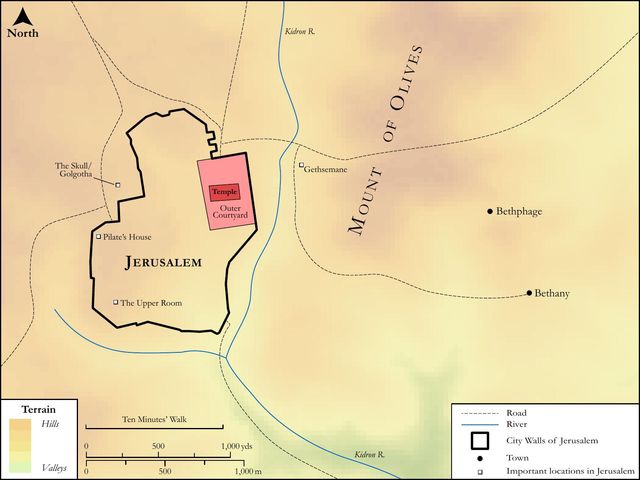
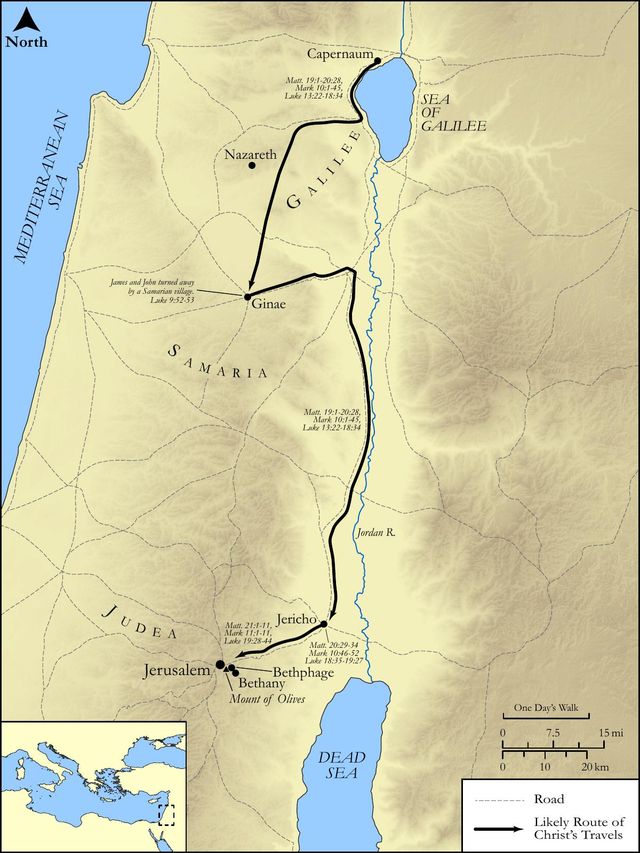
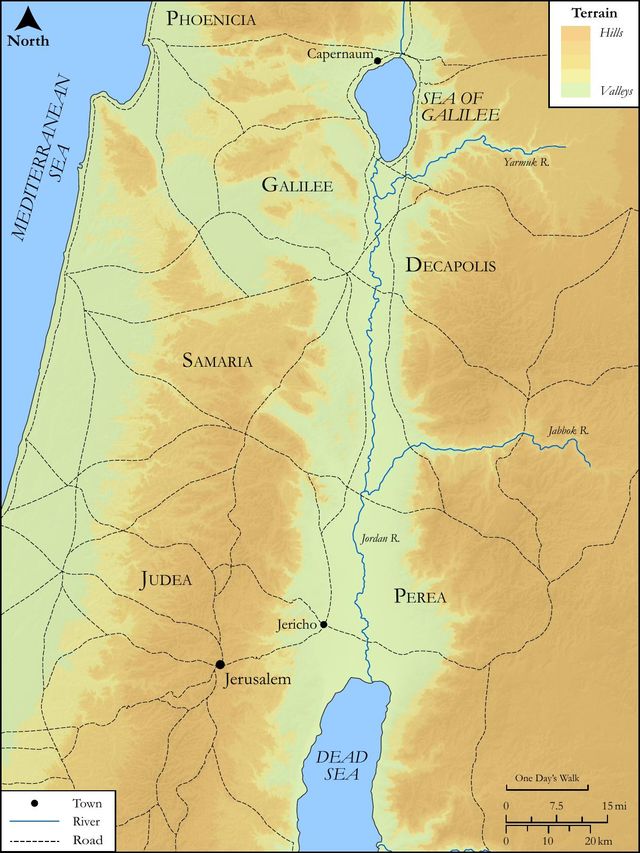
Jesus and His disciples are undertaking the final leg of their journey from Galilee, through Perea and Jericho, to Jerusalem for the Passover festival. This pilgrimage was a customary annual event for devout Jews. Jerusalem, as the religious and political heart of Judea, was the expected stage for the Messiah's grand arrival and the establishment of His kingdom. However, the prevailing Jewish messianic expectations were largely focused on a conquering, political liberator who would overthrow Roman oppression and restore Israel's national glory. The concept of a suffering and dying Messiah was deeply counter-cultural and scandalous, a profound theological stumbling block that contributed significantly to the disciples' inability to grasp Jesus' words.
Key Themes
ShowHideLuke 18:31 powerfully contributes to several overarching themes in Luke's Gospel. It highlights the Divine Sovereignty and Foreknowledge of God, demonstrating that Jesus' path to suffering and death is not a tragic accident but the predetermined and necessary unfolding of God's redemptive plan. The explicit mention of "all things that are written by the prophets" underscores the theme of Fulfillment of Prophecy, emphasizing the continuity between the Old Testament's messianic expectations and Jesus' life, death, and resurrection. Jesus' self-designation as the Son of Man reinforces His unique identity, encompassing both His true humanity and His authoritative, eschatological role, often linked to suffering and ultimate vindication, as seen in Daniel 7:13-14. Finally, the destination of Jerusalem emphasizes the Centrality of Jerusalem as the divinely appointed stage for the climactic events of salvation history.
Exposition and Analysis
ShowHideKey Word Analysis
ShowHideThis verb signifies "to receive near," "to take along," or "to associate with oneself," often implying a deliberate, intentional gathering for a specific purpose. Here, Jesus purposefully "took aside" or "drew near" the twelve disciples, indicating a private, solemn, and significant communication intended exclusively for His inner circle. It highlights the gravity and intimacy of the revelation He is about to impart.
Meaning "to grave" or "to write," this word emphasizes the authoritative, enduring, and divinely inspired nature of the prophetic scriptures. It underscores that the events Jesus is about to undergo are not random or accidental, but have been meticulously recorded and foretold in God's word for centuries, affirming their divine origin and absolute certainty.
This term means "to end," "complete," "execute," or "discharge" (a debt). It conveys the idea of bringing something to its destined conclusion, fulfilling a purpose, or perfecting a task. Here, it underscores the absolute certainty and divine orchestration of Jesus' passion, indicating that His suffering and death are not failures but the necessary and perfect culmination of God's redemptive plan, bringing all prophecies to their intended and perfect fulfillment.
Verse Breakdown
ShowHide"Then he took unto him the twelve,"
This opening phrase highlights Jesus' intentionality in gathering His closest disciples. It signifies a private, solemn moment, setting apart this revelation from His public teachings. The number "twelve" emphasizes the apostolic core, the foundation of the new community, who are being prepared for the profound events ahead, even if they don't yet grasp their meaning.
"and said unto them,"
This simple connective emphasizes that the following words are a direct, verbal communication from Jesus to His chosen followers, underscoring the authority and importance of His message.
"Behold, we go up to Jerusalem,"
The imperative "Behold" (Greek: idoú) serves as an attention-grabber, signaling the gravity of what is to follow. The phrase "we go up" signifies a deliberate, determined journey, not merely a casual trip. Jerusalem, situated at a higher elevation, was the destination, but more importantly, it was the prophesied place where the Messiah's climactic work would unfold, a place of both glory and suffering.
"and all things that are written by the prophets concerning the Son of man shall be accomplished."
This is the core of Jesus' declaration. "All things" emphasizes the comprehensive nature of the prophecies. The events are not partial fulfillments but a complete realization of what the "prophets" (Old Testament scriptures) foretold. The specific title "Son of Man" points to Jesus' unique identity as both fully human and divinely appointed, a figure whose suffering and vindication were foretold. The phrase "shall be accomplished" (Greek: telésthetai) conveys the absolute certainty and divine necessity of these events, indicating that God's plan, meticulously detailed in scripture, is now reaching its perfect and unavoidable culmination through Jesus.
Literary Devices
ShowHideLuke 18:31 is rich with literary devices that amplify its theological weight. Foreshadowing is paramount, as Jesus explicitly predicts His impending suffering and death, setting a somber tone for the journey to Jerusalem and preparing the reader (though not the disciples) for the passion narrative. There is profound Irony in the disciples' inability to comprehend Jesus' clear words, despite their proximity to Him and His repeated warnings (as noted in Luke 18:34). This dramatic irony highlights their spiritual blindness and the vast gap between their earthly expectations and God's divine plan. The phrase "all things that are written by the prophets shall be accomplished" serves as a powerful statement of Divine Sovereignty, emphasizing that the unfolding events are not random but part of a meticulously orchestrated divine plan, preordained and revealed through scripture. Furthermore, Jerusalem itself functions as a powerful Symbol, representing not only the center of Jewish worship but also the destined place of messianic suffering and ultimate triumph, a stage for the culmination of God's redemptive history.
Theological and Thematic Connections
ShowHideLuke 18:31 stands as a profound theological statement on the nature of God's redemptive plan and the identity of Jesus as the Messiah. It underscores the absolute certainty of divine prophecy and the sovereign control of God over human history. Jesus' willing submission to the path of suffering, even when it was incomprehensible to His closest followers, reveals His perfect obedience to the Father's will and His unique role as the suffering servant, whose death was not a defeat but the necessary means for the accomplishment of salvation. This verse firmly establishes the Old Testament as a prophetic blueprint for the Messiah's work, finding its ultimate and complete fulfillment in Jesus Christ. It challenges us to look beyond immediate circumstances and trust in God's overarching, perfect plan.
Reflection and Application
ShowHideLuke 18:31 offers profound lessons for contemporary believers. First, it calls us to embrace the reality of God's sovereign plan, even when its unfolding involves suffering or seems contrary to our expectations. Just as Jesus walked steadfastly towards Jerusalem, knowing the pain that awaited Him, we are called to trust in God's perfect will, understanding that His purposes are always redemptive, even through hardship. This verse also strengthens our confidence in the absolute truth and unity of Scripture, affirming that the Old Testament prophecies are not mere historical texts but living words that find their ultimate meaning and fulfillment in Jesus Christ. It reminds us that our faith is grounded in a God who meticulously plans and perfectly executes His salvation history. Furthermore, it challenges us to cultivate spiritual discernment, seeking to understand God's ways even when they defy human logic, and to be prepared for the reality that following Christ may involve a path of self-denial and suffering, just as it did for Him.
Questions for Reflection
ShowHideFAQ
ShowHideWhy did the disciples not understand Jesus' clear predictions of His suffering and death?
ShowHideThe disciples struggled to understand Jesus' passion predictions primarily because their cultural and theological framework was deeply rooted in the expectation of a conquering, political Messiah who would liberate Israel from Roman rule and establish an earthly kingdom. The concept of a suffering, dying Messiah was antithetical to their understanding of messianic glory and power. They likely interpreted Jesus' words through their preconceived notions, filtering out or spiritualizing the uncomfortable details of suffering and death. Luke 18:34 explicitly states, "And they understood none of these things: and this saying was hid from them, neither knew they the things which were spoken." This suggests a profound spiritual inability to grasp a truth that was so contrary to their deepest hopes and traditions, a truth that would only become clear in light of the resurrection and the outpouring of the Holy Spirit (Luke 24:45).
What specific prophecies were "written by the prophets" concerning the Son of Man that Jesus refers to?
ShowHideJesus is referring to a broad range of Old Testament prophecies that, when viewed through the lens of His life, death, and resurrection, clearly point to Him. While not exhaustive, these include prophecies about the Messiah's suffering (e.g., Isaiah 53, Psalm 22), His betrayal (e.g., Psalm 41:9), His unjust trial and execution (e.g., Isaiah 50:6), His resurrection (e.g., Psalm 16:10), and His ultimate vindication and glory (e.g., Daniel 7:13-14). The phrase "Son of Man" itself carries significant prophetic weight, particularly from Daniel 7:13-14, where a human-like figure is given everlasting dominion and glory, a passage Jesus frequently referenced in relation to His identity and future. The New Testament authors consistently demonstrate how Jesus' life and ministry fulfilled these diverse prophetic strands (e.g., Acts 3:18).
Christ-Centered Fulfillment
ShowHideLuke 18:31 stands as a pivotal declaration of Christ's perfect fulfillment of God's redemptive plan. Jesus, the Son of Man, is not merely a prophet who speaks of God's will, but the very embodiment of that will, marching willingly towards the cross to "accomplish" all that was "written by the prophets." This verse profoundly connects the Old Testament's messianic expectations with the New Testament's reality of Christ's atoning work. The suffering servant of Isaiah 53, the righteous one who dies for the unrighteous, finds His ultimate reality in Jesus' journey to Jerusalem. His death was not a tragic end but the divinely orchestrated climax of salvation history, the means by which sins are forgiven and reconciliation with God is achieved (2 Corinthians 5:21). The resurrection, though not explicitly mentioned here, is intrinsically linked to the "accomplishment" of these prophecies, demonstrating Jesus' victory over death and His vindication as the Son of God (Romans 1:4). Thus, Luke 18:31 proclaims that every detail of Christ's passion was part of God's perfect design, culminating in the cross and empty tomb, through which He secured eternal salvation for all who believe, proving Himself to be the promised Messiah, the Lamb of God who takes away the sin of the world (John 1:29).