


Matthew 20:17
- ΚαὶKaiAndG2532CONJConjunction
- ἀναβαίνωνanabainōngoing upG305V-PAP-NSMVerb Present Active Participle Nominative Singular Masculine
- ὁho<the>G3588T-NSMDefinite article Nominative Singular Masculine
- ἸησοῦςIēsousJesusG2424N-NSM-PNoun Nominative Singular Masculine Individual
- εἰςeistoG1519PREPPreposition
- ἹεροσόλυμαHi'erosolumaJerusalemG2414N-APN-LNoun Accusative Plural Neuter Location
- παρέλαβενparelabenHe tookG3880V-2AAI-3SVerb 2nd Aorist Active Indicative 3rd Singular
- τοὺςtoustheG3588T-APMDefinite article Accusative Plural Masculine
- δώδεκαdōdekatwelveG1427A-NUIAdjective
- μαθητὰςmathētasdisciplesG3101N-APMNoun Accusative Plural Masculine
- κατ᾽kat᾽asideG2596PREPPreposition
- ἰδίανidian[on their] ownG2398A-ASFAdjective Accusative Singular Feminine
- καὶkaiandG2532CONJConjunction
- ἐνenonG1722PREPPreposition
- τῇtēatheG3588T-DSFDefinite article Dative Singular Feminine
- ὁδῷhodōwayG3598N-DSFNoun Dative Singular Feminine
- εἶπενeipenHe saidG2036V-2AAI-3SVerb 2nd Aorist Active Indicative 3rd Singular
- αὐτοῖς·autoisto themG846P-DPMPersonal pronoun Dative Plural Masculine
English is a literal word-by-word gloss of the Greek, not the KJV's wording. Why?
This is the original text the KJV's translators worked from — each Greek word with its own literal English meaning in this verse, prepared by scholars at Tyndale House, Cambridge. The KJV translates whole sentences, not word by word, so its wording differs: one Greek word can become several English words, and the KJV may choose “charity” where the gloss reads “love”. Both are faithful — they answer different questions. For the KJV's own rendering, switch to the KJV text.
Details
See on the biblical-era map
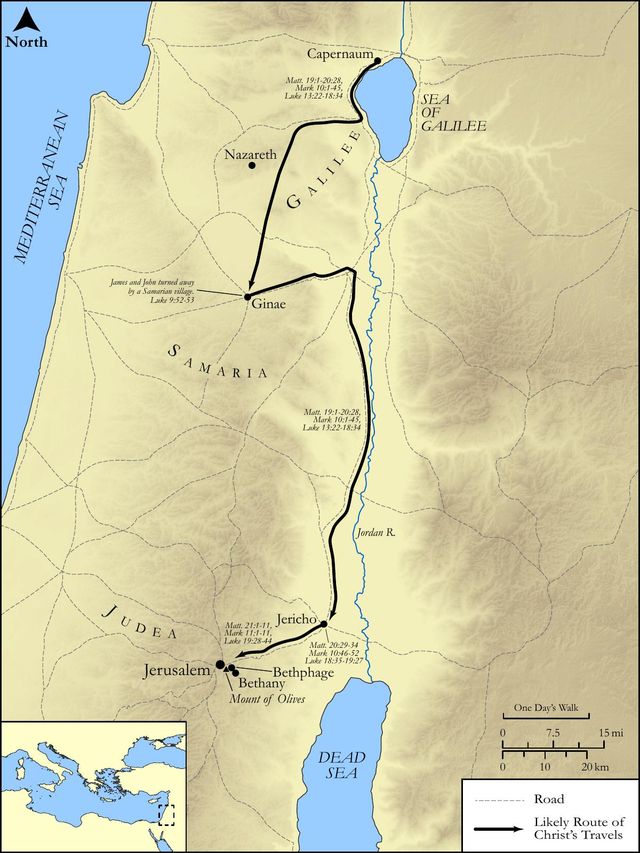
Study this verse
Historical interpretation
Six Centuries of Reception
8 surviving comments on this verse. Each one is dated, so this reads as a timeline rather than a list.
Select a marker to jump to its quote. Markers stagger vertically where authors wrote within a few decades of each other.
Judas was yet among the twelve; for he was perhaps still worthy to hear in private along with the rest the things which his Master should suffer.
Meditating then of this, we ought to know that often even when there is certain trial to be undergone, we ought to offer ourselves to it. But forasmuch as it was said above, When they persecute you in one city, flee ye to another, (Mat. 10:23.), it belongs to the wise in Christ to judge when the season requires that he shun, and when that he go to meet dangers.
When He says, The first shall be last, and the last first, He alludes secretly to such as were at the first eminent, and afterwards set at nought virtue; and to others who have been reclaimed from wickedness, and have surpassed many. So that this parable was made to quicken the zeal of those who are converted in extreme old age, that they should not suppose that they shall have less than others.
(Hom. lxv.) The Lord leaving Galilee, did not go up straightway to Jerusalem, but first wrought miracles, refuted the pharisees, and taught the disciples concerning perfection of life, and its reward; now when about to go up to Jerusalem, He again speaks to them of His passion.
He had indeed told it, and to many, but obscurely, as in that, Destroy this temple; (John 2:19.) and again, There shall no sign be given it but the sign of Jonas the Prophet. (Mat. 12:39.) But now He imparted it clearly to His disciples.
He forewarns them also in order that they should learn that He comes to His passion wittingly, and willingly. And at the first He had foretold only His death, but now that they are more disciplined, He brings forth yet more, as, They shall deliver him to the Gentiles.
This was added, that when they should see the sufferings, they should look for the resurrection.
He goeth not up at once to Jerusalem when He is come out of Galilee, but having first wrought miracles, and having stopped the mouths of Pharisees, and having discoursed with His disciples of renouncing possessions: for, "if thou wilt be perfect," saith He, "sell that thou hast:" and of virginity, "He that is able to receive, let him receive it:" and of humility, "For except ye be converted, and become as little children, ye shall not enter into the kingdom of Heaven:" and of a recompense of the things here, "For whoso hath forsaken houses, or brethren, or sisters, shall receive an hundredfold in this world:" and of rewards there, "For he shall also inherit," it is said, "eternal life:" then He assails the city next, and being on the point of going up, discourses again of His passion. For since it was likely that they, because they were not willing this should come to pass, would forget it, He is continually putting them in remembrance, exercising their mind by the frequency with which He reminded them, and diminishing their pain.
But He speaks with them "apart," necessarily; for it was not meet that His discourse about these things should be published to the many; neither that it should be spoken plainly, for no advantage arose from this. For if the disciples were confounded at hearing these things, much more the multitude of the people.
What then? was it not told to the people? you may say. It was indeed told to the people also, but not so plainly. For, "Destroy," saith He, "this Temple, and in three days I will raise it up;" and, "This generation seeketh after a sign, and there shall no sign be given it, but the sign of Jonas;" and again, "Yet a little while am I with you, and ye shall seek me, and shall not find me."
But to the disciples not so, but as the other things He spake unto them more plainly, so also spake He this too. And for what purpose, if the multitude understood not the force of His sayings, were they spoken at all? That they might learn after these things, that foreknowing it, He came to His passion, and willing it; not in ignorance, nor by constraint. But to the disciples not for this cause only did He foretell it; but, as I have said, in order that having been exercised by the expectation, they might more easily endure the passion, and that it might not confound them by coming upon them without preparation. So for this cause, while at the beginning He spake of His death only, when they were practised and trained to hear of it, He adds the other circumstances also; as, for instance, that they should deliver Him to the Gentiles, that they should mock and scourge Him; as well on this account, as in order that when they saw the mournful events come to pass, they might expect from this the resurrection also. For He who had not cloaked from them what would give pain, and what seemed to be matter of reproach, would reasonably be believed about good things too.
But mark, I pray thee, how with regard to the time also He orders the thing wisely. For neither at the beginning did He tell them, lest He should disquiet them, neither at the time itself, lest by this again He should confound them; but when they had received sufficient proof of His power, when He had given them promises that were very great concerning life everlasting, then He introduces also what He had to say concerning these things, once and twice and often interweaving it with His miracles and His instructions.
But another evangelist saith, that He brought in the prophets also as witnesses; and another again saith, that even they themselves understood not His words, but the saying was hid from them, and that they were amazed as they followed Him.
Surely then, one may say, the benefit of the prediction is taken away. For if they knew not what they were hearing, neither could they look for the event, and not looking for it, neither could they be exercised by their expectations.
But I say another thing also more perplexing than this: If they did not know, how were they sorry. For another saith, they were sorry. If therefore they knew it not, how were they sorry? How did Peter say, "Be it far from Thee, this shall not be unto Thee?"
What then may we say? That He should die indeed they knew, albeit they knew not clearly the mystery of the Incarnation. Neither did they know clearly about the resurrection, neither what He was to achieve; and this was hid from them.
For this cause also they felt pain. For some they had known to have been raised again by other persons, but for any one to have raised up himself again, and in such wise to have raised himself as not to die any more, they had never known.
This then they understood not, though often said; nay nor of this self-same death did they clearly know what it was, and how it should come on Him. Wherefore also they were amazed as they followed Him, but not for this cause only; but to me at least He seems even to amaze them by discoursing of His passion.
Yet none of these things made them take courage, and this when they were continually hearing about His resurrection. For together with His death this also especially troubled them, to hear that men should "mock and scourge Him," and the like. For when they considered His miracles, the possessed persons whom He had delivered, the dead whom He had raised, all the other marvellous works which He was doing, and then heard these things, they were amazed, if He who doeth these works is thus to suffer. Therefore they fell even into perplexity, and now believed, now disbelieved, and could not understand His sayings.
He had often told His disciples of His passion, but because it might have slipped out of their recollection by reason of the many things they had heard in the mean while, now when He is going to Jerusalem, and going to take His disciples with Him, He fortifies them against the trial, that they should not be scandalized when the persecution and shame of the Cross should come.
(Ver. 17 seqq.) And Jesus, going up to Jerusalem, took his twelve disciples aside privately, and said to them: Behold, we are going up to Jerusalem, and the Son of Man will be delivered to the chief priests and scribes, and they will condemn him to death, and deliver him to the Gentiles to be mocked, and scourged, and crucified, and on the third day he will rise again. He had often told this to his disciples, but because they were engaged in many disputes among themselves, they could easily forget what they had heard. So, as he was about to go to Jerusalem and take the apostles with him, he prepared them for the trial, so that they would not be scandalized when persecution and the ignominy of the cross come.
For the salvation of men entirely rests upon Christ's death; nor is there any thing for which we are more bound to render thanks to God, than for His death. He imparted the mystery of His death to His disciples for this reason, namely, because the more precious treasure is ever committed to the more worthy vessels. Had the rest heard of the passion of Christ, the men might have been troubled because of the weakness of their faith, and the women because of the tenderness of their nature, which such matters do commonly move to tears.
That word Behold, is a word of stress, to bid them lay up in their hearts the memory of this present. He says, We go up; as much as to say, Ye see that I go of My free-will to death. "When then ye shall see Me hang upon the cross, deem not that I am no more than man; for though to be able to die is human; yet to be willing to die is more than human.
For when sorrow comes at a time we are looking for it, it is found lighter than it would have been, had it taken us by surprise.
Our Redeemer, foreseeing that the souls of the disciples would be troubled by His passion, foretold to them long beforehand both the suffering of that same passion and the glory of His resurrection, so that when they saw Him dying, as had been predicted, they would not doubt that He would also rise again. But because the disciples, still carnal, were by no means able to grasp the words of the mystery, a miracle is performed. Before their eyes a blind man receives light, so that those who could not grasp the words of the heavenly mystery might be strengthened in faith by heavenly deeds.
For Judas delivered the Lord to the Jews, and they delivered Him to the Gentiles, that is to Pilate, and the Roman power. To this end the Lord refused to be prosperous in this world, but rather chose to suffer affliction, that He might show us, who have yielded to delights, through how great bitterness we must needs return; whence it follows, To mock, and to scourge, and to crucify.
Continue studying Matthew 20:17 across the web’s major study libraries — every link below opens this exact verse, chapter, or book on the destination site.
Read & Compare
 BibleGatewayThis verse in more than 200 translations and 70 languages.
 Bible.comThe YouVersion reader — hundreds of translations, reading plans, and highlights.
 ESV.orgCrossway's official English Standard Version reader.
 NET BibleThe NET translation with 60,000+ translators' notes on every rendering decision.
 STEP BibleTyndale House's free study tool — original text, vocabulary, and scholarly resources.
 BibliaLogos Bible Software's free web reader.
 USCCBThe New American Bible (Revised Edition) with the U.S. bishops' study notes.
Commentaries
 BibleHub CommentariesDozens of classic commentaries on this verse, gathered on one page.
 StudyLightMore than 100 commentary sets — the largest collection on the web.
 BibleRefPlain-English commentary on what this verse means, verse by verse.
 Enduring WordDavid Guzik's free commentary on this chapter, widely used by Bible teachers.
 Bible Study ToolsVerse commentary alongside Greek and Hebrew study aids.
Original Language & Research
- BibleHub InterlinearThe verse word by word — original language, transliteration, and English.
- BibleHub LexiconEvery word's original-language definition and Strong's entry.
 Blue Letter BibleDeep-study tools — Strong's numbers, concordance, and word studies.
 CNTR CollationThe earliest Greek manuscripts of this verse, collated letter by letter.
Sermons, Hymns & Audio


TrulyRandomVerse is not affiliated with these sites and doesn’t control their content. They’re linked because they’re genuinely useful.
Summary
Matthew 20:17 marks a profound moment in Jesus' ministry, depicting His deliberate and resolute journey towards Jerusalem, the destined city of His passion and triumph. On this final ascent, Jesus privately gathers His twelve disciples, setting the stage for a solemn and critical revelation concerning His impending suffering, death, and resurrection, underscoring the divine necessity of these events within God's redemptive plan.
Context
ShowHideLiterary Context
This verse immediately follows the Parable of the Laborers in the Vineyard (Matthew 20:1-16), which explores themes of divine grace, generosity, and the surprising nature of God's kingdom economy. The transition to Matthew 20:17 shifts from public teaching to private instruction, signaling a heightened urgency and gravity. This is the third and most detailed of Jesus' passion predictions in Matthew's Gospel, building upon earlier, less explicit warnings in Matthew 16:21 and Matthew 17:22-23. The act of taking the disciples "apart" emphasizes the confidential and weighty nature of the message, preparing them for the climactic events that will unfold in Jerusalem, even if their full comprehension would only come later.
Historical & Cultural Context
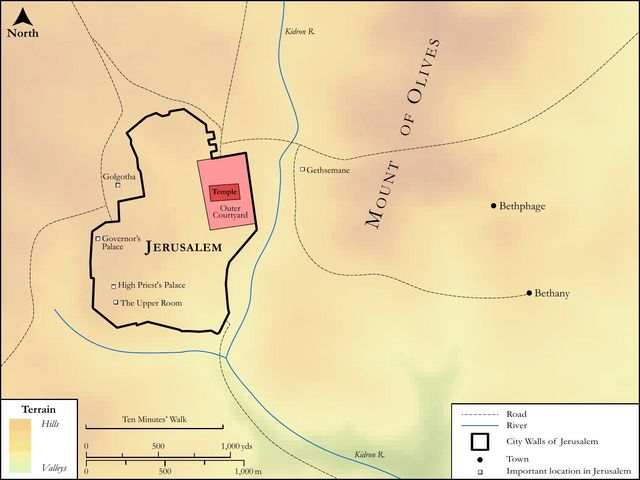
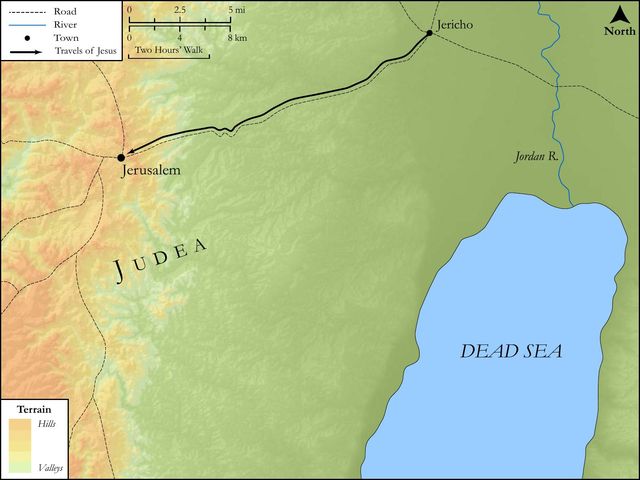
Jerusalem, the capital of Judea, held immense religious and political significance. It was the site of the Temple, the center of Jewish worship, and the seat of the Sanhedrin. Geographically, Jerusalem is situated on a plateau, requiring an "ascent" from nearly all directions, making the phrase "going up to Jerusalem" a literal description of travel. Culturally, pilgrimage to Jerusalem, especially for Passover, was a common practice, and Jesus' journey aligns with this tradition, though His purpose was far more profound. The Jewish authorities in Jerusalem, particularly the chief priests and scribes, had already shown hostility towards Jesus, and His arrival there would inevitably lead to confrontation. The disciples, expecting a political Messiah, likely anticipated a triumphant entry to establish an earthly kingdom, making Jesus' subsequent revelation of suffering particularly shocking and difficult for them to grasp.
Key Themes
ShowHideMatthew 20:17 contributes to several overarching themes in Matthew and the broader New Testament. Firstly, it highlights Divine Sovereignty and Purpose, demonstrating that Jesus' journey to the cross was not an accident but a predetermined part of God's redemptive plan, a path Jesus willingly embraced (Luke 9:51). Secondly, it underscores the theme of Preparation for Sacrifice and Resurrection, as Jesus meticulously prepares His closest followers for His impending suffering and ultimate victory over death, an event crucial for the salvation of humanity (Matthew 28:6). Thirdly, the act of taking the disciples "apart" emphasizes Intimacy and Intentional Discipleship, revealing Jesus' commitment to personally instruct and equip His inner circle with vital truths, even when those truths were challenging to accept. This private instruction contrasts with His public ministry, indicating the unique importance of this particular revelation for His chosen witnesses.
Exposition and Analysis
ShowHideKey Word Analysis
ShowHideThis verb signifies a literal ascent, as Jerusalem is geographically elevated. However, in this context, it also carries profound spiritual weight, indicating Jesus' deliberate and purposeful journey towards the climax of His earthly ministry—a pilgrimage to fulfill God's redemptive plan through His suffering and resurrection. It implies a resolute movement towards a divinely appointed destination.
Used in conjunction with the preposition katá (G2596), forming the phrase kat' idian (κατ' ἰδίαν), meaning "privately" or "by themselves." This word emphasizes the exclusive and intimate nature of the conversation Jesus is about to have with His twelve disciples. It highlights a deliberate separation from the larger crowd or other followers, underscoring the confidential and weighty significance of the message that follows, intended specifically for His inner circle.
This primary verb denotes speaking or saying, often implying a direct and authoritative declaration. In this context, it introduces Jesus' solemn and crucial pronouncement regarding His passion and resurrection. It signifies a formal and intentional communication of a vital truth, rather than a casual remark, setting the tone for the prophetic revelation that is to follow.
Verse Breakdown
ShowHide"And Jesus going up to Jerusalem"
This clause establishes the setting and the protagonist's intentional action. Jesus is not merely traveling but is actively "going up," signifying a resolute and purposeful movement towards the city that will be the stage for the culmination of His earthly ministry. This ascent is both geographical and theological, marking the final phase of His journey towards fulfilling prophecy.
"took the twelve disciples apart in the way"
This phrase details Jesus' specific action and audience. He deliberately separates His inner circle—the twelve, representing the core of His new covenant community—from the larger group or public. The phrase "apart" (κατ' ἰδίαν) underscores the private and intimate nature of this gathering, indicating that the message He is about to deliver is of profound importance, reserved for those He has specially chosen and prepared. This act occurs "in the way," meaning while they are still on the journey, emphasizing the immediacy and urgency of the upcoming revelation.
"and said unto them,"
This final clause introduces the direct communication. Having established the setting and the private audience, the verse concludes by stating that Jesus then spoke to them. This sets the expectation for the momentous prophecy that immediately follows in the subsequent verses (Matthew 20:18-19), where He explicitly details His betrayal, condemnation, crucifixion, and resurrection.
Literary Devices
ShowHideThe verse employs several significant literary devices. Foreshadowing is prominent, as Jesus' deliberate journey to Jerusalem and His private conversation with the disciples directly anticipate the climactic events of His passion, death, and resurrection detailed immediately afterward. The setting of "Jerusalem" itself functions as Symbolism, representing not only a geographical location but also the prophetic center for the Messiah's suffering and triumph, a place of both rejection and ultimate redemption. The act of taking the disciples "apart" (κατ' ἰδίαν) highlights Intimacy and Exclusivity, emphasizing the special relationship Jesus had with His twelve and the weighty, confidential nature of the truths He was about to impart, distinguishing this instruction from His public teachings.
Theological and Thematic Connections
ShowHideMatthew 20:17 is deeply theological, revealing Jesus' full awareness and willing submission to God's sovereign plan for salvation. His deliberate journey to Jerusalem signifies His unwavering commitment to the cross, not as a victim of circumstances, but as the willing Lamb of God. This passage underscores the divine necessity of the atonement, demonstrating that Jesus' suffering was not an unforeseen tragedy but the very purpose for which He came. It also highlights the nature of true discipleship, which involves understanding and embracing the path of suffering that precedes glory, a lesson the disciples would only fully grasp after the resurrection. This intimate disclosure prepares them, however imperfectly, for the most pivotal events in human history.
Reflection and Application
ShowHideMatthew 20:17 offers profound lessons for contemporary believers. Jesus' unwavering commitment to His divine mission, even when it led to immense suffering and death, serves as a powerful example of obedience and trust in God's sovereign plan. For us, this means recognizing that God's path for our lives may not always be easy or comfortable, but it is always purposeful. Just as Jesus prepared His disciples for difficult truths, we too must cultivate a willingness to face challenging realities, whether in our personal lives, our faith journeys, or the broader world, trusting that God is at work even in the midst of hardship. Furthermore, Jesus' intentional, private instruction to His disciples highlights the vital importance of deep, personal discipleship and mentorship within the Christian community. We are called not only to learn from God's Word but also to invest in others, guiding them through difficult truths and preparing them for the spiritual battles and triumphs that lie ahead. Ultimately, this verse calls us to trust in God's redemptive plan, even when it involves suffering, knowing that the path of the cross ultimately leads to resurrection and eternal life.
Questions for Reflection
ShowHideFAQ
ShowHideWhy did Jesus take the disciples "apart" for this conversation?
ShowHideJesus took the twelve disciples "apart" (Greek: kat' idian) for several crucial reasons. Firstly, it underscored the confidential and weighty nature of the message He was about to deliver. His passion and resurrection were the central events of salvation history, and this intimate setting ensured that His closest followers, who would become the primary witnesses, received this vital revelation without public interruption or misunderstanding. Secondly, it allowed for focused instruction and preparation. The disciples, still largely clinging to expectations of an earthly kingdom, struggled to comprehend Jesus' suffering. A private setting allowed Jesus to address their misconceptions directly and repeatedly, preparing them for the shock of His crucifixion and the subsequent triumph of His resurrection. Finally, it demonstrated Jesus' intentional investment in His inner circle, highlighting the unique role they would play in the unfolding of God's plan after His ascension. This private moment was a critical step in their spiritual formation as apostles.
Christ-Centered Fulfillment
ShowHideMatthew 20:17, depicting Jesus' resolute journey to Jerusalem, is profoundly Christ-centered, revealing the very heart of His mission and the fulfillment of Old Testament prophecy. His deliberate ascent to the city was not merely a geographical movement but a purposeful march towards the cross, the ultimate act of atonement for humanity's sin. This journey culminates in His suffering and death, which were not accidental but divinely ordained (Isaiah 53:5-6), fulfilling the role of the Suffering Servant. Yet, it does not end in death; Jesus' prediction of His resurrection (Matthew 20:19) points to His triumph over sin and death, establishing the New Covenant through His shed blood (Luke 22:20). His resurrection validates His claims, defeats the power of the grave, and offers eternal life to all who believe (Romans 6:4). Thus, Jesus' journey to Jerusalem, initiated in this verse, is the very path of salvation, demonstrating His perfect obedience to the Father's will and His sacrificial love, culminating in His glorious resurrection and ascension, through which He reigns as Lord and Savior (Philippians 2:8-11).