


Judges 2:4
- וַיְהִיvay·Hiand it wasH1961Conj-w ¦ V-Qal-ConsecImperf-3msVerb Qal Consecutive Imperfect 3rd Singular Masculineוַandיְהִיit was
- כְּדַבֵּרke·da·Berwhen spokeH1696Prep-k ¦ V-Piel-InfVerb Piel Infinitive Constructכְּwhenדַבֵּרspoke
- מַלְאַךְmal·'Akh[the] angel ofH4397N-mscNoun Singular Masculine Construct
- יְהוָהYah·wehYahwehH3068N-properNoun Proper Title
- אֶת'et<obj.>H853DirObjMParticle Object Indicator
- הַדְּבָרִיםha·de·va·Rimthe wordsH1697Art ¦ N-mpNoun Plural Masculine Absoluteהַtheדְּבָרִיםwords
- הָאֵלֶּהha·'E·leh<the> theseH428Art ¦ PrtParticle Demonstrativeהָ<the>אֵלֶּהthese
- אֶל'eltoH413PrepPreposition
- כָּלkolallH3605N-mscNoun Singular Masculine Construct
- בְּנֵיbe·Nei[the] people ofH1121N-mpcNoun Plural Masculine Construct
- יִשְׂרָאֵלYis·ra·'ElIsraelH3478N-properNoun Proper Location
- וַיִּשְׂאוּvai·yis·'Uand they lifted upH5375Conj-w ¦ V-Qal-ConsecImperf-3mpVerb Qal Consecutive Imperfect 3rd Plural Masculineוַandיִּשְׂאוּthey lifted up
- הָעָםha·'Amthe peopleH5971Art ¦ N-msNoun Singular Masculine Absoluteהָtheעָםpeople
- אֶת'et<obj.>H853DirObjMParticle Object Indicator
- קוֹלָםko·Lamtheir voiceH6963N-msc ¦ 3mpNoun Singular Masculine Constructקוֹלָvoiceםtheir
- וַיִּבְכּוּvai·yiv·Kuand they weptH1058Conj-w ¦ V-Qal-ConsecImperf-3mpVerb Qal Consecutive Imperfect 3rd Plural Masculineוַandיִּבְכּוּthey wept
English is a literal word-by-word gloss of the Hebrew, not the KJV's wording. Why?
This is the original text the KJV's translators worked from — each Hebrew word with its own literal English meaning in this verse, prepared by scholars at Tyndale House, Cambridge. The KJV translates whole sentences, not word by word, so its wording differs: one Hebrew word can become several English words, and the KJV may choose “the LORD” where the gloss reads “Yahweh”. Both are faithful — they answer different questions. For the KJV's own rendering, switch to the KJV text.
Details
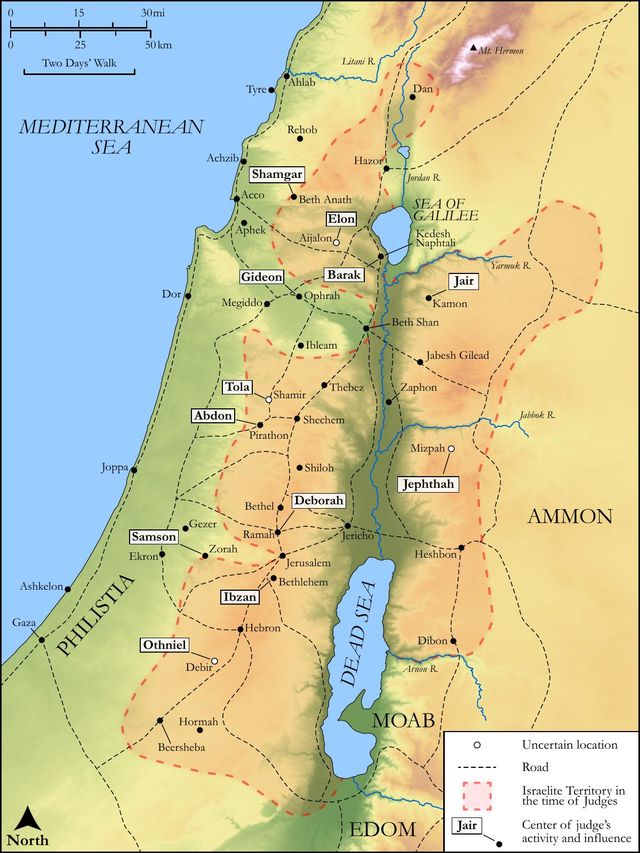
See on the biblical-era map
Study this verse
Public-domain commentary
Matthew Henry
From his Commentary on the Whole Bible. Henry comments on passages, not single verses — this entry covers Judges 2:1–5. His three-level outline is real structure in the source text, so it is rendered as structure.
It was the privilege of Israel that they had not only a law in general sent them from heaven, once for all, to direct them into and keep them in the way of happiness, but that they had particular messages sent them from heaven, as there was occasion, for reproof, for correction, and for instruction in righteousness, when at any time they turned aside out of that way. Besides the written word which they had before them to read, they often heard a word behind them, saying, This is the way, Isa 30:21. Here begins that way of God's dealing with them. When they would not hear Moses, let it be tried whether they will hear the prophets. In these verses we have a very awakening sermon that was preached to them when they began to cool in their religion.
I.The preacher was an angel of the Lord (Jdg 2:1), not a prophet, not Phinehas, as the Jews conceit; gospel ministers are indeed called angels of the churches, but the Old Testament prophets are never called angels of the Lord; no doubt this was a messenger we from heaven. Such extraordinary messengers we sometimes find in this book employed in the raising up of the judges that delivered Israel, as Gideon and Samson; and now, to show how various are the good offices they do for God's Israel, here is one sent to preach to them, to prevent their falling into sin and trouble. This extraordinary messenger was sent to command, if possible, the greater regard to the message, and to affect the minds of a people whom nothing seemed to affect but what was sensible. The learned bishop Patrick is clearly of opinion that this was not a created angel, but the Angel of the covenant, the same that appeared to Joshua as captain of the hosts of the Lord, who was God himself. Christ himself, says Dr. Lightfoot; who but God and Christ could say, I made you to go up out of Egypt? Joshua had lately admonished them to take heed of entangling themselves with the Canaanites, but they regarded not the words of a dying man; the same warning therefore is here brought them by the living God himself, the Son of God appearing as an angel. If they slight his servants, surely they will reverence his Son. This angel of the Lord is said to come up from Gilgal, perhaps not walking on the earth, but flying swiftly, as the angel Gabriel did to Daniel, in the open firmament of heaven; but, whether walking or flying, he seemed to come from Gilgal for a particular reason. Gilgal was long their headquarters after they came into Canaan, many signal favours they had there received from God, and there the covenant of circumcision was renewed (Mic 6:5), of all which it was designed they should be reminded by his coming from Gilgal. The remembrance of what we have received and heard will prepare us for a warning to hold fast, Rev 3:2, Rev 3:3.
II.The persons to whom this sermon was preached were all the children of Israel, Jdg 2:4.
A great congregation for a great preacher! They were assembled either for war, each tribe sending in its forces for some great expedition, or rather for worship, and then the place of their meeting must be Shiloh, where the tabernacle was, at which they were all to come together three times a year. When we attend upon God in instituted ordinances we may expect to hear from him, and to receive his gifts at his own gates. The place is called Bochim (Jdg 2:1), because it gained that name upon this occasion. All Israel needed the reproof and warning here given, and therefore it is spoken to them all.
III.The sermon itself is short, but very close. God here tells them plainly,
1.What he had done for them, Jdg 2:1. He had brought them out of Egypt, a land of slavery and toil, into Canaan, a land of rest, liberty, and plenty. The miseries of the one served as a foil to the felicities of the other. God had herein been kind to them, true to the oath sworn to their fathers, had given such proofs of his power as left them inexcusable if they distrusted it, and such engagements to his service as left them inexcusable if they deserted it.
2.What he had promised them: I said, I will never break my covenant with you. When he took them to be his peculiar people, it was not with any design to cast them off again, or to change them for another people at his pleasure; let them but be faithful to him, and they should find him unchangeably constant to them. He told them plainly that the covenant he entered into with them should never break, unless it broke on their side.
3.What were his just and reasonable expectations from them (Jdg 2:2): that being taken into covenant with God they should make no league with the Canaanites, who were both his enemies and theirs, - that having set up his altar they should throw down their altars, lest they should be a temptation to them to serve their gods. Could any thing be demanded more easy?
4.How they had in this very thing, which he had most insisted on, disobeyed him: "But you have not in so small a matter obeyed my voice." In contempt of their covenant with God, and their confederacy with each other in that covenant, they made leagues of friendship with the idolatrous devoted Canaanites, and connived at their altars, though they stood in competition with God's. "Why have you done this? What account can you give of this perverseness of yours at the bar of right reason? What apology can you make for yourselves, or what excuse can you offer?" Those that throw off their communion with God, and have fellowship with the unfruitful works of darkness, know not what they do now, and will have nothing to say for themselves in the day of account shortly.
5.How they must expect to smart by and by for this their folly, Jdg 2:3. Their tolerating the Canaanites among them would,
(1.)Put a period to their victories: "You will not drive them out," says God, "and therefore I will not;" thus their sin was made their punishment. Thus those who indulge their lusts and corruptions, which they should mortify, forfeit the grace of God, and it is justly withdrawn from them. If we will not resist the devil, we cannot expect that God should tread him under our feet.
(2.)It would involve them in continual troubles. "They shall be thorns in your sides to gore you, which way soever you turn, always doing you one mischief or other." Those deceive themselves who expect advantage by friendship with those that are enemies to God.
(3.)It would (which was worst of all) expose them to constant temptation and draw them to sin. "Their gods" (their abominations, so the Chaldee) "will be a snare to you; you will find yourselves wretchedly entangled in an affection to them, and it will be your ruin," so some read it. Those that approach sin are justly left to themselves to fall into sin and to perish in it. God often makes men's sin their punishment; and thorns and snares are in the way of the froward, who will walk contrary to God.
IV.The good success of this sermon is very remarkable: The people lifted up their voice and wept, Jdg 2:4.
1.The angel had told them of their sins, for which they thus expressed their sorrow: the lifted up their voice in confession of sin, crying out against their own folly and ingratitude, and wept, as those that were both ashamed of themselves and angry at themselves, as having acted so directly contrary both to their reason and to their interest.
2.The angel had threatened them with the judgments of God, of which they thus expressed their dread: they lifted up their voice in prayer to God to turn away his wrath from them, and wept for fear of that wrath. They relented upon this alarm, and their hearts melted within them, and trembled at the word, and not without cause. This was good, and a sign that the word they heard made an impression upon them: it is a wonder sinners can ever read their Bible with dry eyes. But this was not enough; they wept, but we do not find that they reformed, that they went home and destroyed all the remains of idolatry and idolaters among them. Many are melted under the word that harden again before they are cast into a new mould. However, this general weeping,
(1.)Gave a new name to the place (Jdg 2:5): they called it Bochim, Weepers, a good name for our religious assemblies to answer. Had they kept close to God and their duty, no voice but that of singing would have been heard in their congregation; but by their sin and folly the had made other work for themselves, and now nothing is to be heard but the voice of weeping.
(2.)It gave occasion for a solemn sacrifice: They sacrificed there unto the Lord, having (as is supposed) met at Shiloh, where God's altar was. They offered sacrifice to turn away God's wrath, and to obtain his favour, and in token of their dedication of themselves to him, and to him only, making a covenant by this sacrifice. The disease being thus taken in time, and the physic administered working so well, one would have hoped a cure might be effected. But by the sequel of the story it appears to have been too deeply rooted to be wept out.
Historical interpretation
Historical reception
1 surviving comment on this verse from the historical church.
Let us consider where he has set his ascent: “In the valley of tears, in the place that he has appointed.” We have read in the book of Judges that when the angel came and preached repentance to the people, saying, “You have abandoned the Lord, and the Lord shall abandon you,” the Israelites wept aloud when they heard the threat; and that place was called the valley of tears. We have called attention to ancient history in order to avoid heresy. The valley of tears, moreover, we may understand allegorically as this world, for we are not on the mountain, that is, in the kingdom of heaven, but in the valley, in the darknesses of this world; through a fault, we have been cast out of Paradise with Adam into a lowly vale of tears where there is repentance and weeping. “In the valley of tears, in the place that he has appointed.” What did the prophet mean? God made this world an arena that here we may strive against the devil, against sin, in order to receive our crown in heaven. Why did he ordain a contest? Could not he save us without the struggle? He gave us, as it were, a master of contests; he gave us a stadium in which to carry on our wrestling against vices, so that afterwards he may crown us meritoriously, not as those who sleep but as those who labor.
Continue studying Judges 2:4 across the web’s major study libraries — every link below opens this exact verse, chapter, or book on the destination site.
Read & Compare
 BibleGatewayThis verse in more than 200 translations and 70 languages.
 Bible.comThe YouVersion reader — hundreds of translations, reading plans, and highlights.
 ESV.orgCrossway's official English Standard Version reader.
 NET BibleThe NET translation with 60,000+ translators' notes on every rendering decision.
 STEP BibleTyndale House's free study tool — original text, vocabulary, and scholarly resources.
 BibliaLogos Bible Software's free web reader.
 USCCBThe New American Bible (Revised Edition) with the U.S. bishops' study notes.
Commentaries
 BibleHub CommentariesDozens of classic commentaries on this verse, gathered on one page.
 StudyLightMore than 100 commentary sets — the largest collection on the web.
 BibleRefPlain-English commentary on what this verse means, verse by verse.
 Enduring WordDavid Guzik's free commentary on this chapter, widely used by Bible teachers.
 Bible Study ToolsVerse commentary alongside Greek and Hebrew study aids.
Original Language & Research
- BibleHub InterlinearThe verse word by word — original language, transliteration, and English.
- BibleHub LexiconEvery word's original-language definition and Strong's entry.
 Blue Letter BibleDeep-study tools — Strong's numbers, concordance, and word studies.
 SefariaThe Hebrew text with Rashi and centuries of Jewish commentary.
Sermons, Hymns & Audio


TrulyRandomVerse is not affiliated with these sites and doesn’t control their content. They’re linked because they’re genuinely useful.
Summary
Judges 2:4 captures a pivotal moment where, in response to the Angel of the LORD's solemn rebuke detailing their covenant unfaithfulness, the children of Israel collectively lift their voices and weep. This profound emotional outpouring at Bochim ("weepers") signifies a corporate acknowledgment of their disobedience and the painful realization of the consequences of their compromise with the Canaanite nations, setting a foundational, albeit often fleeting, pattern for the cycles of apostasy and repentance that characterize the entire book of Judges.
Context
ShowHideLiterary Context
Judges 2:4 immediately follows the solemn divine rebuke delivered by the Angel of the LORD in Judges 2:1-3. This passage serves as a crucial hinge in the book, transitioning from the initial successes and failures of the conquest detailed in Judges 1 to the recurring cycle of apostasy, oppression, and deliverance that defines the subsequent narratives of the judges. The Angel's words meticulously outline Israel's covenant violations – their failure to drive out the inhabitants and their making of covenants with them, leading to the worship of foreign gods. The people's weeping in verse 4 is the direct, emotional response to this divine indictment, confirming their understanding of the gravity of their disobedience and the impending consequences, as stated in Judges 2:3. It marks the point where the people collectively acknowledge their sin, even if their repentance proves to be short-lived.
Historical & Cultural Context
The period of the Judges (roughly 14th-11th centuries BC) was a transitional era for Israel, following the conquest of Canaan and preceding the establishment of the monarchy. It was characterized by a decentralized tribal confederacy, frequent skirmishes with remaining Canaanite populations, and significant religious syncretism. The command to utterly dispossess the Canaanites and destroy their altars (Deuteronomy 7:1-16) was not merely a military strategy but a theological imperative to preserve Israel's covenant purity and prevent idolatry. The Israelites' failure to do so, as highlighted by the Angel of the LORD, led to cultural and religious assimilation, where they adopted the practices of the surrounding pagan nations. The "weeping" at Bochim was a public, communal expression of grief and lament, a common cultural practice in the ancient Near East for expressing profound sorrow, whether over death, disaster, or, in this case, a collective spiritual failure. It reflects a moment of corporate realization of their precarious position and the implications of their unfaithfulness to Yahweh.
Key Themes
ShowHideThis verse powerfully contributes to several overarching themes in Judges. Firstly, it underscores the theme of Divine Rebuke and Accountability. God, through His messenger, directly confronts Israel's unfaithfulness, demonstrating that covenant disobedience has severe implications and that He holds His people accountable for their choices. Secondly, it introduces the theme of Sorrow and Fleeting Repentance. The people's collective weeping signifies a profound emotional response to the realization of their sin and the consequences outlined in Judges 2:3. While genuine in the moment, this sorrow often proved temporary, foreshadowing the cyclical pattern of Israel's crying out to God in distress only after periods of oppression, as seen throughout the book (e.g., Judges 3:9). Thirdly, the verse highlights the Weight of Disobedience and Compromise. The tears shed by the Israelites underscore the gravity of their failure to obey God's clear instructions regarding the Canaanites. This compromise would lead to ongoing struggles, a lack of complete peace in the promised land, and a perpetual spiritual snare, as the remaining nations became "thorns in your sides" (Numbers 33:55 and Joshua 23:13).
Exposition and Analysis
ShowHideKey Word Analysis
ShowHideThis significant figure appears frequently in the Old Testament, often speaking with divine authority, as God Himself. The use of "the LORD" (Yahweh) rather than a generic "angel" suggests a unique, divine messenger, often interpreted by theologians as a pre-incarnate appearance of Jesus Christ (a Christophany), emphasizing the direct and personal nature of God's communication with His people. This figure is not merely a created being but one who embodies and conveys the very presence and word of God.
This verb means "to speak, to declare, to command." It implies a weighty, authoritative utterance, not just casual conversation. The Angel's words were a divine pronouncement, a direct communication of God's will and judgment, demanding a response from the people.
This word denotes deep sorrow, lamentation, and mourning, not merely a few tears. It indicates a profound emotional distress and a corporate expression of grief over their spiritual condition and the consequences of their actions. The location, Bochim, meaning "weepers," is named for this very event, underscoring the intensity and significance of their collective lament.
Verse Breakdown
ShowHide"And it came to pass, when the angel of the LORD spake these words unto all the children of Israel"
This introductory clause establishes the immediate cause and context for the people's reaction. The Angel of the LORD, acting as God's authoritative messenger, had just delivered a scathing rebuke, detailing Israel's covenant unfaithfulness and the dire consequences. The phrase "all the children of Israel" emphasizes the corporate nature of both the sin and the subsequent emotional response, indicating a collective understanding and shared culpability among the entire community.
"that the people lifted up their voice"
This phrase signifies a loud, public, and unified expression of emotion. It was not a quiet, private sorrow but a communal outcry, indicating a profound and widespread distress. "Lifting up their voice" often accompanies lamentation, wailing, or a cry for help in biblical texts, highlighting the intensity of their corporate anguish.
"and wept"
This final clause describes the specific emotional outpouring. The Hebrew word implies deep, audible weeping, a lament. This weeping was a visible manifestation of their internal conviction and sorrow, a response to the realization of their sin and the impending judgment. It suggests a moment of genuine, albeit potentially superficial or temporary, contrition and acknowledgment of their spiritual failure.
Literary Devices
ShowHideJudges 2:4 employs several potent literary devices to convey its message. The primary device is Dramatic Irony, as the reader is aware of Israel's future cycles of apostasy, making this moment of weeping, though seemingly sincere, tragically fleeting. The naming of the place Bochim ("weepers") itself is a powerful instance of Etymological Punning or Symbolism, as the location is permanently marked by the people's lament, serving as a perpetual reminder of their sin and sorrow. This Toponymy (place-naming) emphasizes the profound impact of the divine rebuke. Furthermore, the collective action of "lifting up their voice, and wept" functions as a form of Collective Lament, a communal ritual expressing shared grief and repentance. This public display underscores the corporate nature of Israel's covenant relationship with God and the collective consequences of their disobedience. The narrative structure itself, moving from divine pronouncement to human emotional response, creates a powerful Cause and Effect relationship, highlighting God's active engagement with His people and their immediate, visceral reaction to His truth.
Theological and Thematic Connections
ShowHideThis verse serves as a crucial theological pivot, illustrating God's unwavering commitment to His covenant people, even in their rebellion. His direct rebuke through the Angel of the LORD demonstrates His justice and holiness, yet also His faithfulness in warning and calling His people to repentance before judgment is fully executed. The people's weeping, while a sign of immediate conviction, also highlights the human tendency towards superficial or temporary repentance, a pattern that will plague Israel throughout the period of the Judges. The scene at Bochim underscores the profound grief and spiritual distress that results from covenant unfaithfulness, emphasizing that sin is not merely a transgression of rules but a rupture of relationship with a holy God. It sets a precedent for God's continued engagement with His people, even when they stray, always offering a path back to Him through confession and turning from sin.
Reflection and Application
ShowHideJudges 2:4 offers timeless lessons for believers today, reminding us of the profound impact of our spiritual choices. Just as Israel was confronted with the consequences of their compromise and disobedience, so too are we called to honest self-examination in light of God's Word. The collective weeping at Bochim underscores the gravity of sin and the pain it inflicts upon our relationship with God and within the community of faith. True repentance, while often accompanied by deep emotion, must move beyond mere sorrow to a transformative change of heart and action. This verse challenges us to consider whether our expressions of regret are genuine turning points or merely temporary emotional responses to conviction. It also highlights God's persistent grace, even in rebuke, as He continually calls His people back to faithfulness, desiring their well-being and a right relationship with Him. We are invited to respond to divine truth not just with tears, but with renewed commitment and obedience, recognizing that compromise with the world inevitably leads to spiritual distress and diminished blessing.
Questions for Reflection
ShowHideFAQ
ShowHideWhat is the significance of the Angel of the LORD in this passage?
ShowHideThe "Angel of the LORD" (Hebrew: malʼakh Yᵉhôvâh) is a crucial figure in the Old Testament, often understood by theologians as a pre-incarnate appearance of Jesus Christ, known as a Christophany. This figure speaks with divine authority, often using "I" statements that are clearly God's own words, as seen in Judges 2:1. His appearance at Bochim signifies that God Himself is directly confronting Israel with their covenant unfaithfulness. It underscores the personal and serious nature of God's engagement with His people, demonstrating that their disobedience is not merely a breach of law but a betrayal of their relationship with the living God. The Angel's presence emphasizes the divine origin and gravity of the rebuke, making the people's weeping an appropriate response to a direct encounter with God's truth.
Why did the people weep, and was it true repentance?
ShowHideThe people "lifted up their voice, and wept" as a profound, collective expression of sorrow and lament. This weeping was a visceral response to the Angel of the LORD's rebuke, which laid bare their failure to obey God's commands and the dire consequences of their idolatry and compromise, as outlined in Judges 2:1-3. It signified an immediate acknowledgment of their sin and the pain it caused, leading them to name the place "Bochim" (weepers). While the tears were genuine in the moment, reflecting deep emotional distress and conviction, the subsequent narrative of Judges suggests that this repentance was often superficial or short-lived. The cycles of apostasy and oppression that follow indicate that their sorrow did not consistently translate into sustained obedience and faithfulness. True biblical repentance involves not just sorrow for sin but a turning away from it and a turning towards God, a change of mind and action that was often lacking in Israel's history during this period.
How does this event at Bochim relate to the overall message of the book of Judges?
ShowHideThe event at Bochim in Judges 2:4 is foundational to understanding the entire book of Judges. It serves as a programmatic introduction to the recurring cycle of sin, judgment, crying out, and deliverance that characterizes the era. The Angel's rebuke highlights Israel's initial and fundamental failure to obey God's command to dispossess the Canaanites and destroy their altars, setting the stage for the spiritual decline that follows. The people's weeping at Bochim represents the initial response to divine conviction, a moment of collective sorrow over their unfaithfulness. However, the subsequent narrative reveals that this repentance was often temporary, leading to repeated cycles of apostasy and oppression. Thus, Bochim is not just a geographical location but a symbolic moment, encapsulating the tragic pattern of Israel's spiritual instability and God's persistent, yet often frustrated, efforts to call His people back to Himself throughout the period of the judges.
Christ-Centered Fulfillment
ShowHideJudges 2:4, with its depiction of a divine messenger confronting Israel's sin and evoking a response of weeping, profoundly foreshadows the ultimate confrontation with sin and the call to repentance embodied in Jesus Christ. The "Angel of the LORD," often understood as a pre-incarnate appearance of Christ, directly delivers God's truth, just as Jesus, the Word made flesh, would later come to reveal the Father's will and expose the sin of the world. While Israel's weeping at Bochim was a response to condemnation, it points to the "godly sorrow that produces a repentance that leads to salvation without regret" (2 Corinthians 7:10) that Christ offers. Unlike Israel's fleeting repentance, Jesus's sacrifice on the cross provides the means for a complete and lasting cleansing from sin, enabling true and abiding reconciliation with God. He is the Lamb of God who takes away the sin of the world, and His call to "repent, for the kingdom of heaven is at hand" (Matthew 4:17) is an invitation to a transformative sorrow that leads to life, not merely a temporary lament over consequences. In Christ, the tears of conviction are met with the promise of forgiveness and the power for genuine, sustained obedience, fulfilling the longing for true restoration that Israel glimpsed but could not fully grasp at Bochim.