


John 17:16
Bible text: King James Version (1769 Blayney text) · Public domain
Bible text: Berean Standard Bible · Public domain
Bible text: American Standard Version (1901) · Public domain
Bible text: World English Bible, Messianic edition · Public domain
Bible text: Geneva Bible (1599) · Public domain
Bible text: Young's Literal Translation · Public domain
- ἐκekOfG1537PREPPreposition
- τοῦtoutheG3588T-GSMDefinite article Genitive Singular Masculine
- κόσμουkosmouworldG2889N-GSMNoun Genitive Singular Masculine
- οὐκouknotG3756PRT-NNegative Particle Negative
- εἰσὶνeisinthey areG1510V-PAI-3PVerb Present Active Indicative 3rd Plural
- καθὼςkathōseven asG2531CONJConjunction
- ἐγὼegōI myselfG1473P-1NSPersonal pronoun Nominative 1st Singular
- οὐκouknotG3756PRT-NNegative Particle Negative
- εἰμὶeimiamG1510V-PAI-1SVerb Present Active Indicative 1st Singular
- ἐκekofG1537PREPPreposition
- τοῦtoutheG3588T-GSMDefinite article Genitive Singular Masculine
- κόσμουkosmouworldG2889N-GSMNoun Genitive Singular Masculine
English is a literal word-by-word gloss of the Greek, not the KJV's wording. Why?
This is the original text the KJV's translators worked from — each Greek word with its own literal English meaning in this verse, prepared by scholars at Tyndale House, Cambridge. The KJV translates whole sentences, not word by word, so its wording differs: one Greek word can become several English words, and the KJV may choose “charity” where the gloss reads “love”. Both are faithful — they answer different questions. For the KJV's own rendering, switch to the KJV text.
Details
See on the biblical-era maps
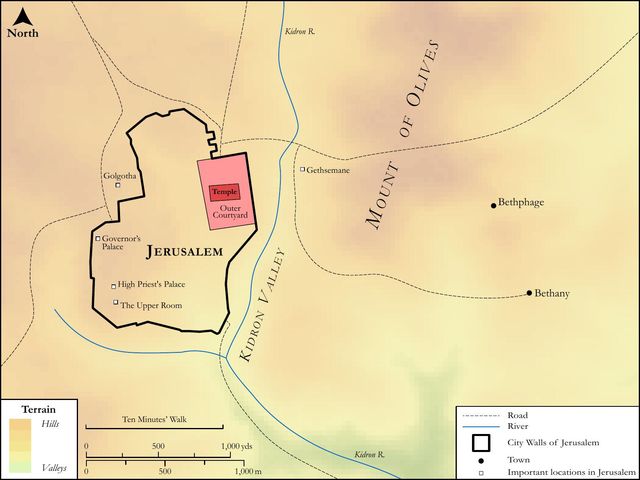
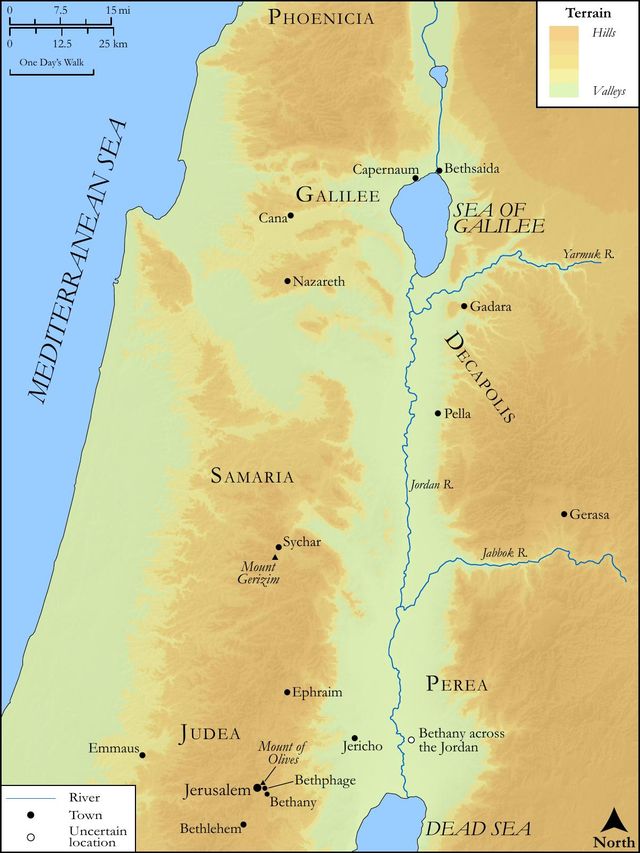
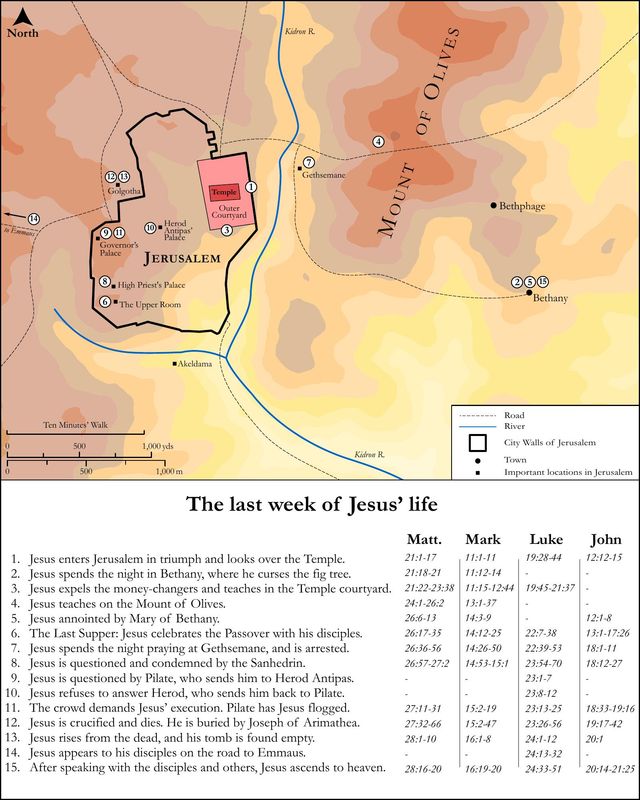
Study this verse
Public-domain commentary
Matthew Henry
From his Commentary on the Whole Bible. Henry comments on passages, not single verses — this entry covers John 17:11–16. His four-level outline is real structure in the source text, so it is rendered as structure.
After the general pleas with which Christ recommended his disciples to his Father's care follow the particular petitions he puts up for them; and, 1. They all relate to spiritual blessings in heavenly things. He does not pray that they might be rich and great in the world, that they might raise estates and get preferments, but that they might be kept from sin, and furnished for their duty, and brought safely to heaven. Note, The prosperity of the soul is the best prosperity; for what relates to this Christ came to purchase and bestow, and so teaches us to seek, in the first place, both for others and for ourselves. 2. They are such blessings as were suited to their present state and case, and their various exigencies and occasions. Note, Christ's intercession is always pertinent. Our advocate with the Father is acquainted with all the particulars of our wants and burdens, our dangers and difficulties, and knows how to accommodate his intercession to each, as to Peter's peril, which he himself was not aware of (Luk 22:32), I have prayed for thee. 3. He is large and full in the petitions, orders them before his Father, and fills his mouth with arguments, to teach us fervency and importunity in prayer, to be large in prayer, and dwell upon our errands at the throne of grace, wrestling as Jacob, I will not let thee go, except thou bless me.
Now the first thing Christ prays for, for his disciples, is their preservation, in these verses, in order to which he commits them all to his Father's custody. Keeping supposes danger, and their danger arose from the world, the world wherein they were, the evil of this he begs they might be kept from. Now observe,
I.The request itself:
Keep them from the world. There were two ways of their being delivered from the world: -
1.By taking them out of it; and he does not pray that they might be so delivered: I pray not that thou shouldest take them out of the world; that is,
(1.)"I pray not that they may be speedily removed by death." If the world will be vexatious to them, the readiest way to secure them would be to hasten them out of it to a better world, that will give them better treatment. Send chariots and horses of fire for them, to fetch them to heaven; Job, Elijah, Jonah, Moses, when that occurred which fretted them, prayed that they might be taken out of the world; but Christ would not pray so for his disciples, for two reasons: - [1.] Because he came to conquer, not to countenance, those intemperate heats and passions which make men impatient of life, and importunate for death. It is his will that we should take up our cross, and not outrun it. [2.] Because he had work for them to do in the world; the world, though sick of them (Act 22:22), and therefore not worthy of them (Heb 11:38), yet could ill spare them. In pity therefore to this dark world, Christ would not have these lights removed out of it, but continued in it, especially for the sake of those in the world that were to believe in him through their word. Let not them be taken out of the world when their Master is; they must each in his own order die a martyr, but not till they have finished their testimony. Note, First, The taking of good people out of the world is a thing by no means to be desired, but rather dreaded and laid to heart, Isa 57:1. Secondly, Though Christ loves his disciples, he does not presently send for them to heaven, as soon as they are effectually called, but leaves them for some time in this world, that they may do good and glorify God upon earth, and be ripened for heaven. Many good people are spared to live, because they can ill be spared to die.
(2.)"I pray not that they may be totally freed and exempted from the troubles of this world, and taken out of the toil and terror of it into some place of ease and safety, there to live undisturbed; this is not the preservation I desire for them." Non ut omni molestia liberati otium et delicias colant, sed ut inter media pericula salvi tamen maneant Dei auxilio - Not that, being freed from all trouble, they may bask in luxurious ease, but that by the help of God they may be preserved in a scene of danger; so Calvin. Not that they may be kept from all conflict with the world, but that they may not be overcome by it; not that, as Jeremiah wished, they might leave their people, and go from them (Jer 9:2), but that, like Ezekiel, their faces may be strong against the faces of wicked men, Eze 3:8. It is more the honour of a Christian soldier by faith to overcome the world than by a monastical vow to retreat from it; and more for the honour of Christ to serve him in a city than to serve him in a cell.
2.Another way is by keeping them from the corruption that is in the world; and he prays they may be thus kept, Joh 17:11, Joh 17:15. Here are three branches of this petition: -
(1.)Holy Father, keep those whom thou hast given me.
[1.]Christ was now leaving them; but let them not think that their defence was departed from them; no, he does here, in their hearing, commit them to the custody of his Father and their Father. Note, It is the unspeakable comfort of all believers that Christ himself has committed them to the care of God. Those cannot but be safe whom the almighty God keeps, and he cannot but keep those whom the Son of his love commits to him, in the virtue of which we may by faith commit the keeping of our souls to God, Pe1 4:19; Ti2 1:12. First, He here puts them under the divine protection, that they may not be run down by the malice of their enemies; that they and all their concerns may be the particular care of the divine Providence: "Keep their lives, till they have done their work; keep their comforts, and let them not be broken in upon by the hardships they meet with; keep up their interest in the world, and let it not sink." To this prayer is owing the wonderful preservation of the gospel ministry and gospel church in the world unto this day; if God had not graciously kept both, and kept up both, they had been extinguished and lost long ago. Secondly, He puts them under the divine tuition, that they may not themselves run away from their duty, nor be led aside by the treachery of their own hearts: "Keep them in their integrity, keep them disciples, keep them close to their duty." We need God's power not only to put us into a state of grace, but to keep us in it. See, Joh 10:28, Joh 10:29; Pe1 1:5.
[2.]The titles he gives to him he prays to, and them he prays for, enforce the petition. First, He speaks to God as a holy Father. In committing ourselves and others to the divine care, we may take encouragement, 1. From the attribute of his holiness, for this is engaged for the preservation of his holy ones; he hath sworn by his holiness, Psa 89:35. If he be a holy God and hate sin, he will make those holy that are his, and keep them from sin, which they also hate and dread as the greatest evil. 2. From this relation of a Father, wherein he stands to us through Christ. If he be a Father, he will take care of his own children, will teach them and keep them; who else should? Secondly, He speaks of them as those whom the Father had given him. What we receive as our Father's gifts, we may comfortably remit to our Father's care. "Father, keep the graces and comforts thou hast given me; the children thou hast given me; the ministry I have received."
(2.)Keep them through thine own name. That is,
[1.]Keep them for thy name's sake; so some. "Thy name and honour are concerned in their preservation as well as mine, for both will suffer by it if they either revolt or sink." The Old Testament saints often pleaded, for thy name's sake; and those may with comfort plead it that are indeed more concerned for the honour of God's name than for any interest of their own.
[2.]Keep them in thy name; so others; the original is so, en tō onomati. "Keep them in the knowledge and fear of thy name; keep them in the profession and service of thy name, whatever it cost them. Keep them in the interest of thy name, and let them ever be faithful to this; keep them in thy truths, in thine ordinances, in the way of thy commandments." [3.] Keep them by or through thy name; so others. "Keep them by thine own power, in thine own hand; keep them thyself, undertake for them, let them be thine own immediate care. Keep them by those means of preservation which thou hast thyself appointed, and by which thou hast made thyself known. Keep them by thy word and ordinances; let thy name be their strong tower, thy tabernacle their pavilion."
(3.)Keep them from the evil, or out of the evil. He had taught them to pray daily, Deliver us from evil, and this would encourage them to pray. [1.] "Keep them from the evil one, the devil and all his instruments; that wicked one and all his children. Keep them from Satan as a tempter, that either he may not have leave to sift them, or that their faith may not fail. Keep them from him as a destroyer, that he may not drive them to despair." [2.] "Keep them from the evil thing, that is sin; from every thing that looks like it, or leads to it. Keep them, that they do no evil," Co2 13:7. Sin is that evil which, above any other, we should dread and deprecate. [3.] "Keep them from the evil of the world, and of their tribulation in it, so that it may have no sting in it, no malignity;" not that they might be kept from affliction, but kept through it, that the property of their afflictions might be so altered as that there might be no evil in them, nothing to them any harm.
II.The reasons with which he enforces these requests for their preservation, which are five: -
1.He pleads that hitherto he had kept them (Joh 17:12): "While I was with them in the world, I have kept them in thy name, in the true faith of the gospel and the service of God; those that thou gavest me for my constant attendants I have kept, they are all safe, and none of them missing, none of them revolted nor ruined, but the son of perdition; he is lost, that the scripture might be fulfilled." Observe,
(1.)Christ's faithful discharge of his undertaking concerning his disciples: While he was with them, he kept them, and his care concerning them was not in vain. He kept them in God's name, preserved them from falling into any dangerous errors or sins, from striking in with the Pharisees, who would have compassed sea and land to make proselytes of them; he kept them from deserting him, and returning to the little all they had left for him; he had them still under his eye and care when he sent them to peach; went not his heart with them? Many that followed him awhile took offence at something or other, and went off; but he kept the twelve that they should not go away. He kept them from falling into the hands of persecuting enemies that sought their lives; kept them when he surrendered himself, Joh 18:9. While he was with them he kept them in a visible manner by instructions till sounding in their ears, miracles still done before their eyes; when he was gone from them, they must be kept in a more spiritual manner. Sensible comforts and supports are sometimes given and sometimes withheld; but, when they are withdrawn, yet they are not left comfortless. What Christ here says of his immediate followers is true of all the saints while they are here in this world; Christ keeps them in God's name. It is implied,
[1.]That they are weak, and cannot keep themselves; their own hands are not sufficient for them.
[2.]That they are, in God's account, valuable and worth the keeping; precious in his sight and honourable; his treasure, his jewels.
[3.]That their salvation is designed, for to this it is that they are kept, Pe1 1:5. As the wicked are reserved for the day of evil, so the righteous are preserved for the day of bliss.
[4.]That they are the charge of the Lord Jesus; for as his charge he keeps them, and exposed himself like the good shepherd for the preservation of the sheep.
(2.)The comfortable account he gives of his undertaking: None of them is lost. Note, Jesus Christ will certainly keep all that were given to him, so that none of them shall be totally and finally lost; they may think themselves lost, and may be nearly lost (in imminent peril); but it is the Father's will that he should lose none, and none he will lose (Joh 6:39); so it will appear when they come all together, and none of them shall be wanting.
(3.)A brand put upon Judas, as none of those whom he had undertaken to keep. He was among those that were given to Christ, but not of them. He speaks of Judas as already lost, for he had abandoned the society of his Master and his fellow-disciples, and abandoned himself to the devil's guidance, and in a little time would go to his own place; he is as good as lost. But the apostasy and ruin of Judas were no reproach at all to his Master, or his family; for,
[1.]He was the son of perdition, and therefore not one of those that were given to Christ to be kept. He deserved perdition, and God left him to throw himself headlong into it. He was the son of the destroyer, as Cain, who was of that wicked one. That great enemy whom the Lord will consume is called a son of perdition, because he is a man of sin, Th2 2:3. It is an awful consideration that one of the apostles proved a son of perdition. No man's place or name in the church, no man's privileges or opportunities of getting grace, no man's profession or external performances, will secure him from ruin, if his heart be not right with God; nor are any more likely to prove sons of perdition at last, after a plausible course of profession, than those that like Judas love the bag; but Christ's distinguishing Judas from those that were given him (for ei mē is adversative, not exceptive) intimates that the truth and true religion ought not to suffer for the treachery of those that are false to it, Jo1 2:19.
[2.]The scripture was fulfilled; the sin of Judas was foreseen of God's counsel and foretold in his word, and the event would certainly follow after the prediction as a consequent, though it cannot be said necessarily to follow from it as an effect. See Psa 41:9; Psa 69:25; Psa 109:8. We should be amazed at the treachery of apostates, were we not told of it before.
2.He pleads that he was now under a necessity of leaving them, and could no longer watch over them in the way that he had hitherto done (Joh 17:11): "Keep them now, that I may not lose the labour I bestowed upon them while I was with them. Keep them, that they may be one with us as we are with each other." We shall have occasion to speak of this, Joh 17:21. But see here,
(1.)With what pleasure he speaks of his own departure. He expresses himself concerning it with an air of triumph and exultation, with reference both to the world he left and the world he removed to. [1.] "Now I am no more in the world. Now farewell to this provoking troublesome world. I have had enough of it, and now the welcome hour is at hand when I shall be no more in it. Now that I have finished the work I had to do in it, I have done with it; nothing remains now but to hasten out of it as fast as I can." Note, It should be a pleasure to those that have their home in the other world to think of being no more in this world; for when we have done what we have to do in this world, and are made meet for that, what is there here that should court our stay? When we receive a sentence of death within ourselves, with what a holy triumph should we say, "Now I am no more in this world, this dark deceitful world, this poor empty world, this tempting defiling world; no more vexed with its thorns and briars, no more endangered by its nets and snares; now I shall wander no more in this howling wilderness, be tossed no more on this stormy sea; now I am no more in this world, but can cheerfully quit it, and give it a final farewell." [2.] Now I come to thee. To get clear of the world is but the one half of the comfort of a dying Christ, of a dying Christian; the far better half is to think of going to the Father, to sit down in the immediate, uninterrupted, and everlasting enjoyment of him. Note, Those who love God cannot but be pleased to think of coming to him, though it be through the valley of the shadow of death. When we go, to be absent from the body, it is to be present with the Lord, like children fetched home from school to their father's house. "Now come I to thee whom I have chosen and served, and whom my soul thirsteth after; to thee the fountain of light and life, the crown and centre of bliss and joy; now my longings shall be satisfied, my hopes accomplished, my happiness completed, for now come I to thee."
(2.)With what a tender concern he speaks of those whom he left behind: "But these are in the world. I have found what an evil world it is, what will become of these dear little ones that must stay in it? Holy Father, keep them; they will want my presence, let them have thine. They have now more need than ever to be kept, for I am sending them out further into the world than they have yet ventured; they must launch forth into the deep, and have business to do in these great waters, and will be lost if thou do not keep them." Observe here,
[1.]That, when our Lord Jesus was going to the Father, he carried with him a tender concern for his own that are in the world; and continued to compassionate them. He bears their names upon his breast-plate, nay, upon his heart, and has graven them with the nails of his cross upon the palms of his hands; and when he is out of their sight they are not out of his, much less out of his mind. We should have such a pity for those that are launching out into the world when we are got almost through it, and for those that are left behind in it when we are leaving it.
[2.]That, when Christ would express the utmost need his disciples had of divine preservation, he only says, They are in the world; this bespeaks danger enough to those who are bound for heaven, whom a flattering world would divert and seduce, and a malignant world would hate and persecute.
3.He pleads what a satisfaction it would be to them to know themselves safe, and what a satisfaction it would be to him to see them easy: I speak this, that they may have my joy fulfilled in themselves, Joh 17:13. Observe,
(1.)Christ earnestly desired the fulness of the joy of his disciples, for it is his will that they should rejoice evermore. He was leaving them in tears and troubles, and yet took effectual care to fulfil their joy. When they thought their joy in him was brought to an end, then was it advanced nearer to perfection than ever it had been, and they were fuller of it. We are here taught,
[1.]To found our joy in Christ: "It is my joy, joy of my giving, or rather joy that I am the matter of." Christ is a Christian's joy, his chief joy. Joy in the world is withering with it; joy in Christ is everlasting, like him.
[2.]To build up our joy with diligence; for it is the duty as well as privilege of all true believers; no part of the Christian life is pressed upon us more earnestly, Phi 3:1; Phi 4:4.
[3.]To aim at the perfection of this joy, that we may have it fulfilled in us, for this Christ would have.
(2.)In order hereunto, he did thus solemnly commit them to his Father's care and keeping and took them for witnesses that he did so: These things I speak in the world, while I am yet with them in the world. His intercession in heaven for their preservation would have been as effectual in itself; but saying this in the world would be a greater satisfaction and encouragement to them, and would enable them to rejoice in tribulation. Note,
[1.]Christ has not only treasured up comforts for his people, in providing for their future welfare, but has given out comforts to them, and said that which will be for their present satisfaction. He here condescended in the presence of his disciples to publish his last will and testament, and (which many a testator is shy of) lets them know what legacies he had left them, and how well they were secured, that they might have strong consolation.
[2.]Christ's intercession for us is enough to fulfil or joy in him; nothing more effectual to silence all our fears and mistrusts, and to furnish us with strong consolation, than this, that he always appears in the presence of God for us; therefore the apostle puts a yea rather upon this, Rom 8:34. And see Heb 7:25.
4.He pleads the ill usage they were likely to meet with in the world, for his sake (Joh 17:14): "I have given them thy word to be published to the world, and they have received it, have believed it themselves, and accepted the trust of transmitting it to the world; and therefore the world hath hated them, as also because they are not of the world, any more than I." Here we have,
(1.)The world's enmity to Christ's followers. While Christ was with them, though as yet they had given but little opposition to the world, yet it hates them, much more would it do so when by their more extensive preaching of the gospel they would turn the world upside down. "Father, stand their friend," says Christ, "for they are likely to have many enemies; let them have thy love, for the world's hatred is entailed upon them. In the midst of those fiery darts, let them be compassed with thy favour as with a shield." It is God's honour to take part with the weaker side, and to help the helpless. Lord, be merciful to them, for men would swallow them up.
(2.)The reasons of this enmity, which strengthen the plea.
[1.]It is implied that one reason is because they had received the word of God as it was sent them by the hand of Christ, when the greatest part of the world rejected it, and set themselves against those who were the preachers and professors of it. Note, Those that receive Christ's good will and good word must expect the world's ill will and ill word. Gospel ministers have been in a particular manner hated by the world, because they call men out of the world, and separate them from it, and teach them not to conform to it, and so condemn the world. "Father, keep them for it is for thy sake that they are exposed; they are sufferers for thee." Thus the psalmist pleads, For thy sake I have borne reproach, Psa 69:7. Note, Those that keep the word of Christ's patience are entitled to special protection in the hour of temptation, Rev 3:10. That cause which makes a martyr may well make a joyful sufferer.
[2.]Another reason is more express; the world hates them, because they are not of the world. Those to whom the word of Christ comes in power are not of the world, for it has this effect upon all that receive it in the love of it that it weans them from the wealth of the world, and turns them against the wickedness of the world, and therefore the world bears them a grudge.
5.He pleads their conformity to himself in a holy non-conformity to the world (Joh 17:16): "Father, keep them, for they are of my spirit and mind, they are not of the world, even as I am not of the world." Those may in faith commit themselves to God's custody,
(1.)Who are as Christ was in this world, and tread in his steps. God will love those that are like Christ.
(2.)Who do not engage themselves in the world's interest, nor devote themselves to its service. Observe,
[1.]That Jesus Christ was not of this world; he never had been of it, and least of all now that he was upon the point of leaving it. This intimates, First, His state; he was none of the world's favourites nor darlings, none of its princes nor grandees; worldly possessions he had none, not even where to lay his head; nor worldly power, he was no judge nor divider. Secondly, His Spirit; he was perfectly dead to the world, the prince of this world had nothing in him, the things of this world were nothing to him; not honour, for he made himself of no reputation; not riches, for for our sakes he became poor; not pleasures, for he acquainted himself with grief. See Joh 8:23.
[2.]That therefore true Christians are not of this world. The Spirit of Christ in them is opposite to the spirit of the world. First, It is their lot to be despised by the world; they are not in favour with the world any more than their Master before them was. Secondly, It is their privilege to be delivered from the world; as Abraham out of the land of his nativity. Thirdly, It is their duty and character to be dead to the world. Their most pleasing converse is, and should be, with another world, and their prevailing concern about the business of that world, not of this. Christ's disciples were weak, and had many infirmities; yet this he could say for them, They were not of the world, not of the earth, and therefore he recommends them to the care of Heaven.
Historical interpretation
Four Centuries of Reception
7 surviving comments on this verse. Each one is dated, so this reads as a timeline rather than a list.
Select a marker to jump to its quote. Markers stagger vertically where authors wrote within a few decades of each other.
"They are not of the world, even as I am not of the world." How then saith He in another place, "Which Thou gavest Me out of the world; Thine they were"? There He speaketh of their nature; here of wicked actions. And He putteth together a long encomium of them; first, that "they were not of the world"; then, that "the Father Himself had given them"; and that "they had kept His word;" and that on this account "they were hated." And if He saith, "As I am not of the world," be not troubled; for the "as" is not here expressive of unvarying exactness. For as, when in the case of Him and the Father the "as" is used, a great Equality is signified, because of the Relationship in Nature; so when it is used of us and Him, the interval is great, because of the great and infinite interval between the respective natures. For if He "did no sin, neither was guile found in His mouth," how could the Apostles be reckoned equal to Him? What is it then that He saith, "They are not of the world"? "They look to another world, they have nothing common with earth, but are become citizens of heaven." And by these words He showeth His love, when He commendeth them to the Father, and committeth them to Him who begat Him. When He saith, "Keep them," He doth not speak merely of delivering them from dangers, but also with regard to their continuance in the faith.
(Hom. lxxxii) Again, our Lord gives a reason why the disciples are worthy of obtaining such favour from the Father: I have given them Thy word; and the world hath hated them; i. e. They are had in hatred for Thy sake, and on account of Thy word.
(Hom. lxxxii. 1) Above, when He said, Them whom Thou gavest Me out of the world, He meant their nature; here He means their actions. They are not of the world; because they have nothing in common with earth, they are made citizens of heaven. Wherein He shows His love for them, thus praising them to the Father. The word as when used with respect to Him and the Father expresses likeness of nature; but between us and Christ there is immense distance. Keep them from the evil, i. e. not from dangers only, but from falling away from the faith.
Then He repeats the same statement: "They are not of the world, even as I am not of the world. Sanctify them in the truth." For thus are they kept from the evil, as He had previously prayed that they might be. But it may be inquired how they were no more of the world, if they were not yet sanctified in the truth; or, if they already were, why He requests that they should be so. Is it not because even those who are sanctified still continue to make progress in the same sanctification, and grow in holiness; and do not so without the aid of God's grace, but by His sanctifying of their progress, even as He sanctified their outset? And hence the apostle likewise says: "He who hath begun a good work in you, will perform it until the day of Jesus Christ."
The Lord speaks to his Father in the Gospel as follows: “They are not of the world, as I am not of the world.” … No one can understand the truth and force of this except one who has gone through the trials of what [Jesus] was talking about—one who has been under the teacher of experience. This is someone the eyes of whose soul the Lord has turned away from all things present, so that he no longer considers them as things that will soon pass away but as things that are already over and done with, and he sees them vanish into nothing, like misty smoke.… And so, if we are anxious to attain true perfection, we ought to ensure that we have outwardly with the body made light of parents, home, the riches and pleasures of the world, so that we may also inwardly with the heart forsake all these things and never be drawn back by any desires to what we have forsaken.
By these words He indicates once more, and makes clear to us, the reason why He requires to ascend to God the Father, and why so to do becomes Him, while He is still our Mediator, and High Priest, and Advocate, according to the Holy Scripture; and shows us that it is in order that, if at any time we encounter failure, or miss the straight path in thought or action, or are assailed by unexpected perils or buffeted by the tempest of the devil's malice, He may approach His Father on our behalf in His appropriate character as Mediator; and join with Him in granting good gifts to those who are worthy. For it would well become Him so to do, as He is God by Nature. Those then, He says, who have received Thy Word, O Father, through Me, show forth My Likeness in themselves and are conformed to the pattern of Thine own Son, who, like Him, pass unscathed through the ocean of the world's wickedness, and have shown themselves foreigners and strangers to the love of pleasure in this life, and every kind of vice. Therefore keep them in Thy truth, for exceeding purity is inherent in Christ. For He is truly God, and cannot be subject to sin nor endure it, but is rather the fountain of all goodness, and the beauty of holiness. For the Divine Nature, that ruleth over all, can do nothing but what is in truth suitable and belongeth thereto. And the holy disciples, I mean all who believe on Him, cannot otherwise exhibit purity unspotted by the wickedness of this world than by means of forgiveness and grace from above, which putteth away the defilement of previous offences and the accusing sins of their past lives; and, further, conferring on them the glory of a life of sanctification, though their continuance therein be not free from conflict, as Paul wisely teaches us, saying: Wherefore let him that thinketh he standeth take heed lest he fall. For our life is cast upon the deep, and we are tossed by divers storms, as the devil tempts without ceasing, and continually assails and strives to defile if he can, by the insidious inventions of malice, even those who have been already made pure. For his meat is well chosen, as the prophet says. Having then borne witness to His disciples that their life was out of the world, and that they were conformed to the likeness of His own essential purity, He proceeds to pray to His Father to keep them. It is almost as though He said: O Holy Father, if they were in the world----that is, if they lived the life that has honour in this world----if, sowing the seed of earthly and temporary pleasure in their hearts, they imprinted on themselves the foul image of the evil one, would not have attacked them with temptation, nor have armed himself against his own children, for he would have in them the likeness of his own inherent wickedness. But since they, following after Me, laugh to scorn the deceitfulness of this world, and are out of the world, and, moreover, in their conduct show most clearly the impress of My incomparable holiness, and on that account have Satan, who is ever murmuring against the Saints, for their bitter foe, ever lying in wait for them; therefore of necessity I desire them to be in Thy safe keeping. And to be in Thy safe keeping is not to be far from Thy truth, that is, from Me. For I am by Nature Thy truth, O Father, the Essential, True, and Living Word.
We must suppose that this is what He thinks right to say. See how, in all His sayings, so to speak, He insinuates His own Person into the action of the Father, whatever that action has reference to, and puts Himself altogether side by side with Him, wishing probably to show how true the statement is: All things were made by Him; and without Him was not anything made. In the previous passage, indeed, He briefly besought His Father to keep the disciples in the Name which had been given unto Himself. In this, however, He desires His prayer on their behalf to be fulfilled in the truth of the Father. What, then, does this mean; or what does the change in the language signify? Is it meant to show that the working of the Father, shown through Him in mercy to the Saints, is not uniform? For in the first passage, when He says that His disciples ought to be kept in the Name of the Father, that is to say, in the glory and power of His Godhead, so that they should be out of the power of the enemy, He declares that aid is vouchsafed to the Saints in whatever happens unto them, after the secret fashion that Christ at the proper season revealed to His disciples when He said: Simon, Simon, behold, Satan asked to have you, that he might sift you as wheat: but I made supplication for thee, that thy fail not. For many of God's dealings concerning us are in secret, Christ taking thought for the life of each of us, and covering us as with a shield. But here, when He says Keep them in the truth, He signifies clearly their being led by revelation of the truth to apprehend it. For no man can attain to the knowledge of truth without the light of the Spirit, nor can he at all, humanly speaking, work out for himself an accurate comprehension of the Divine doctrines. For the mysteries of Holy Writ exceed our understanding, and glorious is the blessing of having even a moderate knowledge concerning Christ.
The blessed Peter, moreover, when he confessed that the Lord was in truth the Son of the living God, heard the words: Blessed art thou, Simon Bar-jona; for flesh and blood hath not revealed it unto thee, but My Father Which is in heaven. For He reveals to the Saints His Son, Who is truth, and does not allow Satan to lead the mind of His believers astray to false knowledge; relying on whom, in their season, Hymenaeus and Alexander have made shipwreck concerning the faith, rejecting the true doctrine of the faith. Of great avail, then, towards a right continuance in the straight path of thought and action, is our safe keeping by the Father in the Name of God and in truth; that we may not fail in making our light shine forth in action, nor, by turning aside to folly, stray far away from the doctrines of true holiness. And this may easily be our lot, if we are seen to be out of the world while not disavowing our birth in the world; for of the dust of the earth are we all framed, as the Scripture saith, but by the quality of our deeds we rid ourselves of life in the world. For while they walk upon earth, those who love conformity with Christ are citizens of heaven.
We must also remark that He very appropriately here calls the Father holy, almost, as it were, reminding Him that, as He is holy, He takes pleasure in those that are holy. And all men are holy, whosoever are seen to be unspotted by the world, and whosoever are by nature in Christ, in the Father's likeness adopted, and chosen to be His disciples by the sanctification according to grace, and the light and goodness of their lives. For a man may thus be conformed to the Image of God, Which transcends the world.
There are two cities, dearest brothers.… The first is the city of this world, the second, the city of paradise. The first city is full of labor, the second is restful. The first is full of misery, the second is blessed. If a person lives sinfully in the first, he cannot arrive in the second. We must be pilgrims in this world in order to be citizens of heaven. If one wants to love this world and remain a citizen of it, he has no place in heaven, for we prove our pilgrim status by our longing for our true country. Let no one deceive himself, beloved brothers. The true country of Christians is in heaven, not here.… The angels are our fellow citizens. Our parents are the patriarchs, prophets, apostles and martyrs. Our King is Christ. May we live, therefore, in this earthly sojourn in a manner that will enable us to long for such a country during our stay here.
Do you want Christ to appear to you in prayer as he would to his friend? Let love for him be within you without a moment’s break. Do you want this love to be continually inflamed in your soul? Then remove from your soul love for the world. Do you want your home to be in that place which is without place, being in God? Leave the world, as a baby leaves the womb. Then you will have seen reality. For Christ cannot live with the world. I beg you, listen to him as he demonstrates to you with his own words, “I am not of the world.” This is why it chases me away from where I would live, and also why I cannot live with it, “because it hates me.” But he is continuously overshadowing the soul and visiting it, so that if it empties itself of the things of the world he can dwell in it.
Continue studying John 17:16 across the web’s major study libraries — every link below opens this exact verse, chapter, or book on the destination site.
Read & Compare
 BibleGatewayThis verse in more than 200 translations and 70 languages.
 Bible.comThe YouVersion reader — hundreds of translations, reading plans, and highlights.
 ESV.orgCrossway's official English Standard Version reader.
 NET BibleThe NET translation with 60,000+ translators' notes on every rendering decision.
 STEP BibleTyndale House's free study tool — original text, vocabulary, and scholarly resources.
 BibliaLogos Bible Software's free web reader.
 USCCBThe New American Bible (Revised Edition) with the U.S. bishops' study notes.
Commentaries
 BibleHub CommentariesDozens of classic commentaries on this verse, gathered on one page.
 StudyLightMore than 100 commentary sets — the largest collection on the web.
 BibleRefPlain-English commentary on what this verse means, verse by verse.
 Enduring WordDavid Guzik's free commentary on this chapter, widely used by Bible teachers.
 Bible Study ToolsVerse commentary alongside Greek and Hebrew study aids.
Original Language & Research
- BibleHub InterlinearThe verse word by word — original language, transliteration, and English.
- BibleHub LexiconEvery word's original-language definition and Strong's entry.
 Blue Letter BibleDeep-study tools — Strong's numbers, concordance, and word studies.
 CNTR CollationThe earliest Greek manuscripts of this verse, collated letter by letter.
Sermons, Hymns & Audio


TrulyRandomVerse is not affiliated with these sites and doesn’t control their content. They’re linked because they’re genuinely useful.
Summary
John 17:16, a pivotal statement within Jesus' High Priestly Prayer, profoundly declares the distinct spiritual identity of His disciples. Jesus asserts that His followers, like Himself, do not belong to the world system estranged from God. This verse underscores a fundamental separation in nature, values, and allegiance, highlighting that while believers live physically within the world, their true citizenship and spiritual orientation are heavenly, rooted in their relationship with God through Christ.
Context
ShowHideLiterary Context
This verse is embedded within Jesus' profound High Priestly Prayer, recorded in John 17. It immediately follows Jesus' declaration in John 17:14 that He has given His disciples God's word, and as a result, the world hates them because they are "not of the world." The subsequent verse, John 17:17, transitions to Jesus' prayer for their sanctification by truth, which is intrinsically linked to their separation from the world. The entire prayer, spanning John 17:1-26, reveals Jesus' deep concern for His disciples' protection, unity, and spiritual integrity in the face of His imminent departure and the challenges they would face in a hostile world.
Historical & Cultural Context
Jesus' prayer takes place on the eve of His crucifixion, a moment of profound transition for His disciples. They were about to lose their physical proximity to their Lord and would soon be commissioned to carry His message into a world that had rejected Him. The concept of "the world" (Greek: kosmos) in this context refers not to the physical earth or humanity in general, but to the fallen, organized system of human society that operates independently of God, often in active opposition to His will and truth. This worldview was prevalent among the Jews of that day, for whom allegiance to God often meant a counter-cultural stance against prevailing norms, idolatry, and moral decay. The disciples, being chosen by Christ, were now set apart from this system, a status that would inevitably lead to conflict and persecution, as Jesus had warned them in John 15:18-19.
Key Themes
ShowHideJohn 17:16 powerfully articulates several core themes central to the Gospel of John and Christian theology. The primary theme is the Separation from the World, emphasizing that believers, like Christ, possess a distinct spiritual nature and allegiance that sets them apart from the fallen system of human society. This separation is not about physical isolation but about a fundamental difference in values, priorities, and spiritual citizenship, as highlighted in Philippians 3:20. Closely related is the theme of Identification with Christ, where the disciples' "not-of-the-world" status directly mirrors Christ's own. Their identity is inextricably linked to His, sharing in His divine nature and mission, as seen in 1 John 4:17. Finally, the verse underscores the Divine Identity of believers, asserting that their true belonging and definition come from their relationship with God through Christ, rather than from their earthly circumstances or the world's approval. This divine identity forms the basis for their sanctification and protection, themes Jesus continues to pray for in John 17:17-19.
Exposition and Analysis
ShowHideKey Word Analysis
ShowHideThis term, derived from a root meaning "orderly arrangement" or "decoration," carries a profound theological weight in John's Gospel. While it can refer to the physical universe or humanity, in contexts like John 17:16, it denotes the organized system of human society that is alienated from God, characterized by sin, rebellion, and opposition to divine truth. To be "not of the world" means not being defined by, controlled by, or aligned with this spiritual system, but rather belonging to God's kingdom.
This is an absolute negative particle, indicating a definitive and objective denial. It signifies that the disciples' non-belonging to the world is not a matter of degree or choice, but a fundamental reality of their new spiritual nature. It is a factual statement about their identity, mirroring Christ's own inherent otherness from the fallen realm.
This comparative adverb means "just as" or "according to." It establishes a direct and precise parallel between the disciples' relationship to the world and Jesus' own. This comparison is crucial, as it grounds the disciples' distinct identity in Christ's unique nature and position. Their "not-of-the-world" status is not merely an ethical injunction but a participation in Christ's own fundamental separation from the fallen order.
Verse Breakdown
ShowHide"They are not of the world"
This clause declares a fundamental truth about the disciples' spiritual identity. The Greek preposition ek (G1537, "of" or "from") denotes origin or source. Thus, the disciples do not originate from, belong to, or derive their essence, values, or allegiance from the fallen world system. Their spiritual birth and citizenship are from God, marking a decisive break from their former alignment with worldly values and priorities.
"even as I am not of the world"
This powerful comparative clause establishes the basis and pattern for the disciples' identity. Jesus asserts His own inherent and absolute separation from the world's system, not merely as a moral choice but as a characteristic of His divine nature and mission. By stating that His disciples share this same "not-of-the-world" status, Jesus indicates that their spiritual distinctiveness is a direct result of their union with Him and their participation in His divine life and mission. Their identity is a reflection of His.
Literary Devices
ShowHideThe primary literary device at play in John 17:16 is Parallelism, specifically Comparative Parallelism. The verse explicitly draws a direct comparison between Jesus' relationship to the world and His disciples' relationship to it: "They are not of the world, even as I am not of the world." This structure emphasizes the shared nature of their spiritual distinctiveness and grounds the disciples' identity in Christ's own. It highlights that their separation is not a self-achieved state but a bestowed reality, a participation in Christ's unique "otherness." Additionally, there is an implied Contrast between being "in the world" (as Jesus acknowledges in John 17:15) and being "of the world." This contrast underscores the tension and unique calling of believers to live within a fallen system without being conformed to its values or spirit. The term "world" itself functions as Symbolism, representing not merely the physical earth but a spiritual system of rebellion against God, making the declaration of "not of the world" a profound statement of allegiance and spiritual citizenship.
Theological and Thematic Connections
ShowHideJohn 17:16 establishes a foundational theological truth about the nature of the believer's identity and calling. It asserts that those who belong to Christ are fundamentally distinct from the world system that is estranged from God. This "otherness" is not a call to physical isolation but to a radical difference in values, priorities, and allegiance. Believers are citizens of God's kingdom, living as ambassadors in a foreign land, reflecting Christ's own unique position. This truth underscores the spiritual conflict inherent in the Christian life, where the values of the kingdom often stand in direct opposition to the values of the world. It also provides profound comfort, reminding believers that their ultimate belonging and security are found not in worldly acceptance, but in their divine identity in Christ. This spiritual separation is the basis for the call to holiness and sanctification, as believers are set apart for God's purposes.
Reflection and Application
ShowHideJohn 17:16 serves as a profound anchor for the believer's identity in a world that constantly seeks to define and conform. It reminds us that our primary allegiance is to God's kingdom, not to the passing systems, values, or trends of this age. Living "not of the world" means cultivating a mind transformed by God's Word, discerning worldly philosophies and resisting their influence. It calls us to examine our priorities, our pursuits, and our sources of satisfaction, ensuring they align with our heavenly citizenship. This truth empowers us to stand firm in our convictions, even when unpopular, and to live counter-culturally for Christ's sake. It also provides immense comfort, assuring us that despite the world's opposition, our true home and belonging are secure in Christ. We are called to be salt and light in the world, influencing it for good, precisely because we are distinct from it, carrying the aroma of Christ rather than the scent of the fallen age.
Questions for Reflection
ShowHideFAQ
ShowHideWhat does "the world" mean in John 17:16?
ShowHideIn John 17:16, "the world" (Greek: kosmos) does not refer to the physical planet Earth or humanity in general. Instead, it signifies the fallen, organized system of human society that is estranged from God, operating independently of His will and often in active opposition to His truth. It represents the collective values, philosophies, and priorities that are contrary to God's kingdom. Jesus uses this term to distinguish between those who belong to God and those who are aligned with this rebellious system.
Does "they are not of the world" mean believers should withdraw from society?
ShowHideIn fact, immediately after this statement, Jesus prays in John 17:18 "As thou hast sent me into the world, even so have I also sent them into the world." This indicates that believers are to live in the world but not be of it. Our calling is to be distinct in our values, character, and allegiance, serving as salt and light within society, rather than conforming to its fallen ways. We are to engage with the world as Christ's ambassadors, bringing His truth and love to bear on all aspects of life.
Christ-Centered Fulfillment
ShowHideJohn 17:16 finds its ultimate fulfillment and meaning in the person and work of Jesus Christ. He is the quintessential "one not of the world," being eternally from the Father (John 1:1-3), distinct in His divine nature and perfectly untainted by sin. His earthly life, though lived fully among humanity, was marked by a profound otherness, consistently challenging and exposing the corrupt values of the world system. When Jesus declares that His disciples are "not of the world, even as I am not of the world," He is not merely stating a moral aspiration but a spiritual reality brought about by their union with Him. Through His atoning work and the gift of the Holy Spirit, believers are born again into a new creation (2 Corinthians 5:17), sharing in His victory over the world (John 16:33). Their new identity is "in Christ," which means they are spiritually seated with Him in heavenly places (Ephesians 2:6) and are therefore fundamentally alien to the world's dominion. This verse thus points to Christ as the source and pattern of the believer's distinct, heaven-bound identity, enabling them to live as citizens of another kingdom while serving as His representatives in this one.