


Judges 1:24
Bible text: King James Version (1769 Blayney text) · Public domain
Bible text: King James Version with Strong's numbers · Public domain
Bible text: Berean Standard Bible · Public domain
Bible text: American Standard Version (1901) · Public domain
Bible text: World English Bible, Messianic edition · Public domain
Bible text: Geneva Bible (1599) · Public domain
Bible text: Young's Literal Translation · Public domain
- וַיִּרְאוּvai·yir·'Uand they sawH7200Conj-w ¦ V-Qal-ConsecImperf-3mpVerb Qal Consecutive Imperfect 3rd Plural Masculineוַandיִּרְאוּthey saw
- הַשֹּׁמְרִיםha·Sho·me·Rimthose [who] watchedH8104Art ¦ V-Qal-Prtcpl-mpVerb Qal Participle Plural Masculine Absoluteהַthoseשֹּׁמְרִים[who] watched
- אִישׁ'isha manH376N-msNoun Singular Masculine Absolute
- יוֹצֵאyo·Tze'coming outH3318V-Qal-Prtcpl-msVerb Qal Participle Singular Masculine Absolute
- מִןminfromH4480PrepPreposition
- הָעִירha·'Irthe cityH5892Art ¦ N-fsNoun Singular Feminine Absoluteהָtheעִירcity
- וַיֹּאמְרוּvai·Yo·me·ruand they saidH559Conj-w ¦ V-Qal-ConsecImperf-3mpVerb Qal Consecutive Imperfect 3rd Plural Masculineוַandיֹּאמְרוּthey said
- לוֹloto <the> himPrep-l ¦ 3msSuffix Personal 3rd Singular Masculineלto <the>וֹhim
- הַרְאֵנוּhar·'E·nushow usH7200V-Hiphil-Imp-2ms ¦ 1cpVerb Hiphil Imperative 2nd Singular Masculineהַרְאֵshowנוּus
- נָאna'pleaseH4994PrtParticle Interjection
- אֶת'et<obj.>H853DirObjMParticle Object Indicator
- מְבוֹאme·Vo'[the] entrance ofH3996N-mscNoun Singular Masculine Construct
- הָעִירha·'Irthe cityH5892Art ¦ N-fsNoun Singular Feminine Absoluteהָtheעִירcity
- וְעָשִׂינוּve·'a·Si·nuand we will doH6213Conj-w ¦ V-Qal-ConsecPerf-1cpVerb Qal Consecutive Perfect 1st Plural common genderוְandעָשִׂינוּwe will do
- עִמְּךָ'i·me·Khawith youH5973Prep ¦ 2msPreposition Definiteעִמְּwithךָyou
- חָסֶדCha·sedloyaltyH2617N-msNoun Singular Masculine Absolute
English is a literal word-by-word gloss of the Hebrew, not the KJV's wording. Why?
This is the original text the KJV's translators worked from — each Hebrew word with its own literal English meaning in this verse, prepared by scholars at Tyndale House, Cambridge. The KJV translates whole sentences, not word by word, so its wording differs: one Hebrew word can become several English words, and the KJV may choose “the LORD” where the gloss reads “Yahweh”. Both are faithful — they answer different questions. For the KJV's own rendering, switch to the KJV text.
Details
See on the biblical-era maps
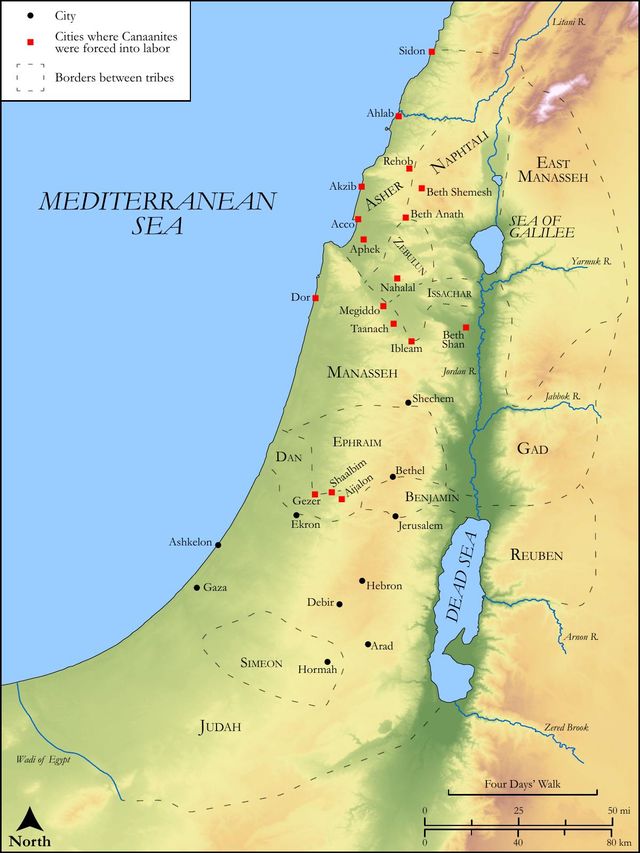
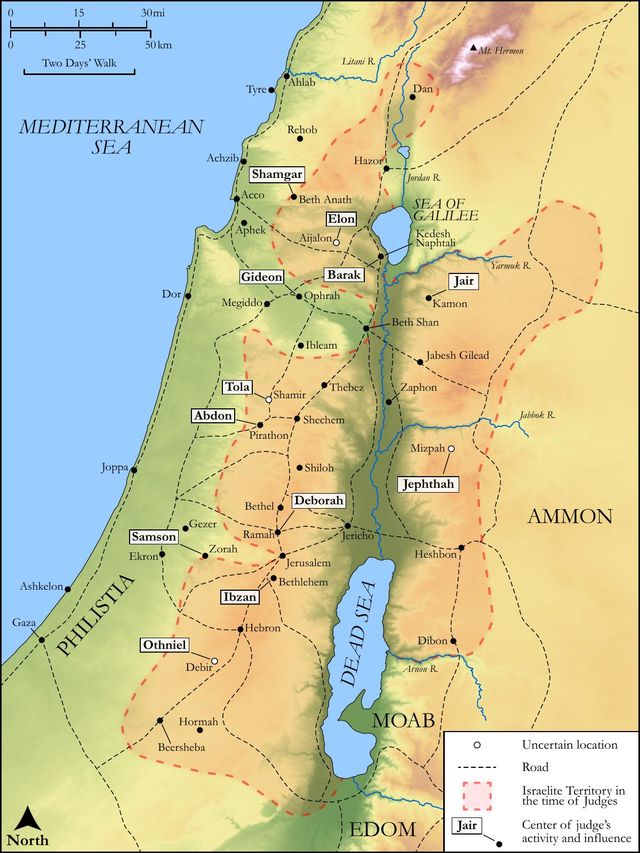
Study this verse
Public-domain commentary
Matthew Henry
From his Commentary on the Whole Bible. Henry comments on passages, not single verses — this entry covers Judges 1:21–36. His four-level outline is real structure in the source text, so it is rendered as structure.
We are here told upon what terms the rest of the tribes stood with the Canaanites that remained.
I.Benjamin neglected to drive the Jebusites out of that part of the city of Jerusalem which fell to their lot, Jdg 1:21.
Judah had set them a good example, and gained them great advantages by what they did (Jdg 1:9), but they did not follow the blow for want of resolution.
II.The house of Joseph,
1.Bestirred themselves a little to get possession of Beth-el, Jdg 1:22. That city is mentioned in the tribe of Benjamin, Jos 18:22. Yet it is spoken of there (Jdg 1:13) as a city in the borders of that tribe, and, it should seem, the line went through it, so that one half of it only belonged to Benjamin, the other half to Ephraim; and perhaps the activity of the Ephraimites at this time, to recover it from the Canaanites, secured it entirely to them henceforward, or at least the greatest part of it, for afterwards we find it so much under the power of the ten tribes (and Benjamin was none of them) that Jeroboam set up one of his calves in it. In this account of the expedition of the Ephraimites against Beth-el observe,
(1.)Their interest in the divine favour: The Lord was with them, and would have been with the other tribes if they would have exerted their strength. The Chaldee reads it here, as in many other places, The Word of the Lord was their helper, namely, Christ himself, the captain of the Lord's host, now that they acted separately, as well as when they were all in one body.
(2.)The prudent measures they took to gain the city. They sent spies to observe what part of the city was weakest, or which way they might make their attack with most advantage, Jdg 1:23. These spies got very good information from a man they providentially met with, who showed them a private way into the town, which was left unguarded because, being not generally known, no danger was suspected on that side. And here,
[1.]He is not to be blamed for giving them this intelligence if he did it from a conviction that the Lord was with them, and that by his donation the land was theirs of right, any more than Rahab was for entertaining those whom she knew to be enemies of her country, but friends of God. Nor,
[2.]Are those to be blamed who showed him mercy, gave him and his family not only their lives, but liberty to go wherever they pleased: for one good turn requires another. But, it seems, he would not join himself to the people of Israel, he feared them rather than loved them, and therefore he removed after a colony of the Hittites, which, it should seem, had gone into Arabia and settled there upon Joshua's invasion of the country; with them this man chose to dwell, and among them he built a city, a small one, we may suppose, such as planters commonly build, and in the name of it preserved the ancient name of his native city, Luz, an almond-tree, preferring this before its new name, which carried religion in it, Bethel - the house of God.
(3.)Their success. The spies brought or sent notice of the intelligence they had gained to the army, which improved their advantages, surprised the city, and put them all to the sword, v. 25. But,
2.Besides this achievement, it seems, the children of Joseph did nothing remarkable (1.) Manasseh failed to drive out the Canaanites from several very considerable cities in their lot, and did not make any attempt upon them, Jdg 1:27. But the Canaanites, being in possession, were resolved not to quit it; they would dwell in that land, and Manasseh had not resolution enough to offer to dispossess them; as if there was no meddling with them unless they were willing to resign, which it was not to be expected they ever would be. Only as Israel got strength they got ground, and served themselves, both by their contributions and by their personal services, Jdg 1:28, Jdg 1:35. (2.) Ephraim likewise, though a powerful tribe, neglected Gezer a considerable city, and suffered the Canaanites to dwell among them (Jdg 1:29), which, some think, intimates their allowing them a quiet settlement, and indulging them with the privileges of an unconquered people, not so much as making them tributaries.
III.Zebulun, perhaps inclining to the sea-trade, for it was foretold that it should be a haven for ships, neglected to reduce Kitron and Nahalol (Jdg 1:30), and only made the inhabitants of those places tributaries to them.
IV.Asher quitted itself worse than any of the tribes (Jdg 1:31, Jdg 1:32), not only in leaving more towns than any of them in the hands of the Canaanites, but in submitting to the Canaanites instead of making them tributaries; for so the manner of expression intimates, that the Asherites dwelt among the Canaanites, as if the Canaanites were the more numerous and the more powerful, would still be lords of the country, and the Israelites must be only upon sufferance among them.
V.Naphtali also permitted the Canaanites to live among them (Jdg 1:33), only by degrees they got them so far under as to exact contributions from them.
VI.Dan was so far from extending his conquests where his lot lay that, wanting spirit to make head against the Amorites, he was forced by them to retire into the mountains and inhabit the cities there, but durst not venture into the valley, where, it is probable, the chariots of iron were, Jdg 1:34. Nay, and some of the cities in the mountains were kept against them, Jdg 1:35. Thus were they straitened in their possessions, and forced to seek for more room at Laish, a great way off, Jdg 18:1, etc. In Jacob's blessing Judah is compared to a lion, Dan to a serpent; now observe how Judah with his lion-like courage prospered and prevailed, but Dan with all his serpenting subtlety could get no ground; craft and artful management do not always effect the wonders they pretend to. What Dan came short of doing, it seems, his neighbours the Ephraimites in part did for him; they put the Amorites under tribute, Jdg 1:35.
Upon the whole matter it appears that the people of Israel were generally very careless both of their duty and interest in this thing; they did not what they might have done to expel the Canaanites and make room for themselves. And, 1. It was owing to their slothfulness and cowardice. They would not be at the pains to complete their conquests; like the sluggard, that dreamed of a lion in the way, a lion in the streets, they fancied insuperable difficulties, and frightened themselves with winds and clouds from sowing and reaping. 2. It was owing to their covetousness; the Canaanites' labour and money would do them more good (they thought) than their blood, and therefore they were willing to let them live among them, that they might make a hand of them. 3. They had not that dread and detestation of idolatry which they ought to have had; they thought it a pity to put these Canaanites to the sword, though the measure of their iniquity was full, thought it would be no harm to let them live among them, and that they should be in no danger from them. 4. The same thing that kept their fathers forty years out of Canaan kept them now out of the full possession of it, and that was unbelief. Distrust of the power and promise of God lost them their advantages, and ran them into a thousand mischiefs.
Continue studying Judges 1:24 across the web’s major study libraries — every link below opens this exact verse, chapter, or book on the destination site.
Read & Compare
 BibleGatewayThis verse in more than 200 translations and 70 languages.
 Bible.comThe YouVersion reader — hundreds of translations, reading plans, and highlights.
 ESV.orgCrossway's official English Standard Version reader.
 NET BibleThe NET translation with 60,000+ translators' notes on every rendering decision.
 STEP BibleTyndale House's free study tool — original text, vocabulary, and scholarly resources.
 BibliaLogos Bible Software's free web reader.
 USCCBThe New American Bible (Revised Edition) with the U.S. bishops' study notes.
Commentaries
 BibleHub CommentariesDozens of classic commentaries on this verse, gathered on one page.
 StudyLightMore than 100 commentary sets — the largest collection on the web.
 BibleRefPlain-English commentary on what this verse means, verse by verse.
 Enduring WordDavid Guzik's free commentary on this chapter, widely used by Bible teachers.
 Bible Study ToolsVerse commentary alongside Greek and Hebrew study aids.
Original Language & Research
- BibleHub InterlinearThe verse word by word — original language, transliteration, and English.
- BibleHub LexiconEvery word's original-language definition and Strong's entry.
 Blue Letter BibleDeep-study tools — Strong's numbers, concordance, and word studies.
 SefariaThe Hebrew text with Rashi and centuries of Jewish commentary.
Sermons, Hymns & Audio


TrulyRandomVerse is not affiliated with these sites and doesn’t control their content. They’re linked because they’re genuinely useful.
Summary
Judges 1:24 offers a concise yet profound insight into the pragmatic strategies employed by the Israelite tribes during the post-Joshua conquest of Canaan. It details a pivotal intelligence-gathering operation by spies from the House of Joseph, who, in their efforts to capture the strategically vital city of Bethel, encountered a man emerging from its gates. Recognizing a critical opportunity, they offered him clemency and protection in exchange for crucial information regarding the city's entrance, demonstrating a blend of shrewd military cunning and a conditional application of mercy to achieve their objective.
Context
ShowHideLiterary Context
Judges 1 serves as a crucial transitional chapter, bridging the unified conquest narrative of Joshua with the fragmented, often tumultuous period of the Judges. Unlike the grand, divinely orchestrated campaigns led by Joshua, this chapter highlights the decentralized, ongoing efforts of individual Israelite tribes to secure their allotted territories after Joshua's death. The book opens with the tribes seeking divine guidance on who should "go up first" against the Canaanites, indicating a shift from a single leader to a more tribal-centric approach. Judges 1:24 specifically falls within the account of the "House of Joseph" (comprising the tribes of Ephraim and Manasseh) undertaking the conquest of Bethel. This incident immediately precedes the successful capture of the city, indicating that the information gained through this encounter was vital to their victory, providing a practical example of the challenges and diverse methods employed during this transitional period of settlement.
Historical & Cultural Context
The events described in Judges 1 are set in the days of the judges (approximately 1200-1000 BCE), a period characterized by the gradual settlement of Israelite tribes in Canaan amidst lingering Canaanite strongholds. Unlike the initial, divinely orchestrated campaigns under Joshua, the subsequent tribal efforts often involved more conventional military tactics, including reconnaissance, negotiation, and siege warfare. Bethel was a significant Canaanite city, strategically located on a major north-south ridge route that connected Jerusalem to Shechem, making its capture vital for Israelite control of the central highlands and securing lines of communication. The practice of offering clemency to informants or defectors during sieges was a common military strategy, as when Joshua's spies pledged kindness to Rahab, aimed at minimizing casualties, preserving infrastructure, and expediting conquest, reflecting a pragmatic approach to warfare that prioritized efficiency and strategic advantage.
Key Themes
ShowHideJudges 1:24 contributes to several key themes prevalent in the book of Judges and the broader narrative of the conquest. Firstly, it exemplifies Strategic Warfare, showcasing the use of intelligence, cunning, and negotiation as military tactics rather than solely relying on direct, overwhelming force. This pragmatic approach sought to gain an advantage and reduce the cost of conquest, highlighting the human element in the divine plan. Secondly, the offer of "mercy" highlights the theme of Conditional Mercy, where expediency and strategic advantage could lead to exceptions from the general command of herem (devotion to destruction) against the Canaanite inhabitants. This echoes the earlier account of Rahab's salvation in Jericho, demonstrating a nuanced application of divine commands in specific circumstances. Lastly, the verse underscores Human Agency in Conquest, illustrating that while God had promised the land, its actual taking often involved human effort, strategy, and decision-making, sometimes resulting in actions that deviated from ideal divine commands, a recurring tension throughout the book of Judges.
Exposition and Analysis
ShowHideKey Word Analysis
ShowHideThis term refers to an individual or a male person. In this context, the "man" is not merely a generic inhabitant but a specific individual encountered by the spies. His emergence from the city gates at that precise moment makes him a unique and pivotal figure, an unexpected opportunity for the Israelite reconnaissance team to gain crucial insider information. His identity as "a man" rather than a soldier or leader emphasizes the serendipitous nature of the encounter, highlighting that even an ordinary citizen could possess the vital knowledge needed for conquest.
This word denotes a place of entry or the act of entering. Here, it specifically refers to the way into the city of Bethel. This was not merely the main gate, which would likely be heavily guarded, but potentially a less obvious access point, a secret passage, a weak point in the fortifications, or a specific method of breaching the defenses. The spies' request for the "entrance" indicates their strategic focus on finding the most effective and least costly way to infiltrate and capture the city, rather than attempting a frontal assault.
This rich theological term, often translated as "steadfast love" or "covenant loyalty" when describing God's character, is used here to describe a human act of showing favor or clemency. Specifically, it implies sparing the man's life and potentially extending protection to him and his family from the general destruction that would befall the city's inhabitants. This "mercy" is conditional and pragmatic, offered as a direct exchange for vital military intelligence. Its application here demonstrates the versatility of chêçêd, showing how it can function not only as divine benevolence but also as a strategic human act of kindness or favor, even in the context of warfare.
Verse Breakdown
ShowHide"And the spies saw a man come forth out of the city"
This opening clause establishes the setting and the initial, serendipitous encounter. The "spies" (likely from the tribe of Joseph, as per the preceding verses) were engaged in their reconnaissance mission, observing the city. The man's emergence from the city gates at a critical moment presented an unexpected but crucial opportunity, suggesting a providential timing that allowed the Israelites to gain direct access to an insider.
"and they said unto him, Shew us, we pray thee, the entrance into the city"
This is the direct request for strategic intelligence, revealing the spies' objective. The phrase "we pray thee" (נָא, na') adds a polite but firm tone, indicating a plea for cooperation rather than an immediate threat. The request for the "entrance" signifies their desire for a tactical advantage, seeking a vulnerable point or a secret way in that would facilitate the city's capture with minimal resistance or casualties.
"and we will shew thee mercy"
This final clause presents the quid pro quo, the conditional offer of clemency. The "mercy" promised is the sparing of the man's life and potentially the lives of his household, in stark contrast to the typical fate of inhabitants of a conquered city. This offer serves as a powerful incentive for the man to betray his city, highlighting the pragmatic and often ruthless realities of ancient warfare, where self-preservation could override loyalty to one's people or city.
Literary Devices
ShowHideThe narrative of Judges 1:24 employs several literary devices that enrich its meaning. Pragmatism is evident in the straightforward depiction of the Israelites' military strategy, which prioritizes efficiency and intelligence over a purely direct assault. This unvarnished realism contrasts with some of the more overtly miraculous accounts of conquest in Joshua, highlighting the human effort involved. There is also a strong element of Typology or Foreshadowing, as this incident remarkably parallels the story of Rahab in Jericho, where spies offered clemency to a Canaanite who provided vital information, leading to her and her family's salvation (Joshua 2:1-21 and Joshua 6:25). This repetition underscores a recurring theme in the conquest narrative: that divine judgment could be tempered by human mercy and cooperation, even with the enemy. Furthermore, the scene presents a subtle Tension between the divine command for complete eradication of certain Canaanite groups (herem) and the practical realities of conquest, where strategic advantage and conditional clemency sometimes took precedence, revealing the complexities of obedience in a fallen world.
Theological and Thematic Connections
ShowHideJudges 1:24, while seemingly a straightforward account of military strategy, offers profound theological insights into the complexities of God's sovereign plan and human agency within it. It demonstrates that even within the overarching divine command for the conquest of Canaan, there was room for human initiative, strategic thinking, and the exercise of conditional mercy. This incident, like that of Rahab, suggests that God's justice, though absolute, can be mediated by human acts of grace, even if motivated by pragmatic concerns. It highlights the tension between the ideal of complete obedience to the herem command and the realities of a protracted, decentralized conquest, where exceptions and negotiations sometimes occurred. Ultimately, it reminds us that God's purposes are often accomplished through diverse means, including the shrewdness of His people, and that His mercy can extend even to those outside the covenant who respond to an offer of grace, albeit one that is conditional in this context.
Reflection and Application
ShowHideJudges 1:24 provides a fascinating case study in strategic thinking, discernment, and the nuanced interplay of justice and mercy in the pursuit of a divinely ordained goal. While believers today are not engaged in physical conquest of cities, we are called to spiritual warfare and to navigate complex ethical landscapes in a fallen world. This verse encourages us to be "wise as serpents and innocent as doves" (Matthew 10:16), employing wisdom, discernment, and strategic foresight in our endeavors for God's kingdom. It challenges us to consider how we might extend grace and mercy even in challenging circumstances, recognizing that God's character is rich in both justice and compassion. The pragmatic mercy shown here, though imperfect and conditional, points to the broader biblical principle that God often uses human choices, even those that are less than ideal, to advance His sovereign purposes. We are called to seek God's wisdom in every decision, balancing our zeal for righteousness with a heart of compassion, always striving to honor Him in our methods as well as our ultimate aims.
Questions for Reflection
ShowHideFAQ
ShowHideWas this act of showing mercy to the man from Bethel consistent with God's commands for conquest?
ShowHideThe general command for Israel regarding the Canaanite inhabitants of the promised land was herem, or "devotion to destruction" (Deuteronomy 7:2, Deuteronomy 20:16-18). This was a unique, divinely ordained judgment against the extreme wickedness and idolatry of the Canaanites, intended to prevent Israel from being corrupted. However, the Bible also presents instances where exceptions were made. The most prominent example is Rahab and her family in Jericho, who were spared because she aided the Israelite spies (Joshua 2:1-21). The incident in Judges 1:24 bears a striking resemblance to Rahab's case. While not explicitly commanded for every situation, this act of "mercy" (clemency in exchange for vital information) demonstrates a pragmatic approach to conquest that God seemingly permitted within His broader sovereign plan. It highlights the complexity of applying divine law in specific contexts and shows that God's purposes could sometimes be achieved through means that involved human negotiation and conditional grace, even if they deviated from the most stringent interpretation of the herem command.
Why is the "House of Joseph" mentioned specifically in relation to this conquest?
ShowHideThe "House of Joseph" refers collectively to the descendants of Joseph, primarily the powerful and numerous tribes of Ephraim and Manasseh. These two tribes, though descended from one of Jacob's sons, were granted full tribal status, effectively making the "House of Joseph" one of the most dominant forces in Israel. Their specific mention in Judges 1:22-26 underscores the decentralized nature of the conquest after Joshua's death. Unlike the unified campaigns under Joshua, the book of Judges often details the efforts of individual tribes or tribal coalitions to secure their allotted territories. The House of Joseph took on the significant task of conquering Bethel, a key strategic city in the central highlands. Their success in this endeavor, aided by the intelligence gained in Judges 1:24, highlights their prominence and military capability during this period of tribal autonomy and ongoing struggle for the land.
Christ-Centered Fulfillment
ShowHideThe pragmatic mercy extended by the spies of the House of Joseph in Judges 1:24, while a human act driven by strategic necessity, imperfectly foreshadows the perfect and unconditional mercy offered through Jesus Christ. The spies offered life in exchange for information, a quid pro quo that saved one man and his family. In contrast, Christ's "mercy" is not contingent upon our prior merit or information, but is freely given through His sacrificial love, a demonstration of God's rich mercy even when we were dead in our trespasses (Ephesians 2:4-5). He is the ultimate "spy" or scout, who entered enemy territory—the world hostile to God—not to gain intelligence for destruction, but to reveal the Father's heart and offer salvation to all who believe, as the Word made flesh dwelling among us (John 1:14, John 3:16). Jesus' "conquest" is not of cities with physical weapons, but a spiritual triumph over sin, death, and the powers of darkness, disarming them on the cross (Colossians 2:15). Through His perfect obedience and ultimate sacrifice, Christ provides the "entrance" into the Kingdom of God, not for a select few based on a deal, but for all who trust in Him, bringing reconciliation between God and humanity when we were still sinners (Romans 5:8, Ephesians 2:13-16). The partial and conditional mercy shown in Judges 1:24 ultimately points to the boundless, redemptive mercy found in the Lamb of God, who truly takes away the sin of the world (John 1:29).